Total-Rewards-Strategie: Stärkt euer Employee Value Proposition


Bessere Vergütung war lange die Standardtaktik, um Talente zu gewinnen und zu halten. Heute steht das Gehalt nicht mehr an erster Stelle auf der Wunschliste von Mitarbeitenden.* Stattdessen suchen Menschen nach außergewöhnlichen Arbeitserfahrungen, die ihr langfristiges Wohlbefinden und ihren Erfolg unterstützen.
Um starke Unternehmenserfahrungen zu schaffen, setzen Unternehmen auf einen ganzheitlichen Ansatz: die Total-Rewards-Strategie. Diese Strategien decken Themen wie Work-Life-Balance, Karrierewachstum, Anerkennung, Arbeitsflexibilität und Unternehmenskultur ab.
Wer diese Art von umfassender Strategie einführt, steigert das Wertversprechen des Unternehmens und hält die besten Talente langfristig zufriedener. Erfahrt, wie ihr ein Total-Rewards-Framework aufbaut, das eurem Unternehmen einen Wettbewerbsvorteil verschafft.
*Randstad, 2025
Was ist eine Total-Rewards-Strategie?
Eine Total-Rewards-Strategie schafft eine einheitliche Unternehmenserfahrung, die Mitarbeitende gewinnt, bindet und engagiert.
Neben klassischer Vergütung und Zusatzleistungen bezieht dieser Ansatz die gesamte Employee Experience mit ein, einschließlich Karriereentwicklung, Anerkennung, Wohlbefinden und Arbeitsplatzkultur.
Aber es ist nicht einfach eine Sammlung von HR-Programmen. Die wirksamsten Total-Rewards-Strategien bauen auf den Unternehmenswerten auf.
Vergütung und Zusatzleistungen
„75 % der Unternehmensausgaben entfallen auf Gehälter. Wird dieses Geld nicht sinnvoll eingesetzt, verschwendet ihr es. HR sorgt dafür, dass es klug investiert wird.“
Melanie Naranjo, Chief People Officer bei Ethena
Auch wenn eine umfassende Vergütung nicht mehr oberste Priorität für Mitarbeitende hat, bleibt sie ein wichtiger Faktor, um Talente zu gewinnen und zu halten. Laut einer PwC-Umfrage aus 2026 suchen Mitarbeitende weiterhin finanzielle Sicherheit in ihrem Job. Solide Grundgehälter und Bonusanreize sind wichtig. Doch Mitarbeitende wünschen sich auch Zusatzleistungen, die langfristige Stabilität fördern, etwa eine starke Krankenversicherung, Lebensversicherung, Berufsunfähigkeitsversicherung, eine 401(k)-Altersvorsorge sowie Eltern- und Krankheitsurlaub.
Karriereentwicklung und Anerkennung
Mitarbeitende wollen wissen, wie sie ihre Karriere in einem Unternehmen weiterentwickeln können. Career-Pathing-Programme helfen Mitarbeitenden, ihr volles Potenzial auszuschöpfen, und können Folgendes umfassen:
- Lernstipendien
- Mentoring-Programme
- Erstattung von Studiengebühren
- Klare Beförderungswege
- Sinnvolle Anerkennung von Mitarbeitenden
Wenn diese Karriereförderprogramme personalisiert sind, verbessern sie langfristig Engagement und Zufriedenheit. Zudem lohnt sich das Angebot von Karriereentwicklungsmöglichkeiten auch geschäftlich. Laut einer Gallup-Studie sind Unternehmen, die diese Programme priorisieren, 11 % profitabler als Wettbewerber, die das nicht tun.
Wohlbefinden und Arbeitsplatzkultur
Laut einer Randstad-Umfrage aus 2025 sagen Mitarbeitende, dass Work-Life-Balance der wichtigste Faktor für ihren aktuellen oder zukünftigen Job ist. Sie stufen sie sogar höher ein als Gehalt und Arbeitsplatzsicherheit. Mitarbeitende wünschen sich heute Arbeitsumgebungen, die ihr Wohlbefinden dauerhaft fördern. Attraktive Zusatzleistungen können Folgendes umfassen:
- Remote-Arbeit
- Wellness-Stipendien
- Fitnessstudio-Mitgliedschaften
- Großzügige oder unbegrenzte Urlaubsregelungen
- Versicherung für psychische Gesundheit
- Mitarbeiterunterstützungsprogramme
Vor allem wünschen sich Mitarbeitende sichere, stressarme Arbeitsplätze, an denen ihre Karriere gedeihen kann.
Wie ihr Total Rewards zu einer einheitlichen Employee Experience vereint
„Jeder Dollar, den wir für Mitarbeitende ausgeben, sollte optimal eingesetzt werden: Verschiebt Mittel von ‚Nice-to-haves‘ hin zu dem, was das Unternehmen voranbringt.“
Melanie Naranjo, Chief People Officer bei Ethena
Unternehmen gestalten ihre Vergütungs- und Zusatzleistungsprogramme oft getrennt von ihren Entwicklungs- und Anerkennungsprogrammen. Das kann bei Mitarbeitenden den Eindruck eines unzusammenhängenden Unternehmens hinterlassen. Würden Mitarbeitende eure Unternehmenswerte beschreiben, würden sie eine stimmige Geschichte erzählen oder sechs unzusammenhängende?
Für ein wirksames Total-Rewards-Management solltet ihr euch darauf konzentrieren, eine stimmige Employee Experience zu gestalten, die in euren Werten verwurzelt ist. So geht’s.
Sorgt dafür, dass sich Rewards gegenseitig verstärken
Laut einer Mercer-Studie verfolgt heute jedes dritte Unternehmen keinen „ganzheitlichen Ansatz“ bei Total Rewards. Unternehmen, die Vergütung, Zusatzleistungen, Anerkennung und Entwicklungsprogramme voneinander abschotten, schaffen dadurch ungewollt Lücken oder Inkonsistenzen in der Employee Experience. Unternehmen, die zum Beispiel eine gute Krankenversicherung und Elternzeit bieten, aber keine Remote-Arbeit, isolieren damit womöglich berufstätige Eltern, die Flexibilität für ihre Familienplanung brauchen.
Rewards auf unterschiedliche Karrierephasen abstimmen
Auch wenn ihr Rewards an die Prioritäten jeder einzelnen Person anpassen solltet, hier die gängigsten HR Total Rewards für jede Karrierephase:
- Früh: Fokus auf Kompetenzaufbau, etwa durch Lernangebote, Anerkennung und Fortschritte auf dem Weg zur Beförderung.
- Mitte: Fokus auf Arbeitsplatzsicherheit, einschließlich starker Kern-Benefits (wie Vergütung, Krankenversicherung und Elternzeit) und Work-Life-Balance (wie flexibles Arbeiten).
- Spät: Fokus auf das Vermächtnis vor dem Ruhestand, etwa durch die Leitung wichtiger Projekte, die Einrichtung eines flexiblen Arbeitszeitplans und den Ausbau von Rentenplänen und Urlaubstagen.
Messt die Employee Experience, nicht nur die Programmteilnahme
Um die Wirkung eurer Strategie zu verstehen, müsst ihr euch das Gesamtbild der Employee Experience ansehen. Bedenkt, dass Mitarbeitende eher die gesamte Unternehmenserfahrung bewerten als einzelne Zusatzleistungsprogramme. Deshalb ist es wichtig, die Stimmung der Mitarbeitenden zu euren Rewards zu erfassen, nicht nur die Teilnahme.
📊 Stimmige Employee Experiences beginnen mit Daten
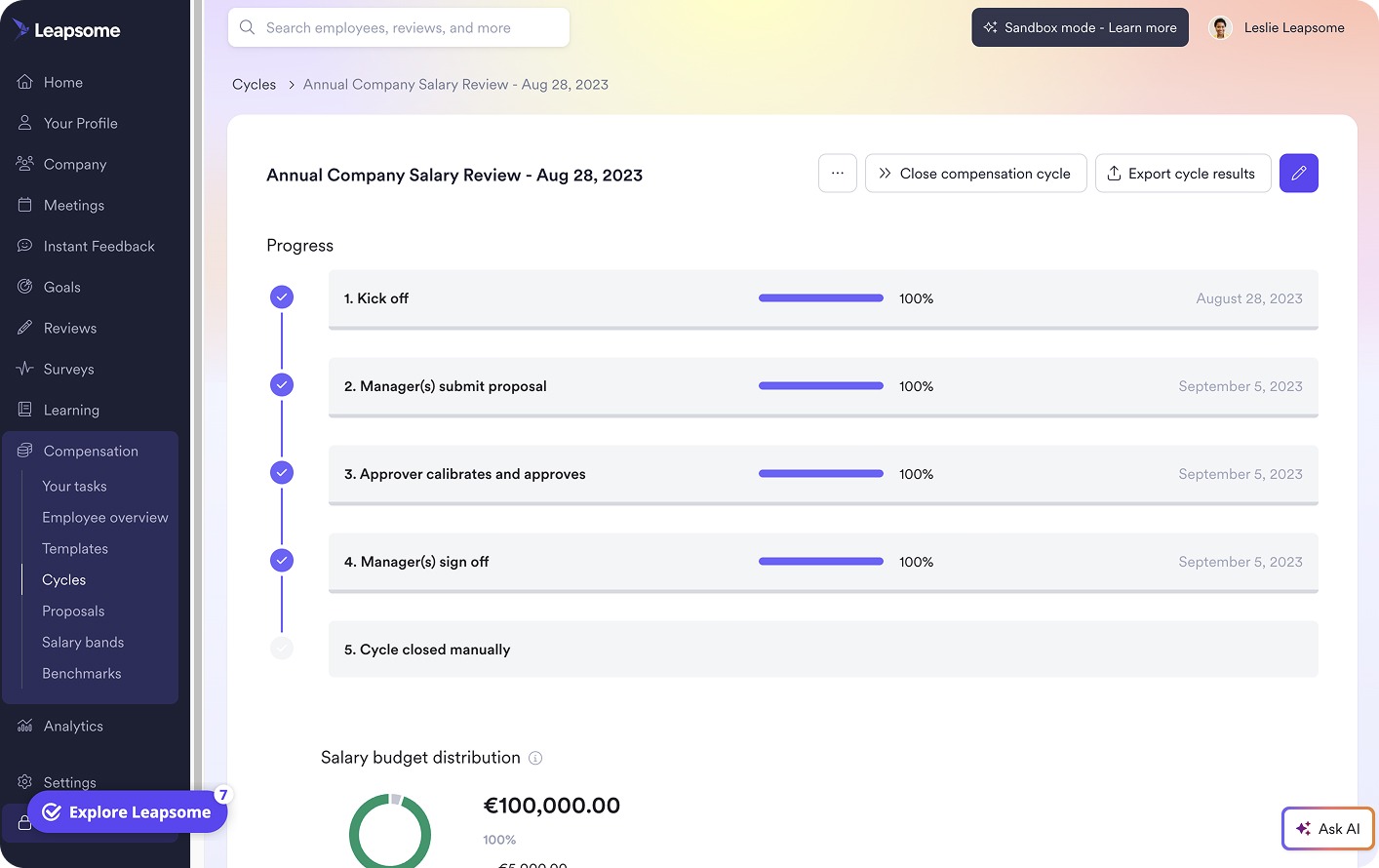
Zentralisiert eure Mitarbeiterdaten in Leapsome und gewinnt Insights, um eure Employee Experience zu verbessern. Leapsome gibt euch vollen Einblick in Vergütung, Performance, Engagement, Lernen, Karriereentwicklung und mehr.
👉Entdeckt Compensation und Performance
Wie ihr eine wirksame Total-Rewards-Strategie aufbaut
„Der Zweck einer HR-Funktion ist es, eine People-Strategie zu entwickeln, die Unternehmensziele möglichst wirksam vorantreibt. Es beginnt beim Geschäft, und von dort aus baut ihr eure People-Strategie auf.“
Melanie Naranjo, Chief People Officer bei Ethena
Eine Total-Rewards-Strategie zu entwickeln, die zu euren Zielen passt und Mitarbeitende wirksam engagiert, kann eine Herausforderung sein. Laut Deloitte glauben nur 11 % der Führungskräfte, dass ihre Rewards-Strategie mit den Unternehmenszielen übereinstimmt.
Ihr solltet eure HR-Strategie regelmäßig überprüfen, um sie besser an euren Zielen auszurichten.
Versteht die Bedürfnisse von Mitarbeitenden und die Prioritäten des Unternehmens
Auffällige Extras wie kostenloses Mittagessen klingen gut, bewegen aber meist nicht viel beim Mitarbeiterengagement. Versteht die Prioritäten eurer Mitarbeitenden durch regelmäßige Umfragen, Fokusgruppen und Exit-Daten, damit ihr ein Total-Rewards-Modell entwickeln könnt, das zu euren Mitarbeiterprofilen und Unternehmensprioritäten passt.
Baut ein integriertes Rewards-Framework auf und kommuniziert es
„Transparenz bedeutet nicht, jede Zahl offenzulegen. Es bedeutet, die Logik zu erklären: wie Gehaltsentscheidungen getroffen werden, welche Kriterien gelten und wie Menschen sich innerhalb der Struktur weiterentwickeln können.“
Alexandra Edl, Senior HR Consultant bei EDL Consulting
Euer Total-Rewards-Framework sollte sich wie ein Fundament anfühlen, das auf euren Unternehmenswerten aufbaut. Wenn eure Kultur Innovation priorisiert, sollte sich das in Total-Rewards-Komponenten wie Lernstipendien, bezahlter Studien- oder Forschungszeit und Leistungsboni widerspiegeln.
Messt Ergebnisse und verbessert kontinuierlich
Es lohnt sich, eure Total-Rewards-Strategie mit dem Wachstum eures Unternehmens weiterzuentwickeln. Wenn ihr Ergebnisse messt und Verbesserungspotenzial erkennt, könnt ihr mit den Prioritäten eurer Mitarbeitenden Schritt halten und die richtigen Talente vor eure (virtuelle) Tür holen. Sammelt regelmäßig Feedback und verfolgt zentrale Kennzahlen wie Mitarbeiterzufriedenheit/-stimmung, Leistungsdaten, Bindungsrate und Teilnahmequote.
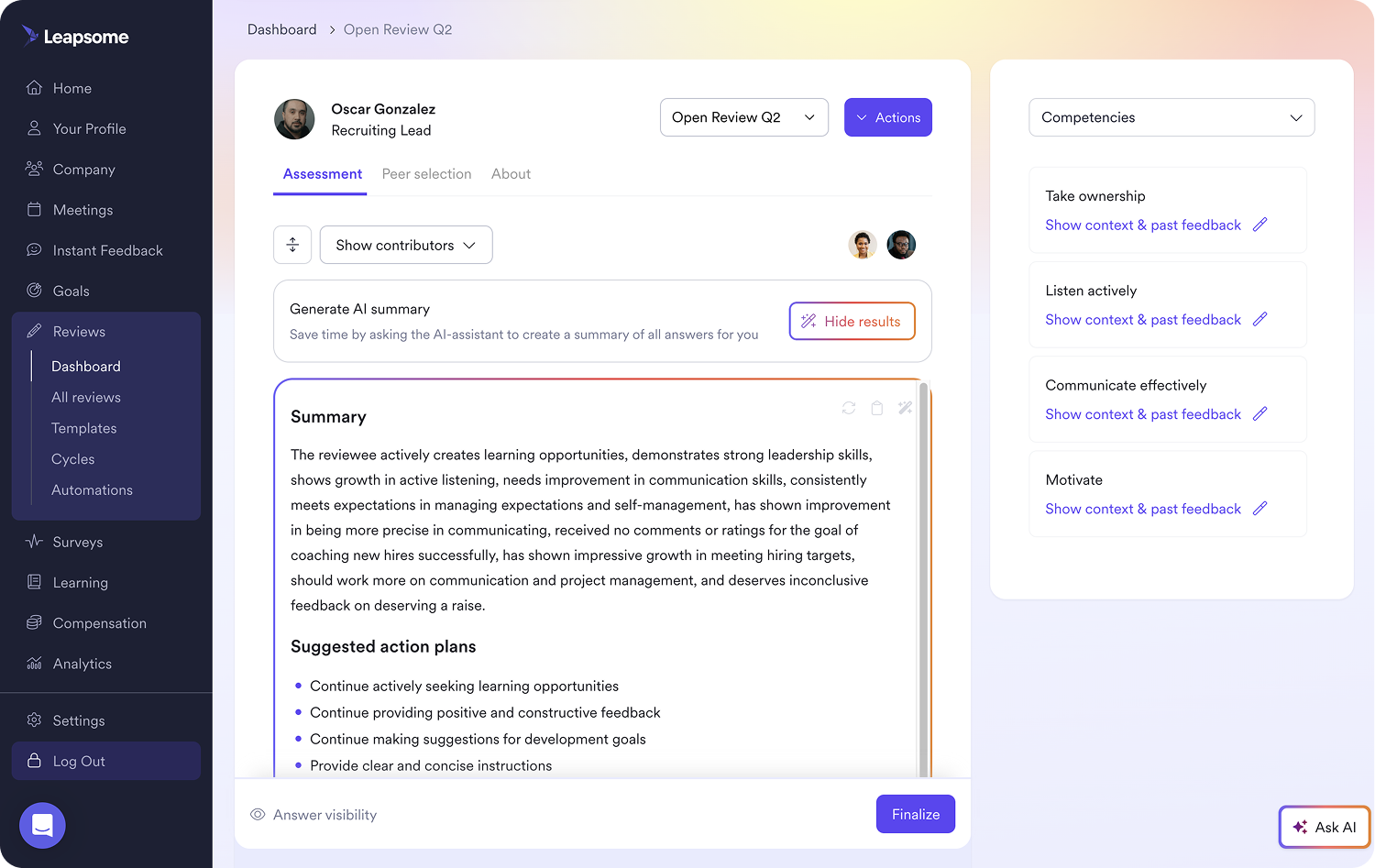
🎯 Verankert EX in euren HR-Systemen
Bessere Employee Experiences basieren auf Einblicken in Vergütung, Performance, Engagement und Lernen. Verknüpft eure Mitarbeiterdaten mit eurer Total-Rewards-Strategie in Leapsome.
👉Entdeckt Engagement
Schärft euer Employee Value Proposition mit Leapsome
„Mit Leapsome konnten wir Performance Reviews automatisieren, die Zielsetzung, die vorher schon lief, jetzt aber noch weiter, sowie Onboarding und Offboarding. Zusammen hat uns das geholfen, rund 20 % manuellen Aufwand in unserem Team einzusparen.“ Weronika Czerny-Nowakowska, Chief Operating Officer bei Neurons Lab
Um die besten Talente wirksam zu gewinnen und zu halten, braucht euer Unternehmen eine konsistente, integrierte Employee Experience und keine isolierten HR-Programme. Eine umfassende Strategie, die eure Employer Brand stärkt, kann Mitarbeiterzufriedenheit, Engagement und Bindung verbessern.
Um Employee Experiences für langfristigen Geschäftserfolg zu vereinen, braucht ihr die richtigen Tools. Mit Leapsome können HR-Teams Performance Management, Compensation Planning, Lernen, Engagement, Ziele und People Analytics verknüpfen, um ein einheitliches, integriertes Total-Rewards-Framework zu schaffen.
Konkret unterstützt Leapsome HR-Verantwortliche dabei, ein stärkeres Employee Value Proposition zu schaffen, und zwar durch:
- Stärkung des Mitarbeiterengagements: Surveys und Q&A Boards
- Verknüpfung von Performance und Rewards: Reviews, Goals und Compensation
- Förderung der Karriereentwicklung: Learning, Competencies und Instant Feedback
- Verbesserung der Workforce Insights: Employee Records und Analytics
Mit Leapsome könnt ihr Employee Experiences verfeinern, um über den gesamten Lifecycle hinweg Wirkung zu erzielen, und eure Total-Rewards-Strategie mit wachsender Belegschaft weiterentwickeln.
🧩 Vereint euren Employee Lifecycle
Leapsome hilft dabei, bedeutungsvolle Employee Experiences zu gestalten, indem es Performance, Compensation, Lernen, Engagement, Ziele und Analytics für maximale Wirkung verknüpft.
👉Demo anfordern
FAQ
Was ist ein Total-Rewards-Programm?
Ein Total-Rewards-Programm ist ein umfassendes Paket für Mitarbeitende, das Folgendes umfasst:
- Vergütung
- Boni
- Klassische Zusatzleistungen wie Krankenversicherung und Altersvorsorgekonten
- Karriereentwicklungsmöglichkeiten
- Wellness-Angebote wie Fitnessstudio-Mitgliedschaften oder flexible Arbeitszeiten
Diese Programme helfen Unternehmen dabei, die besten Talente zu gewinnen und zu halten.