Types of employment contracts: Choose agreements to fit your workforce


Disclaimer: This content is for general informational purposes only and does not constitute legal advice. Leapsome does not guarantee legal compliance and cannot confirm how specific situations would be assessed in court. If you're unsure how the requirements apply to your organization, please consult qualified legal counsel.
Employment contracts are hardly exciting, but they’re key to defining the legal relationship between your organization and its workers. These policies set the core terms of employment and clarify what each side has agreed to. Or they’re supposed to — Gallup found that only 46% of employees clearly understand what their employers expect.*
This disconnect shows why choosing the right type of employment contract is only the first step. HR also needs systems and managers that carry written expectations forward into daily work and adjust for specific needs. A permanent hire needs an experience built for long-term growth, while a fixed-term specialist needs clarity on scope and what success looks like within a defined time period.
In this guide, we’ll explain the main kinds of contracts you’ll need, and explore how you can use them to support workforce performance from day one.
* Gallup, 2025
What’s an employment contract?
An employment contract is a legally binding agreement that turns a hiring decision into a defined working relationship. This document clarifies what the employee needs to contribute and what the organization will provide in return.
"At the end of the day, it's a contract — we're paying for a service, and employees provide it. The market changes the power dynamics, not the value of people."
– Melanie Naranjo, Chief People Officer at Ethena
Setting these contracts upfront reduces repetitive admin, while helping HR set clear responsibilities and compensation that fits each role. Just keep in mind that contract requirements vary by country, so every employee agreement must also follow local labor laws.
What should an employment contract include?
Use each employment contract as the first opportunity to build a strong working relationship. To start things off on the right track, include:
- Role and employment terms: In a meta analysis, Gallup found that role clarity is one of the most foundational elements in a strong employee experience. This clarity needs to start before onboarding. So state the job title and core responsibilities, and specify details like the employee contract type, duration, and working hours.
- Compensation and benefits: Employees care just as much (well, probably more) about what they’re owed as they do about what’s expected. Lay out the salary and payment schedule, and explain benefits eligibility and leave entitlements, including any conditions tied to bonuses and paid time off.
- Legal and contractual provisions: On the legal side, you’ll want to define notice periods, offboarding procedures, and confidentiality obligations. Add restrictive covenants only when local law allows them and the role genuinely requires them.
All this can be a lot to keep track of, both during onboarding and throughout the employee lifecycle. Leapsome’s centralized HRIS and people management platform keeps signed contracts and all other employee records connected, and it even helps you check for compliance issues.
“Leapsome is powerful enough to already know the local regulations that apply in your geography — and flags it if your setup isn’t compliant.”
– Suraj Paneru, Customer Success Coach at Leapsome
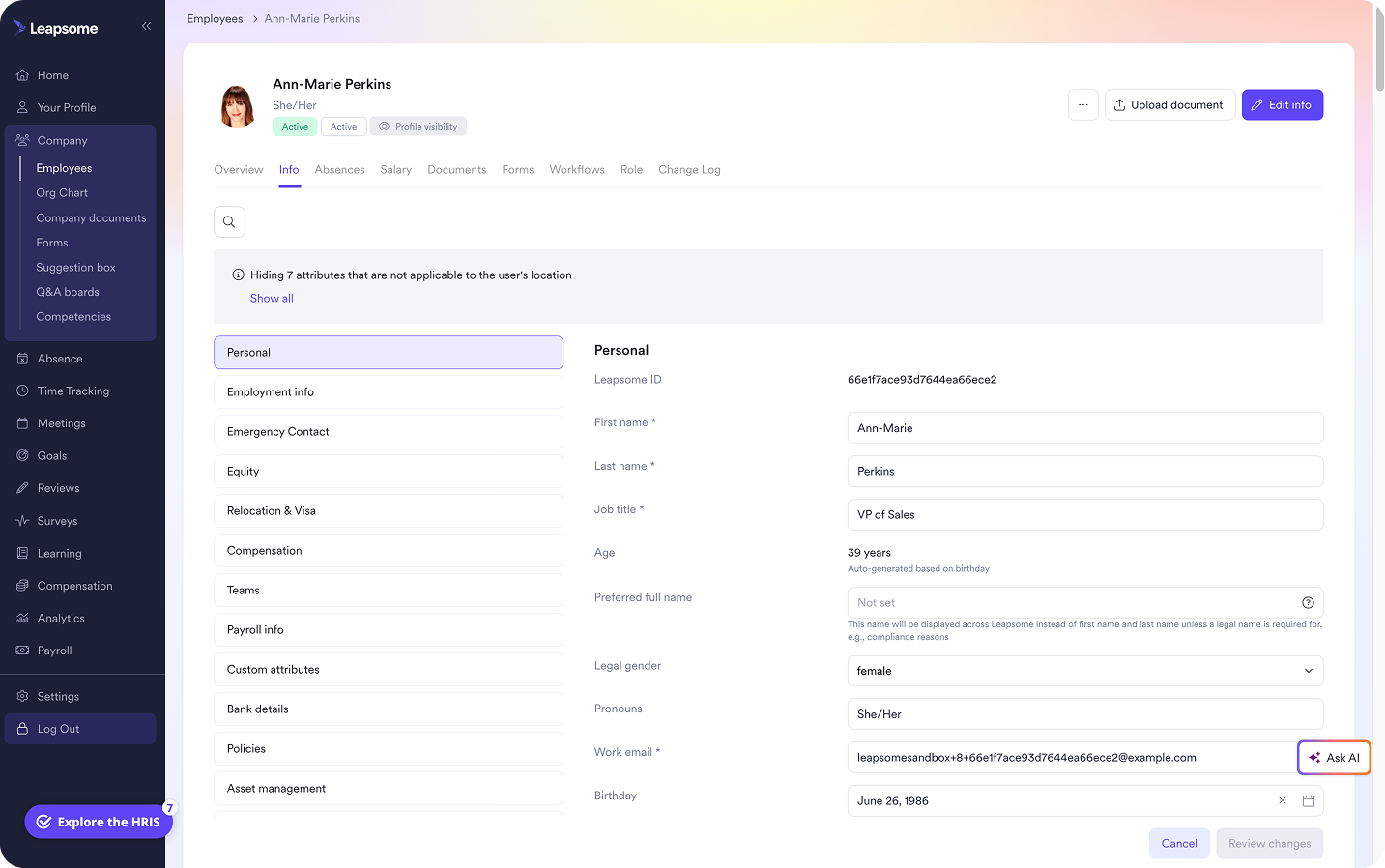
🗂️ Keep contracts tied to employee data
Leapsome lets HR teams store contracts securely, collect electronic signatures, and keep all documentation linked to the right employees.
👉 Explore Employee Records
What are the main types of employment contracts?
Organizations use different types of employment contracts to match business needs with the right levels of workforce commitment and flexibility. Most fall into one of these three broad categories.
Permanent employment contracts
A permanent employment contract has no fixed end date, so it usually suits work the organization expects to need over the long term. According to the U.S. Bureau of Labor Statistics, about 45% of contingent workers would prefer permanent contracts. These steady roles can strengthen retention, because they offer stability and clear pathways for development.
On the other hand, a permanent hire creates ongoing payroll and benefits costs. That means HR should assess long-term workloads carefully before making this contract type the default.
Fixed-term contract
A fixed-term contract ends on a specified date or after the employee completes a defined piece of work. Organizations often use this structure for parental leave cover and seasonal demand, along with time-bound or one-off projects.
The predetermined end dates make budgeting and workforce planning easier, but they often leave fixed-term employees on the periphery. HR should set expectations early, and make sure all employees have adequate feedback and growth opportunities regardless of contract length.
Freelance/independent contractor agreements
An independent contractor agreement covers services provided by a self-employed worker. Here, it’s especially important to define the scope of work and payment terms, while outlining the ways the contractor will stay independent.
Also, look carefully into the legal distinctions between employees and contractors. In the United States, these lines can easily blur; the Economic Policy Institute reports that up to 30% of employers have misclassified at least one worker. The contract and the actual working relationship need to align, or your organization may face back taxes and other penalties.
How to choose the right type of contracts for your workplace
Here are the two top factors to consider when you’re deciding on an employment contract type:
- Balance flexibility with long-term workforce needs: Budget often guides contract decisions, but the cheapest option now can become more expensive later on. McKinsey found that only 12% of HR leaders conduct operational workforce planning at least three years out. So look past the next quarter to consider how long the work will exist and how difficult the talent might be to replace.
“Seventy-five percent of the company spend is on salaries. If that’s not effectively spent, you’re throwing money away. HR exists to make sure it’s invested wisely.”
– Melanie Naranjo, Chief People Officer at Ethena
- Consider the employee experience from day one: Permanent employees look for long-term growth, while fixed-term hires need clarity about what they can achieve before the agreement ends. But according to a ZipRecruiter survey, 15% of new hires said their job descriptions barely matched their actual roles. Make sure that, whatever expectations your contracts set, onboarding and manager behavior follow suit.
Leapsome keeps contracts and employee records in the same place, so HR can trigger onboarding workflows based on actual employment arrangements. Managers can then set goals and run feedback cycles that match the scope and expectations of each role.
"Workflows give you limitless opportunities to set up steps that need to be taken by various stakeholders — everything from onboarding and offboarding to contract changes can happen automatically."
– Suraj Paneru, Customer Success Coach at Leapsome
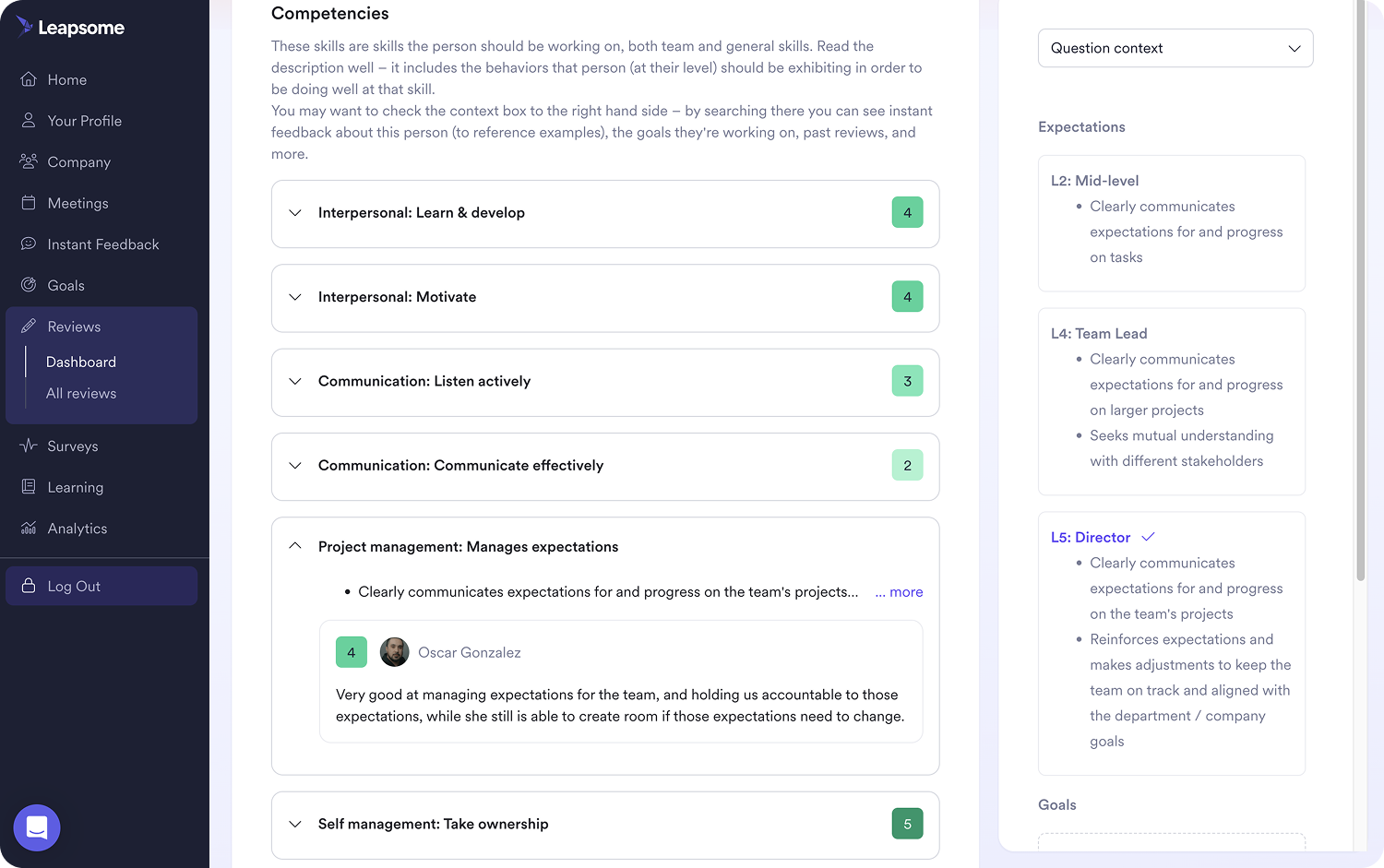
🤝 Make hiring promises part of the employee lifecycle
Leapsome connects onboarding, development, and performance, so managers can reinforce expectations from day one and support growth for all employee types.
👉 Learn about Performance Reviews
How Leapsome helps you connect contracts with employee experience
Choosing the right employment contract matters, but if agreements stay disconnected from onboarding and performance, the rest of the employee lifecycle drifts away before the ink dries. Managers may set goals without understanding contract scope, and HR can miss amendments or end dates. Employees are left with experiences that don’t match the roles they accepted.
Leapsome brings HRIS and people enablement into one connected platform. With Leapsome, your team can:
- Centralize contracts and employee records: Store signed agreements and later changes in a single source of truth.
- Trigger onboarding from employment data: Launch onboarding workflows that reflect each role and contract type.
- Align goals with contracts: Connect role expectations to goal-setting and performance reviews.
- Support ongoing development: Link learning and feedback to employee roles and job scopes.
- Improve future contract decisions: Use engagement and performance insights to understand which workforce arrangements best support everyone.
"With software like Leapsome…you need good customer service — a partner to help you run things smoothly and quickly. Leapsome is definitely the absolute best at it. I think customer service is 100% its strongest point!" – Valentina Saggese, People Operations Manager at Fueled
🧭 Turn contract choices into stronger workforce decisions
Leapsome connects employment contracts with employee records, onboarding, performance, and development, so HR can deliver the right experience for every arrangement.
👉 Request a demo
FAQ
What are the four types of employment contracts?
The four common types of employment contracts are: permanent, fixed-term, temporary, and independent contractor agreements. Employers can structure permanent and fixed-term hires as either part-time or full-time employees, depending on their working hours. Note that exact classification requirements vary based on country and local labor laws.

.png)


Entdeckt unsere Plattform für HRIS, Performance und Entwicklung.