Job-Leveling-Matrix: Schluss mit Rätselraten bei der Karriereplanung


Weiterbildung kann wie ein nettes Extra wirken statt wie eine zentrale Unternehmensstrategie. Doch die Daten zeigen deutlich: Unternehmen stehen und fallen mit ihren Lernangeboten.
Eine Studie von Gallup zeigt zum Beispiel, dass fehlende Aufstiegschancen der häufigste Grund sind, warum Mitarbeitende ihren Job verlassen. Gallup stellte außerdem fest, dass rund neun von zehn Millennials Weiterbildung als sehr wichtig einstufen. (1)
Trotz des klaren Zusammenhangs zwischen Mitarbeiterbindung und Entwicklungsmöglichkeiten schöpfen viele Unternehmen ihr Potenzial nicht aus. Laut Gartner sind nur 46 % der Mitarbeitenden mit ihren Karriereentwicklungsmöglichkeiten zufrieden. (2)
Wenn ihr den Beförderungsprozess in eurem Unternehmen stärken wollt, könnt ihr mit einer Job-Leveling-Matrix klare Erfolgskriterien und Entwicklungspfade festlegen. Wir zeigen euch, wie ihr ein Framework aufbaut, das Aufstiege transparenter macht, damit eure Top-Talente motiviert bleiben.
1. Gallup, 2024
2. Gartner, 2024
Was ist eine Job-Leveling-Matrix?
Job Leveling bezeichnet den Prozess, verschiedene Rollen zu unterscheiden, indem ihre wesentlichen Merkmale und Verantwortlichkeiten definiert werden. Sind diese Details festgelegt, könnt ihr daraus eine Job-Leveling-Matrix erstellen: ein visuelles, teilbares Framework, das die Erwartungen für jede Position darstellt.
Die meisten Job-Leveling-Matrizen konzentrieren sich auf einige zentrale Kategorien:
- Verantwortlichkeiten und Umfang: Ein Job-Leveling-Leitfaden zeigt sowohl die Art der Arbeit, für die eine Rolle verantwortlich ist, als auch die Entscheidungsbefugnis dieser Position.
- Fähigkeiten und Verhaltensweisen: Hier wird beschrieben, welches Fachwissen und welche Soft Skills für jedes Job-Level nötig sind.
- Erwartungen an Leistung und Beförderung: Dieser Abschnitt legt fest, was für den Aufstieg in eine bestimmte Rolle erforderlich ist.
Tipps für eure Job-Leveling-Matrix
Ihr müsst nicht jedes denkbare Szenario in eurer Job-Leveling-Matrix dokumentieren. Schafft stattdessen genug Klarheit, damit Mitarbeitende und Führungskräfte wissen, wie Karriereentwicklung abläuft (und sie als fair empfinden).
„Wir haben unsere Job-Level so unterteilt, dass Führungskräfte und Mitarbeitende genau sehen, welche Fähigkeiten sie für den nächsten Schritt brauchen. Beim Wachstum geht es nicht nur um einen neuen Titel oder mehr Gehalt. Es geht darum, neue Kompetenzen zu meistern, die euch für das Unternehmen wertvoller machen.“
Janelle Daugherty, Head of People and Culture at Notion Health
Geht dafür in drei Schritten vor:
- Rollen, Level und Verantwortlichkeiten definieren: Identifiziert alle Rollen in eurem Unternehmen und legt fest, welche Aufstiegsstufen ihr für die jeweiligen Senioritätstitel nutzen wollt (z. B. Associate und Senior). Dokumentiert anschließend die Verantwortlichkeiten jeder Kernrolle, zusammen mit ihrem Aufgabenbereich und ihrer Entscheidungsbefugnis.
- Kompetenzen und Leistungserwartungen abstimmen: Geht die Level jeder Rolle erneut durch, diesmal mit den Verhaltens- und Fachanforderungen für jede Stufe. Dieser Schritt macht aus vagen Karrieretipps einen konkreten Entwicklungspfad, mit dem Mitarbeitende ihre aktuelle Position und ihr Entwicklungspotenzial einschätzen können.
Mit Leapsome behaltet ihr eure Kompetenzen organisiert im Blick. Mitarbeitende sehen, welche Fähigkeiten für die einzelnen Job-Level nötig sind, sodass alle wissen, was erwartet wird und wie der Aufstieg im Unternehmen funktioniert.
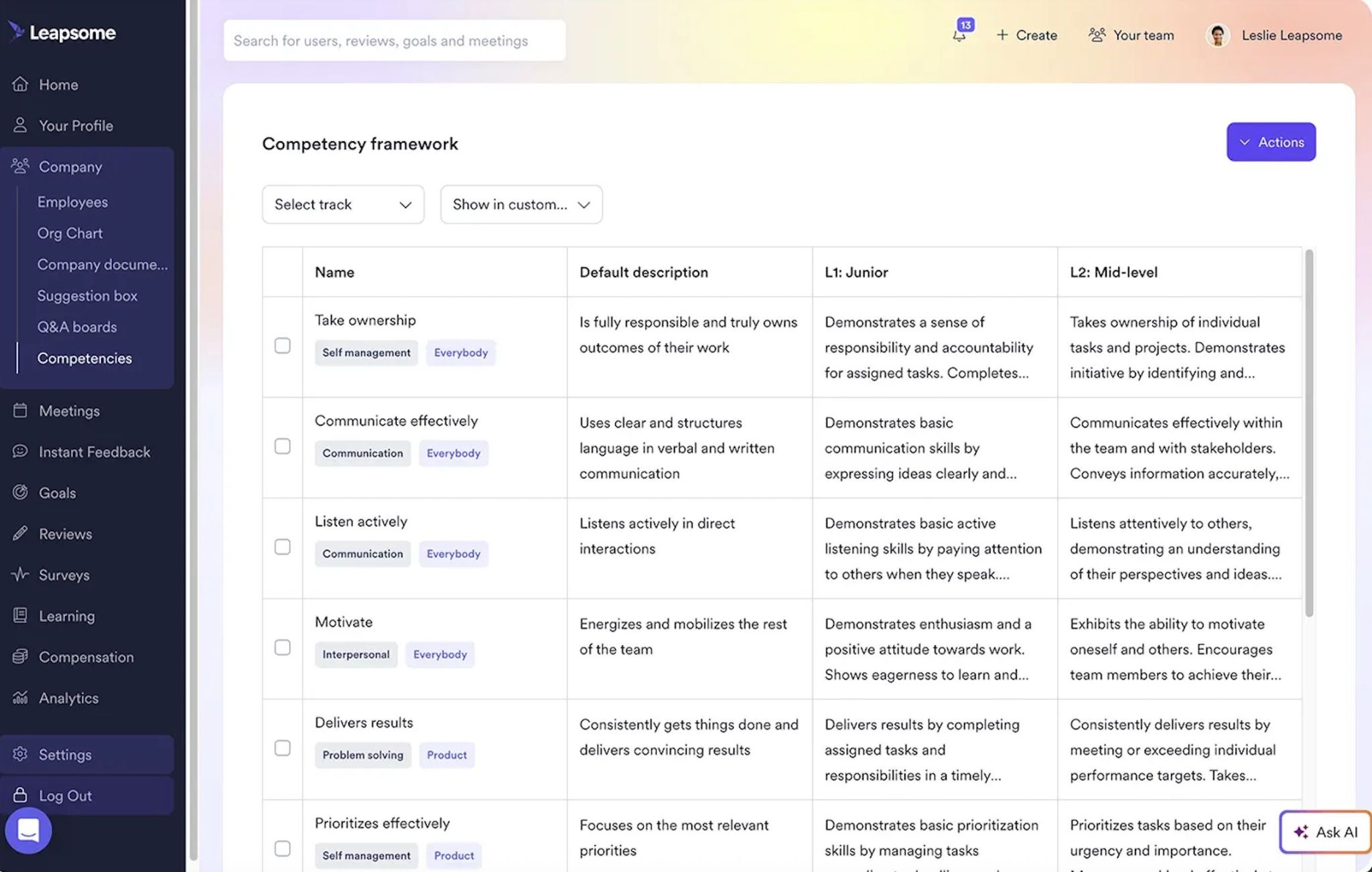
🪜 Karrierefortschritt klar machen
Verknüpft Fähigkeiten mit Job-Leveln in Leapsome, damit Mitarbeitende wissen, wo sie stehen, und Führungskräfte bessere Entwicklungsgespräche führen können.
👉 Mehr zum Kompetenzmodell
- Beförderungskriterien festlegen und pflegen: Eure Job-Leveling-Matrix sollte die wichtigsten Aufstiegswege aufzeigen. Nehmt konkrete Beförderungskriterien auf, die Mitarbeitenden und Führungskräften als Orientierung dienen.
Um den Prozess zu beschleunigen, könnt ihr mit unserer Job-Leveling-Vorlage starten. Füllt einfach die Lücken mit den Kompetenzen und Aufstiegskriterien eures Unternehmens.
📃 Setzt eure Job-Leveling-Matrix in die Praxis um
Stellt sicher, dass ihr an alles gedacht habt, bevor ihr eure Aufstiegsstruktur unternehmensweit teilt.
👉 Jetzt Vorlage herunterladen
So könnte euer Job-Leveling-Framework aussehen
Job-Leveling-Frameworks können sehr unterschiedlich aussehen. Hier ein Beispiel für eine effektive Grundstruktur.
| Level | Aufgaben | Umfang und Wirkung |
|---|---|---|
| Software Engineer I | Entwickelt Features, behebt Bugs und lernt Systeme und Tools kennen | Verantwortet einzelne Aufgaben und trägt zu Teamzielen bei |
| Software Engineer II | Liefert Projekte eigenständig, reviewt Code und verbessert Prozesse | Verantwortet Projekte mit Wirkung auf ein Produkt oder Team |
| Senior Software Engineer | Leitet komplexe Projekte und coacht andere Engineers | Treibt Teamleistung und technische Ausrichtung voran |
| Staff Engineer | Steuert die Architektur, löst bereichsübergreifende Herausforderungen und hält Teams aufeinander abgestimmt | Beeinflusst mehrere Teams und Geschäftsergebnisse |
| Principal Engineer | Entwickelt die technische Strategie und berät die Führungsebene zu Innovationsthemen | Wirkt sich auf unternehmensweite Technologieentscheidungen und langfristiges Wachstum aus |
So macht ihr aus eurer Job-Leveling-Matrix ein System für Wachstum: drei Schritte
„Kompetenzmodelle sind keine reinen Checklisten. Sie sind Wegweiser für Wachstum und Verantwortung. Sie helfen Führungskräften, effektiver zu coachen, und geben Mitarbeitenden ein klares Bild davon, wie sie auf jedem Level erfolgreich sind. Wenn Erwartungen schriftlich festgehalten sind, wissen alle, wie gute Leistung aussieht.“
Monica Sarkar, Co-Founder at Purple Umbrella
Eine Job-Leveling-Matrix allein garantiert aber noch keinen reibungslosen Beförderungsprozess. Es kann trotzdem zu Problemen kommen, wenn Führungskräfte und Mitarbeitende die Merkmale hinter jedem Titel unterschiedlich interpretieren.
So stellt ihr sicher, dass eure Job-Leveling-Matrix die gewünschte Wirkung erzielt.
1. Erfolg auf jedem Level definieren
„In einem jungen Unternehmen wollen oft 10 Leute dieselbe Beförderung. Deshalb führen wir ein Skills-Framework ein, das vom Recruiting bis zur Rente reicht: Es zeigt, wo Mitarbeitende stehen, welche Lücken es gibt und wann sie wirklich bereit für den nächsten Schritt sind.“
Michael Latzik, Country Manager Germany at Deel
Klarheit beginnt damit, konkret zu beschreiben, wie Erfolg für jede Rolle praktisch aussieht. Seid dabei so detailliert wie möglich und geht auf Fähigkeiten, Verhaltensweisen, erwartete Ergebnisse und geschäftliche Auswirkungen ein. So sehen Mitarbeitende, was das nächste Level bedeutet, und können sich gezielt auf die richtigen Fähigkeiten konzentrieren.
2. Führungskräften ein einheitliches Coaching-Framework geben
„Wenn Menschen wissen, dass Reviews wirklich zu Wachstum führen, hören sie auf, sie zu fürchten, und fangen an, in sie zu investieren. Wenn Feedback mit konkreten Ergebnissen wie Gehalt, Beförderungen und Lernplänen verknüpft wird, werden aus Leistungsgesprächen echte Empowerment-Momente.“
Monica Sarkar, Co-Founder at Purple Umbrella
Was „gute Leistung“ bedeutet, sollte nicht von der Laune einzelner Führungskräfte abhängen. Eine hochwertige Job-Leveling-Matrix braucht einen objektiveren Rahmen für konsistente Feedback-Zyklen und faire Leistungsbeurteilungen.
Laut Gallup verzeichnen Unternehmen, die strategisch in die Mitarbeiterentwicklung investieren, eine 11 % höhere Produktivität und eine doppelt so hohe Mitarbeiterbindung. Bringt euren Führungskräften bei, die Kompetenzen aus eurer Job-Leveling-Matrix für Karrieregespräche zu nutzen, und verknüpft Fähigkeiten mit konkreten Lernangeboten, um kontinuierlichen Fortschritt zu fördern.
3. Talententscheidungen an Level-Kriterien ausrichten
Eure Matrix wird erst dann zu einem echten Wachstumssystem, wenn ihr Job-Level nutzt, um interne Mobilität zu steuern. Wer sich immer wieder auf die Job-Leveling-Matrix bezieht, macht Beförderungen weniger von subjektiven Eindrücken abhängig und mehr von dokumentierten Erwartungen, die Vertrauen schaffen.
Leapsome bündelt eure Job-Leveling-Funktionen und verknüpft sie direkt mit People Analytics. Liegen alle Mitarbeitendendaten an einem Ort, fällt es Führungskräften leichter, Leistungsbeurteilungen auf objektive Standards zu stützen.
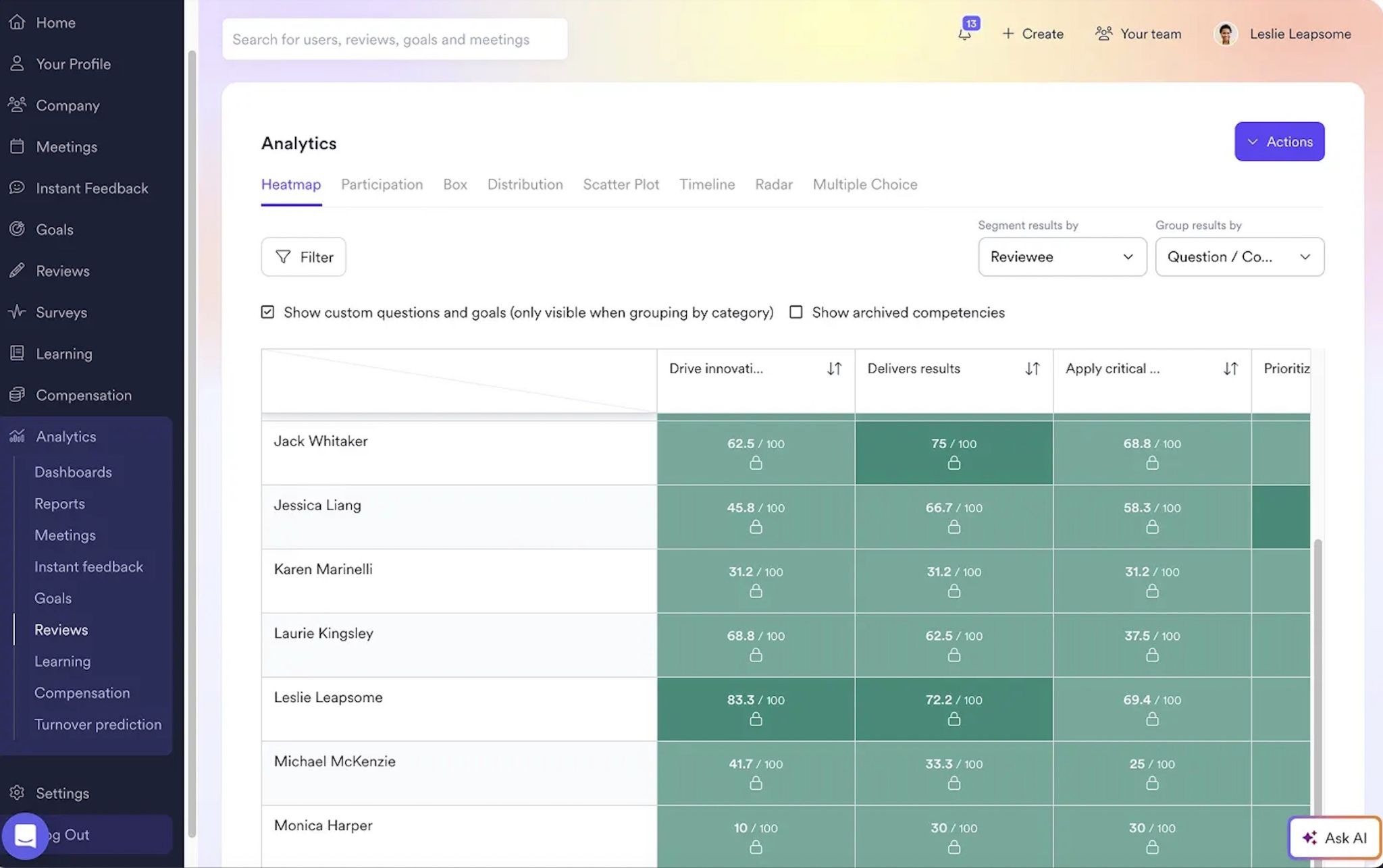
🤝 Fördert bedeutungsvolle Wachstumsgespräche
Leapsome gibt Führungskräften einen klaren Feedback-Rahmen, indem es aktuelle People Analytics mit umfassenderen Entwicklungszielen verknüpft.
👉 Performance Reviews entdecken
Wie Leapsome Unternehmen beim Aufbau und Skalieren von Job-Leveling-Frameworks unterstützt
Eine Job-Leveling-Matrix aufzustellen ist ein wichtiger erster Schritt, aber ein Plan allein verändert noch keine Karriereentwicklung. Die eigentliche Herausforderung beginnt, wenn ihr das neue Framework in den Arbeitsalltag integriert.
Die HRIS- und People-Management-Plattform von Leapsome bietet Tools, mit denen ihr Vertrauen bei Mitarbeitenden aufbaut und dafür sorgt, dass Führungskräfte bei Beförderungen nach denselben Regeln vorgehen. Damit könnt ihr:
- Einen visuellen Kompetenzleitfaden erstellen: Mit Leapsome legt ihr die nötigen Fähigkeiten für verschiedene Job-Level fest, sodass jedes Teammitglied sie einsehen und verstehen kann.
- Bedeutungsvolle Wachstumsgespräche unterstützen: Nutzt People Analytics zu eurem Vorteil, wenn ihr Leistungsbeurteilungen und Feedback-Zyklen gestaltet.
- Führungskräfte mit der Leapsome Academy coachen: Stärkt eure Führungskräfte mit Lernkursen im Leapsome-Academy-Portal.
„Wir konnten alles in unsere Leistungsbeurteilungen einbauen, was wir wollten: unsere Struktur, Fragen, Antwortformate, Skala sowie unser Werte- und Kompetenzmodell. Es funktioniert einfach großartig!“, sagt Marie Richter, VP of People at Billie
🚀 Macht Karrierewachstum leicht verfolgbar
Die integrierten Tools von Leapsome für Performance, Entwicklung und People Analytics helfen euch zu zeigen, wie jeder Job und jedes Level aussehen soll.
👉 Demo anfragen





.png)