Vorlagen für Rollen und Verantwortlichkeiten: Klarheit + Abstimmung

.png)
Weniger als die Hälfte (46 %) der Mitarbeitenden weiß genau, was von ihnen bei der Arbeit erwartet wird.* Das führt zu einer ganzen Reihe von Problemen: doppelte Arbeit, uneinheitliche Management-Entscheidungen und ins Stocken geratene Karrieren, ganz zu schweigen von einem höheren Risiko für Burnout und geringes Engagement.
Durchdachte Vorlagen für Rollen und Verantwortlichkeiten räumen mit unklaren Erwartungen auf, indem sie genau festhalten, wer wofür zuständig ist und wie Erfolg gemessen wird. Starke Vorlagen fördern Verantwortungsbewusstsein, Zusammenarbeit und organisatorische Abstimmung über den gesamten Employee Lifecycle hinweg, von schnellerem Onboarding bis zu aussagekräftigen Performance Reviews.
Eine gute Vorlage zu schreiben, braucht aber mehr als eine Checkliste mit Aufgaben. Dieser Guide liefert euch ein Beispiel für eine Vorlage für Rollen und Verantwortlichkeiten und zeigt euch Best Practices für Dokumente, die Zuständigkeit und Verantwortung dauerhaft sichtbar machen.
* Gallup, 2025
Was ist eine Vorlage für Rollen und Verantwortlichkeiten?
Eine Vorlage für Rollen und Verantwortlichkeiten ist ein strukturiertes Dokument, das festhält, welche Unternehmensziele eine Rolle unterstützt und welche Aufgaben und Verantwortlichkeiten diesen Zielen zugrunde liegen. Unternehmen erstellen oder aktualisieren solche Vorlagen meist bei der Einstellung neuer Mitarbeitender, bei der Beförderung bestehender Mitarbeitender in eine neue Position oder bei der Umstrukturierung eines Teams.
Eine vollständige Vorlage für Rollen und Verantwortlichkeiten lässt sich in drei Hauptkategorien unterteilen.
1. Zweck: Warum gibt es diese Rolle?
„Es war eine einfache Frage: Wie sieht euer Onboarding-Prozess aus? Man denkt, es wird eine Seite. Und plötzlich hat man ein sechsseitiges Dokument.“
Erica Ancobia
Bevor Teams Aufgaben und Tätigkeiten auflisten, müssen sie sich zunächst klar darüber werden, warum die Rolle überhaupt existiert. Ein einziger, fokussierter Satz, der die gewünschte Wirkung der Rolle auf den Punkt bringt, gibt euch eine solide Grundlage für ein wirksames Dokument und einen Entwicklungsplan für neue Mitarbeitende. Bei einem Customer Success Manager könnte das zum Beispiel so aussehen: „Verantwortet die Kundenbindung, indem sichergestellt wird, dass Accounts einen klaren, messbaren Mehrwert aus unserem Produkt ziehen.“
Den Zweck einer Rolle klar zu definieren, ist wichtiger, als man vielleicht denkt. Mitarbeitende, die voll zustimmen, dass ihre Jobbezeichnung und -beschreibung zu der Arbeit passen, die sie tatsächlich leisten, sind laut Gallup-Studie 2,5-mal so wahrscheinlich engagiert.
2. Ergebnisse und Verantwortlichkeiten: Was umfasst diese Rolle?
Als Nächstes wird es konkret: Was macht jede Rolle eigentlich genau? Gute Vorlagen konzentrieren sich auf Ergebnisse und Deliverables statt auf reine Aufgabenlisten. So verstehen Mitarbeitende, wie hohe Leistung in ihrer Rolle aussieht und welchem Ziel jede Aufgabe dient.
3. Performance: Wie sieht Erfolg aus?
Ein Abschnitt zu den wichtigsten Kompetenzen rundet die Vorlage ab und beschreibt die Fähigkeiten, Verhaltensweisen und Fertigkeiten, die für die Rolle nötig sind. Er sollte außerdem festhalten, wie diese Kompetenzen bewertet werden, etwa durch einen Abgleich mit Key Performance Indicators (KPIs) und Erfolgskennzahlen.
Wie SHRM feststellt, können HR-Verantwortliche mit diesen Performance-Management-Tools die tägliche Arbeit mit messbaren Ergebnissen verknüpfen, damit Teammitglieder ihre Rolle besser verstehen.
Wie erstellt ihr eine Vorlage für Rollen und Verantwortlichkeiten?
Laut einem Asana-Report verbringen Mitarbeitende 60 % ihrer Zeit mit „Arbeit über die Arbeit“, also mit unnötigen Meetings und doppelter Arbeit. Ein wirksames Dokument für Rollen und Verantwortlichkeiten schafft überflüssige Meetings nicht ab, kann aber die verschwendete Zeit deutlich reduzieren. So erstellt ihr eines.
Ergebnisse zuerst
Beim Schreiben von Vorlagen für Aufgabenbereiche beginnt ihr am besten mit dem Fokus auf Ergebnisse. Verwendet Aktivverben (wie „leitet“ und „führt aus“) und bleibt bei kurzen, prägnanten Stichpunkten. Klare, jargonfreie Definitionen sind leichter verständlich und lassen sich einfacher aktualisieren, wenn sich eure Belegschaft verändert.
Macht eure gewünschten Ergebnisse offiziell, indem ihr sie in Leapsomes HRIS- und People-Management-Tool festhaltet. Leapsome verknüpft Ziele mit Kompetenzmodellen und Performance Management, damit alle auf dem gleichen Stand sind.
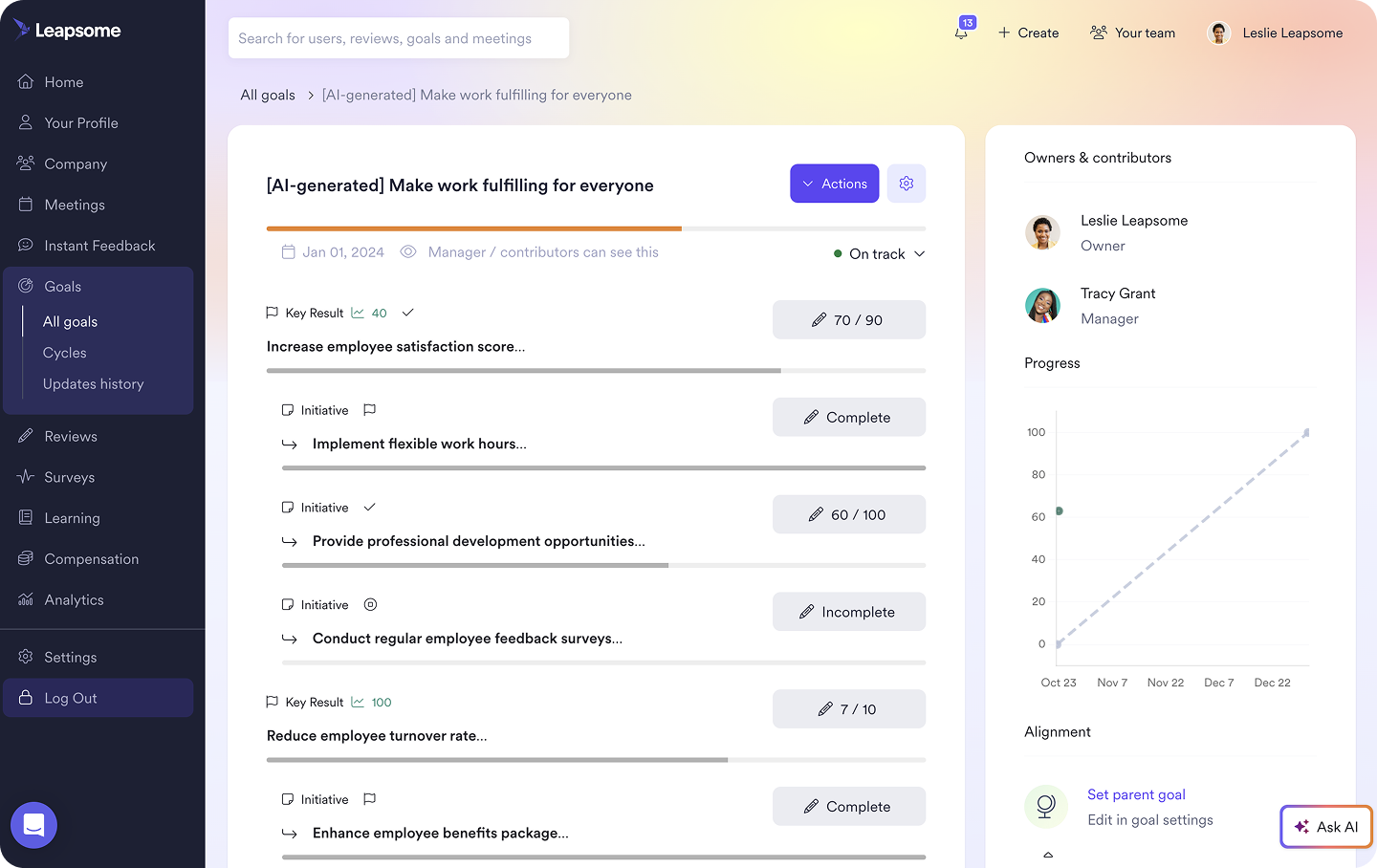
🔮 Macht Rollen mit messbaren Zielen glasklar
Leapsome hilft Teams, Rollendefinitionen und Ziele mit Performance Management und Entwicklungsplänen für Mitarbeitende zu verknüpfen, damit ihr immer mit echten Daten arbeitet, nicht mit Vermutungen.
👉 Entdeckt Ziele & OKRs
„Workflows bieten euch endlose Möglichkeiten, Schritte für verschiedene Stakeholder festzulegen: von Onboarding und Offboarding bis zu Vertragsänderungen kann alles automatisch ablaufen.“ Suraj Paneru, Customer Success Coach bei Leapsome
Gemeinsam gestalten, nicht diktieren
Bezieht alle Stakeholder beim Schreiben von Rollenbeschreibungen ein, um möglichst viele Perspektiven einzubringen. Durch Zusammenarbeit werden Lücken sichtbar, die eine einzelne Sichtweise übersehen könnte. Außerdem werden Rollendefinitionen dadurch genauer, weil sie die tatsächliche Realität des Jobs widerspiegeln und nicht nur die Vorstellung einer einzelnen Person.
Rollen regelmäßig überprüfen
Rollendefinitionen sind nur so statisch wie eure Organisation (also wahrscheinlich nicht sehr). Überprüft Rollenbeschreibungen regelmäßig, besonders während Einstellungsphasen oder wenn neu definierte Unternehmensziele den Umfang bestehender Rollen betreffen.
Wenn ihr bereit seid loszulegen: Wir haben eine kostenlose Vorlage für Rollen und Verantwortlichkeiten für Teams und Einzelpersonen vorbereitet.
📄 Ihr müsst nicht bei null anfangen
Statt das Rad neu zu erfinden, nutzt unsere kostenlose Vorlage für Rollen und Verantwortlichkeiten als Ausgangspunkt für klarere Kommunikation.
👉 Vorlage jetzt herunterladen
Hier sind zwei Beispiele für diese Vorlage in der Praxis.
- Allgemeine Rollenbeschreibung
Jobtitel: Marketing Manager
Zweck: Verantwortet Marketingstrategie und -umsetzung und stellt sicher, dass Kampagnen die Markenbekanntheit steigern und übergeordnete Unternehmensziele unterstützen.
Ergebnisse und Verantwortlichkeiten:
- Hält Content im Zeitplan, indem der Content-Kalender eigenverantwortlich gepflegt wird.
- Baut das Marketingteam aus, indem Talente entsprechend dem Personalbedarf eingestellt und entwickelt werden.
- Verbessert den Kampagnen-ROI kontinuierlich durch Erfolgsmessung und entsprechende Anpassung der Strategien.
Wichtigste Kompetenzen: Kampagnenstrategie, Datenanalyse, funktionsübergreifende Kommunikation
Erfolgskennzahlen: Marketing-generierte Pipeline, Return on Ad Spend
- Projektspezifische Rollenbeschreibung
Jobtitel: Event Coordinator
Zweck: Plant und organisiert die jährliche Firmenkonferenz und sorgt dafür, dass sie reibungslos abläuft und den Teilnehmenden echten Mehrwert bietet.
Ergebnisse und Verantwortlichkeiten:
- Hält das Event im Zeitplan, indem die Logistik von der Planung bis zum Abbau gesteuert wird.
- Bleibt im Budget, indem Ausgaben mit dem genehmigten Plan abgeglichen und Überschreitungen zeitnah adressiert werden.
- Arbeitet mit dem Marketingteam zusammen, um das Event zu bewerben und Anmeldungen voranzutreiben.
Wichtigste Kompetenzen: Eventplanung, Lieferantenmanagement, Budgetmanagement
Erfolgskennzahlen: Tatsächliche vs. angestrebte Teilnehmerzahl, Zufriedenheitswert der Teilnehmenden über Umfragen nach dem Event
Mit Rollenklarheit Unternehmensziele erreichen
Viele Unternehmen schreiben Rollenbeschreibungen einmal und betrachten sie dann als erledigt. Doch solange nicht alle Mitarbeitenden in einer geteilten Rolle ihre Aufgaben auf ähnliche Weise beschreiben können, lässt sich noch verbessern, wie sie ihre Arbeit verstehen.
So macht ihr Rollenerwartungen klarer und helft Mitarbeitenden, ihr Bestes zu geben.
Erfolg über Ergebnisse definieren, nicht über Tätigkeiten
„Teams gehen davon aus, dass es eine klare Zuständigkeit gibt, dabei wurde sie nie wirklich definiert.“
Erica Ancobia
Eine Checkliste mit Tätigkeiten, die nicht an erwartete Ergebnisse geknüpft sind, lässt den Rollenumfang offen für Interpretation. Setzt auf messbare Ergebnisse, um Verwirrung zu reduzieren und sicherzustellen, dass alle auf dem gleichen Stand sind.
Erwartungen standardisieren für effektiveres Coaching
Führungskräfte brauchen konsistente Erwartungen als Grundlage, sonst laufen sie Gefahr, sich auf subjektive Meinungen und Feedback zu verlassen, hinter das Stakeholder nicht stehen können. Konsistente Erwartungen helfen besonders neuen Führungskräften, die einen verlässlichen Rahmen brauchen, bevor sie ihr eigenes Gespür entwickelt haben.
Entwicklungspfade in Rollendefinitionen einbauen
Unklare Rollen sind laut SHRM eines der größten Hindernisse, um Ergebnisse für Mitarbeitende und Unternehmen zu erreichen. Mitarbeitende sind engagierter und entwickeln sich eher weiter, wenn sie genau wissen, wie diese Entwicklung aussieht. Das bedeutet, Entwicklungspläne zu erstellen, die diese Pfade und Erwartungen transparent darlegen.
Diese Hindernisse wirken sich besonders negativ aus, wenn es Zeit für ein Performance Review ist. Führungskräfte brauchen Kontext, um Feedback zu geben, das auf der Realität jeder Rolle basiert und nicht auf subjektiven Eindrücken. Genau dieses Problem lösen Leapsomes Performance Reviews.
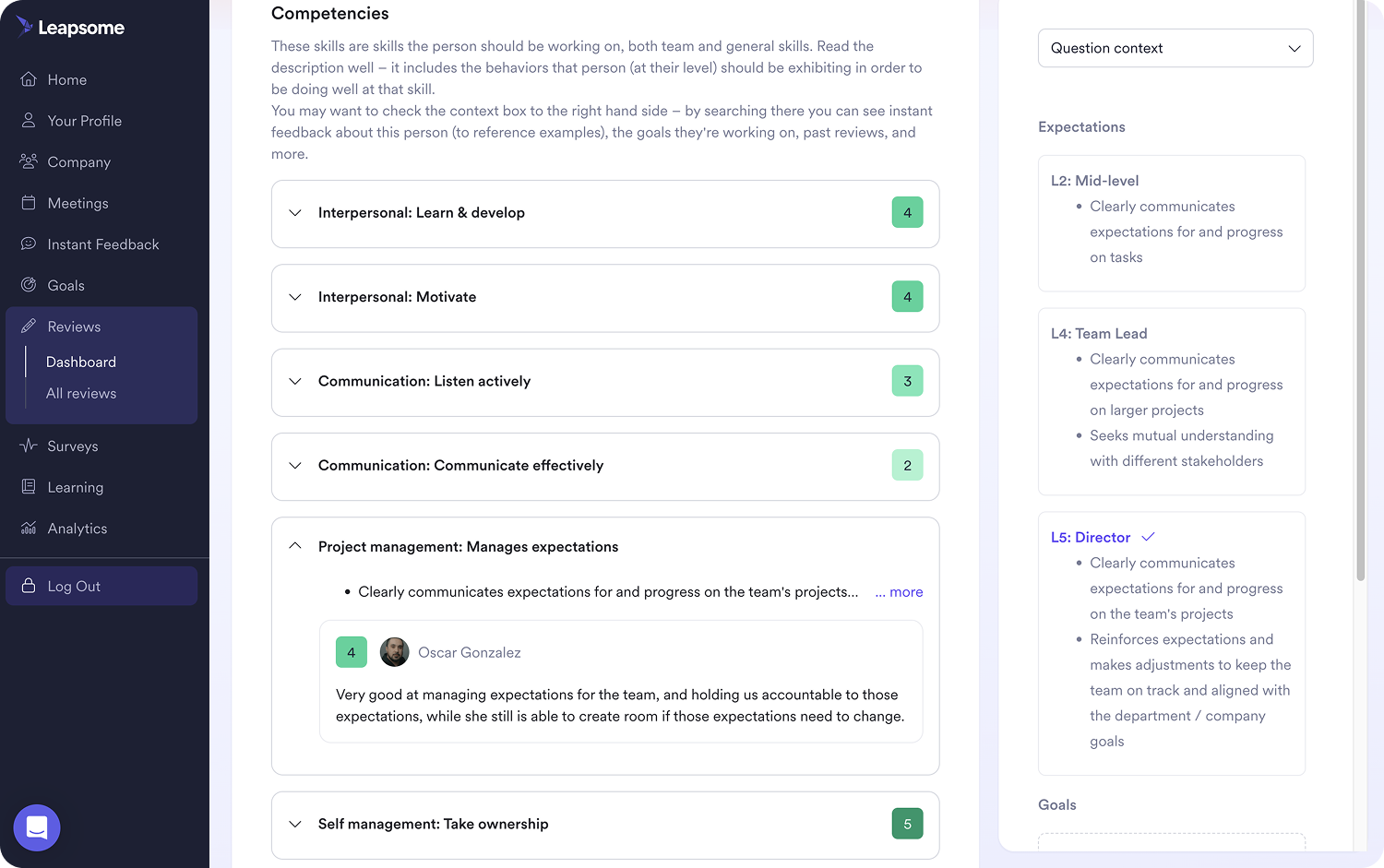
💬 Führt jedes Mal kontextreiche Gespräche
Leapsomes Performance Reviews geben Führungskräften den vollen Kontext für jedes Gespräch, inklusive anpassbarer Vorlagen und AI-gestützter Insights.
👉 Entdeckt Performance Reviews
Rollen standardisieren für eine produktive Belegschaft mit Leapsome
Viele Unternehmen kämpfen mit uneinheitlichen Auffassungen derselben Rolle. Mitarbeitende mit unterschiedlichen Vorstellungen davon, was von ihnen erwartet wird, erleben häufig Verantwortungslücken, gebremste Entwicklung durch vage Entwicklungspfade und unklare Zuständigkeiten, die zu unnötiger Doppelarbeit führen.
Leapsomes AI-gestützte HRIS- und People-Management-Plattform verknüpft Rollen und Verantwortlichkeiten mit Zielen und Performance Management, damit Erwartungen über den gesamten Employee Lifecycle hinweg konsistent bleiben. Mit Leapsome können Teams:
- Eine Kultur der Verantwortung schaffen: Rollenerwartungen vom Onboarding über Beförderungen und darüber hinaus festhalten, damit Verantwortung nicht nur vom Erinnerungsvermögen abhängt.
- Rollen mit Unternehmenszielen abstimmen: Rollendefinitionen mit konkreten Zielen und OKRs verknüpfen für vollständige operative Abstimmung und einfache Fortschrittsverfolgung.
- Performance-Gespräche stärken: Strukturierte Performance Reviews mit anpassbaren Vorlagen nutzen, die sich mit individuellen Zielen und vergangenem Feedback gestalten lassen.
- Mitarbeiterentwicklung fördern: Ein Kompetenzmodell definieren, das Mitarbeitenden einen transparenten Entwicklungspfad bietet, statt sie improvisieren zu lassen.
„Leapsome hat wirklich großartige Arbeit bei Performance-, OKR- und Feedback-Management geleistet: alles auf einer Plattform.“ Zhen Wang, People Servicer bei Jina AI
👓 Macht Rollenklarheit zum Standard
Seht, wie Leapsome Rollen mit Zielen und Performance verknüpft für volle Klarheit und Team-Alignment.
👉 Demo anfragen
FAQ
Was sind Jobbeschreibungen und Aufgabenbereiche?
Aufgabenbereiche sind ein Teil einer Jobbeschreibung. Eine Jobbeschreibung fasst die Qualifikationen, die Vergütung und die Verantwortlichkeiten einer Rolle zusammen und wird meist für Recruiting-Zwecke genutzt. Aufgabenbereiche sind schlicht die konkreten Pflichten, die eine Rolle erfordert.
Was sind Arbeitsaufgaben?
Arbeitsaufgaben sind die konkreten Tätigkeiten, die Mitarbeitende im Rahmen ihrer Aufgaben ausführen. Bei einem Data Analyst könnte das zum Beispiel das Bereinigen von Datensätzen und das Erstellen wöchentlicher Berichte umfassen.


.jpg)