Ein Kompetenzmanagement-Framework aufbauen, das Mitarbeitende verstehen


Kompetenzmanagement bedeutet, die Skills zu definieren und zu entwickeln, die Mitarbeitende für ihren Erfolg brauchen. Im besten Fall gibt es Mitarbeitenden und Managern eine gemeinsame Sprache dafür, wie starke Performance heute aussieht und wie Wachstum morgen aussehen soll.
Zu oft wird aus Kompetenzarbeit aber ein reines HR-Artefakt. Das Framework wirkt vollständig, die Level sind übersichtlich, die Sprache ist geschliffen. Nur nutzen Manager es kaum, weil so niemand wirklich spricht, und Mitarbeitende müssen Formulierungen wie „zeigt strategische Agilität“ entschlüsseln, ohne zu wissen, was sie am Montag anders machen sollen.
Da Duolingo und LinkedIn herausgefunden haben, dass 60 % der befragten Fachkräfte das Gefühl haben, Jargon am Arbeitsplatz allein entschlüsseln zu müssen, liegt das Problem dieser Kompetenzmodelle zwischen Anspruch und Umsetzung.* Kompetenzmanagement sollte kein aufwendiges Compliance-Framework sein, sondern ein lebendiges Dokument mit klaren Standards, nach denen Menschen handeln können.
Dieser Guide zeigt, wie ihr ein Kompetenzmanagement-System aufbaut, das Performance unterstützt, Entwicklung praxisnäher macht und HR dabei hilft, Ziele in Entwicklungspfade zu übersetzen, die das Unternehmen wirklich nutzen kann.
* Duolingo, 2023
Was ist Kompetenzmanagement?
„Kompetenzmodelle sind keine reinen Checklisten, sie sind Roadmaps für Wachstum und Verantwortung. Sie helfen Managern, effektiver zu coachen, und geben Mitarbeitenden ein klares Bild davon, wie Erfolg auf jeder Ebene aussieht. Wenn Erwartungen schriftlich festgehalten sind, verstehen alle, was gut bedeutet.“
Monica Sarkar, Co-Founder of Purple Umbrella
Ein Kompetenzmanagement-System übersetzt Unternehmensprioritäten in klare Erwartungen an die Rolle. Es zeigt, was Mitarbeitende jetzt gut machen müssen und was sie aufbauen müssen, bevor sie bereit für mehr Verantwortung sind.
Kompetenzen können rollenspezifisches Fachwissen definieren, etwa technische Skills oder Produktwissen. Sie können auch Verhalten am Arbeitsplatz beschreiben, etwa wie jemand ein Team führt oder unter Druck kommuniziert.
Statt vage Ideale wie „baut starke Stakeholder-Beziehungen auf“ aufzulisten, sollte ein Framework für Kompetenzentwicklung klare Sprache nutzen, die Mitarbeitenden leicht verständlich macht, wie Erfolg in ihrer Rolle aussieht, und die sie ins Handeln bringt.
Modernes Skill-Management verbindet diese Erwartungen dann mit Reviews und Entwicklungsplänen. Lernen wird gezielter, weil Mitarbeitende sehen, welche Fähigkeit sie gerade aufbauen und warum sie für ihre Karriere zählt. HR bekommt außerdem bessere Workforce-Daten, sodass Skill-Lücken nicht erst auffallen, wenn Performance oder Nachfolgeplanung ins Stocken geraten.
Vorteile von Kompetenzmanagement
Ein gut aufgebautes Kompetenzmanagement-Modell bringt mehrere Vorteile, darunter:
- Klarere Performance-Erwartungen: Laut einer McKinsey-Umfrage geben 72 % der Mitarbeitenden an, dass klare Ziele ihre Performance stark motivieren. Mit einem Kompetenzmanagement-System verstehen Mitarbeitende, wie gute Arbeit in ihrer Rolle aussieht, und Manager haben eine gemeinsame Sprache und gemeinsame Standards für Feedback.
- Fokussiertere Mitarbeiterentwicklung: Entwicklungspläne knüpfen an echte Fähigkeitslücken an, statt an generische Lernziele, die voller Jargon stecken und selten etwas verändern.
- Bessere Personalplanung: McKinsey fand heraus, dass zwar 73 % der Unternehmen operative Personalplanung betreiben, aber nur 12 % der Führungskräfte dabei die nächsten drei Jahre im Blick haben. Diese fehlende Weitsicht entsteht oft, wenn im Unternehmen kein vernetztes Kompetenzmanagement-System existiert. Solche Systeme helfen HR, eine stärkere People-Strategie zu entwickeln, und zwar auf Basis davon, welche Skills Mitarbeitende haben, welche fehlen und wo interne Mobilität mehr Struktur braucht.
Wie werden Kompetenzen für Mitarbeitende und Manager greifbar?
Eure Mitarbeitenden sollten sicher benennen können, welche Verhaltensweisen und Skills für Erfolg in eurem Unternehmen sorgen. Können sie das nicht, funktioniert euer Kompetenzmanagement-System vermutlich nur auf dem Papier in der HR-Ablage. Ein poliertes Kompetenzmodell bringt wenig, wenn Manager es nicht in Coaching-Gesprächen nutzen können und Mitarbeitende damit ihren nächsten Schritt nicht verstehen.
Laut Deloitte experimentieren rund 90 % der Unternehmen mit skillbasierten Ansätzen, aber nur 15 bis 30 % (je nach Praxis) haben sie klar und wiederholbar im gesamten Unternehmen etabliert. Diese Lücke entsteht meist durch mangelnde Nutzbarkeit.
Kompetenzen werden greifbar, wenn Menschen sehen, wie sie mit dem Arbeitsalltag, Performance-Feedback und Karrierewachstum zusammenhängen.
Kompetenzen sind zu abstrakt, um Verhalten zu steuern
„Am Anfang wusste niemand, wie Erfolg aussieht. Wir haben Performance-Level definiert und Erwartungen dokumentiert. Danach ist die Motivation sprunghaft gestiegen, weil die Leute endlich wussten, was Gewinnen bedeutet.“
Noelle Pittock, Senior Director, Onboarding Operations and Business Operations at Remote
Eine Kompetenz wie „handelt wie ein Owner“ klingt zunächst nützlich, aber auf welcher Skala bewegt sich dieses Ownership? Heißt das, Entscheidungen ohne Freigabe zu treffen, Verantwortung zu übernehmen, wenn etwas ins Stocken gerät, oder etwas ganz anderes?
Um solche Kompetenzen greifbar zu machen, verknüpft sie mit konkreten Verhaltensweisen, nicht nur mit Corporate-Jargon. Manager brauchen klare Bewertungskriterien, die zeigen, wie „Ownership“ in der Rolle konkret aussieht. Sonst wissen Mitarbeitende nicht, in welche Richtung sie sich entwickeln sollen.
Manager übersetzen Kompetenzen unterschiedlich
Wenn die Sprache der Kompetenzen unklar ist, füllen Manager die Lücken in den Bewertungsskalen selbst auf. Der eine Manager belohnt vielleicht Selbstbewusstsein, der andere schätzt Geschwindigkeit. Mitarbeitende erleben dadurch unterschiedliche Standards, auch wenn HR glaubt, das Framework habe die Rollenerwartungen konsistenter gemacht.
Um diese Streuung zu verringern, verknüpft Kompetenzen mit Entwicklungsplänen. Manager können jede Kompetenz in einen konkreten nächsten Schritt übersetzen, und Mitarbeitende sehen, welche Fähigkeit sie vor dem nächsten Review-Zyklus aufbauen.
Karrierewachstum und Performance-Entscheidungen wirken unberechenbar
„Wir haben unsere Joblevel segmentiert, damit Manager und Mitarbeitende genau sehen, welche Skills sie für den nächsten Schritt brauchen. Bei Wachstum geht es nicht nur um einen neuen Titel oder mehr Geld. Es geht darum, neue Kompetenzen zu meistern, die euch für das Unternehmen wertvoller machen.“
Janelle Daugherty, Head of People and Culture at Notion Health
Mitarbeitende verlieren Vertrauen, wenn Feedback zum Wachstum subjektiv klingt. Ein Manager sagt vielleicht, jemand solle „mehr Führungsinitiative zeigen“, aber ohne Beispiele dafür, wie „Führungsinitiative“ aussieht, kann die betroffene Person nicht einschätzen, ob sie ihre Entscheidungsfähigkeit verbessern oder sich stärker im Team einbringen soll.
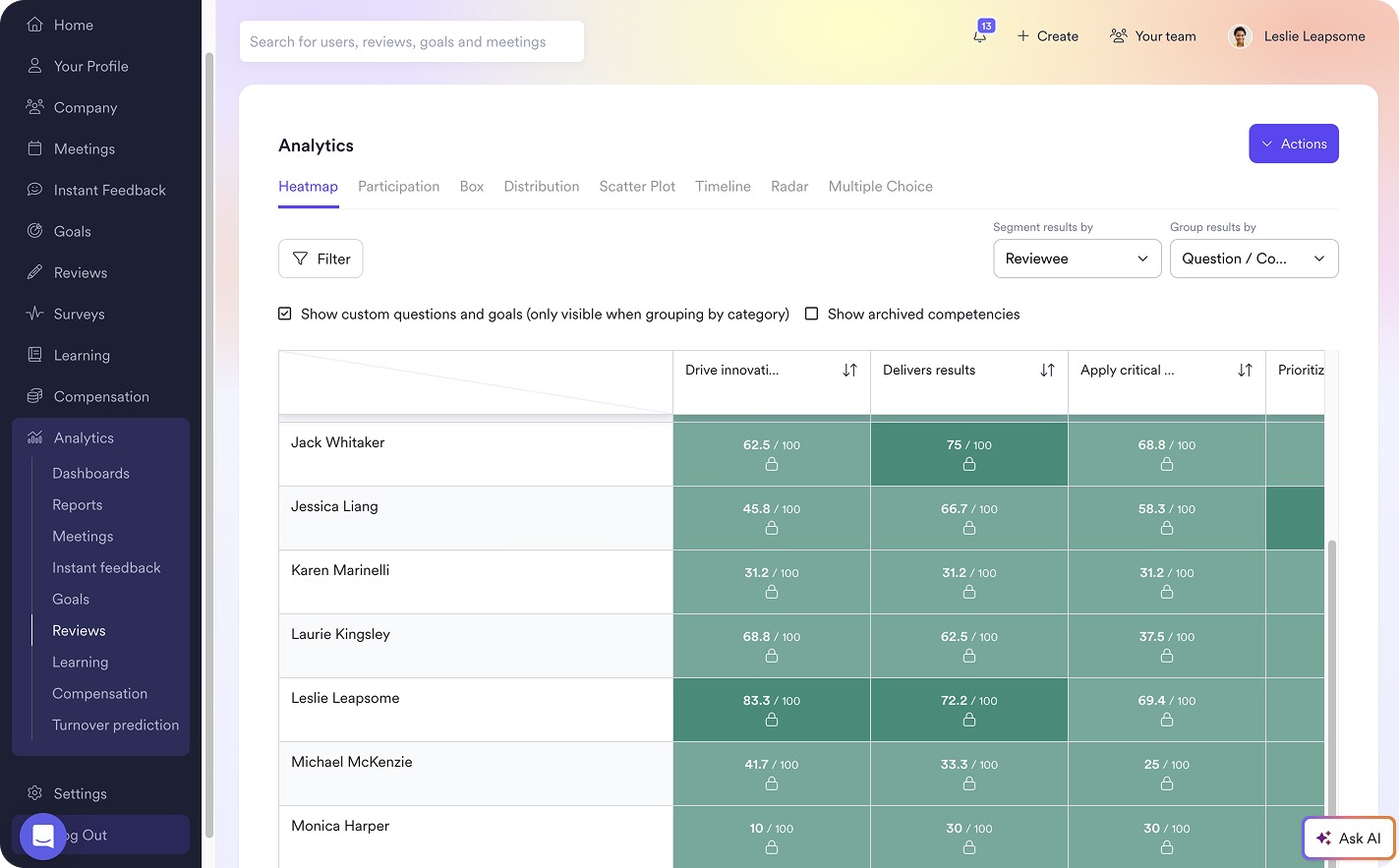
Um Wachstumsentscheidungen klarer zu machen, können HR-Verantwortliche Leapsomes HRIS und People-Management-Tools nutzen, um Kompetenzen mit Beförderungskriterien in einem gemeinsamen System zu verknüpfen. Mitarbeitende sehen, welche Verhaltensweisen in ihrer Rolle wirklich zählen und anhand welcher Nachweise Manager sie bewerten. Außerdem können sie Lernpfaden folgen, die ihnen helfen, Lücken zu schließen, statt Kurse abzuschließen, die nie mit KarrierewachstumCaption: Leapsome hilft Teams, Performance Reviews in großem Maßstab auszuwerten, um Schwachstellen zu erkennen und stärkere Kompetenzerwartungen aufzubauen.
🎬 Kompetenzen greifbar machen
Leapsome verknüpft Kompetenzerwartungen mit Feedback und Entwicklung, sodass Manager aus abstrakten Standards konkrete Wachstumsgespräche machen können.
👉 Entdeckt Performance Reviews
Wie baut ihr ein dynamisches Kompetenzmanagement-System auf?
„In einem jungen Unternehmen wollen oft 10 Leute dieselbe Beförderung. Deshalb führen wir ein Skill-Framework ein, das von Recruiting bis Rente reicht. Es zeigt, wo Mitarbeitende stehen, welche Lücken es gibt und wann sie wirklich bereit für den nächsten Schritt sind.“
Michael Latzik, Country Manager Germany at Deel
Ein dynamisches Kompetenzmanagement-System ist keine Matrix, die HR einmal im Jahr auffrischt. Es startet bei den Fähigkeiten, die das Unternehmen jetzt braucht, und hält diese Erwartungen kontinuierlich verbunden mit Performance und Entwicklung der Mitarbeitenden.
1. Kompetenzen an Unternehmens- und Personalzielen ausrichten
Eine Kompetenzbewertung muss die Arbeit unterstützen, die euer Unternehmen beim Wachsen leistet, statt nur eine Liste statischer, breiter Skills zu liefern. Wenn zum Beispiel ein wachsendes Sales-Team stärkere Enterprise-Discovery-Skills braucht oder ein Produktteam beim Vorstoß ins Upmarket-Segment ein schärferes Urteilsvermögen im Umgang mit Kund*innen benötigt, sollte sich die Kompetenzbewertung entsprechend aktualisieren.
Kompetenzen müssen außerdem die Personalplanung des Unternehmens widerspiegeln. Plant das Unternehmen, über interne Mobilität zu wachsen, müssen Mitarbeitende sehen, welche Skills sie für die nächste Stufe der Karriereleiter vorbereiten. Braucht das Unternehmen stärkere Manager, müssen Leadership-Kompetenzen zeigen, wie gutes Management aussieht, bevor jemand befördert wird.
2. Kompetenzen in Performance- und Entwicklungs-Workflows integrieren
Wenn eine Liste definierter Kompetenzen an einem Ort liegt, die Workflows für Managemententscheidungen aber woanders ablaufen, verlieren diese Kompetenzen ihr Potenzial für positive Veränderung. Ein starkes Kompetenzmanagement-System ist mit dem Employee Lifecycle verbunden, sodass jeder Schritt den nächsten natürlich prägt:
- Performance Reviews zeigen, wie gut Mitarbeitende eine Kompetenz zeigen
- Entwicklungspläne geben Lücken einen fokussierten nächsten Schritt
- Lernangebote unterstützen den Skill-Aufbau hinter diesem nächsten Schritt
3. Workforce-Analytics nutzen, um Kompetenzen kontinuierlich weiterzuentwickeln
Wenn Kompetenzdaten am selben Ort liegen wie Reviews und Entwicklungspläne, erkennt HR Muster, die ein statisches Framework übersehen würde.
Eine wiederkehrende Skill-Lücke im Team kann zum Beispiel zeigen, dass Mitarbeitende mehr Unterstützung bei der Entwicklung brauchen, und uneinheitliche Kompetenzbewertungen können darauf hindeuten, dass Manager klarere Kriterien brauchen. Mit der Zeit helfen diese Signale HR, das Modell aktiv zu verbessern, statt zu raten, wann ein Refresh fällig ist.
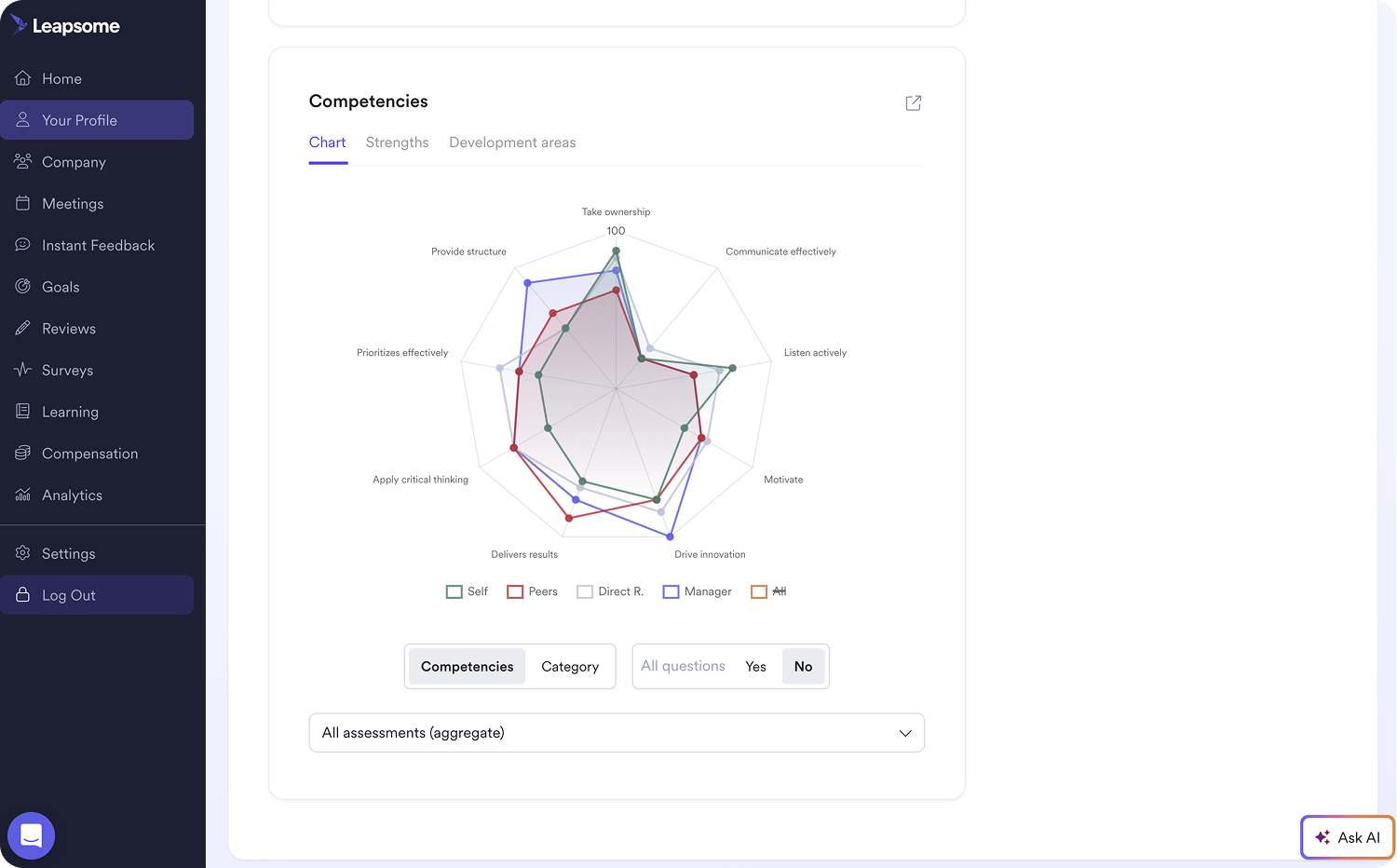
Plattformen wie Leapsome helfen HR-Teams zu erkennen, wann Kompetenzen die Arbeit noch unterstützen und wann sie sich ändern müssen. Indem Leapsome eure zentralisierten People-Daten sammelt und analysiert, deckt es Zusammenhänge auf, die euch sonst vielleicht entgangen wären.
🧩 Kompetenzen mit echtem Wachstum verbinden
Leapsomes Kompetenz-Features helfen HR-Teams, rollenspezifische Skills zu definieren und mit Mitarbeitenden-Feedback, Zielen und Lernpfaden zu verknüpfen.
👉 Entdeckt Kompetenzmodell
Kompetenzmanagement mit Leapsome operationalisieren
Viele Unternehmen behandeln Kompetenzmanagement wie ein Software-Problem. Sie kaufen ein neues Tool, laden ein veraltetes Framework hoch und erwarten, dass Manager dadurch plötzlich bessere Coaches werden. Aber wenn Erwartungen vage bleiben und HR-Teams Lücken im Employee Lifecycle nicht erkennen, macht ein isoliertes Tool selten einen sichtbaren Unterschied.
Deshalb bringt Leapsome Kompetenzmanagement in den Employee Lifecycle. Indem Kompetenzen mit allen relevanten Kontexten in einem HRIS- und People-Management-Tool verknüpft werden, müssen HR-Teams kein Framework mehr mühsam zusammenflicken und können endlich echtes Wachstum ihrer Mitarbeitenden fördern.
Mit Leapsome können Teams:
- Kompetenzdaten zentralisieren: Rollenerwartungen und Signale zur Mitarbeiterentwicklung in einem vernetzten HRIS- und Talent-Management-Tool bündeln.
- Kompetenzen mit Performance verknüpfen: Managern helfen, breite Erwartungen in klares, umsetzbares Feedback zu übersetzen.
- Fokussierte Entwicklung fördern: Entwicklungspläne passend zu Skill-Lücken erstellen, damit Mitarbeitende in ihrer Rolle glänzen können.
- Personalplanung verbessern: Mit Analytics erkennen, wo Fähigkeiten wachsen und wo das Unternehmen mehr Unterstützung braucht.
„Wir konnten alles, was wir wollten, in unsere Performance Reviews integrieren: unsere Struktur, Fragen, Antwortformate, Skala sowie unser Werte- und Kompetenzmodell. Es funktioniert einfach großartig!“ Marie Richter, VP of People at Billie
🏗️ Ein Kompetenzmanagement-System aufbauen, das mitwächst
Leapsome verknüpft Skill-Erwartungen mit Performance- und Entwicklungsdaten, damit HR-Teams das Wachstum der Mitarbeitenden im Gleichschritt mit dem Unternehmen halten können.
👉 Demo anfragen
FAQ
Was ist ein Kompetenzmodell?
Ein Kompetenzmodell definiert die Skills und Erwartungen, die Mitarbeitende für ihren Erfolg brauchen. Es gibt Managern eine gemeinsame Sprache für Performance und hilft Mitarbeitenden zu verstehen, was von ihnen erwartet wird und wie ihre Vorgesetzten Beförderungsentscheidungen treffen.
Wie lassen sich Mitarbeiterkompetenzen managen?
Ihr könnt Mitarbeiterkompetenzen managen, indem ihr definiert, wie Erfolg in jeder Rolle aussieht, und diese Erwartungen dann mit Entwicklungsplänen und Performance Reviews verknüpft. Statt unnötig lange Kompetenzlisten zu erstellen, hilft ein fokussiertes Framework Managern, diese Kompetenzen praktisch im Feedback zu nutzen und anzuwenden.



.png)


.jpg)