Wie Jobarchitektur klare Karrierewege schafft und Engagement steigert


Um die Aufstiegskriterien vieler Unternehmen liegt ein Schleier aus Unklarheit. Laut Gallup-Daten weiß weniger als die Hälfte der Mitarbeitenden, was ihre Führungskräfte von ihnen erwarten, um erfolgreich zu sein.*
Sobald euer Unternehmen ernsthaft wächst, wird es schwieriger, Prozesse konsistent zu halten, und Schwachstellen in euren Entwicklungs- und Beförderungsrichtlinien werden sichtbarer. Fehlt Teams eine gemeinsame Sprache für Erfolg, schleicht sich Subjektivität in Beförderungsentscheidungen ein, weil jede Führungskraft nach eigenen Maßstäben urteilt.
Was ihr braucht, ist eine Jobarchitektur, die Rollen und Karrierepfade klar definiert. Schauen wir uns an, wie eine gut durchdachte Jobarchitektur präzise Aufstiegskriterien schafft und das Mitarbeiterengagement steigert.
* Gallup, 2024
Was ist Jobarchitektur?
Eine Jobarchitektur ist ein Set aus Definitionen und Erwartungen, mit dem ihr die Karriereentwicklung im gesamten Unternehmen standardisiert. Statt darauf zu hoffen, dass jede Führungskraft zufällig dieselben Maßstäbe im Kopf hat, hält eure Jobarchitektur Rollen und Karrierepfade verbindlich fest. So sind alle auf demselben Stand, wie Aufstieg funktioniert.
Die Bausteine einer starken Jobarchitektur
Klassischerweise werden Rollen im Unternehmen anhand dieser übergeordneten Kriterien gruppiert:
- Jobfamilien: Statt euch durch Hunderte Einzeltitel zu arbeiten, bündelt ihr Rollen mit ähnlichen Skills und Aufgaben in Familien. Eine Marketing-Jobfamilie könnte zum Beispiel Content Specialist und Performance Marketing Manager umfassen, während eine Engineering-Jobfamilie Data Manager und Software Engineers einschließt.
- Joblevel: Joblevel legen fest, welche konkreten Anforderungen an einzelne Mitarbeitende gestellt werden. Rollen innerhalb einer Familie haben zwar ähnliche Funktionen, unterscheiden sich aber in Komplexität und Verantwortung je nach Level wie Associate, Manager oder Director.
- Karrierepfade: Klare Pfade zeigen, welche Wege Mitarbeitende typischerweise zwischen Leveln oder Fachrichtungen nehmen, damit sie sehen, wie Wachstum konkret aussieht.
Innerhalb dieser drei Kategorien sind Jobtitel die standardisierten Bezeichnungen für Rollen, Level und Funktionen, während Kompetenzen die konkreten Skills sind, die Mitarbeitende benötigen. Jobbeschreibungen legen Verantwortlichkeiten und Erwartungen im Detail fest. Die Vergütungsstruktur schließlich definiert die erwartete Gehaltsspanne für jede Position.
Ein praktisches Beispiel für Jobarchitektur
Die meisten Jobarchitektur-Pfade folgen derselben Logik: Der Verantwortungsbereich einer Rolle wächst schrittweise. Ein Marketing-Pfad könnte zum Beispiel diese Level durchlaufen:
- Marketing Associate
- Marketing Specialist
- Senior Marketing Specialist
- Marketing Manager
- Marketing Director
Marketing Associates auf Einstiegslevel konzentrieren sich zunächst darauf, Kampagnen im Team umzusetzen und die Content-Produktion zu unterstützen. Auf dem Weg zum Specialist und Senior Specialist übernehmen sie mehr Verantwortung für einzelne Kanäle und geben ihre Erfahrung teilweise schon in Mentorings weiter.
Auf Manager-Level sind sie bereit, kleine Teams zu führen und Kampagnenstrategien zu verantworten, während Directors den größten Verantwortungsbereich haben und ihre Arbeit oft an unternehmensweiten Zielen messen.
Ein klares Job-Framework schaffen
Es ist verlockend, die Jobarchitektur mit ausufernden Beschreibungen vollzustopfen, aber zu viel Komplexität lässt Karrierepfade verworren und unerreichbar wirken. Bleibt eure Jobarchitektur einfach, hat sie in der Praxis mehr Wert.
„Setzt auf Entwicklung statt auf Wachstum um jeden Preis. Schritt für Schritt statt Sprung. Investiert konstant und fördert Menschen bei ihren Stärken, damit sie besser performen können.“
Steve Browne, Chief People Officer bei LaRosa’s
So geht ihr vor:
- Rollen in Jobfamilien gruppieren: Beginnt damit, ähnliche Rollen den passenden Jobfamilien zuzuordnen, damit ihr die Arbeit für konsistente Bewertungen logisch strukturiert.
- Joblevel und Erwartungen definieren: Legt als Nächstes die Level innerhalb jeder Familie fest, damit alle wissen, wie Verantwortung und Entscheidungsbefugnis zunehmen.
- Kompetenzen und Karrierepfade abstimmen: Verknüpft abschließend jede Rolle und jedes Level mit klar definierten Kompetenzen, damit Mitarbeitende wissen, welche Skills und Verhaltensweisen sie entwickeln müssen.
Warum Jobarchitektur die Basis starker Talententwicklung ist
„Kompetenzmodelle sind keine Checklisten, sondern Wegweiser für Wachstum und Verantwortung. Sie helfen Führungskräften, effektiver zu coachen, und geben Mitarbeitenden ein klares Bild davon, wie Erfolg auf jedem Level aussieht. Wenn Erwartungen schriftlich festgehalten sind, verstehen alle, was gute Leistung bedeutet.“
Monica Sarkar, Co-Founder bei Purple Umbrella
Behandelt eure Jobarchitektur nicht als einmaliges Projekt, das ihr abhaken könnt. Seht sie stattdessen als gemeinsamen Erfolgsstandard, der Mitarbeitende und Führungskräfte bei Entscheidungen unterstützt, etwa zu:
- Performance Management: Rollendefinitionen und levelbasierte Kriterien geben den Ton für jährliche Performance Reviews vor, da sie klären, worauf Führungskräfte achten sollten und wie sie Mitarbeitende fair zur Verantwortung ziehen.
- Karriereentwicklung: Mitarbeitende haben feste Orientierungspunkte für ihre Leistung und Leitlinien, die ihnen zeigen, wie sie ihre Karriere vorantreiben. Ergänzt ihr das um Weiterbildungsinitiativen, steht ihr für Wachstum noch besser da. Laut LinkedIn werden Lern- und Entwicklungsangebote für jüngere Zielgruppen immer wichtiger: Über 30 % der Befragten zwischen 18–34 Jahren schätzen solche Angebote besonders.
- Nachfolgeplanung: Mit einer klaren Jobstruktur fällt es leichter, für Schlüsselrollen vorauszuplanen und potenzielle Nachfolger*innen frühzeitig zu erkennen.
Der beste Weg, Jobarchitektur in den Arbeitsalltag zu bringen, ist, Kompetenzen für jedes Joblevel in einem gemeinsamen System zu verknüpfen. Mit Leapsomes zentralisierten HRIS-Tools zeigt ihr mühelos, wie diese Kompetenzen mit eurer übergreifenden Jobarchitektur zusammenhängen, damit sich Mitarbeitende und Führungskräfte gleichermaßen auf Wachstumschancen konzentrieren können.
„Wir haben unsere Joblevel segmentiert, damit Führungskräfte und Mitarbeitende genau sehen, welche Skills für den nächsten Schritt nötig sind. Wachstum bedeutet nicht nur einen neuen Titel oder mehr Gehalt. Es bedeutet, neue Kompetenzen zu meistern, die euch für das Unternehmen wertvoller machen.“
Janelle Daugherty, Head of People and Culture bei Notion Health
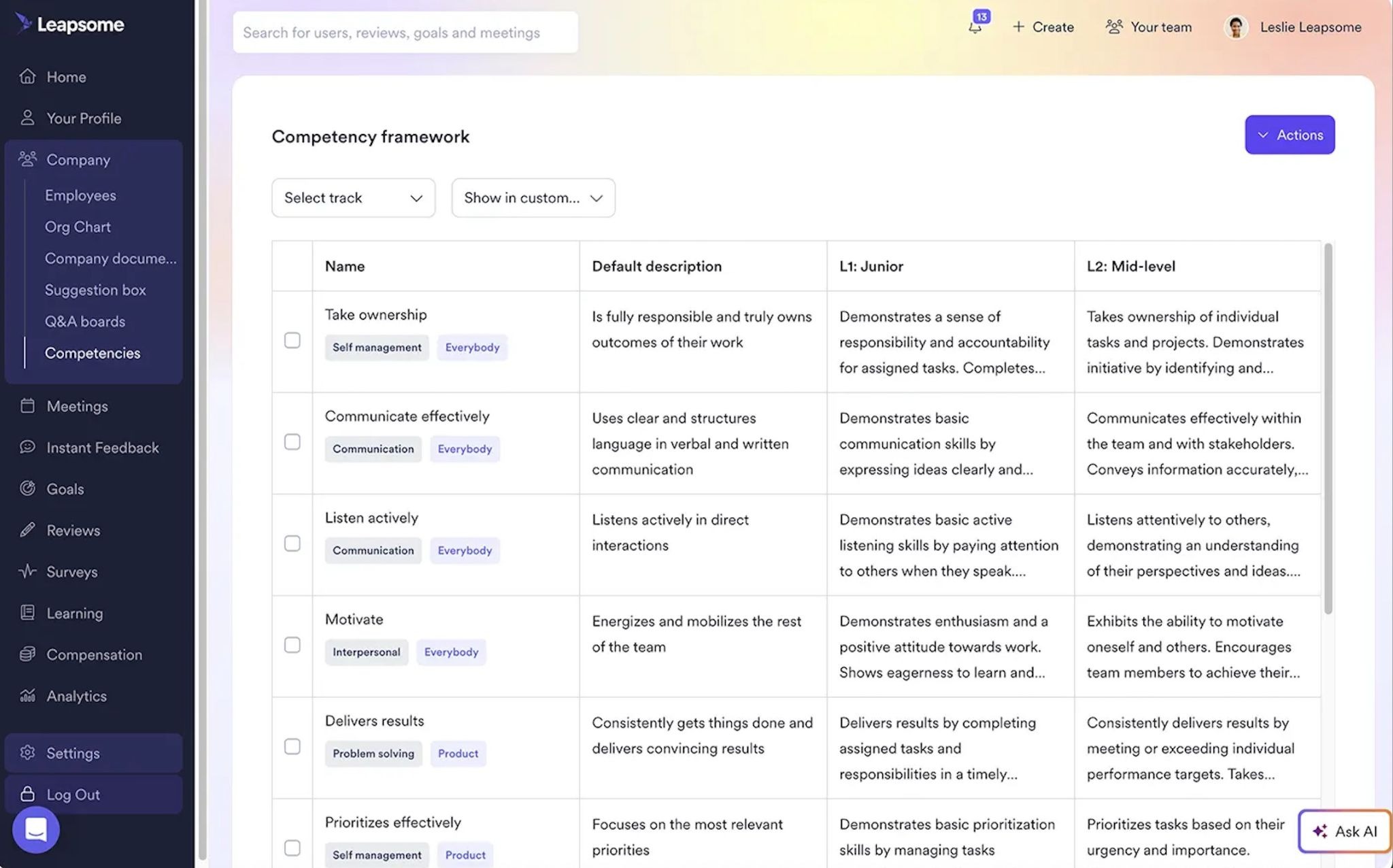
💪Entwicklung durch strukturierte Kompetenzen stärken
Leapsome verankert eure gewünschten Skills und Erwartungen in einem System, für konsistente Karriereentwicklung im großen Maßstab.
👉 Kompetenzmodell entdecken
Die versteckten Kosten unklarer Karrierearchitektur
„Es herrscht diese Dringlichkeit: Alle wollen wachsen, befördert werden, Ergebnisse sehen. Aber Wachstum ist nicht nur ein Titel oder eine Gehaltserhöhung. Es geht darum, einen Schritt zurückzutreten und zu verstehen, wofür wir eigentlich arbeiten.“
Luck Dookchitra, ehemalige VP of People and Culture bei Leapsome
Um ehrlich zu sein: Eine Jobarchitektur wird meist erst dann zur Priorität, wenn genug Mitarbeitende sich beschweren. Ob unangenehme Fragen zu unfairen Beförderungen oder Unmut über stagnierendes Wachstum: Solche Kritik lenkt die Aufmerksamkeit fast zwangsläufig auf klarer definierte Jobtitel.
Unternehmen, die nicht schnell genug reagieren, riskieren:
- Geringeres Mitarbeiterengagement: Es ist schwer, motiviert zu bleiben, wenn der Weg nach vorn unklar ist. Laut Gallup sind Mitarbeitende mit klaren Erwartungen fast viermal so engagiert wie jene, die nicht wissen, worauf sie hinarbeiten.
- Uneinheitliches Führungsverhalten: Ihr könnt nicht erwarten, dass alle Führungskräfte dieselbe Vorstellung von Erfolg haben, wenn ihr sie nie definiert habt. Ohne ein Framework als Grundlage bemerken Mitarbeitende mit ähnlicher Leistung oft ungleiche Erfahrungen und Feedback.
- Höheres Bindungsrisiko: Ohne klaren Beförderungsweg verliert ihr einen der stärksten Gründe, warum Mitarbeitende bleiben. Laut AOI bewerten 92 % der Mitarbeitenden Aufstiegschancen als „wichtig“ oder „sehr wichtig“.
Mitarbeitende erleben Jobarchitektur nicht über Dokumente, sondern lernen ihr Level über tägliches Feedback und Performance Reviews kennen. Leapsome gibt HR und Führungskräften die Tools an die Hand, um Level klar zu erklären und Wachstum zu fördern.
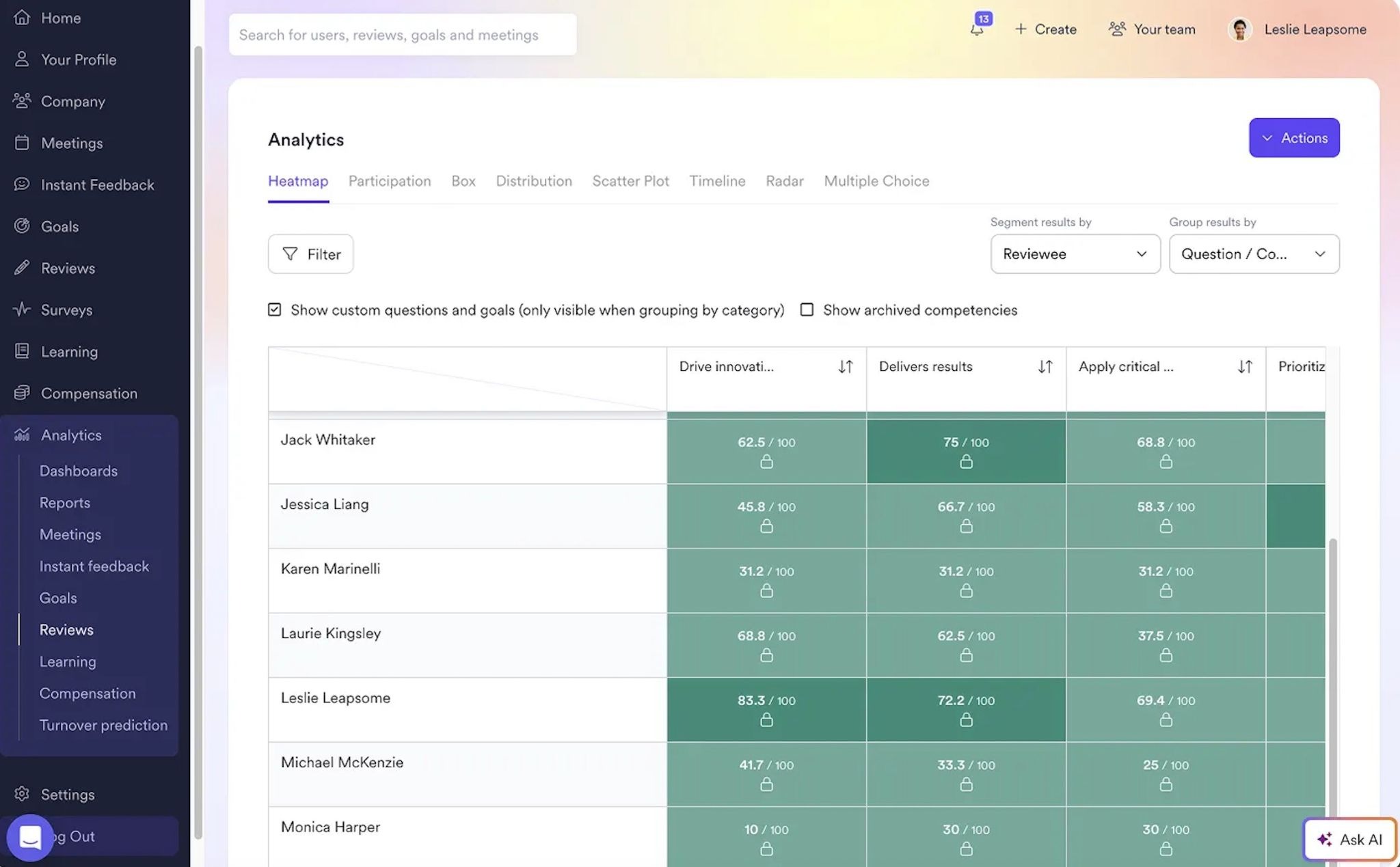
🌱Karriereentwicklung mit Performance verknüpfen
Leapsome verbindet Feedback- und Performance-Review-Daten mit eurer Jobarchitektur, für dynamischere berufliche Entwicklung.
👉 Performance Reviews entdecken
Wie Leapsome eure Jobarchitektur im Alltag umsetzbar macht
Eine Jobarchitektur schafft nur dann Mehrwert, wenn Mitarbeitende erkennen, wie sie in ihren Arbeitsalltag passt. Für viele Unternehmen bleibt es jedoch schwierig, solche Frameworks lebendig zu halten, weil sie weiterhin auf getrennte Systeme setzen. Fragmentierte Daten und isolierte Informationen geben Mitarbeitenden und Führungskräften nicht die Orientierung, die sie für Motivation und strategische Entscheidungen brauchen.
Leapsomes All-in-one-HRIS- und People-Management-Plattform schließt genau diese Wissenslücken. So fördert ihr berufliche Entwicklung fortlaufend:
- Die gewünschten Kompetenzen festlegen: Macht deutlich, welche Skills auf welchem Joblevel gefragt sind, damit Mitarbeitende wissen, worauf sie für eine Beförderung hinarbeiten.
- Performance Reviews zielgerichtet halten: Gebt Führungskräften den nötigen Kontext, etwa Peer-Feedback und Zielfortschritt, um faire Wachstumsgespräche zu führen.
- Eure Ziele und OKRs klären: Arbeitet in Echtzeit gemeinsam am Ziel-Tracking, damit alle dieselben Erwartungen teilen.
„Wenn Mitarbeitende wissen, dass Reviews wirklich zu Wachstum führen, fürchten sie sich nicht mehr davor, sondern investieren aktiv hinein. Verknüpft man Feedback mit konkreten Ergebnissen wie Gehalt, Beförderungen und Lernplänen, werden aus Performance-Gesprächen echte Momente der Stärkung.“ Monica Sarkar, Co-Founder bei Purple Umbrella
🤝Mitarbeitende mit klarerer Rollenstruktur zum Erfolg führen
Leapsome verbindet eure Jobarchitektur mit Kennzahlen wie OKRs und Performance Reviews, damit alle dieselben Erwartungen an Karrierepfade haben.
👉 Demo anfragen




.png)