Dry promotion: Risks, alternatives, and best practices


Dry promotions — giving an employee a new job title and a new set of responsibilities without a corresponding pay bump — are on the rise. In 2023, 30% of employers in the United States offered job titles as a reward for strong performance, as did 40% of large businesses.*
There are several common reasons employers offer dry promotions, from simple budget constraints to organizational restructuring. No matter why you may be looking into dry promotions, this guide covers when they make sense to implement and how to manage them through clear communication. But these promotions also impact trust, engagement, and retention — we’ll cover that, too.
* Pearl Meyer, 2024
What’s a dry promotion?
A dry promotion advances an employee to a new position with everything that comes with a traditional promotion, including a new job title and new or increased responsibilities, except for the salary increase.
How dry promotions work
Dry promotions work almost identically to traditional ones. A manager recommends an employee to promotion, higher-ups deliberate and approve, and the employee gets a shiny new title and updated responsibilities. The only difference is that the employee doesn’t get a corresponding pay raise.
Why organizations use dry promotions
Companies choose to offer dry promotions over traditional ones for a variety of reasons, including:
- Budget constraints: Sometimes employees are hungry for development, but there just isn’t any slack in the budget, meaning dry promotions are their best opportunity for growth.
- Recognition: Rewarding an employee with a new job title is one way to recognize high performance when a pay raise isn’t feasible. In a study published in Psychological Bulletin and reported on by Inc., 70% of office workers said they’d rather have a better job title than a pay increase.
- Retention: Dry promotions can be a budget-friendly way to incentivize employees to stick around, as promotions can improve employee retention rates.
How dry promotions impact outcomes
The clearest benefit of dry promotions is that they cost the employer almost nothing. At the same time, a heavier workload won’t offset a snazzy new title for every employee, and some workers may feel undervalued or even disrespected by the offer.
Another advantage of dry promotions is that they give organizations a way to test an employee’s readiness for a more impactful role before committing to a permanent raise. But creating that gap can also backfire: If the employee doesn’t thrive in their new position and that delayed compensation bump never comes through, they might end up feeling shortchanged.
How to talk about dry promotions without eroding trust
“Being as open as possible about how and why pay is determined will help build trust with your workforce.”
— Brian J. Hall, Albert H. Gordon Professor of Business Administration at Harvard Business School
Many employees evaluate a dry promotion based on whether it demonstrates a genuine commitment to their long-term growth. A key part of that demonstration is making it clear what exactly the promotion involves.
The following talking points can help clarify the decision for everyone.
Highlight the career advancement opportunity
“Growth isn’t just about giving you a new title or more money — it’s about mastering new competencies that make you more valuable to the business.”
— Janelle Daugherty, Head of People and Culture at Notion Health
Frame the promotion around what the employee stands to gain aside from a new title, such as skill development and a stronger case for a compensation bump in the future. Just make sure you actually deliver on those promises to avoid tanking trust.
Lay out measurable success expectations
Define what success looks like in the new role so expectations aren’t ambiguous. Use concrete criteria like specific KPIs instead of vague performance expectations like “show more initiative.” Tying those milestones to a timeline helps keep both sides accountable.
Discuss alternatives first
“When people say they’re good with change, they’re just lying to themselves. Internal resistance should be expected. The problem is we focus on resistance instead of opportunity. People just need context — we jump to execution instead of taking time to talk through the ‘why.’”
— Steve Browne, Chief People Officer at LaRosa’s
Before finalizing the decision, consider looping in the employee if there are smaller incentives you can offer, like some extra PTO or flexible work opportunities. This signals that you’re willing to financially commit to them, even if it doesn’t show up as a higher pay rate yet.
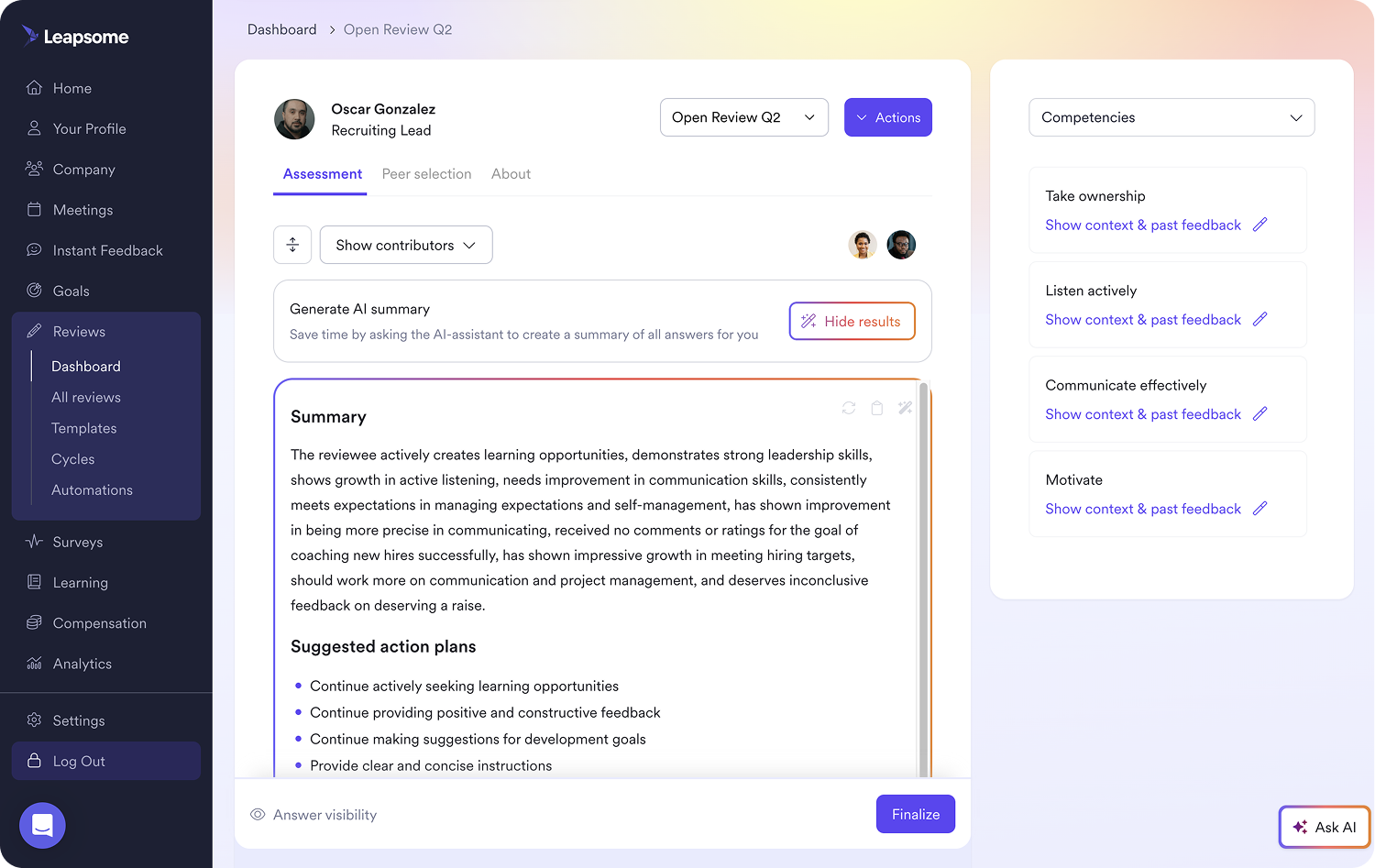
One way to work out which approach fits best is to ground these promotion decisions in all the employee’s performance. Pull data from performance reviews, manager feedback, and their goals before you sit down to make a decision. This way, you’ll also have the data you need to clearly explain what their progression looks like so far and where they might be headed next. Leapsome offers that visibility by default.
🧭 From reviews to roadmaps
Leapsome links performance reviews to goals and career development, so employees don’t have to guess how far along they are on the road to promotion.
👉 Explore Performance Reviews
Design a process to keep dry promotions fair and consistent
“There’s this urgency — everyone wants to grow, get promoted, see results. But growth isn’t just a title or a raise. It’s about stepping back and understanding what we’re solving for. We need to get back to the basics and give people the narrative behind what we do.”
— Luck Dookchitra, former VP of People and Culture at Leapsome
In 2023, ADP studied data from 1.2 million U.S. workers and found that 29% of them left their company within a month of their first promotion. According to ADP’s model, only 18% would have left if they hadn’t been promoted in the first place — meaning promotion increased departure risk by almost two-thirds. The takeaway: Promotions need to be handled with care. And without an associated pay bump, dry promotions are even more sensitive.
It takes a structured process, designed for fairness, consistency, and employee trust, to approach dry promotions with care. Here are some best practices for creating that framework.
Define when a dry promotion is appropriate
Set criteria for when it makes sense to consider a dry promotion long before the move is on the table. This promotes consistent decision-making that’s easy to explain, so it doesn’t look like you’re playing favorites among your workforce.
Monitor employee engagement after the promotion
Task managers with using surveys and check-ins to monitor engagement and morale in the period following a dry promotion. This helps you spot signs of disengagement or frustration early so you can address them before they lead to burnout.
Create a communication and review plan
Document all the details you communicate to the promoted employee and get specific about when you’ll revisit compensation. Without clear steps and timelines, employees can feel undervalued or misled if follow-ups are few and far between.
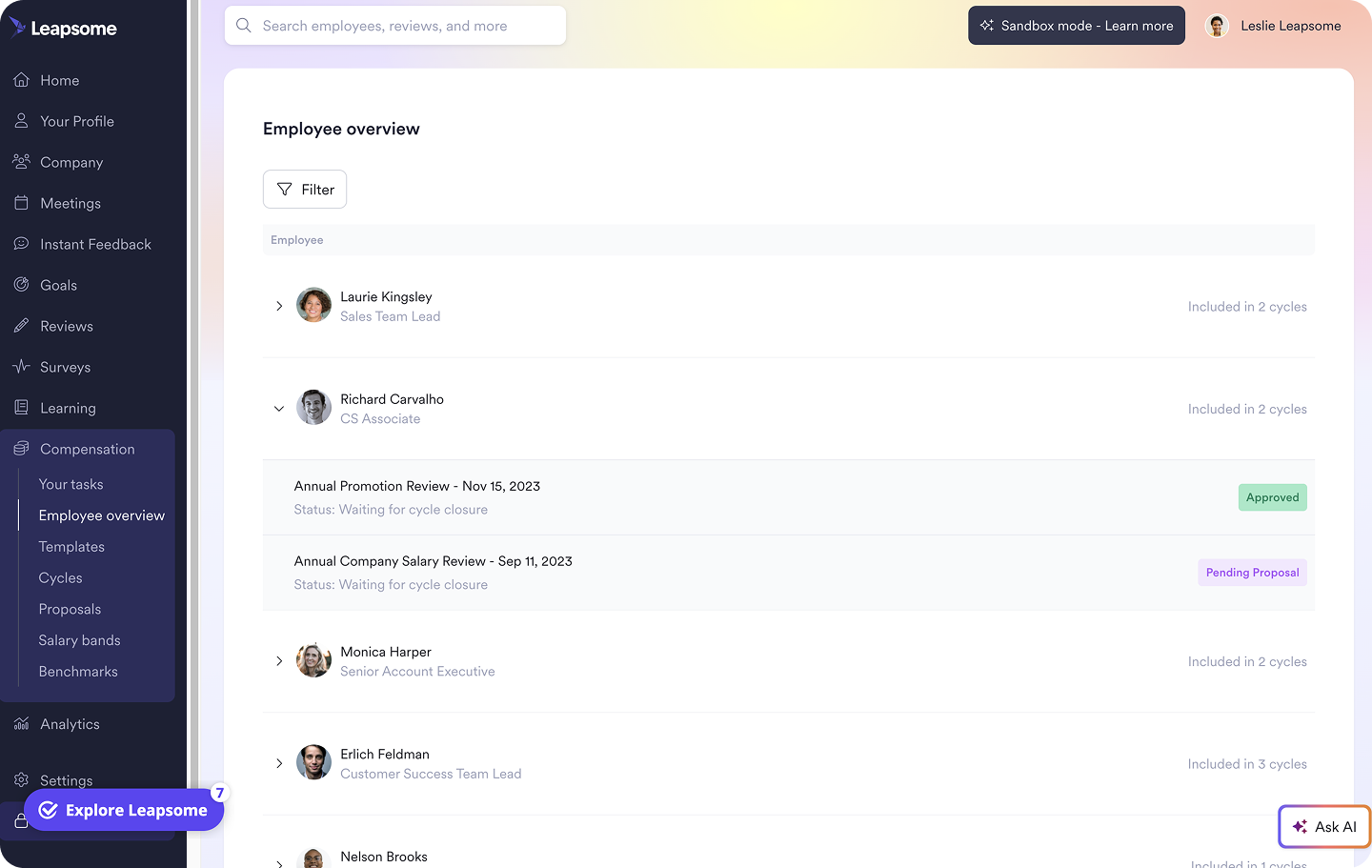
Communication can only be as clear as the data and insights it’s built on. That’s why Leapsome’s Compensation Management feature was designed around transparent pay decisions and promotion policies that don’t leave employees in the dark.
⚖️ Make every pay and promotion decision balanced
Leapsome centralizes and connects your people data so you can align rewards with performance and make fairer salary decisions.
👉 Explore Compensation Management
Anchor promotion decisions meaningfully with Leapsome
Employees are more likely to feel promotion decisions are justified when the plans behind those decisions are part of a transparent, structured process. When they’re not, promotion decisions can become inconsistent and career paths opaque. This can hurt employee trust and, over time, bring engagement and retention down with it.
Leapsome’s AI-powered people enablement platform combines performance management and career development with feedback and goal-setting to keep this sticky situation at bay. HR teams can make fairer promotion decisions through:
- Clearer career development conversations: Leapsome’s Competency Frameworks give employees and managers a shared view of what progress looks like.
- Goals aligned with employee growth: AI-powered Goals & OKRs set transparent milestones on the path to promotion.
- Improved employee engagement: Customizable Engagement Surveys gauge employee sentiment, so HR teams can get insight into the impact of dry promotions.
- More consistent manager decisions: Centralizing processes and data in a single platform means managers are working from the same playbook.
“Leapsome has saved us so much time. Managers are now more engaged in the review process for their team members. Previously, reviews were often put on the back burner, but now they know what’s coming up since they receive email notifications in advance. This gives them more flexibility to plan and complete reviews on time.” — Michelle Taylor, Human Resources Administrator at The Jerky Outlet
✅ Make every promotion make sense
Link compensation to performance and goals in Leapsome’s interconnected platform to keep every promotion decision consistent and justifiable.
👉 Request a demo
FAQ
What are the guidelines for promotions?
Effective promotion guidelines include:
- A transparent process that makes it easy to understand what goes into each decision
- Clear criteria for compensation choices, grounded in skills and performance
- Discussions with the employee to align promotions with their actual goals and needs
What’s employment promotion?
An employment promotion advances a worker to a higher role with a new title and increased or different responsibilities. It typically comes with a pay raise, though employers increasingly use dry promotions to recognize achievement or spur employee development with a tight budget.

.png)