Transition plan template: Guide for smooth role transitions


A transition plan outlines how responsibilities and role-specific knowledge move when an employee changes roles or leaves your organization. A transition plan template gives managers a clear structure for assigning responsibilities and setting a reliable handover timeline.
The challenge is capturing the knowledge that rarely appears on task lists. Teams need to understand why exceptions exist and how key relationships influence daily work. Without that context, successors must gain insight through trial and error. This problem is common, as 64% of IT managers said their organizations had experienced significant knowledge loss due to staff turnover.*
While a transition plan helps you document the basics, software is an invaluable tool to help maintain accurate context over time. Storing role information with employee records and using automated workflows ensures handover steps happen on schedule.
This guide gives you a free transition planning template and shows you how to build knowledge continuity into daily work.
* SHRM, 2025
What’s a transition plan?
A transition plan is a reusable document that helps you manage an employee’s move into or out of a role. It records role responsibilities and handover dates. It also assigns owners and tracks knowledge-transfer activities, giving managers a consistent process for each transition. This organizational visibility helps you prevent missed deadlines when responsibilities change hands.
An effective transition plan should include the following sections.
Employee and role information
Start with the employee’s name and current role. Record the transition type, such as a promotion or a resignation, and the effective date. You should also name the manager responsible for the plan and the successor, if you’ve selected one. If the successor remains unknown, assign an interim owner so important work doesn’t sit untouched while you recruit new employees.
Responsibilities and knowledge transfer
For each responsibility, record the frequency and next deadline. Link the relevant system or source documents, then identify the new owner.
Include key contacts with a short explanation of each relationship. Flag recurring exceptions that require a live handover. This overview helps the successor understand how to handle the role in practice.
Transition timeline and completion checklist
Break the handover into dated milestones, such as shadowing and access transfers. Assign an owner to each milestone and define what completion looks like.
Track required approvals and mark each item as work progresses. Add a review after the transition date so the manager confirms the successor can operate independently.
"Once a workflow is active, every step runs automatically. HR saves hours, nothing slips through the cracks, and new joiners feel supported without anyone chasing tasks." — Suraj Paneru, Customer Success Coach, Leapsome
📋 Build a transition plan your managers will use
We’ve created a free transition plan template to help you assign ownership and track every handover.
👉 Download the template now
Great transition plans transfer knowledge, not just work
Most transition plans answer one immediate question: Who owns the task list next? That can keep current projects moving forward, but a task list is a weak proxy for the full role. Deloitte found that 71% of employees operate outside their formal job scope, while only 24% report they do the same work as others with the same job title and level.
If you rely only on documented tasks, the successor may never learn nuances like who influences key decisions or how the team solves recurring problems. A better question to ask is: If this employee left today, what knowledge would nobody else know?
The answer shows what the task list leaves out. Use it to explain how key decisions get made and how important relationships shape daily work. Add lessons from past problems so the incoming employee can avoid repeating them.
Identify knowledge that isn't written down
Start with work that depends on memory or personal experience. Ask the outgoing employee to review their recent calendar and recurring meetings. Then look at the approvals colleagues regularly send them.
For each activity, ask what the documented process leaves out. For example, where do exceptions happen or which decisions require extra context? The answers will help you find responsibilities that colleagues may not realize this employee owns.
Prepare both the outgoing and incoming employee
SHRM notes that employees often struggle to explain in writing what they do and how they do it. So opt for a more personal transfer of knowledge. Once you identify the undocumented parts of the role, schedule time for a live handover.
Start with shadowing, and ask the outgoing employee to explain their reasoning as they complete a familiar task. Then reverse the roles. The incoming employee should complete a task while their colleague observes and corrects gaps.
Reserve time for questions after the first handover session. Employees often realize what they don’t understand only after trying the work themselves. Record those answers in the transition document template so future successors can use them.
"The new pre-boarding portal lets new employees access key documents and get to know their team before their first day — so the first-day experience feels smooth and connected."
— Aubrey Bryan, Senior Customer Success Associate, Leapsome
Connect transition planning to long-term talent development
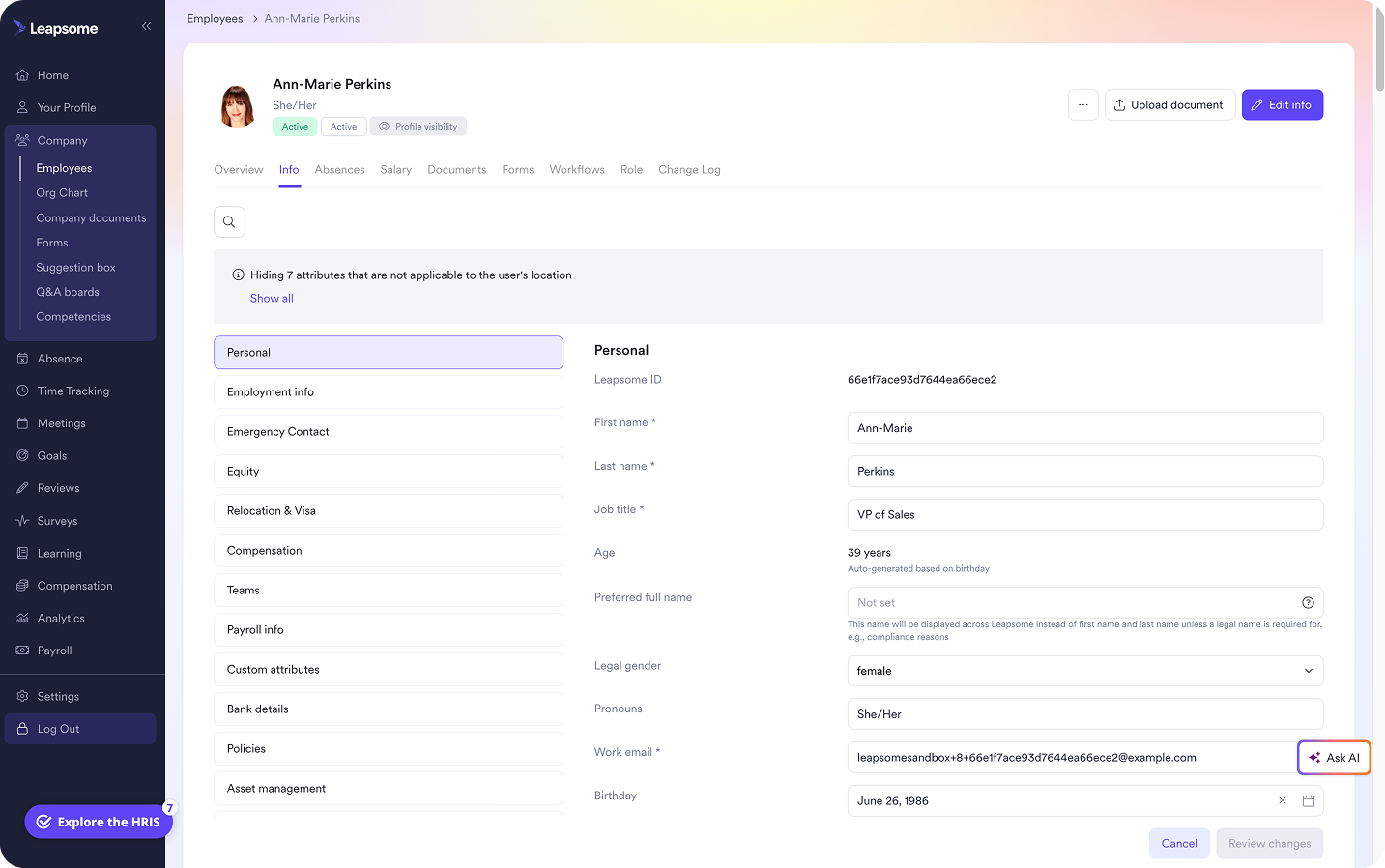
Every transition gives you a clearer view of the skills a role requires and the employees who could step into it next. Store those insights in a centralized HRIS alongside employee records.
Managers can compare role requirements with each employee’s experience. If someone shows potential, you can add the right learning opportunities to their development plan before a vacancy opens. The same information helps you build a stronger succession plan.
Instead of letting these insights stay buried in a one-off handover document, HR can connect them across your people systems.
"Workflows give you limitless opportunities to set up steps that need to be taken by various stakeholders — everything from onboarding and offboarding to contract changes can happen automatically."
— Suraj Paneru, Customer Success Coach, Leapsome
📚 Carry transition insights into talent planning
Leapsome helps organizations document employee knowledge, support career transitions, and strengthen succession planning through connected HR workflows.
👉 Explore Documents and E-Signatures
How to create an effective employee transition plan
A transition plan you start during an employee’s final week leaves little time to share the context a successor needs. At that point, the manager is balancing business deadlines, and the employee has limited time to transfer what they know.
Initiate the process as soon as you confirm the role or organizational change. Set expectations before the handover begins and keep communication open after the transition date.
Define transition goals and responsibilities
Start by identifying the tasks that can't be delayed and the decisions that can’t wait. Assign each responsibility to a named owner for the handover period. Then set the date when the permanent owner will take over.
Adjust the plan to the type of transition. A resignation may require temporary coverage until you hire a replacement. An internal promotion needs a firm cutoff date so the former team doesn’t continue relying on the outgoing employee.
Add each handover action to the plan with a clear deadline. Share it early so everyone can flag workload conflicts or approval gaps before they cause delays.
Document processes and transfer knowledge
Once the responsibilities are clear, turn the handover into a record the next person can use. Prioritize processes that could delay work if someone misses them. Explain what triggers each process and the result it should produce. Then link to the system or source document where the work happens.
Transfer this guidance to one reliable place and update anything that no longer reflects the current practice. This saves the incoming employee from piecing together conflicting instructions across old files.
Monitor progress after the transition
Keep the plan open after the transition date. Schedule one check-in during the first week and another after the incoming employee completes a full work cycle.
Ask what still feels unclear and review whether any tasks missed their due dates or any decisions stalled. If the follow-up exposes a missing step, update the original transition document. If it reveals a capability gap, add the relevant support to the employee’s career development plan.
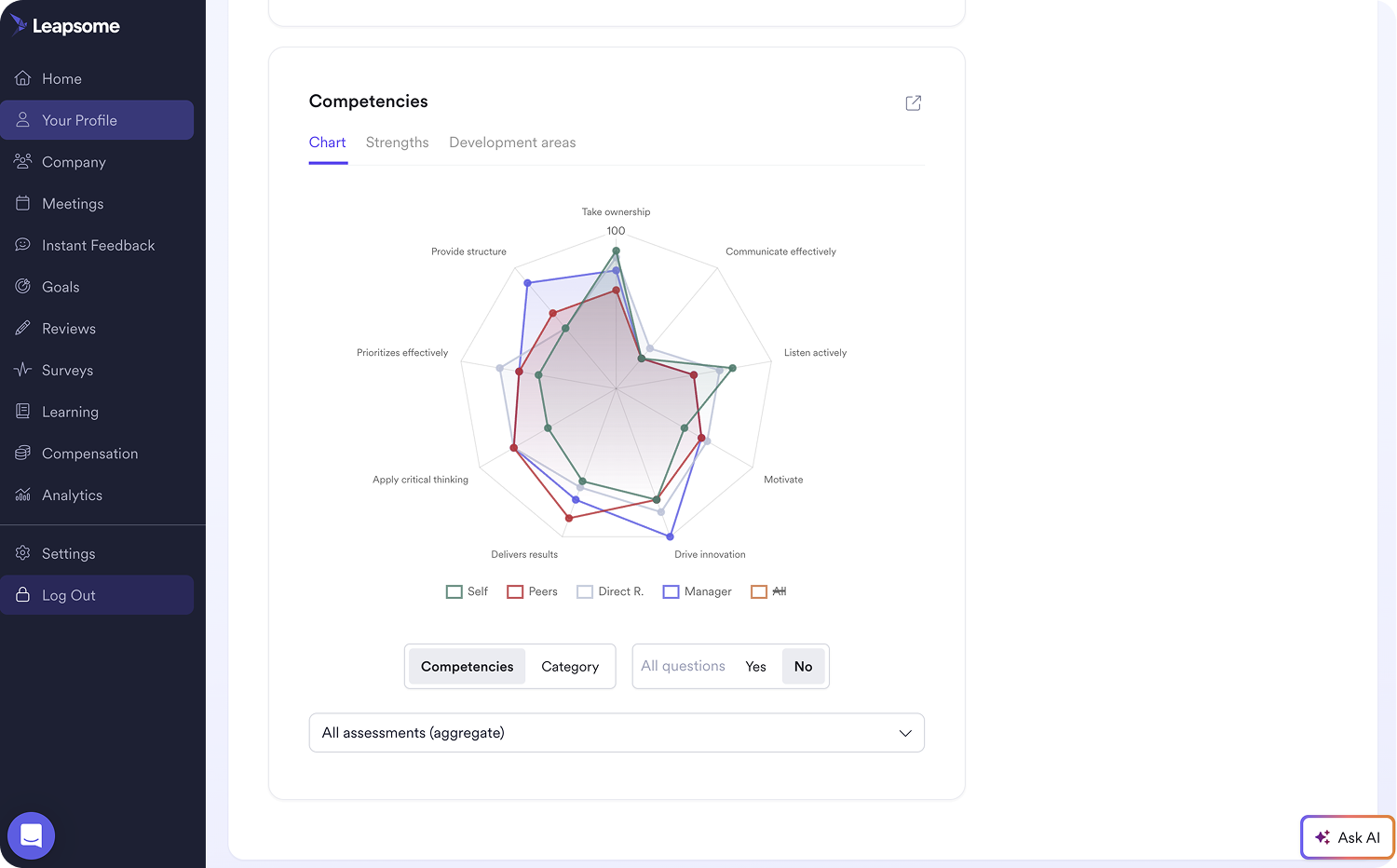
👀 See where your team needs more support
Leapsome’s Competency Framework shows which skills a team has and connects any gaps to relevant performance or learning paths.
👉 Explore Competency Framework
Support seamless employee transitions with Leapsome
Employee transitions often turn HR into handover police, chasing managers for documents and updates. A template brings structure to one transition, but lasting continuity requires a connected system that keeps role context available after the employee moves on.
Leapsome brings core HR and talent management into one AI-powered platform, helping HR teams:
- Centralize employee information: Keep role documents with current employee records so managers work from the same source.
- Standardize each handover: Use automated workflows to assign transition steps and send timely reminders.
- Prepare potential successors: Connect competency data with development plans to spot readiness gaps early.
- Support faster ramp-up: Build learning paths around the skills an employee needs in their new role.
“Leapsome did a really great job with performance, OKR, and feedback management — everything in one platform.” — Zhen Wang, People Servicer | Jina AI
🧠 Build knowledge continuity into every transition
Leapsome connects transition workflows to your people data, so managers keep critical context, and successors can get up to speed.
👉 Request a demo
FAQ
What is a job transition plan template?
A job or work transition plan template is a reusable document that guides a role change from the first handover decision through the final sign-off. It ensures responsibilities, deadlines, and knowledge-transfer steps stay organized throughout the transition.

.png)


Entdeckt unsere Plattform für HRIS, Performance und Entwicklung.