30-60-90-day onboarding plan: Transition hires from intro to impact


There comes a time when onboarding models that worked during the startup phase just don’t cut it anymore. As hiring needs increase, keeping your on-ramp consistent and personalized tends to stretch HR too thin.
But you can’t cut corners in this area, since onboarding has a huge impact on just about everything. Retention, engagement, time to productivity, long-term performance — according to data collected by SHRM, onboarding affects all of those metrics significantly. For example, employees who go through strong onboarding processes are 58% more likely to stay with the company for three or more years, and are also 50% more productive.*
To bring cohesion to onboarding, you’ll want to create a 30-60-90-day plan. This approach connects onboarding experiences with current expectations and long-term outcomes. In this article, we’ll explain what this type of plan is, why it’s a game changer for new hires, and how to get the ball rolling.
*SHRM, 2023
What’s a 30-60-90-day plan, and why does it matter?
A 30-60-90-day plan is a framework that outlines what a new hire should learn, accomplish, and contribute during a three-month onboarding period. Instead of throwing new hires into the deep end and hoping they’ll learn to swim, this plan provides clear priorities and success markers that help employees steadily build trust and confidence.
What a 30-60-90-day plan is not is a simple onboarding checklist or a static OKR template. The most effective onboarding plans provide wiggle room for management to adjust the parameters, depending on day-to-day needs and specific new hire situations. This collaboration between HR and management is the secret sauce that creates an impactful onboarding experience.
“Managers should be the frontline of care…Companies need to equip them with the right tools and communities so they can lead with confidence.”
– Luck Dookchitra, former VP of People and Culture at Leapsome
Benefits of a 30-60-90-day plan for new hires
“The purpose of an HR function is to create a people strategy that most effectively drives business goals. It starts with the business, then you build your people strategy from there.”
– Melanie Naranjo, Chief People Officer at Ethena
The overall goal of a 30-60-90-day plan is to provide the direction and support new hires need to confidently transition into their roles. When done right, that leads to outcomes like:
- Faster time to productivity: With clear expectations, new hires know how to reach full productivity ASAP. According to SHRM, strong onboarding can shave literal months off an employee’s time to productivity.
- Earlier visibility into performance gaps: The goals in a 30-60-90-day plan offer managers valuable checkpoints that help them address misunderstandings and issues promptly.
- Stronger alignment with long-term planning: Structured onboarding gives management a chance to evaluate each employee’s competencies, like problem-solving and adaptability, which creates benchmarks for ongoing development and succession planning.
How to write a 30-60-90-day plan that gets results
Now, let’s walk through what a strategy based on the 30-60-90-day rule should look like. Just keep in mind that this plan isn't meant to be rigid, and you’ll want to leave room for each manager to adjust their approach based on what they observe day to day.
First 30 days: Learning and context
“Busy doesn’t mean effective. True productivity starts with clarity on what success looks like and why it matters.”
– Priscila Bala, CEO at LifeLabs Learning
The first 30 days are about helping new hires establish a firm footing. Priorities include:
- Defining expectations: Tell employees exactly what they’ll learn and what they should be able to achieve by the end of each onboarding stage.
- Establishing support: Introduce new hires to the key tools they should rely on and the core group of coworkers they’ll need to collaborate with.
- Celebrating small wins: Give employees a chance to build confidence right away, with a few manageable tasks or early-stage projects.
Leapsome's Competency Framework can help at this stage by turning vague expectations into concrete, trackable goals. With Leapsome’s all-in-one HR dashboard, you can see each employee’s competencies and easily provide feedback.
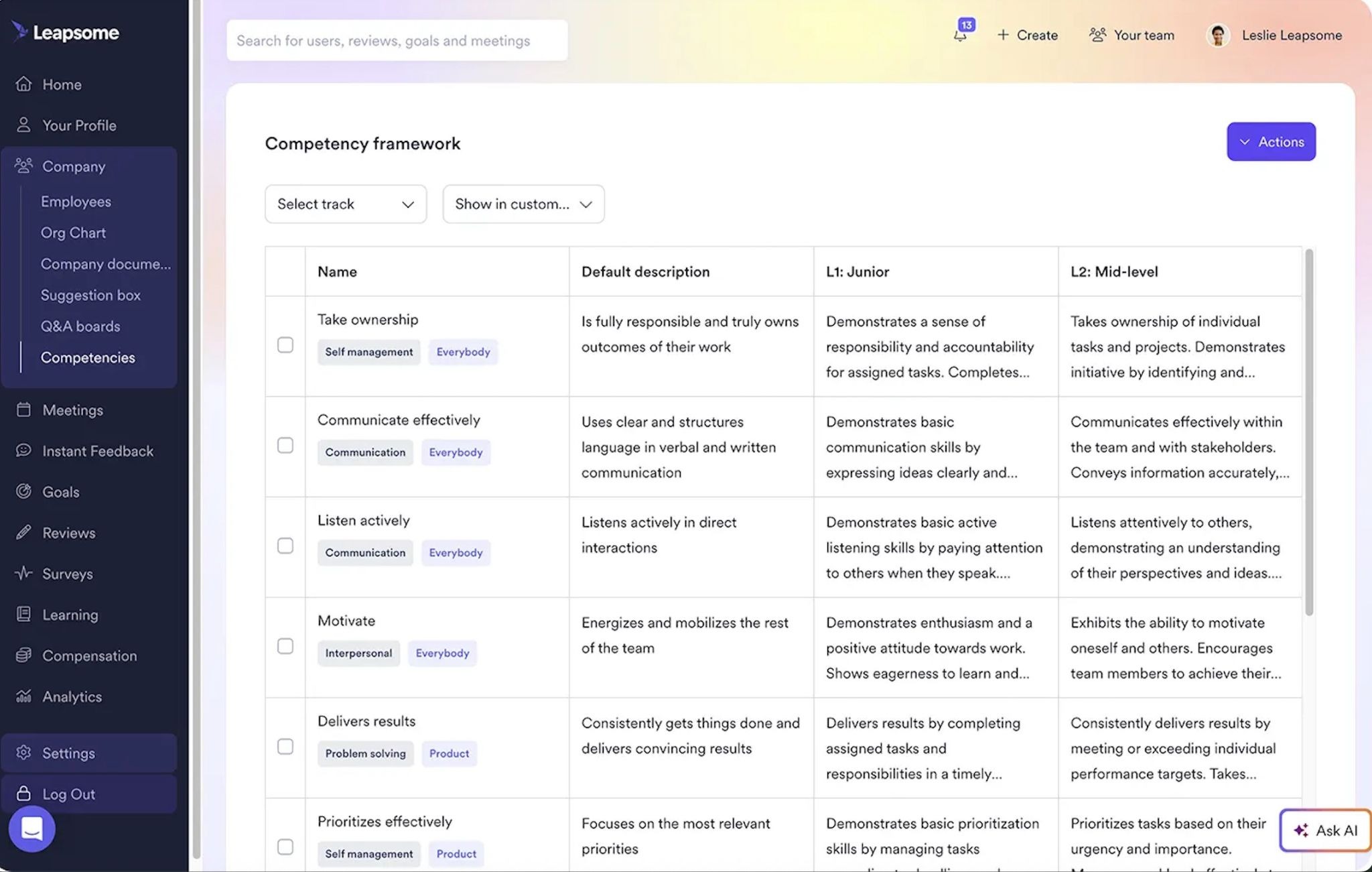
⭐ Set and share employee success metrics
Align your team’s competencies in a shared HRIS, so expectations stay fresh throughout your 30-60-90-day plan (and beyond).
👉 Explore Competency Framework
Next 60 days: Contribution and ownership
“We had a week-by-week plan, and it was crystal clear what to expect by week four. That transparency helped us drive internal change.”
– Siddharth Dhanuka, Head of Finance and Operations at SQUAKE
Over the next 60 days, operations should start to click for new hires. This stage is all about turning learning into tangible contributions, by:
- Setting short-term goals: Help employees see how their contributions contribute to the big picture. That means creating measurable goals that connect the employee’s work directly to team and organizational outcomes.
- Increasing responsibility: Gradually hand over core ownership and workflows to build accountability without overwhelming new hires.
- Establishing regular feedback rhythms: Schedule frequent check-ins focused on challenges and progress. This eases employees into a greater sense of independence, while prioritizing alignment issues.
Final 90-days: Impact and optimization
The last stage of the 30-60-90-day plan shifts focus from getting up to speed to truly owning the role. By the end of three months, new hires should feel comfortable delivering consistent results and working independently when needed.
To make that happen, you’ll want to:
- Clarify ownership and responsibilities: There should be no confusion over what “owning the role” means in practice. Also, the employee should know how to make their own decisions and when to seek advice or approval.
- Set a clear performance timeline: In the final weeks, set a few forward-facing goals that encourage the employee to think in terms of continuous improvement.
- Connect onboarding to future development and engagement: Use employee data from the first 90 days to tailor coaching programs and development conversations that support the employee and improve performance.
To keep employees moving forward after onboarding, check out Leapsome’s customizable performance reviews. This feature gives HR leaders and managers a centralized source of truth that connects real performance data with business goals.
“Our goal is to help HR admins future-proof their people strategies — the tool itself becomes part of the employee lifecycle.”
– Suraj Paneru, Customer Success Coach at Leapsome
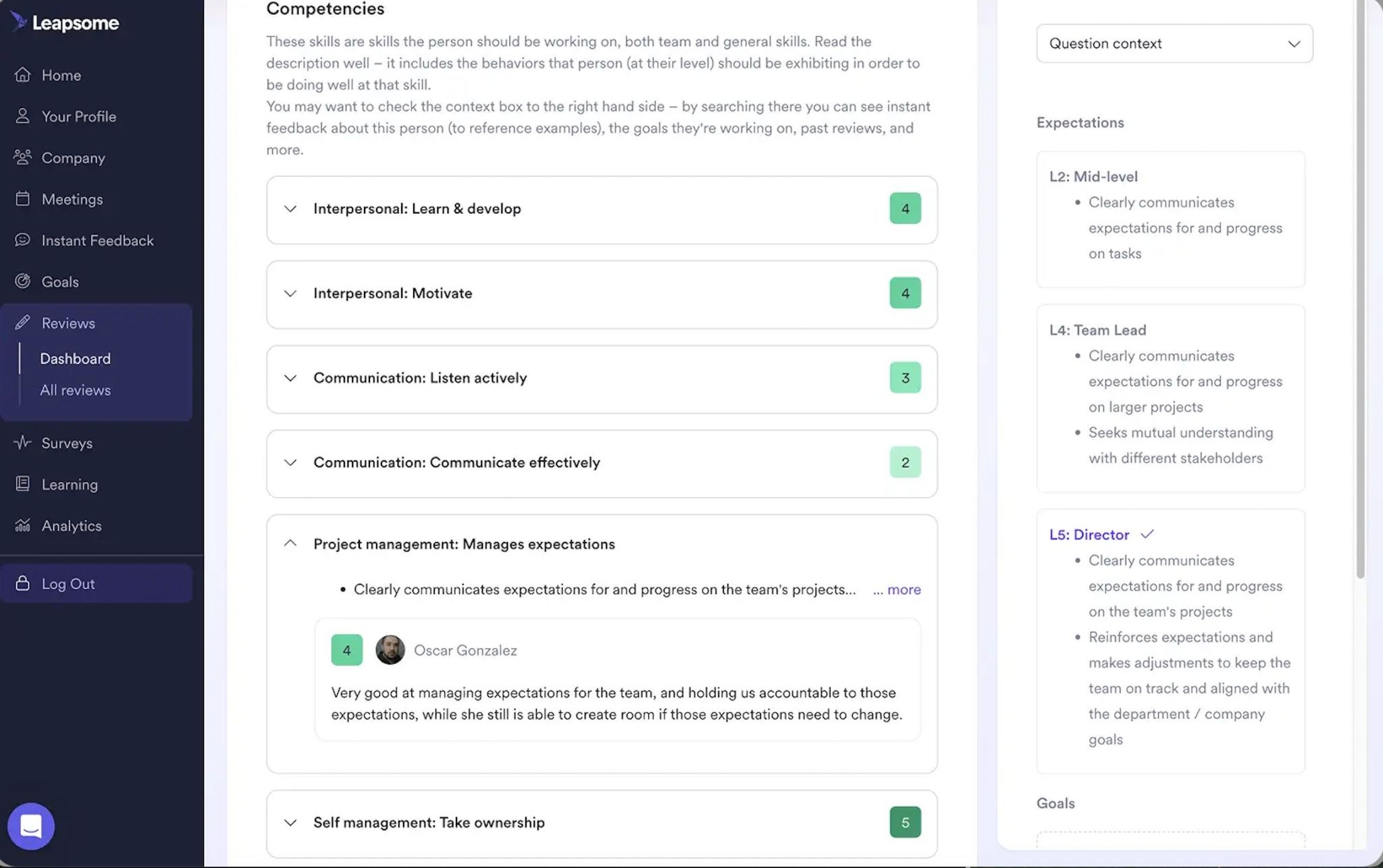
🔄 Turn onboarding insights into ongoing feedback
Use the data from your new 30-60-90-day onboarding process to inform more meaningful reviews that boost performance.
👉 Learn about Performance Reviews
How to implement your 30-60-90-day onboarding plan
30-60-90-day plans shine brightest when viewed as a central part of your employee development system, rather than just an onboarding tool. To make the most of this framework, you can:
- Create role-based templates: Tailor 30-60-90-day plan templates to each hire’s department and seniority level, ensuring consistency without forcing every role into the same rubric. A sales onboarding plan might include CRM training and pipeline shadowing, while a marketing plan focuses on brand guidelines and cross-functional collaboration.
- Define ownership for HR and management: Although HR owns the framework design, managers need to feel in control of day-to-day execution. Make it clear what aspects of the plan are set in stone and what’s flexible.
- Embed plans into existing workflows: Have managers reference 30-60-90-day plans during weekly 1:1s, and integrate key milestones into performance reviews.
A quick 30-60-90-day plan example
To illustrate what an effective 30-60-90-day plan looks like, let’s run through an example onboarding process for a newly hired marketing manager.
First 30 days
- Internalize current marketing strategies and get familiar with important channels
- Learn reporting workflows and other existing processes
- Build relationships with key stakeholders on sales, product, and leadership teams
Next 60 days
- Take ownership of a straightforward but active marketing campaign
- Establish regular reporting and feedback channels with stakeholders
- Launch a new campaign that aligns with business goals and KPIs
Last 90 days
- Fully own marketing campaigns and workflows
- Deliver measurable campaign results tied to KPIs
- Identify and plan an initiative to improve campaign performance
📋 Make your onboarding plans repeatable and scalable
Save time with Leapsome’s onboarding checklist template, and create consistent 30-60-90-day plans that adjust to changing business contexts.
👉 Download the checklist template
Turn your onboarding plan into a connected, scalable system with Leapsome
Even the best-laid 30-60-90-day plans can break under the pressure of daily realities. No matter how well thought-out your onboarding plan is, disconnected tools, unclear communication, and inconsistent tracking make it hard to create the momentum you’re after.
Leapsome bridges the gap between your onboarding plans and day-to-day practices by centralizing all employee data. With a shared HRIS that connects to your people strategy tools, you can easily track progress and keep expectations aligned. Leapsome’s all-in-one platform also helps you gather insights from this phase and link them to long-term goals and development initiatives.
“Ahead of implementing Leapsome, we had lots of different ways of managing the review process across the organization. Not only did we want to create one global approach to managing the review cycle consistently, but we also wanted a tool that supported our managers to have genuine conversations with their people.” – Holly Smith, Culture and Employee Experience Manager
📈Make onboarding measurable and actionable
Leapsome supports your manager-led onboarding process, by connecting the structure of your 30-60-90-day plan with ongoing feedback and performance tracking.
👉 Request a demo