Cloud-based HR software: How to choose the right tool


Cloud-based HR software centralizes employee data and supports HR processes through an online platform. Businesses use these systems to move away from manual work and legacy technology. ISG found that SaaS or hybrid cloud models now form the core of HR technology: 69% of organizations use these globally. And that number may reach 83% by the end of 2027.*
As cloud software becomes standard, more options enter the market, and it’s much harder to narrow your lens and find a tool that fits your company’s needs. HR leaders need to look beyond features and evaluate each system by how easily it lets them update people processes as a business grows. If a platform recreates the same disconnected workflows in a browser, it gives HR a newer interface for the same administrative burden.
The best platforms give HR the flexibility to manage organizational change without adding more work. This guide compares what cloud-based HR software is worth a look and how to choose one.
* ISG, 2025
What’s cloud-based HR software?
Cloud-based HR software is a digital tool hosted on remote servers that often uses a software-as-a-service model. The vendor manages the application and its infrastructure. HR teams access the system through a secure browser or mobile app.
A cloud-based HR system is typically integrated with a company’s tech stack and keeps information connected as employees move through the organization. Candidate details can flow into onboarding, while approved changes update employee records. That record can then inform later processes, such as performance reviews or development planning. Because everyone works from the same platform, HR spends less time resolving conflicting information and chasing details.
Best cloud-based HR software
Each platform below suits a different operating context. The right choice depends on how your workforce operates and how you expect the organization to change. Here are a few top choices.
Leapsome: Best for growing organizations that want core HR and talent development in one platform
Leapsome connects Employee Records with configurable Workflows, so HR can adjust processes as the organization grows. Its talent suite links performance with learning, keeping operational data and employee development in the same system.
Workday: Best for large organizations with complex global operations
Workday offers payroll processing in more than 60 countries, making it a strong fit for global workforces. This cloud-based HCM software packages talent management and analytics as dedicated products. Organizations can combine them with payroll and workforce management based on their needs and budget.
BambooHR: Best for small and midsize organizations that prioritize ease of use
BambooHR links employee data to prebuilt reporting tools. Its onboarding workflows help lean HR teams consistently manage new-hire tasks.
HiBob: Best for growing companies and internationally distributed organizations
HiBob connects core HR data with people analytics. Its workforce planning and compensation tools help HR teams manage headcount changes as the business expands.
Rippling: Best for organizations that want to manage HR and IT together
Rippling uses shared employee data across its HR and payroll products. Its IT tools can automate account access and device management when someone joins or leaves.
Deel: Best for organizations hiring employees and contractors internationally
Deel combines localized employment contracts with a global payroll engine. Its employee self-service tools and country-specific workflows support reliable onboarding and compliance across distributed teams.
Beyond digitizing HR: How cloud software enables change
Many organizations evaluate HR software against the processes they run today. They build a feature checklist, compare vendor prices, and choose the platform that checks the most boxes. That approach doesn’t factor in how quickly those requirements can change.
Gartner found that only 24% of HR employees say their HR function gets the maximum value from its technology. Cloud HR software creates limited value if it automates current tasks but forces HR to rebuild the entire process after every organizational change.
Before investing in an HR solution, ask yourself two questions: If your organization doubled in size or reorganized next year, would your HR software make the process easier? Or would it add more stressful items to your to-do list?
Let’s take a look at three areas that reveal whether a platform can keep up with a growing business.
Support evolving organizational structures
"We wanted to build an HR tool that grows with you, scales with you, and becomes your strategic partner every time you're growing your organization."
— Suraj Paneru, Customer Success Coach, Leapsome
When a company adds a department or team, HR must reflect the new structure across employee records and workflows. A system that requires record-by-record edits creates delays and leaves outdated relationships in place.
For example, changing an employee’s manager should automatically update the relevant permissions and approval paths. This simple test for a cloud-based HRIS reveals whether the platform can absorb a reorganization without creating months of cleanup work.
Reduce administrative friction as the business scales
"Workflows give you limitless opportunities to set up steps that need to be taken by various stakeholders — everything from onboarding and offboarding to contract changes can happen automatically."
— Suraj Paneru, Customer Success Coach, Leapsome
Administrative work grows quickly when every process depends on an HR handoff. Standardized workflows let managers consistently complete tedious processes, while employee self-service removes time-consuming email exchanges.
As headcount grows, routine requests multiply, so automated routing becomes essential. It sends each request to the right approver, while HR retains oversight and handles exceptions without processing every step.
Give leaders better visibility as complexity increases
"Many HR teams still struggle with the basics — too many disconnected tools, limited insights. That's why we built a truly people-first HRIS that unifies all employee data into one source of truth."
— Suraj Paneru, Customer Success Coach, Leapsome
As organizations add teams and reporting layers, direct observation no longer reveals every employee’s day-to-day experience. Disconnected systems compound the problem because HR must reconcile different data sources to produce a reliable report.
Integrated reporting shows how workforce changes connect with people, surfacing in metrics like performance and engagement. Leapsome creates this view by linking HRIS data with insights from its people enablement tools. Leaders can then review current workforce trends without asking HR to compile separate reports.
"Dashboards are custom reports you can build based on what matters most — headcount, growth, diversity, salary, anything, all visualized and ready to share."
— Sophie O'Donoghue, Customer Success Coach, Leapsome
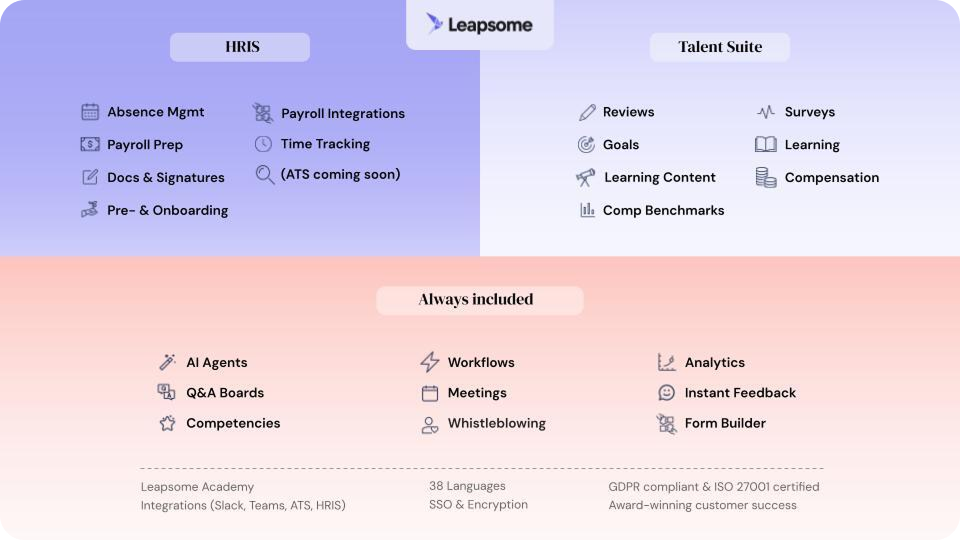
🏗️ Build HR processes that keep up with your growth
Leapsome’s HRIS uses adaptable workflows to help HR implement organizational changes without recreating processes in separate tools.
👉 Explore HRIS
How to choose the right cloud-based HR software
To find the right cloud-based HR software, determine your must-haves before you attend vendor demos, so a polished interface doesn’t blur your priorities. Define the workflows the platform must handle and the workforce questions it should answer. Then, test every shortlisted system against the same scenarios. Be sure to loop in everyone who will use it daily since HR can’t assess usability on their behalf.
Use these three checks to compare your options:
- Trace one employee journey across the platform: Ask each vendor to demonstrate the journey from onboarding to the first performance review. Check where employee information updates automatically. Then confirm whether the change reaches goals and learning assignments without duplicate entry.
- Run usability tests with everyday users: Invite an HR administrator and a people manager to complete common tasks in the system. Test how easily they can find information or approve a request. You should also ask the vendor to add a new location or employee type so you can see how the platform handles greater complexity.
- Bring your own reporting and automation use cases: Choose one report and one approval process that your team already uses. Ask the vendor to recreate both during the demo. Confirm HR can adjust the fields and rules without relying on technical support for routine changes.
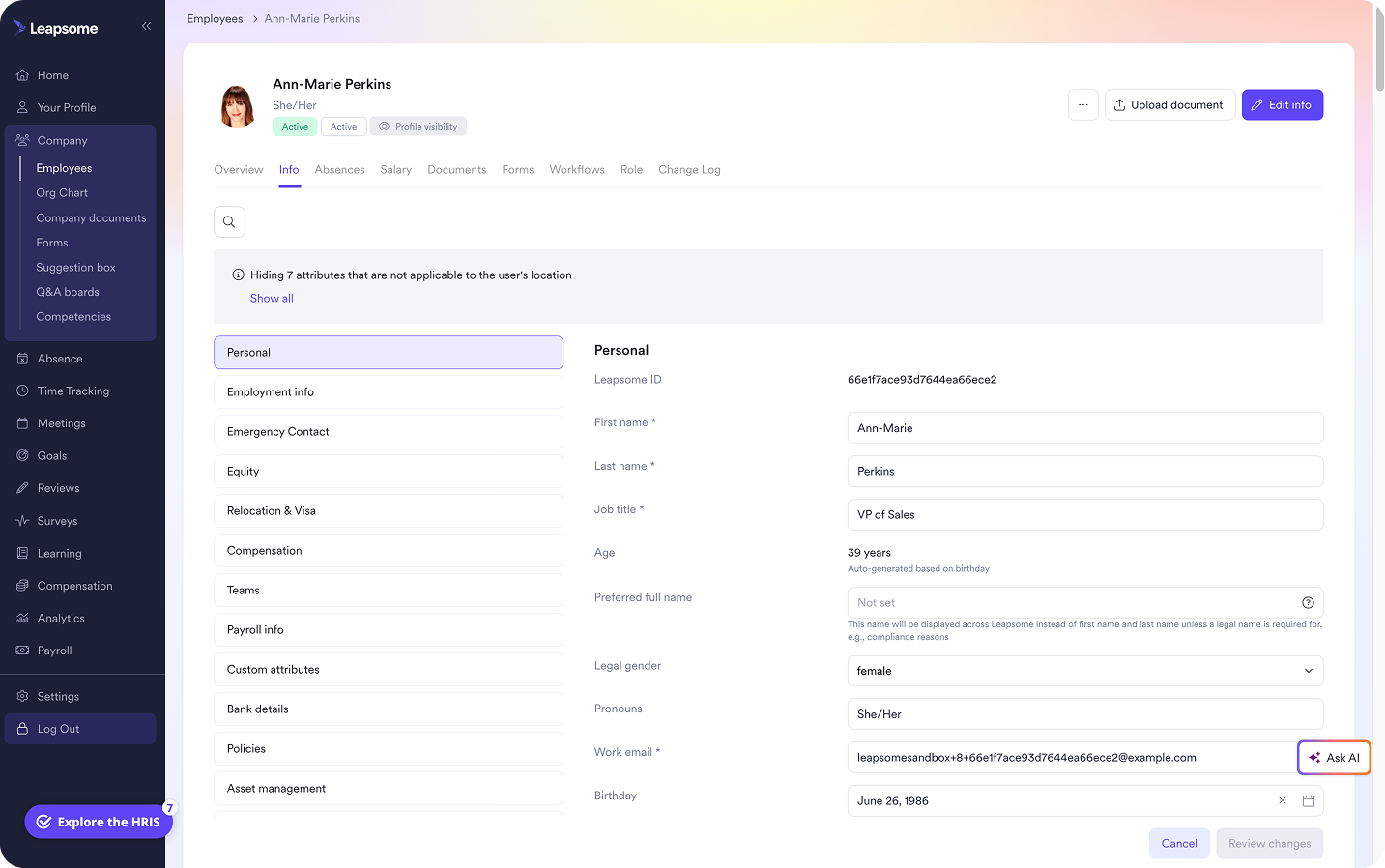
🔗 Create one reliable source of employee data
Leapsome’s Employee Records keep workforce information secure and current, so every connected HR process uses the same data.
👉 Explore Employee Records
Modernize HR operations with Leapsome’s cloud-based software
Moving HR to the cloud should make your next growth stage easier to manage. If HR still has to correct records across several systems and rebuild workflows by hand, the software investment preserves burdens instead of lightening them.
A strong platform keeps employee information connected across the lifecycle and gives HR control over workflows. It makes workforce insights available, intuitive, and shareable.
Leapsome brings these capabilities together by connecting HR and people enablement in a single system. With this all-in-one HRIS, teams can:
- Centralize HR operations: Employee Records keeps personal details and role history in one secure profile. Information instantly updates across connected systems and flows into review cycles.
- Automate administrative work: Workflows coordinate onboarding and pre-boarding and send tasks to the right stakeholders.
- Improve employee experience: Engagement Surveys help HR understand what employees need, and effective 1:1s give managers a better insight into possible blockers and career aspirations.
- Strengthen workforce visibility: Performance Reviews collect structured evidence about employee progress, while People Analytics turn connected workforce data into reports HR can act on.
- Support organizational growth: The Goals & OKRs connect individual goals with team priorities. HR can update that direction as business needs change.
“Leapsome did a really great job with performance, OKR, and feedback management — everything in one platform.” — Zhen Wang, People Servicer at Jina AI
📈 Choose HR software that scales with you
Leapsome centralizes employee records and automates HR workflows, giving your team connected workforce insights across the employee lifecycle.
👉 Request a demo
FAQ
What’s the best cloud-based software for human resource management?
The best cloud-based HR solution depends on your company size and the processes you need to connect. Consider your must-haves and bring a criteria list to each demo. The ideal platform should support reporting and automation, provide accurate employee visibility, and provide an approachable interface.

.png)


Entdeckt unsere Plattform für HRIS, Performance und Entwicklung.