The best HR software platforms for 2026
.png)

As organizations scale in 2026, the most effective HR setups connect core HR data, performance, engagement, and payroll in a single platform. This reduces complexity and dependence on multiple point solutions. Yet research shows most companies still rely on at least four separate HR tools.*
This guide compares the leading HR software platforms in 2026 and how they actually work in practice. We break down payroll-first systems, people enablement platforms, and all-in-one solutions, focusing on what matters most as teams grow. You’ll also find practical guidance on choosing software that can evolve with your organization, rather than locking you into rigid workflows that slow you down over time.
*Gartner, 2026
🏢 Unify your HR stack with Leapsome
Connect HRIS, performance, engagement, and learning in one flexible platform built for growing teams.
👉 Explore Leapsome HRIS
The best HR software platforms for 2026
With costs and demand on the rise in 2026, choosing an HRIS that effectively streamlines workflows is more crucial than ever. Our list of the best HR software platforms for 2026 will help you do just that.
The platforms included here represent a range of approaches to HR process automation, from payroll-centric tools to people enablement platforms that connect performance, engagement, and learning in a single system.
Disclaimer: Information in this article is accurate as of January 2026. Platform details were gathered from each vendor's public website and product documentation. HR software evolves quickly, so readers should confirm current features, pricing, and capabilities directly with vendors before making purchasing decisions.
{{TABLE}}
Leapsome
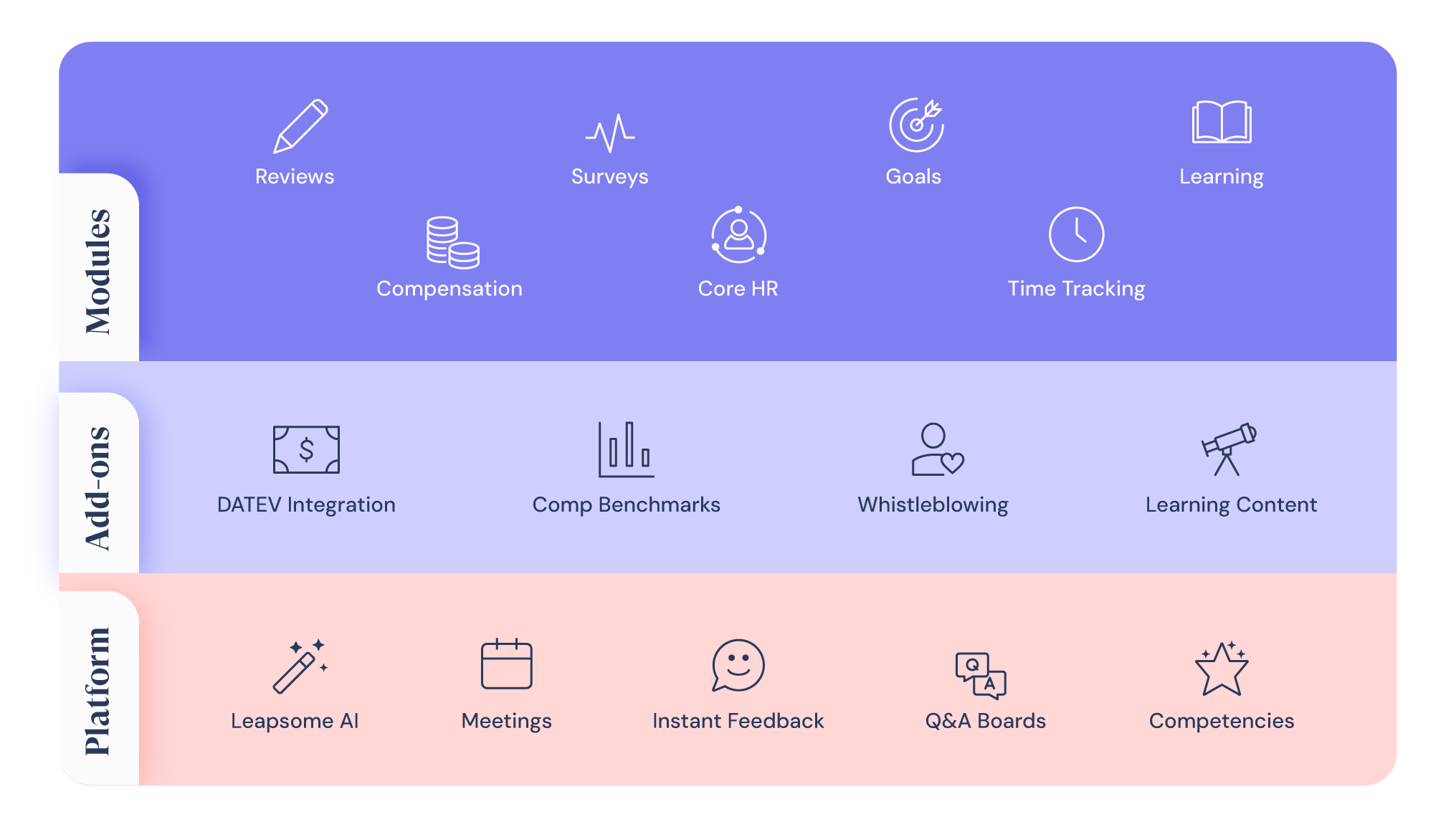
Leapsome is a people-first HRIS platform that connects core HR data with performance management, employee engagement, learning, and compensation within one flexible system. Unlike rigid platforms built primarily for HR admins, Leapsome is designed for everyone in the organization, from individual contributors to senior leaders.
The platform addresses a common challenge facing mid-sized and scaling companies: fragmented HR tools that create silos and manual work. Leapsome solves this problem by unifying critical HR data with performance reviews, goal-setting, engagement surveys, learning paths, and more, so teams are empowered to make informed decisions without constantly switching between systems or cleaning up disconnected data.
“People deserve better than transactional HR platforms. Work represents 80,000 hours of a person’s life. Companies need a platform that not only digitizes processes but also streamlines them. They need one that helps make those hours meaningful, energizing, and impactful.”
— Jenny Podewils, Co-CEO at Leapsome
Key features
- Centralized HRIS acting as a single source of truth
- Native performance management and continuous feedback
- OKRs and goal-setting connected to company priorities
- Employee engagement tools with real-time insights
- Learning management tied directly to development goals
- Compensation management connected to performance and market data
- People analytics across the full employee lifecycle
- AI in HR to support reviews, insights, and manager workflows
Pros
- Connects performance, engagement, learning, and compensation in one platform
- Highly configurable for different team structures and growth stages
- Strong analytics that don’t require manual data cleanup
Limitations
- May require integrations for region-specific payroll execution
Best for
Growing companies of all sizes that want a flexible, centralized HRIS platform to unify people data, automate workflows, and enable better decisions across the employee lifecycle.
"Employees can now find everything in one place—their data, absences, goals, and reviews. I don't have to explain which tool to use for what. It's all in Leapsome."
— Merilyn L, Senior People Operations Specialist, Bob W
⚡ See how Leapsome eliminates HR fragmentation
Discover how our people-first platform connects employee data across the full lifecycle.
👉 Book a demo
BambooHR
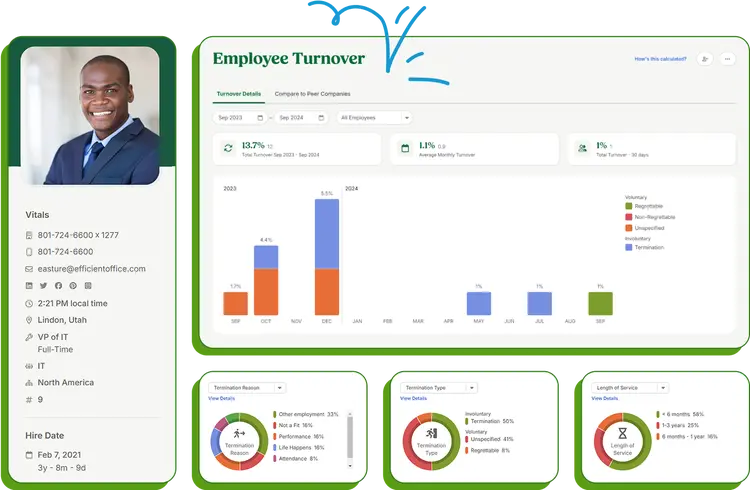
BambooHR is an HR software system designed for small and mid-sized businesses that need core HRIS functionality without complex enterprise features. The platform focuses on employee records management, time-off tracking, and basic performance tools, with an emphasis on ease of use and quick implementation.
BambooHR positions itself as an accessible entry point for companies moving away from spreadsheets or transitioning from manual HR processes. The platform includes employee self-service portals where team members can update personal information, request time off, and access company documents without HR intervention.
Key features
- Employee database and organizational chart management
- Time-off tracking and approval workflows
- Applicant tracking system for hiring and onboarding
- Basic performance management with customizable review templates
- Employee self-service portal for personal data updates
- Document storage and e-signature capabilities
- Standard HR reporting and compliance tools
Pros
- Intuitive interface that requires minimal training for HR teams and employees
- Quick setup and implementation compared to enterprise platforms
- Strong focus on core HRIS tasks without overwhelming feature bloat
- Responsive customer support with helpful onboarding resources
- Clean employee self-service experience that reduces administrative requests
- Solid applicant tracking integration for small recruiting teams
- Straightforward pricing structure with transparent tier options
Limitations
- Limited depth in performance management and employee development features
- Analytics capabilities are basic compared to platforms built for strategic HR decisions
- May require additional integrations as companies scale beyond foundational HR needs
Best for
Small to mid-sized businesses that need straightforward employee records management, time-off tracking, and basic performance tools without advanced analytics or extensive customization requirements.
Gusto
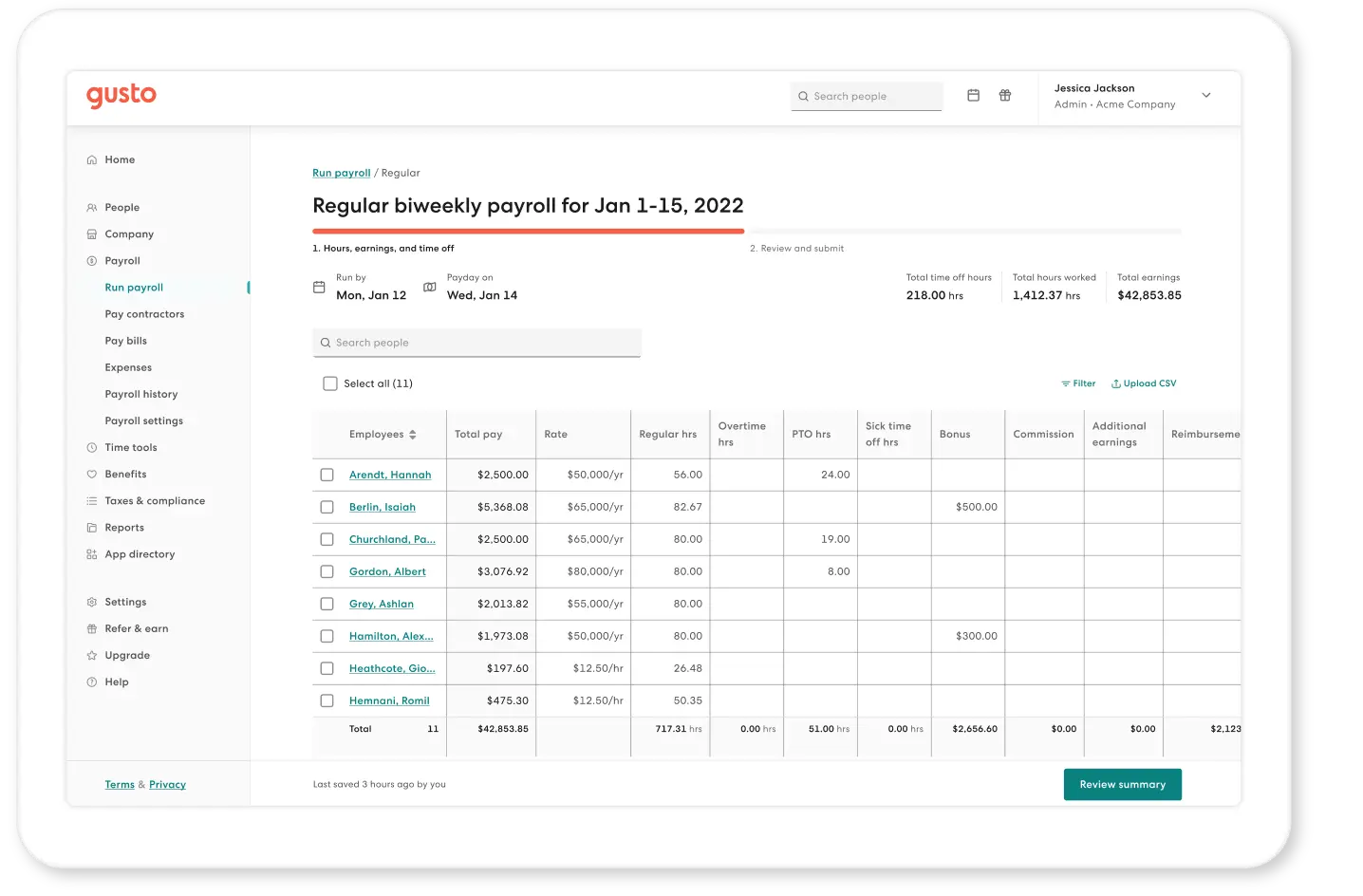
Gusto is a payroll processing and benefits administration platform designed primarily for small businesses and startups. The system focuses on making payroll, tax filing, and compliance straightforward for companies without dedicated finance teams.
Gusto automates payroll calculations, tax withholdings, and filing requirements across federal, state, and local jurisdictions. The platform also handles benefits enrollment, including health insurance, retirement plans, and commuter benefits, with built-in broker integrations to simplify vendor management.
Key features
- Full-service payroll processing with automatic tax calculations and filings
- Benefits administration including health insurance, 401(k), and flexible spending accounts
- Time tracking and PTO management
- Contractor payments with automated 1099 generation
- New hire reporting and onboarding workflows
- Employee self-service portal for pay stubs and tax documents
- Basic HR tools for employee records and compliance
Pros
- Exceptionally user-friendly payroll interface that simplifies complex tax calculations
- Automatic tax filing and compliance across multiple jurisdictions
- Strong benefits broker integrations that reduce administrative burden
- Transparent pricing with clear per-employee monthly costs
- Excellent customer support with responsive payroll specialists
- Seamless contractor payment processing alongside employee payroll
- Clean employee experience for accessing pay information and managing benefits
Limitations
- Limited performance management and employee development capabilities
- Analytics and reporting focus primarily on payroll data rather than strategic people insights
- May require additional tools as companies grow beyond payroll and benefits administration
Best for
Small businesses and startups that need reliable, easy-to-use payroll processing and benefits administration without the complexity of enterprise HR systems.
ADP Workforce Now
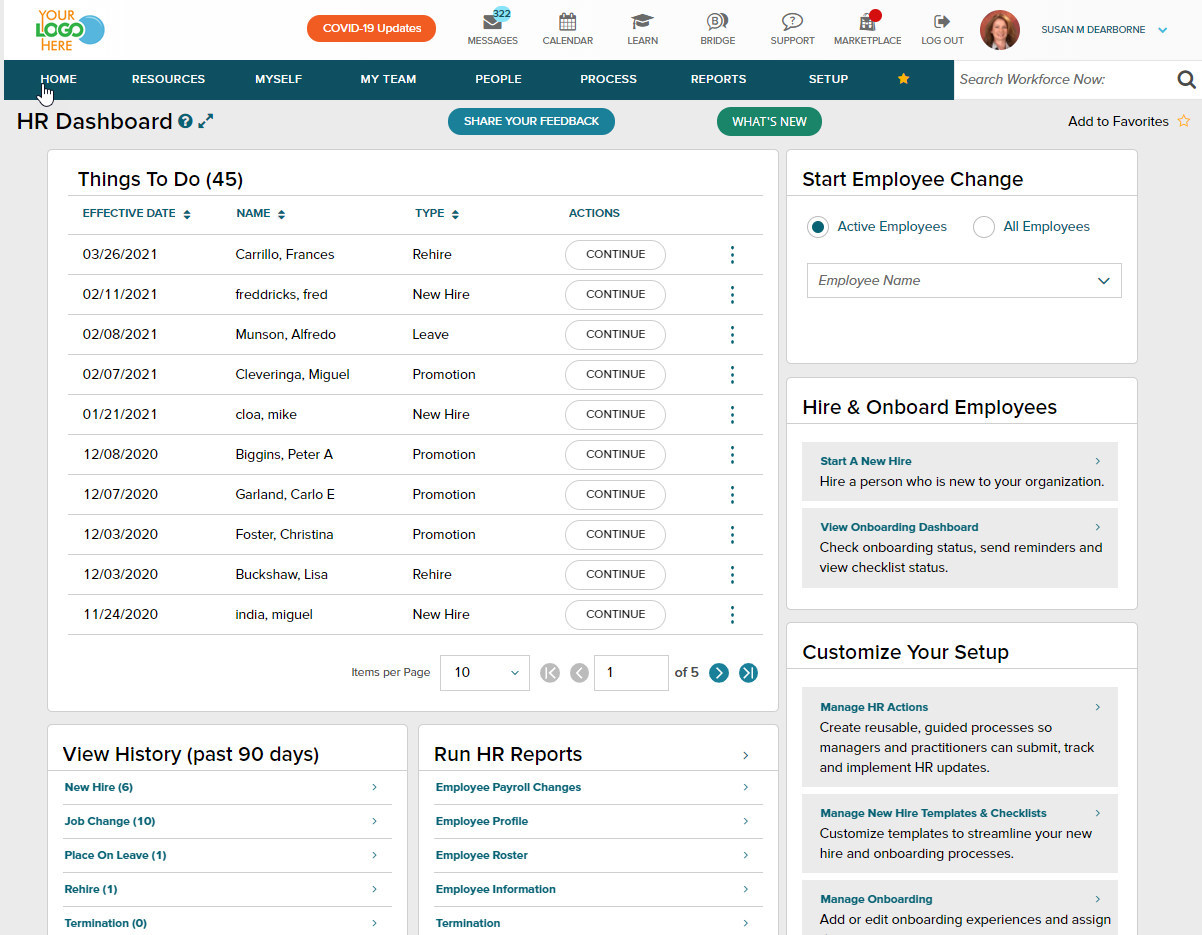
ADP Workforce Now is an enterprise HR software platform designed for mid-sized to large organizations that need comprehensive payroll, benefits, talent management, and compliance management capabilities. The system serves as a full-suite HCM solution with deep payroll processing expertise.
The platform targets companies that require robust compliance tools, multi-state or international payroll processing, and established vendor relationships for benefits and insurance. The platform includes modules for recruiting, onboarding, time tracking, performance management, and workforce analytics, though many organizations primarily use it for payroll execution and compliance.
Key features
- Enterprise-grade payroll processing with multi-state and international support
- Comprehensive benefits administration and carrier integrations
- Time and attendance tracking with scheduling capabilities
- Talent acquisition and applicant tracking tools
- Performance management and succession planning modules
- Compliance management with automatic regulatory updates
- Workforce analytics and standard reporting dashboards
Pros
- Extremely reliable payroll processing backed by ADP's compliance expertise
- Strong regulatory and tax compliance tools that automatically update with law changes
- Extensive benefits carrier network and broker relationships
- Dedicated support teams for implementation and ongoing account management
- Proven track record serving large, complex organizations across industries
- Robust audit trails and security features for enterprise compliance requirements
- Established vendor with deep market presence and stability
Limitations
- User interface feels dated compared to newer cloud-native platforms
- Configuration and customization often require vendor support rather than self-service
- Analytics capabilities lag behind platforms built for strategic people insights rather than payroll execution
Best for
Mid-sized to large enterprises that prioritize payroll accuracy, regulatory compliance, and established vendor relationships over modern user experience or advanced people analytics.
Workday
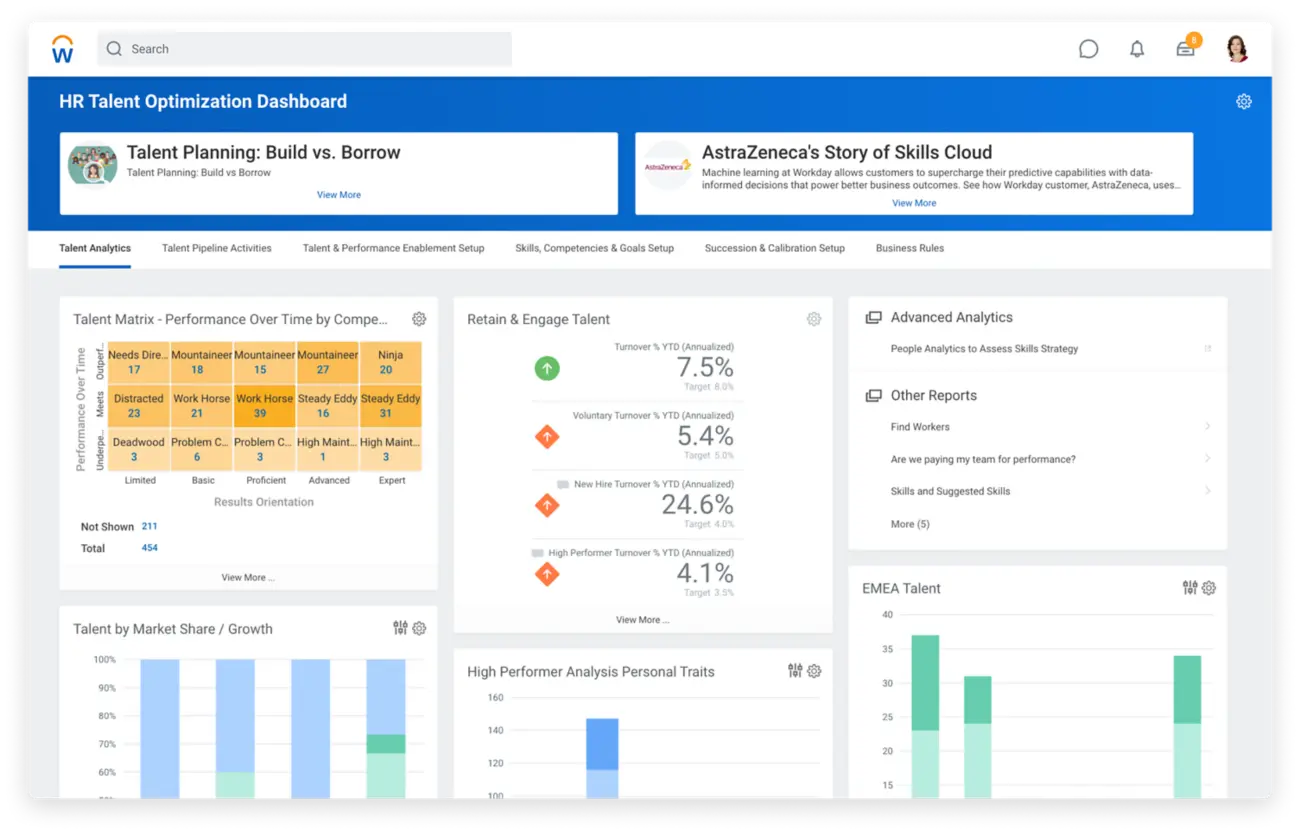
Workday is an enterprise HR platform designed for large organizations that need comprehensive human capital management, financial management, and workforce analytics in a single cloud-based system. The platform is built for complex organizational structures with global operations, multiple business units, and sophisticated reporting requirements.
Workday targets enterprises that view HR technology as strategic infrastructure rather than operational tooling. The system includes modules for core HR, payroll, talent management, workforce planning, and learning, with particular strength in workforce analytics and reporting capabilities that connect people data with financial planning and business outcomes.
Key features
- Unified enterprise HR platform with core HCM and financial management
- Global payroll capabilities with support for multiple countries and currencies
- Talent management suite, including recruiting, performance, and succession planning
- Advanced workforce analytics and planning tools
- Learning management with skills tracking and development paths
- Compensation planning with market data integrations
- Real-time reporting and configurable dashboards
Pros
- Powerful workforce analytics that connect people data with business and financial metrics
- Built for global operations with strong multi-country and multi-currency support
- Highly scalable architecture designed for enterprise complexity and data volume
- Strong security, compliance, and audit capabilities for regulated industries
- Regular platform updates delivered automatically without disruptive upgrades
- Sophisticated organizational management tools for complex reporting structures
- Extensive ecosystem of consultants and implementation partners
Limitations
- Significant implementation timeline and resource investment required
- Pricing structure positions the platform out of reach for most mid-sized companies
- Complexity can make simple configuration changes difficult without specialized training
Best for
Large enterprises with global operations, complex organizational structures, and the resources to implement and maintain an enterprise-grade HCM platform.
Personio
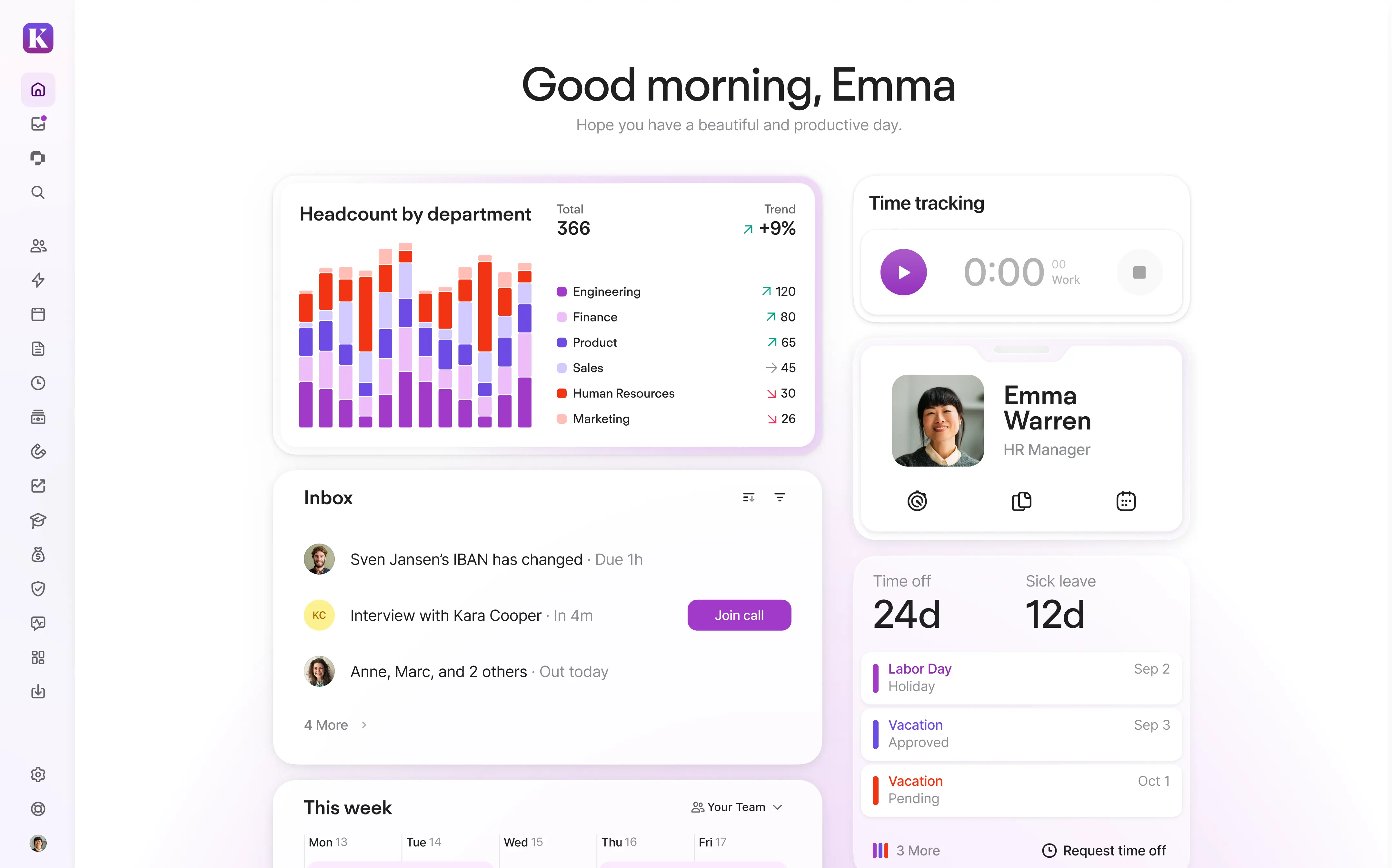
Personio is an HR software platform designed for small and mid-sized businesses in Europe, with particular strength in Germany, the UK, and other European markets. The system combines core HRIS functionality with recruiting, payroll preparation, and time tracking in a single platform built specifically for European labor laws and compliance requirements.
Personio positions itself as an all-in-one HR solution for companies that are outgrowing spreadsheets but don't need enterprise-scale complexity. The platform includes employee records management, applicant tracking, onboarding workflows, time-off management, and HR reporting tools designed around European data protection regulations and employment standards.
Key features
- Core HRIS with employee database and organizational management
- Applicant tracking system with customizable hiring workflows
- Payroll preparation tools with integrations to European payroll providers
- Time tracking and attendance management
- Performance management with review cycles and feedback tools
- Document management with e-signature capabilities
- HR reporting with compliance-focused templates
Pros
- Built specifically for European labor laws, data protection requirements, and employment regulations
- Clean, modern interface that emphasizes ease of use for HR teams and employees
- Strong applicant tracking and recruiting tools integrated with employee data
- Solid time tracking and absence management tailored to European standards
- Responsive customer support with regional expertise
- Payroll preparation tools that integrate with local payroll providers across Europe
- Straightforward pricing structure designed for growing SMBs
Limitations
- Limited presence and feature depth outside of European markets
- Performance management and analytics capabilities are functional but less advanced than specialized platforms
- May require additional integrations as companies develop more sophisticated people enablement strategies
Best for
Small to mid-sized businesses in Europe that need an all-in-one HR platform built around European compliance requirements.
HiBob
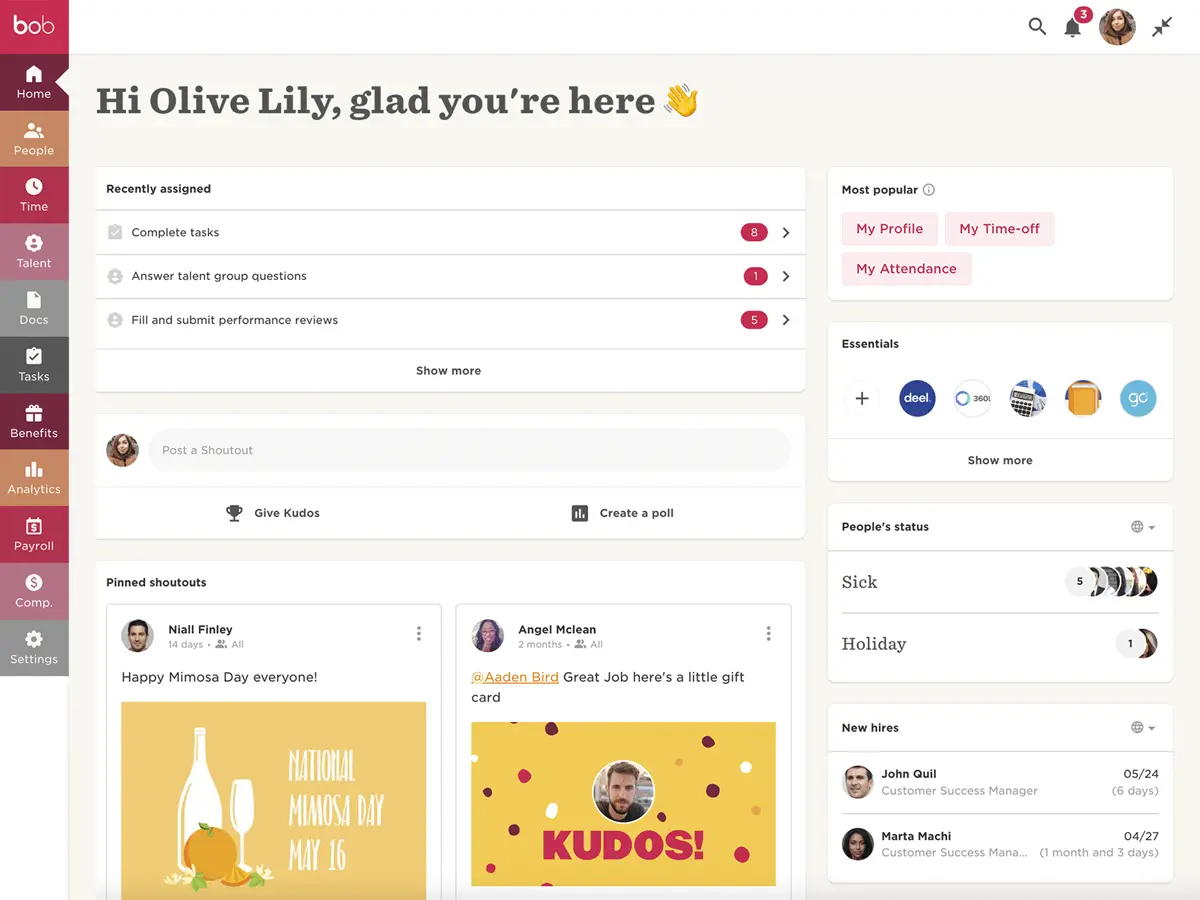
HiBob is an HR software platform designed for mid-sized companies with distributed or hybrid workforces. The system, marketed as "Bob," focuses on creating a modern employee experience while providing HR teams with tools for core HR management, performance tracking, and talent management across multiple locations.
HiBob targets companies that prioritize employee engagement and culture-building alongside operational HR processes. The platform includes social features, customizable workflows, and people analytics designed to help HR teams understand and improve the employee experience while managing compensation, performance, and development.
Key features
- Core HRIS with customizable employee profiles and organizational charts
- Performance management with continuous feedback and review cycles
- Compensation planning and salary review workflows
- Time-off management and absence tracking
- Employee engagement tools including surveys and pulse checks
- Onboarding workflows with task assignments and milestone tracking
- People analytics with configurable dashboards and reports
Pros
- Modern, visually appealing interface designed for employee engagement and adoption
- Strong focus on distributed and hybrid workforce management
- Flexible workflow customization without requiring technical expertise
- People analytics that surface trends across engagement, performance, and retention
- Compensation management tools that connect performance data with salary decisions
- Built for international teams with multi-country HR and compliance support
- Active product development with regular feature releases
Limitations
- Does not include native payroll processing
- Some advanced features require higher-tier pricing plans
- Performance management capabilities, while solid, may not match depth of specialized platforms
Best for
Mid-sized companies with distributed or hybrid teams that want a modern, employee-centric HRIS platform with strong engagement tools and flexible workflows across multiple locations.
UKG
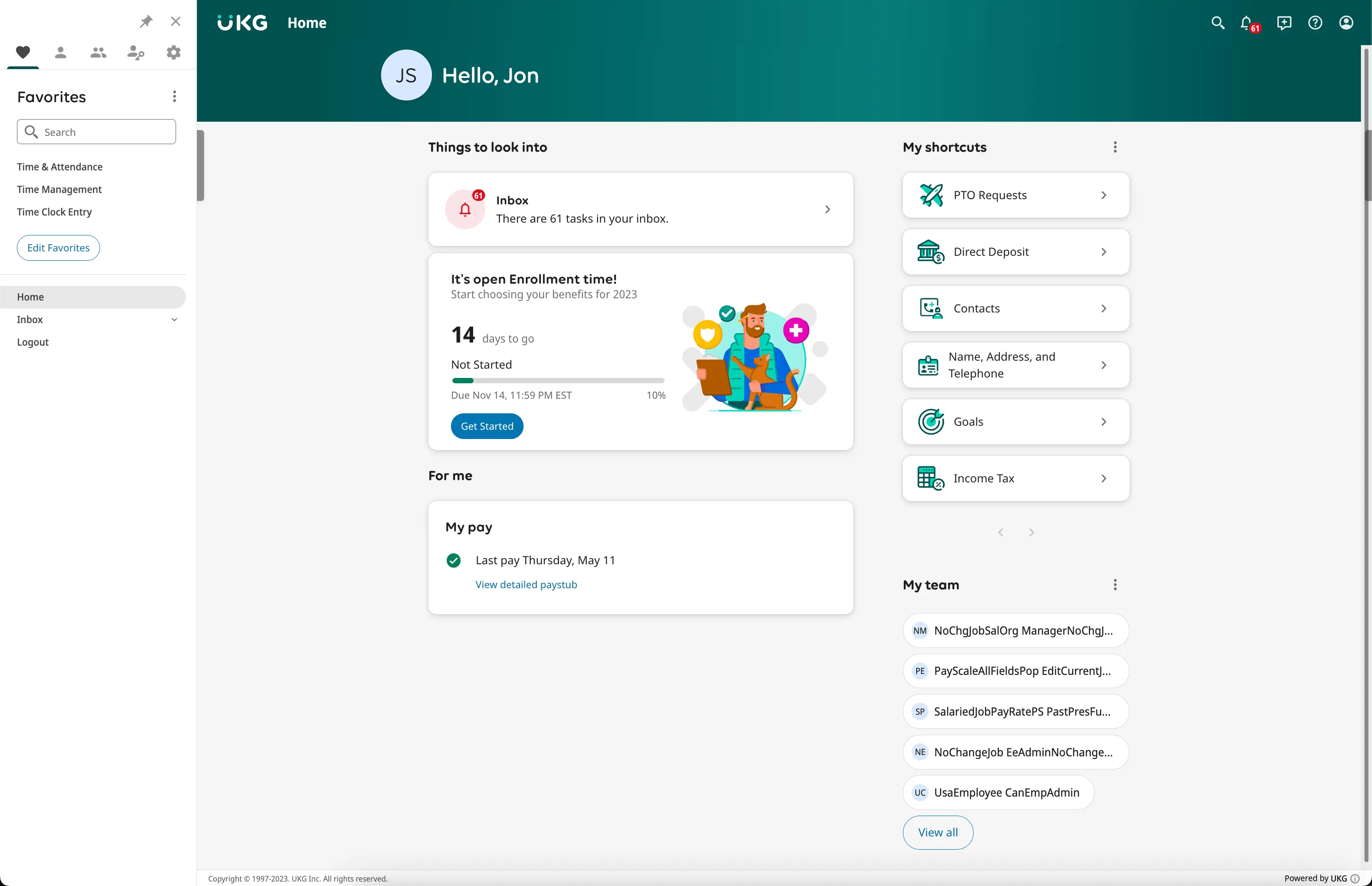
UKG (Ultimate Kronos Group) is a workforce management and HR compliance platform formed from the merger of Ultimate Software and Kronos. The system serves mid-sized to large organizations that need robust time tracking, scheduling, and payroll capabilities, with particular strength in industries that manage hourly workforces, shift schedules, and complex labor compliance requirements.
UKG offers two primary product lines: UKG Pro for comprehensive HCM needs and UKG Ready for smaller organizations. The platform emphasizes workforce operations such as timekeeping, attendance, scheduling, and labor cost management, with HR and talent management features built around these core capabilities.
Key features
- Advanced time tracking and attendance management
- Workforce scheduling with labor forecasting and optimization
- Payroll processing with compliance for complex wage and hour regulations
- HR compliance tools with automatic regulatory updates
- Core HRIS with employee records and organizational management
- Performance management and talent development modules
- Workforce analytics focused on labor costs and operational efficiency
Pros
- Industry-leading time and attendance tracking for hourly and shift-based workforces
- Strong scheduling optimization tools that balance labor costs with coverage needs
- Deep payroll and compliance expertise for complex wage and hour regulations
- Robust labor analytics that connect workforce data with operational metrics
- Proven reliability for organizations managing large hourly employee populations
- Extensive industry-specific configurations for healthcare, retail, manufacturing, and hospitality
Limitations
- User interface can feel complex for organizations without dedicated HR systems administrators
- Performance management and employee development features are less advanced than platforms focused primarily on talent enablement
- Pricing and implementation complexity may exceed needs of companies without significant hourly workforce requirements
Best for
Mid-sized to large organizations that manage hourly workforces, shift schedules, and complex labor compliance requirements across retail, healthcare, manufacturing, or hospitality industries.
Deel
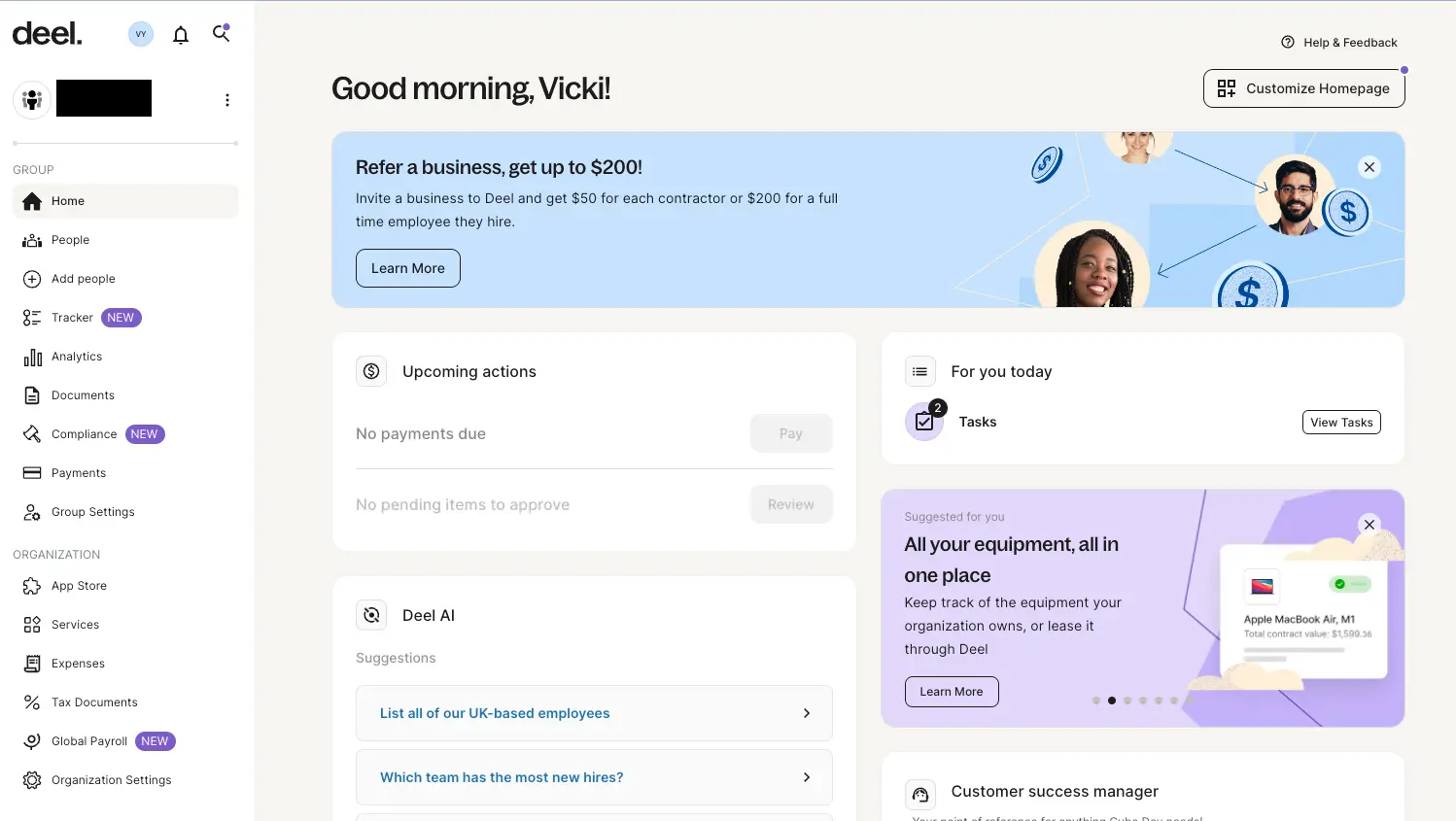
Deel is a payroll software and global hiring platform designed for companies that employ international contractors and full-time employees across multiple countries. The system focuses on simplifying cross-border employment by handling international payroll, tax compliance, contract generation, and benefits administration for distributed teams.
Deel targets companies scaling globally without establishing legal entities in every country. The platform acts as an employer of record in over 100 countries, enabling businesses to hire and pay workers internationally while Deel handles local employment contracts, tax withholdings, benefits compliance, and regulatory requirements.
Key features
- Global payroll processing for employees and contractors in 100+ countries
- Employer of record services for hiring without establishing local entities
- Automated contract generation compliant with local labor laws
- Multi-currency payments and invoicing
- Tax form management and compliance documentation
- Benefits administration for international employees
- Time tracking and expense management for distributed teams
Pros
- Exceptional speed and ease for hiring internationally without legal entity setup
- Comprehensive coverage across more than 100 countries with local compliance expertise
- Contractor and employee payment processing in a single platform
- Automated compliance with local labor laws, tax regulations, and employment standards
- Transparent pricing structure for both contractor and employee payments
- Fast implementation compared to establishing international payroll infrastructure
- Strong customer support with regional expertise for complex hiring questions
Limitations
- Limited people management, performance, or engagement capabilities beyond payroll and compliance
- Employer of record services create indirect employment relationships rather than direct hires
- Cost per employee can be higher than establishing your own entities in countries with significant headcount
Best for
Companies hiring international contractors and employees across multiple countries that need fast, compliant global payroll without the complexity of establishing legal entities in every market.
Key considerations when comparing the best HR software in 2026
HR software must adapt as your company grows, shifts priorities, and navigates changing workforce dynamics. The platforms that serve you well today should support the decisions you'll need to make two or three years from now.
Decide whether you need payroll processing, people enablement, or both
HR software falls into two broad categories: payroll-first systems and people enablement platforms.
Payroll-first tools such as Gusto, ADP Workforce Now, and Deel excel at accurate wage calculations, tax compliance, and benefits administration. These systems ensure employees get paid correctly and on time, but they typically offer limited capabilities for performance management, employee development, or strategic workforce planning.
People enablement platforms take a different approach. Rather than focusing primarily on payroll execution, these systems connect performance management with employee engagement, learning, and compensation decisions. They help HR teams understand why top performers stay or leave, which managers need support, and how development investments affect retention and productivity.
Some platforms bridge both categories. Leapsome, for example, provides payroll preparation tools that integrate with regional providers while also offering a full people enablement suite across performance, engagement, and development. This dual approach helps your organization scale without needing endless point solutions.
“By consistently sensing the way specific solutions evolve and work within the HR technology stack, HR leaders and teams responsible for these technologies can make that intersecting experience productive and comfortable for their workforce.”
— Deloitte, 2025 HR technology marketplace predictions
📊 Turn people data into strategic decisions
Leapsome's analytics connect performance, engagement, and retention insights without manual cleanup.
👉 Explore people analytics
Evaluate how each platform handles HR analytics and reporting
Can you identify unhappy employees before they resign? Are your compensation decisions powered by performance data? These are critical needs in 2026. Luckily, the right HR software will help you out by connecting employee data with HR analytics capabilities.
When evaluating analytics capabilities, test the reporting features during vendor demos. Ask whether you can segment data by team, tenure, or performance rating. Determine whether the platform requires manual data exports and spreadsheet manipulation, or whether insights are available directly within the system.
According to Gartner, 85% of HR leaders expect AI capabilities to influence purchasing decisions this year, making AI-assisted HR—particularly for surfacing recommendations and automating insight generation—another important expectation.
Look for configurability instead of rigid workflows
Standardized HR processes often break as teams scale, shift from in-office to hybrid work, or adapt performance cycles. The best HR software in 2026 should accommodate these shifts without requiring vendor support for every little adjustment.
Configurability matters most in performance management, compensation planning, and organizational workflows. Some platforms enforce rigid annual review cycles with limited flexibility for continuous feedback or mid-year calibrations. Others lock you into predefined competency frameworks or goal structures that don't align with how your teams actually work.
Get ahead of this by asking vendors whether you can modify workflows yourself or whether configuration requires professional services. The platforms that serve growing companies well are the ones that bend without breaking when priorities shift or structures change.
Choosing HR software that unifies the employee lifecycle
The HR software market is expected to eclipse $34 billion by 2030. Rapidly, HR leaders at organizations of all sizes are realizing that transnational tools are a thing of the past.
Modern HR requires strategic insight—which is why the best HR software in 2026 connects HRIS, performance management, employee engagement, learning, and compensation in one flexible platform. Unified systems eliminate the friction of switching between tools, surface insights that disconnected platforms miss, and make it easier to prove HR ROI by connecting employee lifecycle data in one place.
And Leapsome is built specifically for this unified approach. The platform connects core HRIS data with performance reviews, goal tracking, engagement surveys, learning paths, and compensation management so that every decision is informed by complete, accurate information rather than fragmented snapshots. The result? You’re empowered to make the right decisions with all HR data at your fingertips.
🚀 Ready to modernize your HR operations?
See how Leapsome unifies HRIS, performance, engagement, and learning for growing companies.
👉 Request a demo
Frequently asked questions about the best HR software
What is the best HR software for mid-sized companies?
It depends on what you actually need. If you're managing complex performance cycles, engagement initiatives, and learning programs, you'll want a unified platform that connects these workflows in one place. If you mainly need payroll accuracy and benefits admin, a payroll-first system might work—but many teams outgrow these tools once strategic HR priorities expand beyond just processing paychecks.
Can an HRIS replace multiple point solutions?
Yes. A unified HRIS with performance management, engagement surveys, and learning can replace separate platforms and give you a single source of truth for employee data. That said, you might still need specialized integrations for region-specific payroll or niche compliance tools.
What features should HR software include?
Start with the basics: employee records, org charts, time-off tracking, and document management. Then look for strategic features that actually support growth, such as performance management with continuous feedback, goal-setting, engagement tools, learning paths tied to development, compensation planning connected to performance data, and analytics that surface real insights instead of static dashboards.
Does HR software include payroll?
Sometimes payroll-first tools such as Gusto and ADP include full payroll processing with tax filing. HRIS platforms such as Leapsome provide payroll preparation tools that integrate with your existing payroll providers. Your choice depends on whether you need full-service payroll execution or if payroll integration works better for your setup.
What's the difference between HRIS and HCM software?
HRIS traditionally focuses on core HR data and admin. HCM includes broader talent management such as recruiting, performance, learning, and succession planning. But honestly, modern platforms blur these lines. The labels matter less than whether the platform actually supports both operational efficiency and strategic decision-making across the full employee lifecycle.
Emily Laytham


.jpg)
%20(1).webp)
.jpg)