Lohnbuchungen: Für einen sauberen Monatsabschluss, jedes Mal


Wachstum deckt hässliche Payroll-Probleme gnadenlos auf. Vielleicht habt ihr schon gemerkt, dass eure ersten Prozesse in der Lohnabrechnung mit den Anforderungen eines wachsenden Teams nicht mehr mithalten können.
Damit seid ihr nicht allein. Daten von Alight zeigen, wie verbreitet dieses Problem ist: 53 % der Befragten gaben an, in den letzten fünf Jahren Strafen wegen Compliance-Verstößen bei der Lohnabrechnung erhalten zu haben.* Es ist kein Zufall, dass 51 % der befragten Unternehmen für ihre Lohnabrechnung noch immer auf Tabellenkalkulationen setzen, während 19 % Papier und andere manuelle Methoden nutzen.
Das ist ein echtes Problem, denn Lohnbuchungen sind ein entscheidender Berührungspunkt zwischen HR und Finance. Schauen wir uns an, wie ihr für mehr Konsistenz sorgt und den Monatsabschluss-Stress vermeidet.
* Alight, 2024
Was ist eine Lohnbuchung?
Lohnbuchungen sind die offiziellen Finanzunterlagen zu dem, was in jedem Abrechnungszyklus passiert. Sobald Mitarbeitende bezahlt werden, fließen diese Transaktionsdaten in das Buchhaltungssystem eures Unternehmens, damit Finance Personalkosten und Cashflow genau nachverfolgen kann.
Das genaue Format einer Buchung kann variieren, muss aber einige Kernelemente enthalten:
- Bruttolohn und Arbeitgeberanteile der Lohnsteuern: Diese Angaben zeigen die tatsächlichen Kosten der Lohnabrechnung: den Gesamtbetrag, den Mitarbeitende vor Abzügen verdienen, plus den jeweiligen Steueranteil.
- Einbehalte und Abzüge: In dieser Kategorie findet ihr alle Beträge, die vom Lohn einbehalten werden, etwa für Altersvorsorge und andere Benefits.
- Nettolohn: Im Gegensatz zum Bruttolohn ist der Nettolohn der Betrag, den Mitarbeitende nach Abzug aller Steuern und sonstigen Abzüge erhalten.
Warum Lohnbuchungen mehr sind als reine Formsache
Die Lohnabrechnung zu dokumentieren, wirkt oft wie reine Buchhaltungsroutine, besonders wenn ihr auf Wachstum fokussiert seid. Doch Lohnbuchungen können euer Wachstum aktiv unterstützen, durch mehr:
- Finanzielle Transparenz: Konsistente Buchungen halten euer Finance-Team über die Personalkosten auf dem Laufenden, damit unerwartete Abweichungen schnell auffallen.
- Personalplanung: Da die Lohnabrechnung zu euren größten Ausgabenposten zählt, sparen präzise Buchungen bares Geld. HR und Finance können damit Vergütungstrends beobachten und fundierte Budgetentscheidungen treffen.
- Prüfungsbereitschaft: Lückenlose Payroll-Unterlagen schaffen eine belastbare Nachweiskette, mit der ihr Compliance sicherstellt und Rückfragen von Behörden schnell klärt.
„Teams, die bereit sind, bereiten sich nicht erst vor der Prüfung vor. Sie gestalten ihre tägliche Arbeit so, dass keine Vorbereitung mehr nötig ist, wenn es so weit ist.“
Erica Ancobia, CEO bei KUNO
Drei Arten von Lohnbuchungen
Wie ihr Lohnbuchungen organisiert, hängt vom Zeitpunkt und Zweck jeder Zahlung ab. Die Dokumentation lässt sich aber meist einer von drei Hauptkategorien zuordnen.
1. Standard-Lohnbuchungen
Diese bilden eure grundlegenden Payroll-Unterlagen. Sie erfassen, was während eines regulären Abrechnungslaufs tatsächlich passiert ist, inklusive Details zu Verdienst und Abzügen der Mitarbeitenden.
Lohnabrechnung (Bruttolohn)
Buchungssatz zur Erfassung von Bruttolohn, Arbeitgebersteuern und ausgezahltem Nettolohn
| Konto | Soll | Haben |
|---|---|---|
| Personalaufwand: Gehälter und Löhne (Bruttolohn) | $10.000 | |
| Lohnnebenkosten des Arbeitgebers (Aufwand) | $800 | |
| FICA-Steuer (Verbindlichkeit, Arbeitnehmer- und Arbeitgeberanteil) | $1.500 | |
| Bundeseinkommensteuer (Verbindlichkeit) | $1.200 | |
| Krankenversicherungsbeitrag (Verbindlichkeit) | $300 | |
| Kasse (Nettolohn) | $7.800 |
2. Abgegrenzte Lohnbuchungen
„Wenn jemand das Unternehmen verlässt und später noch eine Bonuszahlung erhält, muss das gekennzeichnet werden. Diese Zahlung wird nämlich auf eine komplett andere Weise verbucht.“
Sammie Masley, People and Talent Partner bei Leapsome
Manchmal entstehen Personalkosten, bevor Mitarbeitende tatsächlich bezahlt werden. In diesen Fällen muss Finance abgegrenzte Personalkosten erfassen, damit die Berichte die Personalkosten in der richtigen Abrechnungsperiode zeigen. Sobald die Lohnabrechnung verarbeitet ist, werden diese Buchungen jedoch storniert.
Abgegrenzte Löhne und Lohnsteuern
Buchungssatz zur Erfassung von verdientem, aber noch nicht ausgezahltem Lohn
| Konto | Soll | Haben |
|---|---|---|
| Lohnaufwand (verdient, aber unbezahlt) | $4.500 | |
| Aufwand für abgegrenzte Lohnsteuern | $350 | |
| Verbindlichkeiten aus Löhnen | $4.500 | |
| Verbindlichkeiten aus abgegrenzten Lohnsteuern | $350 |
3. Manuelle Lohnbuchungen
Kein System ist perfekt. Deshalb wird es immer Fälle geben, in denen ihr eingreifen müsst, um Fehler zu korrigieren oder Sonderfälle zu bearbeiten. Das kann bedeuten, einen Scheck für einen vergessenen Bonus auszustellen oder eine unerwartete Abfindungszahlung zu verarbeiten.
Bonuszahlung an Mitarbeitende
Buchungssatz zur Erfassung einer Bonuszahlung nach Abzug einbehaltener Steuern
| Konto | Soll | Haben |
|---|---|---|
| Bonusaufwand | $1.200 | |
| Verbindlichkeiten aus einbehaltenen Steuern | $200 | |
| Kasse (erhaltener Nettobonus) | $1.000 |
So verarbeitet ihr Lohnbuchungen fehlerfrei
Präzise Lohnbuchungen zu erfassen, wirkt bei großen Teams vielleicht einschüchternd. Wenn ihr den Prozess aber in Schritte zerlegt, ist er unkompliziert:
- Payroll-Daten sammeln und prüfen: Unterschätzt nicht die Bedeutung der Datenerfassung für jede Abrechnungsperiode. Auch wenn das wie ein einfacher Verwaltungsschritt wirkt: Abweichungen wie nicht erfasste Abwesenheiten oder übersehene Beförderungen sind häufige Fehlerquellen.
- Bruttolohn, Steuern und Abzüge berechnen: Ermittelt anhand der Daten zu Bruttolohn, Lohnsteuern, Benefits und Abzügen, was Mitarbeitende verdient haben und was einbehalten werden muss.
- Die Buchung erfassen: Jetzt übertragt ihr die Payroll-Aktivität in Finanzunterlagen, indem ihr sie in eurem Buchhaltungssystem erfasst. Eine wiederverwendbare Vorlage vereinfacht diesen Schritt.
- Nettolohn auszahlen und Verbindlichkeiten abführen: Zahlt Mitarbeitenden ihren Nettolohn aus und führt Steuern und Abzüge an die zuständigen Behörden ab.
- Alles prüfen und abstimmen: Vergleicht vor dem Abschluss eure Payroll-Berichte mit den Buchungen, dem Hauptbuch und den Bankbewegungen. Achtet besonders auf häufige Abweichungen wie doppelte Buchungen oder falsch berechnete Steuern.
Daten von KPMG zeigen: Zwar verfügen 92 % der Unternehmen über globale Payroll-Strategien, doch nur 25 % gaben an, dass ihr aktuelles Vendor-Management wirklich funktioniert. Wenn ihr also bereits in Payroll investiert und trotzdem beim Wachstum auf Fehler stoßt, sucht ihr die Lösung vielleicht am falschen Ort.
Leapsomes HRIS- und People-Management-Plattform verarbeitet zwar keine Lohnabrechnung direkt, unterstützt aber den gesamten Reporting-Prozess: Sie zentralisiert eure Mitarbeitendendaten und verbindet euch direkt mit Payroll-Partnern. Mit den Lohnabrechnungs-Tools von Leapsome hält HR Vergütungsdaten und Dokumente jederzeit aktuell.
„Auf C-Level habe ich gelernt, People-Daten zu misstrauen, weil sie zu spät kamen und sich zwischen Dateien widersprachen. Als ich dann selbst in HR saß, habe ich den Schmerz aus erster Hand gespürt und gesehen, wie viel Zeit in den Wiederaufbau derselben Reports floss. Zentralisierung stellt Vertrauen und euren Kalender wieder her.“
Florian Klages, Managing Partner bei torq.partners
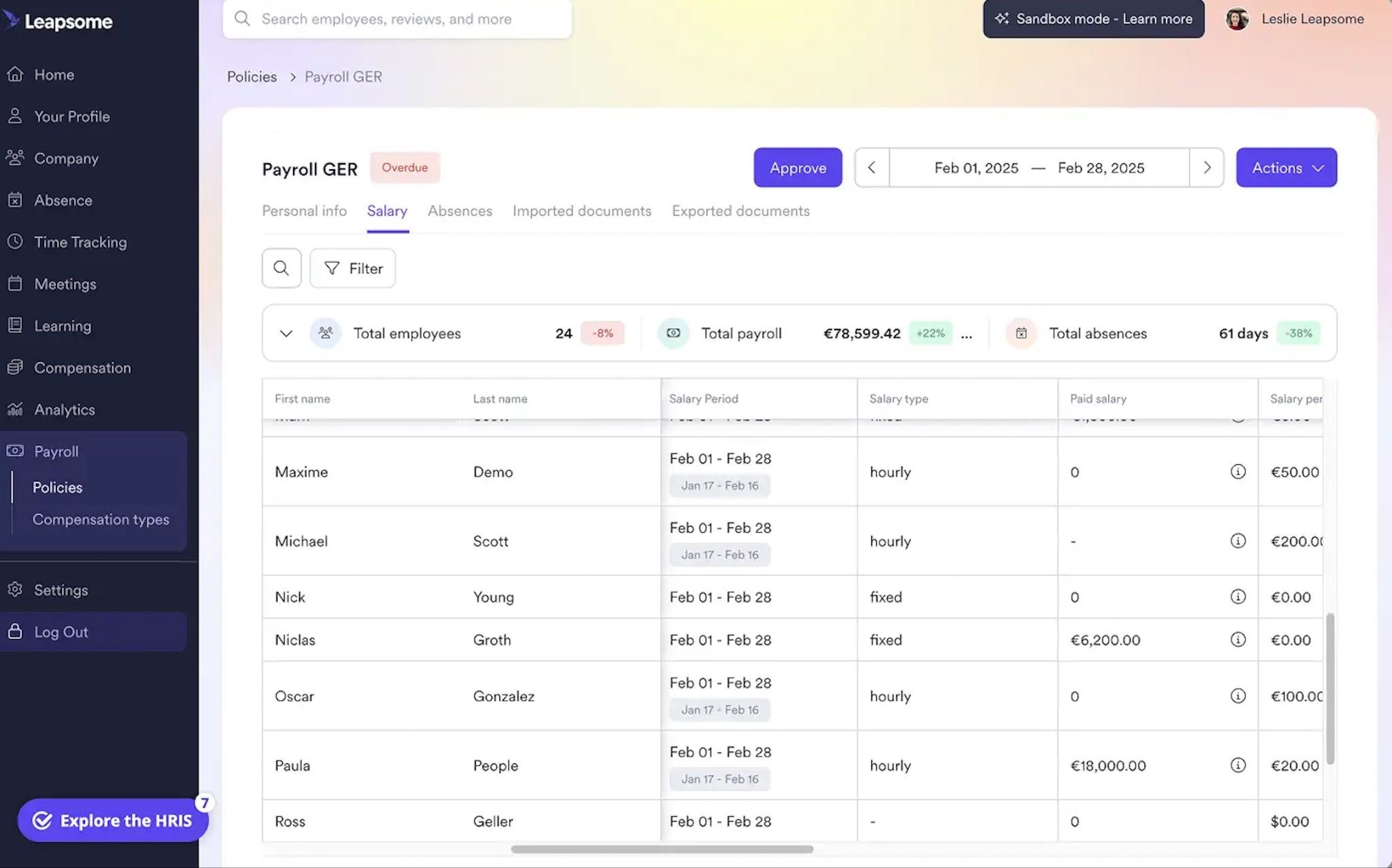
🧾Räumt eure Lohnbuchungen auf
Die Lohnabrechnungs-Tools von Leapsome erfassen alle Personalveränderungen in Echtzeit, damit HR nie in letzter Minute nach korrekten Daten suchen muss.
👉 Mehr über Lohnabrechnung erfahren
Best Practices für aussagekräftige Lohnbuchungen
Wenn Lohnbuchungen reibungslos laufen, liegt das an ein paar bewährten Gewohnheiten in HR:
- Jede Buchung und Anpassung dokumentieren: Geht nie davon aus, dass eine Transaktion zu klein für eure Reports ist. Lückenlose Buchungen braucht ihr, um Abweichungen nachzuvollziehen und Finance-Verantwortlichen die Sicherheit zu geben, dass jede Zahl erklärbar ist.
- Steuersätze und Vorschriften im Blick behalten: Lohnsteuer- und Compliance-Regeln ändern sich häufig. Plant deshalb regelmäßige Abstimmungen mit eurer Rechtsberatung ein.
- Das Lohnkonto monatlich abstimmen: Haltet monatliche Abstimmungstermine ab, um Payroll-Berichte, Buchungen und das Hauptbuch durchzugehen.
Der Wechsel von manuellen zu automatisierten Freigaben macht Lohnbuchungen ebenfalls entspannter. Die Workflows von Leapsome nehmen eurem HR-Team Verwaltungsaufgaben ab und halten zugleich wichtige Daten wie Urlaub und Vergütung an einem Ort.
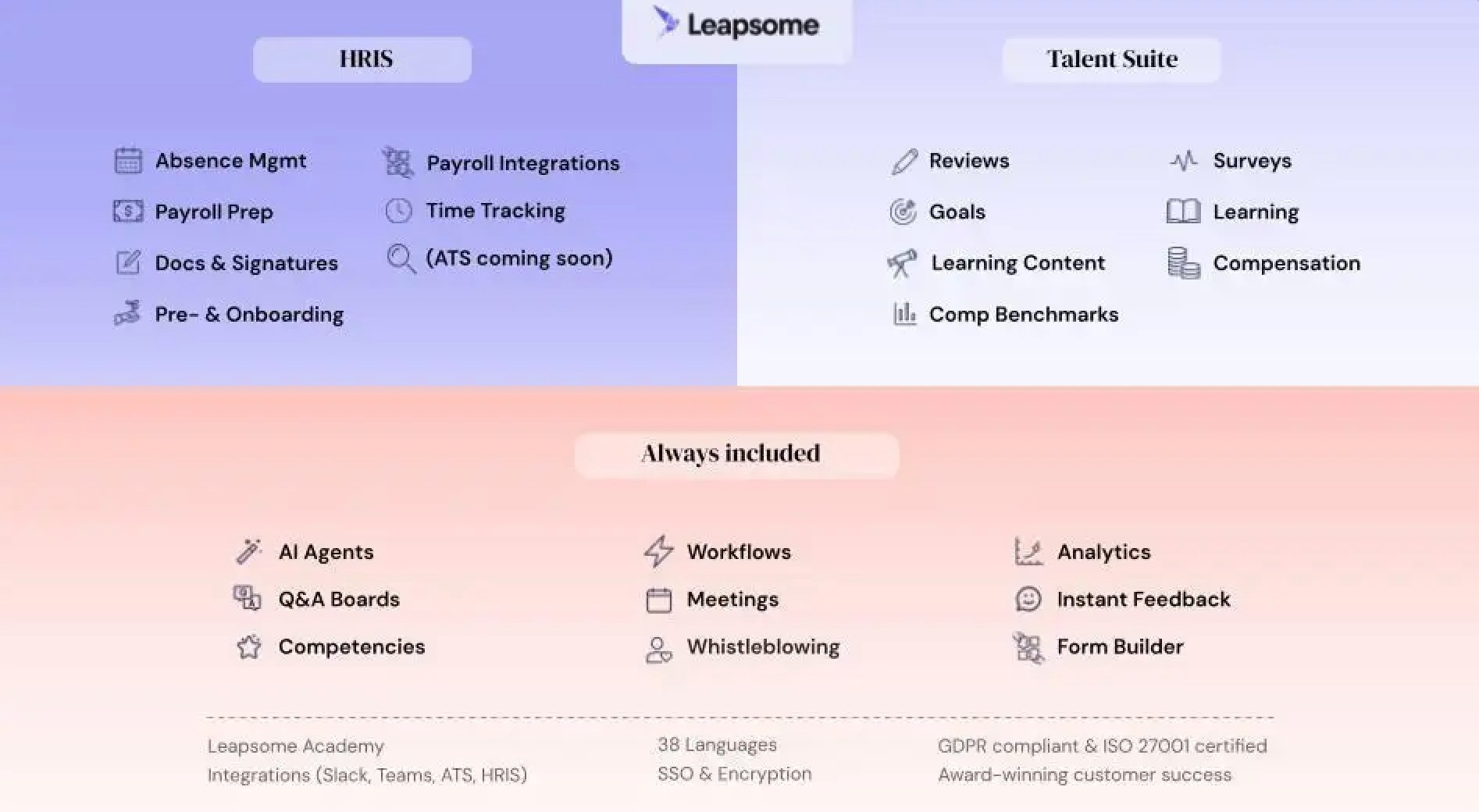
🔗Schließt die Lücke zwischen Personalveränderungen und Lohnbuchungen
Mit den automatisierten Freigaben von Leapsome landet jede Änderung in eurer Lohnabrechnung, bevor die Daten zur Verarbeitung weitergehen.
👉 Workflows entdecken
Checkliste zur Payroll-Bereitschaft für HR und Finance
Damit alle Daten, die HR liefert, aktuell und frei von Widersprüchen sind, solltet ihr euch vor jeder Abrechnung regelmäßig diese Fragen stellen.
Bereitschaft der Mitarbeitendendaten
- Sind alle Gehalts- und Satzänderungen für diese Abrechnungsperiode genehmigt und umgesetzt?
- Haben wir Abteilung, Kostenstelle, Standort und Beschäftigungsart für alle Mitarbeitenden aktualisiert?
- Haben wir alle Manager-Wechsel aktualisiert, die Freigabeprozesse betreffen?
Bereitschaft variabler Vergütung und Eingaben
- Haben wir alle Boni, Provisionen und rückwirkenden Zahlungen eingereicht, genehmigt und dokumentiert?
- Sind alle Überstunden, Abwesenheiten und Urlaubsanpassungen bestätigt und abgeschlossen?
- Haben wir alle Erstattungen und Einmalzahlungen mit einer klaren Freigabehistorie erfasst?
Abstimmung zwischen HR und Finance
- Herrscht Einigkeit mit Finance über die Aufschlüsselung der Payroll-Kosten nach Abteilung oder Kostenstelle?
- Haben wir geklärt, ob Boni und Provisionen als Aufwand oder Verbindlichkeit verbucht werden sollen?
- Haben wir die Payroll-Zusammenfassung im vereinbarten Format und vor dem Stichtag an Finance geliefert?
✅ Holt euch die Checkliste zur Payroll-Vorbereitung
Nutzt diese Fragen, um die Datenbereitschaft von HR vor jedem Abrechnungslauf zu prüfen.
👉 Jetzt Checkliste herunterladen
Payroll-Daten reibungslos und präzise verwalten mit Leapsome
Wenn eure Payroll-Prozesse aus dem Takt geraten, zeigt nicht gleich mit dem Finger auf Finance. Schließlich ist es HR, das die Mitarbeitendendaten liefert, die für die Lohnabrechnung und präzise Buchungen nötig sind.
Daten von Deloitte zeigen: 84 % der Unternehmen nutzen über 20 Payroll-System-Integrationen. Bei einem derart komplexen Geflecht an Protokollen überrascht es kaum, wie viele Unternehmen unter migräneauslösenden Monatsabschlüssen leiden.
Leapsomes zentrale HRIS- und People-Management-Plattform hilft euch, eure Payroll-Daten zu bereinigen und das Fehlerrisiko zu senken, mit:
- Automatisierte Abläufe: Jede Änderung wird automatisch in die Lohnabrechnung übernommen, ganz ohne manuelle Doppelerfassung.
- Abwesenheiten und Time Tracking: Bewahrt alle genehmigten Abwesenheitsdaten in einem integrierten HRIS auf, damit die Kosten in euren Buchungen der tatsächlichen Personalaktivität entsprechen.
- Automatisierte Freigabe-Workflows: Schließt Vergütungs- und HR-Änderungen automatisch ab, lange bevor sie die Lohnabrechnung beeinflussen.
„Mitarbeitende finden jetzt alles an einem Ort: ihre Daten, Abwesenheiten, Ziele und Reviews. Ich muss nicht mehr erklären, welches Tool wofür da ist. Bei uns läuft alles über Leapsome.“ Merilyn L, Senior People Operations Specialist bei Bob W.
💵Macht aus Datenbereinigung echtes Payroll-Vertrauen
Stellt mit Leapsomes zentraler HRIS- und People-Management-Lösung sicher, dass alle Mitarbeitendendaten, die in die Lohnabrechnung einfließen, die aktuelle Realität widerspiegeln.
👉 Demo anfragen





.png)