Multi-State Payroll: Typische Risiken und Herausforderungen meistern


Haftungsausschluss: Dieser Inhalt dient ausschließlich allgemeinen Informationszwecken und stellt keine Rechtsberatung dar. Leapsome übernimmt keine Garantie für die Rechtskonformität und kann nicht bestätigen, wie einzelne Sachverhalte vor Gericht bewertet würden. Wenn ihr euch nicht sicher seid, wie die Vorgaben auf euer Unternehmen zutreffen, wendet euch an qualifizierte Rechtsberatung.
Remote-Arbeit ist längst keine Ausnahme mehr: Laut Gallup-Daten haben mittlerweile 50 % der Vollzeitbeschäftigten in den USA einen remote-fähigen Job.* Für Startups und kleine Unternehmen liegt der Vorteil auf der Hand: Es war noch nie so einfach, die besten Talente zu gewinnen, unabhängig vom Standort.
Für euer Payroll-Team ist diese Grenzenlosigkeit weniger erfreulich: Es muss sich jetzt mit den zahlreichen Herausforderungen von Multi-State Payroll auseinandersetzen. Mitarbeitende haben mehr Fragen, und die Regeln unterscheiden sich von Standort zu Standort.
Der erste Instinkt von HR ist oft, sich auf Compliance zu konzentrieren. Das ist ein solider Ausgangspunkt, reicht aber selten aus, um Payroll-Fehler zu verhindern. Meistens liegen die Probleme an Unstimmigkeiten, die HR übersieht, bevor die Daten an die Payroll übergeben werden.
Deshalb schauen wir uns an, wie ihr Multi-State Payroll richtig angeht: indem ihr euer Team auf mögliche Komplikationen vorbereitet und den Umgang mit Mitarbeitendendaten verbessert.
* Gallup, 2026
Was ist Multi-State Payroll Processing?
Multi-State Payroll bedeutet, Löhne und Steuerabzüge für Mitarbeitende, die in Bundesstaaten außerhalb des Firmensitzes leben oder arbeiten, rechtskonform zu verwalten. Dabei müssen regionsspezifische rechtliche Fragen berücksichtigt werden, was einen soliden Prozess für das Management von Mitarbeitendendaten voraussetzt, um Fehler zu vermeiden.
Am häufigsten taucht dieser Bedarf auf, wenn ihr zum ersten Mal Remote-Mitarbeitende einstellt. Aber auch wenn Mitarbeitende aus unterschiedlichen Bundesstaaten pendeln, müsst ihr die Steuervorgaben für Multi-State Payroll berücksichtigen.
Häufige Herausforderungen bei Multi-State Payroll Processing
Laut einer Studie von EY und Paycom enthält jede fünfte Unternehmens-Payroll Fehler, was sich auf 29 Wochen verlorene Produktivität pro Jahr summiert. Es liegt nahe, dafür die Payroll-Systeme verantwortlich zu machen, aber viele Probleme entstehen bereits bei unvollständigen Daten aus HR.
„Auf C-Level habe ich gelernt, People Data zu misstrauen, weil sie zu spät kam und sich zwischen Dateien widersprach. Als ich dann selbst in HR saß, habe ich den Schmerz aus erster Hand gespürt und gesehen, wie viel Zeit in den Wiederaufbau derselben Reports floss. Zentralisierung stellt Vertrauen wieder her und schont euren Kalender.“
Florian Klages, Managing Partner bei torq.partners
Typische Probleme sind:
- Schwierigkeiten bei der korrekten Berechnung von Steuerabzügen: Wenn Mitarbeitende umziehen, ohne ihre Daten zu aktualisieren, führt das dazu, dass die Payroll falsche Steuern einbehält und erhebliche Compliance-Risiken entstehen.
- Getrennte Vergütungs- und PTO-Freigaben: Wenn Vergütungsdaten verstreut vorliegen, verpasst HR bei der Vorbereitung der Übermittlung möglicherweise aktuelle Änderungen wie Beförderungen, Boni oder PTO-Anpassungen.
- Veraltete oder inkonsistente Datenpflege: Da Remote- und Hybrid-Teams häufig den Standort wechseln, muss HR diese Änderungen schnell erfassen und in die Payroll-Verarbeitung einbinden.
Multi-State Payroll aufzusetzen, kann wie eine gewaltige Aufgabe wirken, aber ihr könnt vieles davon auf einen Schlag angehen, indem ihr eure Datenorganisation aufräumt. Mit Leapsomes All-in-one-HRIS und People-Management-System könnt ihr alle Mitarbeitendendaten an einem Ort einsehen und aktualisieren. Und wenn ihr Leapsome mit einem Payroll-Anbieter wie ADP synchronisiert, hat euer Team immer die aktuellsten Details.
„Führungskräfte sollten HR nicht extra fragen müssen, wer gerade im Urlaub ist oder wie die Salden eines Teams aussehen. Sie sollten es live sehen können. Sobald sich Mitarbeitende selbst bedienen können, sinken Unterbrechungen, und Entscheidungen werden schneller getroffen. Genau darum geht es bei einer Single Source of Truth.“
Carolin Leidel, Consultant bei torq.partners
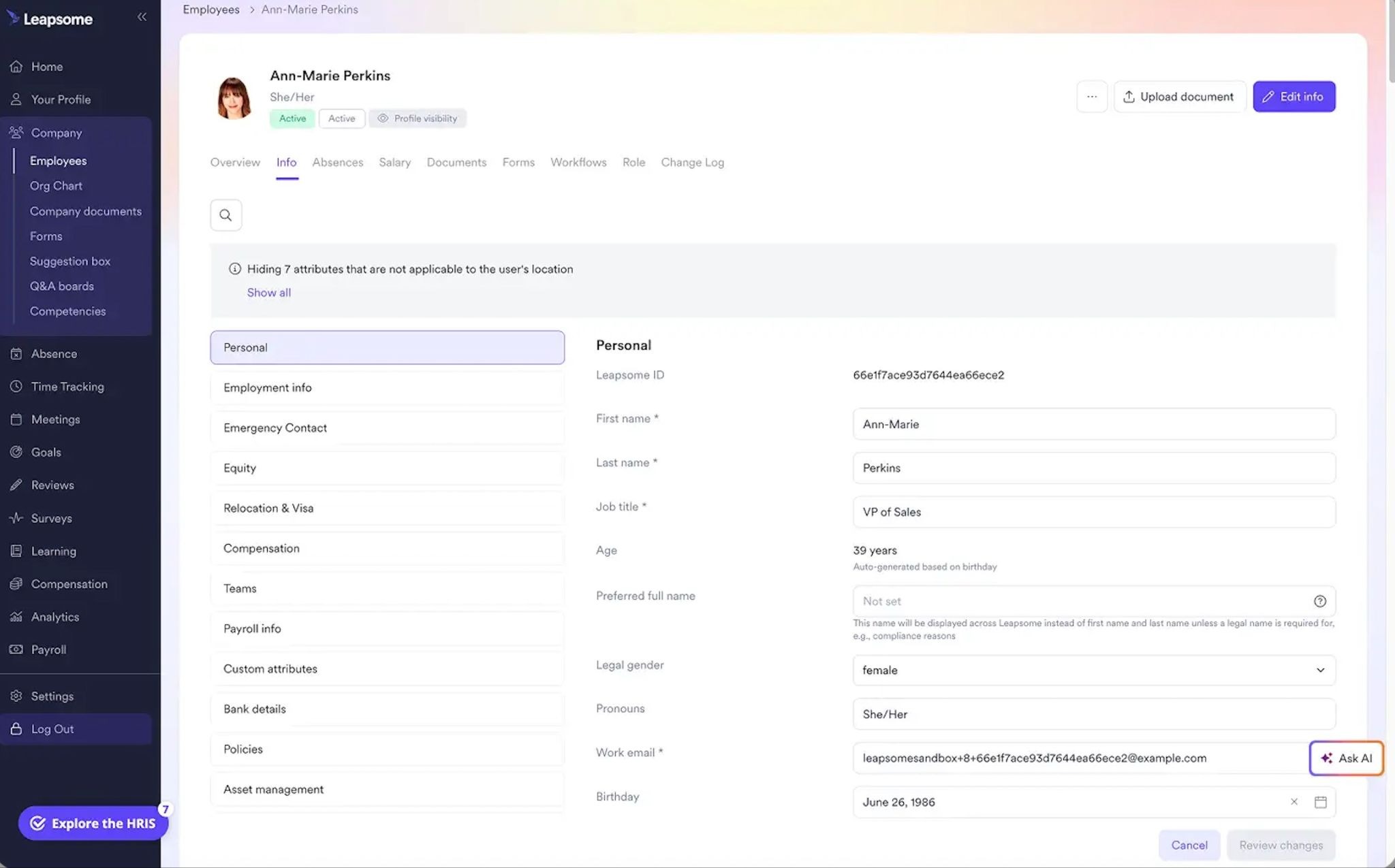
🛡️Bleibt bundesstaatenübergreifend audit-bereit mit zentralisierten Daten
Verfolgt die neuesten Änderungen bei Vergütung und Standort eurer Mitarbeitenden mit Leapsomes einheitlicher Single Source of Truth.
👉 Entdeckt Mitarbeiterprofile
Was macht Multi-State-Payroll-Steuern so komplex?
Jeder Bundesstaat hat eigene Gesetze, die euren Payroll-Plan beeinflussen. Es gibt jedoch einige Gemeinsamkeiten, die ihr kennen solltet:
- Nexus und Registrierung im Bundesstaat: Schon die Einstellung einer einzigen Person in einem neuen Bundesstaat schafft eine geschäftliche Präsenz (auch „Nexus" genannt). Das bedeutet, ihr müsst euch bei den Steuer- und Arbeitslosenbehörden dieses Bundesstaats registrieren.
- Lohnsteuerabzug: Arbeitgeber behalten die Lohnsteuer in der Regel dort ein, wo Mitarbeitende physisch arbeiten. Bei Hybrid-Arbeitsmodellen oder Teammitgliedern aus Bundesstaaten mit sehr unterschiedlichen Regelungen wird das jedoch schnell unübersichtlich. Es lohnt sich, die aktuellen Vorschriften gründlich zu recherchieren und bei Bedarf Rechtsberatung hinzuzuziehen, um zu klären, welche Regeln für welche Person gelten.
- Gegenseitigkeitsabkommen: Manche Bundesstaaten haben „besondere Steuerabkommen", um die Compliance zu vereinfachen und eine Doppelbesteuerung zu vermeiden. Lebt eine Person in einem dieser Bundesstaaten mit Gegenseitigkeitsabkommen, kann sie ein Befreiungsformular einreichen. So kann euer Unternehmen die bundesstaatsspezifischen Abzugsregeln umgehen.
Auf dem Weg zu besserer Datenqualität an der Quelle
„Wir konzentrieren uns wirklich darauf, dass die Daten, die wir erzeugen, qualitativ hochwertig und länderübergreifend konsistent sind. Gute Daten helfen uns, Schwachstellen frühzeitig zu erkennen, Entwicklungsinitiativen zu planen und dem Business klare, umsetzbare Erkenntnisse zurückzugeben.“
Victor Tomas, Learning and Development Specialist bei Swapfiets
Die Verantwortung für eine rechtskonforme Multi-State-Payroll-Verarbeitung liegt oft bei eurem Partner-Anbieter sowie bei den Rechts- und Steuer-Fachleuten in eurem Team. Das heißt aber nicht, dass diese Glieder in der Kette die Ursache aller Payroll-Probleme sind. Viele Multi-State-Probleme entstehen tatsächlich durch schlechte Datenpipelines für Mitarbeitendendaten.
Laut Payroll Integrations verbringen 52 % der Teams zwischen 11 und 20 Stunden pro Woche mit administrativen Aufgaben rund um Payroll und Benefits. Verlässt sich HR während dieser langen Arbeitsstunden auf getrennte Systeme und manuelle Dateneingabe, sind menschliche Fehler unvermeidlich. Ein zentralisiertes HRIS ersetzt keine externe Beratung oder Payroll-Dienstleister, ist aber der einfachste Weg, um potenzielle Probleme frühzeitig zu erkennen.
Stellt euch außerdem vor jedem Payroll-Lauf diese Fragen:
- Wurden die Heimatadresse und der aktuelle Arbeitsbundesstaat jeder Person vor Kurzem bestätigt?
- Sind Neueinstellungen, Kündigungen und Rollenwechsel der letzten Abrechnungsperiode korrekt erfasst?
- Wurden Regeln oder Vorschriften für die Bundesstaaten, in denen Mitarbeitende ansässig sind, kürzlich aktualisiert oder geändert?
Best Practices zur Vermeidung von Multi-State-Payroll-Fehlern
Die Zusammenarbeit mit vertrauenswürdigen Payroll-Anbietern und Rechtsberatung ist beim Umgang mit Multi-State Payroll unerlässlich. Ihr solltet aber auch ein paar Strategien in eure HR-Operations aufnehmen:
- Datenübergaben automatisieren: Manuelle Übergaben sind zu fehleranfällig, gerade bei den Feinheiten von Multi-State Payroll. Verbindet euren Payroll-Anbieter stattdessen mit einem HRIS mit automatisierten Workflows, die menschliche Fehler reduzieren.
- Standort-Updates einplanen: Bei verteilten Teams reicht es nicht, Standortdaten nur einmal beim Onboarding zu erfassen. Baut Standort-Updates in eure bestehenden HR-Audits ein, um mögliche Umzüge abzudecken.
- Über Gesetzesänderungen auf dem Laufenden bleiben: Selbst mit einem gut ausgestatteten internen HR-Team ist es eine große Herausforderung, jede Änderung über mehrere Bundesstaaten hinweg zu verfolgen. Wenn eurem internen Team die Ressourcen fehlen, könnt ihr euch mit regelmäßigen Check-ins auf Steuerberatung und Arbeitsrechtsexpertise stützen.
Am wichtigsten: Schickt eurem Payroll-Anbieter keine veralteten oder unvollständigen Daten mehr, indem ihr Leapsomes All-in-one-HR-Plattform integriert. Unsere Payroll-Prep-Funktion verbindet eure aktuellsten PTO- und Vergütungsänderungen mit zentralisierten Mitarbeitendendaten und verlinkt gleichzeitig direkt zu eurem bevorzugten Partner für automatisierte Übergaben.
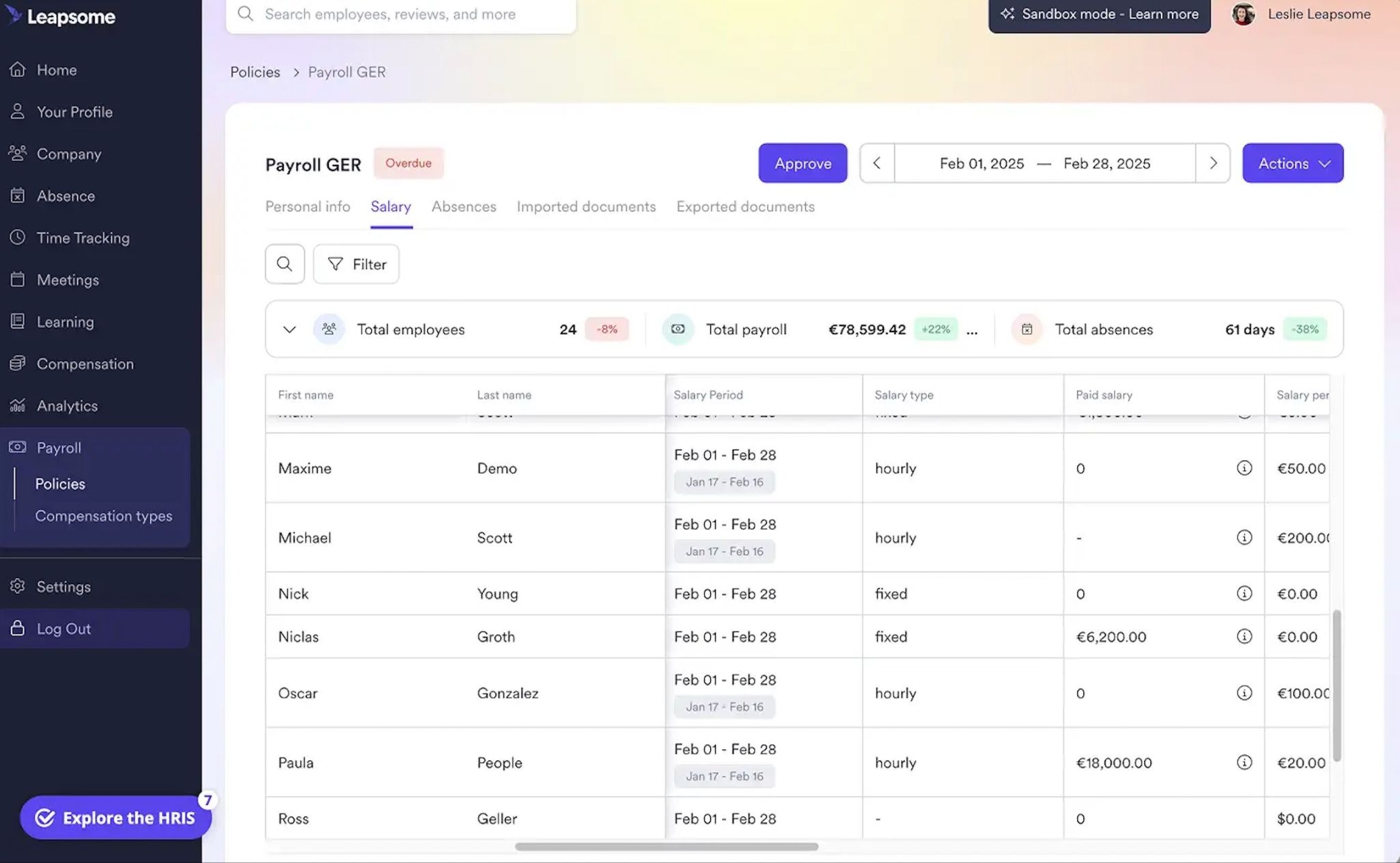
🌐Verabschiedet euch von manuellen Übergaben bei Multi-State Payroll
Leapsome synchronisiert Mitarbeitendendaten in Echtzeit mit euren Payroll-Daten, reduziert automatisch Fehler und entlastet HR administrativ.
👉 Erfahrt mehr über Payroll Prep
Multi-State Payroll vereinfachen mit Leapsome
Multi-State Payroll ist immer etwas mühsam, aber es wird deutlich schlimmer, wenn ihr gleichzeitig mehrere HR-Systeme jonglieren müsst. Da Steuer- und Rechtsanforderungen immer komplexer werden, braucht ihr alle Mitarbeitendendaten an einem Ort.
Leapsome verschafft eurem HR-Team die Transparenz, die es dringend braucht, um das Unternehmen beim Wachstum compliant zu halten. Dank integrierter HRIS- und People-Management-Funktionen könnt ihr:
- Systemweite Aktualisierungen der Mitarbeitendendaten pflegen: Statt Dateien manuell zwischen Systemen abzugleichen, verwaltet ihr relevante Payroll-Daten automatisch auf einer Plattform.
- Direkt mit eurem Payroll-Anbieter synchronisieren: Streicht manuelle Aufgaben und vereinfacht Übergaben, indem ihr Leapsome mit einem Payroll-Anbieter wie ADP verknüpft.
- Compliance in eure Workflows einbauen: Konfiguriert Richtlinien für unterschiedliche Standorte und Mitarbeitendengruppen und definiert spezifische Payroll-Strukturen und Steuerregeln.
„Mitarbeitende finden jetzt alles an einem Ort: ihre Daten, Abwesenheiten, Ziele und Reviews. Ich muss nicht erklären, welches Tool wofür genutzt wird. Es ist alles in Leapsome.“ Merilyn L, Senior People Operations Specialist bei Bob W.
📊 Behaltet die Kontrolle über die Daten hinter eurem Multi-State-Payroll-Prozess
Leapsome gibt HR einen zentralen Ort, um Mitarbeitendenänderungen zu verfolgen und zu verwalten, sodass die Datenflüsse zur Payroll immer aktuell sind.
👉 Demo anfragen
FAQ
Welche Plattform übernimmt Multi-State Payroll?
Die meisten großen Payroll-Anbieter, wie ADP, können Multi-State Payroll Processing übernehmen. Manche Unternehmen lagern die Payroll-Verantwortung stattdessen an einen externen Dienstleister wie einen PEO aus.
Wie halten Unternehmen Multi-State Payroll compliant?
Payroll-Compliance erfordert, in allen Bundesstaaten, in denen Mitarbeitende leben und arbeiten, immer auf dem neuesten Stand der Gesetze zu bleiben. Außerdem müsst ihr Mitarbeitendendaten aktuell und gut organisiert halten. Erwägt eine All-in-one-Plattform wie Leapsome für die Verwaltung eurer Payroll-Daten und holt euch Rechtsberatung, um sicherzustellen, dass eure Prozesse mit allen geltenden Gesetzen übereinstimmen.




.png)