Wie HR-Scorecards die Wirkung von HR aufs Geschäft zeigen, nicht nur in Zahlen


Die meisten HR-Abteilungen ertrinken in Daten. Trotzdem denken nur 12 % der HR-Verantwortlichen in den USA bei der Personalplanung über die nächsten zwei Jahre hinaus.* Schwache langfristige Planung entsteht nicht durch leere Dashboards, sondern durch überlastete People-Teams, die beweisen müssen, dass der Betrieb funktioniert, während sie gleichzeitig kämpfen, der Führungsebene die Schwachstellen aufzuzeigen.
Die meisten Unternehmen verfolgen Engagement, Performance sowie Einstellung und Bindung bereits in irgendeiner Form. Wenn diese Zahlen in getrennten Systemen liegen oder nur Aktivität ohne Kontext messen, ist es schwer, die zugrunde liegenden Muster zu erkennen, geschweige denn zu erklären, was sie für das Wachstum bedeuten.
Im besten Fall verwandelt eine HR-Scorecard verstreute People-Metriken in klare Einblicke in die organisatorische Gesundheit. Doch zu viele HR-Scorecards haben diesen Zweck verloren und belegen stattdessen nur noch die Aktivität von HR-Teams.
In diesem Artikel gehen wir durch, welche Metriken einen Platz auf eurer HR-Scorecard verdienen und wie starke Scorecards Teil eurer Wachstumsstrategie sein können. Außerdem gibt es eine kostenlose Vorlage zum Einstieg.
* McKinsey, 2025
Was ist eine HR-Scorecard?
Eine HR-Scorecard ist ein Tool, mit dem ihr zeigen könnt, wie eure People-Initiativen die übergeordneten Unternehmensziele unterstützen. Sie bringt HR-Projekte, die zugehörigen Metriken und deren Geschäftsauswirkung an einem Ort zusammen, wie ein Cheat-Sheet, das die gesamte Arbeit eures Teams sichtbar macht. Richtig eingesetzt, helfen sie Führungskräften, operative Prioritäten jenseits der Finanzzahlen zu verstehen.
Viele People-Analytics-Dashboards zeigen, wie viele Personen einen Review-Zyklus abgeschlossen oder auf eine Mitarbeiterumfrage geantwortet haben. Diese Zahlen können nützlich sein, sind aber nicht umsetzbar, solange sie Führungskräften nicht zeigen, was funktioniert und was sich ändern muss. HR-Scorecards messen die Leistung über Geschäftsprioritäten hinweg mit dem Balanced-Scorecard-Framework, das finanzielle, kundenbezogene, interne und lern- und wachstumsbezogene Perspektiven als gleich wichtig behandelt.
Was sollte eine HR-Scorecard enthalten?
„Die Metriken, die das Leadership verfolgt, sollten zu dem passen, was HR einbringt: Daten und Stimmungsbilder müssen zusammenwirken, um die volle Wirkung zu zeigen.“
Luck Dookchitra, früher VP of People and Culture bei Leapsome
Die richtigen HR-Scorecard-Metriken hängen von der Größe, Reife und den aktuellen Zielen eures Unternehmens ab. Eine Organisation mit 200 Mitarbeitenden, die die Fluktuation senken will, braucht andere Kennzahlen als ein globales Unternehmen, das eine Talent-Scorecard zur Planung der Führungsnachfolge nutzt.
Dennoch decken die meisten nützlichen HR-Scorecards Metriken aus folgenden Bereichen ab:
- Finanzielle Wirkungsmetriken zeigen, wie Personalentscheidungen Geschäftskosten verursachen oder Wert schaffen. Beispiele sind Fluktuationskosten, Umsatz pro Mitarbeitendem und Kosten pro Einstellung.
- Employee-Experience-Metriken helfen Führungskräften zu verstehen, ob sich Mitarbeitende ausreichend unterstützt fühlen, um gute Leistungen zu erbringen und im Unternehmen zu bleiben. HR-Teams verfolgen dafür zum Beispiel ihren Employee Net Promoter Score (eNPS), die Effektivität von Führungskräften und die interne Mobilitätsrate.
- Interne HR-Prozessmetriken zeigen, ob zentrale Personalprozesse wie vorgesehen funktionieren. Dazu zählen Time to Hire, Onboarding-Abschlussrate und die Abschlussquote der Review-Zyklen.
HR-Scorecard-Vorlage
Eine Metrik verdient nur dann einen Platz auf der Scorecard, wenn sie dem Leadership hilft, bessere Entscheidungen zu treffen.
Hier ist ein Beispiel für eine einfache HR-Scorecard zum Einstieg.
| Geschäftspriorität | Zu messendes People-Ergebnis | Metrik | Warum sie Führungskräften bei Entscheidungen hilft |
|---|---|---|---|
| Employee Experience | Bindungsrisiko | eNPS, nach Team segmentiert | Führungskräfte erkennen, wo Probleme mit Stimmung oder Vertrauen zu Fluktuation führen können |
| Interner HR-Prozess | Personalplanung verbessern | Time to Hire | HR und Leadership planen Einstellungsstrategien mit weniger Annahmen |
| Lernen und Wachstum | Effektivität von Führungskräften stärken | Review-Qualitätswert | Zeigt, ob Führungskräfte Mitarbeitenden nützliches Feedback geben |
| Lernen und Wachstum | Zukünftige Fähigkeiten aufbauen | Kompetenzniveaus | Zeigt, ob Lernmaßnahmen das Unternehmen auf zukünftige Anforderungen vorbereiten |
So entwickelt ihr eine HR-Scorecard in drei Schritten
„Kennt euer Ergebnisziel, messt den Fortschritt und führt ein Dashboard. Das hält People-Teams auf Strategie fokussiert, nicht nur auf das Tagesgeschäft.“
Luck Dookchitra, früher VP of People and Culture bei Leapsome
Jede HR-Scorecard sieht anders aus, weil jedes Unternehmen andere Belastungspunkte hat. Aber alle HR-Teams können mit den folgenden drei Schritten starten, um ihre Scorecard davor zu bewahren, zu einem weiteren Satz HR-KPIs zu werden, die verstauben.
Schritt 1: Startet mit Geschäftszielen, nicht mit HR-Metriken
„Engagement-Werte und Vertrauensmetriken sind Signale, keine Ziele. Wenn eine Metrik die Geschäftsergebnisse nicht beeinflusst, lasst sie fallen und konzentriert euch auf das, was wirkt.“
Melanie Naranjo, Chief People Officer bei Ethena
Manche Teams sind versucht, ihre HR-Scorecard mit der Auswahl von KPIs zu beginnen, besonders solchen, zu denen sich leicht Daten sammeln lassen. Sie ziehen vielleicht die aktuelle Quartals-Fluktuationsrate heran und Trainingsraten aus dem Anteil der Mitarbeitenden, die einen allgemeinen Skills-Kurs abgeschlossen haben. Dann versuchen sie, diese Zahlensammlung strategisch aussehen zu lassen, während das Leadership die Punkte selbst verbinden und Entscheidungen auf Vermutungen stützen muss.
Statt bei der Metrik zu starten und Geschäftspläne um die Zahlen herum zu biegen, macht euer HR-Scorecard-Framework strategischer, indem ihr stattdessen bei der Geschäftspriorität ansetzt. Will das Unternehmen zum Beispiel den Umsatz steigern, ohne neue Mitarbeitende einzustellen, muss das Leadership wissen, ob der aktuelle Personalplan dieses Ziel unterstützen kann.
Schritt 2: Bestimmt die Ergebnisse für eure Mitarbeitenden, die diese Ziele vorantreiben
Sobald die Geschäftsziele klar sind, kann HR die Rahmenbedingungen definieren, die sie unterstützen, um einen umsetzbaren People-Plan zu erstellen.
Um bei unserem Umsatzbeispiel zu bleiben: Nachhaltiges Wachstum hängt von zwei People-Ergebnissen ab. Mitarbeitende müssen produktiv sein und Arbeit leisten, die tatsächlich Umsatz bewegt, und Führungskräfte müssen stärkere Leistung fördern, ohne ihr Team in ein Burnout zu treiben.
Diese Ergebnisse machen die Scorecard nützlicher, da sie zeigen, ob die Organisation den Fokus und die Führungskapazität hat, um gesund zu wachsen. Dieser Schritt legt außerdem klar fest, welche Maßnahmen zu ergreifen sind und wie Erfolg für Führungskräfte und Mitarbeitende aussieht, damit alle auf demselben Stand bleiben.
Schritt 3: Wählt wenige, umsetzbare Metriken aus
„Entwickelt Metriken, die direkt mit Geschäftsergebnissen verknüpft sind, und präsentiert sie in einem Format, das das Unternehmen versteht.“
Katerina Arsova, Head of People and Talent Operations and Partnerships bei Leapsome
Der nächste Schritt ist, nur wenige Metriken auszuwählen, um People-Ergebnisse zu messen.
Wenn das Geschäftsziel darin besteht, den Gesamtumsatz durch höhere Mitarbeiterproduktivität zu steigern, könnte HR zum Beispiel die KPI-Abschlussrate verfolgen, um Führungskräften zu zeigen, ob Mitarbeitende die richtigen Prioritäten vorantreiben. Außerdem lohnt es sich, Umfragen zu versenden und Zufriedenheitswerte der Mitarbeitenden zu verfolgen, die Warnsignale liefern können, wenn Mitarbeitende auf ein Burnout zusteuern oder zu einem Abwanderungsrisiko werden.
Aber jede Metrik braucht Kontext. Liegt das Feedback aus Umfragen in einem separaten System als Ziele und Performance-Daten, kann HR einen Stimmungsrückgang bemerken, ohne zu verstehen, was er für die Umsetzung bedeutet. Teams können ihre Ziele weiterhin erreichen, während die Motivation sinkt oder das Vertrauen in die Führung schwindet. Deshalb braucht HR ein vernetztes HRIS- und People-Management-System wie Leapsome, um Muster früh genug zu erkennen und zu handeln.
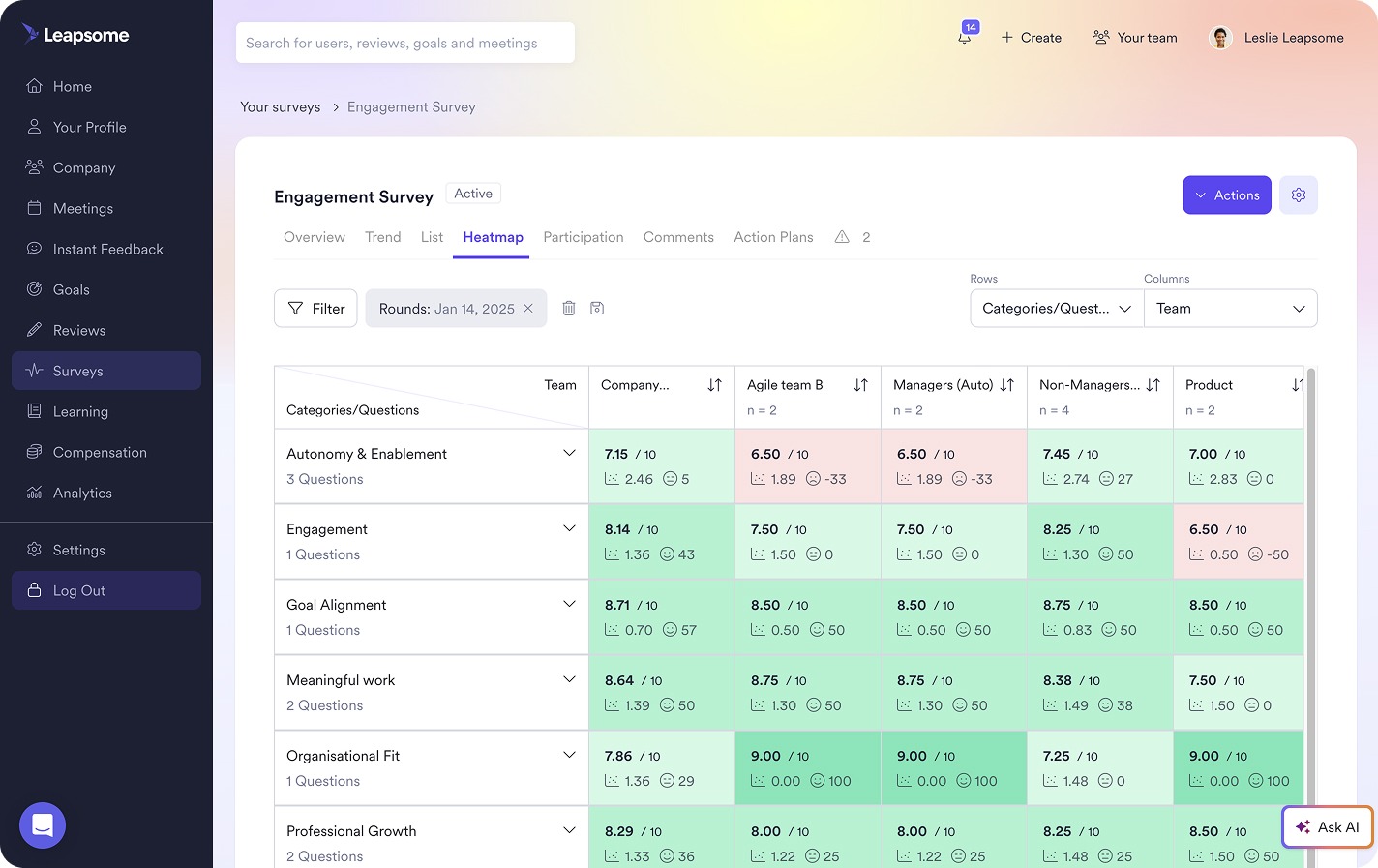
🔗 Verbindet Sentiment mit Performance
Leapsome hilft HR-Teams, das Sentiment der Mitarbeitenden mit Zielen und Performance-Signalen zu vergleichen, damit sie erkennen, welche People-Prozesse gute Arbeit unterstützen und was im Weg steht.
👉 Entdeckt Engagement Surveys
So baut ihr eine HR-Scorecard, die Geschäftsentscheidungen beeinflusst
„Wer die Sprache spricht, die Führungskräfte verstehen (in Metriken und ROI, die überzeugen), gewinnt Business Cases für HR-Teams.“
Katerina Arsova, Head of People and Talent Operations and Partnerships bei Leapsome
Das Leadership braucht keine längere Liste der HR-Prozesse. Es muss sehen, wo Investitionen in Mitarbeitende die Leistung verbessern, wo Personalrisiken steigen und wo es eingreifen muss, damit das Unternehmen seine Ziele erreicht.
Hier sind ein paar Beispiele für den Unterschied zwischen Metriken, die auflisten, was euer Team tut, und Metriken, die die Wirkung dieser Arbeit zeigen, sowie die Fragen, die diese Metriken beantworten, damit Führungskräfte die organisatorische Wirkung verstehen.
| Frage des Leaderships | Aktivitätsmetrik | Ergebnismetrik |
|---|---|---|
| Unterstützt die Einstellung von Personal das Wachstum, oder werden nur Stellen besetzt? | Anzahl der Einstellungen | Qualität der Einstellung |
| Führen Investitionen ins Lernen zu mehr Kompetenz? | Abschlussrate von Trainings | Geschlossene Kompetenzlücken |
| Fühlen sich Mitarbeitende ausreichend unterstützt, um Leistung zu bringen und zu bleiben? | Umfragebeteiligung | Grad des Mitarbeitenden-Engagements |
Egal, welche Metriken ihr wählt: Konzentriert euch auf die folgenden drei Prinzipien, um eine HR-Scorecard aufzubauen, die Entscheidungen vorantreibt:
- Metriken fokussiert halten: Wählt die KPIs, die direkt mit aktuellen Geschäftsprioritäten verknüpft sind, und verschiebt alles andere ins operative Reporting.
- Kontext hinzufügen: Setzt auf ein vernetztes People-System, das jede Metrik mit einem Trend, Segment oder Treiber verknüpft, damit Führungskräfte verstehen, was sich geändert hat und warum.
- Jede Metrik an ein strategisches Ziel knüpfen: Stellt sicher, dass jede Zahl Führungskräften hilft zu entscheiden, wo investiert werden sollte und wo ein Kurswechsel nötig ist.
Laut Gartner glauben nur 35 % der Führungskräfte, dass ihr Ansatz für HR-Technologie sie in die Lage versetzt, Geschäftsziele zu erreichen. Die Lösung liegt also nicht in größeren Scorecards und Vanity-Metriken aus unverbundenen Systemen, sondern darin, diese Daten über euren Tech-Stack so zu präsentieren, dass sie Führungskräften bessere Entscheidungen ermöglichen. Leapsome sammelt und verbindet diese Informationen, damit ihr eure Argumente untermauern könnt.
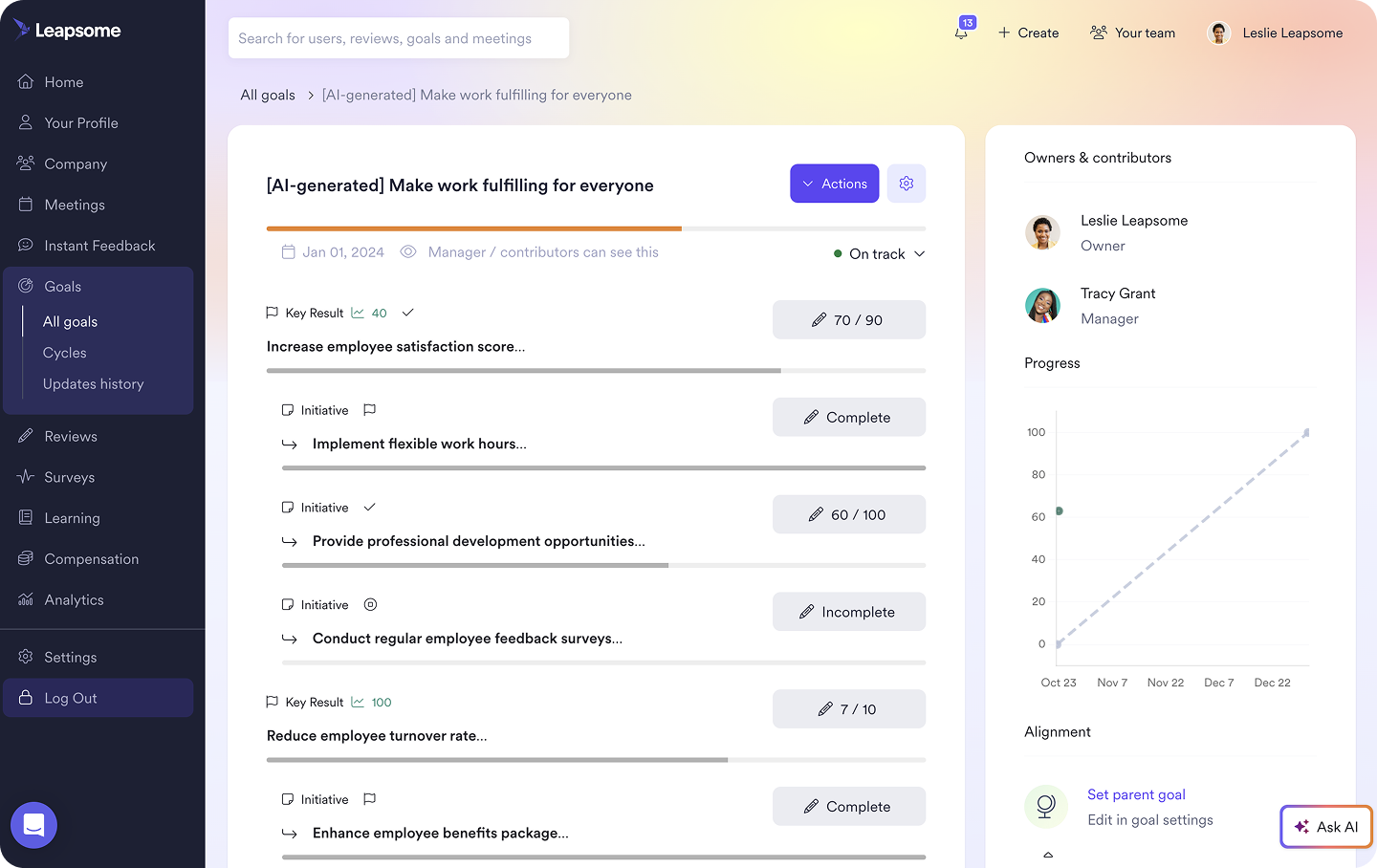
🔭 Zeigt, was das Unternehmen bewegt
Leapsome verbindet Performance-Daten der Mitarbeitenden mit Geschäftszielen, damit HR-Teams dem Leadership zeigen können, welche People-Initiativen aussagekräftige Ergebnisse liefern.
👉 Entdeckt Goals & OKRs
So unterstützt Leapsome Unternehmen beim Aufbau einer strategischen HR-Scorecard
Fragt das Leadership nach einer aufwendigen HR-Scorecard immer noch „na und?“, liegt das Problem nicht am Format oder an der Anzahl der gewählten Metriken. Es ist die fehlende Verbindung hinter den Zahlen.
Leapsome hilft HR-Teams, stärkere Scorecards aufzubauen, indem es People-Daten in einer vernetzten HR-Plattform zusammenführt. Statt isolierte Metriken zu melden, die nichts bewegen, sehen Teams, wie Personalsignale die organisatorische Gesundheit prägen.
Mit Leapsome können Teams:
- Performance mit Geschäftsprioritäten verknüpfen: Goals & OKRs verfolgen den Fortschritt gegenüber den Geschäftszielen und geben HR einen klareren Blick darauf, wie die Leistung der Mitarbeitenden die Unternehmensprioritäten unterstützt.
- Review-Zyklen in nutzbare Performance-Insights verwandeln: Performance Reviews helfen HR-Teams, Teamqualität, die Effektivität von Führungskräften und Entwicklungsbedarf jenseits von Abschlussquoten zu verstehen.
- Engagement-Daten als Frühindikator nutzen: Engagement Surveys geben Mitarbeitenden die Möglichkeit, Bedenken zu äußern, damit HR-Teams Stimmungstrends erkennen, bevor mangelndes Engagement Bindung oder Leistung beeinträchtigt.
- Reports auf verlässlichen Personaldaten aufbauen: Employee Records schaffen eine Single Source of Truth für Reportings, mit mehr Sicherheit und weniger manuellen Korrekturen.
„Wir konzentrieren uns wirklich darauf, dass die Daten, die wir erzeugen, qualitativ hochwertig und länderübergreifend konsistent sind. Gute Daten helfen uns, Schwachstellen früh zu erkennen, Entwicklungsmaßnahmen zu planen und dem Unternehmen klare, umsetzbare Erkenntnisse zurückzugeben.“ Victor Tomas, Learning and Development Specialist bei Swapfiets
📦 Hört auf, nur Zahlen zu sammeln. Fangt an, sie zu verbinden.
Leapsome verbindet alle eure People-Daten und Insights über den gesamten Employee Lifecycle hinweg, damit euer HR-Team mit Scorecards klügere Geschäftsentscheidungen treffen kann.
👉 Demo buchen

.jpg)



.png)