Attrition Rate: die Formel und was sie über euer Unternehmen verrät


Ein einfacher Weg, um eurem Verdacht auf steigende Kündigungen im Unternehmen auf den Grund zu gehen, ist die Berechnung eurer Attrition Rate: dem Anteil der Mitarbeitenden, die ohne Nachbesetzung das Unternehmen verlassen. Gallup-Daten zeigen, dass Mitarbeitende heute häufiger als je zuvor nach neuen Möglichkeiten Ausschau halten. 51 % der Befragten geben an, dass sie entweder beiläufig suchen oder aktiv eine neue Stelle anstreben.* Attrition wirkt auf den ersten Blick wie eine simple Kennzahl, verrät aber auch viel darüber, wie gesund euer Unternehmen ist und wie es sich strukturell entwickelt.
In diesem Leitfaden gehen wir genau darauf ein und noch weiter: Ihr erfahrt, warum Mitarbeitende das Unternehmen verlassen und wie ihr Retention-Risiken entgegenwirkt, um Headcount und Stimmung hochzuhalten.
* Gallup, 2024
Was ist eine Attrition Rate?
Die Attrition Rate ist der Anteil der Mitarbeitenden, die euer Unternehmen in einem bestimmten Zeitraum (meist monatlich) verlassen, ohne direkt ersetzt zu werden. Sie zeigt nicht nur, wie schnell euer Unternehmen schrumpft, sondern hängt oft auch mit weiteren organisatorischen Veränderungen und Herausforderungen zusammen, etwa mit Führungsproblemen und nachlassendem Mitarbeiterengagement.
Hier ist die Grundformel zur Berechnung der Attrition Rate:
Attrition Rate = (Anzahl ausgeschiedener Mitarbeitender / Gesamtzahl der Mitarbeitenden) * 100 %
Wenn euer Unternehmen im August im Schnitt 200 Mitarbeitende hatte und 10 davon ohne Nachbesetzung ausgeschieden sind, liegt die Attrition Rate bei 5 %.
Ein gewisses Maß an Attrition lässt sich nicht vermeiden, und wie häufig Mitarbeitende das Unternehmen verlassen, hängt stark von der Branche ab. Im Einzelhandel liegt die Attrition tendenziell höher als etwa im Finanzwesen oder im öffentlichen Sektor, und je höher die Position, desto geringer die Wahrscheinlichkeit, dass jemand das Unternehmen verlässt (laut einem aktuellen Mercer-Report). Dieselbe Studie ergab, dass die durchschnittliche Attrition Rate in den USA zwischen Q4 2024 und Q3 2025 bei rund 13 % lag.
Attrition Rate vs. Fluktuationsrate
Fluktuation ist eine weitere Kennzahl, die oft im gleichen Atemzug mit der Attrition Rate genannt wird, misst aber einen anderen Trend in der Belegschaft. Während die Attrition Rate zeigt, dass Stellen ganz wegfallen, konzentriert sich die Fluktuation auf den Kreislauf aus Abgängen und Nachbesetzungen. HR-Verantwortliche sollten Fluktuation daher als Teil des normalen Personalbetriebs betrachten, der den gesamten Headcount nicht beeinflusst, während Attrition ein größeres Problem darstellen kann.
Die Fluktuationsrate misst die Anzahl der Mitarbeitenden, die ein Unternehmen verlassen und ersetzt werden. Wenn beispielsweise drei Mitarbeitende in den Ruhestand gehen und das Unternehmen sie nicht ersetzt, zählt das als Attrition. Werden dagegen drei neue Teammitglieder für diese Rollen eingestellt, zählen die ausgeschiedenen Mitarbeitenden zur Fluktuation.
Attrition erfasst ausschließlich Mitarbeitende, die das Unternehmen verlassen und nicht ersetzt werden. Das bedeutet: Bleibt die Attrition Rate dauerhaft hoch, schrumpft euer Headcount mit der Zeit, ob beabsichtigt oder nicht. Höhere Attrition-Raten können auch aus geplanten Maßnahmen entstehen und etwa im Zuge größerer Restrukturierungen oder Abteilungszusammenlegungen steigen.
Die Rolle von Attrition in eurer Unternehmensstrategie
„Setzt auf Entwicklung statt auf reines Wachstum. Schritt für Schritt, nicht im großen Sprung. Investiert kontinuierlich und fördert die Stärken eurer Mitarbeitenden, damit sie bessere Leistungen erbringen können.“
Steve Browne, Chief People Officer bei LaRosa's
Attrition und Fluktuation getrennt zu betrachten, ist wichtig, wenn ihr eine stärkere People-Strategie aufbauen wollt, denn beide Kennzahlen erzählen eine andere Geschichte.
Kurz gesagt: Attrition zeigt meist, wie sich euer Unternehmen strukturell verändert, während Fluktuation mehr darüber verrät, wie gut ihr eure Teams haltet und weiterentwickelt. Fluktuation hält die Unternehmensgröße stabil, aber höhere Raten können auf Führungsprobleme oder Schwachstellen in der Employee Experience hindeuten (zum Beispiel eine unpassende Vergütung oder fehlende Entwicklungsmöglichkeiten). Gleichzeitig kann eine hohe Attrition Rate auch aus tiefgreifenden strukturellen Veränderungen resultieren, die das Mitarbeiterengagement langfristig verbessern.
Steigt eine der beiden Raten, ist es wichtig, das Warnsignal zu erkennen und die Gründe dahinter zu untersuchen.
Was die Attrition Rate über die Gesundheit eures Unternehmens verrät
Wenn Mitarbeitende das Unternehmen verlassen, ohne ersetzt zu werden, ist das meist ein Symptom eines angeschlagenen Systems. Effektive HR-Teams sollten Attrition als Warnsignal für tiefere strukturelle oder Führungsprobleme verstehen, etwa:
- Schwache Führungsqualität: Das Gefühl, dass die Führungskraft hinter einem steht, ist einer der wichtigsten Gründe, im Unternehmen zu bleiben. Laut Gallup-Studien macht allein dieser Faktor 70 % der Varianz im Team-Engagement aus und ist damit einer der wichtigsten Hebel für die Retention.
„Wenn Führungskräfte einzelne Beiträge sehen und aktiv benennen, entsteht Sinn und Zugehörigkeit. Das gilt besonders, wenn alle nur vor einem Bildschirm sitzen.“
Luck Dookchitra, ehemalige VP of People and Culture bei Leapsome
- Geringes Mitarbeiterengagement: Laut Gallup fühlen sich nur 20 % der Belegschaft wirklich engagiert, was ein häufiges Retention-Risiko darstellt. Neben schwachen Führungsstrategien können auch andere engagement-mindernde Faktoren wie Burnout oder das Gefühl, von der Arbeit abgekoppelt zu sein, die Attrition Rate in die Höhe treiben.
- Begrenzte Karrierechancen: Sehen Mitarbeitende in ihrer aktuellen Rolle keine langfristige Karriereperspektive, schauen sie sich womöglich anderswo um. Deshalb gaben 90 % der Unternehmen, die an LinkedIns Workplace Learning Report 2024 teilnahmen, an, dass Entwicklungs- und Lernmöglichkeiten ihre wichtigste Retention-Strategie sind. Starke L&D-Programme sind zugleich eine Investition in die bestehende Belegschaft, also eine Win-win-Situation.
Mitarbeitende kündigen nicht sofort, wenn sie merken, dass ihre Führungskraft kein besseres Feedback gibt und der Beförderungsweg bestenfalls unklar ist. Es dauert eine Weile, bis die Attrition Rate steigt. Statt erst im Nachhinein zu reagieren, können effektive HR-Teams Tools wie Leapsome nutzen, um Muster frühzeitig zu erkennen. Mit Leapsomes All-in-one-HRIS habt ihr einen klaren Überblick über die gesamte Employee Experience und könnt schnell handeln. Integrierte Tools wie Engagement-Umfragen und Performance Reviews machen es einfach, laufend Feedback zu sammeln, damit ihr rechtzeitig Retention-Strategien entwickelt, bevor Attrition zum Notfall wird.
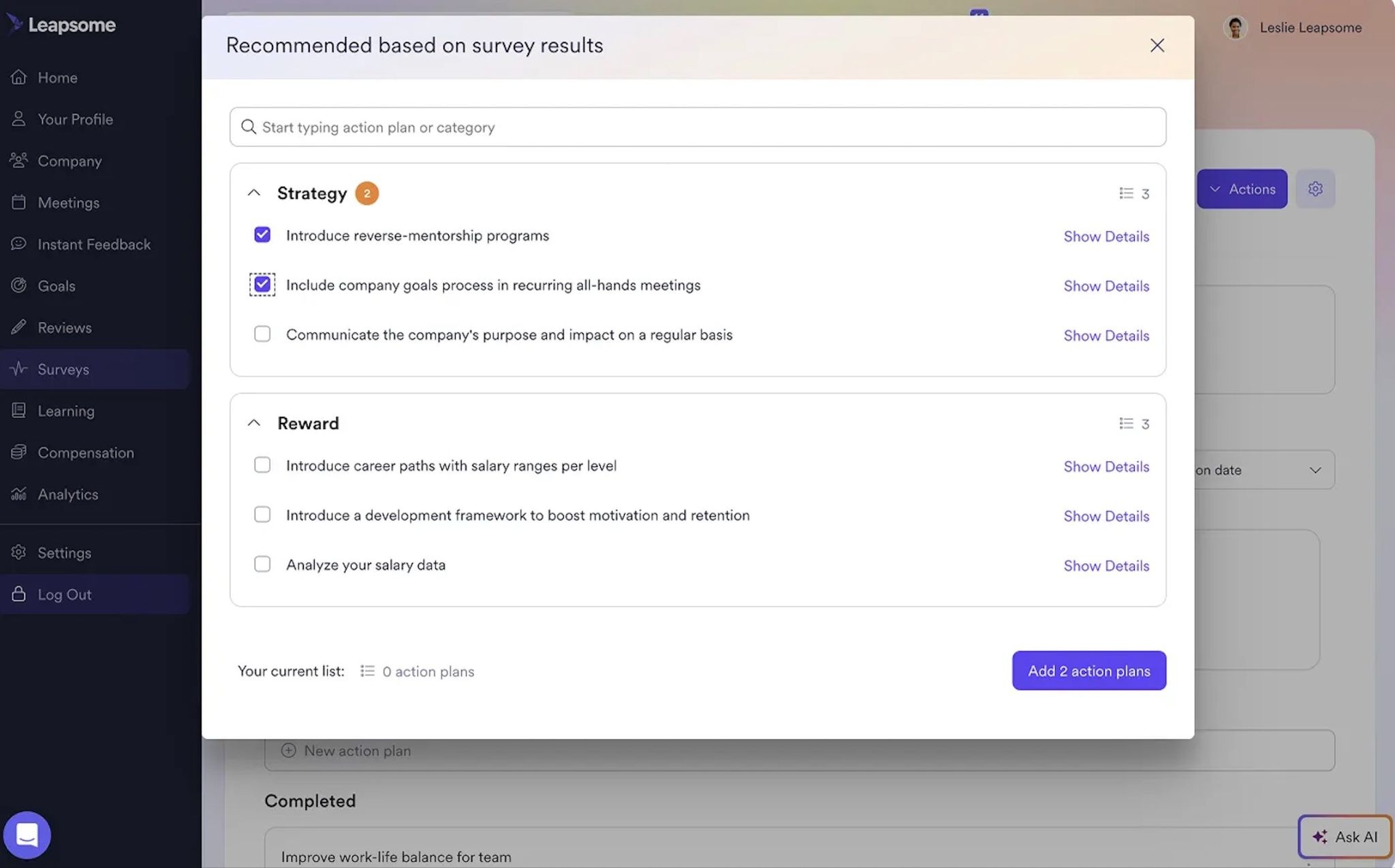
🔮 Bezieht die Meinung eurer Mitarbeitenden für mehr Zufriedenheit mit ein
Mit Leapsome verschickt ihr Mitarbeiterumfragen auf einer einheitlichen Plattform und sammelt Daten, die ihr mit anderen operativen Veränderungen verknüpfen und für proaktive Retention-Strategien nutzen könnt.
👉 Mitarbeiterumfragen entdecken
So senkt ihr eure Attrition Rate strategisch
Beim Senken der Attrition geht es nicht darum, Mitarbeitende für immer zu halten. Selbst in einem perfekten Unternehmen verlassen Menschen das Unternehmen aus persönlichen Gründen oder für neue Möglichkeiten. Der Fokus sollte stattdessen darauf liegen, strukturelle Probleme wie schwache Führung oder begrenzte Entwicklungsmöglichkeiten aufzudecken und zu beheben, die Mitarbeitende aus dem Unternehmen treiben.
Führungseffektivität verbessern<
„Eine ineffektive Führungskraft nimmt sich keine Zeit, ihre Mitarbeitenden zu verstehen oder Vertrauen aufzubauen. Die besten Führungskräfte kümmern sich wirklich, wissen, wohin ihr euch entwickeln wollt, fordern euch heraus, wenn es nötig ist, und schaffen Raum für ehrliches Feedback.“
Luck Dookchitra, ehemalige VP of People and Culture bei Leapsome
Der Spruch „Mitarbeitende verlassen nicht Unternehmen, sondern Führungskräfte“ kommt nicht von ungefähr. Das bestätigt auch die Forschung: Laut SHRM besteht ein starker Zusammenhang zwischen der Effektivität von Führungskräften und dem Gefühl von Mitarbeitenden gegenüber ihrer Rolle im Unternehmen.
Gezielte Trainingsmaßnahmen für Führungskräfte, etwa Schulungen zu Führungskompetenzen oder konsequentere Feedback-Praktiken, sind ein einfacher Hebel, um die Attrition Rate spürbar zu verbessern.
Mitarbeiterengagement und -entwicklung stärken
„Unengagierte Mitarbeitende, die still bleiben, können ein Unternehmen schneller auszehren als jene, die es verlassen. Bei Engagement geht es nicht darum, wer bleibt, sondern wer sich mit Energie und Eigenverantwortung einbringt.“
Emma Leeds, Founder and CEO bei People Function
Wenn ihr ein Umfeld schafft, in dem Mitarbeitende eine Zukunft für sich sehen, etwa durch interne Aufstiegsmöglichkeiten und kontinuierliche Lerninitiativen, haben sie mehr Gründe zu bleiben und sich einzubringen.
Wie SHRM in seinem Report „Employee Retention Technologies“ feststellt, bleiben Mitarbeitende eher im Unternehmen und ziehen es durch, wenn sie glauben, dort wachsen und sich weiterentwickeln zu können.
Workforce Analytics proaktiv nutzen
Ein häufiger Fehler ist es, erst nach einem spürbaren Anstieg auf die Attrition Rate zu reagieren. Zu diesem Zeitpunkt bestehen die zugrunde liegenden Probleme meist schon seit Monaten. Das bedeutet, ihr habt ein langes Zeitfenster verpasst, um eure internen Kapazitäten und euer institutionelles Wissen zu sichern.
Effektive HR-Verantwortliche gehen proaktiv gegen Attrition vor, indem sie ihre People-Daten nutzen, um Retention-Risiken zu erkennen. Das Tracking mehrerer Kennzahlen wie Engagement-Werte, Führungseffektivität sowie Betriebszugehörigkeit und Beförderungsraten hilft euch, Trends zu erkennen und wirksamere Strategien zu entwickeln.
Leapsome macht es einfacher, das Attrition-Risiko zu minimieren, indem alle Mitarbeitendendaten auf einer HR-Plattform zusammenlaufen. Performance Reviews sind ein besonders wertvolles Instrument, um Retention-Risiken zu erkennen, und mit Leapsome speichert ihr diese wertvollen Erkenntnisse zusammen mit Daten aus früheren Leistungs- und Peer-Reviews. Mit all diesen Daten an einem Ort (und AI-gestützten Empfehlungen) erkennt ihr, was funktioniert, und zeigt Führungskräften, wie sie die wirksamsten Reviews für mehr Retention gestalten.
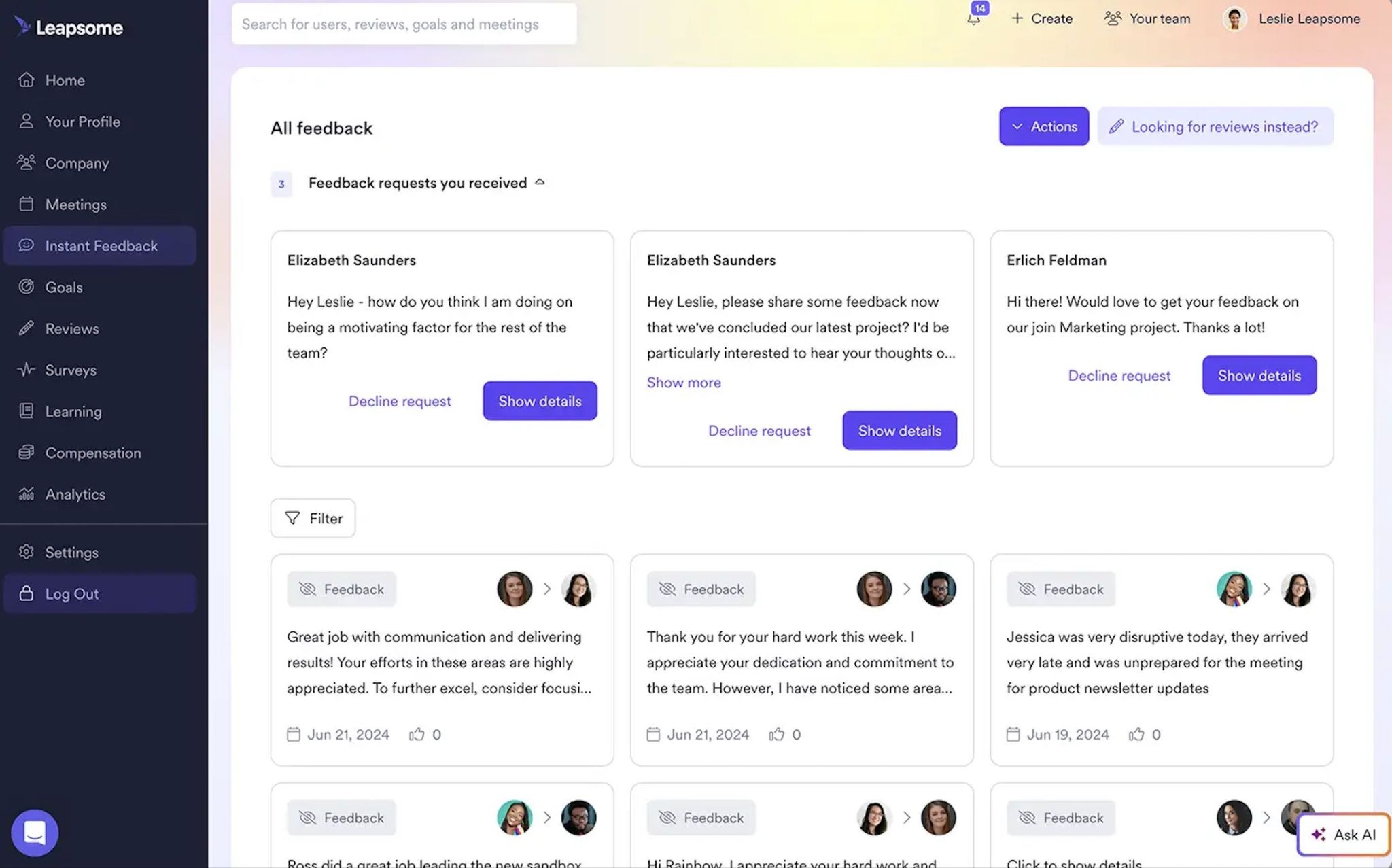
🚨 Attrition-Risiken auf Basis von Performance-Daten angehen
Nutzt Leapsomes Performance Reviews, um Mitarbeitende motiviert zu halten und Workforce-Trends im Blick zu behalten, bevor aus Retention-Risiken Kündigungsschreiben werden.
👉 Performance Reviews entdecken
Mitarbeiterbindung mit Leapsome verbessern
Retention-Probleme entstehen selten über Nacht. Sie beginnen dort, wo Unternehmen frühe Warnsignale übersehen, weil ihre Mitarbeitendendaten noch über verschiedene, unverbundene Systeme verteilt sind. Ohne klaren, umfassenden Überblick über vorausschauende Trends wie Engagement und Performance reagiert HR oft erst überstürzt, wenn Mitarbeitende das Unternehmen bereits verlassen haben.
Der erste Schritt bei jedem proaktiven Attrition-Management ist, alle Mitarbeitendendaten an einer zentralen Quelle der Wahrheit zusammenzuführen. Leapsomes HRIS- und People-Management-Plattform macht genau das möglich: Sie verknüpft eure aktuellen Engagement-Werte, Performance Reviews und euer Feedback mit historischen Daten und neuen Trends. Mit diesem einheitlichen Überblick über eure Abläufe versetzt ihr euer HR-Team in eine bessere Position, um Retention-Risiken frühzeitig zu erkennen und die Employee Experience zu verbessern, bevor Mitarbeitende gehen.
„Frühere Bewertungen, Feedback, Lob und private Notizen direkt während eines Beurteilungsgesprächs einsehen zu können, ist entscheidend, um Recall Bias zu reduzieren. Genau darum geht es uns. Wir wollen unserem engagierten Team gerecht werden und alle ihre Stärken und Schwächen so genau wie möglich berücksichtigen, wenn wir sie auf ihrem Karriereweg begleiten.“ Tara Todorovic, People Development Manager bei SIDES
👀Attrition frühzeitig erkennen und verlangsamen
Leapsomes HRIS- und People-Management-Tools helfen euch, Engagement-Probleme zu erkennen und schnell zu reagieren, für stärkere Retention im gesamten Unternehmen.
👉 Demo anfragen
FAQ
Was verursacht Attrition in der Belegschaft?
Meist steckt nicht nur ein einzelner Faktor hinter Attrition, viele Gründe überschneiden sich mit den Ursachen von Fluktuation: schwache Führungspraktiken, freiwillige Umstrukturierungen und hohes Disengagement. Der entscheidende Unterschied zwischen Attrition und Fluktuation ist jedoch, ob das Unternehmen plant, die Stelle wieder zu besetzen. Situationen, die den Headcount reduzieren (etwa Restrukturierungen oder Einstellungsstopps), treiben daher die Attrition Rate in die Höhe.
Was gilt als hohe Attrition Rate?
Die durchschnittliche Attrition Rate variiert je nach Branche. Vergleicht eure aktuellen Werte daher mit den relevanten Branchen-Benchmarks. Alles, was über diesem branchenweiten Durchschnitt liegt, oder eine kontinuierlich steigende Attrition Rate, sollte als Warnsignal gelten. Laut Mercers 2025er-Report hat der Einzelhandel in den USA mit 26,7 % die höchste Attrition Rate, die Versicherungsbranche mit 8,2 % die niedrigste.






.jpg)