Was ist Employee Monitoring? Der smartere Weg zu besserer Performance


HR-Verantwortliche müssen verstehen, wie Mitarbeitende ihre Arbeit tatsächlich erledigen. Das ist schwierig, wenn Teams über verschiedene Standorte und Tools verteilt arbeiten. Ohne klare Transparenz ist es schwer zu erkennen, was starke Leistung antreibt und wo die Arbeit ins Stocken gerät. Im Ergebnis wisst ihr nicht, ob Teams klarere Ziele, bessere Unterstützung oder praktischere Wege der Zusammenarbeit brauchen.
Employee-Monitoring-Software kann hier Licht ins Dunkel bringen, wenn ihr sie als Performance-Enablement-Tool einsetzt. Bei Tracking sollte es nicht darum gehen, Mitarbeitende beweisen zu lassen, dass sie online sind. Das schafft nur eine Kultur des Misstrauens. Stattdessen sollte es darum gehen, HR und Manager nützliche Leistungsdaten an die Hand zu geben, die sie mit Zielen, Feedback, Engagement und Entwicklungsinitiativen verknüpfen können.
In diesem Guide erklären wir, was Employee Monitoring ist und welche Produktivitätskennzahlen ihr im Blick behalten solltet. Außerdem zeigen wir, wie ihr Employee Monitoring nutzen könnt, ohne Vertrauen zu untergraben.
Was ist Employee Monitoring?
Employee Monitoring bezeichnet die Praxis, arbeitsbezogene Daten zu erfassen, um zu verstehen, wie Teammitglieder ihre Zeit verbringen, Systeme nutzen, kommunizieren und Erwartungen erfüllen. Diese Strategie hat mit der Zunahme von Remote- und Hybrid-Arbeitsplätzen an Popularität gewonnen. Laut einem Bericht von ExpressVPN setzen 74 % der Arbeitgeber Online-Monitoring-Tools ein, wobei 59 % Bildschirme in Echtzeit überwachen und 62 % Protokolle des Surfverhaltens führen.
Das Monitoring dieser Datenart kann Workforce Planning, Leistungsbeurteilungen, Compliance und Entscheidungen durch Manager unterstützen. Wie nützlich ein Employee-Tracking-System letztlich ist, hängt jedoch davon ab, ob HR nur Aktivitätsdaten sammelt oder sich die Zeit nimmt, diese Informationen in Produktivitäts-Insights zu verwandeln.
Reines Aktivitäts-Tracking misst nur Inputs, etwa Online-Stunden oder App-Nutzung. Diese Signale können bei Sicherheit, Zeiterfassung und Richtlinien-Compliance helfen. Sie erklären aber selten, ob eine Person Arbeit leistet, die tatsächlich Mehrwert schafft.
Werden diese Daten mit den tatsächlichen Ergebnissen kombiniert, erkennen Manager leichter, ob Mitarbeitende die Qualitätserwartungen erfüllen und gute Fortschritte machen. Das gibt HR wiederum mehr Kontext für Performance-Gespräche, weil Arbeitsmuster mit Ergebnissen verknüpft werden.
Zu den gängigen Arten von Employee Monitoring gehören:
- Time Tracking: Erfasst Arbeitsstunden, Anwesenheit und die auf Projekte oder Aufgaben verwendete Zeit. Diese Daten können präzise Lohnabrechnung und Kapazitätsplanung unterstützen.
- E-Mail-Tracking: Überprüft E-Mail-Aktivität wie Volumen und Antwortmuster. HR sollte E-Mail-Volumen nicht als Leistungswert behandeln, denn schnelle Antworten bedeuten nicht automatisch starke Ergebnisse.
- Website-Browsing: Erfasst, welche Websites Mitarbeitende auf Unternehmensgeräten oder im Firmennetzwerk besuchen. Unternehmen nutzen dieses Monitoring meist zur Unterstützung von Sicherheits- oder Nutzungsrichtlinien, nicht für Performance Management.
Warum klassisches Employee Monitoring scheitert
Klassisches Employee Monitoring erfasst oft die Signale, die sich am leichtesten sammeln lassen, etwa:
- Online-Stunden
- Mausbewegungen
- App-Nutzung
Diese Kennzahlen zeigen Aktivität, aber nicht zuverlässig Leistung. Eine Person kann acht Stunden online sein und trotzdem wenig erledigen oder an den falschen Prioritäten arbeiten. Ein anderes Teammitglied verbringt vielleicht weniger Zeit als der Durchschnitt in einer bestimmten App, weil es die Arbeit schneller erledigt hat oder sich auf konzentrierte Arbeit fokussiert hat, die Employee-Tracking-Software nicht erfassen kann.
„Beschäftigt sein heißt nicht, effektiv zu sein. Echte Produktivität beginnt mit Klarheit darüber, wie Erfolg aussieht und warum er wichtig ist. Wenn Menschen sehen, wie ihre Arbeit mit den Unternehmenszielen zusammenhängt, finden sie Energie und Sinn in dem, was sie tun.“
Priscila Bala, CEO bei LifeLabs Learning
Wenn Führungskräfte Aktivität mit Produktivität gleichsetzen, reagieren Mitarbeitende oft entweder mit „Performance für den Tracker“ oder fühlen sich vom Unternehmen misstrauisch behandelt. Laut Forbes Advisor geben 39 % der Mitarbeitenden an, dass die Überwachung ihrer Online-Aktivitäten ihre Beziehung zum Arbeitgeber negativ beeinflusst hat, während 43 % berichten, dass Tracking die Unternehmensmoral beeinträchtigt.
Die Alternative ist modernes Employee-Productivity-Monitoring, das auf Leistungsverbesserung statt Mikromanagement abzielt. Der Fokus sollte sich verschieben auf:
- Outputs: Messbare Arbeitsergebnisse betrachten, etwa Projektabschlüsse, Liefertermine, Qualitätsstandards sowie Kunden- oder Umsatzwirkung.
- Alignment: Individuelle Arbeit mit Teamzielen, OKRs und Unternehmensprioritäten verknüpfen.
- Engagement und Nachhaltigkeit: Signale wie Abwesenheitsmuster, Arbeitsbelastung, Feedback-Qualität und Burnout-Risiko prüfen.
Produktivitätskennzahlen, die echte Leistung zeigen
„Wir konzentrieren uns weiterhin darauf, wo Menschen arbeiten, statt darauf, wie sie arbeiten. Sichtbarkeit bedeutet nicht Produktivität. Das war nie so. Es sollte darum gehen, wie gearbeitet wird, nicht wo gearbeitet wird.“
Steve Browne, Chief People Officer bei LaRosa's
Um Produktivität fair zu messen, muss HR Leistung aus jedem Blickwinkel betrachten. Eine Führungskraft sieht Lieferung im Vergleich zu Erwartungen, Peers haben den besten Blick auf Zusammenarbeit und Verlässlichkeit, und direkt unterstellte Mitarbeitende wissen am meisten über die Führungsqualität. Wenn all diese Details über 360-Grad-Feedback gesammelt werden, erhält HR ein umfassendes Verständnis davon, wie Mitarbeitende arbeiten.
Zu den nützlichsten Benchmarks gehören:
- Gesamtleistung: Teams fassen Zielfortschritt und Review-Feedback häufig zu einem zusammenfassenden Leistungswert zusammen. Betrachtet das als Richtungssignal und prüft die zugrunde liegenden Belege, bevor ihr Entscheidungen trefft.
- Kernkompetenzen: Es ist wichtig, Mitarbeitende an den Skills und Verhaltensweisen zu messen, die ihre jeweilige Rolle erfordert. Hängt eine Rolle von funktionsübergreifender Arbeit ab, sollte das Review zeigen, ob die Person ihre Verantwortlichkeiten zuverlässig erfüllt und Probleme frühzeitig anspricht.
- Selbsteinschätzungen: Lasst Mitarbeitende ihren eigenen Fortschritt und Entwicklungsbedarf einschätzen. Vergleicht die Ergebnisse anschließend mit Daten zum Zielfortschritt und anderem Feedback. Nutzt ihr Leapsome für HR-Operations, können Manager während der Review-Zyklen ganz einfach Daten aus Selbsteinschätzungen, Zielverfolgung und 360-Grad-Feedback zusammenführen.
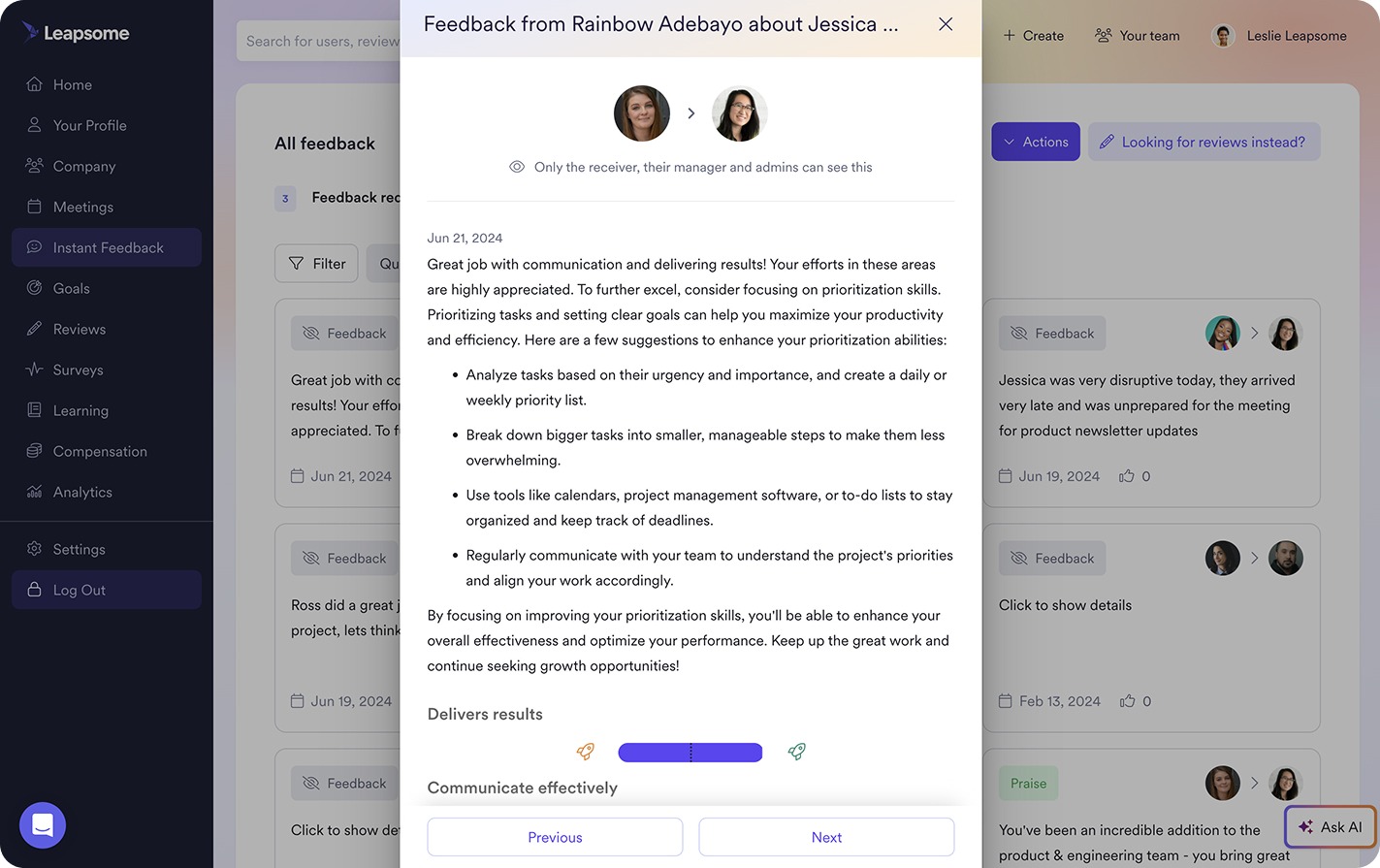
⚡ Leistungsmuster schnell erkennen
Mit Instant Feedback von Leapsome können eure Teams private Meinungen, öffentliches Lob und AI-gestützte Entwicklungs-Insights teilen, damit Manager Muster erkennen und Wachstum fördern können.
👉 Entdeckt Instant Feedback
Produktivitäts-Monitoring implementieren: Drei Schritte
Produktivitäts-Monitoring hilft HR zu verstehen, wie Arbeit teamübergreifend abläuft. Es kann aber auch dazu führen, dass sich Mitarbeitende beobachtet fühlen, als würde jeder Tastenanschlag geprüft, während Online-Zeit zum Ersatzmaßstab für Effizienz wird. APA-Forschung zeigt, dass 56 % der Arbeitnehmenden von Stress oder Angst durch Überwachung am Arbeitsplatz berichten.
„Wir messen weiterhin, ob Menschen erscheinen oder nicht. Wir sollten messen, was sie tun, wenn sie da sind. Menge misst nur Aktivität.“
Steve Browne, Chief People Officer bei LaRosa's
So baut ihr ein Framework auf, das Vertrauen schafft und Employee Monitoring auf Leistungsverbesserung fokussiert hält.
1. Problem und Ziel definieren
Ziele wie „Produktivität steigern“ klingen enthusiastisch, sagen euch aber nicht, was ihr messen sollt. Eine verantwortungsvolle Monitoring-Strategie beginnt damit, das konkrete Problem zu benennen und dann zu definieren, wie Verbesserung aussehen soll.
So gebt ihr dem Monitoring einen klaren Zweck, noch bevor ihr Work-Tracking-Software oder zu beobachtende Datenpunkte auswählt. Hier sind einige Beispiele für klare Problem-Ziel-Aussagen.
3 Anzeichen, dass euer Team von Employee Monitoring profitieren könnte
Das sind Muster, die Manager häufig bemerken, bevor sie Employee Monitoring einführen: So sehen das zugrunde liegende Problem und das Ziel meist aus.
2. Kennzahlen wählen, die geschäftlichen Wert widerspiegeln
Sobald ihr das Problem definiert habt, wählt Kennzahlen, die zeigen, ob das Unternehmen Fortschritte macht. Startet beim Ziel und arbeitet euch von dort aus vor. Zum Beispiel:
- Um die Liefer-Zuverlässigkeit zu verbessern: Zielfortschritt, Projektabschlüsse, Verteilung der Arbeitslast und verpasste Deadlines messen.
- Um die Arbeitsqualität zu verbessern: Qualitätsbewertungen, Kompetenz-Scores, Kundenfeedback und Nacharbeitsmuster nachverfolgen.
- Um die Teamkapazität zu verstehen: Verteilung der Arbeitslast, Zeit für priorisierte Arbeit und Abwesenheitsmuster messen.
- Um die Unterstützung durch Manager zu verbessern: Feedback-Häufigkeit, Abschlussquote von 1:1s, Engagement-Werte und Entwicklungsfortschritt messen.
3. Richtlinien und Erwartungen klar kommunizieren
Laut einer weiteren APA-Umfrage befürchtet mehr als ein Drittel der Arbeitnehmenden, dass Arbeitgeber Technologie nutzen, um sie heimlich bei der Arbeit zu überwachen. Es ist entscheidend, diese Lücke zu schließen, bevor Produktivitäts-Tracking-Software live geht.
Erklärt, was das Unternehmen erfasst, warum es diese Informationen überwacht, wer Zugriff auf die Daten hat und wie Manager die Ergebnisse nutzen. Diese Transparenz reduziert außerdem das rechtliche Risiko, das Monitoring-Systeme mit sich bringen können. Je nachdem, wo Mitarbeitende arbeiten, müsst ihr möglicherweise auch Vorschriften wie die DSGVO und den ECPA, Mitbestimmungsrechte des Betriebsrats und/oder Informationspflichten berücksichtigen.
Produktivitäts-Insights mit Leapsome in sinnvolle Maßnahmen umsetzen
Die Vorteile von Employee-Monitoring-Software sind begrenzt, wenn sich Tracking nur auf Aktivität konzentriert. HR-Verantwortliche müssen verstehen, wie Produktivität mit Leistung, Engagement und Entwicklung zusammenhängt. Sonst bleiben all die Screenshots und Tastenanschlag-Protokolle in Dashboards stecken, während Manager immer wieder dieselben oberflächlichen Gespräche führen.
Leapsome hilft euren Teams, das größere Bild zu sehen. Mit Performance Reviews, Zielen und OKRs, Mitarbeiterumfragen, Feedback-Management, Time Tracking und Mitarbeiterprofilen auf einer Plattform könnt ihr Produktivitätssignale direkt mit People-Initiativen verknüpfen. Das bedeutet, Manager können effektivere 1:1s führen, während HR Muster früher erkennt.
„Mit Leapsome haben wir erstaunliche Verbesserungen erzielt. Die Maßnahmen, die wir aus den Umfrageergebnissen abgeleitet haben, haben unsere Fluktuation um 12,2 % gesenkt, unsere Umfrage-Teilnahmequote auf 82 % erhöht und die Mitarbeitenden produktiver und motivierter gemacht, ins Büro zu kommen. Zuhören und Transparenz sind Teil unserer Kultur, und Leapsome ist ein Tool, das unseren Mitarbeitenden eine Stimme gibt. Die Ergebnisse sind für Teammitglieder sichtbar, sodass sie offen mit ihren Managern in ihren Retros darüber sprechen können.“ Natasa Kovacevic, People and Culture Manager bei Eurowings Digital
🔗 Produktivitäts-Insights mit besseren People-Entscheidungen verbinden
Leapsome bringt HRIS-Funktionen und Mitarbeiterdaten zusammen, damit ihr genau wisst, was nachhaltige Leistung antreibt.
👉 Demo anfragen