Diagnose performance issues with training needs analysis


Training needs analysis is a structured process that helps HR teams understand the root causes behind performance issues and decide whether training is the solution. Effective analysis can identify these gaps quickly so you can create the best development plan for your employees.
This guide offers a diagnosis-first framework for running training needs analyses based on real evidence instead of assumptions. By the end, you’ll know how to use this tool to identify, validate, and prioritize training needs to point your L&D budget toward problems training can realistically solve.
What’s a training needs analysis?
A training needs analysis, also called a training needs assessment, is a structured procedure for comparing employee performance by investigating existing knowledge, skills, or behaviors. The goal is to identify exactly where additional learning and development may be needed to address performance issues.
The importance of training needs analysis is borne out by the data. While three in four companies have made significant updates to their leadership development programs, they’re not seeing results, according to Gartner research. Any changes you make need to be backed by evidence that shows why performance is falling short in the first place.
A training needs analysis can reveal what’s happening at every level in your company:
- Organizational: Strategic capability needs, such as preparing managers to lead teams into new markets during an expansion
- Team or role: Patterns that affect an entire group, such as a sales team struggling to explain the value proposition of a new product or service
- Individual: A single team member’s specific development needs, such as an employee recently promoted to management whose feedback skills need work
Effective analysis doesn’t rely solely on training requests from managers or employees. It also considers factors like performance data, past learning and development successes and failures, and business objectives.
How do you conduct a training needs analysis step by step?
Training needs analysis frameworks vary from company to company, but most effective ones are based on four practical phases.
1. Clarify what you’re trying to do
Start with the desired outcome you want to achieve, not the training you think your workforce needs. This helps you avoid designing employee development plans around assumptions instead of evidence.
Work backwards from broader organizational goals rather than individual or manager requests to make it easier to align training with business needs. Set specific performance metrics and KPIs to make the analysis measurable, so you’ll know if the initiative is successful or not.
“Being in HR doesn’t mean you’re not part of the business. The shift is realizing that every tactic — hiring, L&D, benefits — must align to business strategy and outcomes.”
— Luck Dookchitra, VP People & Culture, Leapsome
2. Identify the capabilities you need to achieve your goal
“In a young company, you often have ten people wanting the same promotion. That’s why we’re introducing a skills framework from recruiting to retirement — to show where employees stand, what gaps exist, and when they’re truly ready for the next step.”
— Michael Latzik, Country Manager Germany, Deel
Break down the specific knowledge, skills, and behaviors needed to achieve your desired outcome. For example, 45% of voluntary leavers say their managers failed to discuss their job satisfaction, performance, or future with their company in the three months before their departure. If you notice a spike in new hire turnover, routine check-ins might help you boost retention.
Aim for strategic impact over quantity. A good rule of thumb is to keep your list limited to no more than 15 items. This avoids information overload for employees and managers during the assessment stage.
3. Gather and assess the performance evidence
This stage compares employee performance to the skills and behaviors identified in the previous step. Dig into the data to home in on what might be bottlenecking performance and blocking business objectives.
Pull in everything you can get your hands on, such as:
- Performance reviews, past training history, and KPI progress
- Skills assessments, including employee self-assessments
- Engagement survey results
- Exit interviews
Gathering these details can be a time-consuming chore when everything lives in disconnected silos. Leapsome helps you run structured performance reviews linked to competencies and development gaps so you don’t have to chase any info down across apps or departments.
“Competency frameworks are not just checklists, they’re roadmaps for growth and accountability. They help managers coach more effectively and give employees a clear picture of how to succeed at every level. When expectations are written down, everyone understands what great looks like.”
— Monica Sarkar, Co-Founder, Purple Umbrella
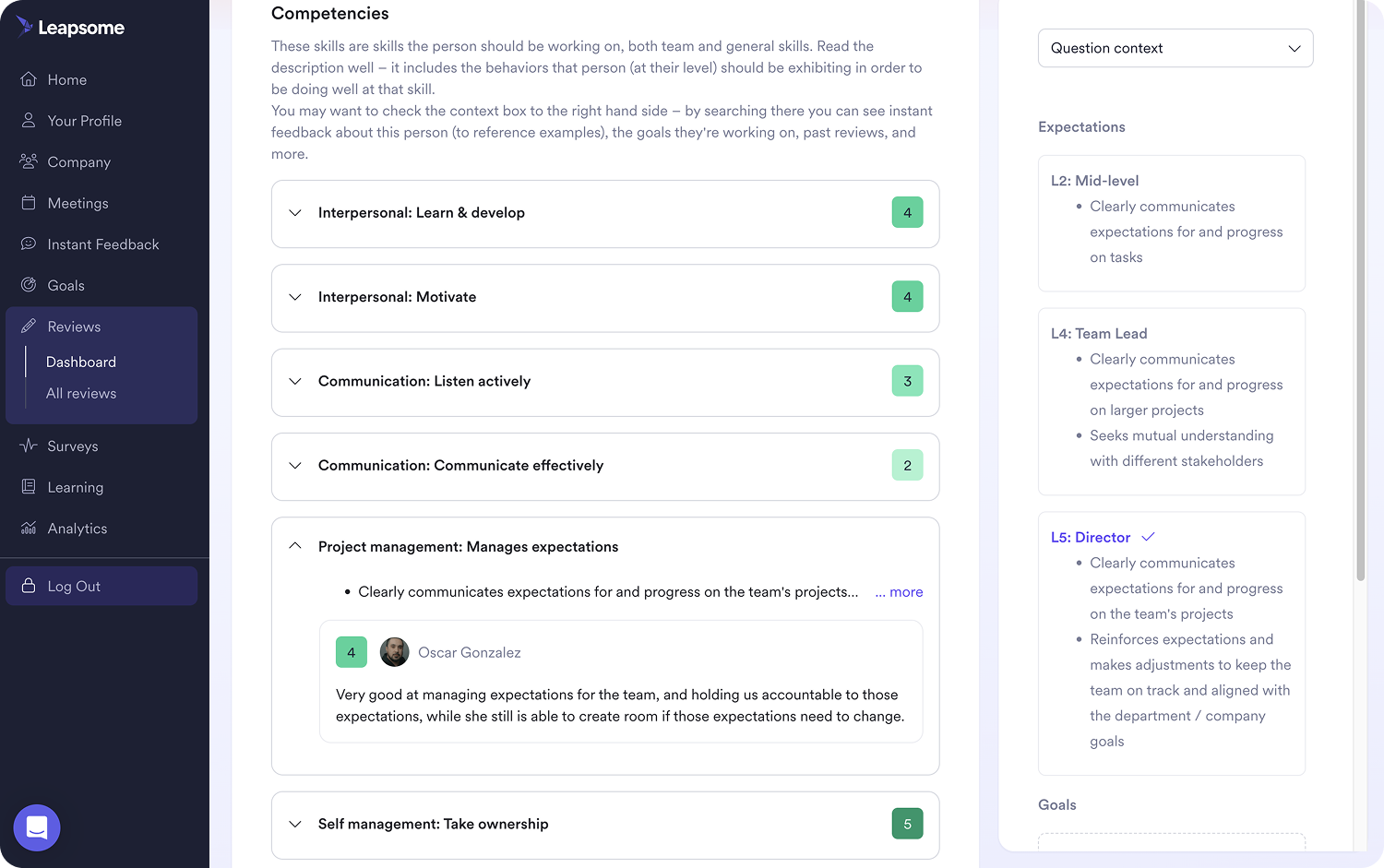
🔍 Spot skill gaps without all the legwork
Assess employees against your competency framework while bringing in goal progress and past feedback for complete context.
👉 Explore Performance Reviews
4. Settle on a solution
Once you’ve identified what’s dragging down performance, you can decide what to do about it. Training might be warranted if you can demonstrate that the culprit is a lack of knowledge or skills. For example, employees may be struggling to use new software. You can use a training plan template to design a process that gets everyone up to speed on the new tech.
To train or not to train: Choosing the right response
The critical question in a training needs analysis is: “What’s keeping people from performing at their best?”
Diagnose the root cause first
Training isn’t a cure-all for every performance problem. The underlying reason could also be unclear expectations, subpar processes, or a lack of management support.
These are problems training alone can’t solve. Implementing new training programs makes the most sense when a lack of knowledge or skills is causing a bottleneck. For example, an underperforming salesperson who doesn’t understand a new product could probably benefit from targeted training. An underperforming salesperson with bad leads probably won’t.
“Build a deliberate pause between input and action. Often the headline isn’t the real story until you dig one level deeper, and that clarity is what prevents scattershot initiatives.”
— Craig Forman, Founder & Principal Consultant, CultureC Consulting
Triage needs
Once you’ve identified genuine training gaps, rank them by factors like urgency and business impact, how many people or processes are affected, and the likelihood that training will actually solve the problem. This helps you more efficiently allocate limited development budget and time, and it also gets better results.
When you’re ready to put your findings into action, Leapsome makes it easy to create targeted learning paths connected to the rest of your data.
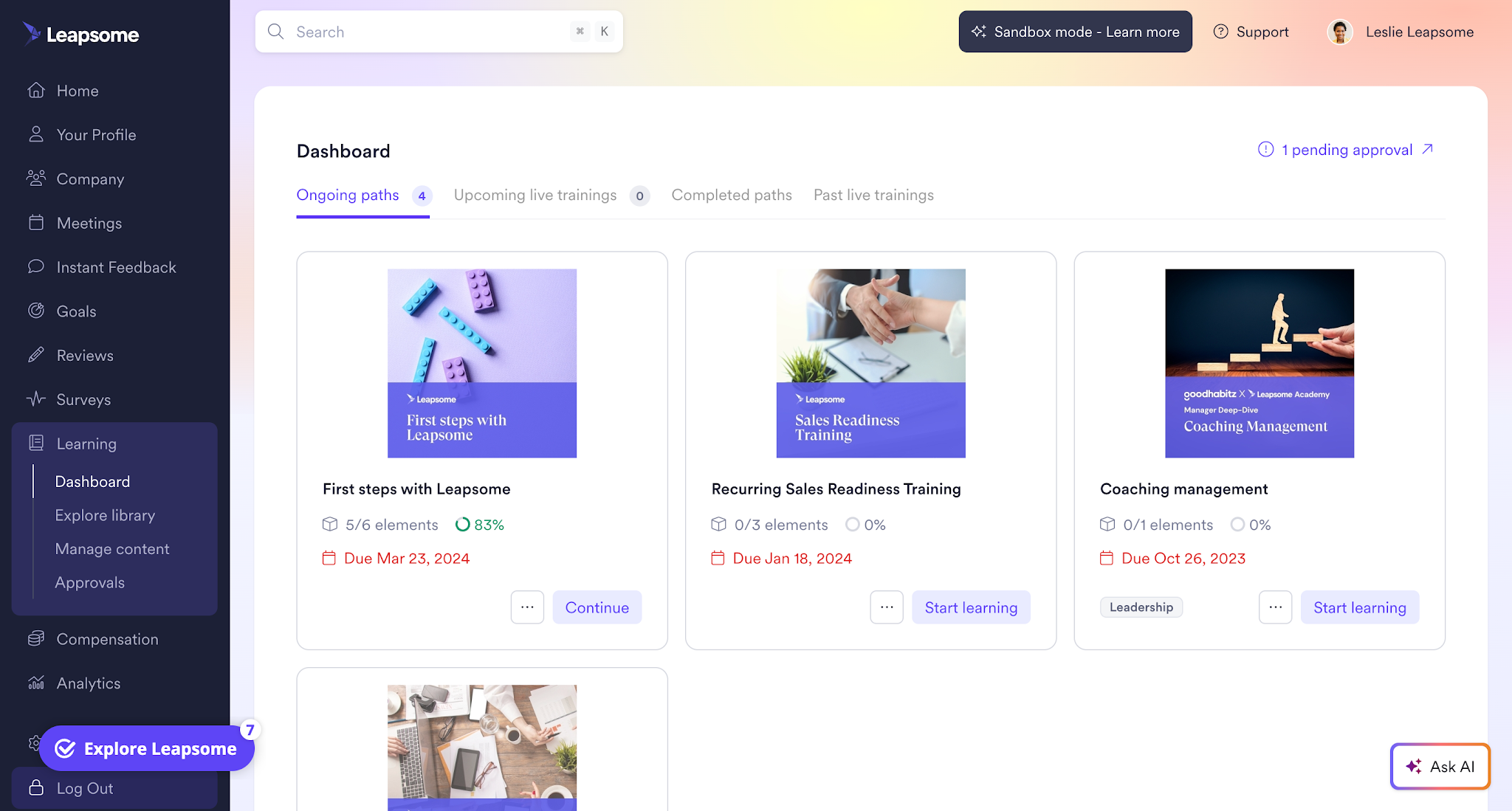
🧑🏫 Convert insights into tailored learning paths
Address performance issues by using AI to generate targeted courses that pull from competencies, reviews, and goals.
👉 Explore Learning
Build training plans around hard data with Leapsome
Many HR teams receive learning and development requests left and right from different managers. Too often, the information HR needs to design effective training plans is buried across performance reviews, spreadsheets, employee engagement survey results, manager check-ins, and learning software. Juniors have to carve out time for gathering and coordinating this scattered information. Seniors must justify which learning and development initiatives deserve the investment.
Leapsome brings order to the chaos by keeping everything connected in a single all-in-one HRIS and people management platform. Teams get:
- Competency Frameworks: Give training plans a concrete direction by defining organizational or team-specific competency frameworks based on the skills you’re targeting.
- Performance Reviews: Conduct structured performance reviews to assess employees against competency expectations. Automate review cycles so you always have an up-to-date understanding of where your workforce stands.
- Learning: With clear targets and performance data in hand, you can use AI to craft learning paths connected to business goals, competencies, and performance management in minutes.
By building a bridge between performance and employee development, HR can create training programs based on real evidence instead of best guesses, while reducing manual coordination work at the same time.
“Being able to view previous assessments and feedback, praise, and private notes directly while conducting an assessment review is crucial for reducing recall bias — and that’s what we’re all about. We want to do justice to our hardworking team and consider all of their strengths and weaknesses as accurately as possible when helping them mold their careers.” — Tara Todorovic, People Development Manager, SIDES
🏋️ Don’t make employees train in the dark
Build learning programs based on defined competencies and deep performance insights, not generic course libraries.
👉 Request a demo
FAQ
What’s the difference between a training needs analysis and a skills gap analysis?
A skills gap analysis is designed to catch mismatches between the skills your team has and the skills your team needs. It can tell you what’s missing, but not necessarily why it’s missing or whether training will help fill in the gap.
A training needs analysis starts with the specific business outcome you want to improve. Instead of looking at employee skills alone, it explores every potential root cause to work out what’s holding the desired outcome back. Then it decides whether training is the right response.