HR für kleine Unternehmen: So baut ihr eine skalierbare Personalabteilung auf


People Operations werden wichtig, sobald ihr eure erste Mitarbeiterin oder euren ersten Mitarbeiter einstellt. Bei einer kleinen Organisation mag es einfach erscheinen, HR-Aufgaben ohne ein dediziertes Team zu managen. Wer HR in den frühen Phasen vernachlässigt, bremst jedoch künftige Skalierungsvorhaben aus.
Als kleines Unternehmen ist HR zwar eine administrative Notwendigkeit, aber gleichzeitig ein strategischer Partner eures Wachstumsplans. Zahlen deuten sogar darauf hin, dass kleine und mittelgroße Unternehmen (KMU) ohne eine HR-Strategie kaum durchstarten. Daten aus dem 2025 State of SMB Hiring Report des CRM-Unternehmens Pipedrive zeigten, dass die Hälfte der KMU im Jahr 2025 Schwierigkeiten hatte, offene Stellen zu besetzen.* HR-getriebene Bindungsstrategien sind also unverzichtbar, damit euer Unternehmen gut besetzt bleibt und Mitarbeitende zufrieden sind.
Human Resources für kleine Unternehmen schafft die Strukturen, die eure Unternehmenskultur prägen und Compliance sicherstellen. In diesem Leitfaden zeigen wir euch, was es braucht, um ein HR-Team aufzubauen, das von Grund auf bereit ist zu skalieren.
* Pipedrive, 2025
Was ist HR für kleine Unternehmen, und warum ist es wichtig?
"Wenn euer Bereich Menschen hat, habt ihr HR. Unsere Aufgabe ist es, das Unternehmen voranzubringen — das war immer so. Jetzt haben wir endlich die Möglichkeit dazu."
— Steve Browne, Chief People Officer bei LaRosa’s, Inc.
HR übernimmt dieselben People-Management-Aufgaben — einschließlich Pre- & Onboarding, Recruiting und Talent Management sowie Lohnabrechnung — unabhängig von der Unternehmensgröße. Die Unterschiede zwischen HR-Anforderungen in großen und kleinen Unternehmen ergeben sich aus der Größe und Komplexität der Organisation.
In kleinen Unternehmen wirkt HR weniger formal, weil die Belegschaft kleiner und die Ressourcen knapper sind. Weil weniger Ressourcen zur Verfügung stehen, ist die größte Herausforderung, den Betrieb effizient zu halten und gleichzeitig lokale Vorschriften einzuhalten. Häufig managt eine einzelne Person die Abteilung allein, oder eine kleine Gruppe teilt alle Compliance- und Wachstumsplanungsaufgaben mit der Geschäftsführung.
Vorteile einer konsequenten HR-Strategie
Eine starke HR-Strategie vom ersten Tag an zahlt sich für kleine Unternehmen mehrfach aus:
- Reibungslose Abläufe: HR bringt Konsistenz in die Employee Experience — wohl ihr größtes Asset für kleine Unternehmen. Verlässliche administrative Prozesse bedeuten mehr Zeit und Energie für die wichtigsten Wachstumstreiber. Ein Bericht der SHRM belegt diesen Zusammenhang: "Jeder Punkt an zusätzlicher HR-Reife bringt 62.000 US-Dollar mehr Umsatz pro Vollzeitkraft." Gleichzeitig stellt konsequentes HR sicher, dass jede Mitarbeiterin und jeder Mitarbeiter die benötigte Zeit und Aufmerksamkeit erhält.
- Compliance mit Arbeitsrecht sicherstellen: Nur weil euer Unternehmen klein ist, bedeutet das nicht, dass es von Vorschriften zu Mindestlöhnen, Arbeitszeiten und Arbeitssicherheit ausgenommen ist. Ob ihr Überstunden korrekt dokumentiert oder klärt, ob eine Einstellung angestellt oder selbstständig ist: Die Einhaltung aktueller Arbeitsgesetze verhindert kostspielige Bußgelder und Rechtsstreitigkeiten.
- Performance und Entwicklung der Mitarbeitenden unterstützen: HR-Strukturen machen Erwartungen für Mitarbeitende klar. Onboarding-Pläne für 30, 60 und 90 Tage sowie monatliche 1:1-Meetings mit Managerinnen und Managern gehören zu den gängigen Ansätzen, mit denen HR Konsistenz fördert und kontinuierliche Verbesserung anregt.
Zentrale HR-Aufgaben in kleinen Unternehmen
Weil kleine Unternehmen oft nicht die Kapazität haben, komplexe administrative Aufgaben zu bewältigen, ist es umso wichtiger, dass HR die relevantesten davon effizient adressiert. Hier sind einige Bereiche, die Teams unbedingt priorisieren sollten.
Lohnabrechnung und Benefits-Verwaltung
Pünktliche und korrekte Gehaltsauszahlungen sind nicht nur gesetzlich vorgeschrieben, sie sind auch essenziell, um Vertrauen aufzubauen. Selbst kleine Fehler — wie falsche Abzüge oder ein Tag Verzögerung — können Engagement und Motivation schnell untergraben. Eine Umfrage der National Association of Women Business Owners aus dem Jahr 2024 ergab, dass bei 50% der Mitarbeitenden bereits zwei Gehaltsabrechnungsfehler ausreichen, um sich nach einem neuen Job umzusehen.
People-first Performance Management
Ohne regelmäßiges Feedback fühlen sich Mitarbeitende leicht übersehen oder unsicher über ihre Leistung. Laut einem Whitepaper der O.C. Tanner Learning Group geben 79% der Mitarbeitenden an, "mangelnde Wertschätzung" sei ein wichtiger Grund für einen Jobwechsel. Auch wenn kleine Unternehmen informellere Formen des Check-ins bevorzugen, benötigen sie dennoch Strategien wie Performance Reviews und Zielsetzung, damit alle Mitarbeitenden sich verstanden fühlen und Zugang zu den Ressourcen haben, die sie zum Wachsen brauchen.
Compliance und Risikomanagement
HR-Richtlinien und -Verfahren halten euer Unternehmen compliant, aber Fehler passieren. Etwas so Simples wie eine fehlende Unterschrift in einem Onboarding-Dokument kann die Organisation im schlimmsten Fall erheblichen rechtlichen Risiken aussetzen. Es ist daher wichtig, Strategien parat zu haben, die greifen, wenn Probleme auftreten.
Ein praktikabler Ansatz für Compliance-Komplexitäten ist der Einsatz eines HRIS, das alle Daten mit klaren, prüffesten Nachweisen zentralisiert. Mit Leapsomes HRIS könnt ihr Compliance-, Lohnabrechnung- und Mitarbeiterdaten in einer einzigen Datenbank verknüpfen und euer Team auch bei steigenden gesetzlichen Anforderungen organisiert und effizient halten.
"Viele HR-Teams kämpfen noch immer mit den Grundlagen: zu viele nicht verknüpfte Tools, begrenzte Insights. Deshalb haben wir ein wirklich people-first HRIS gebaut, das alle Mitarbeiterdaten in einer einzigen Quelle der Wahrheit bündelt."
— Suraj Paneru, Customer Success Coach bei Leapsome
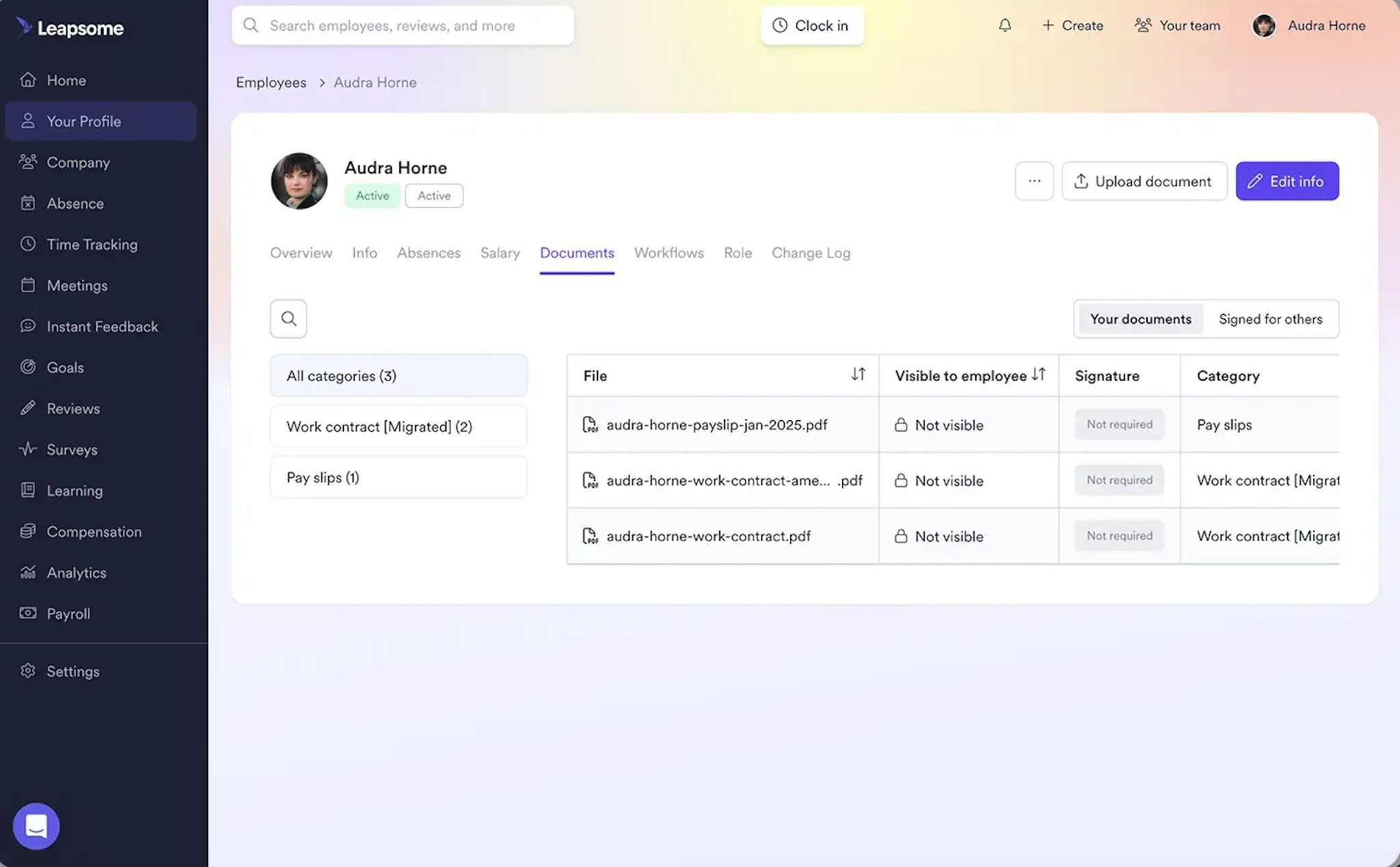
🔒 Mitarbeiterdaten zentralisiert und sicher aufbewahren
Bringt jede Phase des Employee Lifecycle in ein verbundenes System mit Leapsomes HRIS, damit ihr auch beim Skalieren eures KMU organisiert bleibt.
👉 HRIS-Features entdecken
Sind eure HR-Prozesse skalierbar?
Nicht verknüpfte Systeme sind in kleinen Unternehmen weit verbreitet. Während ein paar Tabellen und geteilte Google-Docs in der Frühphase funktionieren mögen, hält dieses Flickwerk-System im Hypergrowth nicht mit. Was bei fünf Mitarbeitenden gut funktioniert, wird bei 15 schnell unübersichtlich — von 50 oder 500 ganz zu schweigen.
Falls ihr nicht sicher seid, ob eure aktuellen HR-Prozesse eure Wachstumspläne unterstützen können, achtet auf einige häufige Fehler, die eine Strategie später ins Wanken bringen können:
- Manuelle Erfassung von Mitarbeiterdaten: Mitarbeiterdaten über viele Dateien und Postfächer zu verteilen, ist keine effiziente Art, organisiert und präzise zu bleiben. Es ist jedoch eine einfache Möglichkeit, Dokumente zu verlieren und Compliance-Probleme zu erzeugen. Langfristig verlangsamt das Fehlen einer einzigen Quelle der Wahrheit HR-Aufgaben und erhöht das Fehlerrisiko. Laut einer Studie von Smallpdf aus dem Jahr 2025 belaufen sich die Kosten für das Beheben von Dateiproblemen auf rund 6.790 US-Dollar pro betroffener Mitarbeiterin oder betroffenem Mitarbeiter.
- Mangelhaftes Performance Management: Inkonsistentes und informelles Feedback führt bei Mitarbeitenden zu Verwirrung und wachsender Unsicherheit. Strukturierte Performance-Management-Pläne können die Employee Experience über Rollen hinweg konsistenter gestalten, alle mit übergeordneten Unternehmenszielen in Einklang halten und die Chancen verbessern, Entwicklungsmöglichkeiten frühzeitig zu erkennen. Wer auf vage Ziele statt auf Rubriken setzt und kein zentrales System hat, um Performance-Veränderungen über Zeit zu speichern und zu reflektieren, ist nicht bereit zu skalieren.
- Compliance-Risiken durch fehlende Prozesse: Ohne ein umfassendes HR-System übersieht man wichtige Compliance-Schritte schneller. Lücken wie nicht dokumentierte Richtlinienänderungen oder fehlende Lohnsteueraktualisierungen fallen nicht sofort auf, schaffen aber ernsthafte Angriffspunkte, wenn die Belegschaft wächst und das Beheben von Versäumnissen teurer wird.
HR-Management für kleine Unternehmen aufbauen: Drei Schritte
Kein kleines Unternehmen startet mit einer voll ausgebauten Personalabteilung. Wie die meisten Bereiche eines kleinen Unternehmens wächst auch ein starkes HR-Team mit der Zeit. Jede Organisation muss jedoch proaktiv überlegen, wie sich ihre HR-Prozesse gemeinsam mit der Belegschaft und den wichtigsten Zielen entwickeln werden.
Hier sind drei Schritte, die euch helfen, einem losen HR-Framework nach und nach mehr Struktur zu geben.
Schritt 1: Grundlegende HR-Richtlinien erstellen
Definiert Erwartungen an die Arbeitsweise in eurem Unternehmen: Verhaltenskodizes, Anforderungen an Datensicherheit und Compliance sowie Abwesenheitsregeln. Haltet diese Richtlinien so einfach und klar wie möglich, um Missverständnisse zu vermeiden. Selbst ein schlankes Employee Handbook kann ein guter Ausgangspunkt sein, um Verwirrung unter euren ersten Mitarbeitenden zu verhindern.
Schritt 2: HR-Tools und Systeme auswählen
"Es ist ein großer Aufwand zu automatisieren, aber jeder Zyklus danach wird schneller und einfacher. Wer die unsichtbare Arbeit automatisiert, gibt HR-Verantwortlichen Zeit zurück für Kultur, Strategie und echte Verbindung."
— Emma Leeds, Gründerin und CEO von People Function
Mit dem Wachstum eures Teams führt mehr Tools und Automatisierung ein, um den Verwaltungsaufwand handhabbar zu halten. Ihr könnt auch überlegen, Prozesse mit Partnern wie Professional Employer Organizations (PEOs) und Employers of Record (EORs) auszulagern.
Ob ihr HR-Aufgaben auslagert oder intern behaltet: Fragt euch, ob das System mit eurem Unternehmen skalieren kann oder nur eine kurzfristige Lösung für aktuelle Probleme bietet. Wenn ihr heute 15 Mitarbeitende habt und im nächsten Jahr auf 40 wachsen wollt, ist eine zentralisierte HRIS-Software, die Daten aller Mitarbeitenden erfasst und Reporting-Hierarchien verfolgt, ein Tool, das mit euch wächst, statt nur ein Pflaster zu sein.
Schritt 3: Prozesse skalieren und verfeinern
Wenn das Wachstum richtig anzieht, habt ihr keine Zeit, HR-Ineffizienzen zu tolerieren. Konzentriert euch darauf, wiederholbare Prozesse über den gesamten Employee Lifecycle hinweg zu schaffen, bevor Einstellungswellen einsetzen, und überwacht deren Erfolg. Indem ihr festlegt, welche Kennzahlen für euer Unternehmen am wichtigsten sind (wie Fluktuation und Engagement-Bewertungen) und regelmäßiges Feedback durch Mitarbeiterumfragen und Review-Sitzungen sammelt, helfen euch Mitarbeitende, blinde Flecken im HR-Team zu erkennen.
Leapsome bietet mehrere Tools, um eure Verbesserungsvorhaben zu unterstützen. Führt Mitarbeiterumfragen durch und analysiert Daten automatisch, um herauszufinden, was das Team gut macht und wo es Schwierigkeiten gibt. Wechselt dann zum Learning-Tool, um aus denselben Daten individuelle Wachstumspfade zu erstellen. Das Performance-Management-Portal verfolgt, wie gut eure Lernmaßnahmen gewirkt haben. Mit automatisierten Benachrichtigungen und AI-gestütztem Feedback bleibt euer Team am Ball bei Review-Zyklen und erhält sofortige Orientierung, wie faires, datengestütztes Feedback formuliert wird.
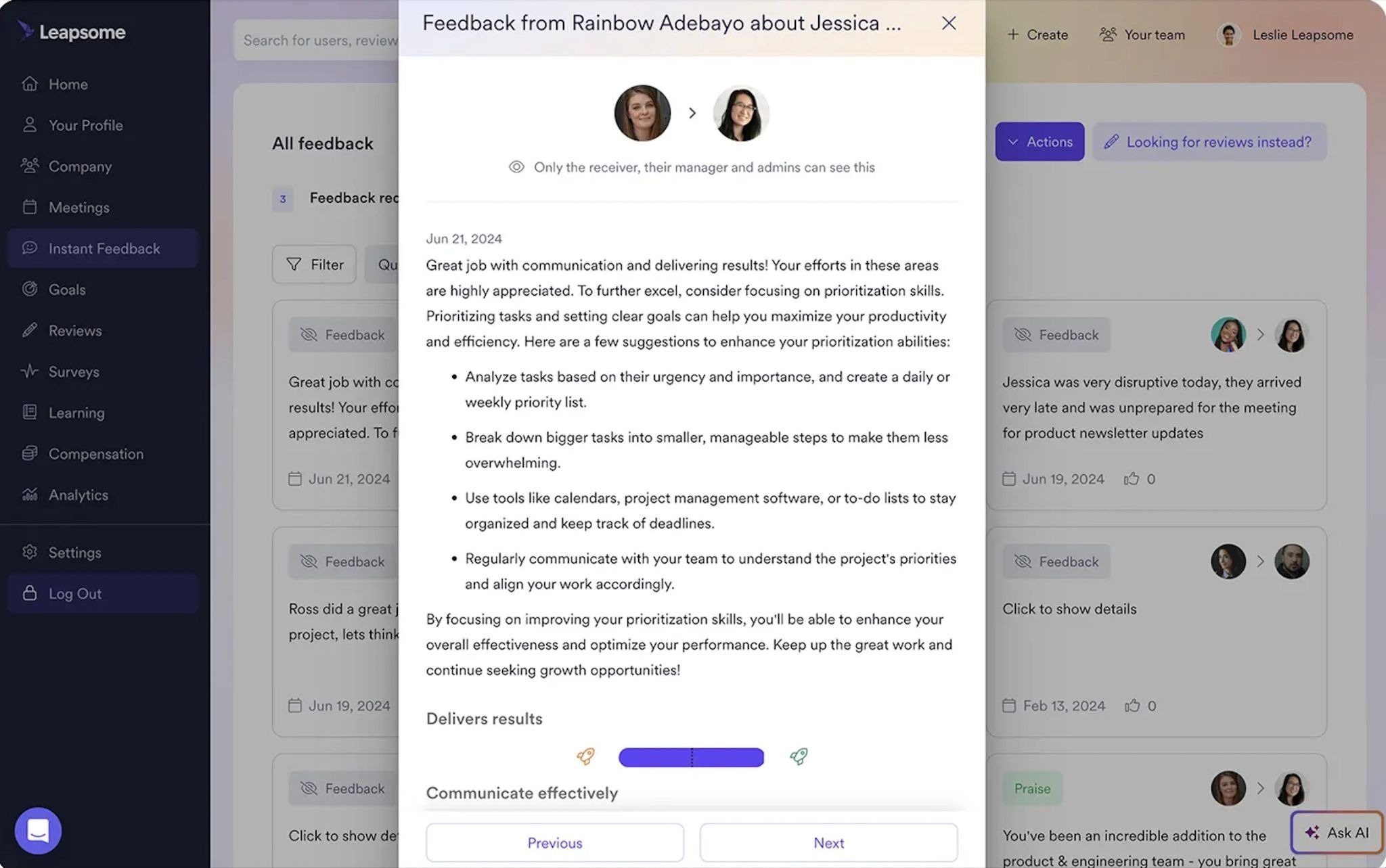
📈 Performance Management, das mit euch skaliert
Haltet euer kleines Unternehmen auf Wachstumskurs mit Leapsomes zentralisierten Performance-Review-Daten und kontinuierlichem Feedback.
👉 Performance Management entdecken
HR-Teams entwickeln, die mit Leapsome bereit sind zu skalieren
KMU müssen HR-Prozesse häufig mit schlanken Teams und begrenzter Zeit managen. Kommen noch nicht verknüpfte Systeme dazu, wird es für kleine Unternehmen noch schwieriger, ihre Wachstumsziele zu erreichen und gleichzeitig aktuelle Steuer-Compliance-Regeln und Ergebnisse von Mitarbeiterumfragen im Blick zu behalten.
Leapsome vereinfacht das Skalieren kleiner Unternehmen mit vollständiger Transparenz durch eine All-in-one-HRIS-Software. Kein Suchen mehr in verschiedenen Tabellen oder Tools: Mit Leapsome erhaltet ihr eine zentrale Quelle der Wahrheit. Alles von Onboarding-Workflows und Mitarbeiterdokumenten bis hin zu Engagement-Umfragen und Performance Reviews liegt zusammen und ist jederzeit leicht abrufbar. Mit dem Wachstum eures Unternehmens bietet Leapsome die Zentralisierung, die ihr braucht, um die Kontrolle zu behalten.
"Mitarbeitende finden jetzt alles an einem Ort — ihre Daten, Abwesenheiten, Ziele und Reviews. Ich muss nicht mehr erklären, welches Tool für was zuständig ist. Alles ist in Leapsome." — Merilyn L., Senior People Operations Specialist bei Bob W.
🚀 Ein HR-System, das für euer wachsendes Unternehmen gemacht ist
Verabschiedet euch von getrennten Prozessen und wechselt zu Leapsomes zentralisiertem, people-first HRIS, damit alle HR-Tools immer leicht zugänglich sind, egal wie groß eure Belegschaft wird.
👉 Demo anfragen
FAQ
Welche HR-Services gibt es für kleine Unternehmen?
Startende Unternehmen können spezialisierte HR-Software für Aufgaben wie Gehaltsabrechnung und Benefits-Verwaltung einsetzen oder einen externen Dienstleister wie eine PEO für umfassenderes Outsourcing nutzen. Es ist auch möglich, eine freiberufliche HR-Beraterin oder einen freiberuflichen HR-Berater für Bereiche wie Recruiting und Onboarding hinzuzuziehen, ohne eine Vollzeitstelle zu schaffen.
Ab wann sollte ein kleines Unternehmen in HR-Services investieren?
Idealer Weise sollten Unternehmen ihre HR-Strategie entwickeln, wenn sie sich entscheiden, ihre erste Mitarbeiterin oder ihren ersten Mitarbeiter einzustellen. So hat jede Phase des Employee Lifecycle von Anfang an eine klare Struktur, damit ihr eine starke Unternehmenskultur mit konsistenten Erfahrungen und Erwartungen aufbauen könnt.

.jpg)