Was ist HR-Outsourcing, und passt es zu eurem Unternehmen?


Wachstum verläuft nicht immer im Gleichschritt mit der operativen Kapazität, gerade in kleinen und mittelständischen Unternehmen. Wenn das Unternehmen wächst, muss euer Team mit dem steigenden Verwaltungsaufwand einer größeren Belegschaft und zunehmenden Compliance-Anforderungen Schritt halten. Diese Anforderungen beanspruchen immer mehr von Ressourcen, die ohnehin schon knapp sind.
HR-Outsourcing ist eine mögliche Lösung, doch es gibt einen Haken: Lässt sich genug Arbeit abgeben, um euch zu entlasten, ohne dabei zu viel Kontrolle und Transparenz über eure zentralen HR-Prozesse aufzugeben?
Für viele Unternehmen reicht der Zwiespalt zwischen mehr Luft zum Atmen und dem eigenen Weg schon aus, um zu zögern. Laut einer Deloitte-Umfrage von 2024 haben 70% der Unternehmen begonnen, ausgelagerte Aufgaben wieder ins Haus zu holen, um Kosten zu senken und die Kontrolle über ihre Abläufe zurückzugewinnen.*
Dieser Leitfaden beleuchtet die Vor- und Nachteile von HR-Outsourcing nicht nur finanziell, sondern auch mit Blick auf Unternehmenskultur, Performance Management und Mitarbeiterengagement. HR- und Finanzverantwortliche bekommen die Details, die sie brauchen, um zu entscheiden, ob HR-Outsourcing zur aktuellen Lage passt und zu dem, wo das Unternehmen in ein paar Jahren stehen könnte.
* Deloitte, 2024 Global Outsourcing Survey
Was ist HR-Outsourcing?
Beim HR-Outsourcing werden zentrale HR-Funktionen (etwa Lohnabrechnung, Recruiting oder sogar die strategische HR-Planung) an einen spezialisierten externen Anbieter übergeben. Dazu zählen Employer of Record (EORs) und Professional Employer Organizations (PEOs). EORs treten als rechtlicher Arbeitgeber auf und eröffnen mehr Wege für internationale Mitarbeitende, während PEOs eher als Partner agieren. Beide bieten organisatorische Unterstützung. Viele Arbeitgeber sehen den Bedarf: Laut Technavio nutzten 2024 mehr als 75% der mittelständischen Unternehmen Outsourcing-Dienste, um den Verwaltungsaufwand zu senken.
HR-Outsourcing ist keine Alles-oder-nichts-Entscheidung. Teams können ein oder zwei Prozesse abgeben oder fast die gesamte Abteilung auslagern. Was ihr auslagert, hängt von den Anforderungen eures Teams ab. Und davon, wie sie sich im Lauf der Zeit verändern.
Wann HR-Outsourcing sinnvoll ist (und wann eher nicht)
Ausgelagerte HR ist nicht in jeder Situation die beste Wahl. HR-Aufgaben auszulagern ist eine strategische Entscheidung, die nicht nur die operative Effizienz betrifft, sondern auch Performance Management, Talententwicklung und die Unternehmenskultur insgesamt. Bevor ihr annehmt, dass eine Übergabe der beste nächste Schritt ist, überlegt, wie sie sich langfristig auf alles auswirkt.
Wann HR-Outsourcing sinnvoll ist
Hier sind einige Situationen, in denen sich das Auslagern eurer HR-Arbeit besonders lohnt:
- Euer Team verbringt die meiste Zeit mit Routineaufgaben: Im besten Fall sind HR-Abteilungen strategische Partner, die Kultur prägen und Talente fördern. Wenn HR in monotonen oder papierlastigen Aufgaben wie Lohnabrechnung und Compliance versinkt, bleiben strategische Initiativen auf der Strecke.
- Ihr braucht während starkem Wachstum kurzzeitig Entlastung: Manchmal braucht ihr bei einer Einstellungswelle oder der Expansion in einen neuen Markt eine helfende Hand. Zentrale HR-Funktionen vorübergehend auszulagern kann helfen, die Lage zu überbrücken, bis ihr wieder aufholt.
- Euch fehlt bestimmtes Know-how im Haus: Komplexe Lohnabrechnung und rechtliche Compliance an einen erfahrenen externen Anbieter auszulagern kann finanziell und operativ sinnvoller sein, als neue Teammitglieder mit dem nötigen Wissen zu finden oder tagelange Spezialschulungen durchzuführen.
Wann HR-Outsourcing an seine Grenzen stößt
HR-Outsourcing passt nicht für jeden und jede Situation. In manchen Fällen ist es sinnvoller, die Arbeit im Haus zu behalten:
- Andere Teams brauchen intensive, direkte Unterstützung: Externe HR-Unterstützung trennt die ausgelagerten Funktionen per Definition von eurem internen Team. Wenn ihr jederzeit flexible Entscheidungen braucht, die auf dem HR-Kontext beruhen, ist es vielleicht am klügsten, bestimmte Prozesse (vor allem das Recruiting) im Haus zu behalten.
- Eure Daten sind fragmentiert: Wenn HR-Daten bei einem externen Anbieter liegen, verlieren Führungskräfte den Blick für Performance-, Engagement- und Retention-Trends. Das erschwert es, Erkenntnisse über die Belegschaft mit Geschäftsentscheidungen zu verknüpfen. Damit eure Daten nicht zersplittern und ihr euer Team trotzdem entlastet, könnt ihr alle Mitarbeiterdaten in einer HR-Plattform wie Leapsome zentralisieren. So beruht jede Entscheidung auf den aktuellsten Kennzahlen.
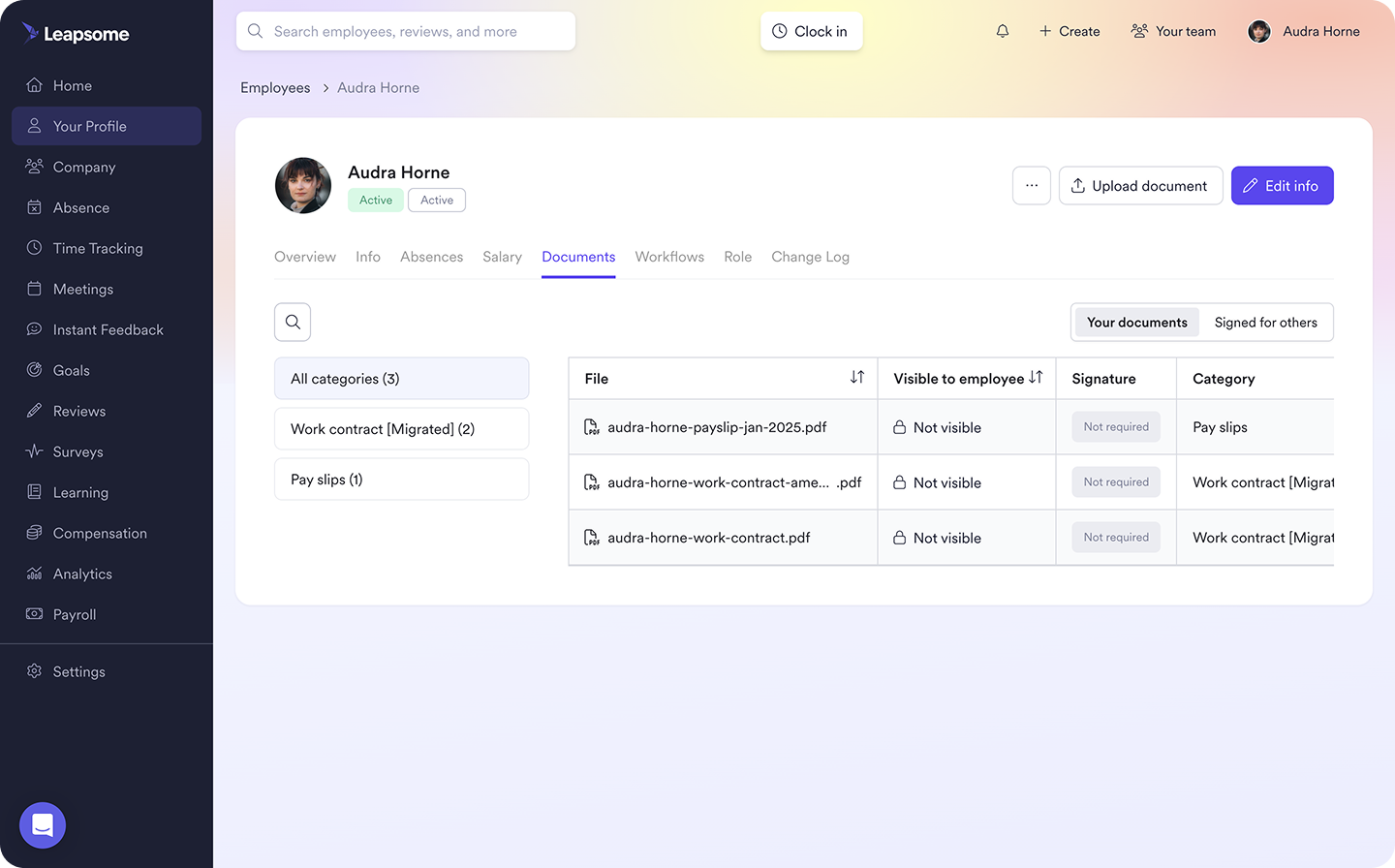
📊 Trefft Entscheidungen auf Basis vereinter Mitarbeiterdaten statt bloßer Vermutungen
Leapsome zentralisiert Mitarbeiterdaten für umfassende Transparenz über den gesamten Employee Lifecycle. So passt jede HR-Entscheidung zu euren Unternehmenszielen und Leistungskennzahlen.
👉 Entdeckt Employee Records
Was lässt sich auslagern? Die gängigsten HR-Outsourcing-Dienste
Vielleicht lässt sich nicht jedes Detail eures Workflows abgeben, aber ihr kommt ziemlich nah heran. Hier sind die wichtigsten HR-Funktionen, die sich auslagern lassen:
- Lohnabrechnung: Gehälter berechnen, Zahlungen anweisen und Steuern abführen.
- Recruiting und Einstellung: Talentmanagement, vom Sourcing bis zu Onboarding und Offboarding.
- Verwaltung von Mitarbeiter-Benefits: Krankenversicherung, Altersvorsorge und andere gängige Leistungen verwalten.
- HR-Compliance: Das Unternehmen im Einklang mit den aktuellen arbeitsrechtlichen Vorgaben halten.
Der verborgene Einfluss von Outsourcing auf Kultur und Engagement
Kosten-Nutzen-Analysen zum HR-Outsourcing, die nur den Preis betrachten, greifen zu kurz. Wer die versteckten Kosten für Unternehmenskultur, Mitarbeiterengagement und Performance Management ausblendet, unterschätzt die wahren Kosten des Outsourcings und überschätzt seinen langfristigen Wert.
Kultur wirksam zu gestalten erfordert umfassenden Kontext, den externe HR-Dienste schlicht nicht haben. Sie stehen außerhalb eurer Systeme und des Tagesgeschäfts, und das ist gewollt. Dienste wie EORs und PEOs können eure Prozesse effizienter machen, doch die Vereinheitlichung kann die Eigenheiten kosten, die euer Unternehmen ausmachen.
Diese Überlegungen sind besonders für kleine und mittelständische Unternehmen wichtig, in denen sich die Kultur noch festigt. Fehltritte an diesem kritischen Punkt können das bestehende Fundament untergraben und es schwerer machen, sich neu zu sortieren.
Outsourcing vs. interne HR vs. HR-Plattformen
Die folgende Tabelle schlüsselt die drei wichtigsten Wege auf, HR zu organisieren, damit ihr die beste Wahl für euren Bedarf trefft.
Vergleich der HR-Management-Optionen: HR-Outsourcing, interne HR und interne HR plus HR-Technologie. Vor- und Nachteile sowie durchschnittliche Kosten.
| Option | Vorteile | Nachteile | Durchschnittliche Kosten |
|---|---|---|---|
HR-Outsourcing |
Weniger Verwaltungsaufwand Spezialisiertes Know-how Stark skalierbar | Begrenzte Kontrolle Weniger kontextbezogene Entscheidungen Fragmentierte Daten Risiko schlechter Employee Experience |
$50–200
pro Mitarbeitenden / Monat
|
Interne HR |
Volle Kontrolle Tiefer Kontext Direkte Beziehungen Schnellere Entscheidungen | Teuer Risiko der Verwaltungsüberlastung Schwer skalierbar Compliance-Lücken |
$43k–109k
pro Mitarbeitenden / Jahr
|
Interne HR + HR-Tech |
Weniger Verwaltung, volle Kontrolle Stark skalierbar Zentralisierte Daten Erschwinglich | Einrichtung nötig Lernkurve Vollständiges HR-Team nötig |
1–25 MA: $12–30
26–100: $10–25 101–500: $8–20 501–1k: $7–18 1.000+: $6–15 PEPM
|
Diese drei Optionen schließen sich nicht gegenseitig aus. Wahrscheinlich werdet ihr weder die gesamte Abteilung auslagern noch alles im Haus behalten oder versuchen, jeden einzelnen HR-Prozess in eine HR-Plattform zu laden. Laut Technavio gaben 56% der Unternehmen, die 2024 einen Teil oder ihre gesamte HR auslagerten, an, unzufrieden zu sein. Sie nannten Probleme in der Kommunikation mit Anbietern und Schwierigkeiten mit der fehlenden Kontrolle.
Der Schlüssel zu erfolgreichem HR-Outsourcing liegt in der Balance. Ihr wollt den Verwaltungsaufwand senken, aber genauso wichtig ist es, genug Transparenz und Verantwortung über die People-Strategie eures Unternehmens zu behalten, damit HR nicht zur bloßen Schnittstelle zwischen Unternehmen und HR-Anbieter oder Software-Lösung wird. Wenn jemand anderes die meisten eurer strategischen Entscheidungen trifft oder das Mitarbeiterengagement sinkt, solltet ihr mehr von eurem HR-Prozess wieder ins Haus holen. Wenn ihr dagegen regelmäßig auf den letzten Drücker die Lohnabrechnung fertigstellt und wichtige Dokumente untergehen, ist das ein Zeichen, dass ihr etwas Unterstützung gebrauchen könnt.
Vier führende HR-Outsourcing-Dienste
Jeder der vier folgenden Dienste deckt zentrale HR-Funktionen ab, etwa Lohnabrechnung, Compliance-Management und Benefits-Verwaltung. Überlegt, wie sie in eure umfassendere HR-Strategie passen.
1. ADP
Diese Plattform ist eine solide Wahl für datenorientierte Teams. ADP bietet ausgefeilte Workforce-Reports und Analytics-Tools, um die Personalplanung mit einem klareren Bild von Lohn-, Compliance- und Leistungsdaten zu stärken. Außerdem lässt es sich direkt in Leapsome integrieren und deckt so HR und People-Management noch breiter ab.
2. ExtensisHR
ExtensisHR glänzt im Recruiting und stellt über sein PEO-Produkt feste Talentspezialisten für jede Phase des Recruiting-Zyklus bereit.
3. AlignHR
AlignHR ist eine starke Wahl für Unternehmen mit schnellem Wachstum. Das servicebasierte Modell mit projektbezogener Unterstützung nimmt HR Last ab, ohne die gesamte Kontrolle zu übernehmen.
4. Namely
Namely ist ideal für kleine Unternehmen mit nur wenigen HR-Mitarbeitenden oder ganz ohne HR-Abteilung. Es deckt die Grundlagen ab: Mitarbeitende können sich für Benefits-Programme anmelden und Urlaub beantragen, während Manager Freigaben verwalten und auf Berichte zugreifen.
Tipps, um die beste HR-Software zu finden
„Auf C-Level habe ich gelernt, Personaldaten zu misstrauen, weil sie spät kamen und sich zwischen den Dateien widersprachen. Als ich dann in HR saß, spürte ich den Schmerz von innen und sah, wie viel Zeit in das ständige Neuaufsetzen derselben Berichte floss. Zentralisierung stellt das Vertrauen wieder her, und euren Kalender.“
– Florian Klages, Managing Partner, torq. Partners
Selbst die besten Lösungen funktionieren nur so gut wie ihre Nutzer. Diese Best Practices helfen euch, das Meiste aus der gewählten Option herauszuholen:
- Setzt auf Benutzerfreundlichkeit: Sucht ein Produkt, das nicht nur für HR intuitiv ist, sondern auch für eure Manager und alle anderen Mitarbeitenden, die damit arbeiten. Das reduziert Reibung und erleichtert die Einführung.
- Prüft vorab: Recherchiert bei jedem möglichen Anbieter die Zielgruppe und für welche Art von Unternehmen er am besten passt. Ein Programm, das für ein kleines Start-up die nötige Grundlage schafft, ist für ein schnell wachsendes mittelständisches Unternehmen vielleicht nicht robust genug.
- Unterschätzt den Kundensupport nicht: HR auszulagern ist immer ein Vertrauensvorschuss, weil ihr kritische Unternehmensprozesse in die Hände eines Dritten legt. Prüft vor einer Zusage die Bilanz möglicher Anbieter bei reaktionsschneller Kommunikation und Support, etwa über Bewertungsportale und Erfahrungsberichte aktueller Nutzer.
- Macht eure Hausaufgaben: Erstellt eine detaillierte Checkliste, was ihr jetzt und künftig braucht, und stellt dann sicher, dass die gewählte HR-Lösung alle Punkte erfüllt. In einem entscheidenden Moment festzustellen, dass eine wichtige Funktion fehlt, und von vorn anfangen zu müssen, ist eine frustrierende Verschwendung von Zeit und Ressourcen.
HR skalieren, ohne das Steuer aus der Hand zu geben
Überlastete HR-Teams wollen ihren Verwaltungsaufwand verringern, ohne alle Kosten zu tragen, die mit Neueinstellungen einhergehen. Auf den ersten Blick wirkt HR-Outsourcing wie eine Lösung. Es kann den Verwaltungsaufwand senken, doch an seine Stelle treten fragmentierte Systeme, weniger Transparenz und ein schwächerer Einfluss auf die Employee Experience.
Leapsome bietet einen anderen Ansatz, der kleinen und mittelständischen Unternehmen hilft, Zeit und Ressourcen zu sparen, ohne die Kontrolle aufzugeben. HR-Teams bekommen die Funktionen, die sie brauchen: Lohnabrechnung, automatisierte Workflows fürs Onboarding und integrierte Lernmodule, direkt neben den Mitarbeiterdaten, die alles antreiben.
Indem es im Takt mit dem Unternehmen bleibt, hilft Leapsome HR-Teams, ihre Abläufe wieder beherrschbar zu machen, ohne ihre Fähigkeit zu schmälern, datengestützte Entscheidungen mit echter Wirkung zu treffen.
„Der Verwaltungsaufwand für HR sinkt um rund 90%. Das macht uns allen das Leben deutlich leichter und den gesamten Review-Prozess transparenter, effizienter und wertvoller.“ – Amanda Heeg, Senior HR Manager | Junique
💪 Lagert HR nicht aus. Optimiert es.
Leapsomes umfassende People-Management-Plattform zentralisiert Personaldaten, automatisiert einfache Aufgaben und senkt den Verwaltungsaufwand drastisch, ohne dass ihr die Schlüssel zu eurer Unternehmenskultur abgebt.
👉 Demo buchen
FAQ
Wie funktioniert HR-Outsourcing?
Beim HR-Outsourcing werden einige oder alle eurer HR-Funktionen an einen externen Anbieter übertragen. Typischerweise abgedeckt sind Lohnabrechnung und Benefits-Verwaltung, Recruiting und Compliance-Management.


.jpg)

.jpg)