Lohnt sich eine PEO-Partnerschaft für euer Unternehmen?


Kleine und mittelgroße Unternehmen balancieren oft auf einem schmalen HR-Seil. Wachstum bedeutet, Top-Talente einzustellen, aber eine wachsende Belegschaft erhöht den operativen Druck. Die Lohnabrechnung wird komplexer, Compliance-Anforderungen variieren je nach Region, und allerlei Verwaltungsaufgaben fressen wertvolle Zeit, die für Planung und Entwicklung fehlt.
Diese Herausforderungen haben dazu geführt, dass über 200.000 Unternehmen auf Professional Employer Organizations (PEOs) setzen.* Eine PEO-Partnerschaft ermöglicht es euren Unternehmen, HR-Funktionen auszulagern und Zugang zu Benefits zu erhalten, die sonst großen Konzernen vorbehalten sind.
In diesem Artikel stellen wir euch die wichtigsten PEO-Vorteile und konkreten Einsatzszenarien vor und helfen euch dabei zu entscheiden, ob eine PEO-Partnerschaft zu euren operativen Zielen und eurem Budget passt.
* NAPEO, 2025
Was ist eine PEO?
"PEOs übernehmen Lohnabrechnung, Benefits und Compliance, was HR entlastet und es ermöglicht, sich auf Personalplanung und langfristiges Wachstum zu konzentrieren."
– Carol Warner, HRMorning
Im Gegensatz zu klassischen HR-Beratungen oder Personalvermittlungen, die Mitarbeitende für euch rekrutieren, unterstützt eine PEO das HR-Team, das ihr bereits habt. Dieser Partner übernimmt Kernoperationen im Co-Employment-Modell. In der Praxis bedeutet das: Die PEO trägt Verantwortung für Verwaltungsaufgaben rund um das Arbeitsverhältnis, wie Lohnabrechnung und Steuererklärungen, während euer Unternehmen die Mitarbeitenden und das Tagesgeschäft weiterhin selbst führt.
Wie PEOs Unternehmen in verschiedenen Wachstumsphasen beeinflussen
Während Unternehmen mit einer PEO 50 % seltener scheitern, hängt der tatsächliche Mehrwert stark von der Reife und Größe eures Unternehmens ab.
Startups und Kleinstunternehmen
Startups arbeiten oft ohne dedizierte HR-Abteilung und verteilen diese Aufgaben stattdessen auf Gründende und Abteilungsleitungen. Die Kombination aus geringer Größe und improvisierten Prozessen bringt verschiedene Herausforderungen mit sich: begrenzte rechtliche Expertise, ein hohes Risiko für Compliance-Fehler, Verwaltungsüberlastung und die Unmöglichkeit, wettbewerbsfähige Benefits anzubieten.
Wenn die Zeit für Lohnabrechnung und Performance Management von der strategischen Planung ablenkt oder wenn euer Team mit Fehlern und Compliance-Problemen kämpft, kann eine PEO Luft zum Atmen und mehr Struktur bringen.
Kleine und mittelgroße Unternehmen
Unternehmen mit 20 bis 100 Mitarbeitenden haben oft übermäßig ausgelastete HR-Teams. Zwei oder drei HR-Generalist:innen managen gleichzeitig Recruiting, Mitarbeiterbeziehungen, Lohnkoordination und Compliance.
Diese Organisationen stehen vor ähnlichen Herausforderungen wie Startups. Mit wachsender Mitarbeiterzahl wird auch die manuelle Dateneingabe in einfachen Tabellenkalkulationen oder getrennten Tools zunehmend zum Problem.
Für kleine Unternehmen kann eine PEO den Verwaltungsaufwand reduzieren und Doppelarbeit bei Compliance- und Lohnaufgaben eliminieren. Das ermöglicht selbst kleinen HR-Teams, effizienter an der Verbesserung der Employee Experience zu arbeiten und die Führung mit klaren Insights zu unterstützen. Eine PEO in Kombination mit einem starken HRIS wie Leapsome ist für Unternehmen dieser Größe oft die ideale Lösung: Kontrolle über die HRIS-Plattform, wo das Team sie braucht, und Freiraum, um sich auf die Menschen zu konzentrieren.
💼 Routineaufgaben mit Automatisierung eliminieren
Leapsome unterstützt kleine und mittelgroße Unternehmen dabei, manuelle Arbeit zu reduzieren und HR-Prozesse durch anpassbare Workflows zu automatisieren.
👉 Leapsomes Workflows entdecken
Mid-Market- und Enterprise-Unternehmen
Größere Organisationen denken vielleicht, sie hätten den Bedarf an einer PEO überwachsen. Doch das Wertversprechen verschiebt sich, es verschwindet nicht. In dieser Größenordnung multipliziert sich die Komplexität: Länderübergreifende oder internationale Lohnabrechnung, Benefits-Verwaltung für Hunderte oder Tausende von Mitarbeitenden und immer mehr Compliance-Anforderungen können euch dazu bringen, die Hilfe einer PEO in Anspruch zu nehmen. So kann sich die reife HR-Funktion stattdessen auf Talent-Strategie, Kultur und Organisationsdesign konzentrieren. Die Kosteneinsparungen bei Benefits durch die kollektive Verhandlungsstärke einer PEO können bei dieser Belegschaftsgröße erheblich sein.
Was sind die wichtigsten Vorteile einer PEO?
Unabhängig von Größe und Zielen eures Unternehmens bietet das Outsourcing an eine PEO viele potenzielle Vorteile.
Rechtssicherheit für euer Unternehmen
"Leapsome ist leistungsstärk genug, um die lokalen Vorschriften in eurer Region bereits zu kennen, und weist euch darauf hin, wenn eure Einrichtung nicht konform ist."
– Suraj Paneru, Customer Success Coach bei Leapsome
PEOs beschäftigen dedizierte Rechts- und HR-Expert:innen, die Arbeitsgesetze im Blick behalten. Sie aktualisieren eure Richtlinien automatisch und stellen sicher, dass ihr alle bundesstaatlichen, kantonalen und lokalen Vorschriften einhalt.
Zugang zu Benefits, die eurer Größe eigentlich nicht entsprechen
Indem PEOs Mitarbeitende aller Kundenunternehmen in einer Gruppe zusammenfassen, verhandeln sie günstige Konditionen mit Versicherungen. Das verschafft kleineren Unternehmen Zugang zu Premium-Krankenversicherungen, Zahnpflege, Sehkorrektur und Betriebsrenten.
Weniger Routinearbeit für euer Team
Lohnabrechnung verarbeiten, Urlaubsanträge verwalten, Lohnabrechnungen verteilen und Benefits abstimmen: All das kann Stunden verschlingen. Indem ihr diese Aufgaben an eine PEO übergebt, kann sich euer internes HR-Team auf Unternehmenskultur und Mitarbeiterproduktivität konzentrieren.
Prozesse, die mit eurem Wachstum mithalten
Eine PEO kann einen konsistenten Rahmen bereitstellen, der mit eurer Organisation skaliert. Durch die Automatisierung von Mitarbeiter-Onboarding, Benefits-Anmeldung, Steuerberechnungen und anderen Standardaufgaben könnt ihr eure Systeme auch bei schnellem Wachstum stabil halten.
Jemand anderes erledigt die gesamte Rechenarbeit
"Leapsome verbindet sich direkt mit DATEV für die Lohnabrechnung. Gehälter, Steuern und Benefits fließen automatisch an die Behörden, und Fehler werden vor der Übermittlung markiert."
— Suraj Paneru, Customer Success Coach bei Leapsome
Ihr seid vielleicht in der HR-Branche, weil ihr Menschen liebt, aber wahrscheinlich verbringt ihr viel Zeit mit Zahlen. Lohnabrechnung erfordert repetitive, akribische Arbeit, wenn ihr Fehler vermeiden wollt, die dem Unternehmen oder den Mitarbeitenden schaden. Eine PEO kann eine zuverlässige Lohnabrechnung einrichten und verwalten sowie andere zahlenintensive Workflows übernehmen.
Einfachere Budgetplanung für Pflichtversicherungen
Statt Unfallversicherungen eigenständig abzusichern, könnt ihr euch auf eine PEO verlassen, die eure Mitarbeitenden unter ihrer Masterpolice abdeckt. So könnt ihr auf Pay-as-you-go-Abrechnung setzen und den Cashflow schonen.
Was kostet das Ganze?
Wir wissen, was ihr euch die ganze Zeit gedacht habt: Das klingt alles gut, aber was kostet dieses Outsourcing? Selbst wenn eine PEO theoretisch sinnvoll erscheint, bringt sie wenig, wenn sie euer Budget sprengt.
Die meisten PEOs rechnen auf eine von zwei Arten ab: entweder nehmen sie einen festen Prozentsatz eurer gesamten Bruttolohnsumme, oder sie berechnen eine pauschale monatliche Gebühr pro Mitarbeiter:in. Die tatsächlichen Kosten variieren stark je nach PEO und Leistungsumfang. Prozentsätze liegen häufig im Bereich von 2–5 %, Pauschalbeträge tendieren zu einigen hundert Euro pro Mitarbeiter:in und Monat.
Um diese Vorabinvestition zu rechtfertigen, müsst ihr den langfristigen Mehrwert berücksichtigen. Der durchschnittliche jährliche ROI beim Einsatz einer PEO liegt bei rund 27 %. Darin enthalten sind direkte Einsparungen wie günstigere Krankenversicherungsprämien und weniger Softwareabonnements. Hinzu kommen indirekte Einsparungen wie die Vermeidung kostspieliger Compliance-Bussen und die Wiedergewinnung von Führungszeit, die ihr in umsatzgenerierende Aktivitäten reinvestieren könnt.
Wie PEOs im Vergleich zu anderen HR-Outsourcing-Modellen abschneiden
Organisationen starten oft mit PEO-Diensten, wenn ihre Kapazitäten begrenzt sind. Mit wachsender Größe entscheiden sie sich dann für Systeme, die mehr Transparenz und Kontrolle über den Employee Lifecycle bieten. Hier sind einige weitere HR-Outsourcing-Modelle, die es zu bedenken gibt:
- HR-Berater:innen beraten bei Projekten wie dem Verfassen von Mitarbeiterhandbüchern oder der Umstrukturierung von Vergütungsstufen. Wenn euer Unternehmen hauptsächlich strategische Unterstützung benötigt, könnte das die richtige Wahl sein. Wenn ihr aber möchtet, dass jemand die Lohnabrechnung und Benefits-Pakete direkt managt, ist eine PEO oder ein HRIS möglicherweise die bessere Option. Ihr könnt auch ein HRIS mit externer Beratung kombinieren. Zum Beispiel ist Leapsomes Consultant Partner Network ein geprüftes Verzeichnis von HR-Spezialist:innen aus den Bereichen Vergütung, Performance Management, fraktioniertes HR und mehr.
- Personalvermittlungen finden Zeitarbeits- oder Festangestellte für euer Unternehmen. Sie sind nützlich, wenn ihr euer internes HR-Team vergrößern, aber nicht die Zeit oder Ressourcen dafür habt.
- HR-Plattformen bieten Systeme, die Mitarbeiterdaten zentralisieren und individuelle Workflows ermöglichen. Diese Option gibt euch das Beste aus beiden Welten: interne Kontrolle bei gleichzeitiger Zeitersparnis durch effiziente Automatisierungen. Für viele kleine bis mittelgroße Unternehmen ist die Kombination aus PEO und starker HRIS-Plattform das effektivste Setup.
"Viele HR-Teams kämpfen noch mit den Grundlagen: zu viele fragmentierte Tools, begrenzte Insights. Deshalb haben wir ein wirklich People-first-HRIS entwickelt, das alle Mitarbeiterdaten in einer einzigen Quelle der Wahrheit vereint."
– Suraj Paneru, Customer Success Coach bei Leapsome
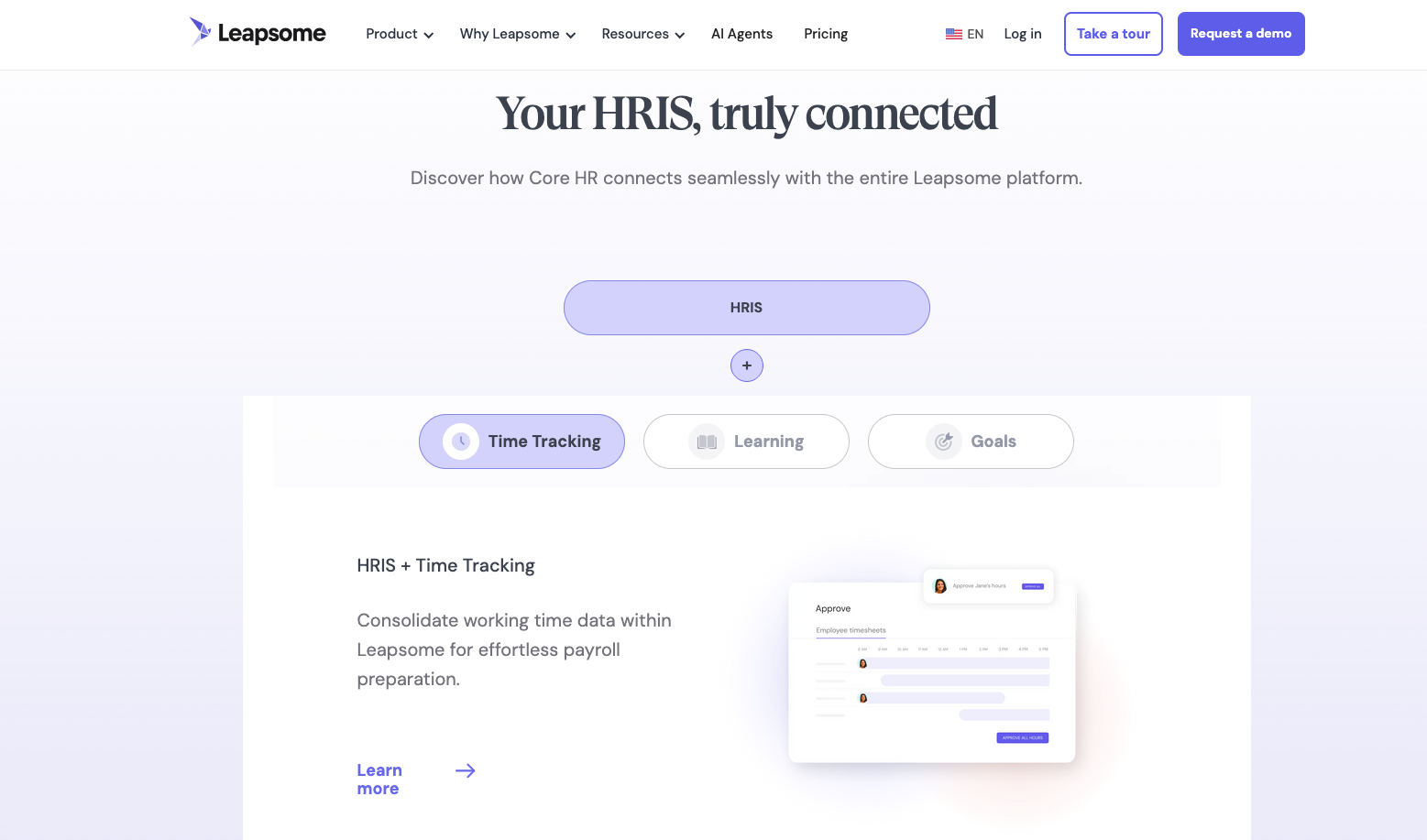
📝 Personaldaten zentralisieren
Leapsome hält Mitarbeiterdaten automatisch und nahtlos aktuell, egal ob ihr eine PEO nutzt oder auf interne HR-Kapazitäten setzt.
👉 Mehr über Leapsome erfahren
Tipps für die Zusammenarbeit mit einer PEO
Der Umstieg auf PEO-Dienste erfordert sorgfältige Planung, um Unterbrechungen bei Lohnabrechnung und Mitarbeiter-Benefits zu vermeiden. Diese Tipps helfen euch, den Übergang reibungsloser zu gestalten:
- Interne Projektleitung bestimmen: Beauftragt eine Person in eurem Unternehmen, den Übergang zu koordinieren und als Hauptansprechperson für das PEO-Team zu fungieren.
- Probeabrechnungen durchführen: Macht parallel in eurem alten System und über die neue PEO mindestens zwei Lohnabrechnungszyklen lang Probeabrechnungen, um Abweichungen zu erkennen.
- Timing sorgfältig wählen: Ein Wechsel zu einer PEO am Ende eines Fiskalquartals oder -jahres vereinfacht die Steuerberichterstattung.
Starke Personalstrategien entwickeln und umsetzen mit Leapsome
Eine PEO kann die Verwaltungsseite eurer HR-Abläufe übernehmen. Bevor ihr diese Kosten auf euch nehmt, ist eine Prüfung eures aktuellen HR-Setups der beste erste Schritt. Vielleicht stellt ihr fest, dass eine starke HRIS-Plattform wie Leapsome euch bereits die benötigte Unterstützung bietet. Und wenn ihr trotzdem Hilfe braucht, kann eine PEO ein wertvolles Sicherheitsnetz für euer HR-Team sein.
Leapsome ist eure End-to-End-Plattform für Mitarbeitende, ob für Unternehmen, die interne HR-Systeme aufbauen, oder für solche, die auf PEO-Partnerschaften setzen. Unsere Plattform vereint Performance Reviews, Ziel-Tracking, Lernpfade und Engagement-Daten und gibt euch eine einzige Quelle der Wahrheit, auf der ihr eine florierende Belegschaft aufbauen könnt.
"Mit Leapsome haben wir beeindruckende Verbesserungen erzielt. Die Initiativen, die wir aus den Umfrageergebnissen abgeleitet haben, haben unsere Fluktuation um 12,2 % gesenkt, unsere Umfragebeteiligung auf 82 % erhöht und die Mitarbeitenden produktiver und motivierter gemacht." – Natasa Kovacevic, People and Culture Manager, Eurowings Digital
🤝 Personalstrategie konsequent und strukturiert umsetzen
Automatisiert eure Workflows und steigert das Mitarbeiterengagement mit Leapsome.
👉 Demo anfragen
FAQ
Warum nutzen Unternehmen eine PEO für HR?
Unternehmen, denen die internen Ressourcen oder Kapazitäten fehlen, um wichtige HR-Aufgaben wie Lohnabrechnung und Compliance zu erledigen, können von einer PEO-Partnerschaft profitieren.
Welche PEOs sind empfehlenswert?
Zu den bekanntesten PEOs zählen Paychex PEO, Justworks und ADP TotalSource. Daneben gibt es viele kleinere, branchenspezifische PEO-Anbieter, die auf Nischenbereiche wie Bauwesen oder Gesundheitswesen spezialisiert sind.

.jpg)


.jpg)