HR für Startups: Prozesse schaffen, die das Unternehmen voranbringen


Die meisten Gründerinnen und Gründer starten aus schlichter Notwendigkeit als ihre eigene Personalabteilung. Das macht es leicht, HR in eurem Startup als eine simple Sammlung von Gehaltsabrechnungsprotokollen und Verwaltungsaufgaben zu sehen. Wenn HR aber mit dem Wachstum des Unternehmens Schritt halten soll, müsst ihr es anders betrachten: als zentralen Akteur, der das Geschäft voranbringen oder ausbremsen kann.
Frühe HR-Verantwortliche und Gründerinnen und Gründer haben eine einzigartige Chance, Abläufe von Grund auf aufzubauen. Ihr benötigt Systeme, die klar genug sind, um ihre Aufgabe zu erfüllen, aber flexibel genug, um gemeinsam mit Kopfzahl und Umsatz zu wachsen. Keine kleine Aufgabe. Dieser Leitfaden bringt euch auf den richtigen Weg.
Warum HR früher einen Unterschied macht, als die meisten Gründerinnen und Gründer denken
Gründerinnen und Gründer haben begrenzte Zeit und Ressourcen. Viele priorisieren deshalb die Produktentwicklung und verschieben People-Systeme auf ein vages "später".
Das kann jedoch zu teuren Fehleinstellungen und noch kostspieligerer hoher Fluktuation führen. Auf der anderen Seite übertreffen Unternehmen, die in Talententwicklung und effektives People Management investieren, ihre Wettbewerber bei Profitabilität und Mitarbeiterbindung konsequent.
Wenn ihr fest in dieser zweiten Kategorie sein wollt, lest weiter. Wir erkunden die Rolle von HR in Startups und erklären:
- Was HR-Systeme euer Startup jetzt aufbauen muss
- Wann ihr jede People-Initiative priorisieren solltet
- Warum HR mit dem Unternehmenswachstum weiterentwickelt werden muss
"HR sollte Geschäftsentscheidungen nicht nur unterstützen, sondern sie mitgestalten. Ihr müsst wie ein Profit Center denken, nicht wie ein administratives Silo."
– Anita Anthonj, Gründerin und CEO bei Talaera
Die Startup-HR-Reifekurve: Ein Framework zum Skalieren von People Operations
Startups scheitern in der Regel nicht daran, überhaupt nicht in HR zu investieren. Sie geraten in Schwierigkeiten, weil ihre Prozesse nicht auf Expansion ausgelegt sind. Systeme, die für ein Fünf-Personen-Team gut funktionieren, versagen häufig bei fünfzig Mitarbeitenden.
"Veränderung ist konstant, Reaktivität funktioniert also nicht mehr. Responsiveness ist keine Frage der Geschwindigkeit, sondern des Designs. Wenn ihr die Struktur nicht vor dem nächsten Brand aufbaut, greift ihr auf Reflexhandlungen zurück, die Verwirrung und Burnout erzeugen."
– Craig Forman, Gründer und Principal Consultant bei CultureC Consulting
Wenn ihr versteht, wie die HR-Reifekurve funktioniert und welchen Reifegrad ihr aktuell habt, könnt ihr Veränderungen proaktiv begegnen, bevor sie zu kulturellen oder operativen Krisen werden. Schauen wir uns an, wie ihr eine proaktive HR-Strategie für euer Startup definiert.
Phase 1: Fundament legen, Stein für Stein
Kopfzahl: 1–20 Mitarbeitende
Snapshot: In dieser Phase spielen Gründerinnen und Gründer eine zentrale Rolle bei der Personalgewinnung, und viele Systeme sind undokumentiert oder ad hoc.
Ziel: Jetzt ist die Zeit, grundlegende HR-Praktiken zu etablieren, die frühe Einstellungen unterstützen und klare Erwartungen für Mitarbeitende setzen.
Risiken und Herausforderungen
- Unklare Rollen: Neue Mitarbeitende kämpfen mit Effizienz, wenn Verantwortliche Zuständigkeiten und Erfolgskennzahlen nicht klar definieren.
- Compliance-Lücken: Fehlende oder unvollständige HR-Dokumentation schafft rechtliche und finanzielle Risiken, die beim Skalieren zunehmen.
- Inkonsistente Einstellungsprozesse: Ohne strukturierte Bewertungssysteme ist es leicht, teure Fehleinstellungen zu machen, die schwer zu korrigieren sind.
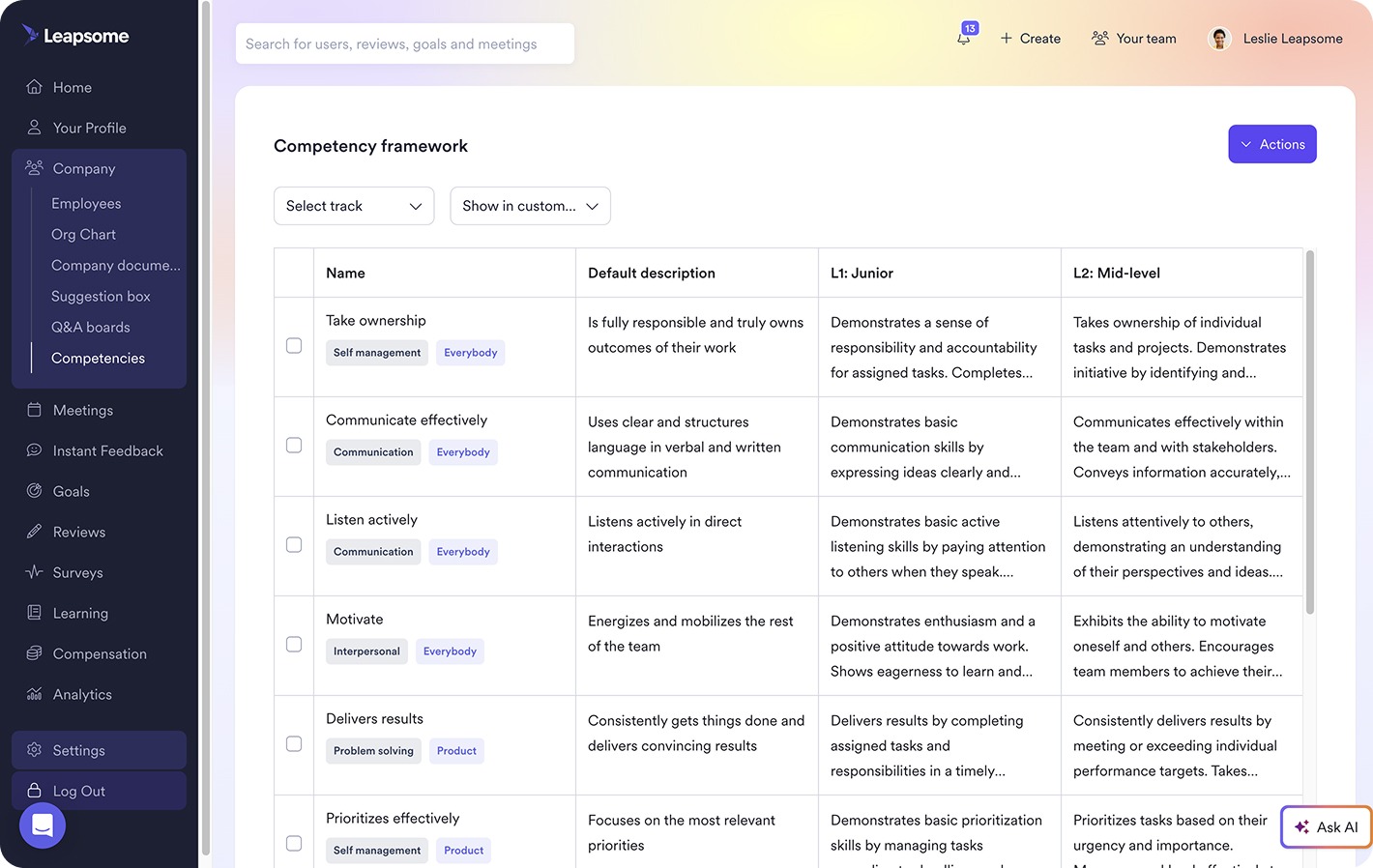
🌟 Definiert, wie ein guter Fit für euer Unternehmen aussieht
Leapsomes Kompetenzmodell hilft Gründerinnen, Gründern und frühen Einstellungsteams, Kandidatinnen und Kandidaten mit den nötigen Kompetenzen zu finden.
👉 Kompetenzmodell entdecken
Top-Prioritäten
- Grundlegende HR-Richtlinien für euer Startup festlegen: Standardisiert Verträge und synchronisiert die Lohnabrechnung mit automatisierten Tools, um genaue Aufzeichnungen zu führen und das Unternehmen prüfbereit zu halten.
- Einstellungsprozesse aufbauen: Beginnt mit einer grundlegenden Einstellungsphilosophie, dann konkretisiert die Details für Interviews und Bewertungen.
- Kompetenzen kartieren: Erstellt eine Liste technischer und Soft Skills, die neue Mitarbeitende für ihren Erfolg in jeder Rolle brauchen.
- Unternehmenskultur ausrichten: Setzt abstrakte Unternehmenswerte in einen schriftlichen Leitfaden um, der die erwarteten Verhaltensweisen von Führungskräften und Mitarbeitenden beschreibt.
Schlüsselsysteme
- Zentralisiertes Recruiting: Nutzt ein Bewerberverfolgungssystem, um eure Kandidatenpipelines zu managen und Recruiting-Daten zu organisieren.
- Strukturierte Interviewprozesse: Entwickelt eine schrittweise Interview-Sequenz, damit jede Kandidatin und jeder Kandidat auf die richtige Berufserfahrung geprüft wird.
KPIs zum Tracken
- Time-to-Hire: Messt die durchschnittliche Anzahl von Tagen, die benötigt werden, um eine Stelle zu besetzen, um Engpässe im Recruiting-Prozess zu identifizieren.
- Annahmequote: Beobachtet, welcher Prozentsatz der ausgesprochenen Angebote angenommen wird, um eure Stärken und Schwächen als Arbeitgeber besser zu verstehen.
Phase 2: Eine Struktur errichten, die hält
Kopfzahl: 20–50 Mitarbeitende
Snapshot: In dieser Phase steigen der Einstellungsbedarf und das erforderliche Tempo, während Gründerinnen und Gründer die direkte Teamleitung an Managerinnen und Manager übergeben.
Ziel: Jetzt, da ein solides Fundament steht, gilt es, einen strukturierten HR-Plan zu erstellen, der Managerinnen und Manager in die Lage versetzt, effektiv zu führen.
Risiken und Herausforderungen
- Fragmentierte Employee Experience: Die Qualität des Onboardings variiert stark zwischen Teams und Abteilungen.
- Burnout bei Managerinnen und Managern: Neue Führungskräfte haben oft nicht die nötige Erfahrung oder Unterstützung, was ihre Führungsqualität und Motivation beeinträchtigt.
- Mangelnde Abstimmung zwischen Performance und Erwartungen: Teams schwanken ohne strukturiertes Feedback und konsistente Erwartungen.
Top-Prioritäten
- Einen Onboarding-Prozess formalisieren: Baut Onboarding-Programme auf, die jede neue Mitarbeiterin und jeden neuen Mitarbeiter zuverlässig und willkommen empfangen.
- Feedback-Frameworks einführen: Regelmäßige, umsetzbare Feedback-Schleifen halten Teams beim Wachsen in Einklang.
- Managerinnen und Manager befähigen: Delegiert HR-Verantwortlichkeiten und gebt Führungskräften die Tools und Orientierung für effektive Zielsetzung und produktive 1:1-Meetings.
- People-Strategie dokumentieren: Wechselt von ad-hoc-Praktiken zu formalisierten HR-Abläufen, die dem Wachstumsdruck standhalten.
Schlüsselsysteme
- Zentralisiertes Pre- & Onboarding: Baut Pre-Boarding-Dokumentations-Workflows für Verträge und persönliche Daten. Erstellt Onboarding-Checklisten, die neue Mitarbeitende durch ihre ersten Wochen führen.
- Standardisierte Trainingspfade: Entwickelt Trainingsprogramme, die neue Mitarbeitende effizient mit den nötigen Tools und Wissen ausstatten. Plant Zielsetzungs- und Performance-Review-Systeme, die langfristiges Wachstum fördern.
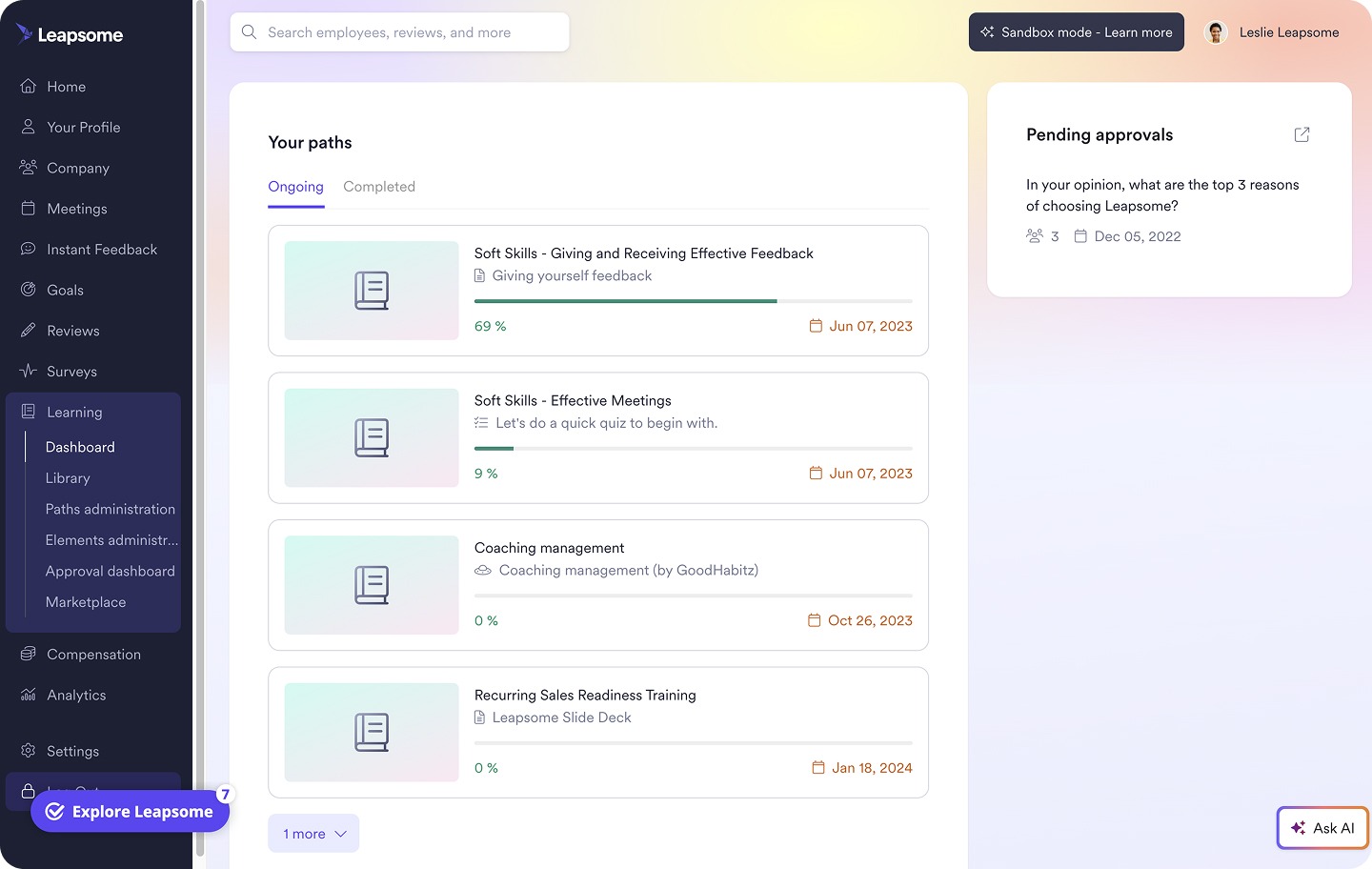
👟 Schafft einen reibungslosen Start für jede neue Mitarbeiterin und jeden neuen Mitarbeiter
Leapsomes strukturierte Onboarding-Workflows ermöglichen eine konsistente Einarbeitungserfahrung und helfen Mitarbeitenden, schnell produktiv zu werden.
👉 Pre- & Onboarding entdecken
KPIs zum Tracken
- New-Hire-Retention: Verfolgt, welcher Prozentsatz der Mitarbeitenden mindestens sechs Monate im Unternehmen bleibt.
- Time-to-Productivity: Messt, wie lange es dauert, bis eine neue Mitarbeiterin oder ein neuer Mitarbeiter die Kernerwartungen der Rolle erfüllt.
- Interne Beförderungsquoten: Schaut euch an, wie viele offene Stellen intern statt extern besetzt werden.
- Ziel-Abschlussquoten: Behaltet wichtige Performance-Ziele im Blick, für einzelne Mitarbeitende und Teams.
Phase 3: In neue Höhen skalieren
Kopfzahl: 50–100+ Mitarbeitende
Snapshot: Ihr seid jetzt zu groß, um Kultur und Performance gut zu managen, ohne dass HR eine formale, konsistente Rolle spielt.
Ziel: Ab jetzt ist es eure Aufgabe, People-Systeme zu verfeinern, die langfristiges Engagement und Mitarbeiterbindung unterstützen.
Risiken und Herausforderungen
- Bindungsprobleme: High Performer verlassen das Unternehmen, wenn sie keinen klaren Entwicklungspfad sehen.
- Sinkendes Engagement: Die Mitarbeiterstimmung sinkt, wenn sich Erfolg weniger von individuellen Leistungen abhängig anfühlt.
- Strategische Abdrift: People-Initiativen verlieren den Bezug zu Geschäftsergebnissen, wodurch HR zum administrativen Silo wird.
- System-Fragmentierung: Datenmanagement über nicht verknüpfte Tools führt zu manuellen Eingabefehlern und inkonsistenter Berichtsqualität.
Top-Prioritäten
- Karrierepfade gestalten: HR-Frameworks sollten Mitarbeiterentwicklung und internes Wachstum unterstützen.
- Engagement messen: Verfolgt Engagement und holt regelmäßig Feedback ein, um zu verstehen, wie Systeme auf Teammitglieder wirken.
- People- und Geschäftsziele verbinden: Stellt sicher, dass eure HR-Strategie mit den langfristigen Unternehmenszielen und Umsatzzielen übereinstimmt.
- HR-Technologie konsolidieren: Fasst eure wachsenden HR-Systeme in einer einzigen Quelle der Wahrheit zusammen.
Schlüsselsysteme
- Engagement-Schleifen: Startet regelmäßige Pulsbefragungen, um ehrliche Daten über Mitarbeiterbeziehungen und Zufriedenheit zu sammeln.
- Anerkennungsprogramme: Schafft Anerkennungsprogramme, die Performance hervorheben und eure Unternehmenswerte verstärken.
- Einheitliche HR-Infrastruktur: Integriert euer HRIS, Lohnabrechnung, Reporting und Performance-Tools in einer einzigen Plattform.
"Viele HR-Teams kämpfen noch immer mit den Grundlagen: zu viele nicht verknüpfte Tools, begrenzte Insights. Deshalb haben wir ein wirklich people-first HRIS gebaut, das alle Mitarbeiterdaten in einer einzigen Quelle der Wahrheit bündelt."
– Suraj Paneru, Customer Success Coach bei Leapsome
KPIs zum Tracken
- Mitarbeiterengagement-Scores: Nutzt eine konsistente Skala wie den Employee Net Promoter Score, um zu verfolgen, wie motiviert und verbunden sich euer Team fühlt.
- Freiwillige Fluktuation: Messt, welcher Prozentsatz der High Performer das Unternehmen freiwillig verlässt.
- Administrative Effizienz: Verfolgt, wie viel Zeit euer Team mit manueller Datenverwaltung versus strategischen People-Initiativen verbringt.
- Datenqualität und Reporting: Gleicht People-Daten auf Genauigkeit ab und behaltet im Blick, ob Reporting-Arbeit zu messbaren Ergebnissen führt.
Euer Startup schnell und reibungslos skalieren mit Leapsome
Unser wichtigster Rat für HR in eurem Startup: Neue Wachstumschancen kommen schnell, und ihr solltet bereit sein, sie zu nutzen. Euer Team benötigt daher ein HR-System, das Führungskräften die Transparenz und Struktur gibt, die effektives Skalieren erfordert.
Leapsome kombiniert HRIS- und People-Strategy-Tools in einem vollständig integrierten HR-Hub. Unabhängig von eurer Wachstumsphase ersetzt ihr verstreute Tabellen und nicht verknüpfte Apps durch eine einzige Quelle der Wahrheit, die dem Unternehmen hilft, sich anzupassen und zu gedeihen.
"Wir haben Leapsome gewählt, weil es unsere Managerinnen, Manager und Teammitglieder in einem gemeinsamen Raum verbunden hat. Es ging nicht darum, dass eine Seite den Prozess besitzt, sondern darum, zusammenzuarbeiten." – Hilary Worcester, Senior Manager of Learning and Development bei MKC
🌱 Schneller wachsen mit einer zuverlässigen HR-Struktur
Leapsome zentralisiert eure Kern-People-Prozesse in einer einzigen Plattform und bietet die operative Klarheit, die euer Unternehmen zum Skalieren braucht.
👉 Demo anfragen
FAQ
Wie können Startups HR effektiv managen?
Startups können HR effektiv managen, indem sie skalierbare und automatisierte HR-Prozesse implementieren, etwa HRIS-Systeme für Lohnabrechnung und Onboarding. Konsistente Einstellungspraktiken und Performance Management helfen zusätzlich, hohe Fluktuation zu vermeiden und Wachstum zu unterstützen.
Welche HR-Services gibt es für Startups?
Die erfolgreichsten Startups nutzen typischerweise Full-Service-HR-Software, die wichtige Workflows unterstützt, etwa Gehaltsabrechnung, Benefits-Verwaltung, Recruiting und Performance Management.

.png)