Recruitment automation: Benefits, risks, and best use cases


Recruitment automation means using different software and AI tools to handle repetitive tasks, such as scheduling interviews or sending candidate updates, so HR teams can spend less time on administration.
Insight Global’s 2025 report found that 99% of hiring managers already use AI in some part of hiring, so teams don’t need convincing that they should automate more.* But 25% of job seekers say they trust companies less when they use AI in their application process, according to Gartner.** Knowing when and where to use AI in the hiring process is crucial for HR leaders.
This guide explains what work recruitment automation software handles well, which tasks still need human judgment, and how to use the latest technology wisely and effectively.
* Insight Global, 2025
**Gartner, 2025
Recruitment tasks worth automating
"It's one big lift to automate, but every cycle after that becomes faster and easier. Automating the invisible work gives HR leaders back time for culture, strategy, and meaningful connection."
— Emma Leeds, Founder, CEO & Chief People Consultant, People Function
89% of HR professionals say AI has helped them save time or increase efficiency at work (SHRM). But what’s the best way to use it in the hiring process?
A practical way to find recruitment tasks worth automating is to look for ones that follow clear rules and need frequent attention. Recruitment automation tools can usually handle these tasks without requiring a recruiter to manage every step:
- Scheduling interviews: Once the recruiter selects a candidate for an interview, the system sends a booking link with available times and confirms the slot the candidate chooses. This reduces or eliminates endless back-and-forth emails.
- Sending confirmations and status updates: After someone applies, use automated recruitment software to send an acknowledgment that tells the candidate when to expect a response. Once the hiring team agrees on the next stage, they can automatically update the candidate instead of drafting a new message.
- Routing approvals: Automatically send requests to the right people in the right order. If someone hasn’t responded within a set time frame, the software can autosend a reminder.
"We've been able to optimize and automate a lot of the functions that were taking up our time, turning them into one streamlined workflow that connects departments like onboarding, offboarding, training, and hiring."
— Janelle Doharty, Chief People Officer, Knowtion Health
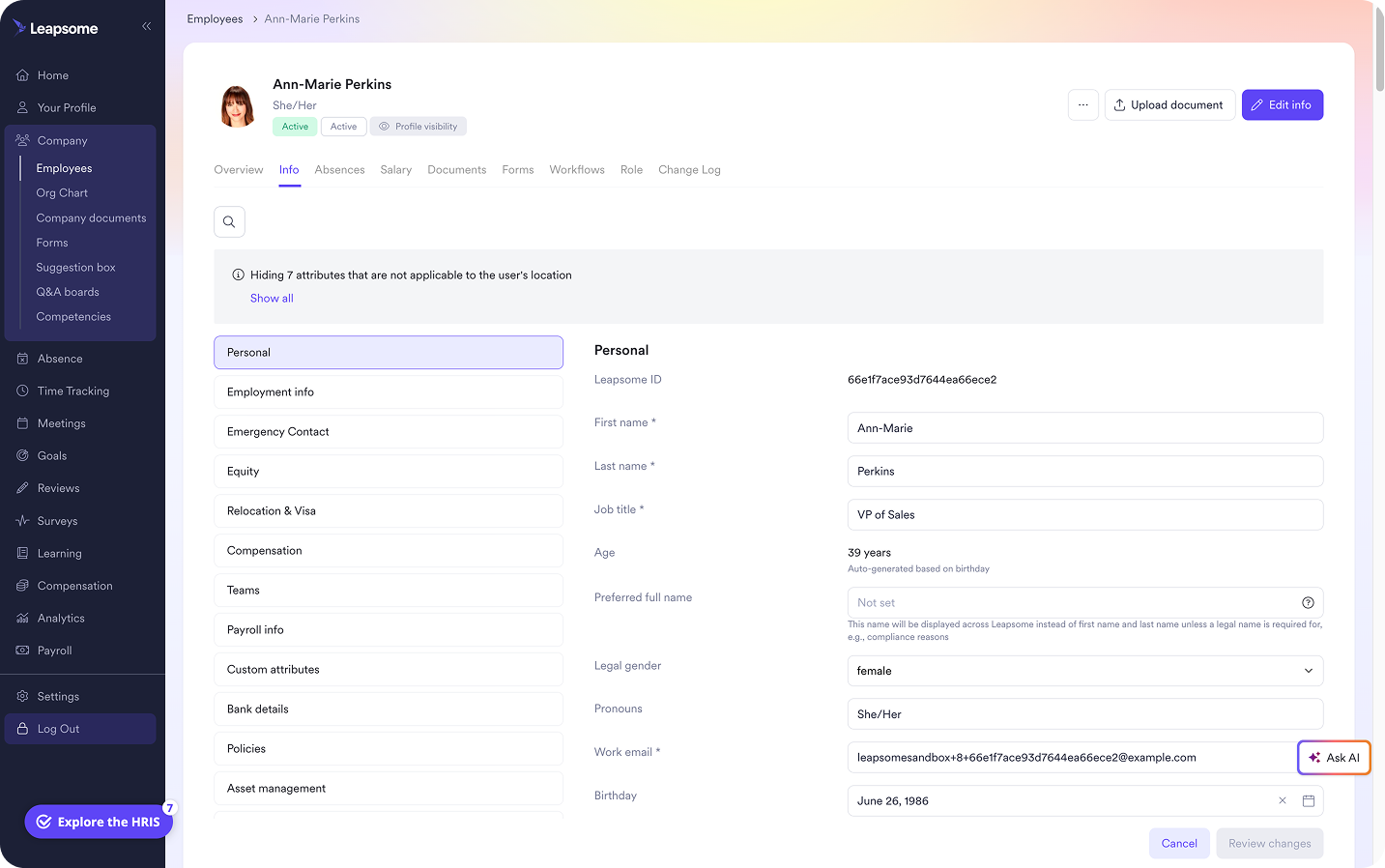
👟 Spend less time chasing the next step
Leapsome’s Workflows automates multi-step approval routing and reminders with Slack integrations that help your team coordinate repeatable processes and spend more time on the hiring work that needs human judgment.
👉 Explore Workflows
What to automate and where human judgment is required
“Using those automation workflows and having all the data in the right place really gives you time back to do that important strategic HR work.” — Sammie Masley, People and Talent Partner, Leapsome
A task isn’t safe to automate just because recruiters repeat it often. HR staff and hiring managers need to screen applications every day, but deciding which candidates get to move forward is too important for AI to do. Sometimes a task’s importance and need for accuracy outweighs the time you could save by automating it.
Use these three categories to review your hiring process:
- Automate: Repetitive and rules-based tasks of low consequence are good candidates for automation. Some examples include sending an email that says “Thank you for applying” or scheduling a pre-screening call. You can easily step in to review or reverse these steps if the automation backfires.
- Use AI with human review: Some recruitment tasks require sifting through large amounts of data. You can use AI to screen or summarize this data, but then a real person needs to step in and fact check it. Some examples include using an AI note taker during interviews or scanning resumes for a required technical skill.
- Keep human accountability: Humans should be responsible for all recruitment decisions of consequence, including candidate advancement, job offers, and total compensation.
Here’s how common hiring tasks fit into those categories:
Remember that recruiters should maintain full visibility into how AI makes recommendations. Humans should be able to adjust, override, and customize workflows as needed.
Where recruitment automation goes wrong
"AI should be a copilot, not an autopilot. Let it handle the heavy lifting, so you can show up more human, more present, and more precise where it matters."
— Luck Dookchitra, VP People & Culture, Leapsome
Even the best-constructed automations can cause an error in your recruitment processes. HR teams need to stay vigilant when using AI so they can intervene quickly when something goes wrong.
Here are a few common problems to watch out for:
- Candidates face automatic rejection on a technicality: A system might reject an application even though the candidate meets the role’s requirements because it can’t understand the resume’s file type or formatting. (That’s why only 26% of job seekers trust an AI-powered ATS to evaluate them fairly, according to Gartner research.
- Screening rules carry bias into the process: A system that penalizes employment gaps can disadvantage candidates who took time away from work for important reasons, such as medical leave or caregiving.
- Hiring managers stop questioning recommendations: A manager may accept a high candidate rating proffered by AI without checking the qualifications themselves (especially if they need to fill a role quickly). It’s easy for people to get lax about double-checking AI, but keeping a human-in-the-loop is crucial for maintaining accuracy.
Hiring teams are always responsible for final decisions. That’s why it’s important to use automation software with safeguards that keep human judgment at the forefront. An ATS like Leapsome Recruiting can help. It keeps pipeline stages, scorecard, and candidate evaluations together in one platform, with AI support for tasks like screening and interview transcription. HR teams get the time-saving benefits of automation but stay firmly in the driver’s seat for all consequential decisions.
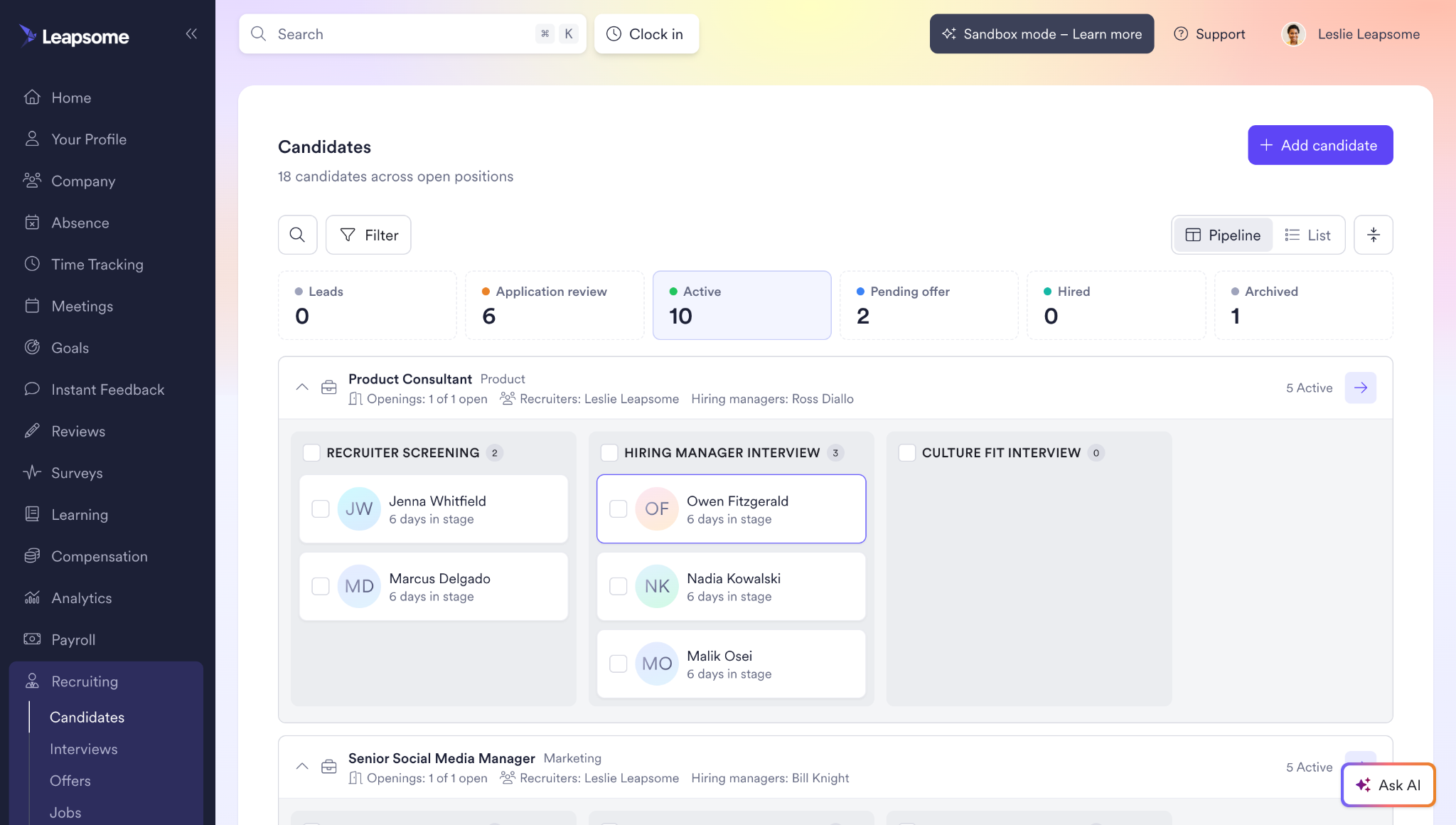
🕹️ Keep your team in control of candidate decisions
Leapsome Recruiting helps your team review candidates and coordinate the hiring process with AI-powered tools.
👉 Explore Recruiting
Automate the coordination and keep the judgment human with Leapsome
Recruitment automation saves time by handling the steps recruiters would otherwise coordinate manually. When HR software books interviews and follows up on pending approvals, recruiters can spend that time reviewing candidates’ experience and preparing questions that help the team assess their suitability for the role.
Leapsome combines Workflows for repeatable coordination with Recruiting for candidate evaluation, helping HR reduce administrative work while keeping hiring decisions in human hands:
- Workflows: Set up multi-step approval routing and automatic reminders so requests reach the right person without HR forwarding emails or chasing responses. Connect workflows with tools like Slack to keep people informed where they already work.
- Recruiting: Keep candidate evidence alongside scorecards so hiring managers can assess applicants against shared criteria. Recruiting uses AI to prepare screening summaries and draft scorecards from interview recordings, while your team reviews the evidence and decides who advances.
"Our first impression was, okay, the team will enjoy using this tool. It's intuitive. We don't need to do much onboarding." — Siddharth Dhanuka, Head of Finance & Operations, SQUAKE
⏱️ Give recruiters more time for human judgement
Leapsome brings candidate evidence together so your team can weigh each applicant’s suitability, with AI supporting the assessment and people making the final call.
👉 Request a demo
FAQ
Does recruitment automation actually save recruiters time?
Yes, especially when automated recruitment software handles interview bookings and routine follow-ups. Recruiters spend less time coordinating these steps, which leaves more time for candidate evaluation.
The time savings depend on how much work the tools remove. If recruiters have to re-enter information or correct frequent errors, the benefit shrinks. HR should compare the time recruiters spend on each task before and after automation, including the time they need to review AI output.
How can recruitment chatbots support hiring?
A recruitment chatbot uses technology to handle routine candidate conversations, such as answering questions about a job posting or helping someone book an interview. Some tools, like enterprise talent acquisition provider iCIMS, offer a chatbot that suggests relevant roles based on a candidate’s resume and handles replies to automated outreach.
A chatbot can reduce repetitive conversations when recruiters handle frequent candidate inquiries, but the team should assess who the best candidates are and offer a way to speak directly to a person when needed.
Which recruiting software can support recruitment automation?
Leapsome supports automation through Workflows and its Recruiting system. Lever combines an ATS with a recruiting CRM, while Workday connects hiring with broader HR processes. For specialist needs, SeekOut offers AI recruiting for sourcing, and HireVue provides video interview and scheduling tools.
To narrow the options, look at where recruiters spend time on manual work. For example, resume parsing can reduce data entry, while integrations with job boards and background check providers can save recruiters from copying information between systems.