Panel interview: How to structure for better hiring decisions


A panel interview is a job interview where multiple people evaluate the same candidate in one session. This type of assessment relies on employees with different areas of expertise helping your HR team analyze the skills the role requires.
Robert Half’s research shows why structure matters: 65% of hiring managers said a surge in applications, with many résumés generated by AI, had made candidate skills harder to verify.* Panel interviews give interviewers a chance to go beyond the polished claims on a résumé. When done right, the format reveals real decision-making and problem-solving.
Bringing more colleagues into the interview might seem like a sensible way to scrutinize those abilities. But if panelists repeat questions or judge answers against different standards, you might end up with more personal opinions and little objective evidence. A stronger panel gives each interviewer specific competencies to assess, along with shared criteria for evaluating answers.
This guide breaks down the meaning of panel interviews and shows you how to structure them so each participant contributes to a better assessment.
* Robert Half, 2026
What’s a panel interview and who should be involved?
An interview panel brings the hiring manager and other relevant colleagues into one conversation with a candidate. Each person explores a specific requirement tied to the role.
Panel interviews are different from one-on-one interviews, where one person conducts the assessment. They’re also not the same as sequential interviews, where the candidate meets interviewers in separate sessions.
Use panel interviews when a role requires strong judgment and collaboration. This format lets interviewers see how a candidate approaches shared work and real-time decisions. It also gives colleagues a chance to evaluate the same example from different angles.
For example, if you’re hiring a product manager, an engineer on the panel can examine how the candidate handles technical trade-offs. The hiring manager can focus on how they set priorities. Both panelists hear the same example, but each evaluates a different aspect of the candidate’s approach.
Who’s usually on a panel of interviewers?
Interviewers on a panel should be people who understand the work and can assess a specific requirement. According to CNBC’s analysis of Google hiring practices, 95% of the time, panels of just four interviewers made the same hiring decision as panels of more than four interviewers.
Depending on the role, these four people on your panel may include:
- Hiring manager: Assesses the candidate’s ability to deliver the outcomes the role requires.
- HR representative or recruiter: Leads introductions, takes notes, and asks assigned questions. They also ask behavioral questions that explore how the candidate handled feedback or workplace challenges.
- Future team member: Asks how the candidate shares work with colleagues, including what they do when a teammate misses a deadline.
- Cross-functional stakeholder: Tests how the candidate handles competing requests from other teams, such as a sales commitment that conflicts with the product roadmap.
- Senior leader: For leadership hires, asks how the candidate has set departmental priorities and made difficult budget decisions.
How to conduct a successful panel interview
“If the people you hire aren’t aligned, you’ll constantly play catch-up. Use tough interview questions to test alignment and maturity early.”
— Melanie Naranjo, Chief People Officer at Ethena
Instead of relying on panelists to decide what to ask in the moment, agree on the interview plan before anyone meets the candidate. Here’s how to conduct a successful interview:
- Define what the panel needs to assess: Choose the role requirements that need further exploration at this stage. If the potential new hire already demonstrated technical ability with a work sample, use the panel to understand the candidate’s reasoning rather than test the same skill again.
- Assign questions and plan the session: Give each interviewer responsibility for specific competencies and the questions that explore them. Set time limits for each part of the conversation, with room for follow-up questions and the candidate’s own questions.
- Use a consistent approach across candidates: Ask the same core panel interview questions for the role, while allowing follow-ups that clarify individual answers. Ask what the candidate personally did and what happened as a result, especially when they describe a team achievement.
- Collect individual scores before discussing the candidate: Have panelists rate their assigned competencies and support each score with evidence from the answers. Then meet to review disagreements and spot any unanswered questions. Set the feedback deadline before the interview so everyone knows when to submit their assessment.
Panel interview tips for HR and hiring managers
“Ask what makes someone feel undervalued or how they handled feedback—they reveal how well they’ll handle change and business realities.”
— Melanie Naranjo, Chief People Officer at Ethena
Small preparation choices can prevent the panel from becoming a series of disconnected conversations. Here are a few pro tips:
- Keep attendance tied to a purpose: If two panelists would assess the same competency, consider using only one.
- Brief interviewers using a sample answer: Before interviews begin, discuss how panelists would score an example response. Resolve differences in what they consider strong evidence before those differences affect a candidate’s evaluation.
- Tell candidates what to expect: Explain who they’ll meet and what each person will cover. Share the interview format so candidates know how the conversation will run. Invite requests for adjustments so they can prepare effectively.
- Replace generic “culture fit” judgments and repeated questions: If an interviewer suggests a candidate isn’t a good cultural fit, ask which job-related behavior supports that view. This shift toward evidence reduces bias. A centralized and connected HRIS like Leapsome helps panelists follow assigned behavioral questions and avoid asking candidates to repeat answers.
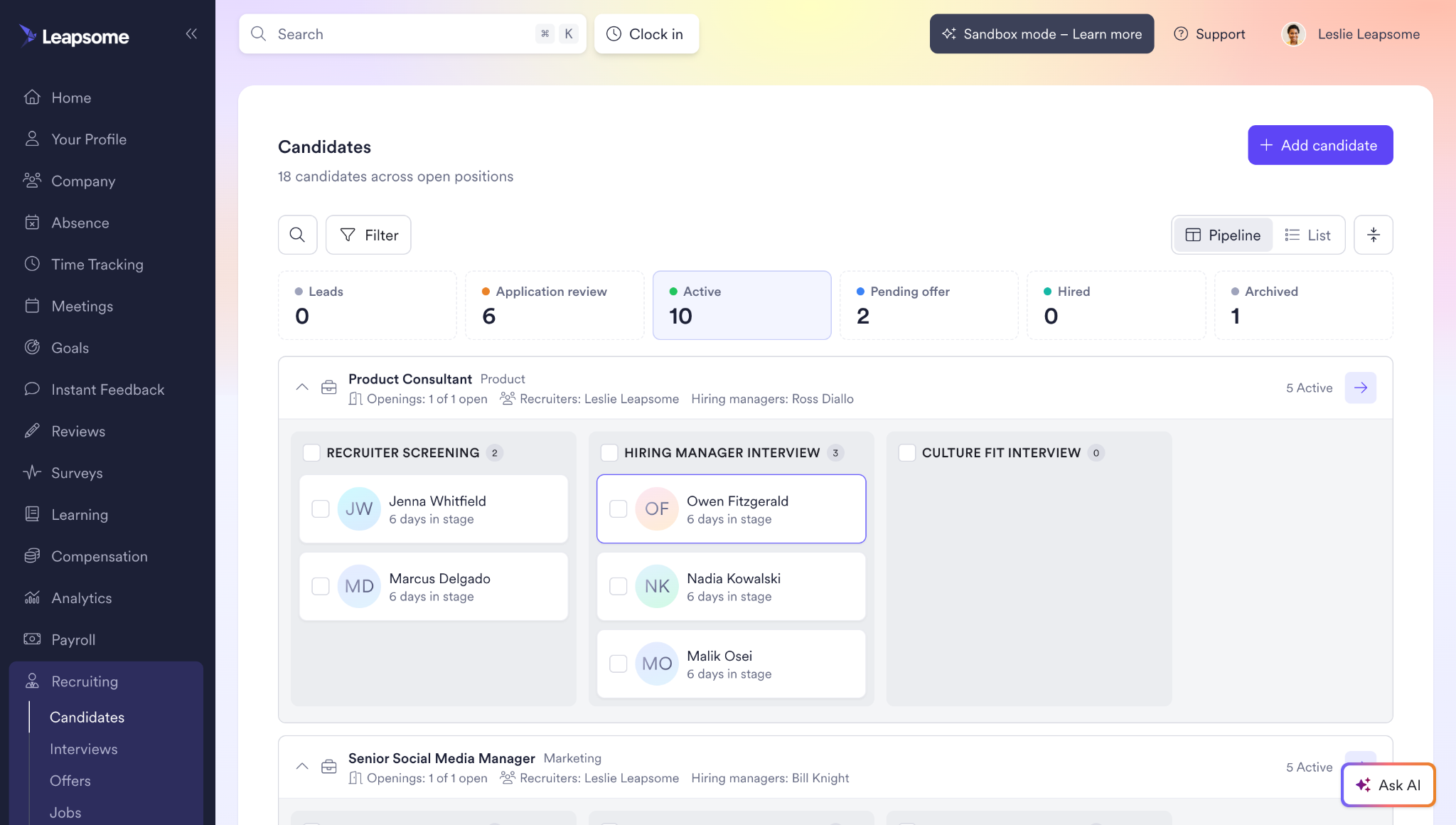
🗺️ Give every interviewer a clear assessment plan
Leapsome Recruiting brings interview guides, candidate information, and scorecards together, helping panelists assess the same role criteria and submit feedback in one place.
👉 Explore Recruiting
How to design a panel interview that produces better evidence, not more opinions
More interviewers don’t always make a hiring decision more reliable. Each person needs to uncover evidence of a skill the role requires and judge it against agreed criteria. Otherwise, you’ve added more perspectives without learning more about the candidate’s ability to do the job. Here’s how to structure a panel that produces useful evidence instead of extra opinions.
Give each panelist a competency to assess
“At first no one knew what success looked like. We defined performance levels and documented expectations — then motivation skyrocketed because people finally knew what winning meant.”
— Noelle Pittock, Senior Operations Director at Remote
Start with what success in the role requires, then divide the assessment accordingly. Avoid broad assignments such as “check leadership skills.” Instead, specify the behavior the interviewer should explore.
For example, a 100-person company hiring a customer success manager could divide the responsibilities like this:
Define what each score needs to show
A numbered scale won’t create consistency when interviewers interpret the numbers differently.
Write key characteristics that support each rating.
If you asked the question on account prioritization above, a simple scale might look like this:
Include an “insufficient evidence” option. An incomplete answer may require another question to build rapport.
Discuss the evidence after everyone submits feedback
Have panelists record scores with supporting notes before sharing an overall recommendation. This reduces the opportunity for a senior colleague’s opinion to shape everyone else’s assessment.
During the debrief, review differences by competency. If two interviewers interpreted an answer differently, return to what the candidate said and the agreed scoring criteria.
Those competencies should also reflect expectations after the hire. If you assess customer prioritization during recruitment, the employee should encounter the same expectation in onboarding and later performance conversations. That’s why it’s important to choose an HR platform like Leapsome that follows a talent management lifecycle from application through onboarding and development with the same set of competencies.
“Competency frameworks are not just checklists, they’re roadmaps for growth and accountability. They help managers coach more effectively and give employees a clear picture of how to succeed at every level. When expectations are written down, everyone understands what great looks like.” — Monica Sarkar, Co-Founder at Purple Umbrella
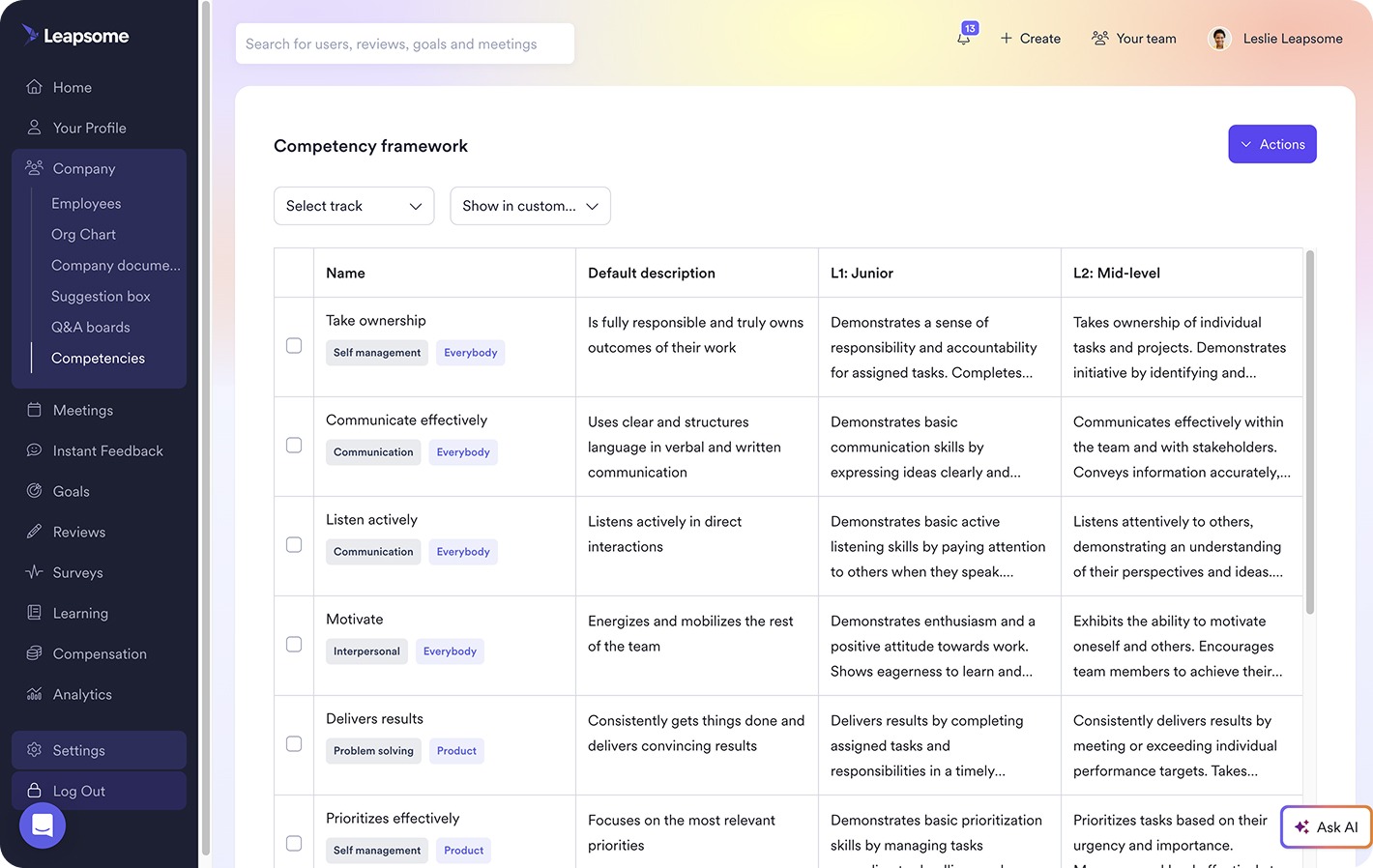
🔗 Hire against clear performance expectations
Leapsome Competencies defines role-specific skills at each level, so Recruitment can assess candidates against the expectations they’ll have once hired.
👉 Explore Competencies
How Leapsome helps HR teams build a more consistent hiring process
As your hiring volume grows, lean HR teams need managers to run consistent panel interviews without overseeing every step. That becomes harder when interview plans sit in separate documents, and panelists send feedback through disconnected channels. Managers struggle to review the evidence together, and HR ends up chasing scorecards and consolidating answers.
A shared system like Leapsome helps your team put consistent hiring process into practice with:
- Recruitment: Manage the hiring pipeline and interview scheduling alongside candidate scorecards, so interviewers can find their questions and submit assessments in one place.
- Competencies: Define role-specific skills and expectations at different levels, then use those criteria to assess candidates.
- Connected recruitment and performance data: Carry hiring criteria into performance assessments, helping your team compare an employee’s work with the expectations that shaped the hiring decision.
“Being able to view previous assessments and feedback, praise, and private notes directly while conducting an assessment review is crucial for reducing recall bias — and that’s what we’re all about. We want to do justice to our hardworking team and consider all of their strengths and weaknesses as accurately as possible when helping them mold their careers.” — Tara Todorovic, People Development Manager | SIDES
🧱 Give hiring decisions a stronger foundation
Leapsome connects candidate assessments with performance expectations, so your team shares a clear definition of what success requires.
👉 Request a demo
FAQ
What’s the difference between a panel interview and a group interview?
The difference between a panel interview and a group interview is who participates. A panel interview involves several interviewers assessing one candidate, while a group interview involves several candidates taking part in the same session.