Job requisition guide: How to create and track requests end-to-end


A manager who’s eager to hire a new team member may send HR a Slack message, or they might casually mention the opening on a video call. But a job requisition form is what formalizes this hiring need, so HR and other key teams are looped into early role planning.
A job requisition is the official internal request to duly approve and budget a role before recruitment begins. This form can cover all types of roles, whether you’re replacing a current position or hiring for something new. But when the requisition process is one-size-fits-all, routine backfill requests may get stuck in the queue.
In this article, we’ll go over how to create a job requisition process that accounts for different request types. You’ll get a form template to get you started, plus tips for creating a system that speeds up hiring without undermining your budget.
What’s a job requisition?
“You have to use holistic data and make it hard for the business to argue against your case. Build every business case with your stakeholders, not in isolation, especially finance.”
– Lee Bage, Global VP of People Operations at Valtech
A job requisition (or hiring requisition) is an internal request that outlines and justifies the hiring of a new employee. This form acts as a blueprint, explaining why a role is needed and how to successfully fill it. By aligning all parties on the role’s objectives and responsibilities, a job requisition form can help HR avoid expensive hiring mistakes downstream.
This form is separate from the job description (which defines the role’s responsibilities and qualifications) and the job posting (which advertises the role). The job requisition is the first step in this chain of paperwork, and it’s vital for planning your company’s job architecture.
How to route job requisition approvals by request type
“I built a model that reviews shape, size, skills, and cost every month. It’s a continuous assessment framework that helps us react early — not just when finance says it’s time to cut.”
– Lee Bage, Global VP of People Operations at Valtech
Use this job requisition matrix as a starting point to create your own approval chains that speed up request routing without risking budget control.
A backfill role often comes with a proven, pre-defined description. But tweaks to these roles are sometimes necessary to keep pace with skill trends. According to SHRM, 28% of United States businesses added new skills for full-time roles last year.
Signals that your approval process slows down hiring
To decide if approvals are slowing down your hiring process, watch for these key signs:
- Time-to-approval is the same for all request types: This may mean there are opportunities to accelerate backfill requests.
- The bounce-back rate for requests is high: If job requisitions are often returned for clarification or revision, the form may have gaps or managers might require more guidance.
- Job requisitions are frequently changed or reopened even after approval: When approved requests are later amended by recruiters, the process may not accurately define the role’s scope.
Job requisition form and process: What to include
To make sure your job requisition form captures comprehensive information without adding unneeded complexity, we’ve created a template that outlines the essential fields. Be sure to adapt this starting point to your business location, as the European Union and the U.S. have distinct rules for salary transparency and data collection.
A job requisition form template
This template and job requisition example can help you collect key details and align expectations for every stakeholder in the approval chain.
Pay special attention to the salary range, since once recruitment is underway, it’s difficult to backtrack on that detail. Also, EU-based companies are legally bound to offer transparent salary ranges.
If all this information seems like a lot to keep straight, Leapsome’s HRIS and people management platform can help.
“Look for one platform that covers your key needs and integrates with your stack. Don’t scatter data across 10 or 20 disconnected tools.” – Katerina Arsova, Head of People, Talent Operations, and Partnerships at Leapsome
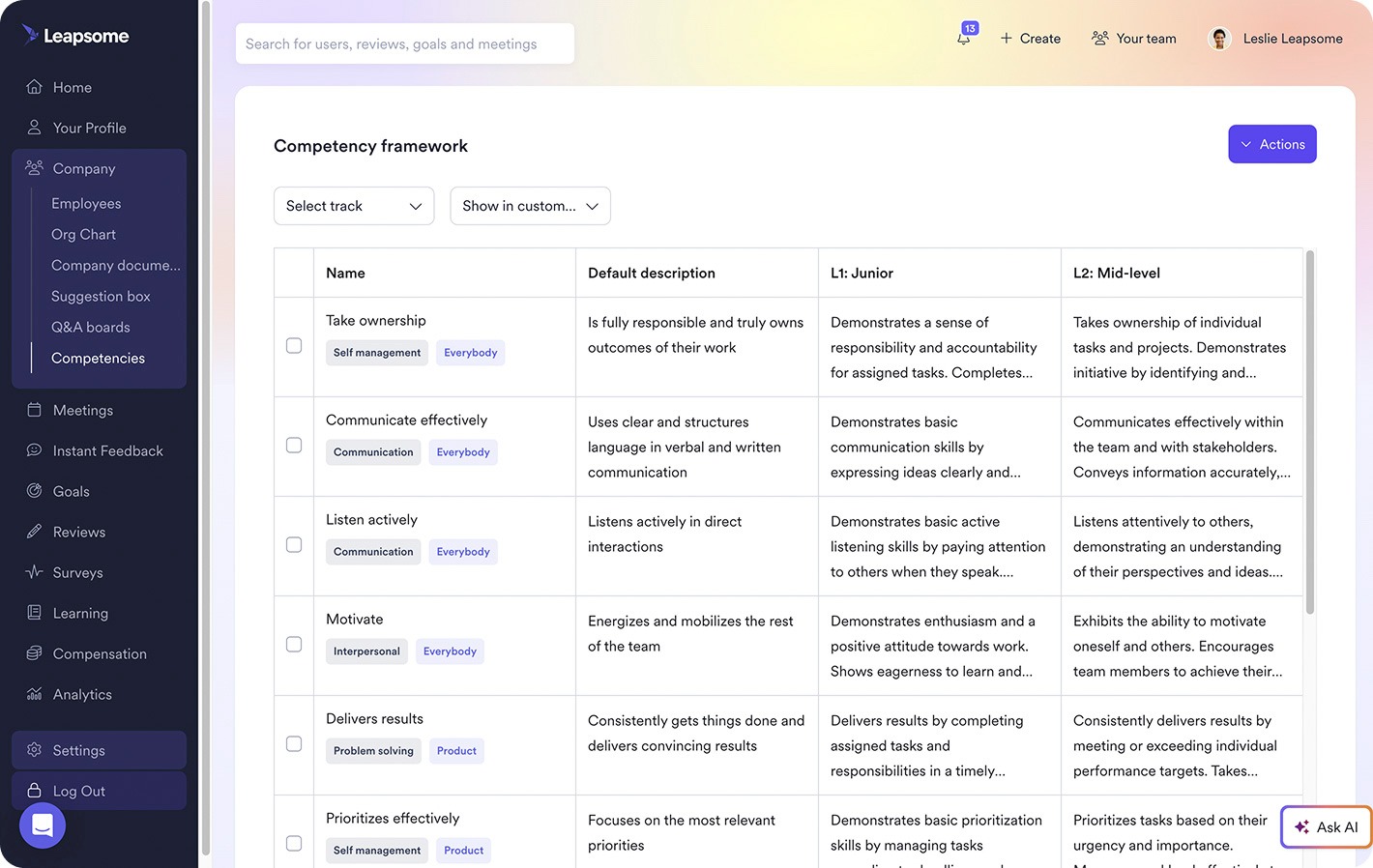
🎯 Bridge skill gaps from day one
Build competency frameworks for every role and team, creating a shared basis for interview scorecards and skill development.
👉 Explore Competency Framework
Job requisition process: Four steps from request to open role
While every company will create their own chain, the job requisition process typically involves these four stages:
- Confirm the need before filling out the form: HR will verify that the need is justified and check the budget bandwidth, then update the headcount plan as needed.
- Submit and review the request: The hiring manager sends the form to the HR contact, who will look it over and confirm the request type for proper routing.
- Route for approval and record the decision: Depending on the request type, HR will coordinate the routing of the job requisition to each relevant approver.
- Hand off to recruiters and track status: HR will confirm the details and continue to track the role status throughout the recruitment lifecycle.
A platform like Leapsome can help you strategically align roles with headcount plans and track job openings, all in one, unified pipeline.
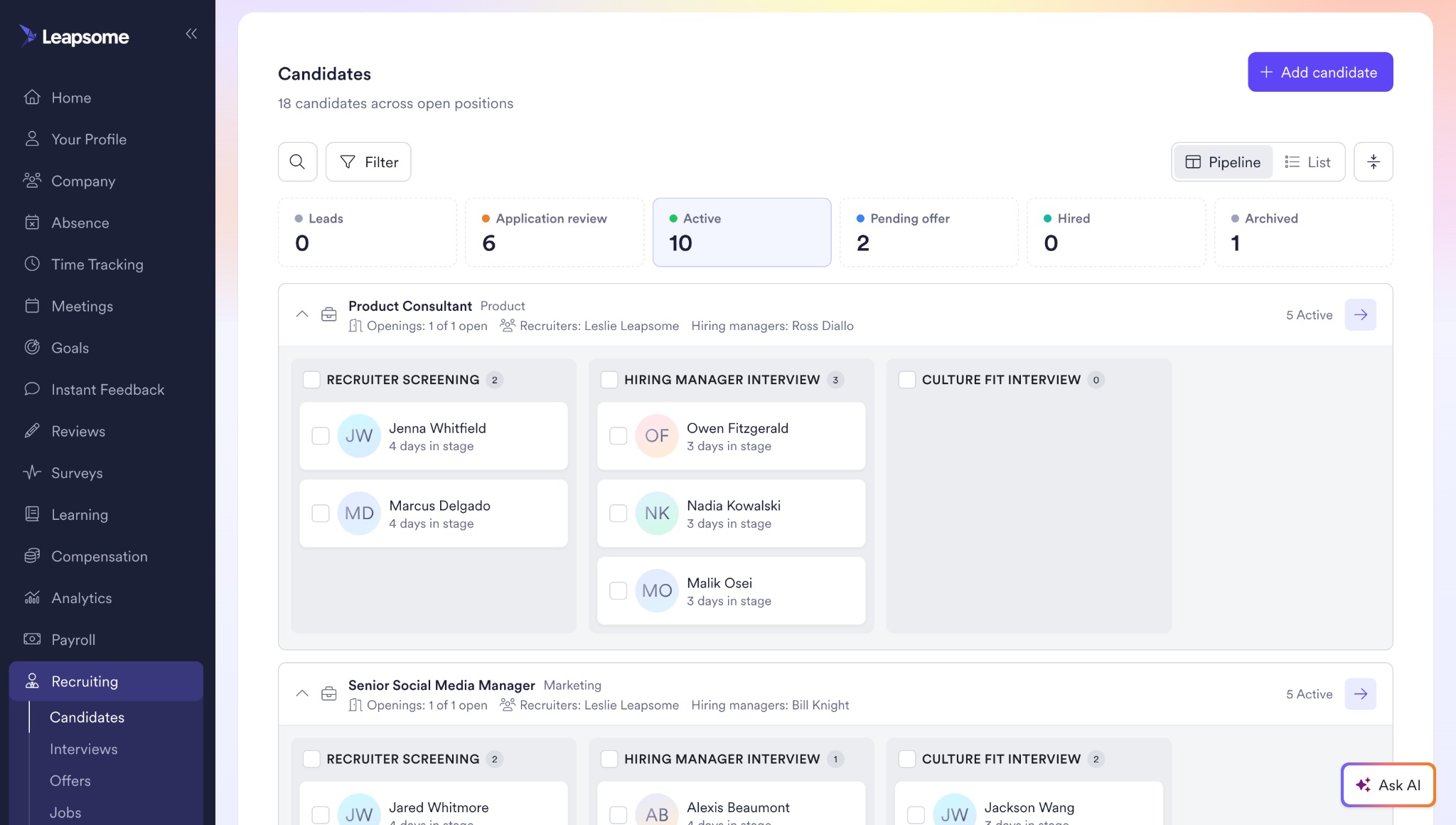
🔄 Sync every role with your headcount strategy
Get HR and internal stakeholders on the same page for every job requisition request with Leapsome Recruiting.
👉 Discover Recruiting
Connect job requisitions to hiring processes and skill plans with Leapsome
Informal hiring requests may reach HR in one-off emails or during video calls. These requests can be tricky to track without an official job requisition form to back them up.
Leapsome supports your HR team in setting up a connected, tailored requisition process. Here are a few of the useful features Leapsome’s all-in-one HRIS and people management platform offers:
- Competencies: Develop shared skill definitions to screen and interview candidates, as well as to onboard and review hires.
- Recruiting: Tie every role and approval back to your headcount plan. Leapsome helps you draft competitive job descriptions and check offers against compensation bands.
- Employee Records: Avoid duplicate entry of role, level, and pay details by having everything sync directly in Leapsome, both before and after the hire.
Across the entire requisition-to-hire lifecycle, Leapsome supports your growing company with consistent role expectations and shared skill frameworks.
“Employees can now find everything in one place — their data, absences, goals, and reviews. I don’t have to explain which tool to use for what. It’s all in Leapsome.” – Merilyn L, Senior People Operations Specialist at Bob W.
🌱 Fit job requisition into the full employee lifecycle
Link requisition requests to your big-picture headcount and skill development plans with Leapsome.
👉 Request a demo
FAQ
What’s the difference between a job order and a job requisition?
A job requisition is an internal document for planning, budgeting, and approving a role before hiring begins. In contrast, a job order conveys the full role details to an external recruiter or agency to kick off the recruitment process.
Leapsome Team