Funktionale Organisationsstrukturen: So funktionieren und skalieren sie


Informelle Organisationsstrukturen, die Teams früher schnell gemacht haben, brechen auseinander, sobald es Zeit zu skalieren ist. Entscheidungen liegen bei denselben wenigen Personen, Abteilungen lösen Probleme isoliert, und Führungskräfte legen Leistungserwartungen unterschiedlich aus, weil kein gemeinsames System definiert, wie „gute“ Leistung aussieht. Laut Gallups Workplace-Forschung wissen tatsächlich nur 45 % der Mitarbeitenden genau, was ihre Führungskräfte von ihnen erwarten.*
Eine funktionale Organisationsstruktur ist einer der häufigsten Wege, in dieser Wachstumsphase Ordnung zu schaffen. Aber die Wahl der Struktur ist nur die halbe Miete. HR-Verantwortliche müssen sie auch mit der richtigen People-Infrastruktur unterstützen, um Rollen zu definieren, Ziele zu verknüpfen und Erwartungen sowie Leistungsstandards für jede Funktion zu dokumentieren.
In diesem Guide schauen wir uns an, was funktionale Strukturen sind und wie ihr sie nutzt, um beim Skalieren stärkere Beziehungen zwischen Teams aufzubauen.
* Gallup, 2024
Was ist eine funktionale Organisationsstruktur?
Eine funktionale Organisationsstruktur gruppiert Mitarbeitende nach Fachgebieten, etwa HR, Finanzen oder Marketing. Jede Funktion hat eigene Kommunikationswege und eine eigene Führung mit klar definierter Berichtslinie.
Wachsende Unternehmen können eine funktionale Struktur nutzen, um Fähigkeiten in Struktur zu überführen. Statt euch auf Generalist:innen und informelle Zuständigkeiten zu verlassen, schafft ihr Abteilungen, die Tiefe, wiederholbare Prozesse und stärkere Standards für Stabilität beim Skalieren aufbauen.
Zentrale Merkmale und Komponenten
Starke funktionale Strukturen teilen diese Elemente:
- Spezialisierte Abteilungen: Mitarbeitende werden nach ihrer Arbeit und ihren Fähigkeiten in Teams gruppiert. Das hilft Teams, konsistentere Workflows und Expertise in ihrem Bereich zu entwickeln.
- Vertikale Berichtslinien: Mitarbeitende berichten in der Regel innerhalb ihrer Funktion nach oben. Eine Marketing-Spezialistin berichtet zum Beispiel an einen Marketing Manager, der wiederum an eine Marketing-Direktorin berichtet. Diese Art vertikaler Hierarchie gibt jeder Abteilung klarere Verantwortung für Prioritäten und Leistung.
- Zentralisierte Entscheidungsfindung: Große Entscheidungen treffen oft Senior-Führungskräfte innerhalb ihrer Funktion. Zentralisierte Entscheidungen verbessern meist die Konsistenz, solange die Führung definiert, was Manager:innen eigenständig entscheiden dürfen, um Engpässe zu vermeiden.
Typen von Organisationsstrukturen
Ein funktionales Modell basiert üblicherweise auf Spezialisierung und vertikalen Berichtslinien. Es ist aber nicht der einzige Weg, eine Organisation zu strukturieren. Unterschiedliche Wachstumsphasen und Geschäftsmodelle verlangen unterschiedliche Strukturen:
- Divisionale Struktur: Unternehmen gruppieren Mitarbeitende nach Produktlinie, Region oder Kundensegment. Das kann größeren Organisationen helfen, sich in unterschiedlichen Märkten schneller zu bewegen, weil Spezialist:innen für einzelne Angebote entstehen. Es kann aber auch Rollen über Divisionen hinweg duplizieren.
- Matrixstruktur: Statt in einer vertikalen Linie berichten Mitarbeitende quer, oft an eine funktionale Führungskraft und eine Projekt- oder Business-Leitung. Laut Harvard Business Review kann eine Matrixstruktur die laterale Koordination verbessern, braucht aber reifere (und kompliziertere) Entscheidungsregeln.
- Teambasierte oder flache Struktur: Flache Strukturen reduzieren Hierarchien und geben Teams mehr Autonomie. Das kann in kleineren oder sehr agilen Umgebungen funktionieren, macht Ergebnisse aber weniger vorhersehbar, wenn Verantwortung von persönlichen Beziehungen statt von einem gemeinsamen System abhängt.
Vor- und Nachteile einer funktionalen Organisationsstruktur
Funktionale Strukturen können Disziplin in ein skalierendes Unternehmen bringen. Sie können aber auch Silos verhärten, wenn Führungskräfte das Organigramm als einzige Lösung behandeln. HR-Teams müssen beide Seiten kennen, um die Passung zu bewerten, bevor sie sich auf ein Modell festlegen.
Vorteile
„Am Anfang wusste niemand, wie Erfolg aussieht. Wir haben Leistungsstufen definiert und Erwartungen dokumentiert. Danach ist die Motivation in die Höhe geschossen, weil die Leute endlich wussten, was Gewinnen bedeutet.“
— Noelle Pittock, Senior Director, Onboarding Operations and Business Operations bei Remote
Das sind die größten Vorteile einer funktionalen Organisationsstruktur:
- Klarere Spezialisierung: Mitarbeitende können tiefere Expertise aufbauen, weil funktionale Teams Menschen mit gemeinsamen Fähigkeiten, Verantwortlichkeiten und Standards zusammenbringen. Das erleichtert den Wissensaustausch und schafft klare Entwicklungspfade für jede Rolle. Prozesse bleiben übersichtlich, und Mitarbeitende kommen sich seltener in die Quere.
- Konsistente Weiterbildung: Jede Gruppe kann definieren, wie starke Leistung in ihren Rollen aussieht. HR kann Führungskräfte dann mit gemeinsamen Kompetenzmodellen, Review-Zyklen und Lernpfaden für die Funktion unterstützen.
- Kosteneffizienz: Eine vertikale funktionale Struktur kann kosteneffizienter sein als andere Modelle, weil das Unternehmen Spezialarbeit an einem Ort bündelt, statt sie über Teams hinweg zu duplizieren. Nischenbasierte Strukturen würden zum Beispiel fünf Mitarbeitende einstellen, die Marketing-Kampagnen in jedem Spezialgebiet des Unternehmens umsetzen. In einer funktionalen Struktur übernimmt ein Marketing-Team aus drei Personen diese Aufgabe für alle fünf Nischen. Die Struktur erzeugt also weniger Rollenüberschneidungen, sodass ihr mit weniger Personal auskommt (ohne das neue Team zu überlasten).
Nachteile und Herausforderungen bei der Einführung
„Funktionsübergreifende Kommunikation auf Führungsebene ist entscheidend. Ohne sie duplizieren Teams Arbeit und verlieren die Ausrichtung auf die Geschäftsprioritäten.“
— Melanie Naranjo, Chief People Officer bei Ethena
- Kommunikationssilos: Funktionale Teams können sich zu stark auf die eigenen Prioritäten konzentrieren und die Zusammenarbeit mit anderen vernachlässigen. Marketing optimiert vielleicht Kampagnen und die Sales-Pipeline. Wenn Lead-Qualität und Follow-up aus dem Produktteam aber nicht mithalten, bricht die Customer Experience.
- Langsamere funktionsübergreifende Zusammenarbeit: Wenn Entscheidungsrechte unklar sind, wandert jedes Thema die Berichtslinie nach oben. Manager:innen warten auf Freigaben von oben, Mitarbeitende warten auf ihre Manager:innen, und HR moderiert am Ende Verwirrung, die früher hätte geklärt werden sollen.
- Begrenzte Sicht auf die Unternehmensziele: Wenn jede Abteilung nur auf die eigenen Prioritäten schaut, ohne ein gemeinsames System, das die Arbeit verknüpft, erreicht das Team vielleicht seine Ziele, verfehlt aber die OKRs des Unternehmens. Statt effizient in getrennten Spuren zu bleiben, sollten funktionale Teams eine zentrale Datenquelle (wie Leapsome) nutzen, um gemeinsame Geschäftsprioritäten zu identifizieren und in dieselbe Richtung zu gehen.
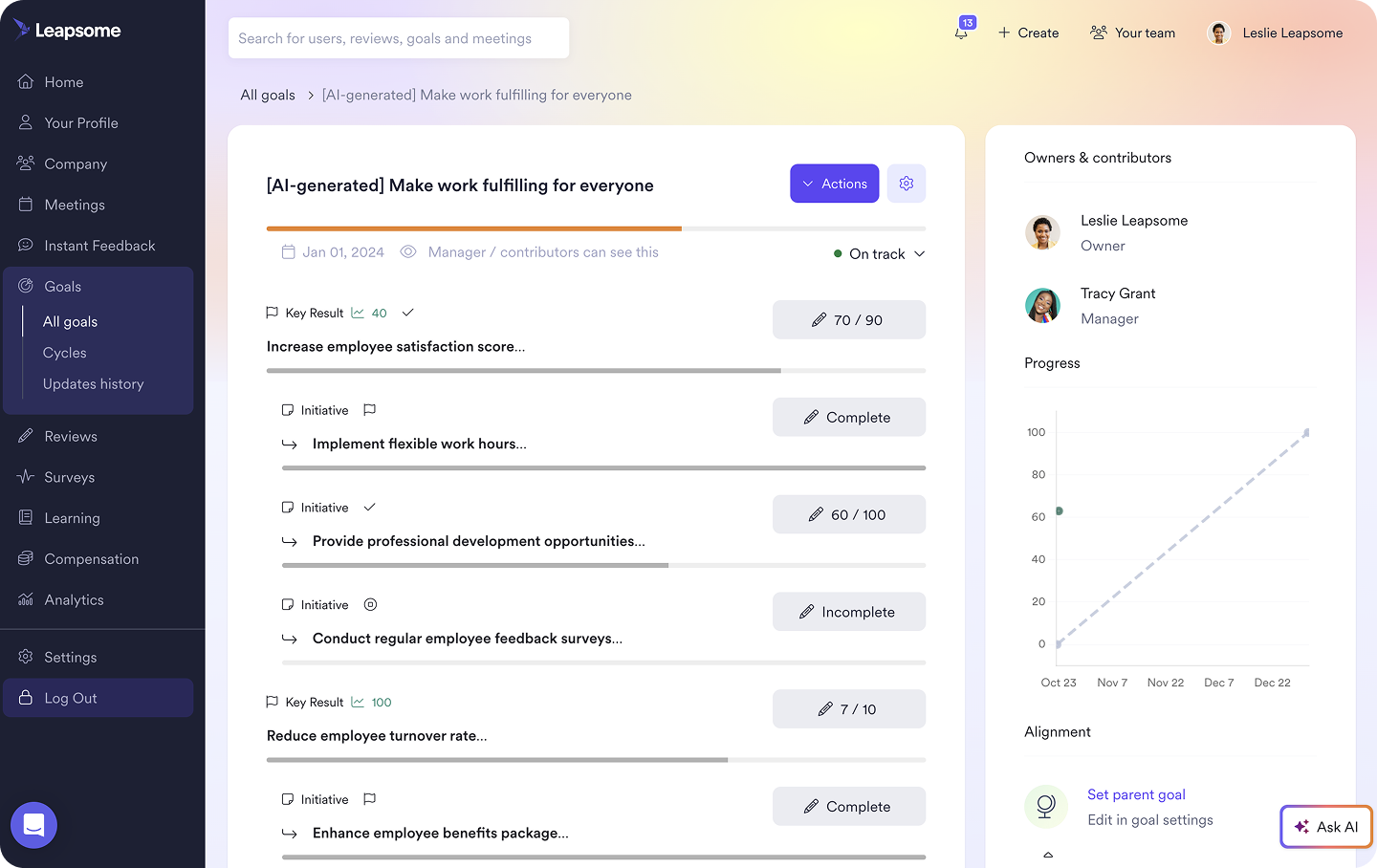
🎯 Richtet funktionale Teams auf gemeinsame Ergebnisse aus
Mit Leapsomes Zielen & OKRs verknüpfen Führungskräfte individuelle Ziele und Teamziele mit den Unternehmensprioritäten. So können Funktionen in die Tiefe gehen, ohne gemeinsame Ergebnisse aus dem Blick zu verlieren.
👉 Entdeckt Ziele & OKRs
Bausteine einer funktionalen Organisationsstruktur
„Veränderung ist konstant, deshalb funktioniert Reaktivität einfach nicht mehr. Bei Reaktionsfähigkeit geht es nicht um Geschwindigkeit, sondern um Design. Wenn ihr die Struktur nicht vor dem nächsten Brand aufbaut, verfallt ihr in Hauruck-Aktionen, die Verwirrung und Burnout erzeugen.“
— Craig Forman, Founder und Principal Consultant bei CultureC Consulting
Eine funktionale Organisationsstruktur einzuführen heißt weniger, eure Hierarchien aufzuräumen, und mehr, auf den Prüfstand zu stellen, wo Mitarbeitende mehr Expertise brauchen und wo Entscheidungen ins Stocken geraten.
Mit ein paar Tipps gelingt euch die Einführung einer neuen Struktur:
- Ermittelt den Bedarf eurer Organisation: Die richtige Struktur sollte echte operative Schmerzpunkte lösen. Findet also heraus, wo euer aktuelles Setup Reibung erzeugt. Sind Berichtslinien für Mitarbeitende unklar, oder unterscheiden sich die Leistungserwartungen zwischen Teams? Verschickt und analysiert anonyme Mitarbeiterumfragen und wertet Review-Daten aus, um diese Lücken zu finden.
- Definiert Abteilungsgrenzen und Berichtsbeziehungen: Viele Unternehmen halten Berichtslinien für den ultimativen Weg zu einer starken Organisationsstruktur. Eure Mitarbeitenden müssen aber mehr wissen als den Namen ihrer Führungskraft und deren Position im Organigramm. Klärt, wofür jedes Team verantwortlich ist, wann ein anderes einbezogen wird und wer bei gemeinsamen Entscheidungen das letzte Wort hat.
- Arbeitet Rollen und Verantwortlichkeiten im Detail aus: Jobtitel allein schaffen keine Verantwortlichkeit. Es liegt an der Organisation, genau zu definieren, was jede Rolle tut. Ohne dieses Gerüst fühlen sich Mitarbeitende schnell verloren, verwirrt und unmotiviert. Gallup berichtet von einem Rückgang um 10 Prozentpunkte bei Mitarbeitenden, die die Erwartungen an ihre Rolle kennen, von 2020 bis 2024 (von 56 % auf 46 %). Um zu klären, wer welche Aufgaben verantwortet, nutzt Kompetenzmodelle, die Verantwortlichkeiten, Entscheidungsrechte und Leistungserwartungen für jede Rolle definieren. Das gibt Führungskräften eine fairere Grundlage für Feedback und Mitarbeitenden einen klaren Weg.
„Kompetenzmodelle sind nicht nur Checklisten, sie sind Roadmaps für Wachstum und Verantwortlichkeit. Sie helfen Führungskräften, effektiver zu coachen, und geben Mitarbeitenden ein klares Bild davon, wie Erfolg auf jeder Stufe aussieht. Wenn Erwartungen schriftlich festgehalten sind, verstehen alle, was Spitzenleistung bedeutet.“
— Monica Sarkar, Co-Founder bei Purple Umbrella
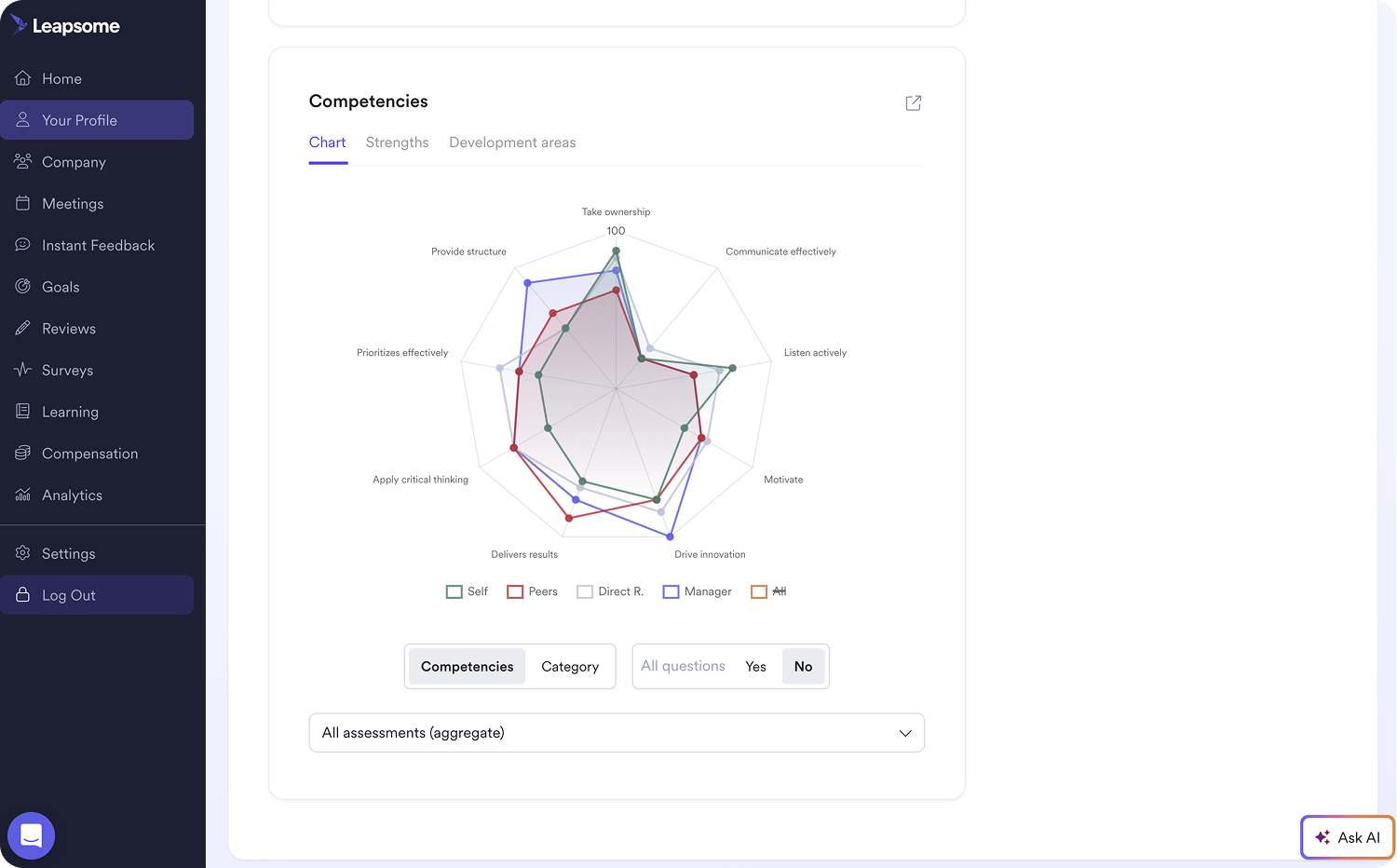
🧭 Definiert Erwartungen für jede Funktion
Leapsomes Kompetenzmodell gibt HR-Verantwortlichen einen konsistenten Weg, Rollenanforderungen, Verantwortlichkeiten und Leistungsstandards während der Einführung der Organisationsstruktur zu definieren.
👉 Entdeckt das Kompetenzmodell
So funktioniert eine funktionale Organisationsstruktur auch im großen Maßstab
„Einzelne können eine Organisation mit 500 Leuten nicht durch Chaos stemmen. Baut die Systeme so, dass gute Reaktionen einfach, natürlich und wiederholbar sind, besonders wenn der Stress hoch ist.“
— Craig Forman, Founder und Principal Consultant bei CultureC Consulting
Eine funktionale Struktur kann auf dem Papier organisiert aussehen und in der Praxis trotzdem auseinanderdriften. Das passiert meist, wenn Führungskräfte das Organigramm der funktionalen Struktur als Betriebsmodell behandeln. Das Organigramm zeigt, wie Menschen zueinander stehen. Es klärt aber nicht, wie Entscheidungen getroffen werden, wie Prioritäten zwischen Abteilungen wandern oder wie Führungskräfte ihre Teams in die Verantwortung nehmen.
Diese fehlenden Informationen werden zum sichtbareren Problem, je größer das Unternehmen wird. Jede Funktion wird in ihrer eigenen Arbeit stärker, aber die Zusammenarbeit wird schwerer zu steuern. Der Vertrieb drängt auf Tempo, das Produktteam will den Roadmap-Fokus schützen, und Finance verlangt Planbarkeit. Keine dieser Prioritäten ist falsch, aber es fehlt ein gemeinsames Verständnis für die Rollen der anderen und die Arbeit, die dahintersteckt. Wenn das Produktteam zum Beispiel schneller arbeiten soll, können mehr Fehler im Code und große Bugs beim Release entstehen, die Kund:innen enttäuschen. Die Kluft zwischen Funktionen ist am größten, wenn es keinen vereinbarten Weg gibt, Kompromisse zwischen Teams auszuhandeln.
So schützt ihr funktionale Expertise und baut gleichzeitig gemeinsame Praktiken auf, die alle auf demselben Stand halten:
- Klärt Entscheidungsverantwortung, bevor ihr mehr Zusammenarbeit einfordert: Funktionsübergreifende Arbeit wird langsam, wenn alle Input geben, aber niemand die finale Entscheidung verantwortet. McKinsey & Company hat herausgefunden, dass nur 10 % der Unternehmenstransformationen Verantwortlichkeit und Konsequenzen priorisierten, was erklärt, warum Strukturveränderungen in der Praxis oft scheitern. Definiert, welche Entscheidungen bei funktionalen Führungskräften liegen, welche bei Manager:innen und welche die Abstimmung der Geschäftsführung brauchen. So kommen Teams schneller voran, weil sie wissen, wann sie beitragen und wann sie entscheiden.
- Verknüpft Abteilungsziele mit den Unternehmensprioritäten: Funktionale Teams brauchen eigene Ziele, aber diese Ziele sollten auf gemeinsame Geschäftsergebnisse einzahlen. Sonst erreichen Abteilungen ihre Zahlen, während das Unternehmen das größere Ziel verfehlt. HR sollte auf einen gemeinsamen Zielsetzungsrhythmus drängen, der Abhängigkeiten sichtbar macht, bevor Teams loslegen.
- Standardisiert Führungserwartungen über Funktionen hinweg: Mitarbeitende sollten keine völlig andere Führungserfahrung machen, nur weil sie im Marketing statt im Engineering arbeiten. Laut Gallup hängen 70 % der Varianz im Team-Engagement von der Führungskraft ab. HR braucht also konsistente Erwartungen für Feedback, Performance Reviews, Entwicklungsgespräche und Rollenentwicklung. Funktionen können spezialisiert bleiben, aber die Grundlagen guter Führung sollten keine Abteilungslotterie sein.
Skaliert eure funktionale Struktur mit Leapsome
Die meisten HR-Verantwortlichen führen eine funktionale Struktur ein, um ein Skalierungsproblem zu lösen, wenn ihr Unternehmen informellen Zuständigkeiten entwachsen ist. Mit steigender Mitarbeiterzahl verschwimmt die Entscheidungsverantwortung. Führungskräfte in verschiedenen Abteilungen entwickeln unterschiedliche Gewohnheiten, wodurch Zielsetzung über Funktionen hinweg und funktionsübergreifende Arbeit schwieriger werden. Mitarbeitende brauchen mehr Klarheit darüber, an wen sie berichten und welche Erwartungen an ihre Rolle bestehen.
Eine funktionale Struktur behandelt nur die sichtbaren Symptome fehlender Ausrichtung. Das tiefere Problem ist oft, dass die People-Systeme nicht mit dem Organigramm mitgewachsen sind. Ohne vernetzte People-Systeme verstärken sich diese Probleme schneller, als ein weiteres Struktur-Redesign sie beheben kann.
Leapsome hilft HR-Verantwortlichen, diese Lücke zu schließen: mit einer zentralen HRIS- und People-Management-Plattform für Personalakten, Zielmanagement und Manager-Enablement. Das gibt HR-Teams die Infrastruktur, um funktionale Tiefe zu unterstützen, ohne die Konsistenz im Unternehmen zu verlieren. So müsst ihr das Rad nicht jedes Mal neu erfinden, wenn euer Unternehmen den nächsten Wachstumsmeilenstein feiert.
„Einer der größten Effekte von Leapsome für uns ist die Transparenz rund um Ziele. Die Mitarbeitenden wissen sehr genau, was von ihnen erwartet wird.“ — Amita Rao, Director of Talent Management bei Orbis
🏗️ Baut eine funktionale Organisationsstruktur, die skaliert
Leapsome verbindet Ziele, Performance und People-Daten, damit funktionale Teams ausgerichtet bleiben, während euer Unternehmen wächst.
👉 Demo anfragen


.jpg)