Was ist ESS, und wie sieht ein gutes System aus? Tipps für HR


Laut Deloitte verbringen HR-Teams in der Regel über die Hälfte ihrer Zeit mit administrativen Aufgaben.* Bei so vielen Anfragen und Dokumenten, die täglich bearbeitet werden müssen, können kleine Verschiebungen in der Zuständigkeit einen großen Unterschied machen.
Employee Self-Service (ESS) bedeutet, dass eure Mitarbeitenden mit der richtigen Technologie Routineaufgaben wie das Aktualisieren persönlicher Daten oder das Beantragen von Urlaub eigenständig erledigen können. Das gibt HR-Teams mehr Raum, sich auf Arbeit zu konzentrieren, die die Employee Experience verbessert, zum Beispiel Unterstützung für Manager oder Personalplanung.
In diesem Artikel erklären wir, was ESS ist, wie Employee Self-Service funktioniert und wo der eigentliche Mehrwert liegt.
* Deloitte, 2024
Was ist ein ESS-System?
„Stakeholder fragen sich oft: ‚Sehen andere die falschen Dinge?' Moderne HRIS-Berechtigungen beantworten genau das. Manager sehen ihre direkten Mitarbeitenden, Finance sieht Kostendaten, Mitarbeitende sehen nur ihre eigenen Daten und nichts darüber hinaus."
Carolin Leidel, Consultant bei torq.partners
ESS ist die mitarbeitendenseitige Ebene einer HR-Plattform. Sie gibt Teammitgliedern einen sicheren Ort, um Routineaufgaben zu erledigen. Gleichzeitig kann HR mit Kontrollen dafür sorgen, dass sensible Daten geschützt bleiben und Prozesse konsistent sind.
Laut SHRM haben 78 % der Unternehmen bereits eine Form von Employee Self-Service eingeführt. Doch Einführung allein garantiert noch keine Wirkung, und ESS lässt sich leicht wie ein hübsch verpackter gemeinsamer Ordner behandeln.
Stattdessen sollte HR ESS nutzen, um Mitarbeitendenaktionen mit Unternehmensdaten zu verknüpfen, sodass jede Aktualisierung an anderer Stelle Arbeit erspart. Ändert ein Teammitglied zum Beispiel seine Adresse, sollte das ESS-System automatisch das Mitarbeiterprofil aktualisieren und relevante Payroll- oder Compliance-Felder markieren, die HR prüfen muss.
Vorteile von Employee Self-Service
„Manager sollten HR nicht per E-Mail fragen müssen, wer gerade im Urlaub ist oder wie die Salden im Team aussehen. Sie sollten es live sehen. Sobald Mitarbeitende sich selbst bedienen können, sinken Unterbrechungen und Entscheidungen werden schneller getroffen. Genau das ist der Sinn einer Single Source of Truth."
Carolin Leidel, Consultant bei torq.partners
Employee-Self-Service-Software schafft auf verschiedene Weise Mehrwert:
- Weniger administrativer Aufwand: ESS reduziert wiederkehrende Anfragen, die HR sonst zum Helpdesk machen. Statt Daten manuell zu aktualisieren oder immer wieder dieselben Urlaubsfragen zu beantworten, kann euer Team Zeit in die Systeme investieren, die am meisten zur Mitarbeiterentwicklung beitragen.
- Bessere Employee Experience: Ein einfacher Prozess wird schnell frustrierend, wenn eine Urlaubsanfrage oder die Suche nach einem Dokument drei Nachrichten und zwei Erinnerungen braucht. Ein intuitives Employee-Self-Service-Portal gibt Teammitgliedern einen klaren Weg, um grundlegende Aufgaben zu erledigen. Das lässt den Arbeitsplatz organisierter wirken und steigert häufig die Mitarbeiterzufriedenheit.
- Höhere Datengenauigkeit: ESS reduziert Fehler, weil Mitarbeitende ihre eigenen Daten über kontrollierte Workflows aktualisieren können. HR prüft weiterhin sensible Änderungen, aber euer Team muss Daten nicht mehr manuell aus verschiedenen Tools und E-Mails ins System übertragen.
Wichtige Funktionen eines Employee-Self-Service-Systems
„Mit Self-Service können Mitarbeitende ihre eigenen Daten verwalten (Adressen oder persönliche Informationen aktualisieren), während sensible Daten wie das Gehalt weiterhin nur für Admins zugänglich sind."
Sophie O'Donoghue, Customer Success Coach bei Leapsome
Eine starke ESS-Plattform sollte mehr bieten als nur einen Ort, um Informationen zu finden. Dazu gehören zum Beispiel:
- Onboarding-Tools: ESS hilft neuen Mitarbeitenden, erforderliche Aufgaben schon vor ihrem ersten Arbeitstag zu erledigen, zum Beispiel Formulare auszufüllen oder Unternehmensrichtlinien durchzusehen. Das macht den Onboarding-Prozess strukturierter und reduziert den Papierkram, den HR nachhalten muss.
- Payroll- und Benefits-Funktionen: Mitarbeitende brauchen oft schnellen Zugriff auf Gehaltsinformationen oder Benefits-Details. Statt vielbeschäftigte HR- oder Finance-Teams mit einfachen Fragen zu belasten, können Mitarbeitende über ESS sicher finden, was sie brauchen.
- Dokumentenmanagement-Systeme: ESS gibt Mitarbeitenden Zugriff auf Dokumente wie Verträge und Richtlinien an einem Ort. Gleichzeitig hat HR einen klareren Überblick darüber, was jede Person bereits erhalten und unterschrieben hat und was noch offen ist.
Wie ESS strategische HR-Arbeit beeinflusst
Euer HR-Team kann in endlosen administrativen Aufgaben feststecken, wenn jede Routineanfrage von ihm abhängt. Eine Urlaubsfrage oder eine einfache Datenaktualisierung wirkt für sich genommen klein, aber in der Masse fressen diese kleinen Aufgaben den Arbeitstag auf. Ein Unternehmen mit 10 Mitarbeitenden kommt vielleicht noch gut mit informellen Nachfragen zurecht, aber Anfragen von 400 Personen bringen fragile oder unverbundene HR-Systeme zum Einsturz.
Deshalb bringt ESS mehr als nur mehr Effizienz. Wenn Mitarbeitende Routineaufgaben selbst lösen können, hat HR mehr Kapazität, um strategische People-Initiativen zu entwickeln und umzusetzen.
ESS-Plattformen setzen an einigen typischen Engpässen an:
- Wiederkehrende Anfragen: HR-Teams verlieren oft Zeit damit, einfache Fragen zu Urlaub zu beantworten oder persönliche Daten manuell zu übertragen. ESS übernimmt diese Routineaufgaben, sodass HR mehr Zeit für People-Arbeit hat, die sich nicht automatisieren lässt, wie Mitarbeiterentwicklung und Leistungsgespräche.
- Operative Reibung: Ein fehlendes Dokument oder ein veraltetes Mitarbeiterprofil wirkt vielleicht unbedeutend, aber jedes Problem bedeutet für HR eine weitere Nachfrage. ESS reduziert diese Reibung, indem Mitarbeitende Aufgaben schnell und erfolgreich erledigen, oft ganz ohne HR-Beteiligung.
- Strategischer Druck: Die Führungsebene erwartet von HR, Performance zu verbessern und Wachstum zu unterstützen. Diese strategische Arbeit braucht Zeit und Fokus, die fehlen, wenn ihr ständig Kalender abgleicht. ESS schafft mehr Raum für HR, bessere Performance-Initiativen umzusetzen und Feedback in konkrete Maßnahmen zu verwandeln. Für noch mehr Effizienz könnt ihr ESS und Mitarbeiterentwicklung mit Leapsome in einem System zusammenführen.
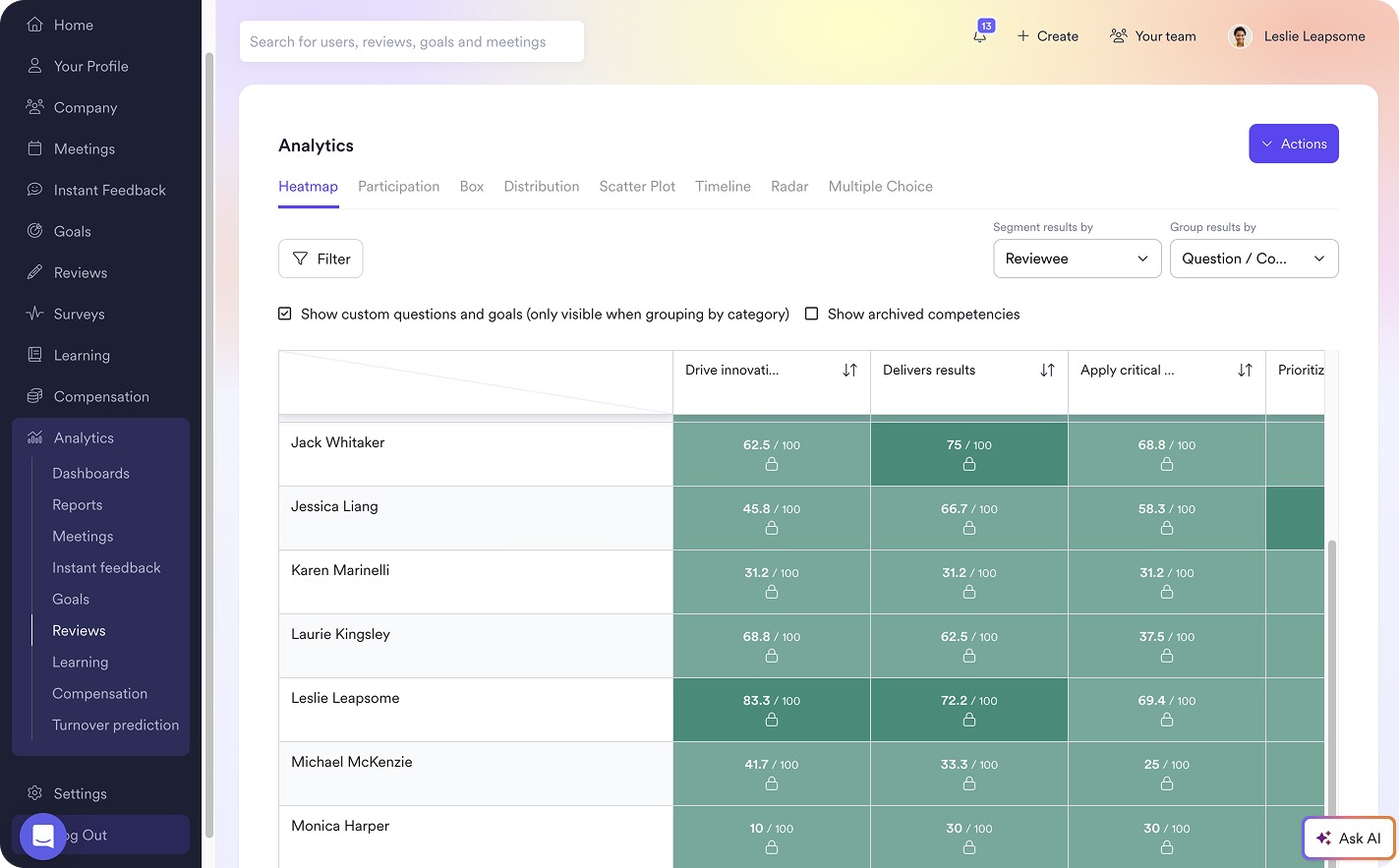
🧠 HR-Kapazität für People Growth nutzen
Mit Leapsomes Performance Reviews könnt ihr die durch ESS gewonnene Kapazität nutzen, um strukturierte Review-Zyklen durchzuführen und aussagekräftige Wachstumsgespräche im großen Maßstab zu unterstützen.
👉 Entdeckt Performance Reviews
Warum ESS mehr ermöglichen sollte als nur Zugriff
Viele ESS-Systeme funktionieren vor allem wie Mitarbeiterportale. Ein Teammitglied findet zwar eine Richtlinie oder lädt ein Formular herunter, ist aber trotzdem auf HR angewiesen, um die Aufgabe abzuschließen.
Ein integriertes Employee-Self-Service-System sollte die gesamte Aufgabe in einem Workflow abschließen lassen. Ein neuer Mitarbeitender sollte zum Beispiel nicht per E-Mail einen Vertrag erhalten und die unterschriebene Kopie dann an anderer Stelle hochladen müssen. Stattdessen sollte er das Dokument öffnen, unterschreiben und sehen können, dass die Aufgabe erledigt ist, ohne das Tool zu wechseln.
Derselbe Onboarding-Workflow kann die Informationen sammeln, die HR braucht, um den Mitarbeitenden korrekt anzulegen. Trägt ein neues Teammitglied persönliche Daten oder Payroll-Informationen ein, leitet ein vernetztes ESS-System diese Daten direkt ins richtige Mitarbeiterprofil weiter.
Genau hier muss ESS mit eurer gesamten HR-Plattform verbunden sein. Stehen Dokumenten-Workflows getrennt von den Mitarbeiterprofilen, bleibt HR die manuelle Brücke zwischen beidem. Mit einer vollständig integrierten Plattform wie Leapsome erledigen Mitarbeitende ihre Aufgaben, während die richtigen Informationen automatisch dort landen, wo HR sie braucht.
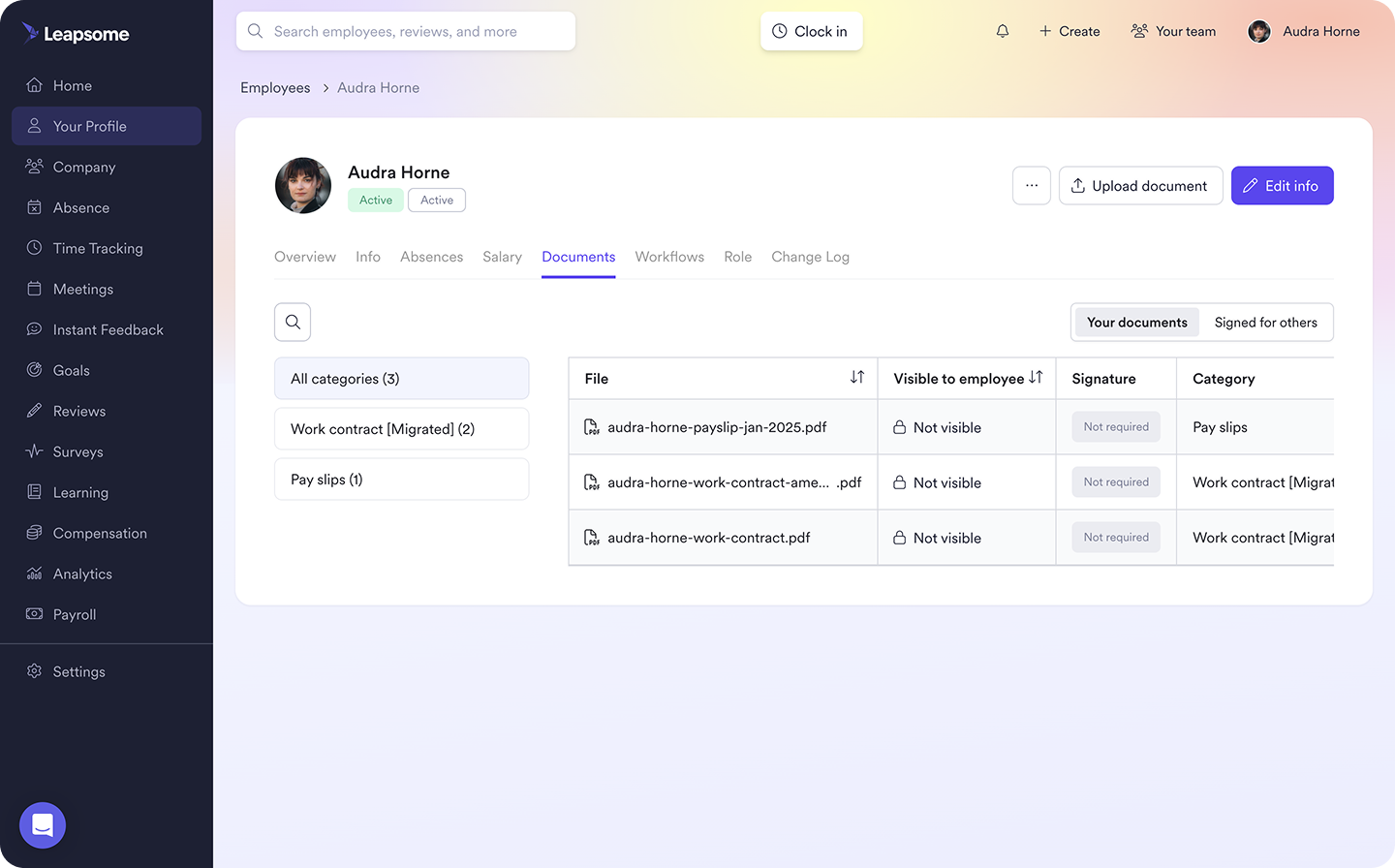
✍️ Aus Dokumentenzugriff werden abgeschlossene Workflows
Mit Leapsome können Mitarbeitende HR-Dokumente über den gesamten Employee Lifecycle hinweg sicher aufrufen, ausfüllen und unterschreiben.
👉 Entdeckt Documents and Signatures
Wie Leapsome Unternehmen zu einem besseren Employee-Self-Service verhilft
Eigenständige ESS-Portale scheinen Unterbrechungen zu reduzieren, greifen aber oft zu kurz. Muss HR trotzdem prüfen, ob Daten stimmen, Dokumente richtig gespeichert sind und Aufgaben am richtigen Ort erledigt wurden, sinkt die Arbeitslast durch weniger Slack-Nachrichten oder E-Mails kaum.
Leapsome integriert Employee Self-Service in eine vernetzte HRIS- und People-Management-Plattform. Mitarbeitende erledigen Routineaufgaben eigenständig, während automatisierte Workflows es HR leicht machen, den Daten zu vertrauen, manuelle Arbeit zu reduzieren und mehr Zeit für strategische Initiativen zu gewinnen.
Mit Leapsome könnt ihr als HR-Team zentralisieren:
- Mitarbeiterprofile: Teammitglieder halten ihre persönlichen Daten in ihren Profilen aktuell und geben HR so aktuelle Datengrundlagen für Reporting und Lifecycle-Änderungen.
- Dokumente und Signaturen: Mitarbeitende prüfen und unterschreiben HR-Dokumente digital, abgeschlossene Dateien werden direkt mit ihrem Profil verknüpft.
- Preboarding und Onboarding: HR weist Aufgaben schon vor dem ersten Arbeitstag zu, gibt neuen Mitarbeitenden einen klaren Onboarding-Pfad und behält den Fortschritt in Echtzeit im Blick.
- Abwesenheiten: Mitarbeitende stellen Abwesenheitsanträge über einen strukturierten Workflow, Manager prüfen sie mit Echtzeit-Einblick in die Salden.
- Time Tracking: Mitarbeitende erfassen ihre Arbeitszeit direkt in der Plattform, was HR sauberere Daten für die Lohnabrechnung liefert.
„Wir können alles vorbereiten, die Daten sperren, exportieren und übergeben. Das ist sauber, schnell und konsistent." Siddharth Dhanuka, Head of Finance and Operations bei SQUAKE
🕊️ Self-Service, der HR entlastet
Leapsome hilft HR-Teams, Routineaufgaben von Mitarbeitenden mit dem gesamten People Lifecycle zu verknüpfen, sodass Self-Service weniger Nacharbeit und mehr Kapazität für Wachstum schafft.
👉 Demo anfragen