Create a hiring process that drives long-term success


Disclaimer: This content is for general informational purposes only and does not constitute legal advice. Leapsome does not guarantee legal compliance and cannot confirm how specific situations would be assessed in court. If you're unsure how the requirements apply to your organization, please consult qualified legal counsel.
A good hiring process should help you find stand-out talent and set them up for success at your organization. Many companies focus solely on the recruitment phase of hiring, but the success criteria you establish during interviews can and should follow your new hire into their onboarding and development.
This guide covers the hiring best practices and tools you can use to find great candidates, onboard them quickly, and track their performance.
What’s a hiring process?
A hiring process is the step-by-step method HR uses to hire and onboard a new team member. It defines how candidates apply to a job posting and how you assess them. It should also give the new hire’s manager the information they need to begin onboarding.
Some organizations use the term hiring and recruitment process interchangeably. But recruitment is only one step of a larger process designed to fill a role and get your new hire up to speed.
Common hiring scenarios that require different processes
Here’s how the hiring process might work in four common situations:
- Internal hiring: You fill an opening with a current employee. You may already know their work history, but you still need to assess their readiness for the new role.
- External hiring: You seek candidates outside the organization. The process usually includes an application review followed by recruiter interviews that assess every candidate against the same requirements.
- High-volume hiring: You fill several similar openings in a short period. Managers use a standardized screening process and shorter interviews to make high-quality decisions quickly.
- Specialist or leadership hiring: You fill a vacancy that requires rare expertise or carries broad responsibilities. A work sample or focused 1:1 conversation with key colleagues can reveal how a candidate should approach the role.
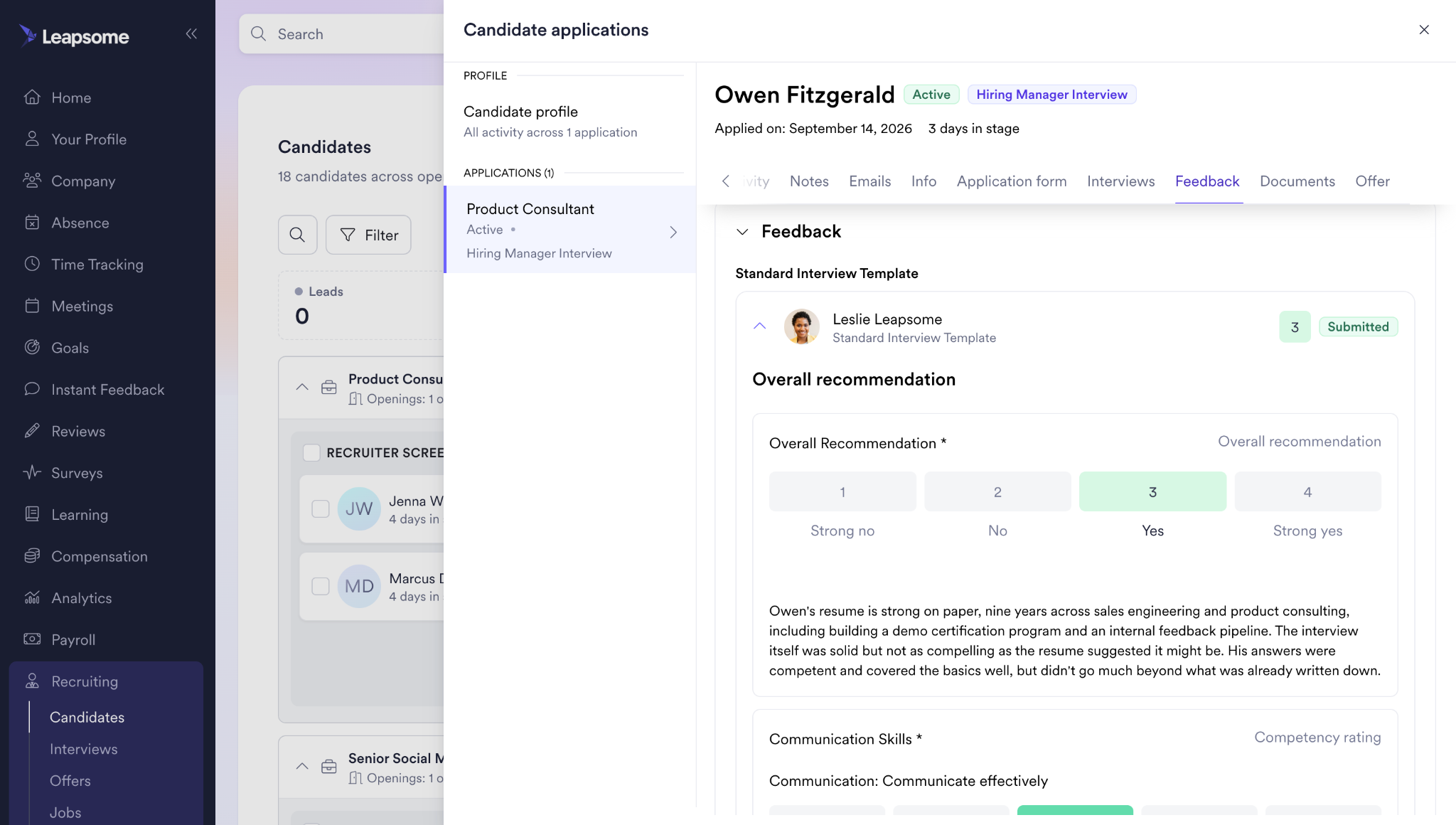
Hiring processes with extra interview stages should help you learn about the candidate, not add administrative burden. HRIS platforms with recruiting capabilities like Leapsome can help different interviewers evaluate candidates against the same criteria and see which questions the team has already answered before scheduling another conversation.
🔗 Keep the hiring process connected to the employee lifecycl
Leapsome Recruiting keeps applications and interview evaluations in one place, then moves the hired candidate’s information into their employee profile for onboarding.
👉 Explore Recruiting
What are the steps in an effective hiring process?
An effective process usually follows three core hiring steps.
1. Define the role and plan the hiring process
“In a young company, you often have ten people wanting the same promotion. That’s why we’re introducing a skills framework from recruiting to retirement — to show where employees stand, what gaps exist, and when they’re truly ready for the next step.”
— Michael Latzik, Head of Expansion DACH & CEE, Deel
Traditional role descriptions often rely on degree requirements. But 62% of HR professionals and 84% of supervisors have found that prioritizing specific skills over educational requirements has helped them find successful hires, according to SHRM.
Certain roles may still require specific degrees — for example, the experts in your legal department should probably have JDs. But asking your managers what technical or soft skills they think someone in the role needs to be successful can expand the talent pool and help you find stronger candidates.
Once you understand what the hiring department is looking for, draft the job description around those requirements and decide how to assess them.
2. Attract, evaluate, and select candidates
“If the people you hire aren’t aligned, you’ll constantly play catch-up. Use tough interview questions to test alignment and maturity early.” — Melanie Naranjo, Chief People Officer at Ethena
Use the application process to give candidates a clear understanding of what the job involves. Screen job seekers against the agreed requirements, then ask interviewers to record notes before they discuss their impressions with each other. This makes it easier to explain why one candidate meets the standard, and another doesn’t.
Candidates are assessing your organization and employer branding as well. Gallup has found that structured interviews with hiring managers and other key stakeholders drive 44% of their decision to accept the offer. Use the interview process to give candidates a realistic picture of the work.
It’s also a good idea to set clear expectations about how long the hiring process will take. Job seekers value communication from the companies they’re interviewing with, and 75% of candidates are willing to accept a salary that is 5% lower than expected if they had a positive hiring process, according to SHRM.
3. Move from hiring into preboarding and onboarding
After the candidate accepts the offer, use preboarding to collect the required forms and arrange access to the systems they need. Before their first day, ask the manager to prepare an initial assessment that reflects their expectations for the new hire. Schedule a check-in after the first week so they can ask questions and understand their performance objectives.
“The new pre-boarding portal lets new employees access key documents and get to know their team before their first day — so the first-day experience feels smooth and connected.”
— Aubrey Bryan, Customer Success Coach, Leapsome
🔁 Carry hiring context into onboarding
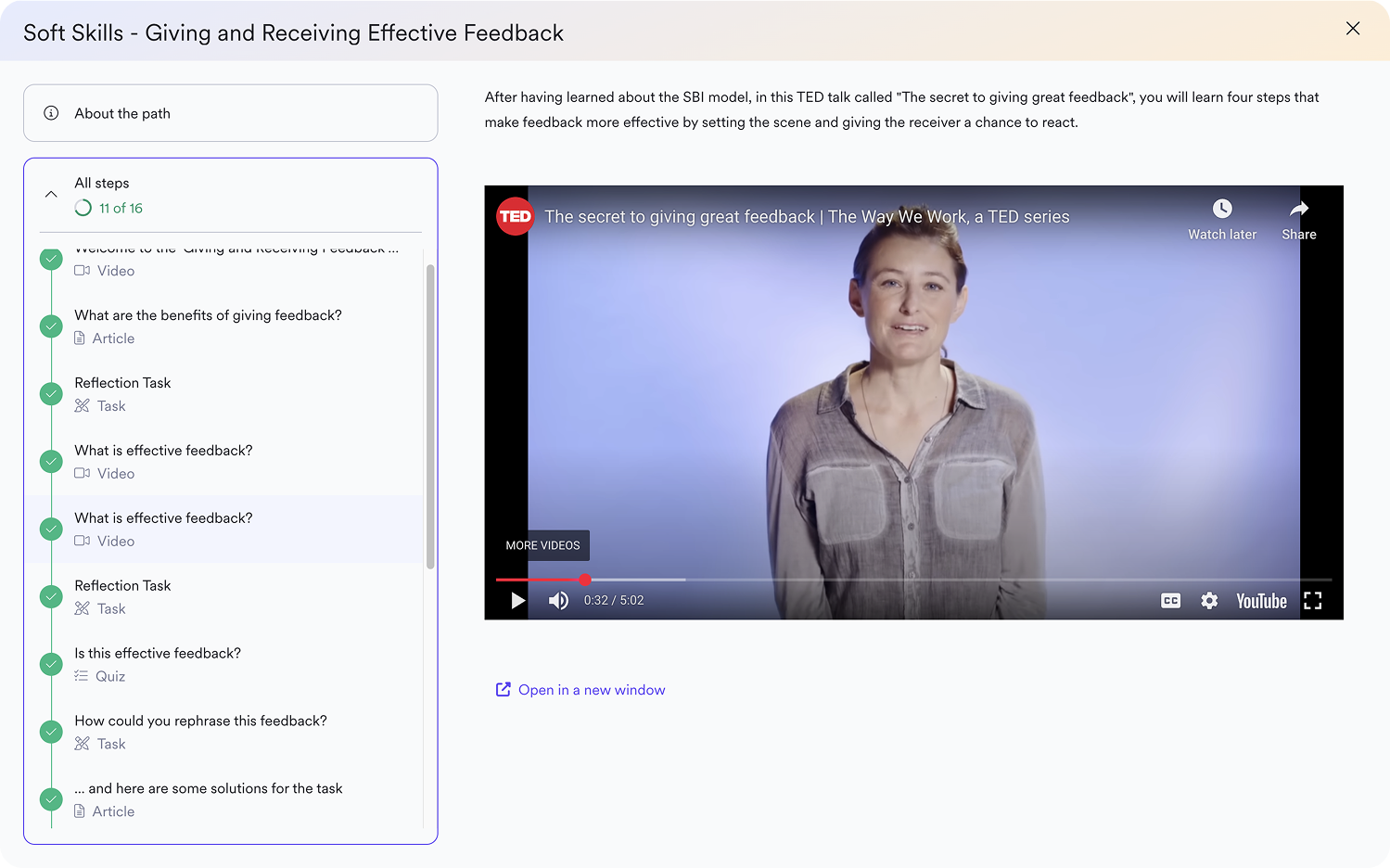
Leapsome Pre-boarding and Onboarding carries application data into the employee profile, so you can build a role-specific onboarding journey around the expectations set during hiring.
👉 Explore Pre-boarding and Onboarding
How to turn hiring criteria into a consistent employee experience
“At first no one knew what success looked like. We defined performance levels and documented expectations — then motivation skyrocketed because people finally knew what winning meant.” — Noelle Pittock, Senior Operations Director, Remote
You can use hiring criteria to create a development plan for your new hire. Clarify the new hire’s performance goals in their onboarding process so they know what it takes for them to succeed.
Imagine you want to hire a customer success manager with three core competencies. One is the ability to spot account risks early. The interviewer asks candidates how they would handle a customer at risk of leaving and rate their answers. Once a candidate is hired, their manager can give them feedback and coaching based on how well they answered that question. Keeping all these ratings, goals, and feedback in one system can help HR teams guide the performance management cycle.
How Leapsome helps HR teams build a connected hiring process
Hiring is just the first step of an employee’s journey through your organization. HR is responsible for coordinating their development, and for lean teams, that means tracking down feedback and documentation across multiple departments.
If your employee records and onboarding live in one tool while goals and performance objectives live elsewhere, you have an even greater administrative burden. And senior leaders may struggle to understand how well a hiring decision translates into strong employee performance.
A strong tool like Leapsome can help keep all your hiring and HR processes connected with:
- Recruiting: Evaluate candidates against shared criteria and keep a record of the decision. Once someone joins the team, application data can flow into the employee profile.
- Pre-boarding and onboarding: Build a journey that fits the role, with tasks and documents ready for the new hire. Then connect onboarding to relevant learning.
- Competencies: Define the skills you expect in each role so you can use the same standards during hiring and after the employee joins.
- Performance Reviews and Goals: Set goals based on those expectations and review how the employee applies them at work. Over time, that data can help you improve your hiring criteria.
“With Leapsome, we were able to automate performance reviews, goal setting that was even prior, but now even further and onboarding and offboarding and that together helped us save about 20% of the manual effort of our team.” — Weronika Czerny-Nowakowska, Chief Operating Officer, Neurons Lab
📈 Keep hiring decisions useful after the job offer
Leapsome connects hiring criteria with onboarding and performance, so you can see whether the expectations behind each decision hold up on the job.
👉 Request a demo
FAQ
Can AI detectors be used during the hiring process?
Yes, but you shouldn’t reject a candidate just because a detector flags their application as AI-written. These tools can misclassify human writing, and a detector score doesn’t show if someone can do the job.
If AI use matters for an assessment, tell candidates what you allow before they begin. Evaluate their work against the same role-related criteria and have a person make the hiring decision. AI tools used to inform selection decisions also need to comply with employment discrimination law.
When should you run a background check during a hiring process?
Many employers run a background check late in the hiring process, after they’ve assessed the candidate’s qualifications. The right timing can depend on your local laws. If you use a background reporting company, get the candidate’s written authorization and follow the required notice process before acting on the report.


.jpg)