Abfindungsvereinbarungen: Das letzte Kapitel gut schreiben


Haftungsausschluss: Diese Inhalte dienen ausschließlich allgemeinen Informationszwecken und stellen keine Rechtsberatung dar. Leapsome übernimmt keine Garantie für die rechtliche Konformität und kann nicht bestätigen, wie einzelne Situationen vor Gericht bewertet würden. Wenn ihr unsicher seid, wie die Anforderungen auf euer Unternehmen zutreffen, wendet euch an qualifizierte Rechtsberatung.
Ob durch Stellenabbau oder ausgehandelte Trennungen: Offboarding ist oft mit starken Emotionen verbunden. Für Mitarbeitende tauchen zahlreiche Fragen zu Vergütung, Leistungen und sogar dazu auf, was sie nach dem Ausscheiden noch sagen dürfen.
Auf der anderen Seite liegen Arbeitgebende oft nachts wach, aus Sorge vor rechtlichen Konsequenzen, wenn dieser Prozess nicht korrekt gehandhabt wird. Diese Sorgen sind nicht unbegründet: Laut USC werden viele eigentlich vertretbare Fälle gegen Arbeitgebende entschieden, weil es an ordnungsgemäßer Dokumentation und anderer Vorbereitung mangelt.*
Abfindungsvereinbarungen sollen die Anliegen der Mitarbeitenden berücksichtigen und gleichzeitig euer Unternehmen schützen. Lasst uns besprechen, was in diese Vereinbarungen gehört und welche Rolle sie im größeren Offboarding-Erlebnis und im Employee Lifecycle spielen.
* USC, 2026
Was ist eine Abfindungsvereinbarung?
Abfindungsvereinbarungen sind rechtsverbindliche Verträge, die die Bedingungen für das Ausscheiden von Mitarbeitenden festlegen. Diese Dokumente legen in der Regel die Vergütung und Leistungen fest, die eine ausscheidende Person erwarten kann, sowie etwaige Pflichten nach dem Beschäftigungsende, wie Tätigkeitsbeschränkungen oder Vertraulichkeitspflichten.
Beachtet, dass die Abfindungsvereinbarung nur das rechtliche Dokument ist. Ein Abfindungspaket dagegen umfasst die gesamten Leistungen und die Unterstützung, die Mitarbeitende nach ihrem Ausscheiden erhalten (sofern vorhanden). Und die Abfindung selbst bezieht sich genauer auf die finanzielle Entschädigung, die den größten Teil eines typischen Abfindungspakets ausmacht.
Was in eine Abfindungsvereinbarung gehört
Die genauen Details jeder Abfindungsvereinbarung hängen von den Unternehmensrichtlinien und den Umständen des Ausscheidens ab. Trotzdem konzentrieren sich die meisten auf diese drei zentralen Bereiche.
Beschäftigungsdetails und Vergütung
Hier legt ihr die grundlegenden Bedingungen der Trennung fest, einschließlich des offiziellen Beendigungsdatums sowie Details zur Abfindung und zu den Leistungen. Auch Vergütung im Zusammenhang mit Aktienoptionen, Restricted Stock Units und nicht genutztem bezahltem Urlaub gehört in diesen Abschnitt, ebenso wie Regelungen zur Krankenversicherung, etwa COBRA-Fristen und Anspruchsvoraussetzungen.
Pflichten der Mitarbeitenden und Schutz für das Unternehmen
In diesem Teil der Abfindungsvereinbarung klärt ihr offene Punkte, um das Risiko rechtlicher Auseinandersetzungen zu minimieren. Zum Beispiel verlangt ihr in der Regel, dass Mitarbeitende sämtliches Firmeneigentum zurückgeben, etwa Geräte und Firmenausweise.
Manche Unternehmen nehmen Klauseln zum Haftungsverzicht auf, deren konkrete rechtliche Anforderungen je nach Art des Anspruchs und Rechtsraum variieren. Außerdem solltet ihr Vertraulichkeitsvereinbarungen und Klauseln gegen abfällige Äußerungen vorbereiten, um zu verhindern, dass sensible Informationen an die Konkurrenz gelangen.
Nachvertragliche Einschränkungen
Manche Abfindungsvereinbarungen sollen den nachvertraglichen Schutz stärken, indem sie Einschränkungen für die nächste Tätigkeit der Mitarbeitenden festlegen. Abwerbeverbote verhindern, dass ehemalige Mitarbeitende für einen bestimmten Zeitraum Kolleginnen und Kollegen abwerben oder aktiv Kundschaft des Unternehmens ansprechen.
Wettbewerbsverbote sind deutlich restriktiver, da sie Mitarbeitende für einen festgelegten Zeitraum davon abhalten, für Wettbewerber zu arbeiten. Wie durchsetzbar Wettbewerbsverbote sind, unterscheidet sich stark je nach Rechtsraum und kann sich ändern. Holt daher unbedingt rechtlichen Rat ein, bevor ihr diese Klausel in eure Abfindungsvereinbarung aufnehmt.
Wie ihr seht, steckt hier eine Menge sensibler Arbeit, die richtig gemacht werden muss. Erschwert euch den Offboarding-Prozess also nicht zusätzlich, indem ihr an getrennten Systemen festhaltet.
Stattdessen könnt ihr Leapsomes All-in-one-Plattform für People Management nutzen, um Mitarbeiterprofile und Vergütungsdaten zu zentralisieren. Wenn all eure Dokumentations-Workflows an einem Ort liegen, hat euer Team die Konsistenz und verlässlichen Informationen, die es für diese anspruchsvolle Aufgabe braucht.
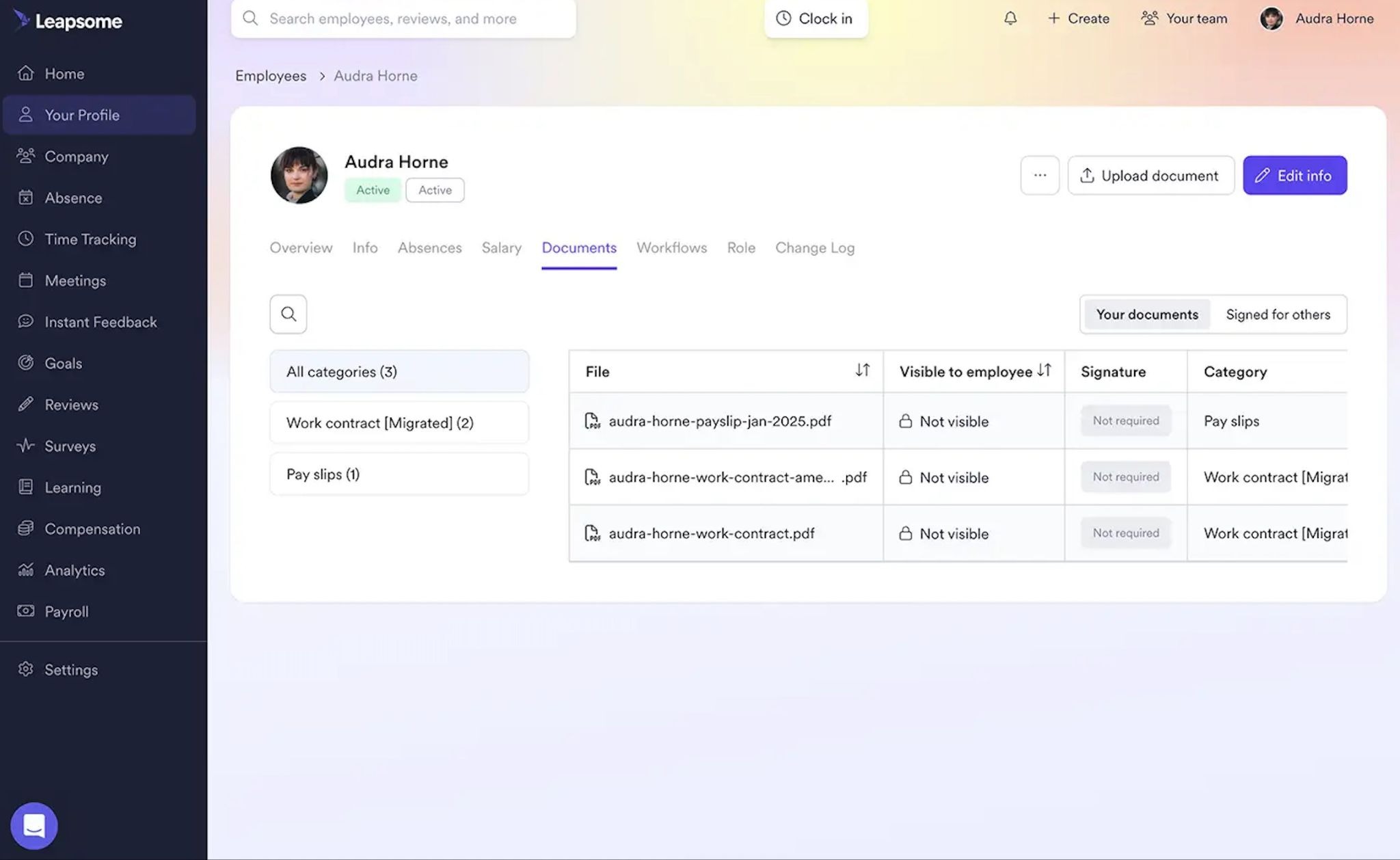
📂Zentralisiert eure Abfindungsprozesse
Bringt Struktur in euren Abfindungsvereinbarungs-Prozess, indem ihr alle Mitarbeitendendaten über eine einzige verlässliche Datenquelle verbindet.
👉 Entdeckt Mitarbeiterprofile
Lasst nichts in eurer Abfindungsvereinbarung aus
Wenn ihr Hilfe braucht, das perfekte Dokument zu erstellen, gibt es einen einfachen Einstieg. Unsere Vorlage für Abfindungsvereinbarungen enthält alle oben genannten wichtigen Punkte, damit ihr organisiert bleibt, während ihr ein verlässliches Offboarding-Erlebnis gestaltet.
📂Erstellt die perfekte Vereinbarung
Schützt sowohl euer Unternehmen als auch ausscheidende Mitarbeitende mit einer Abfindungsvereinbarung, die alle wichtigen Punkte abdeckt.
👉 Vorlage jetzt herunterladen
Wie Abfindungsvereinbarungen in den Employee Lifecycle passen
Offboarding bekommt von Führungskräften selten so viel Aufmerksamkeit wie Onboarding. Laut Gallup sind 9 von 10 CHROs der Meinung, dass ihre Unternehmen Trennungen nicht so effektiv managen, wie sie könnten.
„Werdet euch wirklich klar über das Warum, anstatt resigniert die Hände zu heben und zu sagen: ‚Weil wir es müssen.‘“
Emma Leeds, CEO und Gründerin von People Function
Viele Unternehmen betrachten Offboarding als losgelöstes Thema mit niedriger Priorität und verstehen nicht, wie Abfindungspakete in den größeren Employee Lifecycle eingebettet sind. Erfolgreiches Offboarding kann jedoch einen Welleneffekt auslösen, der:
- Vertrauen und Beziehungen stärkt: Selbst wenn ein Abschied schwierig ist, empfinden Mitarbeitende (sowohl die ausscheidende Person als auch die verbleibenden) den Prozess eher als fair, wenn er gut organisiert ist und die Erwartungen klar sind.
- Eine positive Unternehmenskultur unterstützt: Wie euer Unternehmen mit Offboarding umgeht, sagt viel über seine Werte aus. Gallup-Daten zeigen, dass Mitarbeitende mit positiven Offboarding-Erfahrungen 2,9-mal häufiger angeben, ihre früheren Arbeitgebenden weiterzuempfehlen.
- Rechtliche und operative Konsistenz wahrt: Wenn ihr eure Abfindungsvereinbarungen standardisiert, erhält das Management einen konformen Leitfaden. So schleichen sich keine Unstimmigkeiten oder individuellen Auslegungen in eure Prozesse ein.
Sind eure Offboarding-Prozesse konsistent und skalierbar?
Wenn ihr befürchtet, dass euer aktueller Offboarding-Prozess Schwachstellen hat, achtet auf diese Signale:
- Uneinheitliche Praktiken: Abfindungsvereinbarungen sollten nicht der individuellen Auslegung überlassen bleiben. Ohne ein gemeinsames Rahmenwerk fallen euch jedoch Unterschiede in der Sprache und den Leistungen auf, die verschiedene Führungskräfte und Abteilungen anbieten, was zu uneinheitlichen Erfahrungen der Mitarbeitenden führt.
- Unklare Freigabe-Workflows: Wenn eure Teams nicht wissen, wer für Abfindungsfreigaben zuständig ist, kann diese Unklarheit zu Verzögerungen und peinlichen Last-Minute-Anpassungen führen. Zum Beispiel geht HR vielleicht davon aus, dass die Rechtsabteilung eine Vereinbarung bereits geprüft hat, während die Rechtsabteilung gleichzeitig auf die Freigabe der Führungsebene wartet.
- Verstreute Dokumente: Wenn es sich anfühlt, als würde HR ständig nach Informationen suchen, die über Dateien und Tabellen verteilt sind, gibt es Verbesserungspotenzial. Trennung in euren zentralen HR-Systemen verlangsamt nicht nur das Offboarding, sondern erhöht auch das Fehlerrisiko. Deshalb beheben ausgereifte Unternehmen diese Probleme von Anfang an mit einem zentralen HRIS.
So verwaltet ihr Abfindungsvereinbarungen effektiv
Es kann eine Herausforderung sein, Offboarding-Richtlinien zu erstellen, die sowohl verlässlich als auch flexibel sind. So baut ihr euer Rahmenwerk auf:
- Die gesamte Employee Journey überprüfen: Teams brauchen mehr als Vermutungen, um konsistente Abfindungspakete zu erstellen. Beginnt damit, die aktuellsten Daten zu Vergütung, Performance-Kontext und Beschäftigungsdaten zusammenzutragen.
- HR, Rechtsabteilung und Führungsebene abstimmen: Vermeidet widersprüchliche Botschaften, indem ihr die Bedingungen der Abfindungsvereinbarung gemeinsam als Team klärt. Bindet wichtige Stakeholder aus Führungsebene, HR und Rechtsabteilung ein, um den Plan zu skizzieren und alle auf denselben Stand zu bringen.
- Vereinbarungen durchdacht überbringen: Wie ihr eure Abfindungsvereinbarung präsentiert, ist genauso wichtig wie das, was darin steht. Am besten haltet ihr alles (sowohl im Dokument als auch in der Art, wie ihr darüber sprecht) so klar, einfühlsam und respektvoll wie möglich.
„Behandelt Menschen wie kluge Erwachsene. Versucht nicht, ihnen einzureden, das hier sei eigentlich gut.“
Melanie Naranjo, Chief People Officer bei Ethena
Leapsome unterstützt euch bei jedem dieser Schritte, damit ihr euch auf würdevolle, faire Offboarding-Erlebnisse konzentrieren könnt. Da unsere All-in-one-HR-Plattform mit jeder Phase der Employee Journey verknüpft ist, habt ihr alle relevanten Informationen, die ihr für die Erstellung von Abfindungsplänen braucht. Dazu gehören Details zu PTO-Auszahlungen, Performance und Vergütung sowie automatisierte Workflow-Aufgaben und Fortschrittsverfolgung.
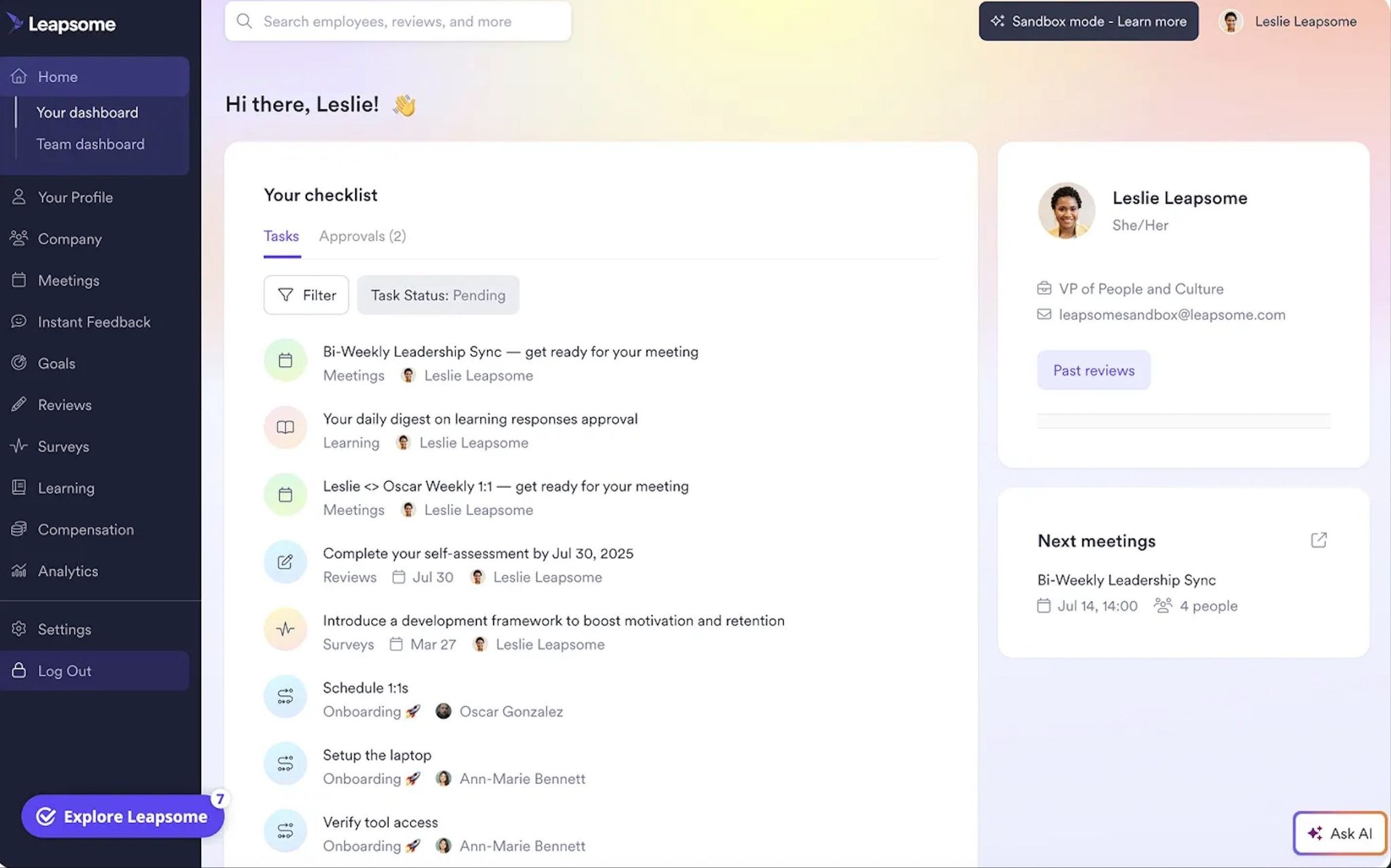
🔄Optimiert Offboarding, indem ihr Workflows auslagert
Automatisiert Routineaufgaben, damit ihr euch auf den Kontakt zu Menschen und einfühlsame Übergänge konzentrieren könnt.
👉 Erfahrt mehr über automatisierte Workflows
Vereinfacht Mitarbeiterübergänge mit Leapsome
Abfindungsvereinbarungen sollten sich nicht wie ein nachträglicher Gedanke anfühlen. Wenn HR jedoch mit fragmentierten Daten und getrennten Systemen kämpfen muss, ist genau das der Eindruck, den ausscheidende Mitarbeitende (und ihre vom Rand aus zuschauenden Kolleginnen und Kollegen) wahrscheinlich bekommen. Ohne zentralisierte Daten und Dokumentation erfordern selbst einfache Offboarding-Aufgaben manuelle Nachfassaktionen, was den gesamten Prozess frustrierender macht.
Wenn es euch schwerfällt, Konsistenz in euren Offboarding-Prozess zu bringen, könnte Leapsome das fehlende Puzzleteil sein. Mit Leapsomes HRIS-Tools und integrierten People-Management-Funktionen könnt ihr:
- Mitarbeiterprofile zentralisieren: Vermeidet die Suche nach Details zu Vergütung und Performance, indem ihr alle Mitarbeiterdaten an einem Ort aufbewahrt.
- Offboarding-Workflows automatisieren: Vermeidet Verzögerungen, indem ihr zentrale Aufgaben zuweist und automatisiert.
- Freigabe-Workflows festlegen: Schickt Freigaben automatisch an die richtigen Abteilungen, für schnelle, konforme Übergaben.
- People Analytics auswerten: Nutzt Feedback und weitere Mitarbeiter-Insights, um zu verstehen, wie Teams auf Abfindungsvereinbarungen und andere HR-Prozesse reagieren.
„Leapsome hat bei Performance, OKR und Feedback-Management großartige Arbeit geleistet: alles auf einer Plattform.“ Zhen Wang, People Servicer bei Jina AI
🛤️ Optimiert die gesamte Employee Journey
Ob ihr neue Mitarbeitende willkommen heißt oder Abfindungsvereinbarungen vorbereitet: Leapsome unterstützt reibungslose Übergänge mit vollständigen Mitarbeiterprofilen und strukturierten Workflows.
👉 Demo buchen



.jpg)
.png)

.jpg)