Pay-Equity-Analyse: Leitfaden für transparente, faire Vergütungsrichtlinien


Was bedeutet „faire Bezahlung“ eigentlich für Mitarbeitende? Viele Führungskräfte scheinen davon keine klare Vorstellung zu haben. Ein aktueller Payscale-Report zeigt zum Beispiel: Auch wenn Gehälter auf oder über dem aktuellen Marktniveau liegen, fühlen sich 68 % der Mitarbeitenden unterbezahlt.*
Der beste Weg zu mehr Fairness und Transparenz ist eine strukturierte Pay-Equity-Analyse. Versteht das aber nicht als einfachen Compliance-Check, den ihr einmal im Jahr abhakt. Um Lohnungleichheit vorzubeugen, müsst ihr die laufende Überprüfung fest in eure HR-Prozesse einbinden. Wir zeigen euch, wie das funktioniert.
* Payscale, 2025
Was ist eine Pay-Equity-Analyse?
„Lohnlücken zeigen den durchschnittlichen Unterschied zwischen Gruppen, aber das erzählt nicht die ganze Geschichte. Bei Pay Equity vergleicht ihr Gleiches mit Gleichem: gleiche Rolle, gleiche Erfahrung, gleiche Leistung.“
Alexandra Edl, Senior HR Consultant bei Edl Consulting AG
Die Pay-Equity-Analyse ist eine formale Prüfung der Vergütungsdaten eures Unternehmens. Dabei sucht ihr nach Unterschieden zwischen Mitarbeitenden, die gleiche oder vergleichbare Arbeit leisten.
Das Ziel ist herauszufinden, ob diese Gehaltsunterschiede auf legitime Faktoren wie Leistung oder Betriebszugehörigkeit zurückzuführen sind, statt auf geschützte Merkmale wie Geschlecht, Herkunft, Alter oder Behinderung. Deckt eine Pay-Equity-Analyse unbegründete Lohnlücken auf, solltet ihr Abhilfemaßnahmen gemeinsam mit der Rechtsabteilung entwickeln, besonders wenn Anpassungen bestehende Verträge oder geschützte Gruppen betreffen.
Eine Pay-Equity-Analyse verschafft eurem Unternehmen mehr Transparenz bei den Vergütungspraktiken. Aber die Vorteile reichen noch weiter:
- Weniger rechtliche und Compliance-Risiken: Diskriminierende Bezahlpraktiken zu korrigieren ist entscheidend, um Bußgelder und den Reputationsschaden durch Compliance-Klagen zu vermeiden.
- Mehr Vertrauen und Bindung bei Mitarbeitenden: Mitarbeitende legen großen Wert auf die Gehaltspolitik eines Unternehmens. Laut Payscale würden 45 % der Befragten einen neuen Job suchen, wenn sie sich unfair bezahlt fühlten.
- Stärkeres Engagement und bessere Leistung: Laut dem Journal of Economic Perspectives wirkt sich Gehaltstransparenz positiv auf Motivation und Produktivität der Mitarbeitenden aus.
Ist euer Unternehmen bereit für Pay Equity?
Daten von SHRM zeigen, dass ein Drittel der HR-Abteilungen noch keinen ausgearbeiteten Pay-Equity-Plan hat. Oft rückt das Thema erst nach einer Beschwerde oder einer externen Prüfungsanfrage auf den Radar eines Unternehmens.
Reife Organisationen gehen proaktiver vor und verankern Equity-Analytics fest in ihren zentralen HR-Prozessen. So wird es deutlich schwerer, dass Ungleichheiten unbemerkt unter der Oberfläche wachsen und später zu großen Problemen werden.
„Pay Equity ist keine einmalige Initiative. Ihr müsst Daten aktualisieren, Strukturen überprüfen und die Kommunikation am Laufen halten. Es ist ein kontinuierlicher Verbesserungszyklus.“
Alexandra Edl, Senior HR Consultant bei Edl Consulting AG
Falls ihr nicht sicher seid, wo euer Unternehmen steht, hier ein paar Warnsignale:
- Uneinheitliche Vergütungspraktiken: Führungskräfte und Abteilungen treffen Gehaltsentscheidungen nach unterschiedlichen Vorlieben statt nach einem gemeinsamen Rahmen.
- Fehlende klare Gehaltsbänder: Euch fallen große Gehaltsunterschiede auf der gleichen Job-Ebene auf, könnt sie aber nicht vollständig begründen.
- Eingeschränkte Sicht auf Gehaltsdaten: HR und Führungskräfte brauchen einfachen Zugang zu gebündelten Vergütungsdaten, um Payroll-Prozesse konsistent zu halten.
Die wichtigsten Bausteine einer Pay-Equity-Analyse
Eine wirksame Pay-Equity-Lösung aufzubauen beginnt damit, die richtigen Daten und den passenden Kontext zu sammeln. Das sind die Bausteine, die ihr vor einer fundierten Analyse braucht.
Vergütungszahlen
„Bei Equity geht es um bereinigte Daten. Die Frage lautet: Werden Menschen, die vergleichbare Arbeit leisten, auch vergleichbar bezahlt? Wenn nicht, können wir es erklären oder müssen wir es korrigieren?“
Alexandra Edl, Senior HR Consultant bei Edl Consulting AG
Zunächst braucht ihr ein vollständiges Bild der Jahresvergütung jeder Person. Neben dem Grundgehalt gehören auch Boni, Beteiligungen und alle weiteren Anreize oder Vergütungsformen dazu. Notiert dabei auch andere relevante Faktoren wie Erfahrung und Ausbildung, die Gehaltsunterschiede beeinflussen können.
Demografische Daten der Mitarbeitenden
Ordnet Mitarbeitende nach Geschlecht, Herkunft, Ethnizität, Alter und Behinderung und ermittelt die aktuellen Daten zu ihrer durchschnittlichen Vergütung. Prüft außerdem die neuesten Marktbenchmarks, damit ihr einschätzen könnt, ob eure Gehälter dem Branchendurchschnitt entsprechen. Die Compensation Benchmarks von Leapsome helfen dabei, indem sie euer HR-System direkt mit den Analysen von Mercer verbinden.
Job-Gruppen und vergleichbarer Arbeitskontext
„Sobald ihr den Marktbenchmark kennt, liegt die eigentliche Herausforderung darin, ihn mit eurer internen Realität abzugleichen. Wer liegt über oder unter dieser Bandbreite, und warum? Lässt sich das objektiv erklären?“
Alexandra Edl, Senior HR Consultant bei Edl Consulting AG
Gruppiert Rollen in vergleichbare Kategorien, damit ihr Mitarbeitende nach Senioritätslevel, Verantwortungsbereich und Skills filtern könnt. So seht ihr bei eurer Analyse leichter, ob festgestellte Gehaltsunterschiede wirklich ‚Äpfel mit Äpfeln‘ vergleichen. Ihr könnt Pay Equity außerdem mit der Arbeitsleistung abgleichen, indem ihr Mitarbeitendendaten in Leapsomes All-in-one-HR-Plattform zentralisiert.
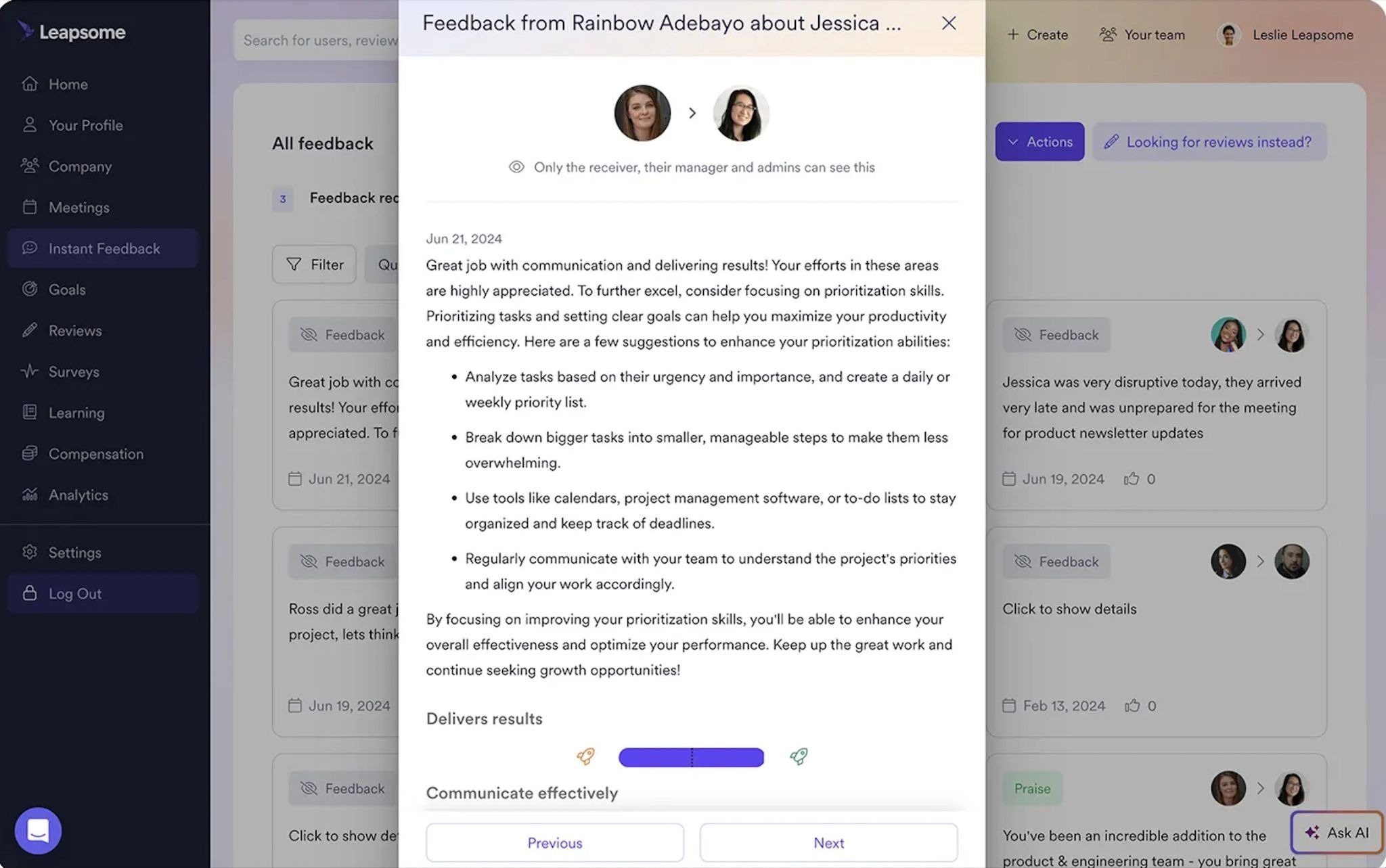
⚖️Unterstützt Pay Equity mit strukturierten Performance Reviews
Leapsome bringt Performance Reviews und Mitarbeitendendaten zusammen, damit ihr Bias reduziert und einheitliche Vergütungsrichtlinien schafft.
👉 Entdeckt Performance Reviews
So führt ihr eine Pay-Equity-Analyse durch: Anleitung in fünf Schritten
Eine Pay-Equity-Analyse durchzuführen bedeutet mehr, als Daten in eine Tabelle einzutragen. So setzt ihr den Fokus richtig und findet praxisnahe Erkenntnisse.
1. Ziele und Umfang festlegen
Wenn ihr den Umfang von Anfang an klar absteckt, spart ihr später Zeit, weil irrelevante Informationen gar nicht erst in den Prozess einfließen. Legt fest, was ihr messen wollt und welche Unternehmensbereiche einbezogen werden. Eine Pay-Equity-Analyse kann zum Beispiel Grundgehälter über Abteilungen hinweg vergleichen, während eine andere die Gesamtvergütung innerhalb einer bestimmten Kategorie wie der Job-Ebene untersucht.
2. Daten sammeln und bereinigen
„Kostenlose Quellen wie Glassdoor sind für einen ersten Eindruck in Ordnung, aber oft unvollständig oder inkonsistent. Ihr braucht aktuelle, validierte Daten, besonders in sich schnell verändernden oder von hoher Inflation geprägten Märkten.“
Alexandra Edl, Senior HR Consultant bei Edl Consulting AG
Sammelt als Nächstes die Vergütungs- und demografischen Daten für eure Analyse. Prüft sorgfältig auf mögliche Probleme wie doppelte Einträge oder fehlende Felder, die die Ergebnisse verzerren könnten. Um spätere Ungenauigkeiten zu vermeiden, hilft es oft, eine Checkliste für korrekte Mitarbeitendenmerkmale, einheitliche Job- und Level-Angaben sowie vollständige Vergütungsdaten zu erstellen.
3. Vergleichbare Arbeitsgruppen definieren
Jobtitel allein reichen nicht für verlässliche Erkenntnisse aus. Berücksichtigt Faktoren wie Rollenverantwortung, Seniorität, Abteilung und Umfang, damit eure Ergebnisse richtig eingeordnet sind. In dieser Phase erkennt ihr möglicherweise Lücken in Rollenstrukturen oder Gehaltsrahmen, die besser standardisiert werden müssen.
4. Gehaltslücken analysieren
Vergleicht nun die Vergütungsmuster über die von euch gebildeten Kategorien hinweg. Achtet auf unerklärte Unterschiede bei Gehältern oder Benefits für Mitarbeitende mit ähnlicher Arbeit. Ihr könnt die Daten nach Mitarbeitendenmerkmalen oder jobbezogenen Faktoren segmentieren, um Trends aufzudecken, die auf den ersten Blick nicht offensichtlich sind.
5. Prüfen, ob Lücken gerechtfertigt sind
Nur weil es einen Gehaltsunterschied gibt, heißt das nicht automatisch, dass er „ungerecht“ ist. Statt sofort Korrekturmaßnahmen einzuleiten, findet heraus, ob es nachvollziehbare geschäftliche Gründe für die Zahlen gibt, etwa die Betriebszugehörigkeit oder das Leistungsniveau der Mitarbeitenden. Erst wenn es keine plausible Erklärung für Gehaltslücken gibt, müssen Führungskräfte mit Anpassungsplänen oder neuen Vergütungsrichtlinien eingreifen.
Denkt zum Schluss daran: Eine Pay-Equity-Analyse wirkt am besten, wenn sie fest in eure HR-Prozesse eingebunden ist. Leapsomes Compensation Management hilft euch, kontinuierliche Gehaltsanalysen direkt in eurem HR-Dashboard umzusetzen, inklusive integrierter Vorlagen und individueller Regeln.
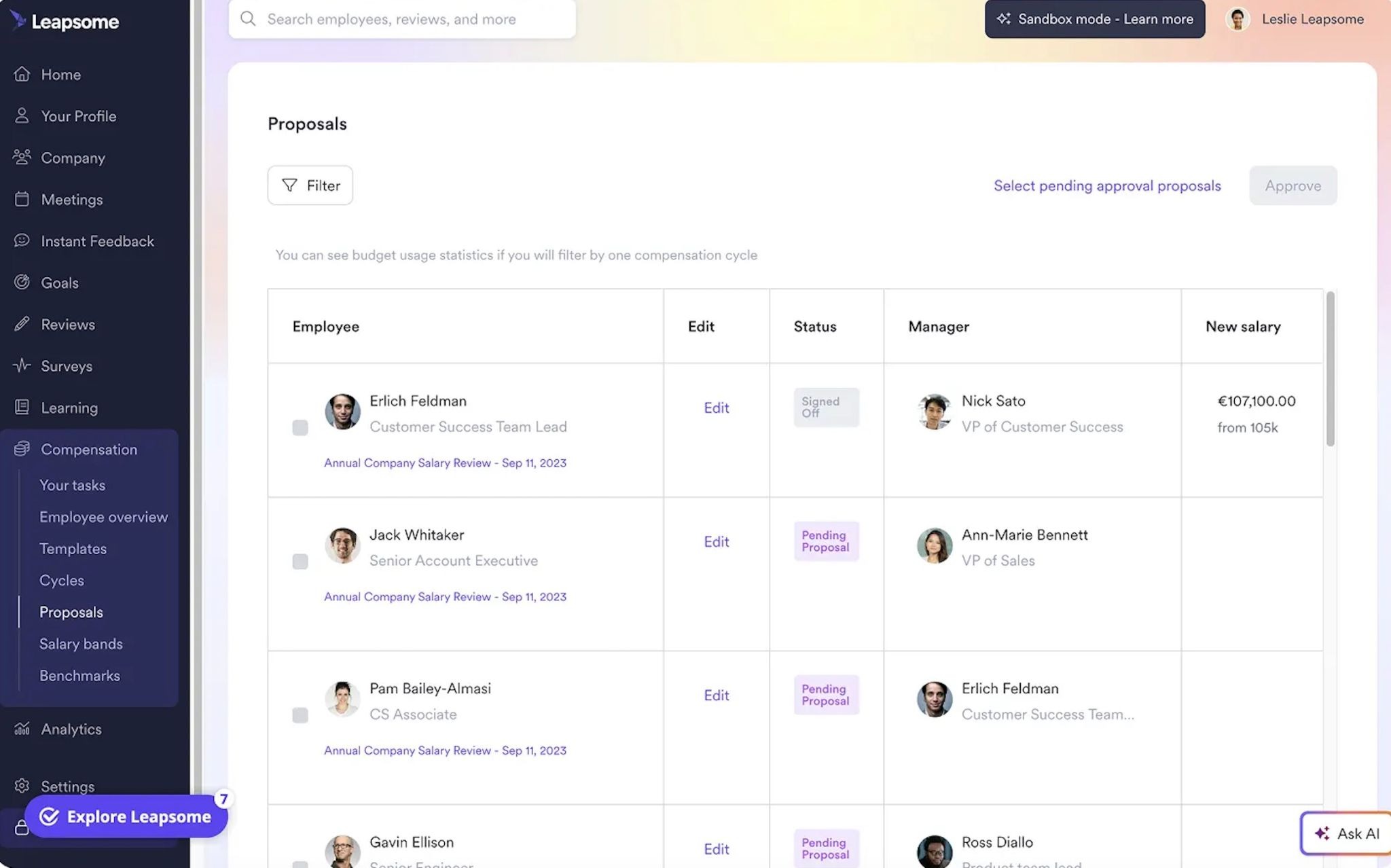
📊Macht aus Vergütungsrichtlinien laufende Pay-Equity-Einblicke
Das Compensation-Management-Dashboard von Leapsome bündelt Gehalts-, Leistungs- und Mitarbeitendendaten, damit ihr eure Equity-Kennzahlen nie aus den Augen verliert.
👉 Testet Compensation Management
Pay-Equity-Analyse mit Leapsome vereinfachen
Eine Pay-Equity-Analyse klingt in der Theorie einfach genug. Aber wenn Mitarbeitendendaten an einem Ort liegen, Performance Reviews woanders und jede Menge Vergütungstabellen irgendwo verstreut sind, wird es schwer, all diese Informationen für eine genaue Prüfung zusammenzuführen.
Leapsome bringt eure Systeme in eine All-in-one-HR-Plattform, damit ihr Gehaltsdetails schnell organisieren und analysieren könnt. Unsere Plattform kombiniert HRIS mit People Management, damit ihr Trends in Echtzeit verfolgt und Pay-Equity-Richtlinien proaktiv fördert.
„Mitarbeitende finden jetzt alles an einem Ort: ihre Daten, Abwesenheiten, Ziele und Reviews. Ich muss nicht erklären, welches Tool wofür da ist. Bei Leapsome ist alles vereint.“ Merilyn L, Senior People Operations Specialist bei Bob W
💰Macht Payroll fairer und einfacher zu verwalten
Leapsome beseitigt Datensilos und schafft stattdessen jederzeit einen einheitlichen Blick auf Gehalt und Leistung eurer Mitarbeitenden.
👉 Demo anfragen
FAQ
Was ist die beste Software, um Gehaltslücken zu bewerten und zu schließen?
Um Lücken zu finden und zu schließen, braucht ihr das ganze Jahr über aussagekräftige Daten zu Pay Equity. Sucht nach Software wie Leapsome, die Mitarbeitendendaten, Payroll und Performance Reviews in Echtzeit zentralisiert.
Was ist der Equal Pay Act?
Der Equal Pay Act von 1963 ist ein US-Bundesgesetz, das Lohndiskriminierung aufgrund des Geschlechts bei vergleichbaren Rollen verbietet. Außerhalb der USA wird Entgeltgleichheit anders geregelt: Die EU und andere Rechtsräume haben ihre eigenen Regelwerke. Besonders relevant ist die EU-Entgelttransparenzrichtlinie, die neue Melde- und Transparenzpflichten für Arbeitgeber einführt. Ihre Umsetzungsfrist (7. Juni 2026) ist inzwischen verstrichen, auch wenn die nationale Umsetzung in den Mitgliedstaaten stark variiert.

.jpg)

%2520(1).png)