How to write a clear salary increase letter + free template

.png)
A salary increase letter is a formal confirmation of an employee’s raise, verifying the new salary and the reasoning behind the decision. While some HR managers might think otherwise, salary increase letters shouldn’t paper over poorly thought out compensation decisions. These documents should only clarify fair decisions.
Getting this right is more important than ever: 74.8% of HR professionals believe their employees receive fair pay, but only 44% of these HR workers think employees feel the same way.* Learning how to write a strong salary increase letter helps spread understanding and close that gap.
To get you there, this guide provides a framework and a free reusable template to give structure to your writing process. Learn what goes into a salary increase letter and how to close out every review cycle with confidence and transparency.
* Salary.com, 2026
What’s a salary increase letter, and when should you use one?
A salary increase letter — also called a pay increase, salary adjustment, or raise letter — is a formal document announcing and explaining a change in an employee’s compensation. HR teams often send salary increase letters when an employee gets a pay bump after an annual salary review or promotion. Types of raises that trigger these letters include:
- Performance-based or merit increases
- Market rate adjustments
- Cost-of-living adjustments
- Contractual raises
These letters clarify and confirm compensation changes. They should describe the reason for the increase so employees understand the context behind company decisions.
Making and documenting fair and transparent pay decisions can strengthen employee retention. Deloitte’s 2022 Gen Z and Millennial Survey found pay is the top reason Gen Zs and Millennials leave their jobs.
By clearly outlining how HR makes compensation choices and backing decisions with evidence, organizations can hold onto more of their workforce. Strong salary increase letters are one step toward addressing the 44% of employees HR pros believe receive fair pay but don’t realize it.
How can I draft a wage increase letter? Process and template
“Competency frameworks are not just checklists, they’re roadmaps for growth and accountability.”
— Monica Sarkar, Co-Founder at Purple Umbrella
This simple three-step framework will help you craft raise letters that hold up under scrutiny.
1. Start with the what and the why
Write a straightforward beginning. Open the letter by directly stating that the employee is getting a raise and give a concise overview of why.
2. Cover the core details
While it’s nice to celebrate employees’ wins, focus on precision first. Prioritizing accurate and complete information over a pat on the back gives the employee something tangible to hold onto. It shows them exactly why they’re getting the increase and how the process will pan out.
Here are the general items to list out:
- The updated salary
- The effective date the new salary kicks in
- The amount or percentage the salary increased by, if appropriate
- Details that aren’t changing, such as benefits or PTO accrual rates
- Any modifications to the role’s workload or responsibilities
- Contacts who can answer employee questions
- Any required documentation, such as an acknowledgment
HR leaders can pull this information straight from their HRIS. With Leapsome Employee Records, details on salary, compensation, and performance live in a centralized hub, so deep context is just a few clicks away.
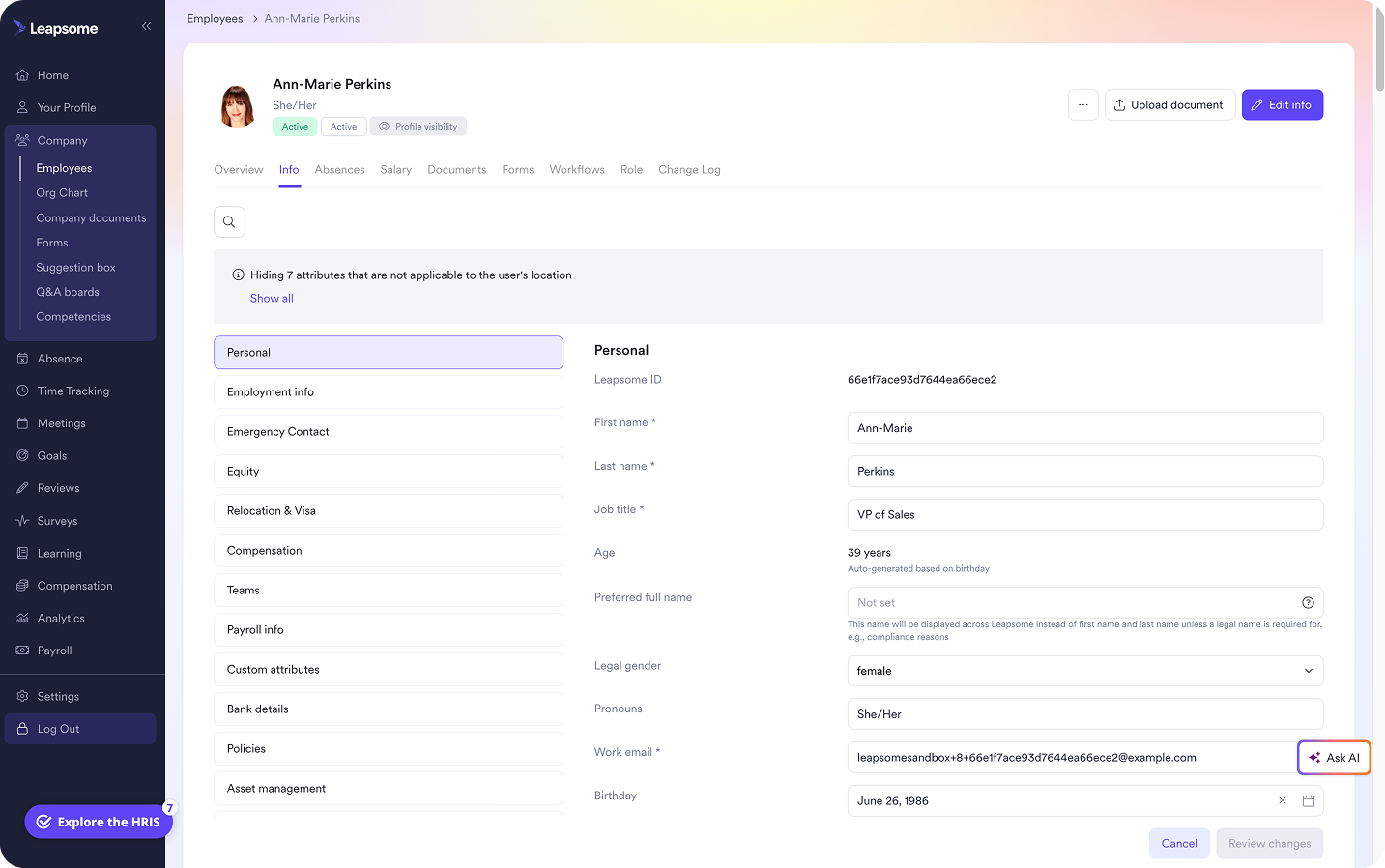
📁 One source of truth, no more loose ends
Never patch together outdated or inconsistent information again by consolidating the documents and data that matter in one centralized location.
👉 Explore Employee Records
3. Connect the raise to the reasoning
“Transparency doesn’t mean sharing every number. It means explaining the logic — how pay decisions are made, what criteria are used, and how people can grow within the structure.”
— Alexandra Edl, Senior HR Consultant, Interim Manager, Coach & Trainer, EDL Consulting
Pointing out the employee’s specific accomplishments fosters trust and credibility by replacing filler with facts. This section of the letter can go several ways depending on the type of raise.
For merit salary increases, concentrate on highlighting the concrete contributions that led to the pay bump. It’s if letters for employee promotions are a little different. They should tie in details about expanded scope or responsibilities. On the other hand, a market adjustment might include info about the industry benchmarks driving the change.
This comprehensive description gives managers the information they need to align with the logic behind the raise. This prevents inconsistent explanations when managers verbally go over the finer points of an increase with the employee.
And managers need this support. The 2026 Pay Practices & Compensation Strategy Survey conducted by Salary.com found that just 51.6% of organizations give managers formal training on talking about compensation with their team.
“Too often, managers say, ‘because HR said so.’ That’s not enough. They need to be trained to explain pay decisions with empathy and transparency.”
— Alexandra Edl, Senior HR Consultant, Interim Manager, Coach & Trainer, EDL Consulting
If this feels like a lot, use our salary increase letter template so you don’t have to start from scratch each time.
📝 Stop staring at a blank page
Incorporate this free template into your writing workflow to create clear, consistent salary increase letters every time.
👉 Download the template now
Pressure testing: Clarify first, write later
Employees trust salary increase letters when they’re based on a rationale that’s clear, explicit, and easy to follow. No matter how well-crafted, a letter can’t hide inconsistent or thoughtless reasoning.
Before putting pen to paper, pressure test the decision by exploring questions like:
- What specific factors triggered the increase?
- What evidence justifies the raise?
- Is the decision consistent with the wider compensation approach, the average salary increase for the organization, and what comparable employees earn?
Remember to tailor the reasoning behind each decision to the specific circumstances that led to it. This can be tricky with performance-based or merit salary increases. These work best when HR can back up its decision with hard data.
Let the evidence do the talking
“Money is a sensitive topic, so communication is everything. Use clear, simple language and make sure leaders know how to talk about pay with confidence and care.”
— Alexandra Edl, Senior HR Consultant, Interim Manager, Coach & Trainer, EDL Consulting
Vague praise won’t cut it for performance-related increases. Managers should be able to discuss the specific documented achievements, goal progress, and performance review history behind the change. They should also be able to communicate each element in clear terms.
People want context behind pay rates, and they’ll likely look elsewhere for information if you don’t provide it. A 2022 Gartner survey found that almost 43% of employees talk about their compensation packages with co-workers in the same role. Another 45% of employees review third-party salary data websites at least annually. When HR doesn’t provide compensation information for employees, assumptions can quickly fill the gap.
To avoid this unpleasant situation, Leapsome lets HR teams connect compensation decisions directly to goal progress, historical performance review data, and past feedback.
“When people know reviews actually lead to growth, they stop dreading them and start investing in them. Linking feedback to concrete outcomes like pay, promotions, and learning plans turns performance conversations into moments of empowerment. It sends the message that great work is recognized, rewarded, and developed.”
— Monica Sarkar, Co-Founder, Purple Umbrella
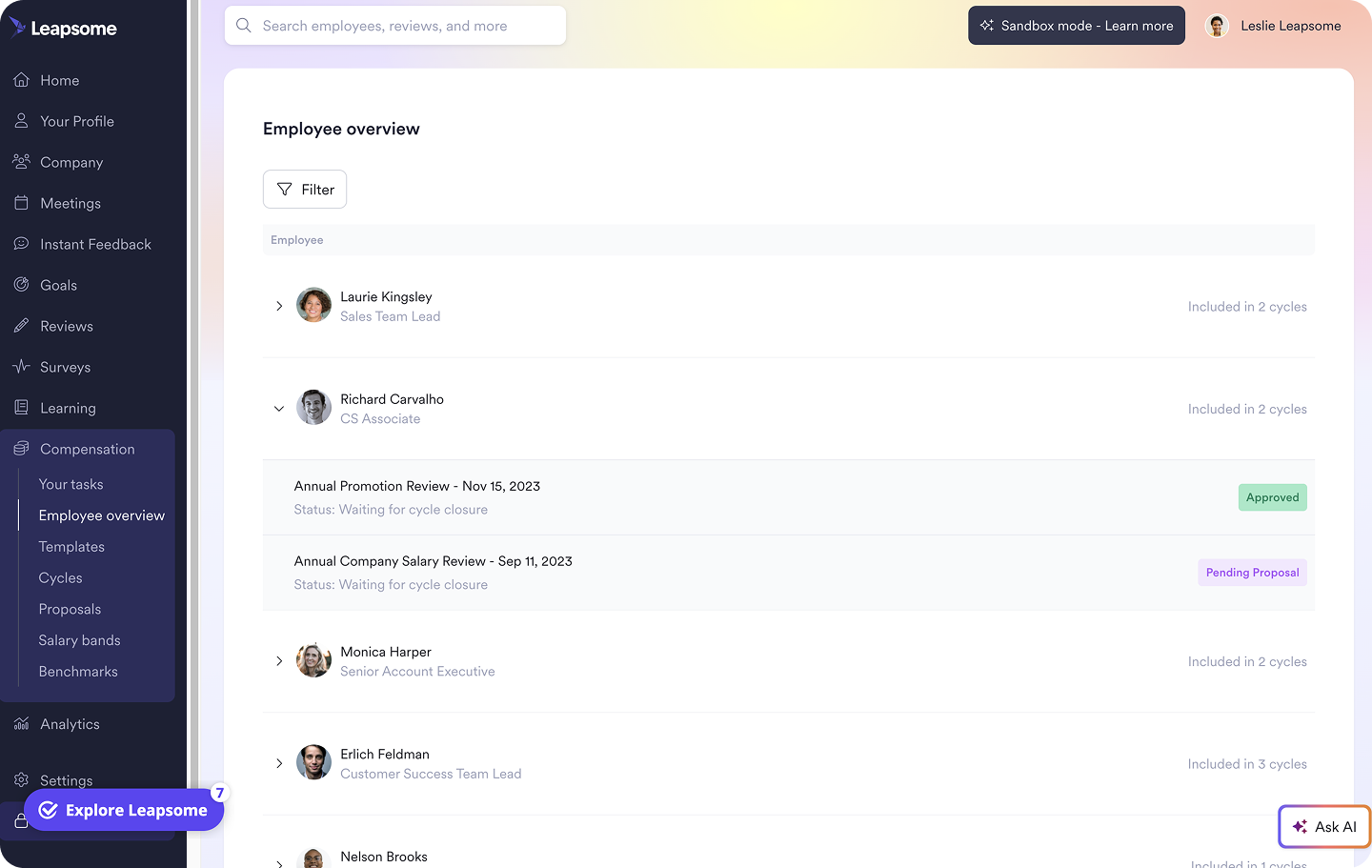
🔗 Put compensation decisions in their proper context
Make compensation decisions easier to defend by linking them to the data that backs them up, from performance data to goal progress.
👉 Explore Compensation Management
Verify consistency before you commit
Compensation decisions that are considerably out of alignment with company standards can erode employee trust fast. They’re also harder for HR to justify.
Before you put the decision in writing, take a second look to ensure the increase follows consistent criteria and has a clear explanation for any exceptions.
Ground salary decisions in full context with Leapsome
In most organizations, compensation management relies on HR software and data. HR leads need to carefully consider the evidence and the company's compensation practices to arrive at a decision. Then teams need to coordinate approvals, communicate the results, and update employee records.
This is tough to get right if you’re working with scattered spreadsheets and decisions that vary by manager.
The trick is to replace ad-hoc procedures with a repeatable compensation process designed to align people and teams. And the smartest way to drive that process is with an interconnected, all-in-one HR platform like Leapsome.
With Leapsome Compensation Management, reviews are always linked to goal progress and performance history, resulting in consistent, data-informed cycles every time. Wrap up each review cycle by pulling context about role changes and salary history directly from your Employee Records. Then, update profiles to reflect wage increases in the same centralized location.
By connecting HR processes to people enablement and the data managers already rely on, salary decisions become thoughtful and defensible instead of isolated and opaque. With a clear rationale, a structured workflow, and Leapsome, HR teams have everything they need to make and explain pay decisions employees can trust.
“A big part of our People work happens through Leapsome — we have many manager touch points there, such as pulse surveys where managers gain a good overview over their team’s mood and health. We also have a yearly talent assessment cycle, with performance reviews and career development conversations tracked through Leapsome. Managers prepare these meetings through the Meetings function, set up developmental goals, and track them over the quarter. Additionally, we track company goals through Leapsome.”
— Eva Gallee, Senior People Business Partner | ProGlove
💡 Stop fumbling for explanations
Connect compensation to employee records and past performance to put decisions on a transparent, quantitative footing.
👉 Request a demo
FAQ
How do I write a defensible salary increase letter?
You can write a defensible salary increase letter by following a three-step approach:
- Start with the what and the why: Open by announcing the raise and briefly explaining the justification behind it.
- Cover the core details: Outline the basic information employees want to know, such as what the new salary is, when it comes into effect, and who to reach out to for questions.
- Connect the raise to the reasoning: Get specific about the accomplishments and contributions that led to the raise.

.png)


Entdeckt unsere Plattform für HRIS, Performance und Entwicklung.