So gestaltet ihr eine faire, people-first Remote-Work-Policy


Remote-Arbeit ist kein Provisorium mehr, sondern für viele Organisationen Alltag. Klare und gleichzeitig flexible Remote-Work-Policies sind heute unverzichtbar, um Produktivität zu stärken und Top-Talente anzuziehen.
Mehr als 70% der Mitarbeitenden bevorzugen ein hybrides oder remote Modell gegenüber reiner Vor-Ort-Arbeit.* Wer diese Option nicht bietet, schränkt den Talentpool ein und riskiert, bestehende Mitarbeitende an Arbeitgeber mit mehr Flexibilität zu verlieren.
Dieser Leitfaden zeigt HR-Verantwortlichen, wie sie eine kulturelle und operative Policy entwickeln, die Compliance fördert und das Fundament für ein starkes Remote-Team legt. Wir zeigen, wie ihr eure Teams ausrichtet, faire Behandlung sichert und ohne Kontrollverlust skaliert.
* Gallup, 2025
Remote-Work-Policies in Kürze
Eine Remote-Work-Policy, manchmal auch Work-from-Home-Policy (WFH-Policy) genannt, ist eine formale Vereinbarung, die Rechte und Erwartungen für eine verteilte Belegschaft festlegt. Sie schützt euer Unternehmen mit robuster Sicherheits- und Compliance-Dokumentation. Außerdem helfen klare Erwartungen Mitarbeitenden, Grenzen für eine bessere Work-Life-Balance zu ziehen.
Wo Remote-Work-Policies oft scheitern
Remote-Work-Policies sind eine echte Chance zu zeigen, dass euch faire Behandlung aller Mitarbeitenden wichtig ist, unabhängig vom Arbeitsort. Diese typischen Fehler stehen aber im Weg, wenn ihr wirklich people-first denken wollt:
- Zu viel Juristensprache: Wenn eure HR-Policies mit Paragrafen überladen sind, decken sie den Alltag nicht klar ab und lassen Mitarbeitende verwirrt oder ausgegrenzt zurück.
- Zu viel auf den Schultern der Manager: Ohne klare Prozeduren entstehen subjektive Ad-hoc-Entscheidungen, die zu inkonsistenter Anwendung und ungleicher Behandlung zwischen Büro- und Remote-Teams führen.
- Anwesenheit statt Ergebnisse im Fokus: Wer Time Tracking über Leistung stellt, baut eine Überwachungskultur auf, die Mitarbeitende abschreckt.
- Erwartungen nicht mit Leistung verknüpft: Die C-Suite will klare Daten zur Remote-Produktivität, doch das wird schwierig, wenn Erwartungen unklar und Daten zerstreut sind. Wenn ihr Erwartungen in der Remote-Work-Policy klärt und sie mit einer HR-Software fürs Performance-Monitoring verbindet, lässt sich Produktivität objektiv bewerten und der Führung zeigen, dass auch Remote-Mitarbeitende Impact liefern.
🔎 Verbindet Remote-Work-Policies mit Performance
Mit Leapsome bündelt ihr Daten, Policies, frühere Reviews und Peer-Feedback an einem Ort. Performance Reviews bekommen den vollen Kontext, und Bauchgefühl weicht informierten Entscheidungen.
👉 Mehr über Performance Reviews erfahren
Der strategische Wert von Work-from-Home-Policies
So hilft eine Remote-Work-Policy eurem Business.
Schafft ein zukunftsfestes System ohne Aufwand
Ad-hoc-Prozesse vervielfachen Zeit und Aufwand bei jedem neuen Hiring oder Mitarbeitenden-Fall. Standardisierte Frameworks senken den Ressourcenverbrauch und erleichtern das Skalieren, weil sie komplexe Einzelprozeduren in ein wiederholbares System überführen. Wenn die Policy einmal steht, lässt sie sich überall anwenden, statt jeden Fall einzeln zu behandeln.
Haltet Top-Talente
Damit die besten Mitarbeitenden nicht abspringen, braucht es klare Work-Life-Grenzen, die Burnout vorbeugen. Gute Remote-Work-Policies enthalten Anreize zum Bleiben, etwa persönliche Offsites, bei denen sich Kolleg*innen treffen, und flexible Arbeitszeiten für eine bessere Balance.
„Hybride Arbeit ist großartig für Flexibilität, aber ihr verliert die menschlichen Signale. Führung muss bewusst Verbindungspunkte schaffen, damit Teams nicht nur in Zoom-Meetings leben.“
– Luck Dookchitra, ehemals VP of People & Culture bei Leapsome
Schluss mit Inkonsistenz und Bias
Ein konsistentes Programm verhindert, dass Manager Entscheidungen aus Favoritismus oder persönlicher Voreingenommenheit treffen, und macht den Arbeitsplatz gerechter.
Damit das wirklich funktioniert, müsst ihr aber auch Bias in den Policies selbst begrenzen. Diese typischen Verzerrungen schleichen sich gern unbemerkt ein:
- Proximity Bias führt dazu, dass Policies um die Büro-Erfahrung als Standard herum gebaut werden. Remote-Arbeit wirkt dann wie eine Abweichung, die gerechtfertigt werden muss, statt eine legitime Arbeitsweise zu sein.
- Recency Bias beeinflusst, welche Probleme adressiert werden. Wenn kürzlich ein prominentes Thema (etwa ein Datenschutzvorfall) passiert ist, drehen sich Policies oft zu stark um dessen Vermeidung und übersehen andere wichtige Themen.
- Verwechslung von Produktivität und Sichtbarkeit: Es ist die Tendenz, sichtbar zu sein (Online-Status, Antwortzeit, Kamera an) mit produktiv zu sein gleichzusetzen.
- Attribution Bias beeinflusst, wie Erwartungen und Fehler erklärt werden. Wenn etwas bei Remote-Mitarbeitenden schiefläuft, wird das oft dem Remote-Setup zugeschrieben. Bei Vor-Ort-Arbeit passiert das nicht.
- Status-Quo Bias führt zu der Annahme, dass das Bewährte das Ideale ist. So entsteht der Reflex, Büro-Arbeit sei besser als Remote-Arbeit.
So gestaltet ihr eine wirkungsvolle Remote-Work-Policy: vier Kernkomponenten
Jede Work-from-Home-Policy sollte für diese typischen Graubereiche klare Leitlinien liefern.
1. Definiert eure Kern-Remote-Regeln
Legt klar fest, was erlaubt ist:
- Wie oft Mitarbeitende remote arbeiten dürfen
- Von wo aus remote gearbeitet werden darf
- Ausnahmen zu den beiden Punkten
2. Setzt Regeln, die Arbeitgeber und Mitarbeitende schützen
Remote-Arbeit bringt rechtliche und operative Komplexität mit, der eine gute Policy zuvorkommt. Drei Bereiche sind für HR besonders risikoreich:
- Steuer- und Compliance-Risiken: Wenn Mitarbeitende über Bundesstaats- oder Landesgrenzen hinweg arbeiten, können sie Steuer-Nexus-Pflichten auslösen, andere Payroll-Anforderungen schaffen und das Unternehmen neuen Arbeitsgesetzen aussetzen. Die Policy sollte zulässige Arbeitsorte definieren (inklusive Prozess für neue Anträge) und festlegen, wie Vergütung und Benefits je nach Geografie angepasst werden.
- Performance- und Kollaborations-Standards: Remote-Arbeit gefährdet keines von beiden. Ohne dokumentierte Erwartungen greifen Manager aber zu inkonsistenten Standards, die Fairness- und Rechtsthemen schaffen.
- Geräte, Datensicherheit und Zugriffskontrollen: Klärt die technische Logistik der Remote-Arbeit, inklusive Best Practices und Sicherheitsregeln für Firmengeräte und private Hardware.
3. Berücksichtigt internationale Compliance
Wenn Mitarbeitende im Ausland arbeiten, geht in die relevanten Vorschriften zu Besteuerung und Visa-Compliance hinein. Passt eure Policy so an, dass sie die rechtlichen Unterschiede zwischen inländischen und internationalen Mitarbeitenden anerkennt, und überlegt, wie ihr Compliance für „Digital Nomads“ regelt, die häufig den Standort wechseln.
4. Macht Regeln und Erwartungen glasklar
Manager und Mitarbeitende müssen wissen, welche Ergebnisse erwartet werden und wie Performance gemessen wird. Wählt klare KPIs, und entscheidet, wie ihr Alltagsdetails (etwa Urlaubsanträge) und größere Outcomes erfasst. All das muss dokumentiert sein, zentral abgelegt, damit Policies fair und Ziele aligned bleiben.
„Kommuniziert lieber zu viel und setzt klare Erwartungen an Antwortzeiten. Sonst bricht asynchrones Arbeiten zusammen und Projekte bleiben liegen.“ – Anita Anthonj, Co-Founderin von Talaera, für Leapsome
⏲️ Bringt Compliance über Bundesstaaten hinweg auf Linie
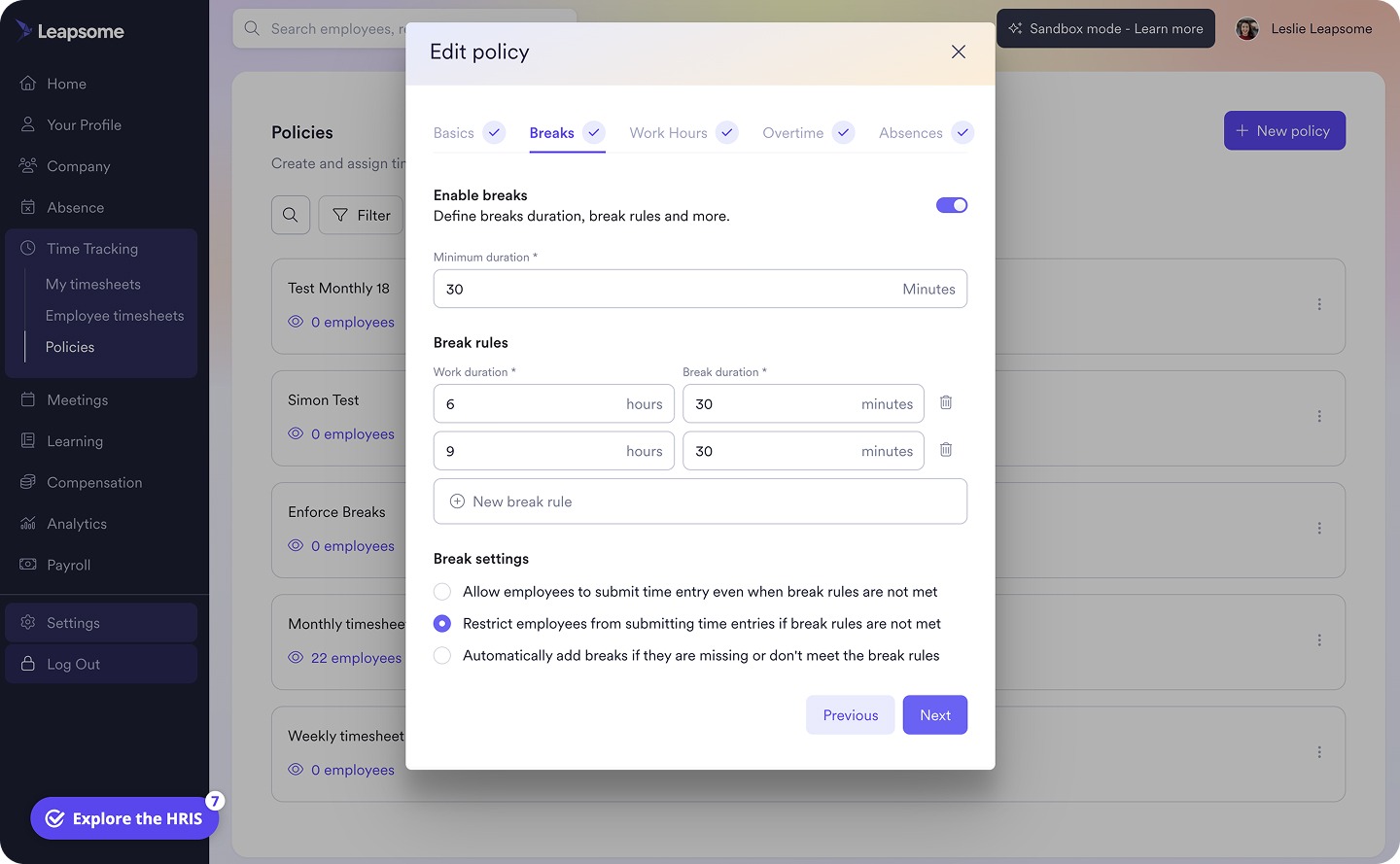
Mit Leapsome passt HR die Time-Tracking-Regeln individuell an, damit sie automatisch an interne Remote-Policies und arbeitsrechtliche Vorgaben mehrerer Jurisdiktionen ausgerichtet sind.
👉 Mehr über Payroll erfahren
Vorlage und Beispiel für eine Remote-Work-Policy
Hier ein reales Beispiel zur Inspiration: Das SaaS-Unternehmen Buffer baute eine „optimistische, dankbare Remote-Truppe“ auf, indem es ein standardisiertes System nutzt und großzügige Perks für Work-Life-Balance bietet. Dazu gehören:
- 1.000 US-Dollar pro Mitarbeitende*r für die Einrichtung des Home Office
- Eine 4-Tage-Woche
- Mindestens drei Wochen bezahlten Urlaub pro Jahr
⏲️ Startet mit einem Vorsprung in eure neue HR-Policy
Damit keine wichtige Komponente verloren geht, nutzt unsere Remote-Work-Policy-Vorlage als Ausgangspunkt.
👉 Vorlage jetzt herunterladen
Tipps für eine skalierbare, reibungslose Remote-Work-Policy
Policies festzuhalten reicht nicht. Euer System muss skalieren und einfach zu managen sein. Folgende Best Practices helfen:
- Verankert Orts- und Anspruchsregeln in eurer HR-Software: Automatisiert die Durchsetzung, indem ihr Policies mit eurer HRIS-Plattform verbindet.
- Verbindet Policies mit Performance Management: Wenn Remote-Policies und Performance-Tracking in getrennten Systemen leben, fehlen Kontext und es entstehen Fehler und Bias.
- Bleibt audit-fest: Legt in den Policies klare Dokumentationsanforderungen fest. So wird Compliance vom Zeitfresser zur Routine.
Macht eure Remote-Work-Policy mit Leapsome zur gelebten Realität
Starre Remote-Policies bieten nicht die Flexibilität, die Organisationen für Wachstum und Anpassung brauchen. Die HR-Software von Leapsome gibt eurem Team die Werkzeuge, um aus der Policy ein lebendiges Framework zu machen, das Mitarbeitende ausrichtet und Accountability sichert.
Mit Leapsome zentralisiert ihr Mitarbeiterprofile und Standortdaten und konfiguriert Regeln, die automatisch greifen. So managt ihr Remote-Teams im großen Stil ohne manuelle Berechnungen oder chaotische Spreadsheets.
In einem vereinheitlichten System wird auch Payroll geradlinig und fehlerfrei. HR spart Stunden für Dateneingabe und Quervergleiche. Leapsome geht über Compliance und Finanzen hinaus und unterstützt auch Performance Reviews mit einfacher Konfiguration, damit ihr kontextstarke Bewertungen liefert.
„Leapsome ist unser Anlaufpunkt, um unsere Arbeit aus der Ziel-Perspektive zu betrachten: wie wir Fortschritt machen und unsere Ziele erreichen. Es vereint uns über Remote-Setups und unterschiedliche Büros hinweg und hält uns auf das Richtige fokussiert. Leapsome ist ein Kernbestandteil davon, wie wir arbeiten.“ – Lisa Potter, VP of Marketing bei KCare
💪 Verbindet Remote-Work-Policies und People-Systeme mit Leapsome
Wenn ihr Regeln und Daten in einem starken HRIS verbindet, bleibt ihr audit-fest und gebt euren Policies ein Fundament, das auch schnelles Skalieren mitmacht.
👉 Demo anfragen
FAQ
Welche Leitlinien sollte HR für Remote-Mitarbeitende setzen?
Remote-Leitlinien sollten Standards für folgende Bereiche enthalten:
- Anspruch und Genehmigung
- Home Office und Equipment
- Wohlbefinden und Unterstützung der Mitarbeitenden
- Inländische und internationale Compliance
- Performance-Tracking und Ausrichtung
Welche Bundesgesetze gelten für Remote-Mitarbeitende?
Meist behandeln US-Bundesarbeitsgesetze Remote-Mitarbeitende genau wie Vor-Ort-Mitarbeitende. Beachtet aber, dass Off-Site-Beschäftigte häufiger als Contractor klassifiziert werden, was Erwartungen, Benefits und Steuern beeinflusst.

.png)


Entdeckt unsere Plattform für HRIS, Performance und Entwicklung.