Fehlzeiten am Arbeitsplatz: Was sie bewirken und wie ihr sie reduziert


Manche Abwesenheiten lassen sich nicht vermeiden: Mitarbeitende werden krank, oder Betreuungspflichten halten sie von der Arbeit fern. Doch anhaltende Fehlzeiten verdienen einen genaueren Blick, besonders wenn sie im gesamten Unternehmen auftreten.
Unternehmen geraten leicht in die Gewohnheit, Fehlzeiten nur als Prozentzahl im Dashboard zu betrachten, die höchstens eine kurzfristige Reaktion oder eine kleine Anpassung der Anwesenheitsrichtlinie auslöst. Die Verantwortung ist zudem oft verteilt: HR prüft die Aufzeichnungen, Führungskräfte konzentrieren sich auf die Abdeckung. Dabei übersieht das ganze Team, was das Abwesenheitsmuster über die umfassendere Employee Experience verrät.
Denn laut Gallup haben stark engagierte Teams 78 % weniger Fehlzeiten.* Wiederholte Abwesenheiten können auf tiefere Probleme hindeuten, etwa nicht nachhaltige Arbeitsbelastung oder schwache Führung, die wiederum die Performance im gesamten Unternehmen schwächen.
Dieser Guide erklärt, was Fehlzeiten am Arbeitsplatz wirklich bedeuten und worauf sie sich auswirken. Außerdem zeigen wir, wie euer HR-Team die Ursachen wiederkehrender Abwesenheiten findet und handelt, bevor daraus größere Performance-Probleme werden.
* Gallup, 2024
Was sind Fehlzeiten am Arbeitsplatz?
Fehlzeiten bezeichnen wiederholte oder unerwartete Abwesenheiten von der Arbeit, die den normalen Betrieb stören können. Geplante Abwesenheiten wie Urlaub oder vereinbarte Arzttermine geben HR und Führungskräften Zeit zur Vorbereitung. Ungeplante Abwesenheiten sorgen dagegen für mehr Störungen, besonders wenn sie häufig und teamübergreifend auftreten.
Laut dem U.S. Bureau of Labor Statistics erreichte die Fehlzeitenquote bei Vollzeitbeschäftigten in den USA 2024 3,2 %, bei einer verlorenen Arbeitszeit von 1,7 Stunden. Häufige Ursachen für diese Abwesenheiten sind:
- Gesundheitliche Probleme und Betreuungspflichten: Krankheiten halten Mitarbeitende natürlich zu Hause, aber auch Betreuungspflichten erhöhen den Druck zusätzlich (besonders wenn flexible Arbeitsmodelle fehlen).
- Belästigung und unsichere Arbeitsumgebungen: Mitarbeitende meiden verständlicherweise einen Arbeitsplatz, an dem sie sich bedroht fühlen oder nicht offen sprechen können. Eine APA-Umfrage ergab, dass 24 % der Mitarbeitenden im vorherigen Jahr verbale Übergriffe erlebt hatten. Wiederholte Abwesenheiten können eines der ersten sichtbaren Anzeichen dafür sein, dass sich jemand am Arbeitsplatz nicht mehr sicher fühlt.
- Niedrige Moral und mangelndes Engagement: Mitarbeitende, die sich von ihrer Arbeit distanziert fühlen, zeigen sich seltener verlässlich, im übertragenen wie im wörtlichen Sinn. Hohe Fehlzeiten können bedeuten, dass die Employee Experience zu bröckeln beginnt.
„Unengagierte Mitarbeitende, die still bleiben, können ein Unternehmen schneller auslaugen als die, die kündigen. Bei Engagement geht es nicht darum, wer bleibt, sondern wer sich mit Energie und Verantwortungsbewusstsein einbringt.“
Emma Leeds, Founder, CEO und Chief People Consultant bei People Function
Häufige Arten von Fehlzeiten am Arbeitsplatz
Nicht jede Abwesenheit ist gleich oder stellt ein Problem dar. Die meisten lassen sich einer von drei Kategorien zuordnen, und die Unterschiede sind wichtig:
- Genehmigte Abwesenheiten: Dazu zählen geplanter Urlaub und andere Abwesenheiten, die durch die Unternehmensrichtlinie abgedeckt sind. HR sollte diese Abwesenheiten korrekt erfassen, weiteres Eingreifen ist aber selten nötig.
- Gelegentliche ungeplante Abwesenheiten: Mitarbeitende fallen durch Krankheiten oder unerwartete private Angelegenheiten immer mal wieder kurz aus. Das ist kein Problem, solange die Abwesenheiten sowohl individuell als auch unternehmensweit gering bleiben.
- Chronische Fehlzeiten: Dieser Begriff beschreibt häufige oder anhaltende Abwesenheiten über einen längeren Zeitraum. Bei Einzelpersonen deutet das meist auf notwendiges Eingreifen der Führungskraft hin. Betreffen chronische Fehlzeiten ein ganzes Team oder Unternehmen, belasten sie die Kapazität und weisen auf tiefere Probleme hin.
HR braucht genug Kontext, um einen Einzelfall von einem Muster zu unterscheiden, das mehr Aufmerksamkeit verdient. Proaktive HR-Teams verlassen sich auf Leapsomes HRIS und People-Management-Plattform, wo vernetzte Mitarbeitendendaten hohe Fehlzeiten aufdecken, bevor sie sich festsetzen.
„Führungskräfte sehen, wer sonst noch abwesend ist, können Anträge anpassen oder direkt genehmigen. Alles wird an einem Ort mit voller Transparenz visualisiert.“
Sophie O'Donoghue, Customer Success Coach bei Leapsome
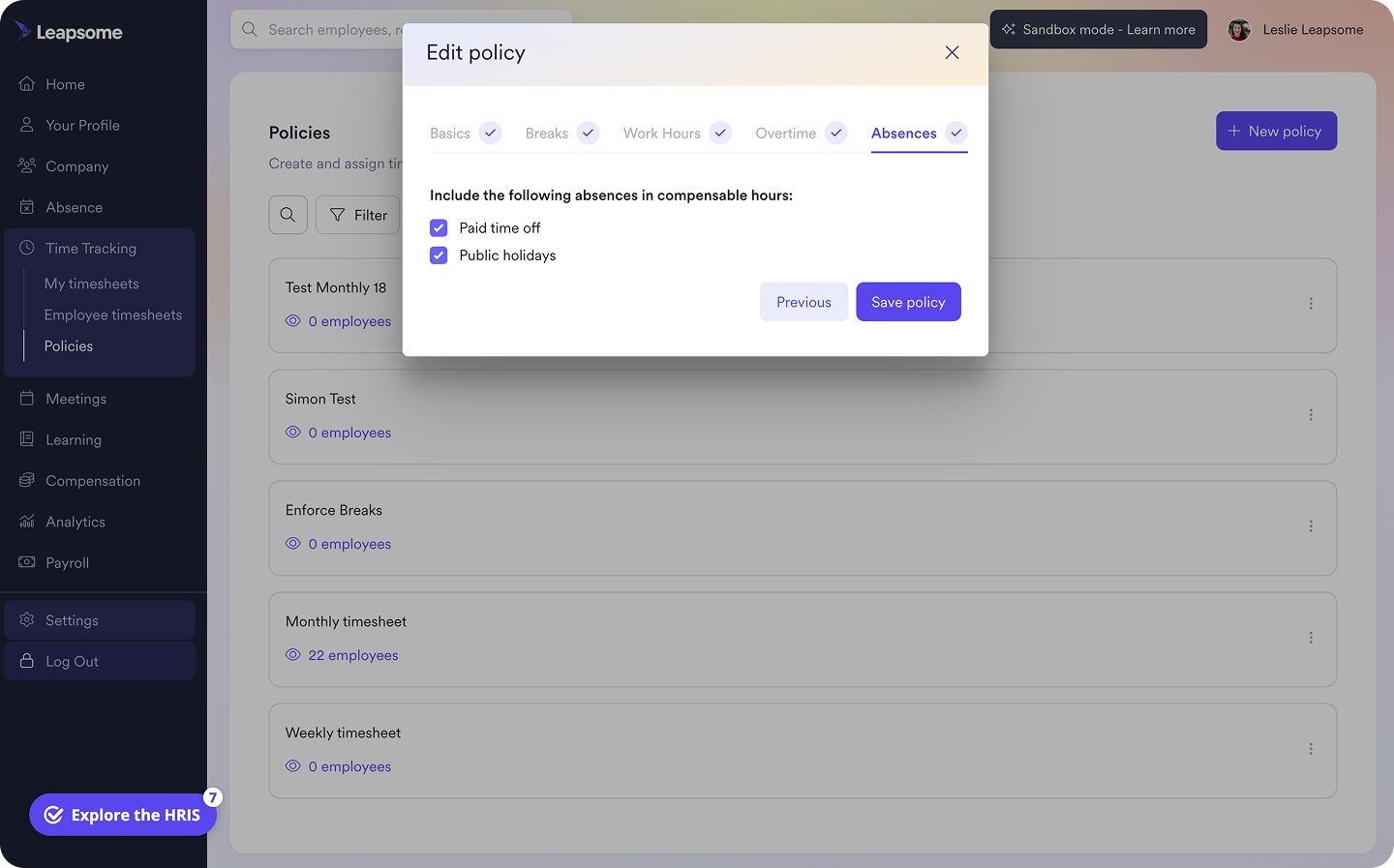
🕵️ Entdeckt das Muster hinter den Fehlzeiten
Leapsome zentralisiert Abwesenheitsdaten und weitere Mitarbeitendenkennzahlen, sodass HR Anträge einfach verwalten und problematische Trends frühzeitig erkennen kann.
👉 Entdeckt Abwesenheiten
Welche Auswirkungen haben Fehlzeiten am Arbeitsplatz?
Die Folgen von Fehlzeiten bleiben selten auf einen Anwesenheitsbericht beschränkt. Fehlt schon ein einzelnes Teammitglied wiederholt, müssen Führungskräfte die Arbeit neu verteilen, und verlässliche Mitarbeitende müssen den Rest auffangen. Mit der Zeit kann dieser Druck zu Burnout führen und noch mehr Abwesenheiten verursachen.
„Häufige oder lang anhaltende Abwesenheiten können ein echtes Anzeichen für mangelndes Engagement sein… Reporting an die Führungsebene hilft, Muster früh zu erkennen und anzugehen.“
Sophie O'Donoghue, Customer Success Coach bei Leapsome
Auch die Produktivität leidet, wenn sich Arbeit verzögert oder an Mitarbeitende übergeht, die sich erst einarbeiten müssen. Entscheidungen können ins Stocken geraten, wenn ein abwesendes Teammitglied wichtigen Kontext oder Freigabebefugnis hat. Unternehmen reagieren manchmal mit Überstunden oder befristeten Ersatzkräften, was die Personalkosten erhöht, ohne die eigentlichen Ursachen zu lösen.
Die kulturellen Auswirkungen sind weniger sichtbar, aber oft am schädlichsten. Mitarbeitende bemerken ungleiche Arbeitsbelastung, und die Kundschaft beschwert sich, wenn der Service langsamer und unregelmäßiger wird. Spätestens dann werden Fehlzeiten zu einem konkreten Performance-Problem.
Die größten Treiber von Fehlzeiten und was ihr dagegen tun könnt
Eine Anwesenheitsrichtlinie zeigt Führungskräften, wie eine Abwesenheit gemeldet wird, aber nicht, warum dasselbe Team immer wieder fehlt. Dieser blinde Fleck kann teuer werden.
Gallup fand heraus, dass das Mitarbeitendenengagement 2025 auf 20 % fiel, und dieser Rückgang kostete die Weltwirtschaft $10 Billionen an verlorener Produktivität. Wenn Abwesenheitsmuster auf mangelndes Engagement hindeuten, bleiben größere Probleme ungelöst, wenn man sie nur als Verwaltungsaufgabe behandelt.
So könnt ihr die wichtigsten Treiber hinter Fehlzeiten und den daraus resultierenden Performance-Problemen angehen:
- Schwache Unterstützung durch Führungskräfte: Häufen sich Abwesenheiten unter einer Führungskraft, reicht der Blick auf die Fehlenden allein nicht aus. Gallup fand heraus, dass Führungskräfte für 70 % der Varianz im Mitarbeitendenengagement verantwortlich sind. HR sollte deshalb kontinuierliches Feedback und konstruktive 1:1s nutzen, um zu erkennen, wie jede Führungskraft die Erfahrung ihres Teams prägt.
„Die Grundlage guter Führung ist der Aufbau von Beziehungen. Ihr könnt alle Tools der Welt haben, aber ohne Verbindung, Kommunikation und Sicherheit leidet die Performance immer.“
Anja Schauer, Global Head of Customer Success bei Leapsome
- Begrenzte Entwicklungsmöglichkeiten: Teammitglieder, die keinen Weg nach vorn sehen, bereiten sich oft schon auf den nächsten Job vor, während sie noch bei euch angestellt sind. Vorstellungsgespräche und Networking bedeuten mehr Zeit abseits der Arbeit. Statt auf Exit-Interviews zu warten, um den Verdacht zu bestätigen, investiert lieber in klare Entwicklungspfade und gezieltes Lernen, damit eure Top-Talente bleiben und mit dem Unternehmen wachsen.
- Burnout und zu hohe Arbeitsbelastung: Wiederholte Abwesenheiten können zeigen, dass einem Team die Kapazität fehlt und Mitarbeitende überlastet sind. Mit Leapsome nutzt ihr Engagement-Umfragen, um zu erkennen, wo sich Arbeitsdruck aufbaut, und vergleicht die Ergebnisse mit euren Abwesenheitstrends. So passt ihr Prioritäten an, bevor die Belastung chronisch wird und Abwesenheit wie der einzige Weg zur Erholung wirkt.
„Behandelt Zuhören nicht als Einmal-Aktion. Schafft einen verlässlichen Rhythmus, der Stimmung und Demografie verbindet, damit Führungskräfte Klarheit darüber bekommen, worauf sie sich konzentrieren sollten.“
Craig Forman, Founder and Principal Consultant bei CultureC Consulting
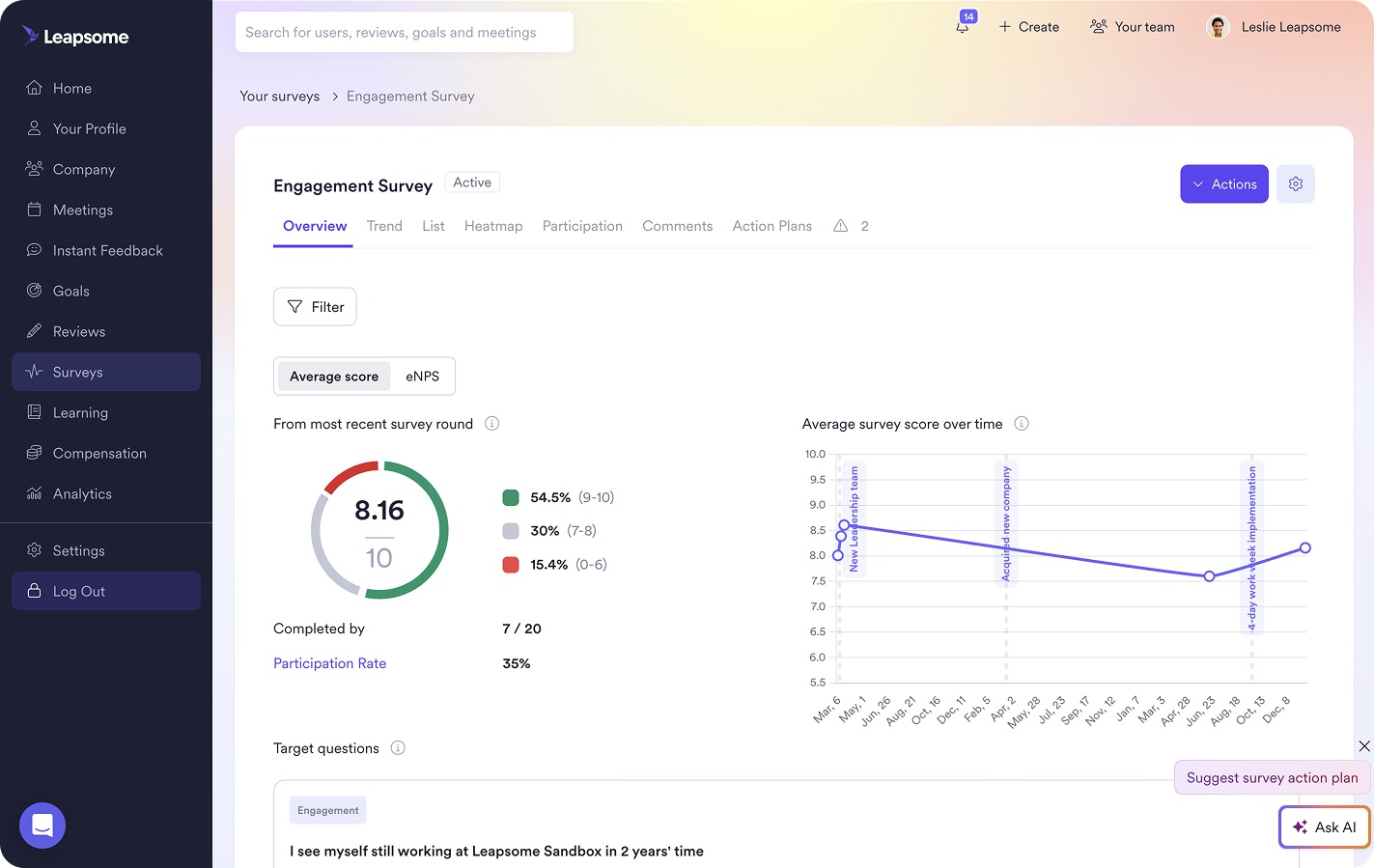
👂 Erfahrt, was Abwesenheitsdaten nicht verraten
Regelmäßige Umfragen zeigen Details zur Employee Experience hinter Anwesenheitstrends, damit HR schnell bei den echten Problemen ansetzen kann.
👉 Entdeckt Mitarbeiterumfragen
Wie Leapsome hilft, Fehlzeiten am Arbeitsplatz zu reduzieren
Wenn Teams Fehlzeiten berechnen und direkt zu strengeren Anwesenheitsrichtlinien greifen, bleiben die eigentlichen Ursachen der Abwesenheiten verborgen. Getrennte Daten verschärfen das Problem zusätzlich, wenn Abwesenheitsdaten separat von Engagement-Feedback und Erkenntnissen der Führungskräfte geführt werden. Die Kernprobleme werden dadurch nicht gelöst und treiben weiterhin Mitarbeitende weg.
Leapsome verbindet all diese Signale in einem System, sodass HR erkennt, wo sich Anwesenheitsmuster mit anderen Employee-Experience-Kennzahlen überschneiden. Mit Leapsomes HRIS und People-Management-Plattform könnt ihr:
- Abwesenheitstrends mit verlässlichem Kontext nachverfolgen: Abwesenheits- und Mitarbeitendendaten liegen auf derselben Plattform, sodass ihr Muster erkennt, ohne Daten mühsam zusammensuchen zu müssen.
- Anwesenheit mit Mitarbeitendenstimmung verknüpfen: Engagement-Umfragen zeigen, wo die Arbeitsbelastung zu hoch ist oder Vertrauen schwindet, und regelmäßige 1:1s liefern Kontext, den reine Abwesenheitsdaten nicht bieten.
- Erkennen, wenn sich die Performance verändert: Strukturierte Performance Reviews zeigen, ob wiederkehrende Abwesenheiten Ziele oder den Teambeitrag beeinflussen.
- Mitarbeitenden einen sichtbaren Weg nach vorn geben: Mitarbeitende engagieren sich eher weiter, wenn sie sehen, wie sie sich in eurem Unternehmen weiterentwickeln können.
- Einen sichereren Weg schaffen, um Bedenken zu äußern: Leapsomes Whistleblowing-Tools geben Mitarbeitenden einen vertraulichen Weg, um Bedenken zu melden, die sich sonst vielleicht als Rückzug oder Abwesenheit zeigen würden.
„Dashboards nehmen einem die Detektivarbeit ab. Hat eine Führungskraft ein Bauchgefühl bei Abwesenheitsspitzen, lässt sich das in Sekunden überprüfen und sofort handeln. Echtzeit schlägt Monate alte Exporte, jedes Mal.“ Florian Klages, Managing Partner bei torq.partners
🛠️ Behebt die Ursachen hoher Fehlzeiten
Leapsome verbindet Anwesenheitsdaten mit Echtzeit-Signalen eurer Mitarbeitenden und gibt HR den Kontext für frühere, fundiertere Entscheidungen.
👉 Demo anfragen