Employee offboarding guide: Stop losing knowledge, trust, and talent


Offboarding is a sensitive part of the employee lifecycle that can be hard to get right. According to Gallup, only one in 10 CHROs feel confident in their offboarding strategy. This showed in how voluntary leavers felt, with only 43% reporting they were satisfied with their exit process (1).
But it’s important to make the effort, because how your team handles offboarding affects your organization’s reputation and the morale of those who stay. Research shows that employees who witness well-managed offboarding demonstrate up to 75% better ‘organizational identification,’ which is essentially a sense of identity alignment with the organization (2). Plus, taking a structured approach to each departure helps you stay compliant, keep data secure, and garner honest feedback.
In this article, we’ll walk through the steps to plan and execute a smooth transition. We’ll also share an employee exit checklist and discuss best practices for handling this process effectively.
🧑🤝🧑Support the whole team during offboarding transitions
Keep morale steady while supporting exiting employees and the remaining teammates with Leapsome’s unified people platform.
👉 Request a demo
What’s offboarding?
Employee offboarding is the process of managing staff departures. Offboarding usually means handling resignations and terminations, but it can also include retirements and expiring contracts.
There’s always some disruption when a team member leaves, even if the employee exits on good terms with plenty of notice. How your HR department offboards employees shapes whether those disruptions spiral into recurring problems. Kathleen Shanley, Founder of Statice and leadership coach, speaks to this:
“When someone leaves an organization, how leaders handle that transition matters as much as the departure itself. Treating the exit with respect, clear communication, and goodwill helps maintain trust and morale within the team and can leave a positive lasting impression on both the individual and the organization.”
When HR onboarding is handled poorly, the consequences can ripple far beyond a single exit. A disorganized or impersonal offboarding process can increase legal exposure and damage trust among remaining employees. Productivity might dip as uncertainty spreads and critical knowledge leaves the team. In some cases, one negative departure can trigger broader attrition, turning one exit into many.
Instead, when offboarding is done right, the departing employee feels valued and respected. They’re more likely to cooperate with any knowledge transfers and training needed to smooth the handoff for their replacements. Happy departing team members may even become ‘boomerang employees,’ returning to the fold if their new positions don't work out. The remaining team will see leadership that values their contributions and well-being.
A seven-step guide for effective offboarding
Effective offboarding starts with a well-thought-out process. Craig Forman, Founder and Principal Consultant at CultureC Consulting, touches on this in Leapsome’s QA about moving from reactivity to responsiveness:
“Change is constant, so reactivity just doesn’t work anymore. Responsiveness isn’t about speed; it’s about design.”
With that in mind, here’s a seven-step workflow for offboarding employees successfully.
1. Spread the word
The first job you’ll tackle is communicating the departure to everyone who needs to know about it. But rather than sending a mass email, create a plan to share the update thoughtfully, and tailor that plan to the specific offboarding circumstances.
Communicating low-conflict exits
If the employee is leaving voluntarily, start by bringing them into your plan. Find out what they’re comfortable with you sharing and how they’d like that message delivered.
Anchor the message on what matters most: recognizing the employee’s contributions, clarifying how work will be covered in the interim, and outlining next steps. Provide a clear, high-level plan, so the team understands what to expect and where to direct questions.
When appropriate, encourage the manager to offer a thoughtful send-off, like a farewell gathering or a small token of appreciation. This acknowledges the employee’s impact and supports a respectful transition.
Operationally, notify the relevant department head and key stakeholders early, providing an offboarding timeline, so they have adequate runway to redistribute responsibilities and, if necessary, initiate hiring. Then communicate with the broader team, creating space for questions and concerns.
This is also a good time to consider how the employee’s role will affect the rest of the offboarding process. For example, you’ll need to dedicate more time to knowledge transfer and team restructuring when a high-level team member leaves.
Communicating high-conflict exits
When a disgruntled employee quits or a team member is let go, much of the advice above still applies. However, you likely won’t involve the departing employee in the process, and you’ll need to be especially careful about how you communicate the event.
Keep in mind that the way you handle this announcement affects how the remaining team responds. Too little information creates a vacuum that invites speculation, while sharing personal details can quickly veer into inappropriate territory and fuel gossip.
If the employee leaves immediately, start by connecting with IT and legal teams. Quickly square away paperwork, revoke access privileges, and if the situation is particularly fraught, get ahead of damage control. This could include:
- Security and data protection: Confirm no sensitive data was taken.
- Legal/reputational risk: Assess the likelihood of complaints, public posts, etc.
- Internal comms: Align leadership on a tight, neutral message to the team to prevent rumors.
- External comms: Prep a response if customers/partners are impacted or might hear about this negative exit.
- Operational continuity: Check that no sabotage blockers remain.
After you send a general update to all relevant team members (sharing the news in a neutral way with minimal personal details), invite people to ask questions or share concerns one-on-one, and handle those conversations honestly but tactfully. Keep dialogue focused on how you plan to move forward and how the departure will affect the team.
On the other hand, if the employee will remain with your company during a notice period, only share the upcoming departure with team members who must know, like managers and anyone else involved in offboarding. At the end of the team member’s final day, share the update with everyone else, and clearly explain how the departure will affect them in the coming weeks or months.
2. Get the paperwork ready and update records
Compile all required documentation (such as signed resignation letters, amended contracts, and any separation agreements) as soon as the transition is confirmed. Acting promptly reduces the risk of delays or downstream issues, like having to track down signatures after an employee has already exited.
At the same time, review the employee’s contract carefully for any resignation or termination clauses, including notice periods, severance obligations, and other compliance requirements. Once those details are confirmed, ensure HR and payroll records are updated for a clean, auditable handoff.
💪 In HR, having the right systems in place really matters
With Leapsome, signed documents, employee records, e-signatures, and audit trails all live in one place, making it easier to create and update the documentation trail you need.
👉 Explore documentation features
3. Capture knowledge before it walks out
Knowledge transfer is one of the most overlooked risk points in an exit. Whenever possible, make sure the departing employee has dedicated time and support to pass on what they know. This protects the team from losing critical, undocumented context and helps the next hire step in without unnecessary disruption.
Coordinate a focused handover conversation with the department head, the departing employee, and any directly impacted team members. Use that time to capture practical essentials, such as access, ownership, and key processes, and higher-level guidance on what success in the role really looks like.
Document everything in a clear, structured handover file and make it easily accessible. Tools like Leapsome keep HR documentation organized and shareable, so knowledge transfer isn’t a last-minute scramble.
4. Square up payroll and cut the final check
You’ll also need to close out all financial obligations. This includes issuing final checks, paying out any unused leave, and setting up severance payments (if applicable). Depending on your organization and jurisdiction, you might need to confirm how equity or benefits continuation will be handled.
This step should be predictable rather than reactive. HR management platforms can support your team here by centralizing payroll workflows and consistently applying your policies, ensuring final payments follow the same rules and approvals as the rest of your payroll operations.
5. Lock down data and recover company property
Before the employee leaves, work with IT to revoke data access rights and carry out other security tasks. Collect company property, such as laptops and mobile devices, and safeguard confidential information like sensitive customer and company details.
If there are any concerns about data leakage, create a mitigation plan with your IT and legal departments. Here are some situations where you’d likely need to do so:
- An ex-employee takes expertise or industry knowledge to a competitor, but they signed a non-disclosure agreement
- An offboarded team member poaches clients for their own business
- Trade secrets are exposed by an employee who was privy to growth plans and in-progress projects
6. Pick their brain with an exit interview
Exit interviews (a common practice during offboarding) offer your team valuable, honest insights you can use to improve HR operations and the employee experience. If the employee resigned, this is your chance to find out where the company culture or management practices fell short. It is a rare opportunity to get genuine feedback because the employee doesn’t have to censor their answers to avoid risking their job. When you know what contributes to employee turnover, you can take targeted steps to rein it in.
The purpose of an exit interview isn’t to defend past decisions or re-litigate individual situations, but to surface signals that point to broader organizational friction. While singular issues shouldn’t be dismissed outright, the real value lies in identifying themes that recur across multiple departures.
According to a 2025 Work Institute report, exit and stay interviews are not just tools to understand turnover — they are predictive instruments that enable organizations to foresee and address future attrition risks. Exit interviews provide clarity about why employees leave, and the insights gleaned reveal systemic issues that will likely lead to continued turnover when left unaddressed.
The insights you gather during exit interviews should inform practical changes, whether that’s adjusting management practices, revisiting role design, or addressing systemic blockers to growth.
When planning the interview, consider how to balance the exiting employee’s needs with your company's goals. You might:
- Carefully select a few high-value questions, so you gain the most important feedback without overwhelming the ex-employee
- Offer a chance for unstructured feedback — that’s how you get information you didn’t even think to ask about
- Wait until the employee’s final day (or shortly afterward), so you receive more honest thoughts free from fear of retaliation or consequences
- Speak with the leaving team member one-on-one or conduct the interview via email, so they don't have to answer in front of anyone they’re not comfortable with
If you don’t have the time for full interviews, you can also send quick exit surveys. While these don’t offer as much depth, they still capture insights you can easily aggregate.
7. Wrap up and look ahead
Once the employee has left, do a final review to confirm that all paperwork is complete and accurate. If your documents are centralized, it should be fairly simple to find all relevant items and conduct an internal/legal review.
Then consider whether you need to take additional steps to finalize the offboarding and help your team adjust, such as:
- Removing the ex-employee's information from public-facing materials like your website
- Conducting debriefs with remaining team members to address concerns or morale issues
- Creating a plan to redistribute workloads, restructure your team, or hire a replacement
- Using exit interview feedback to target preventable issues and improve the offboarding process
Finally, don’t silo offboarding reviews — compare what you learn to other feedback sources, and connect insights to larger initiatives regarding improving employee engagement and company culture.
Employee offboarding checklist template
📋Structure = Offboarding success
A structured offboarding checklist is one of the simplest ways to ensure nothing is missed during a transition. We’ve created a free downloadable offboarding checklist that covers the essentials, so you can move through each step with confidence.
👉Download the template now
If you want to create your own checklist, start by including these key tasks.
Internal communication and team closure
Communicate the separation promptly and professionally by:
- Notifying leadership, team members, and relevant departments
- Offering transitional support for remaining employees
Legal and compliance requirements
Work with your legal team to comply with all relevant laws and regulations. This might include:
- Delivering the final payment by a set deadline
- Preparing the severance pay processing schedule or delivering the payment in one lump sum
- Securing a signed letter of resignation
- Providing copies of non-disclosure or non-compete agreements
- Creating a termination notice
- Offering information about benefits like temporary health insurance and unemployment
- Preparing tax documents like W-2s
IT access and security
Change passwords and revoke access to company software and technology, such as:
- Computers
- Mobile phones
- Office or building keys
- ID badges or access cards
- Credit cards and payment processors
- Email and software logins
Knowledge transfer and documentation
Work with the departing employee to outline:
- Core responsibilities and daily tasks
- The status of ongoing projects
- Training required for the replacement
- The location of and access to critical data and files
Compensation
Make all payments needed to finalize the offboarding. This likely includes:
- The last paycheck
- Stock options
- Unused PTO
- Retirement, health insurance, or life insurance benefits
- The first severance package payment, or severance in a lump sum
HR recordkeeping
Keep your HR system up to date to support compliance, consistency, and transparency. Update all the information relevant to this exit, and make sure that employee records reflect:
- Employee status
- The separation date
- The reason for separation
Best practices for efficient offboarding
Follow these guidelines for streamlined offboarding that goes fast and doesn’t waste resources:
- View departures as learning opportunities, not failures: Departures happen, and they’re not inherently negative. Instead, they’re valuable moments to get candid feedback. Plus, sometimes a departure is simply the right thing for both parties. As Stephanie Shuler, Chief People Officer at LifeLabs Learning, shared with the Leapsome team:
“Disagreement is solution-oriented and linked to goals. Disengagement is pushback for the sake of pushback. Sometimes it’s time for an amicable exit.”
- Use offboarding to set an example: A thoughtful, well-run offboarding process that respects people’s contributions and avoids awkwardness sends a strong message to the rest of the organization about your culture and values. You’re telling current employees that you care about their experiences, from start to finish.
- Don’t wing it: Improvising offboarding leaves too much room for errors and missed feedback opportunities. Develop and standardize a system that includes using an offboarding checklist specific to each role and exit type, defining owners for each process step, collecting feedback to improve your employee retention rate, and regularly auditing your offboarding process.
- Involve IT and managers early: Communication gaps make employee offboarding more difficult and cause delays. Send updates as soon as possible, and give everyone access to a central HR platform where they can view the latest staff details.
Modernize employee offboarding with Leapsome
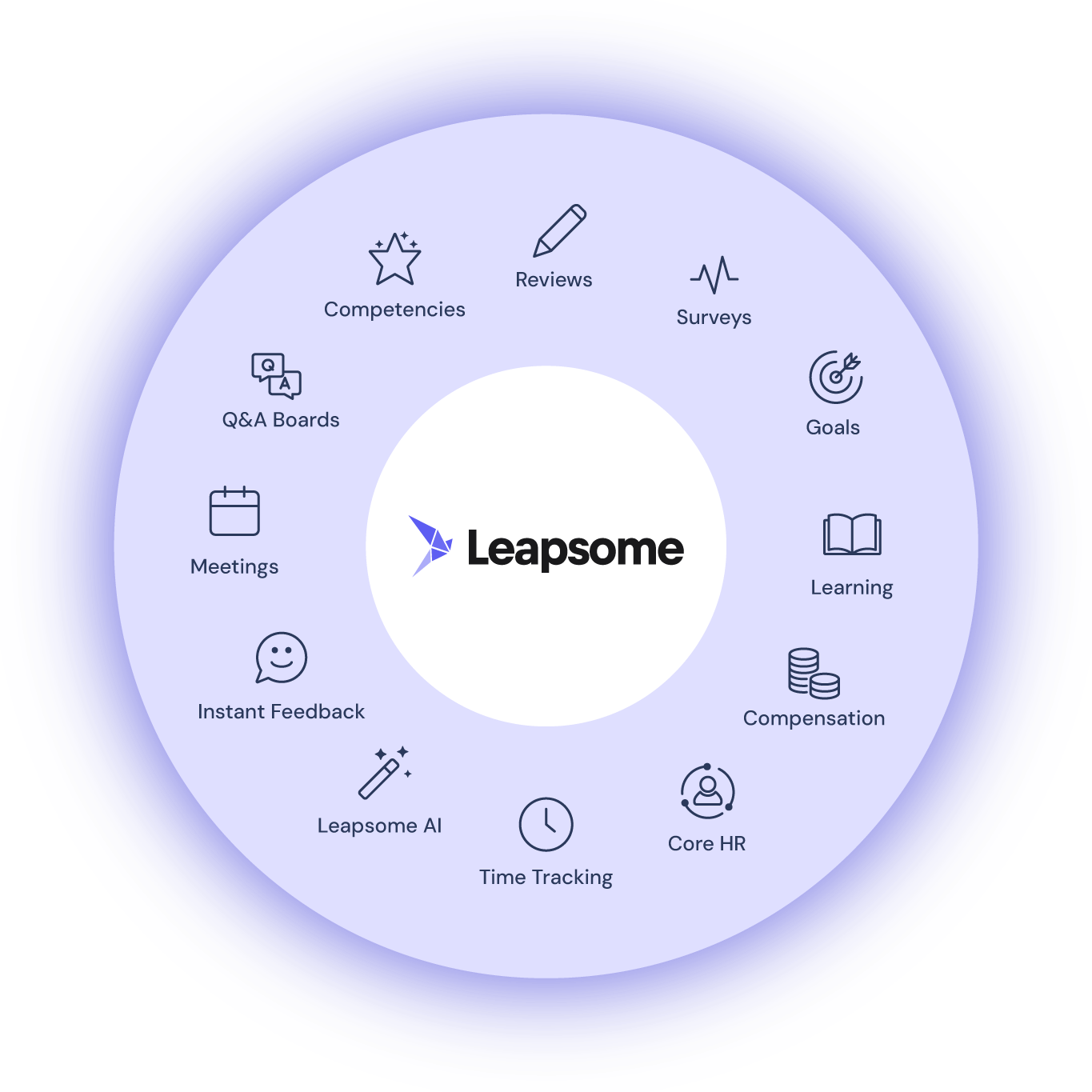
For successful offboarding, you need a structured approach and tools to put that plan into action. Leapsome gives you the foundation to build strong HR processes and execute them quickly.
By organizing team member data into user-friendly profiles and automating tasks such as record updates and sentiment tracking, Leapsome provides HR professionals with visibility and consistency throughout the employee lifecycle.
“Leapsome is very user-friendly — both for HR and for our employees.” Nina Thiessen, Head of Talent Acquisition and HR Management at EGYM
🔄 Make offboarding seamless and structured
Ensure smooth transitions, protect compliance, and turn departures into actionable insight with Leapsome’s unified people platform.
👉 Request a demo
FAQ
How can an offboarding process improve company culture?
When you have a clear plan to offboard employees, you improve company culture by minimizing disruption and ensuring smooth handoffs. Plus, you show your team that you care about their experience and comply with local employment laws.
What types of companies should have offboarding processes?
Every company should have an offboarding plan — when an employee leaves, your team should know exactly what to do and how to get it done fast. Small startups can often work from a simple procedure, while larger companies might need complex playbooks to handle all the admin and cross-team work needed.


.jpg)