Talentmanagement-Strategie: ein Framework für euer Traumteam


Gute Talentmanagement-Strategien messen Ergebnisse bei Recruiting, Performance und Mitarbeiterbindung. Großartige Strategien rücken Lernen und Entwicklung in den Mittelpunkt. Wenn die Talentmanagement-Strategie eines Unternehmens auch Programme zum Kompetenzaufbau umfasst, ist die Wahrscheinlichkeit fünfmal höher, dass Mitarbeitende eine erfüllende Employee Experience erleben. Umgekehrt ist bei Unternehmen, die den Kompetenzaufbau vernachlässigen, die Wahrscheinlichkeit um 72% höher, dass ihre Mitarbeitenden ein Jahr später nicht mehr bleiben wollen.*
HR-Verantwortliche sollten Talentmanagement-Strategien nicht nur entwickeln, um die Belegschaft zu vergrößern, sondern auch, um bestehenden Mitarbeitenden zu helfen, ihre beste Arbeit zu leisten.
Das ist leichter gesagt als getan. Hindernisse stehen im Weg, etwa Führungskräfte, die nicht wissen, wie sie aus der regulären Leistung neue Ziele ableiten, sowie ein schlechter Überblick über die Entwicklungspläne der Mitarbeitenden. Dieser Leitfaden zeigt Lösungswege, indem er eine Talentmanagement-Strategie aufbaut, die Top-Talente gewinnt, entwickelt und hält, damit euer Unternehmen die beste Leistung seiner Geschichte erreicht.
* O.C. Tanner, 2023
Was ist eine Talentmanagement-Strategie?
Im HR-Bereich verbinden Talentmanagement-Strategien Werkzeuge für Talentgewinnung, Lernen und Entwicklung sowie Nachfolgeplanung mit den Zielen des Unternehmens. Eine erfolgreiche Strategie gewinnt neue Talente und gibt ihnen dann die Unterstützung, die sie brauchen, um ihr volles Potenzial in eurem Unternehmen auszuschöpfen.
Diese Talentmanagement-Systeme geben HR-Teams einen strukturierten Weg, um Fluktuationskosten zu senken und künftige Führungskräfte für eine leistungsstarke, zukunftssichere Belegschaft zu entwickeln.
Warum die meisten Talentmanagement-Strategien zu kurz greifen
„HR hat operative Abläufe und Taktiken, ja, aber diese Taktiken müssen mit dem übergeordneten Ziel verknüpft sein. Genau das macht aus einer People-Strategie eine Unternehmensstrategie.“
— Luck Dookchitra, ehemals VP of People & Culture bei Leapsome
Hier sind einige der häufigsten Fehltritte, die kleine und mittlere Unternehmen machen und die verhindern, dass ihre Talentmanagement-Strategien greifen.
Hiring als Ziellinie behandeln
Talentmanagement endet nicht, wenn eine neue Person ihren Vertrag unterschreibt, und selbst die erfahrensten Teammitglieder erledigen ihre Arbeit nicht jeden Tag perfekt. Ein aktueller Report zeigt, dass ein durchdachter Entwicklungsplan auf Stärken aufbaut und Schwächen angeht, damit Mitarbeitende auf allen Ebenen mit eurem Unternehmen mitwachsen.
Ohne Wachstumsplan haben Mitarbeitende vielleicht das Gefühl, auf der Stelle zu treten, was sie dazu bringen kann, sich anderswo nach erfüllenderen Möglichkeiten umzusehen. Daten von SHRM zeigen derweil, dass 76% der Mitarbeitenden angeben, eher in Unternehmen zu bleiben, die ihr Wachstum durch kontinuierliche Schulungen fördern.
Isolierte Performance Reviews ohne Folgeplan
Performance Reviews analysieren die Vergangenheit und zeigen, wo eine mitarbeitende Person mehr Unterstützung braucht. Diese Reviews müssen aber auch den Weg nach vorn weisen, indem sie Feedback mit konkreten nächsten Schritten verbinden.
Angenommen, eine Führungskraft merkt an, dass ihr Teammitglied Schwierigkeiten hat, den Projektstatus klar an mitarbeitende Personen in anderen Abteilungen zu kommunizieren. Wenn die Führungskraft nicht auch einen klaren Fahrplan vorgibt, um das Problem anzugehen, etwa verpflichtende Updates an bestimmten Wochentagen, bleibt das Teammitglied mit unklaren Erwartungen und ohne messbare Verbesserungsziele zurück. Das Problem taucht im nächsten Performance Review wahrscheinlich erneut auf, und im übernächsten ebenso, bis ein umsetzbarer Plan vorliegt.
„Wenn ihr Ergebnisse schnell teilt, Führungskräfte in Entscheidungen einbindet und klar kommuniziert, welche Maßnahmen ergriffen werden, sehen Mitarbeitende, dass ihr Input echte Veränderung bewirkt. Diese sichtbare Umsetzung schafft dauerhafte Glaubwürdigkeit.“
— Monica Sarkar, Co-Founder bei Purple Umbrella
Unsichtbare Kompetenzlücken
Zu verstehen, wo die Kompetenzen eures Teams stark sind und wo es hakt, ist der Ausgangspunkt für Personalplanung und Mitarbeiterentwicklung. Ohne dieses Wissen trefft ihr Entscheidungen zu Recruiting und Entwicklung aus dem Bauch heraus statt auf Basis von Fakten.
Eines der häufigsten Szenarien, das HR-Teams den Überblick über Kompetenzlücken erschwert, ist, wenn Informationen in den Köpfen der Führungskräfte stecken statt in einem zentralen Erfassungssystem. Unternehmen sollten eine Talentmanagement-Plattform nutzen, um die Daten dauerhaft zu erfassen und sie auf umsetzbare Erkenntnisse und Trends hin auszuwerten.
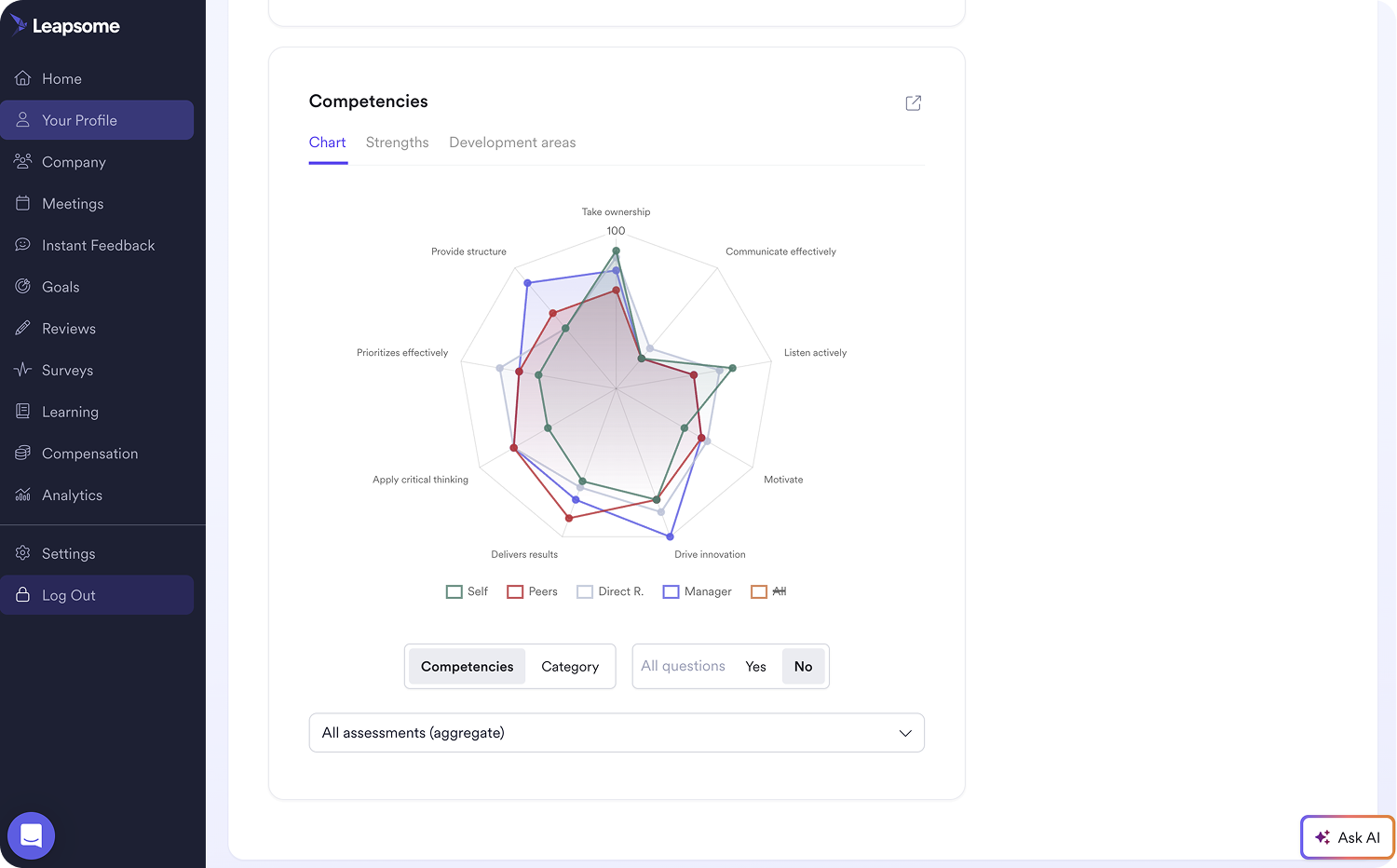
💪 Macht aus bauchgefühlbasierter Kompetenzbewertung formale Entwicklungsstrategien
Leapsome hilft Unternehmen, Kompetenzdaten für jede mitarbeitende Person einfach zu speichern und personalisierte Entwicklungspläne für kontinuierliches Wachstum zu erstellen. KI deckt dabei versteckte Lücken auf.
👉 Mehr erfahren
Den Zyklus der Talentgewinnung entwirren
Talentgewinnung holt gute Bewerbende an Bord, damit euer System für Lernen und Entwicklung sie zu großartigen Talenten machen kann. Jede Phase des Prozesses baut auf der vorherigen auf:
- Planung: Bringt Personalprioritäten und Geschäftsziele in Einklang. Sichtet die aktuellsten Personaldaten und besprecht den Talentbedarf mit Führungskräften, um die wichtigsten Rollen und aktuellen Kompetenzlücken zu bestimmen.
- Anwerben: Definiert die idealen Bewerbenden für die Rollen. Sprecht potenzielle Bewerbende mit passenden Kompetenzprofilen an sowie jene, die mit der richtigen Schulung hineinwachsen können.
- Auswählen: Bewertet Bewerbende anhand ihrer Kompetenzen und ihres Culture-Fits. Priorisiert langfristiges Unternehmenswachstum, indem ihr euch auf jene konzentriert, die am ehesten dauerhaft etwas bewirken und bleiben.
- Onboarding: Bereitet neue Mitarbeitende mit einem strukturierten, individuellen Onboarding-Programm auf den Erfolg vor. Legt Erwartungen klar dar und teilt früh Ressourcen für Lernen und Mentoring.
🚀 Macht neue Mitarbeitende startklar
Leapsome Onboarding hilft euch, neue Talente vorzubereiten, mit einfachem Zugang zu Pre-Boarding-Essentials und personalisierten Onboarding-Journeys, die automatisierte Erinnerungen und Aufgabenmanagement optimal nutzen.
👉 Mehr erfahren
- Halten: Senkt das Fluktuationspotenzial mit Taktiken wie dem Aufzeigen motivierender Karrierewege und der Anerkennung herausragender Beiträge eurer Mitarbeitenden.
- Übergang: Haltet für ausscheidende Mitarbeitende ein strukturiertes Offboarding-Verfahren bereit. Nutzt strukturierte Exit-Interviews, um Feedback zu sammeln und wichtiges, ungeschriebenes Wissen nicht verloren gehen zu lassen.
Fünf Schritte zu einer starken Talentmanagement-Strategie.
An Unternehmenszielen ausrichten
People-Strategie an Ergebnisse koppeln
Hiring und Entwicklung verbinden
Daten in einem HRIS bündeln
Führungskräfte befähigen
Tools, Daten und Feedback-Skills
Karrierepfade definieren
Strukturierte, personalisierte Pläne
Beobachten und verbessern
Kennzahlen verfolgen, Strategie anpassen
Eine starke Talentmanagement-Strategie in fünf Schritten erstellen
Ein klares Vorgehen vereinfacht den Talentmanagement-Prozess und überlässt nichts dem Zufall. Hier sind fünf Schritte für den Einstieg.
1. Talentprioritäten und Geschäftsziele synchronisieren
Ohne klare Ziele werden eure Talentinitiativen zu teuren Ablenkungen. Ohne eine Möglichkeit, die People-Strategie mit direkten Geschäftsergebnissen zu verknüpfen, wirken sich eure Bemühungen womöglich kaum auf das Wachstum eures Unternehmens aus.
Beginnt damit, die Unternehmensziele zu skizzieren und die Rollen und Kompetenzprofile zu bestimmen, die am wichtigsten sind, um sie zu erreichen. Entscheidet dann, welche Kennzahlen für das Verfolgen des Fortschritts am relevantesten sind. Vielleicht wollt ihr zum Beispiel die KI-Kompetenz von Software-Engineers durch effizientes Prompt-Training ausbauen. Um zu sehen, wie die Engineers bei diesem Ziel vorankommen, könnt ihr regelmäßige Kompetenzbewertungen durchführen und Produktivitätsgewinne über die Durchlaufzeit verfolgen.
„HR wird bei strategischen Zielen oft vergessen, dabei sind wir für die Geschäftsergebnisse genauso entscheidend wie jede andere Funktion. Der erste Schritt ist, genau zu definieren, was wir mit unserer People-Strategie erreichen wollen. Alles andere sollte dann auf diese messbaren Ziele einzahlen. Wenn euch das gelingt, bekommen eure Initiativen am Führungstisch echtes Gewicht.“
— Monica Sarkar, Co-Founder bei Purple Umbrella
2. Hiring, Performance Management und Entwicklung verbinden
Wenn der Employee Lifecycle in isolierte Segmente zerfällt, ist es viel schwerer, die einzelnen Teile zusammenzubringen und eine stimmige, strategische Talentmanagement-Strategie zu schaffen. Am einfachsten schließt ihr diese Lücken mit einem HRIS, das alle eure Daten an einem Ort bündelt.
Da eine Untersuchung von McKinsey zeigt, dass nur etwa 20% der Unternehmen Performance Management wirksam mit Programmen zur Talententwicklung verknüpfen, kann euch ein gutes Vorgehen hier einen echten Wettbewerbsvorteil verschaffen.
3. Führungskräfte mit dem richtigen Wissen und den richtigen Tools ausstatten, um Talente zu entwickeln
Führungskräfte sehen als Erste die Kompetenzlücken und den laufenden Fortschritt, die letztlich die Mitarbeiterentwicklung vorantreiben. Gebt ihnen alles, was sie für den Erfolg brauchen, darunter Zugang zu wichtigen Mitarbeiterdaten und Schulungen, um produktive 1:1s zu führen und strukturiertes Feedback zu geben. So fällt es ihnen leichter, Wachstumspotenzial zu erkennen und ihr Teammitglied entsprechend zu begleiten.
4. Strukturierte Entwicklungs- und Karrierepfade definieren
Gebt Mitarbeitenden personalisierte Frameworks, um ihre Schwachstellen anzugehen, basierend auf vergangenen Leistungsdaten und Meilensteinen der Karriereentwicklung. Generische oder unstrukturierte Lernprogramme sind ineffektiv und für Mitarbeitende schwer nachzuvollziehen. Strukturierte Karriereentwicklungspläne helfen ihnen dagegen, sich effizient weiterzubilden.
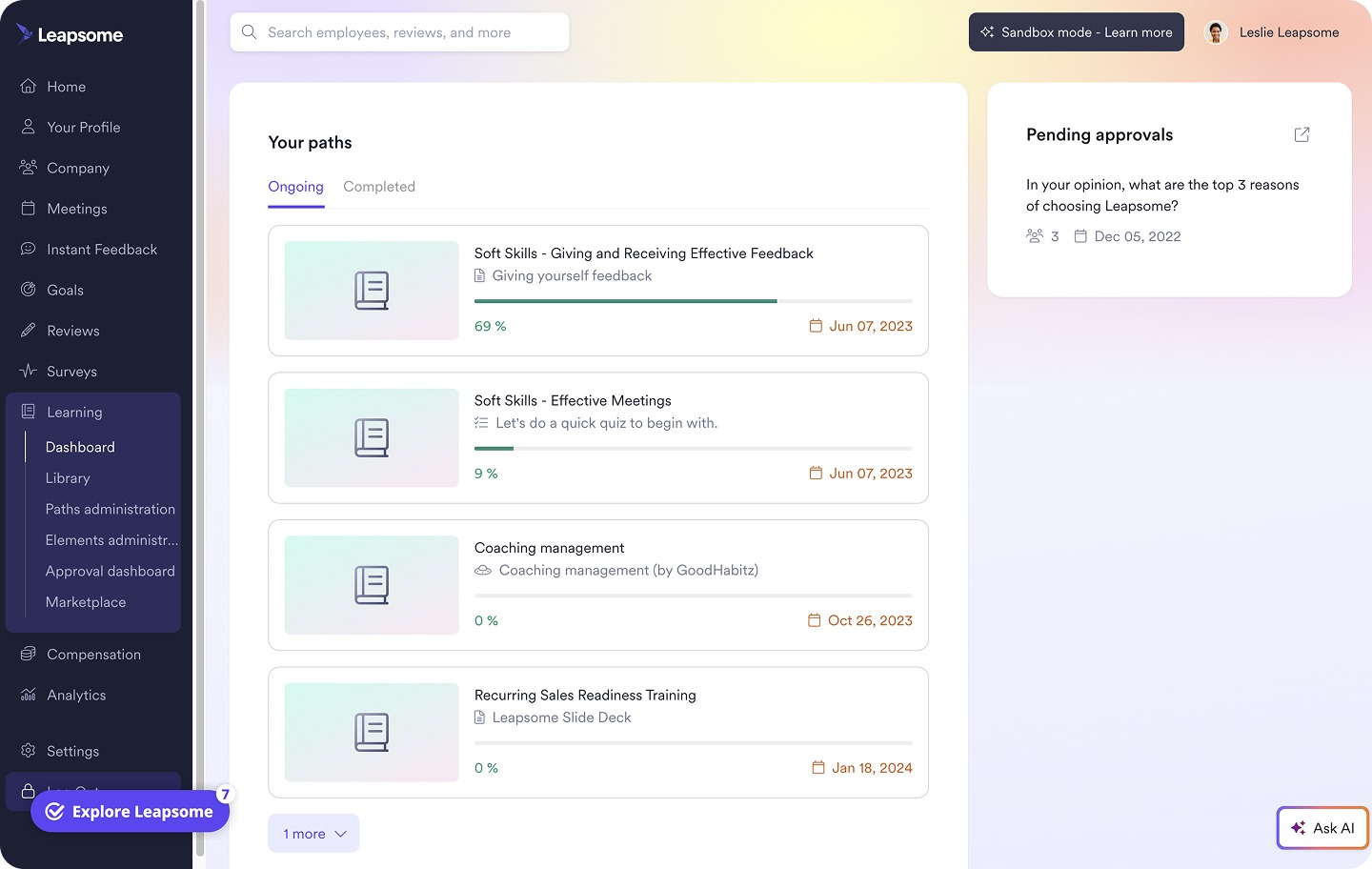
🧑🏫 Macht Mitarbeitende zu Musterschüler:innen
Leapsome Learning bietet viele Werkzeuge, mit denen Mitarbeitende ihre Kompetenzen schärfen und Geschäftsziele unterstützen, mit einer von Expert:innen kuratierten Content-Bibliothek und vereinten Lern- und Leistungsdaten.
👉 Learning entdecken
5. Talentergebnisse für kontinuierliche Verbesserung beobachten
Quantitative Leistungskennzahlen wie die interne Beförderungsquote und die Time-to-Productivity geben eurem Talentmanagement-Prozess ein festes Fundament. Wenn ihr diese Daten über die Zeit verfolgt, könnt ihr eure Talentstrategie flexibel anpassen, damit sie mit den sich wandelnden Anforderungen des Unternehmens Schritt hält.
Talentmanagement mit Leapsome zur täglichen Praxis machen
Talentmanagement-Strategien scheitern aus vielen Gründen. Programme für Lernen und Entwicklung nicht einzubeziehen, ist ein häufiger Grund, aber isolierte Systeme und zusammenhanglose Daten richten genauso viel Schaden an.
Leapsome bietet die Infrastruktur, die HR-Verantwortliche brauchen, um ein Talentmanagement-Framework zu gestalten und umzusetzen, das auf harten Daten statt auf Intuition beruht. Unsere zentrale Plattform verbindet HRIS und Talentmanagement, um unverbundene HR-Prozesse in eine stimmige, kohärente Strategie zu verwandeln. Indem ihr alles zusammenführt, könnt ihr mit faktenbasierten Strategien sinnvolle Verbindungen zwischen den aktuellen Kompetenzen eurer Mitarbeitenden und euren operativen Zielen schaffen.
„Kennt euer Ergebnisziel, messt den Fortschritt und führt ein Dashboard. Das hält People-Teams auf die Strategie fokussiert, nicht nur auf das tägliche Rauschen.“ – Luck Dookchitra, VP People & Culture bei Leapsome
👷 Baut euer eigenes Kommandozentrum für die Talentmanagement-Strategie
Mit Leapsome bündelt ihr alle Bemühungen rund um Recruiting, Lernen und Entwicklung sowie Mitarbeiterbindung an einem Ort, samt KI-gestütztem Coaching und automatisierten HR-Funktionen.
👉 Demo buchen
FAQ
Welche Vorteile bietet Talentmanagement-Software?
Talentmanagement-Software hat viele Vorteile. Zu den wichtigsten gehören:
- Manuelle Prozesse durch schlanke, automatisierte Workflows ersetzen
- Zusammenhanglose Leistungs- und Mitarbeiterdaten unter einem Dach zusammenführen
- Programme für Lernen und Entwicklung direkt mit der Leistung verknüpfen
- Echtzeit-Einblick in Top-Performer:innen und Fluktuationsrisiken geben
Welche Software gibt es für Talentmanagement?
Wir sind überzeugt, dass Leapsome die beste Wahl für Talentmanagement-Software ist. In der Zusammenarbeit mit uns erhaltet ihr tiefe Einblicke in einen vollständig vernetzten Employee Lifecycle, mit KI-gestützten Werkzeugen für besseres People- und Engagement-Management. Außerdem ist die Einführung einfach, mit Migrationsunterstützung, die all eure Daten schnell überträgt, sodass ihr eure Mitarbeitenden sofort beim Wachsen unterstützen könnt.

.png)