Leistungspaket für kleine Unternehmen: Ein Strategie-Leitfaden

.jpg)
Hinweis: Dieser Inhalt dient ausschließlich allgemeinen Informationszwecken und stellt keine Rechtsberatung dar. Leapsome übernimmt keine Gewähr für die Einhaltung gesetzlicher Vorschriften und kann nicht bestätigen, wie einzelne Sachverhalte vor Gericht bewertet würden. Wenn ihr euch unsicher seid, wie die Anforderungen auf eure Organisation zutreffen, wendet euch an eine qualifizierte Rechtsberatung.
Kleine und mittelständische Unternehmen haben nicht die tiefen Taschen großer Konzerne. Sie müssen eine Vergütung bieten, die Talente anzieht, und sich gleichzeitig an ihr Budget halten. In den USA kosten Mitarbeiterleistungen private Arbeitgeber im Schnitt $13,58 pro Stunde.* Das macht die richtige Balance besonders schwierig, wenn die Mitarbeiterzahl wächst und Compliance-Risiken allgegenwärtig sind.
Die meisten kleinen Unternehmen führen neue Leistungen reaktiv ein, was das Problem verschärft. Wenn eine vielversprechende Kandidatin oder ein Kandidat ein Jobangebot ablehnt oder der zunehmend wettbewerbsintensive Arbeitsmarkt eine Überprüfung auslöst, werden neue Extras wahllos zu einem ohnehin schon unzusammenhängenden Leistungspaket hinzugefügt. Und ohne nachweisbare Erfolge bei Bindung, Vertrauen oder Leistung lässt sich nicht sagen, was funktioniert und was nicht.
Dieser Leitfaden gibt HR-Verantwortlichen einen Rahmen an die Hand, um ein Leistungspaket für kleine Unternehmen aufzubauen und strategisch in ihre Mitarbeitenden sowie das zu investieren, was sie für ihre beste Arbeit brauchen.
* U.S. Bureau of Labor Statistics, 2025
Was ist ein Mitarbeiterleistungsplan, und warum ist er wichtig?
„Jeder Dollar, den wir für Mitarbeitende ausgeben, sollte optimal eingesetzt werden: Mittel von ‚Nice-to-haves‘ dorthin verschieben, was das Geschäft wirklich voranbringt.“
Melanie Naranjo, Chief People Officer bei Ethena
Leistungen umfassen jede Form der Vergütung, die nicht Teil des regulären Gehalts ist, etwa Lebensversicherungen oder Arbeitgeberzuschüsse zur 401(k)-Altersvorsorge. Sie sollen die Gesundheit, finanzielle Sicherheit und das allgemeine Wohlbefinden der Mitarbeitenden unterstützen.
Diese Leistungen erfüllen einen doppelten Zweck. Manche, wie die Social Security, sind in den USA gesetzlich vorgeschrieben, Unternehmen müssen sie also anbieten, um grundlegende Compliance-Pflichten zu erfüllen. Gleichzeitig sind Leistungen entscheidend, um in umkämpften Märkten Talente zu gewinnen. Für potenzielle Mitarbeitende zeigt ein starkes Leistungspaket, dass ihr die Menschen wertschätzt, die ihr einstellt, nicht nur die Arbeit, die sie leisten.
Die Gesamtkosten für Mitarbeiterleistungen in kleinen Unternehmen hängen von mehr als nur dem Listenpreis ab. Dazu zählen Faktoren wie:
- Nutzungsraten der Leistungen: Manche Leistungen werden häufiger genutzt als andere. Bei nutzungsabhängigen Leistungen, etwa der Arbeitsunfallversicherung oder manchen Zahnzusatzversicherungen, gilt: Je mehr Mitarbeitende sie nutzen, desto höher die Kosten für euch.
- Plangestaltung und Kostenteilung: Bei manchen Leistungen können sich Mitarbeitende und Arbeitgeber die Kosten teilen. Das ist oft ein Kompromiss: Ein Krankenversicherungsplan mit niedrigem Selbstbehalt und hohem Arbeitgeberanteil kostet mehr als einer, bei dem Mitarbeitende die Prämie tragen, ist aber auch attraktiver für talentierte Bewerbende.
- Demografie der Belegschaft: Durchschnittsalter, Standort und Haushaltsgröße eurer Mitarbeitenden wirken sich direkt auf die Kosten des Leistungspakets aus. Die vollen Kosten einer Krankenversicherung für ein junges, größtenteils unverheiratetes Team in einer kleinen Stadt im Mittleren Westen zu übernehmen, ist deutlich günstiger als für eine familienorientierte Belegschaft in New York City.
Was sind typische Mitarbeiterleistungen für kleine Unternehmen?
Manche Mitarbeiterleistungen sind gesetzlich vorgeschrieben, andere werden angeboten, um Top-Talente zu gewinnen und zu halten. Hier sind einige der besten Mitarbeiterleistungen für kleine Unternehmen, aufgeschlüsselt nach den Gründen, warum ihr sie anbieten würdet.
Gesetzliche Pflichtleistungen
Jedes rechtskonforme Leistungspaket für kleine Unternehmen beginnt mit dem, was gesetzlich vorgeschrieben ist, unabhängig von Unternehmensgröße oder Budget. Dazu gehören:
- Social Security und Medicare (FICA) finanzieren Renten- und Gesundheitsleistungen im Alter.
- Workers' Compensation Insurance schützt die finanzielle Absicherung und den Arbeitsplatz von Mitarbeitenden, die sich bei der Arbeit verletzen.
- Freistellungsansprüche nach dem Family and Medical Leave Act (FMLA) verpflichten Arbeitgeber mit fünfzig oder mehr Mitarbeitenden auf der Gehaltsliste, bis zu zwölf Wochen Freistellung für anspruchsberechtigte familiäre und medizinische Gründe zu gewähren, ohne die Arbeitsplatzsicherheit der Mitarbeitenden zu gefährden.
Gesundheit der Mitarbeitenden
Gesundheitsbezogene Leistungen stehen laut einer aktuellen SHRM-Umfrage durchgehend an erster Stelle: 88 % der Arbeitgeber stufen sie als „sehr“ oder „äußerst wichtig“ ein. Hier sind die gängigsten Wege, sie anzubieten:
- Paid Time Off (PTO) unterstützt die Work-Life-Balance und gibt Mitarbeitenden Zeit, sich zu erholen und Burnout vorzubeugen.
- Arbeitgeberfinanzierte Krankenversicherung bezuschusst oder übernimmt die Kosten medizinischer Versorgung für Mitarbeitende.
- Erwerbsunfähigkeitsversicherung ersetzt entgangenes Einkommen, wenn ein Mitarbeitender aufgrund einer schweren Krankheit oder Verletzung nicht arbeiten kann.
- Flexible Spending Accounts (FSAs) ermöglichen es Mitarbeitenden, Geld vor Steuerabzug für anerkannte medizinische Ausgaben anzusparen.
Finanzielles Wohlbefinden
Wenn ihr die finanziellen Bedürfnisse eurer Mitarbeitenden über das Gehalt hinaus unterstützt, zeigt das, dass euch ihre Zukunft am Herzen liegt, nicht nur das, was sie fürs Unternehmen leisten. Dazu zählen:
- Altersvorsorgepläne, wie SIMPLE IRA, SEP-IRA und 401(k), stärken Mitarbeitende durch steuerbegünstigtes Sparen und Arbeitgeberzuschüsse für den Ruhestand.
- Lebensversicherung ist kein besonders glamouröses Extra, gibt Mitarbeitenden aber für geringe Kosten ein wenig mehr Sicherheit, falls ihnen etwas zustößt.
Sich abheben
Sind die Grundlagen abgedeckt, können kleine Unternehmen über weitere Extras nachdenken, die ihre Arbeitgebermarke stärken und talentierte Bewerbende anziehen, etwa:
- Flexible Arbeitsmodelle wie Remote- oder Hybrid-Arbeit geben Mitarbeitenden mehr Kontrolle darüber, wie und wann sie arbeiten.
- Erstattungen für Gesundheits- und Lifestyle-Ausgaben, etwa Fitnessstudio-Mitgliedschaften oder ergonomische Homeoffice-Ausstattung.
Solche Leistungen helfen Mitarbeitenden, im Job aufzublühen. Das funktioniert aber nur, wenn sie die Leistungen überhaupt verstehen. Laut O.C. Tanners 2025 Global Culture Report kennen weniger als 40 % der Beschäftigten die Bedeutung des Begriffs „Total Rewards“. HR-Verantwortliche müssen also proaktiv dafür sorgen, dass Teams ihr vollständiges Vergütungspaket verstehen. Ein guter Startpunkt: Transparenz bei der Vergütung durch die richtige Software fördern. Leapsome bündelt alle Mitarbeiterdaten in individuellen Profilen, sodass ihr leicht seht, wer welche Leistungen hat, und entsprechend kommunizieren könnt.
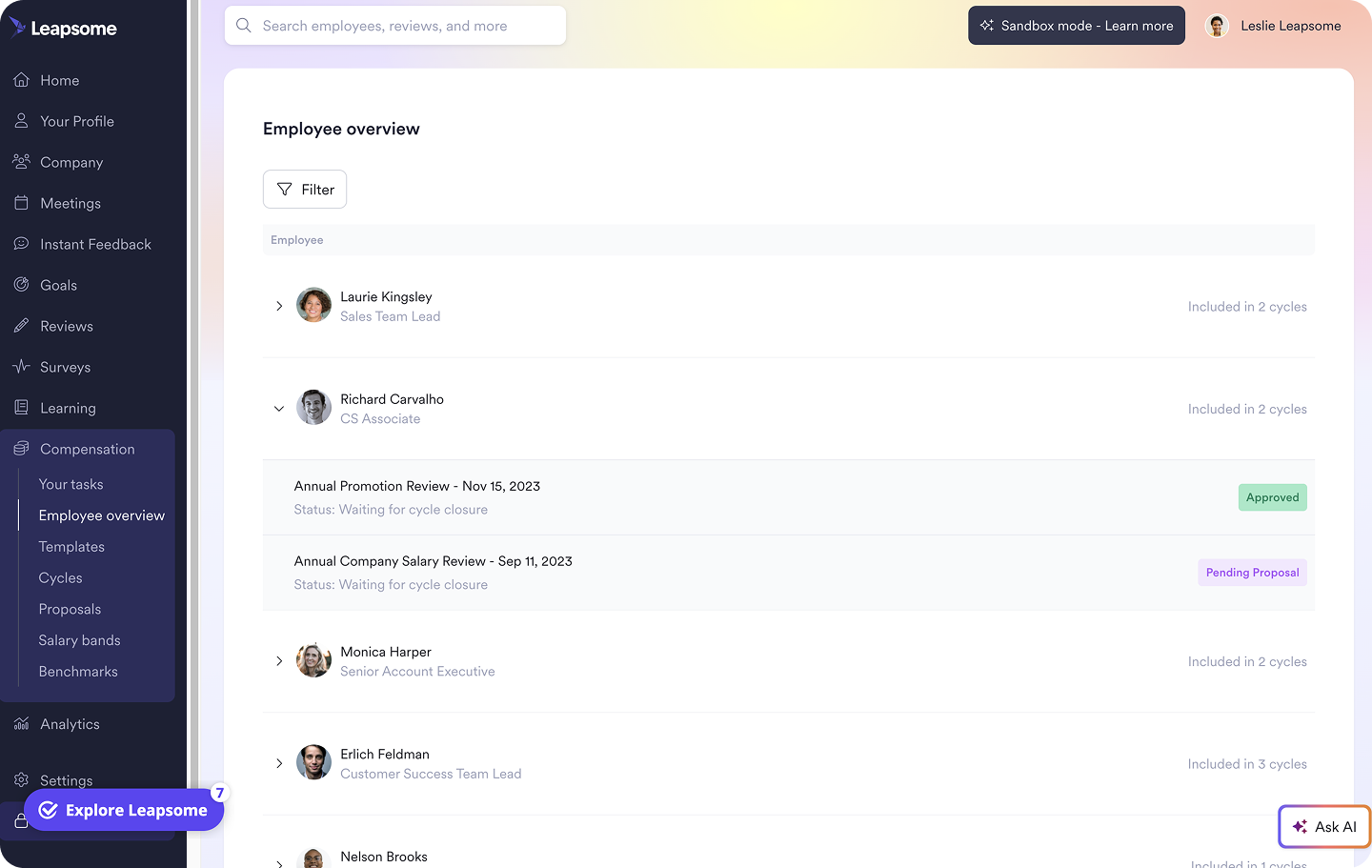
👀 Zeigen, nicht nur zahlen
Verknüpft Transparenz bei Total Rewards mit der Vergütung eurer Mitarbeitenden und zeigt ihnen den vollen Wert ihres Leistungspakets, damit sie es verstehen und wirklich nutzen.
👉 Entdeckt Compensation Management
So erstellt ihr ein Leistungspaket, das zu eurem kleinen Unternehmen passt
„Konzentriert euch auf die Hebel, die das Geschäft voranbringen, und lasst alles andere los. Wenn ihr eure Roadmap teilt und eure Trade-offs erklärt, baut ihr Vertrauen und Glaubwürdigkeit auf. Die Leute beginnen, HR als strategisch statt reaktiv wahrzunehmen.“
Emma Leeds, Gründerin, CEO und Chief People Consultant bei People Function
Viele kleine Unternehmen machen den Fehler, zunächst zu fragen, welche Leistungen sie anbieten sollten, und sich dabei an den Stellenanzeigen der Konkurrenz zu orientieren. Ein strategischerer Ansatz identifiziert Risiken bei Bindung, Mitarbeiterengagement und Betriebsabläufen und baut das Leistungspaket so auf, dass die Employee Experience optimal genutzt wird, ohne die Marge zu belasten.
Schlanke Start-ups mit begrenzten Ressourcen sollten bestimmte Leistungen priorisieren, weil sie überproportional viel bewirken. Etabliertere oder wachsende kleine Unternehmen kämpfen mit steigenden Compliance-Anforderungen und Bindungsherausforderungen, verschärft durch anspruchsvollere Erwartungen der Mitarbeitenden, und sollten ihr Leistungspaket entsprechend anpassen.
So bietet ihr ein Leistungspaket, das sowohl die Grundlagen abdeckt als auch die Extras, mit denen ihr euch abhebt.
Absichern: Die Basis abdecken
Jedes Leistungspaket muss mit Leistungen beginnen, die Mitarbeitende in Extremsituationen absichern und gleichzeitig die rechtlichen und betrieblichen Risiken für das Unternehmen senken. Ohne diese Schutzebene, etwa Krankenversicherungspläne und Workers' Compensation, riskiert ihr hohe Anwaltskosten (oder Schlimmeres).
Wer Leistungen anbietet, die erwartet, aber nicht gesetzlich vorgeschrieben sind, etwa Krankenversicherung und Krankheitstage, verliert Mitarbeitende nicht schon an den Grundlagen, bevor besondere Angebote überhaupt wirken können.
Fördern: Das Beste aus jedem Teammitglied herausholen
Ist der präventive Kern abgedeckt, könnt ihr Leistungen hinzufügen, die aktiv Wohlbefinden, Produktivität und die gesamte Employee Experience verbessern. Flexible Arbeitsmodelle und großzügiges PTO geben Mitarbeitenden mehr Kontrolle über ihr Leben und helfen ihnen, ihr Bestes zu geben. Laut dem U.S. Bureau of Labor Statistics (BLS) hat die durchschnittliche Vollzeitkraft im privaten Sektor der USA 11 Tage PTO pro Jahr, steigend mit der Betriebszugehörigkeit. Nutzt diesen Richtwert, um eine angemessene PTO-Richtlinie für eure Teams festzulegen.
Fragt eure Mitarbeitenden, was sie wirklich wollen, statt euch auf euer Bauchgefühl zu verlassen. Laut einer WTW-Studie aus 2025 geben 84 % der Mitarbeitenden an, gut über ihre Leistungen informiert zu sein, aber 23 % weniger, nur 61 %, sind damit zufrieden. Der klügste Weg für solche Gespräche führt über HR-Software mit passenden Engagement- und Feedback-Tools in einer HRIS- und Talentmanagement-Plattform wie Leapsome.
„Zu viele Organisationen sammeln Feedback, das nie ans Licht kommt, und genau da stirbt Engagement. Wenn ihr Ergebnisse schnell teilt, Führungskräfte in Entscheidungen einbindet und die ergriffenen Maßnahmen klar kommuniziert, sehen Mitarbeitende, dass ihr Input echte Veränderung bewirkt. Diese sichtbare Umsetzung schafft dauerhafte Glaubwürdigkeit.“
Monica Sarkar, Co-Founderin von Purple Umbrella
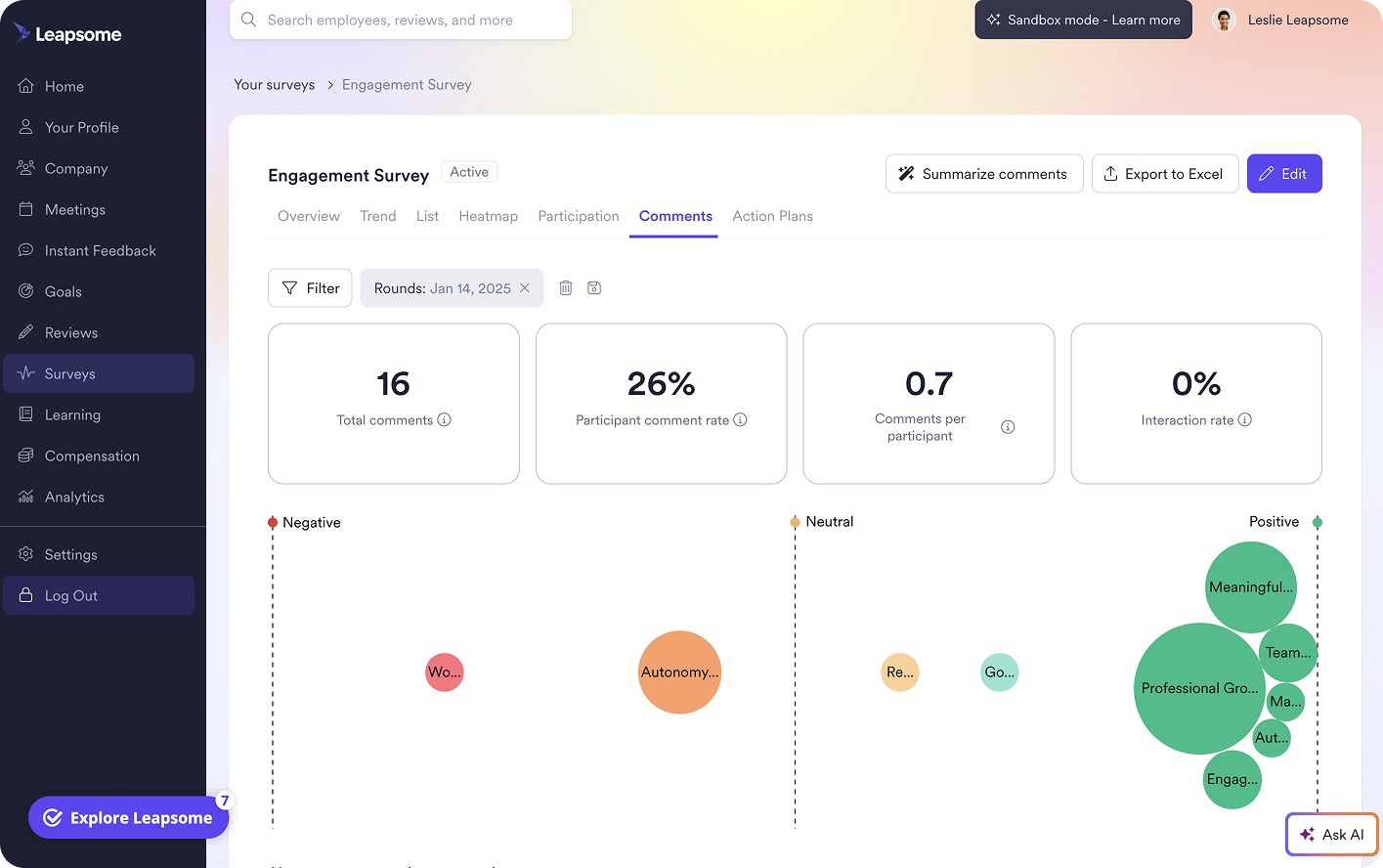
📊 Leistungsentscheidungen mit harten Daten untermauern
Leapsome hilft HR-Teams, Feedback zu sammeln und auszuwerten, damit Vorschläge für Mitarbeiterleistungen echte Lücken schließen und echte Risiken adressieren, bevor in eine neue Leistung investiert wird.
👉 Entdeckt Mitarbeiterumfragen
Differenzieren: Jeden Gleichstand für euch entscheiden
Nischenleistungen können euer Arbeitgeberimage verbessern, Top-Talente halten und euren Talentpool stärken. Gezielte Leistungen für eure Branche und demografische Trends in der Belegschaft, etwa Zuschüsse für Weiterbildung oder Kinderbetreuung, sprechen bestimmte Segmente des Talentpools an, den ihr erreichen wollt.
Manche freiwilligen Nebenleistungen gelten als steuerpflichtiges Einkommen, sofern sie nicht ausdrücklich auf der IRS-Ausnahmeliste stehen oder unter bestimmten Geldbeträgen liegen. Eine Geschenkkarte im Wert von $50 ist beispielsweise steuerpflichtig, ein gelegentlicher Geschenkkorb dagegen nicht. Behaltet diese Kostenplanbarkeit im Hinterkopf, wenn ihr euer Leistungspaket plant, und lasst es vor der Umsetzung von einer Rechtsberatung prüfen.
Von reaktiver zu strategischer Leistungsplanung mit Leapsome
Ein wettbewerbsfähiges Leistungspaket zusammenzustellen, ist schon schwer genug ohne die Ressourcen eines Großunternehmens. Noch schwerer wird es, wenn euer Unternehmen wächst und Compliance-Risiken zunehmen, während ihr mit einem unzusammenhängenden, reaktiven Paket arbeitet.
Meistens liegt die Schwierigkeit nicht daran, welchen Versicherungsanbieter ihr nutzt oder welche genauen Zahlen in eurer Lebensversicherung stehen. Selbst das bestdurchdachte Paket bleibt wahrscheinlich hinter seinen Möglichkeiten zurück, wenn es nicht auf den Grundlagen aufbaut. Transparenz und Infrastruktur, die HR-Verantwortlichen helfen, die tatsächlichen Bedürfnisse der Mitarbeitenden zu verstehen, Details zu kommunizieren und den Erfolg einzelner Leistungen nachzuverfolgen, unterscheiden starke Leistungspakete von solchen, die nur auf dem Papier gut aussehen.
Leapsome schließt diese Lücke, indem es alles bereitstellt, was HR-Verantwortliche brauchen, um ein starkes Leistungspaket aufzubauen und seine Wirkung zu messen, darunter:
- Mitarbeiterumfragen: Leistungsentscheidungen auf direktes Feedback dazu stützen, was Mitarbeitende schätzen und nutzen.
- Engagement-Daten: Zufriedenheitsmuster im Zeitverlauf verfolgen und auswerten, während sich Leistungen ändern.
- Performance-Insights: Leistungen mit Ergebnissen verknüpfen und erkennen, ob eine neue Leistung die Produktivität beeinflusst.
- HR-Workflows: Die Verwaltung von Leistungen vereinfachen und wichtige Details leichter mit dem Team teilen.
„Mitarbeitende finden jetzt alles an einem Ort: ihre Daten, Abwesenheiten, Ziele und Reviews. Ich muss nicht mehr erklären, welches Tool wofür da ist. Alles läuft über Leapsome.“ Merilyn L., Senior People Operations Specialist bei Bob W.
🔗 Leistungsentscheidungen mit echten Daten und Feedback verknüpfen
Tauscht Vermutungen gegen evidenzbasierte Entscheidungen mit Leapsome, damit ihr ein Leistungspaket gestaltet, das echte Mitarbeiterbedürfnisse widerspiegelt.
👉 Demo buchen
FAQ
Wie hoch sind die durchschnittlichen Kosten für Leistungen pro Gehaltsabrechnung?
Im Juni 2025 zeigten BLS-Daten, dass Mitarbeiterleistungen für Beschäftigte der Privatwirtschaft Arbeitgeber im Schnitt $13,58 pro Stunde kosten. Für Vollzeitbeschäftigte (40-Stunden-Woche) mit zweiwöchentlicher Gehaltsabrechnung ergibt das durchschnittlich $1.086,40 an Leistungen pro Gehaltsabrechnung.