Lohnabrechnung outsourcen: Ein Entscheidungsleitfaden für HR


Die Lohnabrechnung kann schnell von überschaubar zu unübersichtlich werden, wenn Unternehmen wachsen. Die manuellen Kontrollen, die in frühen Phasen funktionierten, können mit steigendem Headcount und wachsender Compliance-Komplexität nicht mehr mithalten. Eine aktuelle Umfrage von PwC zeigt, dass das ein verbreiteter Schmerzpunkt für Unternehmen ist: 63 % der Befragten geben an, mit ihrem aktuellen Lohnabrechnungsmodell unzufrieden zu sein.* Ohne Anpassungen kann ein fragmentiertes Lohnabrechnungssystem das rechtliche Risiko erhöhen und eure Wachstumsziele gefährden.
Eine Möglichkeit, diese Hürden zu überwinden, ist das Outsourcing der Lohnabrechnung. In diesem Leitfaden helfen wir euch, eure aktuellen Richtliniendaten und Vergütungsstrukturen sowie zukünftige Ziele zu analysieren, um eine nachhaltige Verbindung zwischen HR und Payroll-Outsourcing herzustellen.
* PwC, 2024
Was ist Payroll-Outsourcing?
Beim Payroll-Outsourcing arbeitet ihr mit einem Drittanbieter zusammen, der einen Teil oder alle eurer Lohnabrechnungsaufgaben übernimmt. In dieser Partnerschaft delegiert ihr lohnspezifische Aufgaben, wie Steueranmeldungen, Compliance-Prüfungen mit regionalen Arbeitsgesetzen sowie Lohn- und Abzugsberechnungen, an den Dienstleister und entlastet damit eure HR- und Finanzteams.
Laut ADP wird Payroll-Outsourcing immer verbreiteter: 70 % der leitenden Lohnabrechnungsverantwortlichen erwägen den Einsatz. In einer weiteren PwC-Umfrage 2024 gaben 46 % der Befragten an, bereits Angebote für Payroll-Outsourcing angefragt zu haben.
Wie funktioniert Payroll-Outsourcing?
Jeder Lohnabrechnungsanbieter hat seine eigene Vorgehensweise, aber die Einrichtung ausgelagerter Lohnabrechnung ist generell unkompliziert. Die arbeitsintensivste Phase für euer Team ist das Zusammenstellen und Übermitteln relevanter Mitarbeitenden- und Vergütungsdaten an den Drittanbieter. Danach übermittelt ihr nur noch automatisierte Eingaben (wie geleistete Arbeitsstunden und genutzte Urlaubstage) pro Lohnzyklus. Der Anbieter berechnet und verarbeitet die Zahlungen und übernimmt damit verbundene Aufgaben wie die Erstellung von Berichten und die laufende Abstimmung.
Vorteile und Herausforderungen beim Outsourcing der Lohnabrechnung
Payroll-Outsourcing ist eine attraktive und generell effektive Möglichkeit, den Administrationsaufwand zu reduzieren, ohne den Headcount zu erhöhen. Unterschätzt aber nicht die Trennung, die Outsourcing zwischen HR-Strategien und Lohnabrechnungsprozessen schafft. Indem ihr die Lohnabrechnung isoliert, könnt ihr blinde Flecken erzeugen, die es schwieriger machen, den Zusammenhang zwischen Lohnabrechnungskennzahlen und Faktoren wie Mitarbeiterengagement und Performance zu erkennen.
Vorteile des Payroll-Outsourcings
Die Zusammenarbeit mit einem externen Lohnabrechnungsunternehmen kann neue strategische Einblicke bieten und Wachstum in alle Richtungen unterstützen:
- Zugang zu Spezialkenntnissen: Statt auf internes Know-how zu setzen, bringt Outsourcing euch in Kontakt mit Spezialistinnen und Spezialisten, die ein tiefes Wissen über lokale und internationale Lohnabrechnungsrichtlinien haben.
- Reduziert Compliance-Risiken: Lohnabrechnungsanbieter sind Profis darin, Steuer- und Arbeitsgesetze in verschiedenen Jurisdiktionen zu verfolgen, was die Wahrscheinlichkeit von Strafen oder rechtlichen Schritten aufgrund von Einreichungsfehlern senkt.
"Wir weisen sogar auf Compliance-Risiken hin. Wenn ein Land beispielsweise mindestens 20 bezahlte Urlaubstage vorschreibt, lässt die Plattform keine geringere Anzahl zu."
— Suraj Paneru, Customer Success Coach bei Leapsome
- Zeitersparnis: Die Übergabe der Lohnabrechnung gibt euren HR- und Finanzteams mehr Zeit für die Planung und Umsetzung strategischer Maßnahmen.
Herausforderungen beim Payroll-Outsourcing
Outsourcing kann die Lohnabrechnung aus dem HR-Ökosystem eurer Organisation herauslösen. Ihr könnt Reibungsverluste und Trennung reduzieren (dazu kommen wir später), müsst aber akzeptieren, dass ihr zumindest einen Teil der Kontrolle über diesen Prozess abgebt:
- Getrennte Systeme: Ohne ein zentralisiertes HR-System für eure Mitarbeiterdaten ist es wahrscheinlicher, dass es Inkonsistenzen bei Vergütung oder Berichten gibt, bedingt durch die Trennung zwischen eurer Lohnabrechnungsabteilung und internen Prozessen.
- Eingeschränkte Transparenz: Das vollständige Outsourcing eurer Lohnabrechnungsanforderungen kann den Zugang zu aktuellen Vergütungsdaten verzögern und es Teams erschweren, fundierte Entscheidungen zu Themen wie Talentgewinnung und Budgetierung zu treffen.
- Integrationsschwierigkeiten: Externe Lohnabrechnungstools lassen sich nicht immer einfach mit eurem bestehenden HR-Stack verknüpfen. Um manuelle Workarounds oder doppelte Dateneingabe zu vermeiden, müsst ihr euren Lohnabrechnungsanbieter mit einem einheitlichen HRIS wie Leapsome integrieren.
"Leapsome verbindet sich direkt mit DATEV für die Lohnabrechnung. Gehälter, Steuern und Leistungen fließen automatisch an die Behörden, und Fehler werden vor der Einreichung markiert."
— Suraj Paneru, Customer Success Coach bei Leapsome
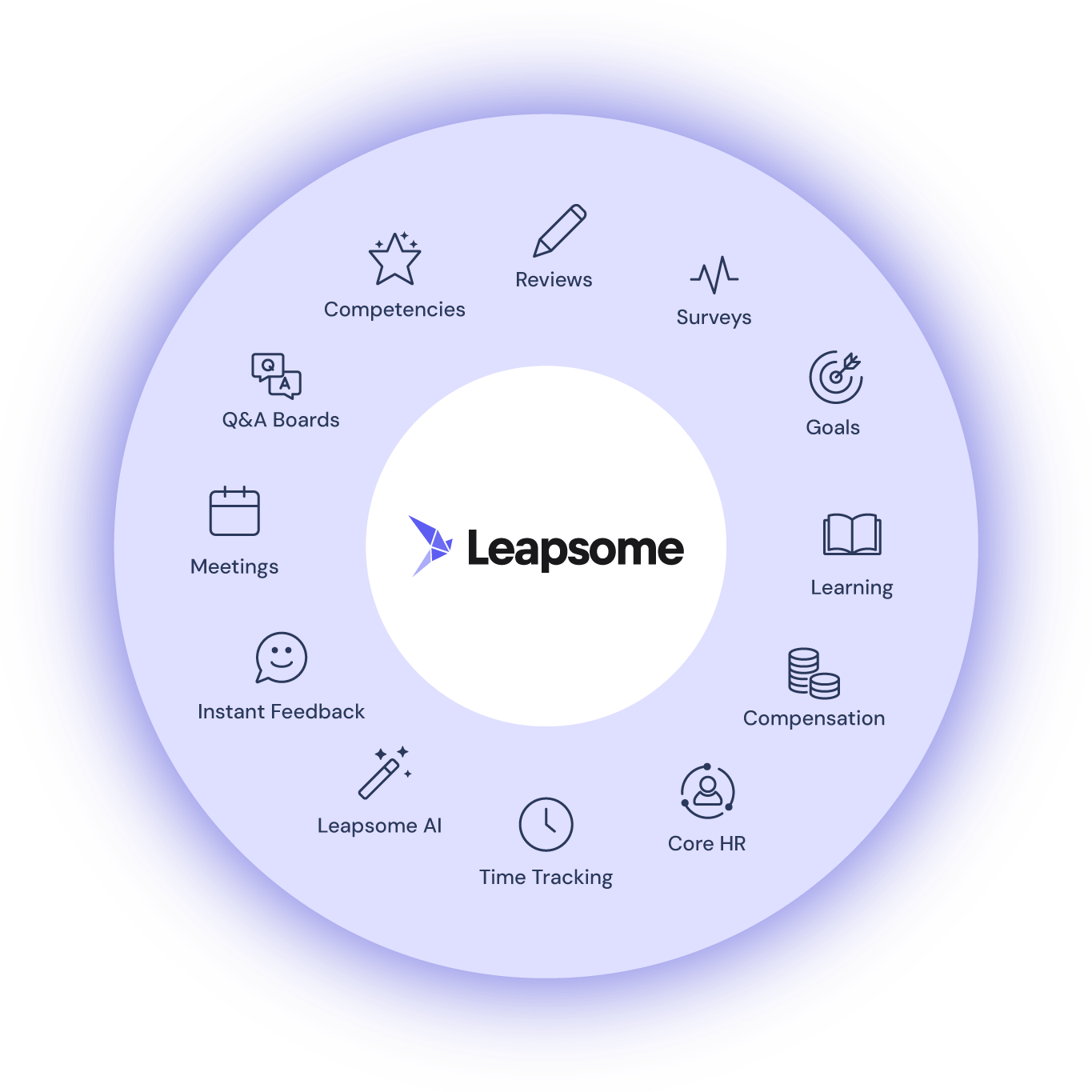
🔗 Lohnabrechnung und HR-Daten synchron halten
Leapsome zentralisiert alle eure People-Daten, damit ihr kostspielige Fehler oder Compliance-Lücken durch Inkonsistenzen bei externen Lohnabrechnungsanbietern vermeidet.
👉 Integrationen entdecken
Lohnabrechnungsoptionen im Vergleich: Intern vs. drei Outsourcing-Varianten
Unternehmen nutzen Payroll-Outsourcing-Dienstleistungen aus vielen Gründen. Besonders attraktiv wird es, wenn administrative Aufgaben HR-Teams daran hindern, die Grundlage für Skalierung zu legen.
Es ist besonders wahrscheinlich, dass Unternehmen auf Dritte zurückgreifen, wenn sie geografisch expandieren. Daten, die auf Select Software Reviews (SSR) von Alight veröffentlicht wurden, zeigen: 55 % der Unternehmen mit Mitarbeitenden in einem Land behielten ihre internen Lohnabrechnungsabteilungen. Bei Mitarbeitenden in zwei bis fünf Ländern sank dieser Anteil auf 31 % und bei sechs bis zehn Ländern auf 19 %.
Denkt aber daran: Das Outsourcing von Lohnabrechnungsprozessen ist nur eine Option. Andere Maßnahmen, wie die Kombination interner Unterstützung mit einem leistungsstarken HRIS oder spezialisierter Lohnabrechnungssoftware, könnten je nach euren aktuellen Bedürfnissen und Zielen vorteilhafter sein. Wachsende Unternehmen könnten beispielsweise Software hinzufügen, die als zentrale Wissensquelle dient, um alle Daten rund um die Uhr organisiert und zugänglich zu halten.
"Bezieht Finance, Manager und Führungskräfte frühzeitig ein, zeigt ihnen, was möglich ist. Wenn sie die Ansichten mitgestalten und geschult werden, nutzen sie das HRIS auch wirklich. Dann zeigen sich die Zeitersparnisse."
— Carolin Leidel, Consultant bei torq.partners
Hier sind die häufigsten Wege, wie Organisationen ihre Lohnabrechnung auslagern.
Lohnabrechnungsoptionen im Vergleich
Wesentliche Merkmale, Anwendungsfälle und Kosten über vier Ansätze hinweg
| Option | Wesentliche Merkmale | Anwendungsfälle | Kosten |
|---|---|---|---|
| Intern | Vollständig von internen HR- und Finanzteams verwaltet, bietet direkte Kontrolle über Systeme und Prozesse, erfordert aber internes Compliance-Know-how. | Kleine Teams mit einfachen Lohnabrechnungsstrukturen, Einzel-Länder-Betrieb und Organisationen, die vollständige Kontrolle und Transparenz priorisieren. | Manuelle Verarbeitungskosten oder Software-Lizenzen, Gehälter für HR/Lohnabrechnung und laufende Compliance-Schulungs- und Risikokosten. |
| Payroll-Outsourcing | Externer Anbieter ausschließlich für die Lohnverarbeitung, der Steuern und Compliance übernimmt und sich häufig in HRIS-Plattformen integriert. | Klein- bis mittelgroße skalierende Unternehmen, Multi-State- oder Multi-Länder-Betrieb und Organisationen, die einen geringeren Adminaufwand benötigen. | Einrichtungs- und Implementierungsgebühren, in der Regel pro Mitarbeitenden pro Monat (PEPM) berechnet. Zusatzgebühren können für Integrationen oder Anpassungen anfallen. |
| Professional Employer Organization (PEO) | Nutzt ein Co-Employment-Modell für Lohnabrechnung, Benefits und HR-Compliance. Bietet Zugang zu gebündelten Benefits- und Versicherungspaketen. | Kleine Unternehmen, die gebündelten HR-Support möchten, Unternehmen ohne robuste interne HR-Abteilung und inländisches Workforce-Scaling. | Prozentsatz der Gesamtlohnkosten oder PEPM. Oft teurer als andere Outsourcing-Optionen aufgrund gebündelter Leistungen und Zugang zu besseren Benefits. |
| Employer of Record (EOR) | Übernimmt die Funktion als rechtlicher Arbeitgeber eurer Mitarbeitenden, verwaltet alle globalen Compliance-Anforderungen und Steuern und hilft bei der Einstellung in neuen Regionen ohne lokale Unternehmensstrukturen. | Organisationen, die an internationalem Recruiting, schneller globaler Expansion und dem Testen neuer Märkte interessiert sind. | Höhere PEPM-Kosten als reines Payroll-Outsourcing, mit Aufschlägen für globale Compliance und rechtliche Beschäftigungsunterstützung. |
Ist Payroll-Outsourcing das Richtige für euch? Drei wichtige Überlegungen
Payroll-Outsourcing ist eine langfristige strukturelle Entscheidung und keine kurzfristige Möglichkeit zur Optimierung von Abläufen. Die Zusammenarbeit mit einem Drittanbieter kann eure HR-Planung beeinflussen. Deshalb solltet ihr drei übergreifende Implikationen durchdenken, bevor ihr eure Entscheidung trefft.
1. Aktuelle Lohnabrechnungskomplexität einschätzen
Werft zunächst einen ehrlichen Blick darauf, wie schwierig und fehleranfällig euer aktuelles Lohnabrechnungssystem ist. Wenn ihr in neue Märkte expandiert, berücksichtigt auch die Belastung durch Compliance-Herausforderungen.
Überlegt, wie viele Quellen euer Lohnabrechnungsteam nutzen muss, wie häufig manuelle Anpassungen erforderlich sind und wie lange es dauert, Lohnabrechnungsdaten zu prüfen. Wenn die Lohnabrechnung mehrere Tage in Anspruch nimmt oder ihr ausschließlich auf die manuelle Arbeitszeiterfassung in mehreren Tabellen angewiesen seid, solltet ihr eure Daten zentralisieren oder externe Unterstützung outsourcen.
2. Interne Expertise und Kapazitäten evaluieren
Sprecht mit euren HR- und Lohnabrechnungsteams, um herauszufinden, was sie bewältigen können und wobei sie Unterstützung benötigen. Je nach Komplexität eurer Lohnabrechnungsanforderungen verfügt euer internes Personal möglicherweise über die Zeit, aber nicht über die Expertise, um die rechtlichen Anforderungen der Lohnabrechnung zu erfüllen.
Wenn nur wenige Mitarbeitende das gesamte Know-how zur Durchführung der Lohnabrechnung besitzen, entstehen häufiger Engpässe, wenn diese Teammitglieder abwesend sind. Das bedeutet, ihr müsst entweder mehr Schulungen anbieten oder auslagern. Wenn der Rest des Teams nicht die Kapazitäten hat, eine größere Rolle bei der Lohnabrechnung zu übernehmen, ist das ein klares Zeichen, dass ihr auslagern oder Lohnabrechnungssoftware einführen solltet.
Um zu entscheiden, ob vollständiges Outsourcing oder unterstützende Software besser zu euren Abläufen passt, überlegt, wie viel Unterstützung euer Team tatsächlich benötigt (etwa Automatisierungen für einige Aufgaben oder vollständige Übergabe). Führt ROI-Analysen mit Schätzungen potenzieller Outsourcing-Agenturen und Abonnementkosten für Lohnabrechnungssoftware durch.
Auch wenn euer Team die Kapazitäten hat, Lohnabrechnungsänderungen beim Wachstum der Organisation zu überwachen und einzuhalten, fragt euch: Würde mehr Komplexität zu viel Aufmerksamkeit von anderen HR-Aufgaben abziehen? Wenn ja, solltet ihr Outsourcing in Betracht ziehen.
3. Compliance- und Risikoexposition identifizieren
Compliance-Probleme werden noch bedrohlicher, wenn euer Unternehmen in neue Märkte mit unterschiedlichen Arbeitsgesetzen expandiert. Lohnabrechnungs- und Compliance-Fehler kosten nicht nur viel Geld, sie können auch euren Ruf ernsthaft beschädigen und die Mitarbeitendenzufriedenheit dämpfen. Laut der National Association of Women Business Owners reichen zwei Lohnabrechnungsfehler aus, damit Mitarbeitende anfangen, nach einem neuen Job zu suchen. Präzise und konsistente Informationen sind daher entscheidend.
Wenn euer Lohnabrechnungsteam Schwierigkeiten hat, behördliche Unterlagen rechtzeitig einzureichen, oder Mitarbeitende regelmäßig mit Fragen zu ihren Lohnabrechnungen an das Team herantreten, könnte das Outsourcing an Compliance-Expertinnen und -Experten helfen, größere rechtliche Probleme oder Mitarbeiterchurn zu vermeiden.
Leapsomes zentralisierte HR-Datenbank umfasst ein Lohnabrechnung-Portal, das euch hilft, Compliance-Herausforderungen einen Schritt voraus zu bleiben. Auf Leapsome könnt ihr eure internen Lohnabrechnungsrichtlinien einfach mit der lokalen Gesetzgebung abgleichen, um das Risiko von Problemen bei der Zahlungsabwicklung zu reduzieren.
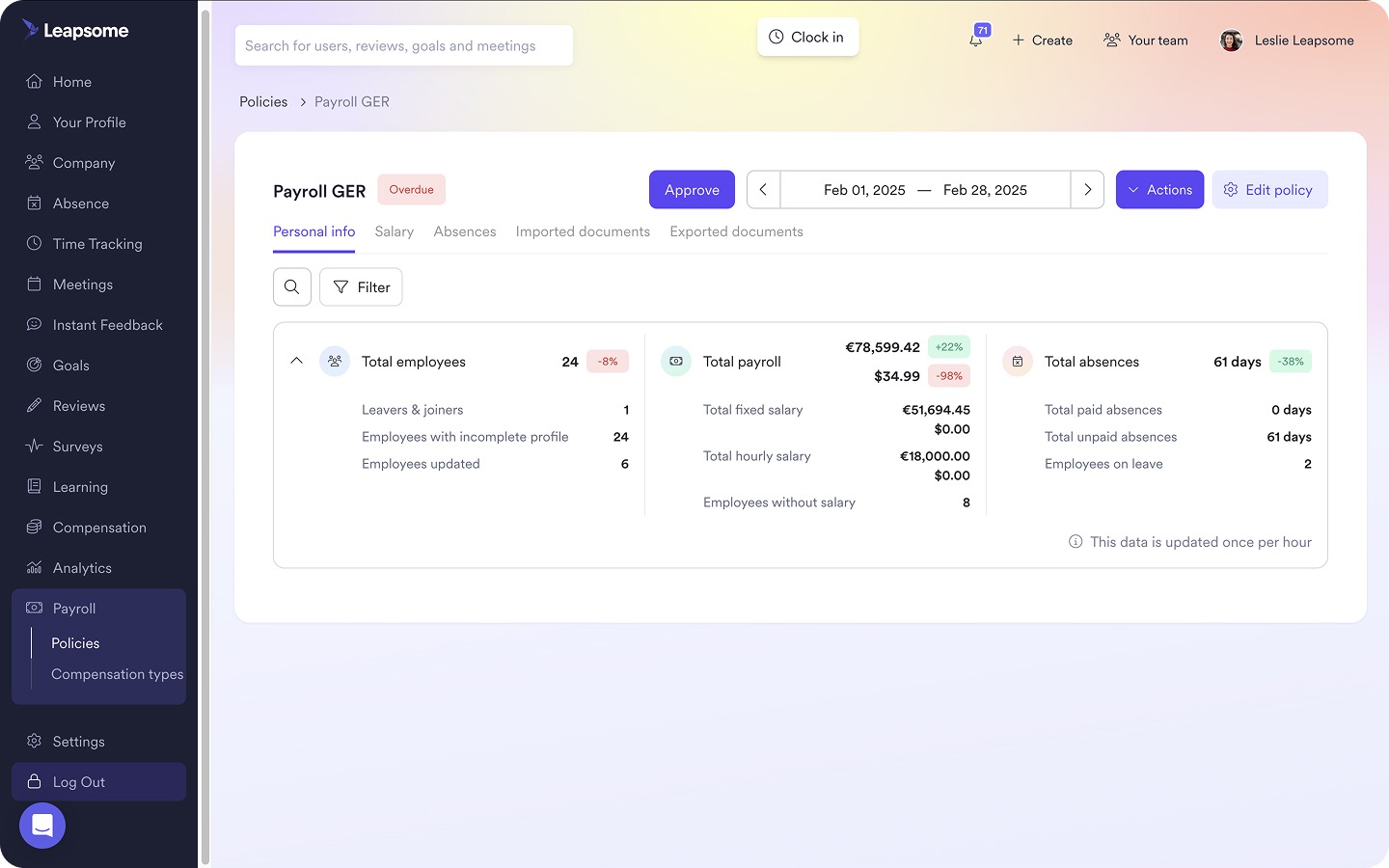
💸 Lohnabrechnung aus einer einzigen Quelle der Wahrheit vorbereiten
Leapsomes anpassbare Regeln und Richtlinien helfen euch, präzise, konforme und konsistente Lohnabrechnungsentscheidungen zu treffen, informiert durch alle anderen kritischen Daten.
👉 Lohnabrechnung entdecken
Lohnabrechnung und HR-Management mit Leapsome stärken
Die Lohnabrechnung an einen seriösen Partner auszulagern ist für schlanke Teams ein schneller Weg, die Arbeitsbelastung zu reduzieren und die Skalierbarkeit zu steigern. Wenn ihr euch aber für die Integration mit einem Drittanbieter entscheidet, stellt sicher, dass ihr dabei keine wichtigen Erkenntnisse opfert, die euer HR-Team benötigt. Die Kontrolle abzugeben und die Lohnabrechnung zu vergessen bedeutet, dass ihr wahrscheinlich die Transparenz über eure eigenen Prozesse verliert.
Leapsome hilft HR-Teams, dieses häufige Problem zu vermeiden, indem Lohnabrechnungsdaten-Integrationen direkt in die zentrale Plattform eingebettet sind. Unser All-in-one-HR-System macht es einfach, mit großen Lohnabrechnungsanbietern zu verknüpfen und gleichzeitig den Zugang zu Mitarbeiterdaten und Analytics in Griffweite zu behalten.
"Mit Leapsome konnten wir Performance Reviews, Zielsetzung sowie Onboarding und Offboarding automatisieren und dabei rund 20 % manuellen Aufwand einsparen." — Weronika Czerny-Nowakowska, Chief Operating Officer bei Neurons Lab
📈 Lohnabrechnung mit eurer HR-Strategie verbinden
Leapsome verknüpft eine HRIS-Plattform mit einem Lohnabrechnungssystem, damit eure HR-Teams die Daten haben, die sie für effektive strategische Initiativen brauchen.
👉 Demo anfordern
FAQ
Wie wähle ich einen externen Lohnabrechnungsdienstleister für mein Unternehmen?
Schaut zunächst auf euer internes System: Wer hat das nötige Know-how zur Durchführung der Lohnabrechnung, wo sind die dafür notwendigen Dokumente gespeichert und wie einfach ist es für das Team, die lokalen Gesetze einzuhalten? Notiert ungeordnete Systeme, etwa mehrere Tabellen, zwischen denen Mitarbeitende Daten manuell kopieren müssen, und Bereiche, in denen automatisierte Software einspringen könnte. Fragt dann eure Mitarbeitenden nach ihrer Arbeitsbelastung und ihren aktuellen Kapazitäten für vertieftere Lohnabrechnungsschulungen. Haben sie nicht die Zeit, oder versinken sie bereits in der Lohnabrechnung ohne zufriedenstellende Ergebnisse, ist es Zeit zu fragen, warum Payroll-Outsourcing noch nicht eingeführt wurde.
Idealerweise solltet ihr mit einem externen Lohnabrechnungspartner zusammenarbeiten, der Erfahrung in eurer Branche, zuverlässigen Compliance-Support und Integrationen zu eurem bestehenden HR-System hat. Vergleicht Preise, Kundenservice und die einzigartigen Features jedes Anbieters, um die beste Option für eure Bedürfnisse zu finden.