PEO vs. EOR: Welches Modell passt für eure HR-Funktionen?

.jpg)
HR-Manager:innen in schnell wachsenden Startups stehen vor einer vertrauten Herausforderung. Das Unternehmen zählt bereits 50 Mitarbeitende, 20 weitere Stellen sind in Planung, einige davon international. Zusätzliche HR-Unterstützung wird unumgänglich. Die Frage ist: Hilft eine Professional Employer Organization (PEO) oder ein Employer of Record (EOR) weiter?
Beide Modelle bieten HR-Outsourcing, in das über die Hälfte der Unternehmen investiert,* aber sie lösen unterschiedliche Probleme. Eine PEO ist möglicherweise die richtige Wahl, wenn ihr hauptsächlich im Inland einstellt, während ein EOR besser geeignet sein könnte, wenn ihr international expandiert. Weitere Faktoren spielen ebenfalls eine Rolle: Kosten, Transparenz und Kontrolle sowie die Auswirkungen des Outsourcings auf die operative Effizienz.
Dieser Leitfaden erklärt die Unterschiede zwischen PEO und EOR und hilft euch zu entscheiden, welches Modell eure HR-Abteilung besser für die Zukunft aufstellt.
* SHRM, 2025
Was ist ein EOR?
Ein EOR ist eine dritte Partei, die als rechtlicher Arbeitgeber eurer Belegschaft fungiert. Indem er als lokale juristische Person an Stelle eures Unternehmens auftritt, ermöglicht euch ein EOR die internationale Einstellung, ohne in all diesen Ländern eigene Niederlassungen gründen zu müssen.
EORs übernehmen grundlegende HR-Funktionen wie Verträge, Lohnabrechnung und Compliance, während ihr das Tagesgeschäft intern weiter verantwortet.
Was ist eine PEO?
Eine PEO ist ein externes Unternehmen, das ein Co-Employment-Verhältnis mit eurem Unternehmen eingeht. Ein zentraler Unterschied zwischen EOR und PEO: Um die PEO-Dienste in einem bestimmten Land zu nutzen, benötigt ihr dort eine etablierte juristische Person.
PEOs bieten HR-Unterstützung für Aufgaben wie Benefits und Lohnabrechnung.
Genauer hingeschaut: Die wesentlichen Unterschiede zwischen PEO und EOR
Hier ist ein näherer Blick auf die Faktoren, die PEOs von EORs unterscheiden.
Welche Beziehung hat das Unternehmen zu den Mitarbeitenden?
Im Co-Employment-Modell unterzeichnen sowohl euer Unternehmen als auch die PEO neue Verträge. Bei einem EOR hat euer Unternehmen kein formelles Arbeitsverhältnis mit der Belegschaft. Das EOR-Unternehmen ist für Einstellung, Onboarding und Offboarding verantwortlich.
Wer trägt die rechtliche Verantwortung?
Bei PEOs wird die Haftung zwischen euch und dem gewählten Anbieter geteilt, d. h. Steuerfehler und Compliance-Verstöße können auf euren Tisch landen. Das ist problematisch, da Forschungsergebnisse zeigen, dass über zwei Drittel der Unternehmen arbeitsrechtliche Compliance nicht aktiv managen können oder wollen. EORs fungieren als rechtliche Arbeitgeber und tragen damit den Großteil des rechtlichen Risikos.
Welche Preismodelle gibt es?
PEOs berechnen üblicherweise entweder einen moderaten Prozentsatz eurer Gesamtlohnsumme oder eine monatliche Gebühr pro Mitarbeiter:in. Das prozentuale Modell eignet sich oft besser für größere Unternehmen, da die Kosten pro Kopf mit steigender Mitarbeiterzahl sinken. EORs halten es einfach: eine pauschale Monatsgebühr pro Mitarbeiter:in.
Wo operieren PEOs und EORs?
PEOs können nur dort tätig sein, wo ihr eine bestehende juristische Person habt, was sie auf den Inlandsgebrauch oder einzelne Länder beschränkt. EORs hingegen sind gezielt für internationale Organisationen konzipiert und verwalten oft große globale Netzwerke juristischer Personen.
Wie sieht es mit Benefits aus?
Dank der Co-Employment-Gruppenkonditionen ermöglichen PEOs oft eine wettbewerbsfähigere Vergütung als euer Unternehmen alleine bieten könnte. Da EORs auf globale Einstellungen fokussiert sind, wählen sie Benefits-Pläne typischerweise je nach Rechtsraum, um die lokale Compliance zu vereinfachen.
Wie aufwendig ist ein Ausstieg?
Die Beendigung einer PEO-Partnerschaft bedeutet, Lohnabrechnung, Benefits und Compliance-Infrastruktur neu aufzubauen, was ein erhebliches operatives Unterfangen sein kann. Die Kündigung eines EOR-Vertrags ist weniger disruptiv, erfordert aber dennoch die erneute Unterzeichnung von Arbeitsverträgen.
PEO vs. EOR: Wichtigste Unterschiede
Zwei Modelle für Employer-of-Record- und Co-Employment-Arrangements
| PEO | EOR | |
|---|---|---|
| Anstellungsform | Co-Employment: euer Unternehmen und die PEO unterzeichnen Verträge Geteilt |
EOR ist rechtlicher Arbeitgeber, keine formelle Verbindung zu eurem Unternehmen Vollständig beim EOR |
| Rechtliche Haftung | Geteilt: Compliance-Straßen können auf euch landen Geteiltes Risiko |
EOR trägt den Großteil der rechtlichen Compliance-Risiken Geringeres Risiko |
| Preismodell | % der Lohnsumme oder pauschale Monatsgebühr pro Kopf | Pauschale Monatsgebühr pro Mitarbeiter:in |
| Geografie | Inland: erfordert bestehende juristische Person Lokal |
Für globale Einstellungen in mehreren Rechtsordnungen konzipiert International |
| Benefits | Gruppenkonditionen via Co-Employment, wettbewerbsfähiger | Pläne je Rechtsraum für lokale Compliance |
| Ausstiegskomplexität | Hoch: Lohnabrechnung, Benefits & Compliance müssen neu aufgebaut werden Disruptiv |
Einfacher, erfordert aber erneute Unterzeichnung von Arbeitsverträgen Handhabbar |
Wichtige Aspekte bei der Arbeit mit PEOs und EORs
Für viele HR-Teams läuft die Entscheidung zwischen EOR und PEO letztlich auf Kosten und Einrichtungsgeschwindigkeit hinaus. Mit wachsendem Unternehmen nehmen auch die Herausforderungen rund um Personalstärke-Transparenz, Vergütungsdokumentation und Reporting-Anforderungen zu.
Der gewählte Anbietertyp hat direkten Einfluss darauf, wie reibungslos ihr folgende Wachstumsschmerzen managen könnt.
Die Dokumentation wird unübersichtlich
Bei einer PEO kann unklar sein, wo Dokumentationen liegen und wer Richtlinien umsetzt. Ihr müsst mit eurem Anbieter den besten Ansatz abstimmen. Ein EOR verwaltet Arbeitsverträge und Compliance-Dokumente, bietet oft mehr Struktur, aber der Zugang zu diesen Ressourcen hängt vom Anbieter ab.
Reporting wird zeitaufwendiger
"Sucht nach einer Plattform, die eure wichtigsten Bedürfnisse abdeckt und sich in euren Tech-Stack integriert. Verteilt keine Daten auf 10 oder 20 unverbundene Tools."
– Katerina Arsova, Head of People & Talent Operations & Partnerships
Mit dem Unternehmenswachstum wird Reporting schwieriger, besonders bei internationalen Teams. Die Führungsebene braucht Headcount-Daten in Echtzeit, jurisdiktionelle Informationen zu Arbeitsgesetzen sowie Einstellungs- und Fluktuations-Tracking, jetzt auf globaler Ebene. Erschwerend kommt hinzu, dass diese Daten oft fragmentiert über Drittanbieter, Lohnabrechnungsdienste und Software-Tools verteilt sind, was fast die Hälfte der HR-Teams vor Herausforderungen stellt.
Für kleinere und wachsende Unternehmen kann die Kombination eines PEO/EOR-Dienstes mit einer HR-Plattform wie Leapsome einige dieser Probleme entschärfen. Unsere vollständige HR-Plattform bündelt Headcount-, Performance- und Engagement-Daten an einem Ort und verbindet sich mit PEO/EOR-Diensten, damit Lohn- und Compliance-Informationen automatisch fließen statt in einem separaten System zu liegen.
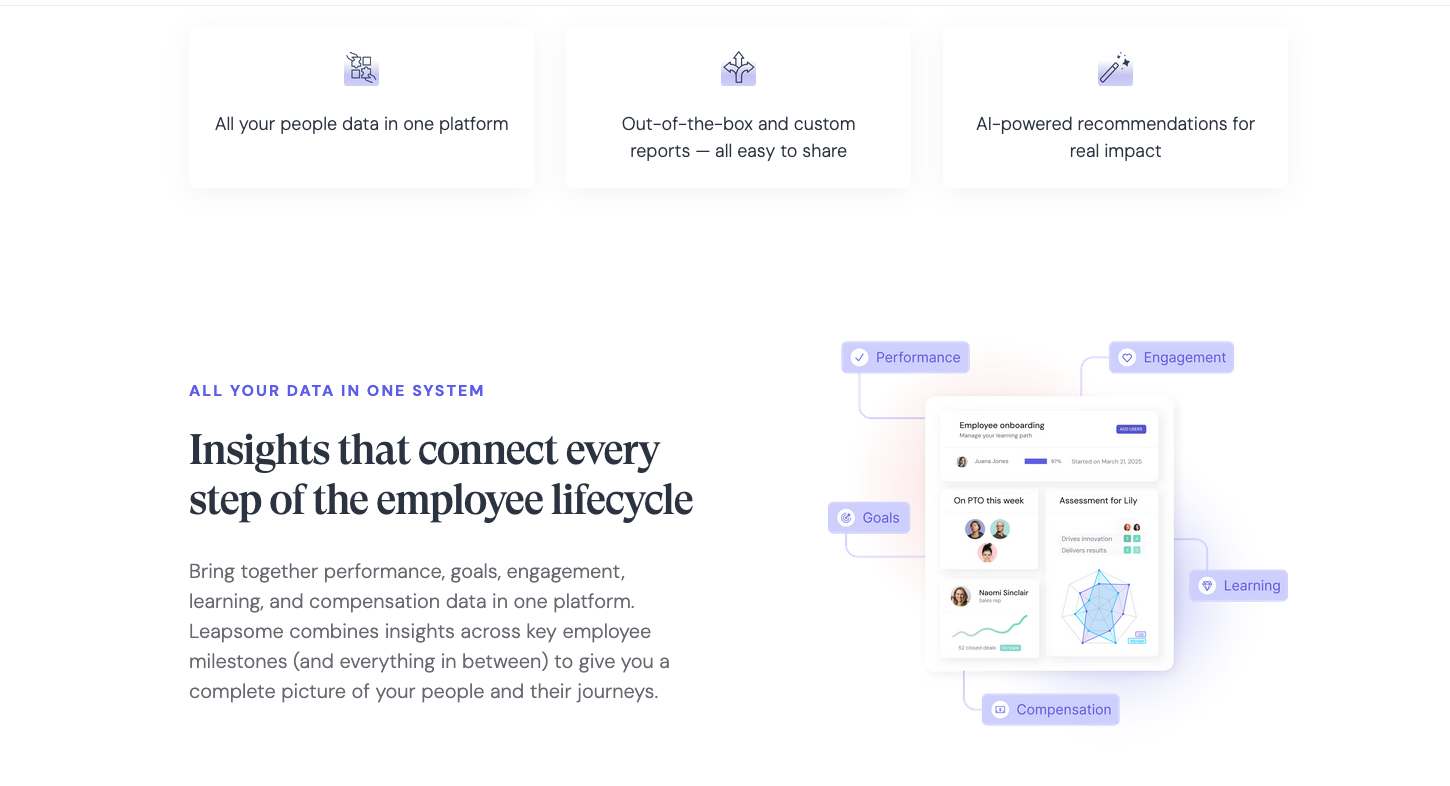
📈 Mitarbeiterdaten für bessere Entscheidungen zentralisieren
Mit Leapsome erhaltet ihr individuelle Berichte und zentrale Daten. Kein mühsames Zusammensetzen von Datensätzen mehr.
👉 Mehr erfahren
Vergütung wird komplexer
Internationale Skalierung bedeutet, Bonusstrukturen und Rollenbeschreibungen rechtsordnungsübergreifend zu standardisieren und bei Bedarf anzupassen, damit jeder Standort compliant und gut versorgt ist. Während PEOs und EORs bei Grundlagen der Lohnabrechnung helfen können, bleibt der Rest in eurer Verantwortung.
Einen PEO oder EOR finden, dem ihr langfristig vertrauen könnt
Es sollte klar sein: Die Zusammenarbeit mit einer PEO oder einem EOR hat sowohl Vorteile als auch Herausforderungen. Wenn ihr euch für Outsourcing entscheidet, solltet ihr diese Kriterien priorisieren, um einen Anbieter zu finden, der Lösungen bietet und keine neuen Hürden aufbaut:
- Geografische Abdeckung: PEOs sind üblicherweise in einem Land tätig. Stellt sicher, dass sie in allen Bundesstaaten oder Regionen registriert sind, in denen ihr geschäftlich tätig seid. EORs verfügen typischerweise über eine deutlich breitere internationale Abdeckung.
- Versteckte Kosten: Seriöse Anbieter behandeln Benefits als transparente Durchlaufkosten, die separat von Verwaltungsgebühren abgerechnet werden. Weniger transparente Bündeln alles zusammen. Fordert vor Vertragsabschluss eine vollständig aufgeschlüsselte Kostenübersicht an.
- Benötigte HR-Dienste: PEOs bieten typischerweise ein breites HR-Dienstleistungsspektrum (Recruiting, Support, Performance Management, Schulungen, Benefits-Verwaltung und Risikomanagement) und sind eine gute Wahl, wenn ihr HR breiter auslagern möchtet. EORs fokussieren sich enger auf die rechtlichen Beschäftigungsfunktionen, die benötigt werden, um in einem bestimmten Land zu operieren. Prüft vor der Entscheidung, was euer internes HR-Team bereits gut kann und wo Defizite bestehen.
Hier sind einige populäre Anbieter, die sowohl PEO- als auch EOR-Dienste anbieten:
- Justworks ist einfach zu bedienen und hat eine transparente Preisgestaltung, allerdings begrenzte Integrationen.
- Deel hat eine eher hohe Preisgestaltung, bietet aber eine breit verfügbare PEO, die sich für auftragnehmerstarke Belegschaften eignet.
- Rippling ist eine umfassende HR-Lösung, einfach einzurichten und anzupassen, mit dedizierten Funktionen für Remote-Teams. Die grundlegende Lohnabrechnung ist allerdings nicht günstig.
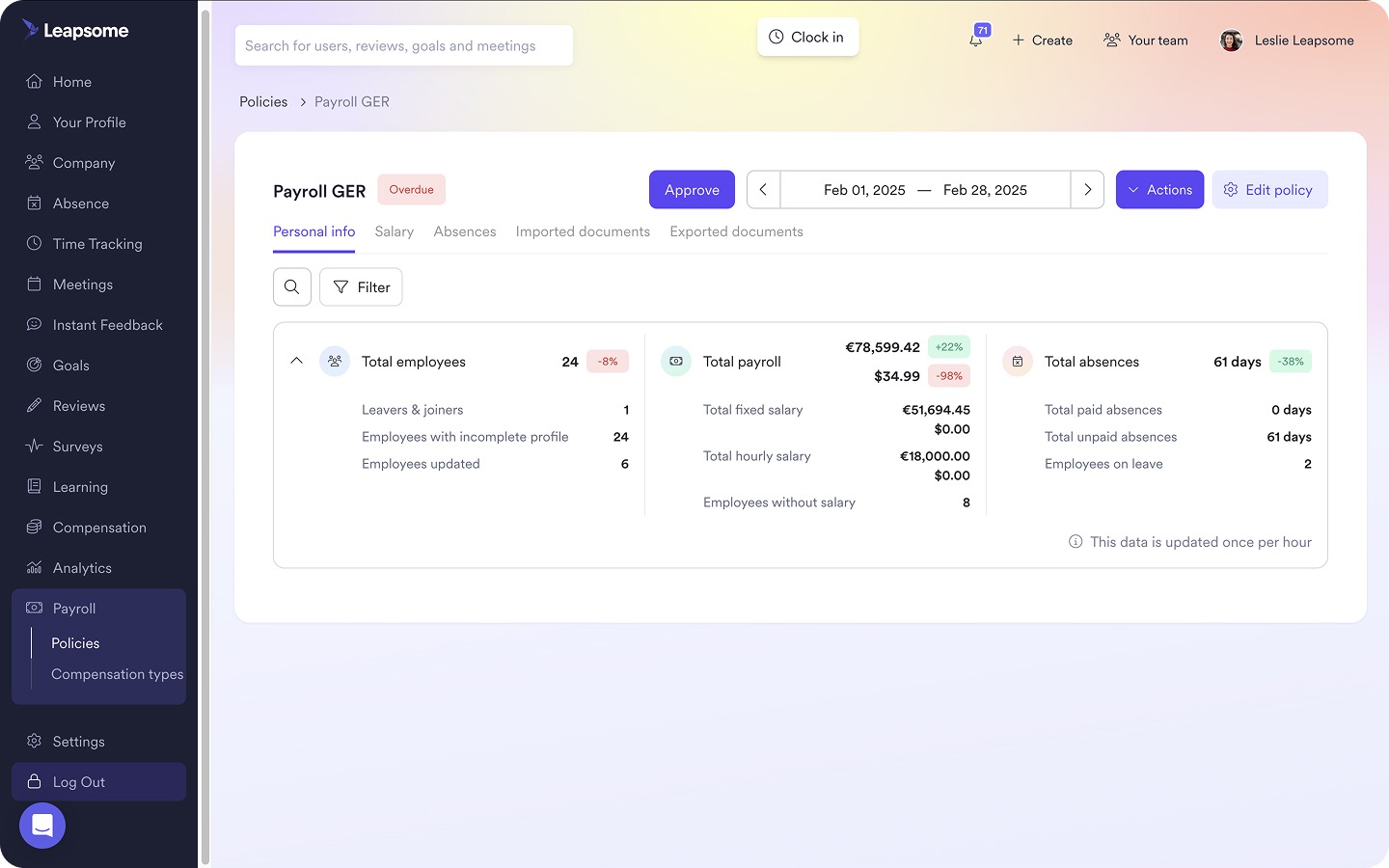
🔒 Lohnabrechnung einfach und sicher vorbereiten
Leapsome akzeptiert Dateneingaben aus vielen Quellen, PEOs und EORs eingeschlossen, damit ihr die Lohnabrechnung schnell und compliant vorbereit.
👉 Mehr über Lohnabrechnung erfahren
PEO vs. EOR: Stärken und Abwägungen
Noch unsicher? Hier sind die Stärken und Schwächen jedes Modells im Überblick.
Professional Employer Organization: Vor- und Nachteile
Vorteile
- Bessere Compliance: PEO-Co-Employer verfügen über fundiertes Wissen über sich ändernde Bundes-, Kantons- und Lokalvorschriften und nehmen einen wichtigen Schmerzpunkt von eurer HR-Agenda.
- Günstigere Benefits: PEOs haben mehr Verhandlungsmacht bei Benefits-Preisen, da sie Tausende von Mitarbeitenden vertreten und Zugang zu Gruppenkonditionen haben.
- Geringerer HR-Overhead: Die Übertragung von HR-Aufgaben an eine PEO befreit eure Zeit für höherwertige Projekte.
Nachteile
- Weniger Flexibilität bei internationalen Einstellungen: Für Einstellungen im Ausland müsst ihr immer noch juristische Personen in jedem Land gründen.
- Co-Employment-Haftung: Bei Compliance-Verstößen seid ihr Arbeitsrechtsklagen ausgesetzt.
- Begrenzte Anpassbarkeit: PEOs sind nicht für individuelle Workflows und Datentypen konzipiert.
Employer of Record: Vor- und Nachteile
Vorteile
- Weltweit einstellen: EORs ermöglichen es euch, Mitarbeitende unabhängig von ihrem Standort anzustellen, mit minimalem Compliance-Aufwand.
- Keine juristische Person erforderlich: Ihr müsst in jedem Land, aus dem ihr einstellen möchtet, keine lokalen Einheiten gründen.
- Geringere Vorabkosten: Keine Gründungsgebühren oder Kosten für regionale Büros, also schnell und kosteneffizient starten.
Nachteile
- Höhere Kosten pro Kopf: PEOs mit prozentbasiertem Preismodell können für größere Unternehmen günstiger sein, da die Kosten pro Mitarbeiter:in mit steigender Zahl sinken.
- Weniger Kontrolle über Benefits-Pakete: EORs standardisieren Benefits-Pakete üblicherweise je Land, um Compliance zu vereinfachen.
- Abhängigkeitsrisiko: Der EOR ist rechtlicher Eigentümer der Arbeitsverhältnisse mit internationalen Mitarbeitenden. Bei finanziellen oder operativen Schwierigkeiten des Anbieters könnte euer Team mit Lohnausfällen oder Benefits-Unterbrechungen konfrontiert werden.
Eure verteilte Belegschaft mit Leapsome stärken
Für viele kleine und mittelgroße Organisationen ist die Fragmentierung von Aufgaben und Daten über verschiedene Plattformen der eigentliche Engpass beim internationalen Wachstum. Inkonsistente Daten, die mühsam zusammengesetzt werden müssen, kombiniert mit zeitaufwändiger manueller Arbeit, die zu kostspieligen Compliance-Fehlern führt, machen Skalierung kompliziert.
Leapsome ist eine strategische People-Enablement-Plattform, die euer Team alleine oder in Kombination mit einem PEO/EOR-Dienst nutzen kann. Leapsome vereint Performance, Engagement, Entwicklung und Lohnabrechnung unter einem Dach und integriert sich mit praktisch jeder Datenquelle. Während euer PEO/EOR-Anbieter die rechtliche und administrative Seite des Beschäftigungsverhältnisses übernimmt, hilft euch Leapsome, den menschlichen Aspekt der HR-Operations in den Mittelpunkt zu stellen.
"Mit Leapsome konnten wir Performance Reviews, Zielsetzung, Onboarding und Offboarding automatisieren. Zusammen hat uns das geholfen, rund 20 % des manuellen Aufwands unseres Teams einzusparen." – Weronika Czerny-Nowakowska, Chief Operating Officer, Neuron Labs
💻 Eine zentrale Schaltstelle aufbauen
Nutzt Leapsome, um fragmentierte Daten zu entwirren und HR ohne die üblichen Wachstumsschmerzen zu skalieren.
👉 Demo anfragen
FAQ
Was ist die beste Professional Employer Organization?
Führende PEO-Unternehmen wie Rippling, Deel und Justworks bieten eine Kombination aus Lohnabrechnung und Compliance-Diensten. Die beste Wahl hängt von der Größe und den Wachstumsplänen eures Unternehmens ab.
Wo finde ich Bewertungen für Professional Employer Organizations?
Websites wie Trustpilot und G2 bieten Tausende von Nutzerbewertungen, die euch bei der Auswahl von PEOs und EORs helfen.

.png)


Entdeckt unsere Plattform für HRIS, Performance und Entwicklung.