Vorlagen und Best Practices für Kündigungsschreiben

.jpg)
Hinweis: Dieser Beitrag richtet sich an eine Zielgruppe in den USA, dient ausschließlich allgemeinen Informationszwecken und stellt keine Rechtsberatung dar. Leapsome übernimmt keine Garantie für die rechtliche Konformität und kann nicht bestätigen, wie einzelne Situationen vor Gericht bewertet würden. Wenn ihr unsicher seid, wie die Vorgaben auf euer Unternehmen zutreffen, wendet euch an eine qualifizierte Rechtsberatung.
Ein Kündigungsschreiben ist ein formelles Dokument, das eine Mitarbeiterin oder einen Mitarbeiter darüber informiert, dass die Zeit im Unternehmen zu Ende geht. In den USA dienen solche Schreiben als rechtlicher Nachweis einer fairen Kündigung. Sie müssen die Bedingungen und Gründe der Entscheidung in klarer Sprache erläutern, sodass keine Unklarheit darüber bleibt, warum die Person das Unternehmen verlässt. Ob grobes Fehlverhalten oder eine unglückliche Folge von Restrukturierung der Auslöser war: Das Schreiben sollte die gesamte Situation dokumentieren und die nächsten Schritte festhalten.
Jahrzehntelange Forschung zeigt: Schlecht durchgeführte Entlassungen führen häufig zu Reputationsschäden, Burnout und Kündigungen bei den verbleibenden Mitarbeitenden.* Gut geschriebene Kündigungsschreiben gehören zu den einfachsten Mitteln, um den Trennungsprozess transparent und respektvoll zu gestalten und diese negativen Folgen zu vermeiden.
Dieser Leitfaden zeigt, wie ihr euren Prozess zum Schreiben von Kündigungsschreiben so aufbaut, dass er konsistent rechtskonform und skalierbar ist, inklusive drei Vorlagen, die eine der schwersten Aufgaben im HR-Alltag erleichtern.
* SHRM, 2025
Was ist ein Kündigungsschreiben?
Ein Kündigungsschreiben ist ein formeller schriftlicher Nachweis, der eine Mitarbeiterin oder einen Mitarbeiter darüber informiert, dass das Arbeitsverhältnis mit dem Unternehmen beendet ist. Es stellt die Kündigung auf eine rechtlich sichere Grundlage und gibt sowohl Arbeitgeber als auch gekündigter Person im Streitfall oder bei rechtlichen Auseinandersetzungen etwas Konkretes an die Hand.
Trennungsschreiben enthalten in der Regel dieselben zentralen Angaben, etwa das Datum des Inkrafttretens, den Kündigungsgrund und die nächsten Schritte. Wichtig ist aber, Ton und Vorgehen je nach Situation anzupassen. Die wichtigsten Kündigungsarten sind:
- Kündigung aus wichtigem Grund: Wenn schriftliche Abmahnungen wiederholte Verstöße gegen betriebliche Vorgaben oder Fehlverhalten nicht stoppen, können Arbeitgeber das Arbeitsverhältnis aus wichtigem Grund kündigen.
- Betriebsbedingte Kündigung: Ein Unternehmen beendet das Arbeitsverhältnis aus Gründen, die nichts mit dem Verhalten oder der Leistung der betroffenen Person zu tun haben, etwa Budgetkürzungen oder Restrukturierung.
- Kündigung mit Abfindung: Eine besondere Form der betriebsbedingten Kündigung, bei der Arbeitgeber gemäß Arbeitsvertrag oder Unternehmensrichtlinie eine Abfindung zahlen. Üblich bei Entlassungswellen, nicht jedoch bei Kündigungen aus wichtigem Grund.
Wenn eine Mitarbeiterin oder ein Mitarbeiter selbst kündigt (auch Eigenkündigung genannt), braucht ihr kein Kündigungsschreiben zu verfassen. Stattdessen benötigt ihr von der Person ein eigenes Kündigungsschreiben, das denselben Zweck erfüllt.
Warum Kündigungsschreiben wichtig sind
„Ganz überwiegend sehe ich, dass diese [Social-Media-]Beiträge [von gekündigten Mitarbeitenden] eine Reaktion auf das Gefühl der Überraschung sind. Ohne zu verstehen, warum sie gekündigt wurden, oder eine Ahnung davon zu haben, dass das überhaupt zur Debatte stand, fühlen sich Mitarbeitende überrumpelt und ungerecht behandelt.“
Parker Gilbert, CEO und Mitgründer von Numeric.io, für SHRM
Schlecht formulierte Kündigungsschreiben können dem Ruf eures Unternehmens schaden und unnötige rechtliche Risiken schaffen. Nur eines ist noch schlechter: gar kein Schreiben zu verschicken.
Es gibt einige Gründe, warum es so wichtig ist, diese Schreiben richtig zu gestalten:
- Respektiert Mitarbeitende und schützt den Ruf: Ein klares, professionelles Kündigungsschreiben, das genau erklärt, warum die Kündigung erfolgt und wie es weitergeht, reduziert Verwirrung in einem emotional aufgeladenen Moment. Ein people-first Ansatz, etwa die Angabe, ob Anspruch auf Arbeitslosenunterstützung oder vergleichbare Leistungen besteht, vermittelt der betroffenen Person, dass das Unternehmen sich um ihr Wohlbefinden und ihre Würde sorgt. Fairness stärkt außerdem den Ruf des Unternehmens als Arbeitsplatz, der Mitarbeitende auch beim Abschied respektvoll behandelt.
- Reduziert rechtliche Risiken: Mit einem datierten, formellen Nachweis sinkt die Wahrscheinlichkeit von Streitigkeiten und Compliance-Problemen. Diese Dokumentation erleichtert es in der Regel, sich gegen Klagen wegen unrechtmäßiger Kündigung oder Vergeltungsmaßnahmen zu verteidigen, falls eine gekündigte Person rechtliche Schritte einleitet.
- Schafft eine lückenlose Dokumentation: Kündigungsschreiben halten zentrale Angaben wie Datum und Grund der Kündigung in klarer Sprache schriftlich fest. Das verringert das Risiko von Missverständnissen zwischen euch und der ehemaligen Mitarbeiterin oder dem ehemaligen Mitarbeiter und schafft einen gemeinsamen Bezugspunkt für die Offboarding-Schritte.
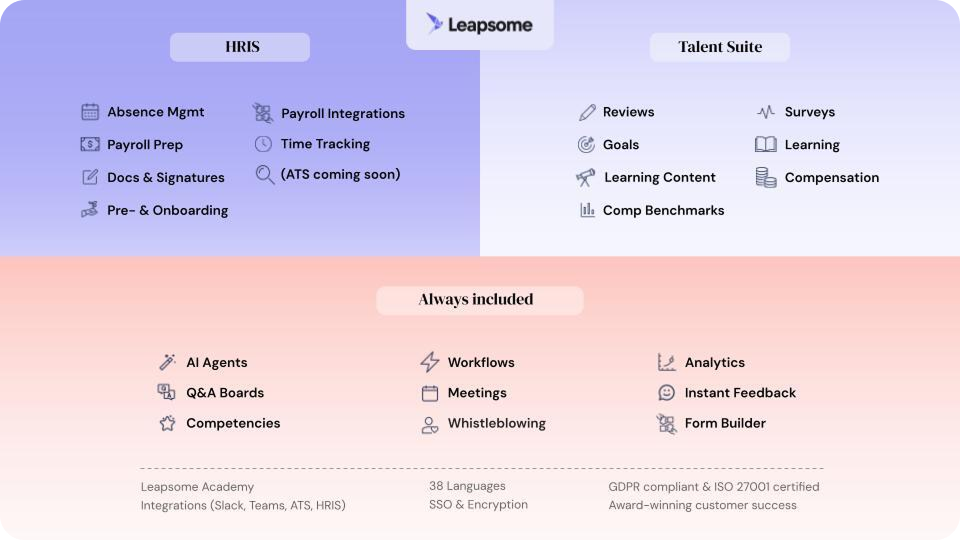
Eine lückenlose Dokumentation ist nur so gut wie die Daten, die sie festhält. Und diese Daten sind nur so gut wie das System, mit dem ihr sie verwaltet. Leapsome schafft eine zentrale Quelle der Wahrheit für alle Informationen in eurem Unternehmen, sodass ihr konkrete Kündigungsgründe von Engagement-Umfragen bis zu Leistungsbeurteilungen über den gesamten Employee Lifecycle hinweg belegen könnt.
🖥️ Mitarbeiterdaten umfassend und rund um die Uhr griffbereit
Leapsome bewahrt alles von Arbeitsverträgen bis zu Kündigungsschreiben an einem zentralen Ort auf, sodass ihr jederzeit auf jedes Detail im Employee Lifecycle zugreifen könnt.
👉 Employee Records entdecken
Drei Vorlagen für Kündigungsschreiben zum Loslegen
„Glaubwürdigkeit entsteht durch Verhalten. Menschen achten auf Ton, Authentizität und Nahbarkeit.“
Steve Browne, Chief People Officer, LaRosa’s, Inc.
Beispiele und Vorlagen für Kündigungsschreiben erleichtern die Arbeit im HR-Team erheblich, selbst wenn ihr sie nur als Ausgangspunkt nutzt. Hier sind drei Vorlagen für einige der häufigsten Kündigungsarten: Fehlverhalten, Leistungsmängel und betriebsbedingte Kündigung.
Kündigung aus wichtigem Grund: Fehlverhalten
[Datum]
[Name der/des Mitarbeitenden]
[Position der/des Mitarbeitenden]
[Adresse der/des Mitarbeitenden]
Betreff: Kündigung des Arbeitsverhältnisses
Sehr geehrte/r [Name der/des Mitarbeitenden],
hiermit kündigen wir Ihr Arbeitsverhältnis mit [Firmenname] außerordentlich und fristlos zum [Datum] aufgrund wiederholter Verstöße gegen betriebliche Vorgaben und schwerwiegenden Fehlverhaltens. Im Einzelnen: [konkrete Gründe für die Kündigung, einschließlich Daten, Vorfallsberichten und Verweisen auf die verletzten betrieblichen Vorgaben]. Die Abmahnungen und Korrekturmaßnahmen vom [Datum] und zuletzt vom [Datum] haben Ihr Verhalten nicht in Einklang mit unseren betrieblichen Standards gebracht.
Ihr letztes Gehalt sowie die Auszahlung nicht genommener Urlaubstage in Höhe von [Betrag] erhalten Sie gemäß betrieblicher Regelung am [Datum] per Überweisung.
Bei Fragen erreichen Sie mich direkt unter [Telefonnummer] oder [E-Mail-Adresse].
Mit freundlichen Grüßen,
[Ihr Name]
[Ihre Position]
[Ihr Firmenname]
Kündigung aus verhaltens-/leistungsbedingten Gründen: Leistungsmängel
[Datum]
[Name der/des Mitarbeitenden]
[Position der/des Mitarbeitenden]
[Adresse der/des Mitarbeitenden]
Betreff: Kündigung des Arbeitsverhältnisses
Sehr geehrte/r [Name der/des Mitarbeitenden],
hiermit kündigen wir Ihr Arbeitsverhältnis mit [Firmenname] ordentlich zum [Datum] unter Einhaltung der gesetzlichen beziehungsweise vertraglichen Kündigungsfrist, da Ihre Leistung wiederholt hinter den vereinbarten Zielen zurückgeblieben ist.
Am [Datum] haben wir gemeinsam einen Verbesserungsplan aufgesetzt, um Schwächen in [konkrete Bereiche, etwa Produktivität oder Kundenkommunikation] mit klaren Zielen und Zwischenschritten zu beheben. Leider hat sich Ihre Leistung nicht auf das erforderliche Niveau verbessert.
Ihr letztes Gehalt sowie die Auszahlung nicht genommener Urlaubstage erhalten Sie zum [Datum] per Überweisung. Ihre betrieblichen Zusatzleistungen laufen bis [Datum] weiter. Bitte geben Sie sämtliches Firmeneigentum bis [Datum] zurück.
Bei Fragen erreichen Sie mich direkt unter [Telefonnummer] oder [E-Mail-Adresse].
Mit freundlichen Grüßen,
[Ihr Name]
[Ihre Position]
[Ihr Firmenname]
Betriebsbedingte Kündigung
[Datum]
[Name der/des Mitarbeitenden]
[Position der/des Mitarbeitenden]
[Adresse der/des Mitarbeitenden]
Betreff: Kündigung des Arbeitsverhältnisses
Sehr geehrte/r [Name der/des Mitarbeitenden],
hiermit kündigen wir Ihr Arbeitsverhältnis mit [Firmenname] betriebsbedingt und ordentlich zum [Datum] unter Einhaltung der gesetzlichen beziehungsweise vertraglichen Kündigungsfrist aufgrund einer Restrukturierung. Diese Entscheidung wurde nicht leichtfertig getroffen und ist keine Bewertung Ihrer Leistung oder Ihres Verhaltens am Arbeitsplatz.
Ihr letztes Gehalt sowie eine etwaige Abfindung erhalten Sie zum [Datum] per Überweisung. Ihre Verschwiegenheits- und Wettbewerbsverbotsvereinbarungen bleiben weiterhin bestehen.
Bei Fragen erreichen Sie mich direkt unter [Telefonnummer] oder [E-Mail-Adresse].
Mit freundlichen Grüßen,
[Ihr Name]
[Ihre Position]
[Ihr Firmenname]
📉 Kündigungsentscheidungen mit Leistungsdaten untermauern
Leapsome speichert Leistungshistorie und Feedback von Führungskräften zusammen mit allen anderen zentralen Daten, die Kündigungsentscheidungen nachvollziehbar machen.
👉 Performance Reviews entdecken
Wie schreibt man ein Kündigungsschreiben? Eine Anleitung in drei Schritten
Der schwierigste Teil einer Kündigung ist das Gespräch selbst. Damit sich HR-Teammitglieder und Führungskräfte, die dieses Gespräch führen müssen, auf ihre Vermittlung konzentrieren können, lohnt es sich, den Prozess für Kündigungsschreiben mit Vorlagen zu vereinfachen. Ein strukturierter Ablauf für jedes Kündigungsschreiben nimmt einen Teil der mentalen Last dieser schwierigen Aufgabe.
So stellt ihr eines in drei Schritten zusammen.
1. Unterlagen zusammenstellen
„Macht euch wirklich klar, warum, statt resigniert zu sagen: ‚Weil wir müssen.‘“
Emma Leeds, CEO und Gründerin von People Function
Stellt zunächst alles zusammen, was ihr braucht, um die Mitarbeiterin oder den Mitarbeiter vollständig zu informieren und die Compliance abzusichern, darunter:
- Details zur Beschäftigungshistorie: Eintrittsdatum, Rollenwechsel oder Beförderungen sowie aktuelle Position.
- Leistungsinformationen: Leistungsbeurteilungen und Probezeitgespräche sowie Entwicklungspläne der Mitarbeitenden.
- Vorfallsberichte: Frühere Verstöße gegen betriebliche Vorgaben oder Fehlverhalten und wie HR damit umgegangen ist.
- Abmahnungen: Aufzeichnungen mündlicher oder schriftlicher Verwarnungen.
2. Das Kündigungsschreiben verfassen
„Behandelt Menschen wie kluge Erwachsene. Redet ihnen nicht ein, dass das Ganze eigentlich gut ist.“
Melanie Naranjo, Chief People Officer bei Ethena
Ein Kündigungsschreiben zu erhalten, ist für niemanden leicht. Schreibt respektvoll und unterstützend, aber redet nicht um den heißen Brei herum. Macht bereits im ersten Satz nach der Anrede klar, worum es geht, und geht dann auf den Kündigungsgrund ein. Den Grund klar zu benennen, ist nicht nur guter Stil: In einigen Teilen der USA ist es sogar gesetzlich vorgeschrieben.
Erklärt abschließend die nächsten Schritte. Muss die Person an einem Exit-Interview oder einer Befragung teilnehmen, und was kann sie dabei erwarten? Wann erhält sie ihr letztes Gehalt?
Sobald der Entwurf steht, lasst ihn von der Rechtsabteilung prüfen, um Compliance und Rechtssicherheit sicherzustellen. Mit ihrer juristischen Expertise finden sie Lücken, die euch vielleicht entgangen sind.
Profi-Tipp: Automatisiert Exit-Umfragen mit Leapsome, um euer HR-Team zu entlasten.
3. Das Schreiben persönlich übergeben
Kündigungsschreiben persönlich zu übergeben (oder bei Remote-Teams per Zoom-Call) zeigt Respekt. Eine Kündigung per E-Mail zu verschicken, obwohl man sich sonst täglich persönlich sieht, wirkt unpersönlich und lässt Mitarbeitende eher wie austauschbare Ressourcen als wie Menschen fühlen. Ein Gespräch in Echtzeit gibt der gekündigten Person außerdem die Möglichkeit, Fragen zu stellen, statt allein zu grübeln, und schließt die Zusammenarbeit auf eine respektvolle Weise ab.
Wählt einen ruhigen, privaten Ort, um die Privatsphäre der betroffenen Person zu schützen. Seid im Gespräch klar, aber auch respektvoll. Haltet Notizen zu diesem letzten Austausch fest und ergänzt sie in der Personalakte, um die Dokumentation zusätzlich abzusichern, besonders falls es zu Problemen kommt.
Kündigungsprozesse mit Leapsome vereinheitlichen und vereinfachen
Der beste Weg, Kündigungen fair und rechtssicher zu gestalten, ist eine lückenlose Dokumentation jedes Details. Niemand kündigt gerne im großen Stil, aber mit wachsendem Unternehmen hat euer Team meist nicht die Zeit, tagelang an der perfekten Kündigung zu feilen. Das gilt besonders, wenn einzelne Angaben erst aus E-Mail-Verläufen und persönlichen Notizen von Führungskräften zusammengesucht werden müssen.
Leapsome vereinfacht die Nachverfolgung von allem, von Performance Reviews und Feedback bis zu Korrekturmaßnahmen, sodass alles griffbereit ist, sobald ein Kündigungsschreiben ansteht. Durch die Zentralisierung von HR-Prozessen und Mitarbeiterdaten können HR-Teams faire und konsistente Workflows aufbauen, die gekündigten Mitarbeitenden das Gefühl geben, wertgeschätzt und respektiert worden zu sein.
„Meine wichtigsten Ziele waren es, eine kontinuierliche Feedbackkultur aufzubauen, Gespräche über Leistung zu verbessern und Kompetenzen im gesamten Unternehmen besser zu verstehen“, sagt Nadja Kaderli, People and Culture Manager bei Advertima.
🔗 Last-Minute-Datensuche vermeiden mit vereinheitlichten Daten und Prozessen
Leapsome verbindet zentrale HR-Prozesse wie Performance Reviews und Exit-Umfragen mit einer Datenbank aller wichtigen Mitarbeiterinformationen, damit eure People Operations von Anfang bis Ende reibungslos laufen.
👉 Demo buchen
Hinweis: Dieser Beitrag richtet sich an eine Zielgruppe in den USA, dient ausschließlich allgemeinen Informationszwecken und stellt keine Rechtsberatung dar. Leapsome übernimmt keine Garantie für die rechtliche Konformität und kann nicht bestätigen, wie einzelne Situationen vor Gericht bewertet würden. Wenn ihr unsicher seid, wie die Vorgaben auf euer Unternehmen zutreffen, wendet euch an eine qualifizierte Rechtsberatung.
FAQ
Was sind Kündigungsschreiben?
Kündigungsschreiben informieren Mitarbeitende formell darüber, dass der Arbeitgeber das Arbeitsverhältnis beendet. Sie erläutern häufig, warum die betroffene Person das Unternehmen verlässt, und enthalten Angaben, die das Unternehmen bei rechtlichen Auseinandersetzungen schützen, indem sie den Sachverhalt klar dokumentieren.
Was gehört in ein professionelles Kündigungsschreiben?
Ein Kündigungsschreiben wird der gekündigten Person in der Regel auf offiziellem Briefpapier zugestellt und enthält einige zentrale Bestandteile:
- Eine formelle Kündigungserklärung
- Gründe für die Kündigung
- Datum des Inkrafttretens der Kündigung
- Angaben zur Auszahlung des letzten Gehalts, nicht genommener Urlaubstage und einer eventuellen Abfindung
- Details zu verbleibenden Zusatzleistungen
- Kontaktdaten des Unternehmens
Scrollt nach oben zum Abschnitt „Drei Vorlagen für Kündigungsschreiben zum Loslegen“ für Beispielschreiben zu einigen der häufigsten Kündigungsszenarien.





.png)