Compliant employee termination: Step-by-step guide + checklist


Terminating an employee is a tough situation for everyone involved, including employers. Small and mid-sized organizations have to navigate more potential problems than enterprises in the process: Improvised termination procedures breed inconsistency and can expose companies to legal action, especially when they aren’t big enough for a legal team. There’s also the potential reputational hit if HR handles the termination inappropriately, closing doors to talented future hires.
This cultural impact of employee termination is easy to overlook when you’re focused on just getting through the process. But according to LeadershipIQ, 74% of remaining employees said their productivity declined post-layoffs, and 87% said they’re less likely to recommend their employer to others.* So, managing cultural fallout is a key component of any employee termination process worth its salt.
This guide unpacks what compassionate employee termination looks like in practice. It also walks HR leaders through how to run a smooth, compliance-safe process that covers their bases while keeping culture and morale intact.
* LeadershipIQ, 2024
Disclaimer: This content is for general informational purposes only and does not constitute legal advice. Leapsome does not guarantee legal compliance and cannot confirm how specific situations would be assessed in court. If you're unsure how the requirements apply to your organization, please consult qualified legal counsel.
What does employee termination mean?
Employee termination marks the ending of an employment relationship. Despite the simple definition, terminating an employee typically comes with a lot of work. You have to tactfully notify the affected employee and carry out a compliant and mindful offboarding procedure. This includes tasks like paying out unused PTO and recovering company equipment like laptops or cell phones.
Dismissing an employee is also a sensitive task that needs careful legal compliance. Poorly defined or unsupported reasoning and inadequate record-keeping can result in costly wrongful termination litigation.
If your performance management system or employee development plans aren’t reducing terminations by closing performance gaps, it may be time to consider other options.
Three types of employment termination
Termination of employment comes in three different forms:
- Voluntary termination: Also known as quitting, this happens when an employee chooses to leave the organization. It tends to be much less work for employers, since they don’t have to worry about building their case with bulletproof reasoning. And company culture takes less of a hit, because it doesn’t leave colleagues wondering if they’re next.
- Involuntary termination with cause: Termination with cause takes place when an organization lets an employee go for a specific reason, such as misconduct or poor performance.
- Involuntary termination without cause: Terminations without cause happen when an organization dismisses an employee for reasons not related to their actions or performance, like layoffs from organizational restructuring or budget cuts.
Common reasons for termination
Termination decisions don’t happen in a vacuum. Effective HR leaders look at several factors to decide whether an employee’s situation calls for termination, but one of the most important considerations is the loss’s impact on company culture and engagement.
Outside of cases of serious misconduct, employee termination should never be Plan A. Coaching, written warnings, and even transfers or demotions often make more sense than outright termination for situations like first-time offenses and missing competencies. Not immediately escalating to termination is also typically less damaging for the rest of the team’s engagement.
The most common reasons for terminating an employee include:
- Serious misconduct, such as harassment, violence, or theft
- Breaches of confidentiality or security policies, like mishandling user or employee data
- Continuous performance issues even after coaching and improvement plans
How to terminate an employee the right way (fairly and compliantly): Six steps
Following a standardized process makes it much easier to terminate employees fairly and consistently, while dotting all the compliance i’s at the same time.
Here’s a people-first six-step guide to employee termination. Use it to create your own termination checklist, or check ours out here.
1. Pinpoint the reason for termination
Identifying the exact reason you’re ending the employment relationship clarifies the situation for both the employee and your HR records. Is it for cause or due to budget cuts, for example? Put it in clear, concise language, such as, “[Employee] was put on a performance improvement plan and assigned additional training after failing to meet core communication competencies. There was no improvement in the skill after 60 days.” Clarifying exactly why they were let go also supports your case if the employee challenges the decision later.
Once you’ve refined your explanation, put it in writing and make sure HR, the employee’s manager, and legal are aligned on it. Legal’s role here is particularly important, because they’ll catch any ways your reason could be misinterpreted or legally dubious.
Leapsome’s Performance Reviews help you identify what your employee’s cultural and competency needs actually are before any misalignments cause problems. By seamlessly connecting with Learning paths in Leapsome’s integrated HRIS platform, you can provide training for each individual’s skill gap.
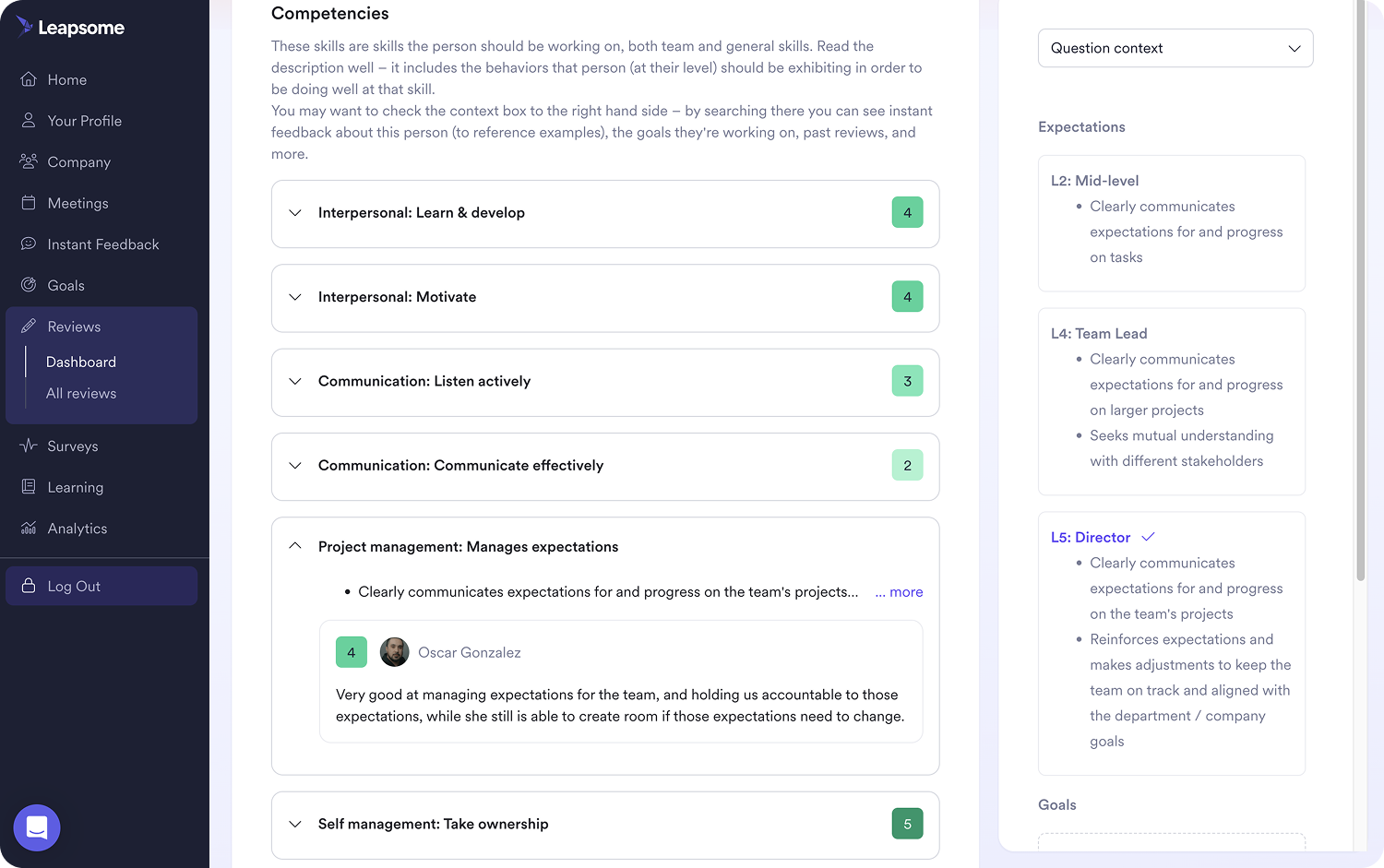
📊 Calibrate performance using hard data, not assumptions
Surface trends and seamlessly connect them to Leapsome’s Learning to build targeted development plans based on real skill gaps and engagement data.
👉 Explore Performance Reviews
"Being able to view previous assessments and feedback, praise, and private notes directly while conducting an assessment review is crucial for reducing recall bias — we want to do justice to our hardworking team and consider all of their strengths and weaknesses as accurately as possible." — Tara Todorovic, People Development Manager at SIDES
2. Gather the relevant documentation
Compile everything that might touch the termination decision, however tangentially. This includes the following documents:
- Employee handbook
- Company policy acknowledgment forms
- Employee termination policy
- Employment contract
- Attendance records
- Improvement plans
- Performance review history
- Written feedback from managers or other team members
- Warning letters or emails
The more comprehensive your documentation, the stronger your position if the employee challenges the decision.
3. Assess compliance risk and call in the pros if necessary
If the case appears to be high-risk, such as an involuntary termination of a protected class, consider looping in legal to double-check the termination reasoning to ensure it will hold up to scrutiny. Check whether the employee filed any recent complaints, too. If they did, they may have reason to believe their termination could be unlawful discrimination or retaliation.
4. Align internally and prepare the termination letter
Run the decision and supporting reasoning and documentation by anyone who may have a stake or responsibility in it; this could include the following:
- Employee’s manager
- HR lead
- Legal
- Finance
- Payroll
- IT
Once everyone has signed off, put together an employee-facing termination letter explaining the reason for dismissal, as well as details like the employee’s last day of employment and any information about their severance package.
5. Hold the termination meeting
With the prep work squared away, choose a comfortable, private location to hold the termination meeting. Depending on the employee, you might hold it as an HR leader, or it could be run by the employee’s manager. The manager should have the training to communicate the decision unambiguously, professionally, and empathetically.
First and foremost, the employee needs to know they’ve been terminated and why. They also need to know what next steps look like (like an exit survey and equipment return procedures) and who to talk to if they have questions.
6. Take care of post-termination tasks
Update the employee’s record to reflect the termination and attach notes from the meeting along with any other relevant documentation (including the termination letter). Communicate the departure to the rest of the team. Don’t sensationalize it: Stick to the facts, be respectful, and be ready to field questions and concerns.
If you terminated an employee with a high violence risk, you may also want to schedule a follow-up call a few days later to take a temperature check on their well-being.
Finally, prepare and execute your standard employee offboarding process. This will likely include:
- Revoking access to systems and accounts
- Retrieving company property
- Processing final payroll
- Reassigning the departing employee’s work and responsibilities
- Conducting an exit interview
✅ Add structure to your employee termination process
Grab a free copy of this checklist to hand out to your management team for smoother, more compliant terminations.
👉 Download the checklist now
The biggest compliance risks, and how to avoid them
Wrongful termination claims aren’t rare. According to analysis by global compliance firm Remote, historical EEOC data shows that wrongful discharge is alleged in roughly 64% of all filed suits. Legal experts note that an employer’s success in defending these cases drops significantly without a strict paper trail.
Here are a couple of the biggest mistakes that poke holes in an otherwise sound employee termination process.
Ill-defined termination reasoning
Having a rock-solid reason for a termination is a must. If the reason is vague or constantly changing, the employee will be confused about why they’ve been let go. That confusion means you may open yourself up to litigation, especially if there’s any chance the firing could be a retaliatory move. And it leaves your other employees wondering if they could be next.
Document a single well-defined reason for each dismissal and back it up with written evidence. Base the explanation on facts, not subjective opinions or personal issues with the departing employee that cloud the narrative.
Limited documentation of performance or misconduct history
When there’s little-to-no documented history of performance or misconduct issues, terminations can feel less credible, especially if they happen suddenly. It’s easier to challenge poorly documented terminations, because you won’t have the proof of a dignified firing at the ready. Not having the right documentation also presents an audit risk, since auditors expect to see a clear paper trail for major employment decisions.
The best way to avoid this pitfall is by using software that centralizes performance data, feedback, and termination records. Leapsome creates one source of truth for your talent management. Document centralization keeps records updated, secure, and easy to find, so your paper trail covers the whole employee lifecycle.
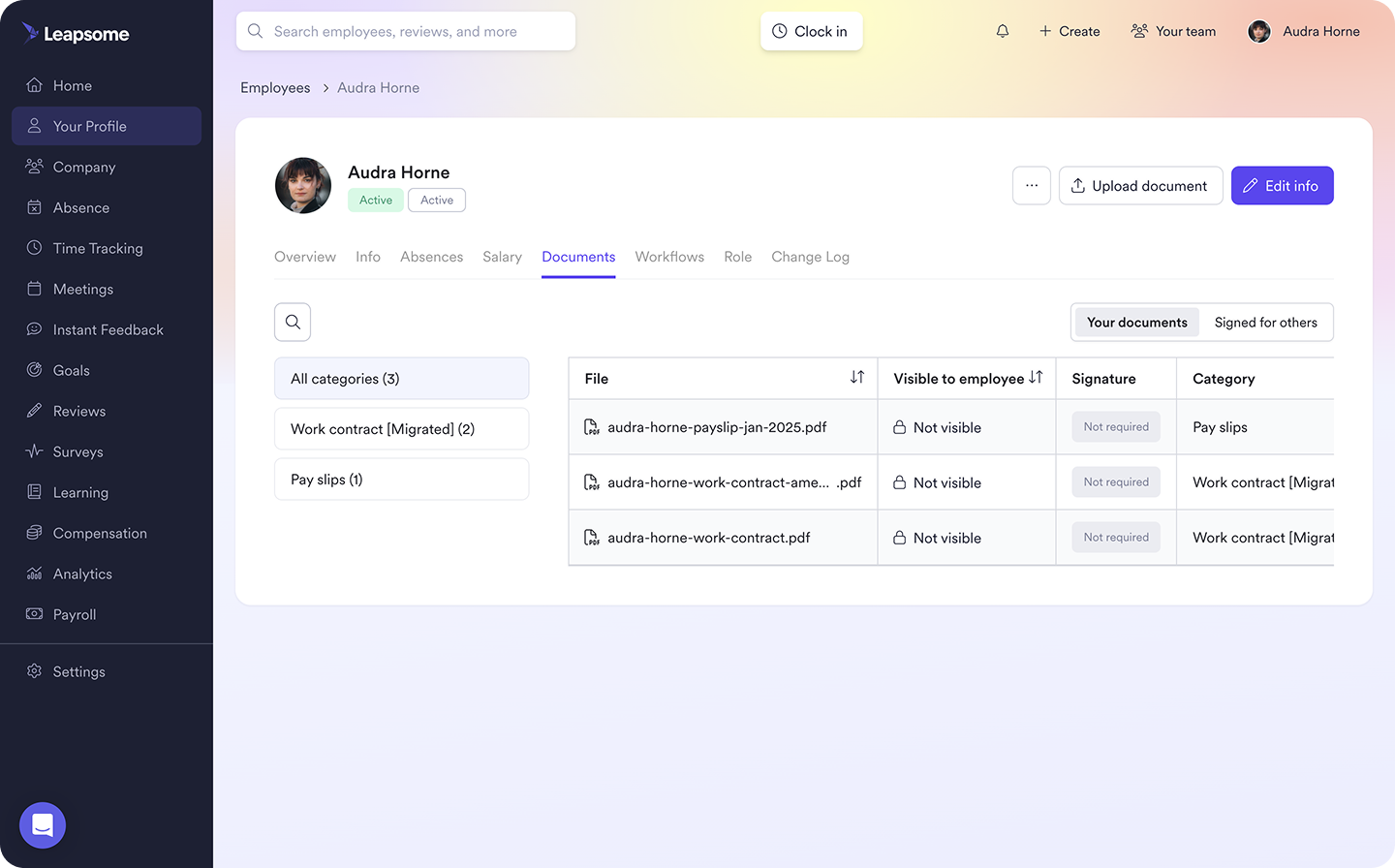
📚 Build a library for all your critical documents
Bring everything together in Leapsome’s single version-controlled repository, so you can always reference concrete performance data.
👉 Explore Documents and E-Signatures
How to build a people-first termination strategy
“Individuals can’t muscle a 500-person org through chaos. Build the systems so good responses are easy, natural, and repeatable, especially when stress is high.”
— Craig Forman, Founder and Principal Consultant at CultureC Consulting
A people-first termination approach means conducting every dismissal fairly, consistently, and respectfully while safeguarding team culture and engagement. Here are a few ways to keep the two interests balanced:
- Follow a structured process: The only way to ensure a fair and consistent termination process is by adhering to a concrete employee termination checklist. Doing the research in advance means you’ll significantly reduce the odds of overlooking a compliance concern that could lead to legal action.
- Help managers lead termination conversations effectively: Managers can be just as nervous and unprepared as the employees they’re letting go. Give them an outline of key points to cover and supporting documentation to back up your claims, as well as coaching for staying calm and communicating clearly if the conversation takes a downturn.
- Focus on patterns: Don’t put too much emphasis on individual situations when creating or refining your termination process. Instead, look for patterns that reveal systemic compliance and culture risks, and consider running engagement surveys to assess how remaining team members are feeling in the aftermath of a termination.
Gracefully handle employee termination with Leapsome
Even when the decision is obvious, employee termination is one of the most complex tasks HR teams face. Issues like ad-hoc termination procedures and documentation, disjointed data, and unprepared managers can get in the way of a fair and compliant dismissal. Small and mid-sized organizations don’t have the deep legal pockets or extra bandwidth of enterprise operations, but the risk per employee is the same.
Leapsome helps HR teams add structure and confidence to their existing processes. By connecting performance to feedback and employee data in Leapsome’s centralized HRIS tool, you can standardize employee termination for maximum fairness and consistency. Add in workflow automations and unified data — plus AI-driven insights to help you act on that data — and termination goes from a reactive response to a controlled operation that keeps employee well-being front of mind.
“Many HR teams still struggle with the basics — too many disconnected tools, limited insights. That’s why we built a truly people-first HRIS that unifies all employee data into one source of truth.” — Suraj Paneru, Customer Success Coach at Leapsome
🪧 Leave a clear trail for every termination call
Leapsome connects performance to feedback and employee data, so you can trace the proper context for every termination decision.
👉 Request a demo
FAQ
What should I say when terminating an employee?
Be straightforward, respectful, and empathetic. Clearly explain the reason for the decision and reference any supporting documentation. The employee will likely have questions, so give them a chance to absorb the information and speak their mind. At the end of the meeting, explain next steps and request any information you may need from them for a smooth transition, such as status updates for ongoing projects.

.jpg)