Teilzeit vs. Vollzeit: Die richtige Personalstruktur gestalten


Teilzeit oder Vollzeit: Diese Entscheidung wirkt wie eine einfache Frage der Arbeitszeit, bis euer Unternehmen zu wachsen beginnt. Ein paar Stunden mehr hier, eine „flexible“ Rolle dort, und schon überschreitet eine Mitarbeiterin oder ein Mitarbeiter eine Schwelle, ohne dass es jemand bemerkt. Mit der Zeit wirken sich schnelle Einstufungsentscheidungen negativ auf Lohnkosten, Sozialleistungen, die Kapazität von Führungskräften und die gesamte Employee Experience aus.
Wenn ihr diese schleichende Entwicklung vermeiden wollt, müsst ihr verstehen, wie Personalentscheidungen langfristige Personalplanung und Compliance unterstützen. Viele Unternehmen tun sich damit schwer, wenn sie wachsen. Der McKinsey HR Monitor 2025 zeigt: 73 % der Unternehmen betreiben operative Personalplanung, aber nur 12 % der HR-Verantwortlichen planen strategisch mit einem Drei-Jahres-Blick.*
Ohne langfristige Pläne setzen Unternehmen meist standardmäßig auf Vollzeitstellen. Oder sie nutzen Teilzeitrollen als schnelle Lösung, anstatt beide Modelle als bewusste Personalstrategien zu betrachten, die Wachstum unterstützen können. Dieser Guide zeigt, warum die Wahl zwischen Teilzeit und Vollzeit weit über Arbeitszeiten und Einstufung hinausgeht, und erklärt, wann welches Modell die bessere Wahl ist.
* McKinsey, 2025
Was bedeuten Vollzeit und Teilzeit, und warum ist der Unterschied wichtig?
Ob eine Mitarbeiterin oder ein Mitarbeiter Vollzeit oder Teilzeit beschäftigt ist, bestimmt zwar den Arbeitsumfang, aber die Einstufung reicht weit über die Arbeitszeit hinaus. Sie beeinflusst den Anspruch auf Sozialleistungen, das Risiko bei Überstunden, die Genauigkeit der Lohnabrechnung und die allgemeinen Personalkosten.
Deshalb können unklare Definitionen von Vollzeit- und Teilzeitstatus zu Problemen führen. Eine Mitarbeiterin mit 32 Wochenstunden wirkt für eine Führungskraft vielleicht nur teilzeitbeschäftigt, für HR ist sie aber bereits anspruchsberechtigt für Sozialleistungen. Ohne einheitliche Definitionen geraten Lohnabrechnung und Compliance schnell aus dem Takt.
Wie viele Stunden sind Vollzeit?
In den USA bedeutet Vollzeit in der Regel eine Arbeitszeit von 35 bis 40 Stunden pro Woche. Viele Arbeitgeber setzen 40 Stunden als Standardmaß für Vollzeit an, HR-Teams sollten aber auch die gesetzlichen Schwellenwerte kennen, um compliant zu bleiben.
Um zu klären, wann Arbeitgeber bestimmten gemeinsamen Pflichten unterliegen, definiert der Affordable Care Act (ACA) eine Vollzeitstelle als mindestens 30 Wochenstunden oder 130 Stunden im Monat. Nach dem Fair Labor Standards Act (FLSA) müssen nicht freigestellte Mitarbeitende Überstundenzuschläge erhalten, wenn sie mehr als 40 Stunden in einer Woche arbeiten.
Wie viele Stunden sind Teilzeit?
Wer weniger als 30 bis 35 Stunden pro Woche arbeitet, gilt in der Regel als teilzeitbeschäftigt. Der genaue Schwellenwert hängt jedoch von den Richtlinien des Arbeitgebers und lokalen Vorgaben ab.
Um compliant zu bleiben, solltet ihr klar definieren, was Teilzeit in eurem Unternehmen bedeutet. Legt eine konkrete Wochenstundenspanne fest, und erfasst Teilzeitstunden sorgfältig. So erkennt ihr schnell, wenn jemand regelmäßig fast Vollzeit arbeitet und möglicherweise reduzierte Stunden oder eine Neueinstufung braucht.
Diese Erfassung manuell durchzuführen, ist zeitaufwendig und fehleranfällig. Mit einem vernetzten People-System wie Leapsome erkennt ihr Trends dagegen frühzeitig und vermeidet Einstufungsfehler.
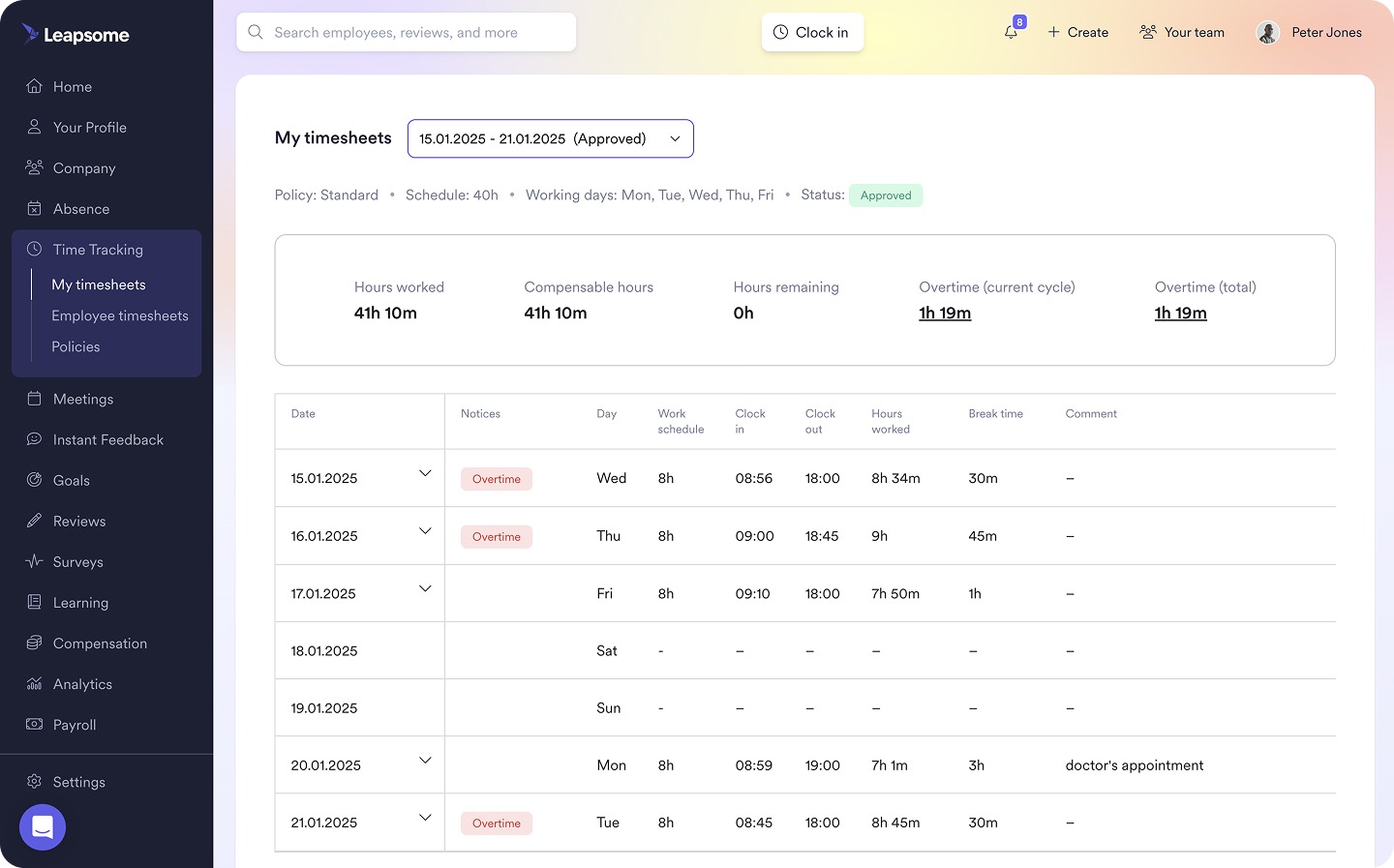
⏱️ Achtet darauf, dass jede Stunde erfasst wird
Leapsome liefert HR verlässliche Daten für alle Mitarbeiterklassifizierungen, damit Personal- und Compliance-Entscheidungen auf präzisen Daten basieren.
👉 Entdeckt Time Tracking
Warum eine klare Einstufung in Vollzeit und Teilzeit wichtig ist
Fehler bei der Einstufung können schnell teuer werden, besonders wenn normale Veränderungen im Arbeitsalltag unbemerkt bleiben. Eine Teilzeitkraft übernimmt immer mehr Stunden, die Führungskraft genehmigt die Dienstpläne weiterhin, und die Lohnabrechnung läuft normal weiter. HR bemerkt das Problem oft erst, wenn die tatsächliche Rolle nicht mehr zur hinterlegten Einstufung passt.
Bis dahin muss das Unternehmen möglicherweise Überstundenzuschläge nachträglich korrigieren oder den Anspruch auf Sozialleistungen neu prüfen. In den USA kann das auch ACA-Strafzahlungen wegen versäumter Versicherungspflichten oder FLSA-Risiken durch unbezahlte Überstunden und fehlerhafte Lohnaufzeichnungen bedeuten. In Deutschland und anderen EU-Ländern mit vergleichbarem Schutz müssen Arbeitgeber zudem Regelungen wie das Teilzeit- und Befristungsgesetz (TzBfG) berücksichtigen.
Um diese Compliance-Risiken zu senken, müssen Einstufungsdaten in eurem People-System liegen und regelmäßig aktualisiert werden. Leapsome zentralisiert Mitarbeiterprofile und gibt HR eine verlässliche Stelle, um Status und Arbeitszeit jeder Person zu prüfen. So können Teams Lohnabrechnung, Sozialleistungen und Compliance-Entscheidungen leichter auf dieselben Informationen stützen.
„Wenn eure HR-Systeme nicht wirklich miteinander sprechen … dann müsst ihr das hier aus dem HRIS ziehen, das aus der Leistungsbeurteilung, das aus der Lohnabrechnung … Ich glaube, da geht der rote Faden ein Stück weit verloren.“
Sammie Masley, People and Talent Manager bei Leapsome
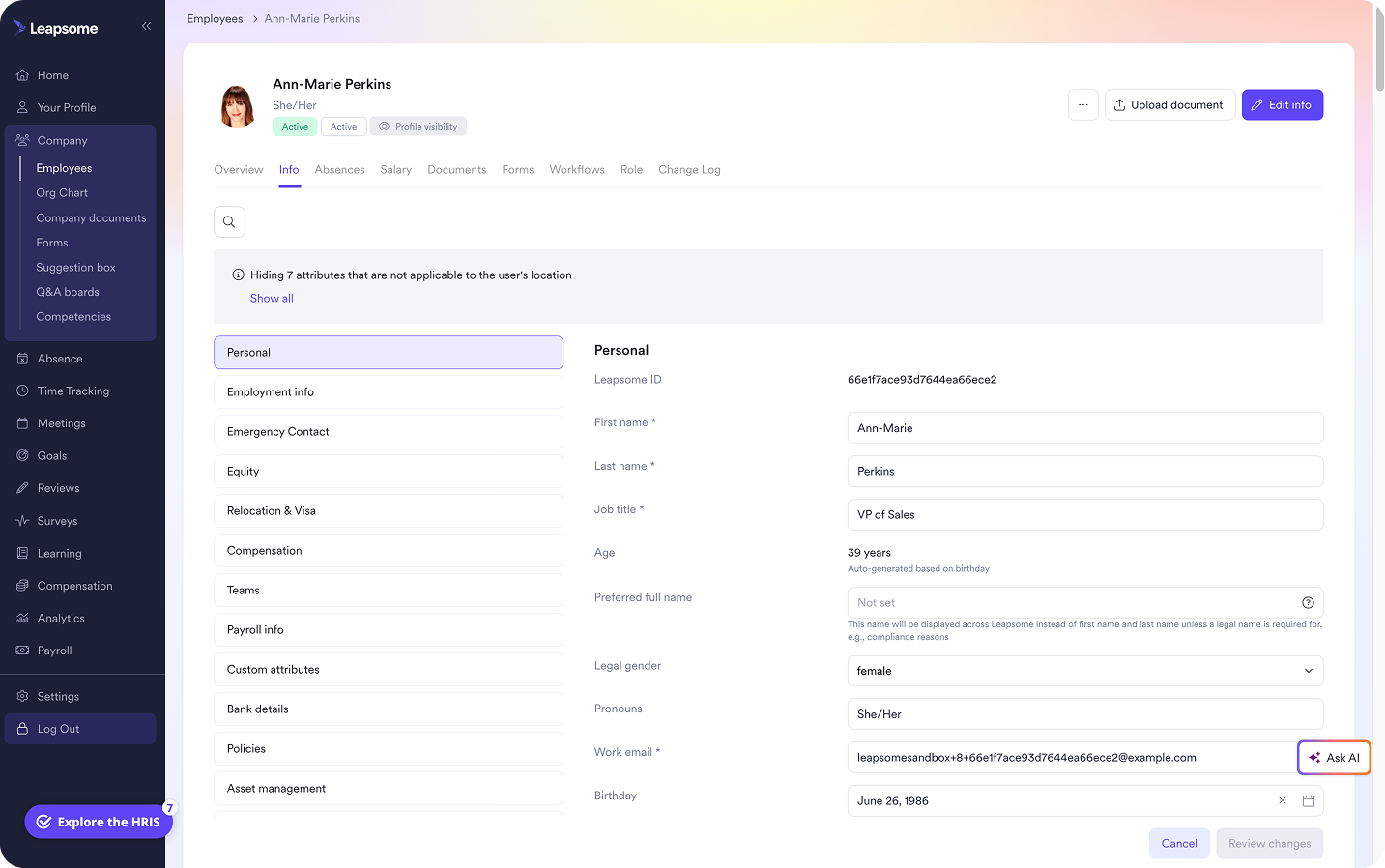
🗂️ Gebt HR eine verlässliche Quelle für Einstufungsdaten
Leapsome hält Mitarbeiterstatus, Arbeitszeiten und weitere zentrale HR-Daten miteinander verbunden, damit Lohnabrechnungs- und Compliance-Entscheidungen nicht auf verstreuten, unzuverlässigen Daten beruhen.
👉 Entdeckt Mitarbeiterprofile
Teilzeit vs. Vollzeit im Vergleich: Die wichtigsten Unterschiede für Arbeitgeber
Für HR zeigt sich der eigentliche Unterschied zwischen Teilzeit- und Vollzeitbeschäftigung oft bei Kosten, Compliance, Leistung und Personalplanung. Hier ein kurzer Vergleich aus Arbeitgebersicht.
| Kategorie | Teilzeitmitarbeitende | Vollzeitmitarbeitende |
|---|---|---|
| Kosten und Leistungen | Niedrigere Fixkosten für Personal entlasten bei schwankender Nachfrage, aber weniger Sozialleistungen können die Bindung einschränken. | Höhere Kosten für Lohn und Sozialleistungen, dafür mehr Kontinuität in Kernrollen. |
| Compliance-Risiken | Das Risiko steigt, wenn die Arbeitszeit regelmäßig über dem erfassten Status liegt. | Das Risiko liegt vor allem bei der Überstundenkontrolle und korrekten Aufzeichnungen. |
| Leistung und Verantwortung | Funktioniert gut, wenn die Rolle klare Ergebnisse und begrenzte Verantwortung hat, wird aber schwierig abzugrenzen, wenn die Arbeit auf ständigem Kontextwissen beruht. | Am besten geeignet, wenn die Rolle durchgehendes Kontextwissen braucht, an täglichen Entscheidungen beteiligt ist und auf langfristiger Verantwortung beruht. |
| Personalplanung | Hilft HR, Flexibilität zu schaffen, ohne Teams zu überdimensionieren. | Hilft dem Unternehmen, stabile Kapazitäten aufzubauen, wenn der Arbeitsaufwand planbar ist. |
Wann Teilzeit die klügere Personalentscheidung ist: Drei zentrale Signale
Teilzeitarbeit wird oft zu Unrecht als Kompromiss statt als langfristige Lösung behandelt. In vielen Unternehmen greifen Führungskräfte zu diesem Modell, wenn Budgets knapp werden oder sie unsicher sind, ob eine Rolle eine Vollzeitinvestition rechtfertigt. Das ist mit ein Grund, warum laut dem U.S. Bureau of Labor Statistics nur 17,5 % der Beschäftigten in Teilzeit arbeiten.
Der Unterschied zwischen Teilzeit als reaktivem Lückenfüller und Teilzeit als gezielter Lösung für ein bestimmtes Problem liegt in der Absicht dahinter. Richtig eingesetzt, kann Teilzeitarbeit ein strategisches Instrument sein, das HR hilft, Spezialwissen einzubinden und Flexibilität aufzubauen, ohne aus jedem Bedarf eine Vollzeitstelle zu machen.
„Der Zweck von HR ist es, eine People-Strategie zu entwickeln, die die Unternehmensziele am effektivsten vorantreibt. Man beginnt beim Business und baut die People-Strategie von dort aus auf.“
Melanie Naranjo, Chief People Officer bei Ethena
Ihr müsst nur wissen, welche Signale auf eine gute Gelegenheit für eine Teilzeitstelle in eurem Unternehmen hindeuten. Hier sind drei Gründe, sich bei der Personalplanung für Teilzeit zu entscheiden.
1. Das Engagement sinkt in Teams mit hoher Arbeitszeit
„Wir messen immer noch, ob Menschen erscheinen oder nicht. Wir sollten messen, was sie tun, wenn sie da sind. Quantität misst nur Aktivität.“
Steve Browne, Chief People Officer bei LaRosa’s
Teilzeitkräfte einzustellen kann die klügere Wahl sein, wenn das eigentliche Problem die Arbeitslast ist, nicht die Kopfzahl. Wenn die Engagement-Werte in Teams mit langen Arbeitszeiten sinken, löst eine weitere Vollzeitstelle das Problem oft nicht. Stattdessen braucht euer Team vielleicht gezielte Unterstützung in Spitzenzeiten oder mehr Kapazität für bestimmte Aufgaben, die immer wieder von wichtigeren Prioritäten ablenken.
2. Ihr braucht Spezialwissen, aber nicht jeden Tag
Manche Rollen sind zu wichtig, um sie zu ignorieren, aber zu eng gefasst, um eine Vollzeitstelle zu rechtfertigen. Vergütungsplanung ist ein gutes Beispiel: Ein wachsendes Unternehmen braucht vielleicht mehr Unterstützung bei der Festlegung von Gehaltsbändern und der Beratung von Führungskräften, aber nicht genug, um eine feste Vollzeitstelle zu rechtfertigen. In solchen Fällen verschafft euch Teilzeitarbeit Zugang zum richtigen Fachwissen bei geringerem Aufwand und geringerer Bindung.
3. Leistungsträger:innen wollen mehr Flexibilität
„Wir haben eine Auslastungsprüfung mit einer Skala für Kapazität und die Fähigkeit, andere zu unterstützen, eingeführt. Nicht alle sind gleichzeitig gleich stark betroffen, also gleichen wir die Last aus und verfolgen Ergebnisse, nicht nur die Checkliste.“
Stephanie Shuler, Chief People Officer bei LifeLabs Learning
Wenn eine engagierte, talentierte Person um reduzierte Stunden oder eine Teilzeitwoche bittet, signalisiert das oft den Wunsch zu bleiben, nicht mangelndes Engagement. Laut einer SHRM-Studie gaben 80 % der Mitarbeitenden an, ihrem Arbeitgeber gegenüber loyaler zu sein, wenn sie Zugang zu flexiblen Arbeitsmodellen hätten.
Wenn ihr diesen Mitarbeitenden mit Teilzeitstunden entgegenkommt, könnt ihr wertvolles internes Wissen und bewährte Leistung erhalten. SHRM fand zudem heraus, dass die Neubesetzung einer Stelle bis zu 200 % des Jahresgehalts kosten kann. Wartet also nicht auf ein Exit-Interview, um unzufriedenen Mitarbeitenden Teilzeit anzubieten.
Baut mit Leapsome eine Personalstrategie auf, die bei jedem Arbeitszeitmodell funktioniert
Eine gemischte Belegschaft kann ein strategischer Schritt sein, der Wachstum fördert, aber das funktioniert nur, wenn alle Mitarbeitenden dieselbe Klarheit erhalten. Teilzeit- wie Vollzeitkräfte brauchen gleichermaßen präzise Daten, klare Erwartungen, hilfreiches Feedback und Entwicklungsmöglichkeiten.
Gleiche Unterstützung und Klarheit für eine gemischte Belegschaft zu bieten, wird mit wachsendem Unternehmen schwieriger. Meist liegt das daran, dass Arbeitszeiten in einem Tracker erfasst werden, Mitarbeiterprofile auf einer anderen Plattform liegen und Ziele in einem dritten System isoliert sind. Diese verstreuten Daten erschweren es HR zu erkennen, ob Mitarbeitende korrekt bezahlt werden und mit den übergeordneten Unternehmenszielen verbunden sind.
Leapsome hilft HR-Teams, Teilzeit- und Vollzeitmitarbeitende gleichermaßen über ein vernetztes System zu verwalten, das Folgendes zusammenführt:
- Mitarbeiterprofile: Bündelt Status, Rollen, Dokumente und vereinbarte Arbeitszeiten aller Mitarbeitenden an einem Ort. Das hilft HR, Einstufungsfehler zu vermeiden, und liefert Lohnabrechnungs- und Compliance-Teams saubere Daten als Grundlage.
- Time Tracking: Erfasst die Arbeitszeiten von Teilzeit- und Vollzeitmitarbeitenden, damit HR Veränderungen früher erkennt und die Lohnabrechnung mit verlässlichen Zeitdaten unterstützt.
- Performance Management: Gibt allen Mitarbeitenden klare Erwartungen und hilfreiches Feedback, unabhängig vom Arbeitszeitmodell. Das verhindert, dass Führungskräfte Teilzeitkräfte als nebensächlich und Vollzeitkräfte automatisch als verantwortungsvoller behandeln.
- Ziele & OKRs: Verbindet die Arbeit Einzelner mit Team- und Unternehmensprioritäten, damit HR erkennt, ob die aktuelle Personalstruktur das Business unterstützt oder Lücken schafft.
- Mitarbeiterumfragen: Zeigen, wie sich Arbeitslast und Flexibilität auf die Employee Experience auswirken. Das hilft HR zu verstehen, ob Teilzeitmöglichkeiten die Bindung verbessern und ob Vollzeitteams zu stark belastet sind.
„Mitarbeitende finden jetzt alles an einem Ort: ihre Daten, Abwesenheiten, Ziele und Bewertungen. Ich muss nicht erklären, welches Tool wofür genutzt wird. Es ist alles in Leapsome.“ Merilyn L, Senior People Operations Specialist bei Bob W
🧗 Wachst souverän, unabhängig vom Arbeitszeitmodell
Leapsome bringt eure People-Daten mit HRIS-Tools zusammen, damit HR jederzeit den vollen Überblick über Kapazität, Bedarf und die Auswirkungen der Personalstruktur hat.
👉 Jetzt Demo anfragen




_under_300kb.jpg)