How to choose between floating holidays vs. PTO


Many companies sprinkle floating holidays in with paid time off (PTO) without a clear reason for why they need both. This approach results in a second leave category, and all the additional admin work that goes with it, without any obvious benefit.
For international organizations, the picture gets even more complicated. Outside the U.S., floating holidays may be structured differently; they may not exist as a separate leave category at all. Global employers may need to balance a floating-holiday policy for their U.S. workforce with different holiday and leave systems at the local level.
Before taking on this commitment, HR teams should ask whether they need floating holidays in the first place. 46% of U.S. employers offer them, but that doesn’t mean they’re right for your organization.*
This guide explains how to decide whether your organization should offer floating holidays in your employee benefits package. It also outlines the key characteristics of floating holidays versus PTO and covers how to track floating holidays effectively.
* SHRM, 2024
What’s a floating holiday vs. PTO?
Floating holidays give employees a fixed number of paid days off to use at their discretion, often for personal, cultural, or religious observances. Paid time off (PTO) combines vacation time and sick days into one bank for employees to use.
The main differences between these leave types come down to three practical considerations:
- Granting: Employers usually grant a set number of floating holidays at the start of the year. PTO may be granted upfront or accrue over time, depending on the policy.
- Carryover: Floating holidays generally expire at the end of the year, so employees have to use them or lose them. Your organization may choose to roll over unused PTO to the following year.
- Payout: Employers don’t typically compensate employees for leftover floating holidays when they leave the organization. Accrued PTO may be subject to payout requirements under state law or company policy.
Officially documenting floating holidays as a unique leave type in your employee handbook helps managers and employees understand how they work.
A good example might be “All regular, full-time employees receive two floating holidays per calendar year in addition to [Organization Name]’s regular paid holidays.”
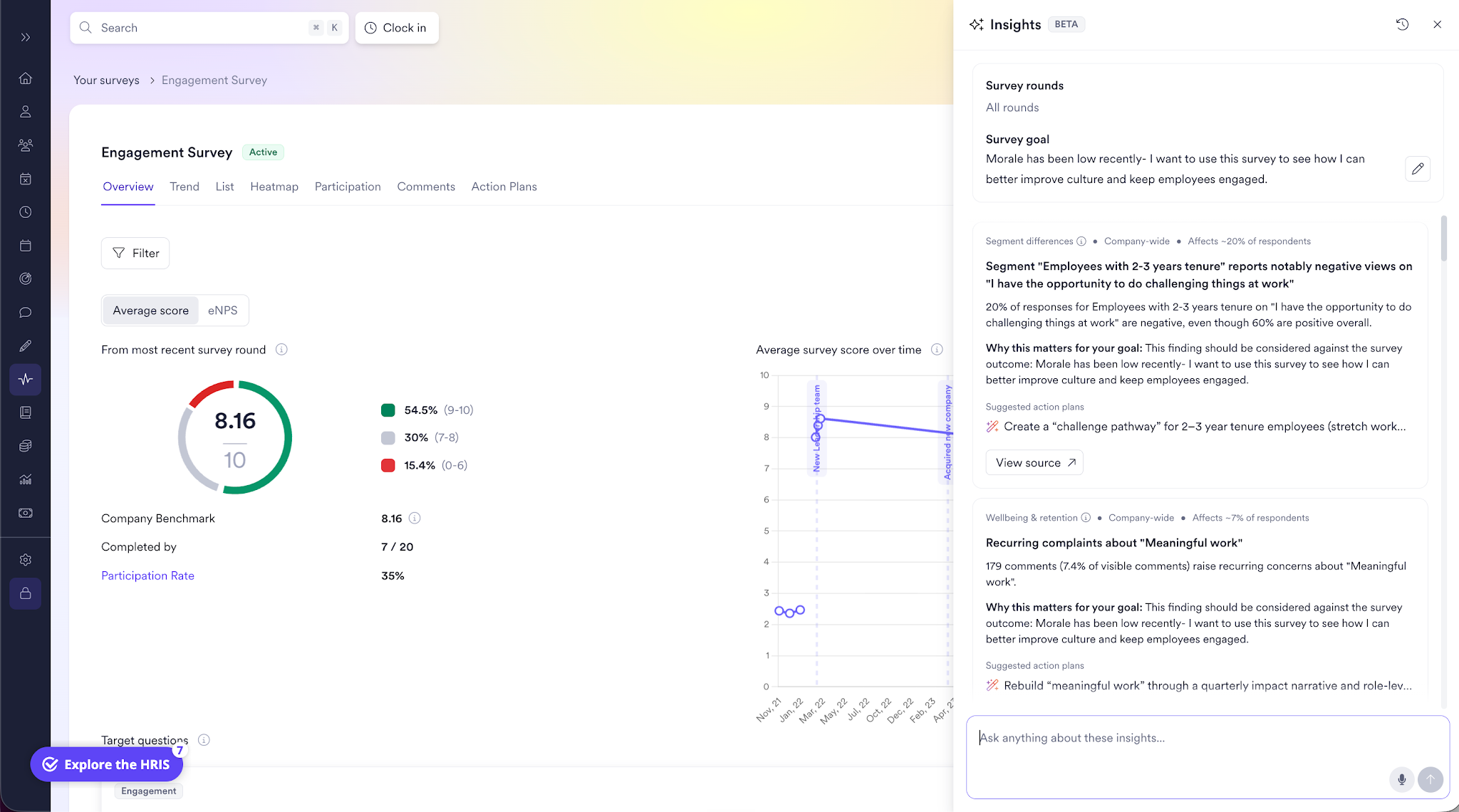
Before you implement floating holidays, you need to know whether your employees will actually find them useful. Leapsome Surveys can show you how your workforce feels about your existing holiday calendar and whether adding floating holidays might improve it.
📝 Evaluate before you allocate
Gather feedback straight from the source to understand whether your workforce would get genuine value out of a floating holiday arrangement. 👉 Explore
👉 Explore Engagement Surveys
Should you offer floating holidays alongside PTO?
“Managers shouldn’t email HR to ask who’s on leave or what a team’s balances are; they should see it live. The moment people self-serve, interruptions drop and decisions speed up. That’s the point of a single source of truth.”
— Carolin Leidel, Consultant, torq.partners
Floating holiday policies often fail when organizations bolt them onto an existing PTO policy without defining their purpose. Employees may treat the two balances as interchangeable, leaving HR to track a new type of leave with distinct eligibility and expiration rules but little practical benefit.
To avoid this, decide whether you want to improve flexibility and inclusion or just offer another perk for optics.
Consider these questions.
Do employees lack the flexibility to celebrate religious holidays, cultural holidays, or other personally significant dates in your existing holiday schedule?
Employees on diverse or geographically distributed teams may benefit from floating holidays to observe special days that fall outside the standard calendar. For example, Pew Research Center data shows that 36% of U.S. adults practice a religion other than Christianity or no religion at all. A floating holiday policy can give employees the flexibility to observe important events and traditions so you don’t need to make the company-wide holiday calendar satisfy everyone.
Would floating holidays give employees meaningful flexibility or duplicate your existing PTO policy?'
Floating holidays aren’t always the solution if employees need more flexibility. If you offer unlimited PTO, for example, employees can take time off for whatever observance they choose. A separate bank of floating holidays would be redundant.
Can your HR process or system keep eligibility, balances, expiration rules, and approvals separate?
It’s easy for floating holidays to blend into other types of leave when they’re tracked the same way. If your current system lumps everything together or requires a significant amount of manual work, HR ends up with a heavier admin burden for little benefit.
Would employees immediately understand when to use floating holidays vs. PTO?
If employees (or HR, for that matter) don’t know exactly what floating holidays are for, they won’t be able to use them as intended. A clear definition and purpose statement in your employee handbook can help.
If you decide floating holidays would benefit your organization, you then need to decide how many you should offer alongside existing PTO. Many companies offer two days per year, but that’s not a universal standard.
If your goal is to replace a certain number of fixed holidays, consider matching the number of days you’re swapping out. If you want to reward employees with an extra perk, run a cost-benefit analysis to see how many extra days off is worth it. Once you decide how many floating holidays to offer, establish clear eligibility rules so employees know how to use their allowance.
How to manage floating holidays vs. PTO for global teams
“We even flag compliance risks, for example, if a country requires a minimum of 20 paid days off, the platform won’t let you go below that.”
— Suraj Paneru, Customer Success Coach, Leapsome
Floating holidays are fairly popular in the U.S., but that doesn’t mean they work everywhere. Multinational employers don’t need to institute the same time-off policy for every region they have workers in. They can let each region run a targeted leave policy that structures public holidays and paid leave according to local laws and customs.
For example, a company headquartered in Germany that has American employees might choose to implement floating holidays for the U.S. workforce without changing its leave policy for German employees.
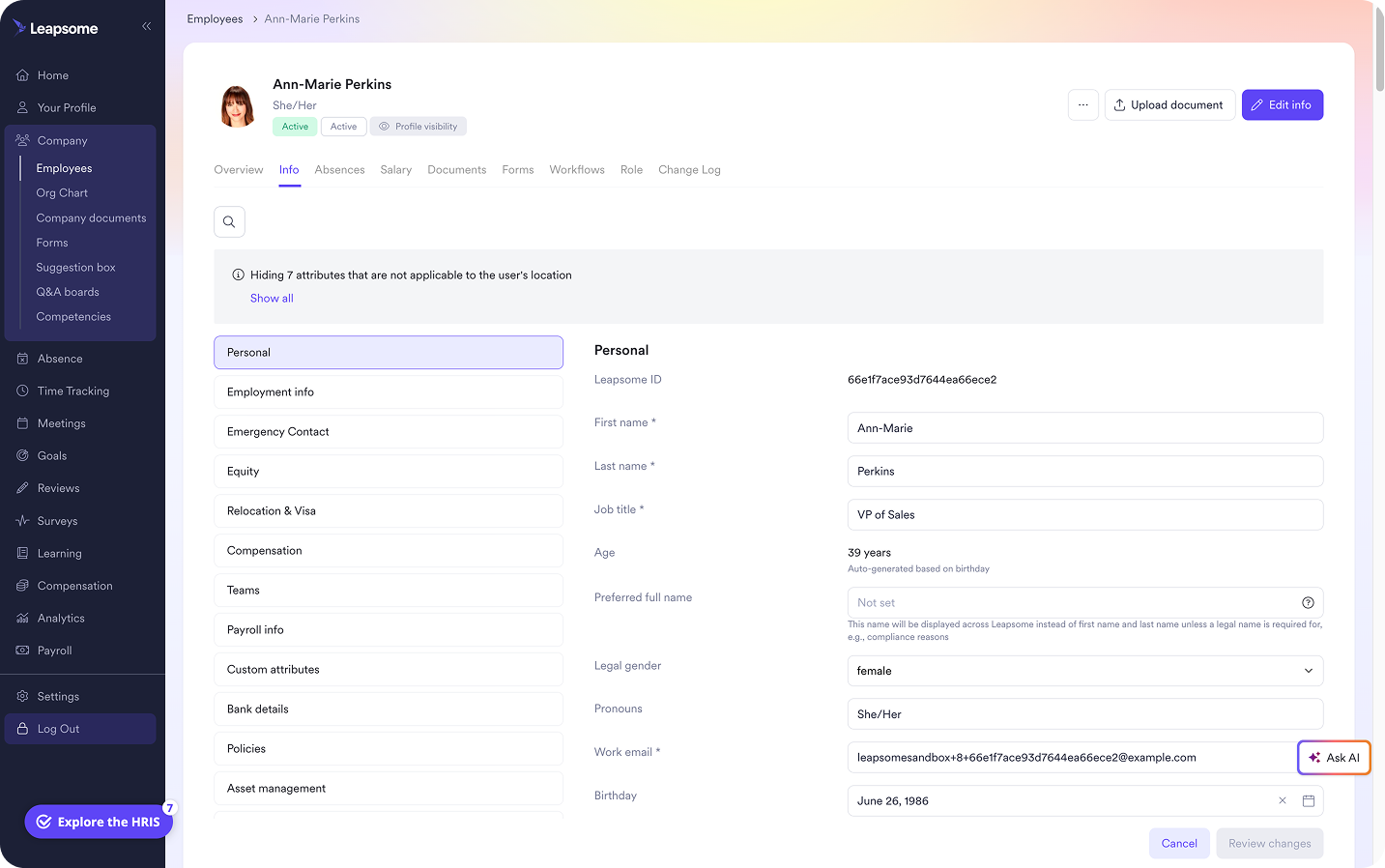
Running different policies in parallel can get chaotic without the right system. Absence Management on Leapsome comes with configurable leave types, eligibility, balances, and policy rules to create clear borders around different regional policies.
🌍 Don’t put a round workforce into a square policy
Configure separate rules and track different leave types automatically so each region’s policy fits its people.
👉 Explore Absence Management
Manage floating holidays and PTO with Leapsome
“On the C-level, I learned to doubt people data because it arrived late and conflicted across files. Then, sitting in HR, I felt the pain from the inside and saw how much time went into rebuilding the same reports. Centralizing restores trust and your calendar.” — Florian Klages, Managing Partner, torq.partners
Offering both floating holidays and PTO can give employees a way to take time off on their own terms. But if you don’t draw a clear distinction between them, you’re left with overlapping leave types that HR has to manage separately.
Leapsome helps HR teams embed policy design decisions at the systems level, keeping policy and implementation from drifting apart over time.
Companies get:
- Absence Management: Configure floating holidays and PTO as distinct leave types, each with its own accrual, carryover, and approval rules. With the policy baked into the system, employees and managers have a better sense of when to use which bank, and they always know which balance a request draws from.
- HRIS integration: Automatically sync absences with employee records and payroll, no manual reconciliation required.
- Leapsome AI: Describe the rules you want for each location you hire in and let AI draft the first pass of your new policy.
“Employees can now find everything in one place: their data, absences, goals, and reviews. I don’t have to explain which tool to use for what. It’s all in Leapsome.” — Merilyn L, Senior People Operations Specialist, Bob W.
📆 Make floating holidays count
Draw a clean line between floating holidays and other types of leave, then enforce it in the same software that runs the rest of your HR processes.
👉 Request a demo
FAQ
When should employees use a floating holiday instead of PTO?
The answer depends on your time-off policy. Typically, employees use floating holidays to celebrate occasions the company-wide calendar doesn’t account for. This might include specific religious or cultural observances, personally significant events like birthdays, or federal holidays the business stays open for. PTO covers everything else, such as vacation time and sick days.