Managereffektivität im Arbeitsalltag verankern


Keine Führungskraft ist perfekt, aber Probleme entstehen, wenn uneinheitliche Führungsqualität die Employee Experience beeinträchtigt. Laut einer Gallup-Umfrage geben Mitarbeitende unter schlechter Führung an, 60 % gestresster zu sein als Mitarbeitende unter starker Führung.*
Diese Spannung zeigt sich meist im ungünstigsten Moment. Solange ein Unternehmen klein ist, lässt sich uneinheitliche Führung leichter auffangen. Mit dem Wachstum der Organisation müssen Führungskräfte zunehmend eigenständig handeln. Die Geschäftsleitung kann nicht jede Hand halten, und HR kann nicht bei jedem schwierigen Gespräch dabei sein.
Wenn sich Belastungsmomente häufen, greift HR oft zuerst zur Strategie. In vielen Fällen können aber selbst die durchdachtesten People-Strategien und umfassendsten Trainings eine Führung nicht reparieren, die den Erwartungen nicht gerecht wird. Es fehlt nicht am Plan, sondern an der Umsetzung.
Dieser Guide zeigt, wie HR-Verantwortliche die Lücke zwischen Theorie und praktischer Unterstützung für Führungskräfte schließen. Ihr erfahrt, wie ihr Best Practices in den Arbeitsalltag von Führungskräften einbettet und wie ihr Managereffektivität messt, um euren Ansatz kontinuierlich zu verfeinern.
* Gallup, 2023
Warum gute Führung für alle wichtig ist
„Eine ineffektive Führungskraft nimmt sich keine Zeit, ihre Mitarbeitenden zu verstehen oder Vertrauen aufzubauen. Die besten kümmern sich wirklich: Sie wissen, wohin ihr euch entwickeln wollt, fordern euch heraus, wenn nötig, und schaffen Raum für ehrliches Feedback."
Luck Dookchitra, ehemalige VP of People and Culture bei Leapsome
Eine gute Führungskraft zu sein bedeutet mehr, als nur Quartalsziele und SMART-Ziele zu erreichen. (Schließlich können Führungskräfte, die durch Konflikte die Mitarbeiterbindung untergraben, trotzdem ihre Leistungsziele erfüllen.) Effektive Führungskräfte setzen Leadership-Skills ein, um Mitarbeitende zu motivieren, einzubinden und weiterzuentwickeln, und schaffen dabei ein Umfeld, in dem jedes Teammitglied durchgehend sein Bestes geben kann.
Ein konsistentes, effektives Führungsteam aufzubauen, kann überproportional große Auswirkungen auf die Ergebnisse der gesamten Organisation haben. Laut Gallup macht die individuelle Effektivität einer Führungskraft 70 % der Schwankungen beim Team-Engagement aus. Die Stärke eines Teams beginnt also mit der Qualität seiner Führung.
Führungserfolg messen: Die wichtigsten Kennzahlen
„Engagement-Werte und Vertrauens-Kennzahlen sind Signale, keine Ziele. Wenn eine Kennzahl keinen Einfluss auf die Geschäftsergebnisse hat, streicht sie und konzentriert euch auf das, was wirkt."
Melanie Naranjo, Chief People Officer bei Ethena
Managereffektivität zu messen, ist Mittel zum Zweck, nicht Selbstzweck. Diese Kennzahlen sollen HR helfen zu erkennen, wann eingegriffen werden muss, und proaktives Coaching sowie Unterstützung so früh wie möglich zu ermöglichen. Sie zeigen außerdem, welche neuen Prozesse funktionieren, damit ihr wisst, was ihr beibehalten und was ihr anpassen solltet.
Hier sind einige der aussagekräftigsten Indikatoren für effektive Führung in einer Organisation.
Interne Beförderungsquote
Die meisten Mitarbeitenden wollen sich in ihrer Karriere weiterentwickeln. Das zeigt sich deutlich: Sie bleiben 41 % länger bei Unternehmen mit hohen internen Beförderungsquoten. Die Beförderungsquote einer Führungskraft zeigt, wie gut sie Teammitglieder auf dem Weg zu künftigen Führungsrollen unterstützt, und ob diese Investition insgesamt eine stärkere Talent-Pipeline schafft.
Ihr berechnet die interne Beförderungsquote, indem ihr die Anzahl der Beförderungen in einem bestimmten Zeitraum durch die Gesamtzahl der Teammitglieder pro Führungskraft teilt:
Beförderungsquote = Anzahl der Beförderungen / Gesamtzahl der Teammitglieder x 100 %
Liegt die Beförderungsquote einer Führungskraft unter dem Organisationsdurchschnitt, lohnt sich ein genauerer Blick. Eine niedrige Quote kann auf Probleme wie ein toxisches Arbeitsumfeld oder sinkendes Engagement hindeuten.
Fluktuationsrate bei Top-Performern
Wenn starke Talente das Unternehmen verlassen, kann das an der Employee Experience oder begrenzten Aufstiegsmöglichkeiten liegen. Ein Anstieg der Fluktuation in einem bestimmten Team deutet eher auf ineffektive Führung hin als auf allgemeine organisatorische Probleme. Betrachtet die Leistung der jeweiligen Führungskraft zusammen mit den Exit-Interviews: Laut einer Studie von 15Five nennt mehr als die Hälfte der Mitarbeitenden mangelnde Unterstützung durch die Führung als Hauptgrund für ihre Kündigung.
Um diese Kennzahl zu verfolgen, identifiziert zunächst eure Top-Mitarbeitenden anhand der Leistungsbewertungen und prüft dann, wie oft sie das Unternehmen in einem bestimmten Zeitraum verlassen. Schlüsselt die Zahlen nach einzelnen Führungskräften auf, um Teams zu vergleichen, und stellt diesen Wert der Gesamtfluktuationsrate gegenüber, um zu sehen, ob Top-Performer ebenfalls überdurchschnittlich oft gehen.
360°-Feedback-Werte
„Wenn ihr euch mit eurer Führungskraft auf einen Rahmen dafür einigt, worüber ihr in eurem 1:1 sprecht, fühlt sich das nicht mehr nach Micromanagement an, sondern nach gemeinsamer Verantwortung."
Liliya Apostolova, ehemalige VP of Marketing bei Leapsome
360°-Feedbackgespräche beziehen die Perspektiven von Peers und direkt unterstellten Mitarbeitenden mit ein, nicht nur die der direkten Führungskraft. Wenn direkt unterstellte Mitarbeitende die Chance erhalten, ihrer Führungskraft über Upward Feedback eine Rückmeldung zu geben, kommen oft Erkenntnisse ans Licht, die den eigenen Vorgesetzten der Führungskraft kaum auffallen würden, etwa ihre emotionale Intelligenz oder wie konkret ihr konstruktives Feedback ausfällt.
Um eine 360°-Feedback-Runde durchzuführen, sammelt anonymisierte Bewertungen von den direkt unterstellten Mitarbeitenden der Führungskraft sowie von Peers aus anderen Teams. Vergleicht die Selbsteinschätzung mit den Bewertungen der einzelnen Reviewer und analysiert die Unterschiede, um Lücken aufzudecken.
Abweichungen zwischen der Selbsteinschätzung einer Führungskraft und der Wahrnehmung des Teams können auf unentdeckte blinde Flecken in der Führung hindeuten. Wird 360°-Feedback jedoch genutzt, um leistungsschwache Führungskräfte auszusortieren, kann das Misstrauen fördern, unnötige Konkurrenz auslösen und Unsicherheit darüber schüren, wer als Nächstes dran sein könnte. Nutzt diese Reviews stattdessen, um Coaching- und Mentoring-Pläne zu personalisieren.
Mit den richtigen Tools lassen sich 360°-Feedbackgespräche deutlich einfacher umsetzen. Moderne HRIS-Plattformen können Bewertungen sammeln und anonymisieren und dieses Feedback dann mit anderen Leistungsdaten in Beziehung setzen. Leapsome geht noch einen Schritt weiter und erfasst zusätzlich Engagement-Signale, sodass alle Informationen zu jedem Mitarbeitenden an einem Ort zusammenlaufen. Wenn Arbeitsalltag und historische Daten in einem System zusammenlaufen, habt ihr alle Details, die ihr braucht, um Managereffektivität dauerhaft hochzuhalten.
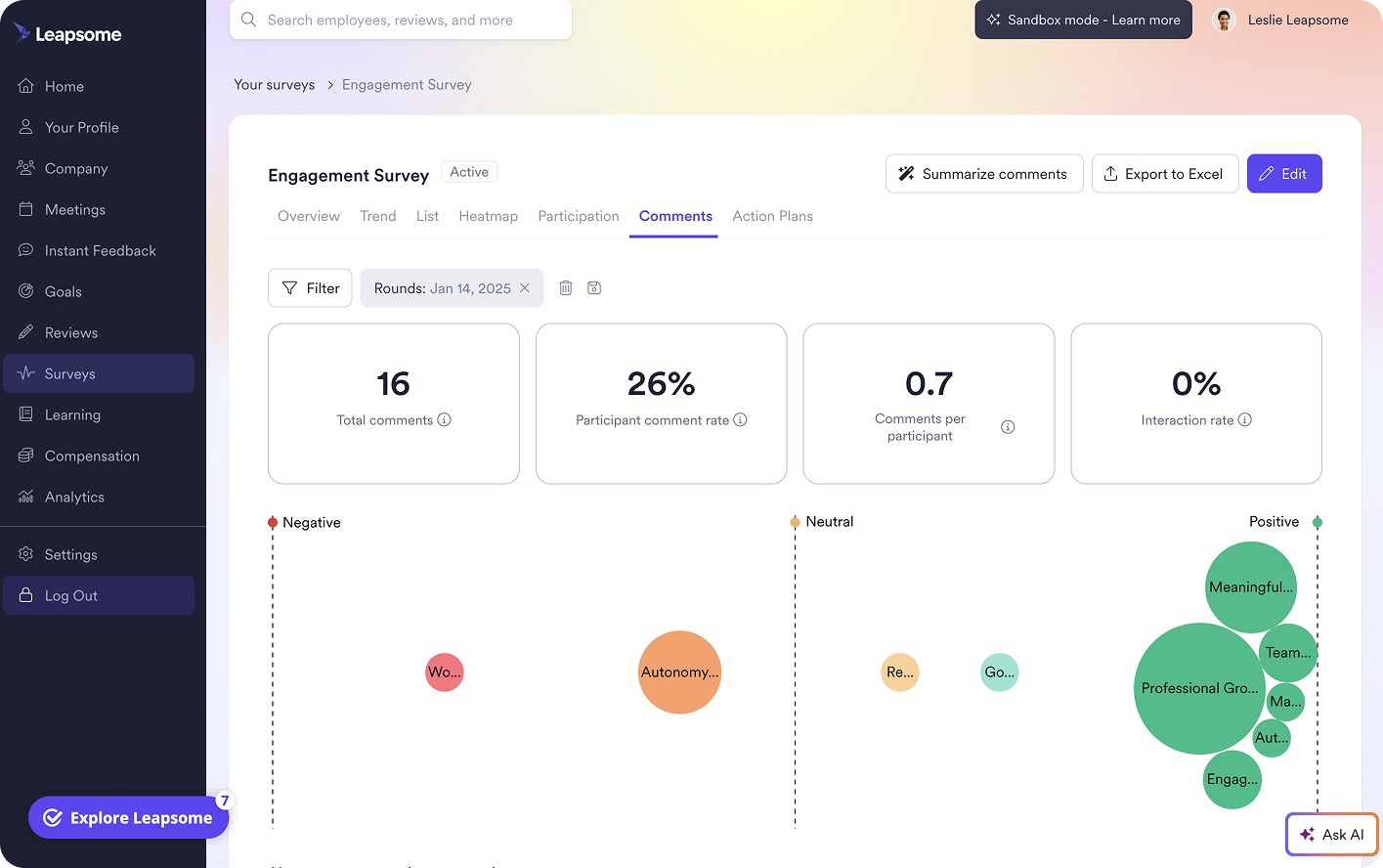
📝 Regelmäßige Engagement-Checks leicht gemacht
Mit Leapsomes Mitarbeiterumfragen könnt ihr schnell Umfragen erstellen und durchführen und Erkenntnisse in konkrete Maßnahmen umsetzen.
👉 Mitarbeiterumfragen entdecken
Wie eingebettete Managereffektivität in der Praxis aussieht
Selbst mit einem soliden Prozess und den besten Absichten setzen sich HRs Bemühungen, bessere Führungskräfte zu entwickeln, nicht automatisch durch, wenn diese Ansätze nicht zu umsetzbaren, zugänglichen Prozessen werden. Wenn Systeme nur in Dokumenten und Tabellen existieren, haben HR-Verantwortliche keine Möglichkeit zu wissen, ob Führungskräfte den Rahmen tatsächlich befolgen, und Führungskräfte haben es schwer, die Regeln zuverlässig anzuwenden.
Ein vernetztes HRIS bettet Best Practices direkt in die Software ein, die Führungskräfte ohnehin nutzen. Wenn ihr eure People-Prozesse direkt in den Arbeitsalltag und die Tools von Führungskräften integriert, entsteht verlässliches Verhalten im großen Maßstab, statt dass sich Führungskräfte in hektischen Situationen allein auf Selbstdisziplin und Erinnerungsvermögen verlassen müssen.
Hier sind einige Grundprinzipien, die euer HR-Team auf dem Weg zu eingebetteter Managereffektivität leiten.
Führungskräfte brauchen reibungslosen Zugang zu People-Prozessen
Effektive Führungspraktiken setzen sich zuverlässiger durch, wenn nur wenige Schritte nötig sind. Wenn Erinnerungen direkt im gewohnten Workflow einer Führungskraft erscheinen, werden sie eher wahrgenommen und umgesetzt. Wenn eine Führungskraft zum Beispiel ein neues Teammitglied onboardet, bleibt durch weniger Hürden mehr Zeit, um Roadmaps vorzubereiten, regelmäßig Check-ins durchzuführen und Entwicklungsgespräche zu vereinfachen.
Automatisierte Erinnerungen leisten, was Führungskräfte sich nicht selbst geben können
Unter Druck geht auch den talentiertesten Führungskräften mal etwas unter. Automatisierte Erinnerungen sorgen dafür, dass die richtigen Verhaltensweisen zur richtigen Zeit passieren, sodass sich Führungskräfte nicht allein auf ihr Gedächtnis verlassen müssen.
Regelmäßige 1:1s machen gute Führung zum Beispiel sichtbar und messbar, indem sie die Gespräche dokumentieren, die eine Führungskraft leitet. Das funktioniert allerdings nur, wenn sie auch wirklich stattfinden. Automatisierte Erinnerungen sorgen dafür, dass Check-ins eher planmäßig stattfinden.
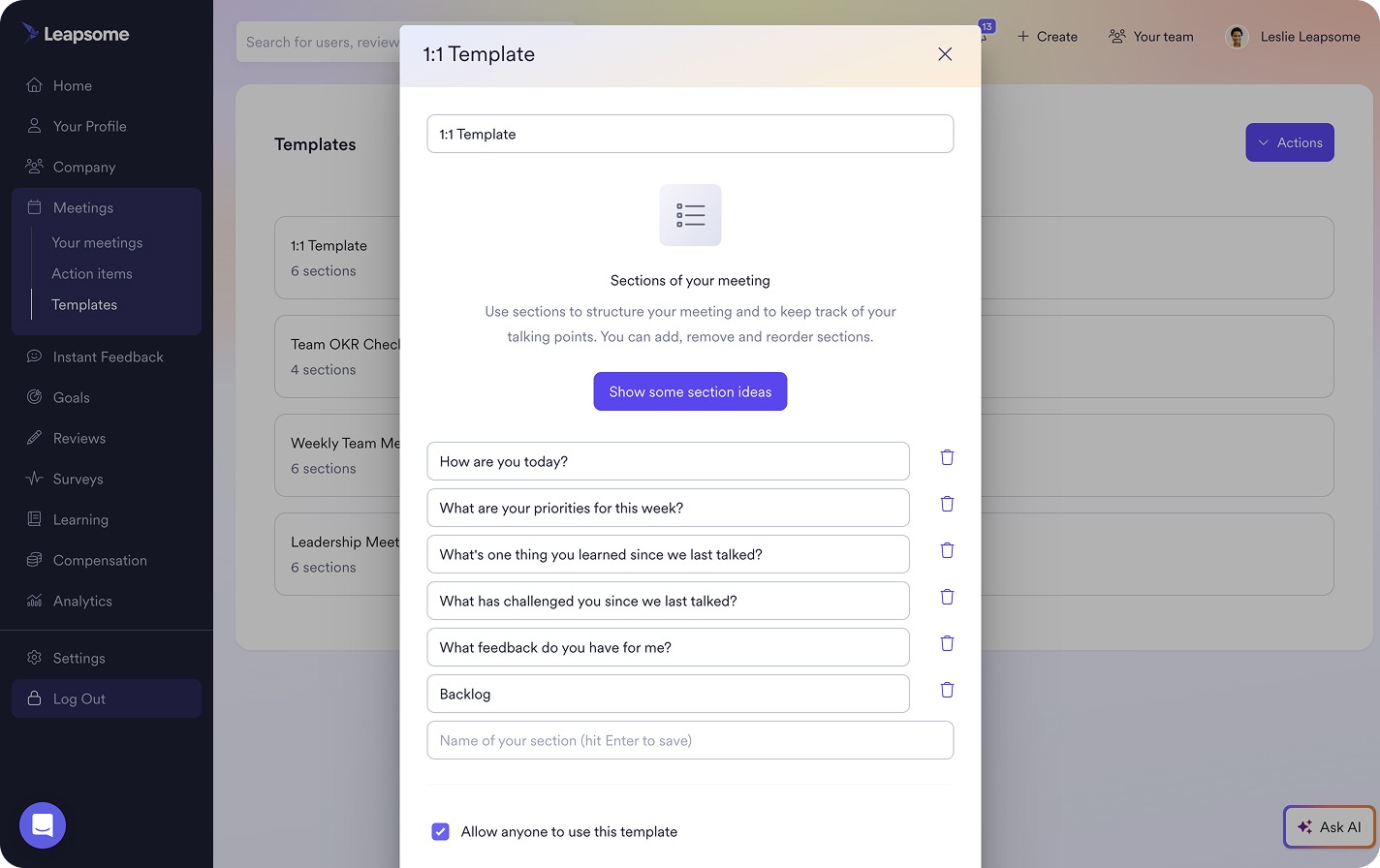
👥 1:1s führen, ohne zwischen Tabs zu wechseln
Leapsome bietet den Rahmen für individuelle oder vorlagenbasierte 1:1s und hilft HR-Teams, den Fortschritt zu verfolgen und Führungskräfte zu den besten nächsten Schritten zu führen.
👉 1:1s & Meetings entdecken
Gute Entscheidungen entstehen aus dem großen Ganzen
Führungskräfte treffen die besten Entscheidungen, wenn sie den vollständigen Kontext eines Themas kennen. Kontextbezogene Entscheidungsfindung bedeutet, Zielsetzung, Engagement-Signale und Feedback in einer einzigen Ansicht zusammenzuführen. Ein zentrales Dashboard statt endlosem Hin- und Herwechseln zwischen getrennten Tools gibt Führungskräften eher alle Details, die sie für die richtige Entscheidung brauchen.
Managereffektivität verbessern: Best Practices
„Führungskräften mehr Trainings oder mehr Skills zu geben, steigert ihre Effektivität nicht. Stattdessen müssen Organisationen sich auf die Handhabbarkeit der Rolle konzentrieren: Eine handhabbarere Führungsrolle zu schaffen, ist fünfmal wirksamer für die Managereffektivität als reine Skill-Vermittlung."
Mark Whittle, Vice President of Advisory bei Gartner HR
Einmalige HR-Maßnahmen wirken sich selten Monate später noch auf die Führung aus. Eine gute Führungskraft zu werden erfordert, People-Prozesse fest im Arbeitsalltag zu verankern. Diese Tipps helfen eurem HR-Team dabei:
- Entwicklungspläne erstellen, bevor Probleme auftauchen: Behandelt Coaching und Führungskräfteentwicklung als fortlaufende Investition statt als Reaktion auf Krisen. Führungskräfte, die unter Druck nicht einbrechen, haben in der Regel schon lange vor schwierigen Momenten aktive Unterstützung zur Verfügung.
- Technologie nutzen, um Reibung zu reduzieren, nicht nur um Funktionen hinzuzufügen: Eure Technologiewahl entscheidet darüber, wie konsistent sich Prozesse umsetzen lassen. Sucht euch Plattformen, die sich leicht in eure bestehenden Systeme einbetten lassen, statt der Plattform mit der längsten Funktionsliste nachzujagen, die eine komplette Umstellung erzwingt.
- Nachfolgeplanung als fortlaufenden Prozess behandeln: Wer künftige Führungskräfte im Blick behält, vermeidet überstürzte Entscheidungen, wenn eine Position im Führungsteam frei wird. Nur während der jährlichen Review-Zyklen nach guten Kandidat*innen zu suchen, ist meist zu langsam. Die stärksten Kandidat*innen sind bis zur Review-Saison oft schon weg.
Effektive Führung mit Leapsome zur betrieblichen Realität machen
Kleine und mittelgroße Organisationen scheitern bei der Managereffektivität meist nicht an schlechter Strategie, sondern daran, gute People-Prozesse mit dem Arbeitsalltag von Führungskräften in Einklang zu bringen.
Leapsome hilft HR-Verantwortlichen, diese Lücke zu schließen, indem konsistente Managereffektivität zu einem System wird statt zu einer Einzelaufgabe. Durch die Kombination aus strukturierten 1:1s, kontinuierlichem Feedback, Zielverfolgung und Engagement-Transparenz in einer einzigen HRIS- und People-Management-Plattform werden Erinnerungen und Prozesse fester Bestandteil des Führungsalltags.
Verlässliches Führungsverhalten ist ein natürliches Nebenprodukt des Gesamtsystems. Leapsome stellt Führungskräfte und Mitarbeitende an erste Stelle und sorgt so für einen reibungslosen Einstieg, der People-Prozesse teamübergreifend verankert. Egal, ob ihr fünf oder 50 Teams leitet: Leapsome macht gute Führung zur Regel, nicht zur Ausnahme.
„Ein großer Teil unserer People-Arbeit läuft über Leapsome. Wir haben dort viele Touchpoints mit Führungskräften, zum Beispiel Pulsbefragungen, bei denen Führungskräfte einen guten Überblick über die Stimmung und das Wohlbefinden ihres Teams erhalten.Außerdem haben wir einen jährlichen Talent-Assessment-Zyklus, bei dem Leistungsbeurteilungen und Gespräche zur Karriereentwicklung über Leapsome nachverfolgt werden. Führungskräfte bereiten diese Meetings über die Meetings-Funktion vor, legen Entwicklungsziele fest und verfolgen sie über das Quartal hinweg. Zusätzlich verfolgen wir Unternehmensziele über Leapsome." Eva Gallee, Senior People Business Partner bei ProGlove
🧰 Ein Flickenteppich aus Tools wird zur umfassenden Toolbox
Leapsome gibt Führungskräften alles, was sie für effektive Führung brauchen, von Mitarbeiterumfragen bis zu strukturierten 1:1-Vorlagen, in einem einzigen benutzerfreundlichen Dashboard.
👉 Demo anfragen
FAQ
Wie berechne ich die Effektivität meines Führungsteams?
Es gibt keine universelle Formel, um Managereffektivität zu berechnen. Wenn ihr aber führungskraftspezifische Beförderungsquoten, Fluktuationsraten bei Top-Performern und 360°-Feedback-Werte verfolgt, erhaltet ihr ein rundes Bild davon, wie gut jede Führungskraft ein Umfeld schafft, in dem Mitarbeitende aufblühen.
In welchen Bereichen sollten sich Führungskräfte weiterentwickeln?
Zu den wirkungsvollsten Fähigkeiten und Werkzeugen, die Führungskräfte lernen können, um effektiver zu werden, gehören:
- Kommunikations- und Feedback-Skills
- Selbstwahrnehmung
- Talententwicklung
- Psychologische Sicherheit
- Delegation und Monitoring

.jpg)



.jpg)