Halbmonatlich vs. vierzehntägig: Gehaltsrhythmen und die Employee Experience


Auf den ersten Blick klingen die Begriffe „bi-weekly“ (vierzehntägig) und „bi-monthly“ (halbmonatlich) leicht verwechselbar. Dabei landet das Gehalt in beiden Fällen ungefähr zweimal im Monat auf dem Konto der Mitarbeitenden. Das wirft einige Fragen auf, und ohne klare Kommunikation ist es gut möglich, dass Mitarbeitende nicht genau wissen, wann sie bezahlt werden.
Laut einer PayrollOrg-Studie aus dem Jahr 2025 geben 78 % der Beschäftigten in den USA an, dass sie bereits nach einer einzigen einwöchigen Verzögerung ihres Gehalts in finanzielle Schwierigkeiten geraten würden.* Eure Mitarbeitenden brauchen diese Informationen also für eine solide Planung. Wenn sie sich nicht darauf verlassen können, wann ihr Gehalt ankommt, bröckelt das Vertrauen, die Employee Experience leidet, und das kann letztlich auch die Bindung ans Unternehmen schwächen.
Dieser Guide erklärt halbmonatliche und vierzehntägige Gehaltsperioden im Detail: ihre Vor- und Nachteile und wie ihr den Rhythmus findet, der am besten zu eurer Belegschaft passt. Außerdem erfahrt ihr, wie moderne HRIS- und People-Management-Plattformen wie Leapsome individuelle Zahlungsrhythmen automatisieren und so Verwirrung von vornherein vermeiden.
* PayrollOrg, 2025
Was unterscheidet einen halbmonatlichen von einem vierzehntägigen Gehaltsrhythmus?
Die Wahl des Gehaltsrhythmus hat mehr Einfluss, als man zunächst denkt. So wirken sich die beiden Modelle auf Mitarbeitende aus.
Was ist vierzehntägige Bezahlung?
Bei einem vierzehntägigen Modell zahlen Arbeitgeber das Gehalt alle zwei Wochen am selben Wochentag aus, zum Beispiel jeden zweiten Freitag. Bei 52 Wochen im Jahr ergibt das 26 Gehaltsperioden.
In der Regel lässt sich bei diesem Modell leichter berechnen, wie viele Stunden Mitarbeitende pro Gehaltsperiode gearbeitet haben. Deshalb ist es vor allem in Branchen verbreitet, in denen Stundenlohn die Norm ist, etwa:
- Produktion und Bauwesen
- Einzelhandel und Gastgewerbe
- Technologie und professionelle Dienstleistungen
Was ist halbmonatliche Bezahlung?
Bei der halbmonatlichen Gehaltsabrechnung zahlen Arbeitgeber zu festen Terminen zweimal im Monat aus, zum Beispiel am 1. und 15. oder am 15. und letzten Tag des Monats. Mitarbeitende erhalten ihr Gehalt damit 24 Mal im Jahr.
Halbmonatliche Bezahlung ist vor allem in Branchen beliebt, in denen Festgehälter überwiegen, etwa:
- Finanzwesen und Buchhaltung
- Unternehmens- und professionelle Dienstleistungen
- Öffentlicher Dienst und Verwaltung
Was unterscheidet die beiden Modelle in der Praxis?
Die vierzehntägige Abrechnung findet immer am selben Wochentag statt, die halbmonatliche immer am selben Kalendertag. Weil das vierzehntägige Modell im Jahr zwei zusätzliche Zahlungen mit sich bringt, fällt jede einzelne etwas kleiner aus als bei der halbmonatlichen Variante, das Jahresgehalt bleibt aber gleich.
Diese beiden „zusätzlichen“ Zahlungen fallen bei der vierzehntägigen Struktur häufig in Monate mit fünf Wochen, in denen Mitarbeitende statt der üblichen zwei gleich drei Zahlungen erhalten, was die Abrechnung komplizierter macht.
Im halbmonatlichen Modell erhalten Mitarbeitende dagegen konstant zwei Zahlungen pro Monat. Weil Monate unterschiedlich lang sind, lässt sich hier schwerer genau berechnen, wie viel Stundenlöhner tatsächlich verdienen.
Ob vierzehntägige oder halbmonatliche Abrechnung besser passt, hängt von eurer Belegschaft ab. Besteht euer Team überwiegend aus Stundenlöhnern, fahrt ihr mit dem vierzehntägigen Modell oft besser, weil es anteilige Zahlungen vermeidet und die Berechnung von Stundenlohn und Überstunden für HR vereinfacht. Sind die meisten Mitarbeitenden fest angestellt und muss das monatliche Reporting synchron bleiben, sorgt das halbmonatliche Modell meist für mehr Einfachheit und Planbarkeit, für HR und die restliche Belegschaft gleichermaßen.
Vor- und Nachteile der beiden Modelle
Hier sind die wichtigsten Vor- und Nachteile beider Modelle für HR-Teams und Mitarbeitende.
Vierzehntägige Bezahlung: Vorteile
- Planbare Zahltage: „Ich werde nächsten Freitag bezahlt“ ist für Mitarbeitende leichter zu merken, als auszurechnen, wie viele Tage bis zum Monatsende noch bleiben.
- Einfachere Finanzplanung: Weil die vierzehntägige Abrechnung zwei zusätzliche Zahlungen pro Jahr mit sich bringt, haben Mitarbeitende mit knappem Budget etwas mehr finanziellen Spielraum.
- Einfachere Überstundenberechnung: Vierzehntägige Gehaltsperioden decken sich sauber mit Arbeitswochen. Überstunden lassen sich damit einfach berechnen: Der Zuschlag gilt für alle Stunden über 80 pro Gehaltsperiode.
Vierzehntägige Bezahlung: Nachteile
- Schwierige Abstimmung mit monatlichen Fixkosten: Monatliche Ausgaben wie Miete und Kreditraten fallen meist auf den Ersten oder Letzten des Monats. Fallen Zahltag und Mietzahlung nicht zusammen, müssen Mitarbeitende genauer planen.
- Komplexere Abzüge für Benefits: Abzüge für Benefits werden in der Regel monatlich berechnet. Gibt es in einem Monat drei Gehaltsperioden, muss HR entscheiden, ob der Abzug aus der dritten Zahlung erfolgt oder auf den Folgemonat verschoben wird.
- Höherer Verwaltungsaufwand: Zwei zusätzliche Abrechnungsläufe können schlanke HR-Teams oder Teams mit manuellen Prozessen zusätzlich belasten. Mit einem HRIS- und People-Management-Tool wie Leapsome lässt sich dieser Aufwand aber deutlich reduzieren, weil ein Teil der Verwaltungsarbeit automatisch im Hintergrund läuft.
„Alle Gehaltsdaten liegen in Leapsome: Es ist eine lebendige Zahl. Wenn sich Gehälter ändern, aktualisieren Führungskräfte sie direkt.“
Siddharth Dhanuka, Head of Finance and Operations bei SQUAKE
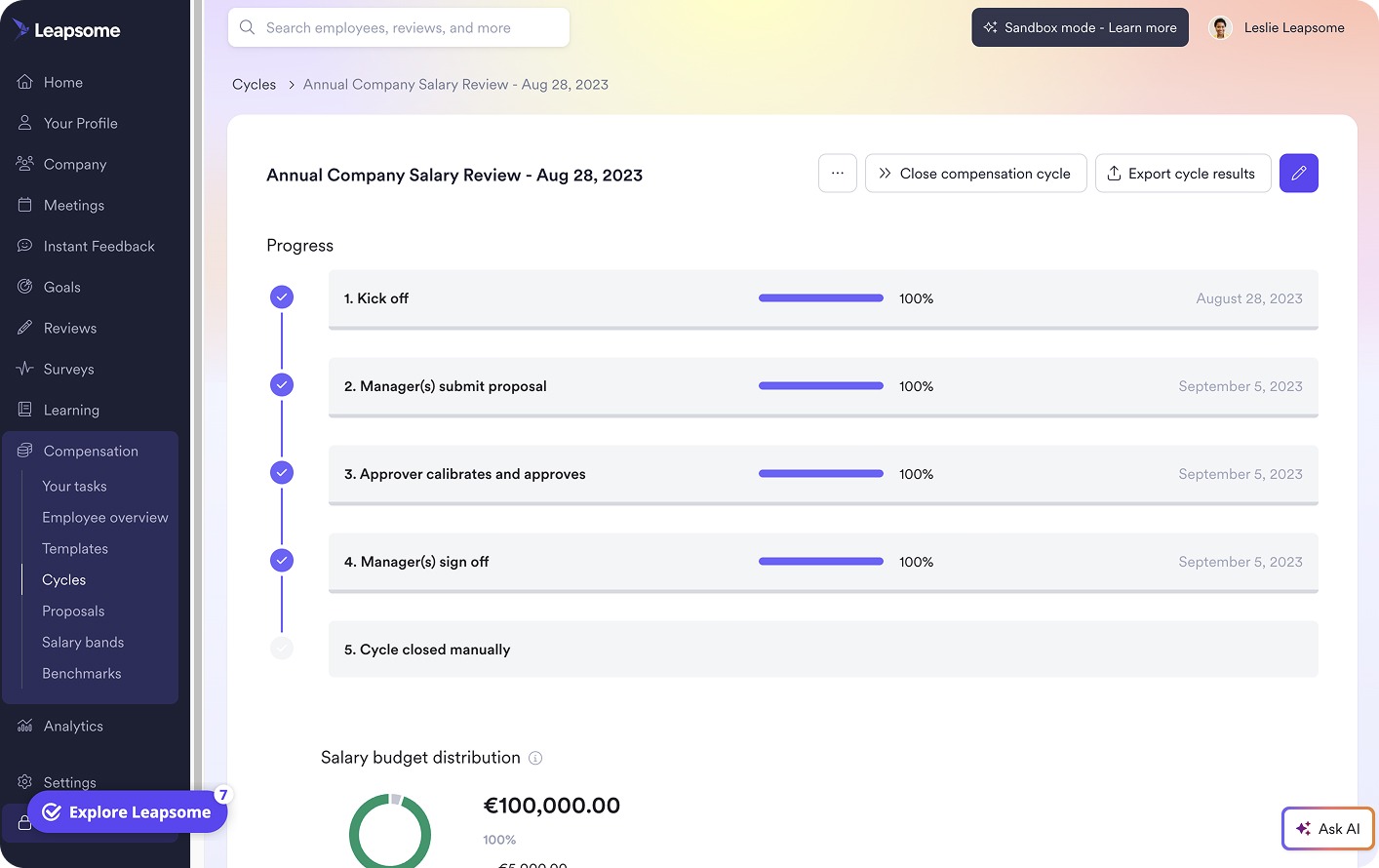
💰 Gehaltsdaten und -prozesse an einem Ort verbinden
Leapsome verbindet Gehaltsdaten, Abzüge für Benefits und die Regeln des Gehaltszyklus, sodass ihr euch den manuellen Abgleich sparen könnt und alles automatisch synchron bleibt.
👉 Entdeckt Compensation Management
Halbmonatliche Bezahlung: Vorteile
- Einfachere Budgetplanung für Festangestellte: Weil Mitarbeitende jeden Monat die gleiche Zahlung erhalten, wissen sie immer genau, wie viel Netto ankommt, und können sich bei der Finanzplanung auf diese Zahlen verlassen.
- Einfachere Planung für HR: HR- und Payroll-Teams können ihre Arbeitslast im Voraus planen, wenn feste Kalendertermine den Rhythmus vorgeben. Ein monatlicher Ablauf mit denselben Stichtagen jeden Monat fühlt sich schnell routiniert an.
- Weniger Verwaltungsaufwand: Weniger Durchläufe der Gehaltsabrechnung bedeuten weniger Arbeit für HR, was besonders für kleinere Teams hilfreich ist.
Halbmonatliche Bezahlung: Nachteile
- Weniger planbare Zahltage: Der Abstand zwischen den Zahlungen variiert, und manche Termine fallen auf Wochenenden oder Feiertage. HR-Teams müssen diese Termine im Blick behalten und vorausplanen, damit alle pünktlich bezahlt werden.
- Komplexere Überstundenberechnung: Halbmonatliche Gehaltsperioden decken sich selten exakt mit Arbeitswochen, weshalb die Überstundenberechnung manuell abgeglichen und geprüft werden muss.
- Weniger intuitiv: Bei der vierzehntägigen Abrechnung reicht es, zwei Wochen ab der letzten Zahlung zu zählen, um den nächsten Zahltag zu kennen. Beim halbmonatlichen Modell müssen Mitarbeitende dafür einen Blick in den Kalender werfen.
So findet ihr den passenden Gehaltsrhythmus für eure Mitarbeitenden
Die Zahlungsfrequenz spielt eine Rolle. Mitarbeitende mit finanziellem Stress sind bei der Arbeit fünfmal wahrscheinlicher abgelenkt, sodass schlechte Planung euer Unternehmen auf Weisen beeinträchtigen kann, mit denen ihr nicht rechnet. Der falsche Rhythmus kann euch außerdem in Konflikt mit Compliance- und Finanzvorschriften bringen: Mitarbeitende fühlen sich dann schnell übersehen.
Der richtige Rhythmus ist der, der zur individuellen Zusammensetzung eurer Belegschaft, eurer Payroll-Infrastruktur und eurem Cashflow passt.
Das solltet ihr bei der Abwägung berücksichtigen:
- Zusammensetzung der Belegschaft: Habt ihr viele Stundenlöhner im Team, sorgt das vierzehntägige Modell für planbare Zahltage und einfachere Überstundenberechnung. Überwiegen Festangestellte, passen die festen Kalendertermine des halbmonatlichen Modells oft besser.
- Cashflow und monatliches Reporting: Ist euer finanzieller Spielraum knapp, können die Monate mit drei Zahlungen beim vierzehntägigen Modell das Budget belasten. Die halbmonatliche Abrechnung folgt dem monatlichen Rhythmus klassischer Abrechnungszyklen und hilft so, finanziell nicht zu knapp zu kalkulieren.
- Payroll-Infrastruktur: Arbeitet ihr noch manuell, lohnt sich der zusätzliche Aufwand der vierzehntägigen Abrechnung womöglich nicht. Hat HR freie Kapazitäten oder nutzt ihr Automatisierungstools wie Leapsome, lassen sich die zwei zusätzlichen Abrechnungsläufe pro Jahr meist problemlos abfedern.
„Die Automatisierung ist einmal ein großer Kraftakt, aber danach wird jeder Zyklus schneller und leichter. Wenn die unsichtbare Arbeit automatisiert ist, gewinnen HR-Verantwortliche Zeit für Kultur, Strategie und echte Verbindung.“
Emma Leeds, Founder, CEO und Chief People Consultant bei People Function
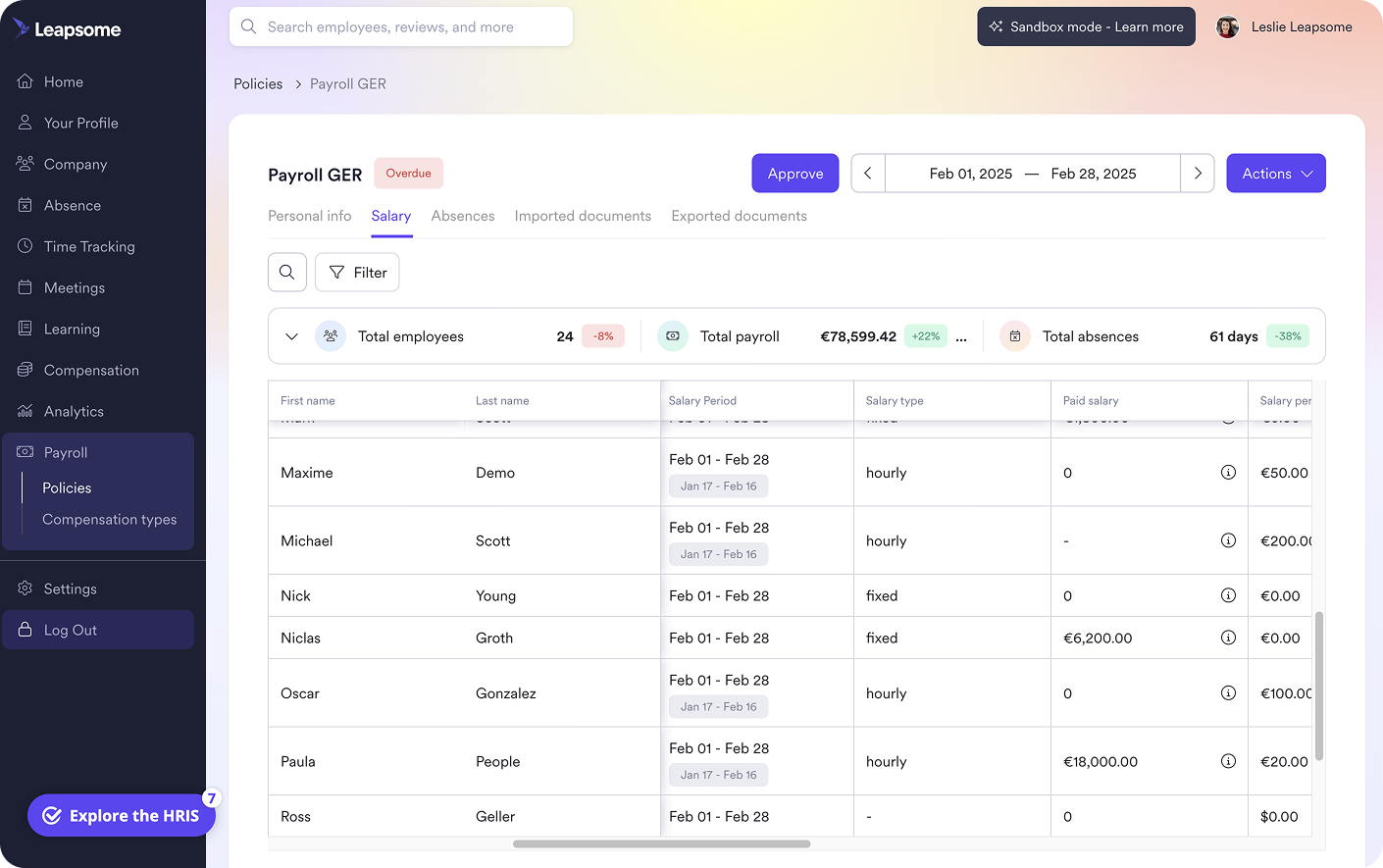
💸 Lasst nicht veraltete Systeme euren Gehaltsrhythmus bestimmen
Leapsomes automatisierte Konfiguration und Verteilung des Gehaltszyklus reduzieren manuelle Arbeit auf ein Minimum, sodass ihr den Zahlungsrhythmus an eure Belegschaft und Compliance-Anforderungen anpassen könnt statt an eure Systeme.
👉 Entdeckt Lohnabrechnung
Der Gehaltsrhythmus aus Sicht der Employee Experience
Der Gehaltsrhythmus beeinflusst, wie gut Mitarbeitende ihre Finanzen planen und nachvollziehen können, wohin ihr Geld eigentlich fließt. Eine durchdachte Wahl zeigt eurem Team, dass es euch wichtig ist. Und wenn HR-Verantwortliche den Gehaltszyklus als Teil der Employee Experience behandeln statt als Nebensache, schafft das die Grundlage für mehr Vertrauen und Zufriedenheit.
Es gibt zwei einfache Wege, die Zahlungsfrequenz von Anfang an in die Employee Experience einzubinden:
- Gehaltsrhythmus im Onboarding erklären: Neue Mitarbeitende müssen ohnehin viel aufnehmen, da gehen Details zur Bezahlung leicht unter. Baut Informationen dazu, wann sie bezahlt werden, fest in euer Onboarding-Programm ein.
- Gehaltsrhythmus dokumentieren: Haltet über die Onboarding-Unterlagen hinaus fest, wie alles funktioniert, etwa im Mitarbeiterhandbuch oder im HRIS-Self-Service-Portal. So haben Mitarbeitende eine Quelle griffbereit, statt bei jeder Frage zu HR zu laufen.
„Geld ist ein sensibles Thema, deshalb ist Kommunikation entscheidend. Nutzt klare, einfache Sprache und sorgt dafür, dass Führungskräfte selbstbewusst und einfühlsam über Gehalt sprechen können.“
Alexandra Edl, Senior HR Consultant, Interim Manager, Coach und Trainerin bei EDL Consulting
Mit Leapsome einen Gehaltsrhythmus aufbauen, hinter dem euer Team steht
Hinter einer ineffizienten Gehaltsabrechnung steckt meist eine schwache Kommunikation darüber, wie der Rhythmus funktioniert. Leapsome löst dieses Problem: Die Plattform liefert HR-Verantwortlichen die Tools, um Gehaltsperioden (neben anderen People-Aufgaben) zu konfigurieren und von Anfang an verständlich zu machen, etwa durch:
- Lohnabrechnung: Bereitet eure Gehaltsdaten für euren Abrechnungsdienstleister vor, vom Time Tracking bis zur Integration mit gängigen Payroll-Anbietern, damit euer Team genau dann bezahlt wird, wenn es erwartet.
- Mitarbeiterprofile: Speichert und verknüpft Gehalts- und Beschäftigungsdaten für Transparenz über alle Tools hinweg.
- Compensation Management: Bleibt dauerhaft synchron, indem ihr Gehalt und Benefits mit den Regeln des Gehaltszyklus verknüpft.
- Self-Service-Dokumentation: Gebt Mitarbeitenden direkten Zugriff auf alle Details zum Gehaltsrhythmus, damit Antworten nur einen Klick entfernt sind.
Indem Leapsome die Gehaltsabrechnung mit dem restlichen People-Management-System synchronisiert, macht die Plattform aus fehleranfälligen manuellen Prozessen ein klares, nahezu autonomes und mitarbeiterorientiertes HR- und Talent-Management-System.
„Mitarbeitende finden jetzt alles an einem Ort: ihre Daten, Abwesenheiten, Ziele und Reviews. Ich muss nicht mehr erklären, welches Tool wofür da ist. Es ist alles in Leapsome.“ Merilyn L., Senior People Operations Specialist bei Bob W
💪 Weniger Zeit mit Gehaltsfragen, mehr Zeit für Strategie
Führt die Gehaltsabrechnung mit Leapsome maximal transparent und minimal aufwendig durch, damit sich euer HR-Team auf eine bessere People-Strategie konzentrieren kann, statt Überstunden der letzten Woche hinterherzujagen.
👉 Demo buchen
FAQ
Was bedeutet vierzehntägige Bezahlung, und wie funktioniert sie?
Bei einem vierzehntägigen Rhythmus werden Mitarbeitende alle zwei Wochen am selben Wochentag bezahlt (zum Beispiel jeden zweiten Freitag). Da ein Jahr 52 Wochen hat, ergeben sich dabei 26 Gehaltsperioden pro Jahr.
Das vierzehntägige Modell ist planbarer und deckt sich mit der Arbeitswoche. Es ist vor allem in Branchen mit einem hohen Anteil an Stundenlöhnern verbreitet, etwa im Einzelhandel und in der Produktion, weil es die Überstundenberechnung vereinfacht.






.jpg)