Job Enrichment: Mit sinnvoller Arbeit das Engagement steigern

.jpg)
Mitarbeitende mit einem starken Sinngefühl sind mit deutlich höherer Wahrscheinlichkeit engagiert bei der Arbeit, genauer gesagt 5,6-mal häufiger.* Trotzdem sagen nur 18 %, dass ihre Arbeit ihnen dieses Maß an Sinn bietet. Ein gut gestaltetes Job-Enrichment-Programm ist ein wirkungsvoller Weg, diese Lücke zu schließen.
Enrichment-Programme motivieren Mitarbeitende und fördern Verantwortungsgefühl, durch durchdachtes Job-Design, das Teammitgliedern mehr Autonomie und reichlich Entwicklungsmöglichkeiten bietet. Manche Fachleute sehen Job Enrichment vor allem als Weg zu höherer Mitarbeiterzufriedenheit. Kluge HR-Teams nutzen es aber auch, um kritische Schmerzpunkte wie Disengagement, Burnout und Fluktuation anzugehen.
In diesem Guide erklären wir, wie ihr Job Enrichment als Baustein einer umfassenderen People-Development-Strategie angeht.
* Gallup, 2025
Was ist Job Enrichment?
„Beschäftigt sein heißt nicht effektiv sein. Echte Produktivität beginnt mit Klarheit darüber, wie Erfolg aussieht und warum er zählt. Wenn Menschen sehen, wie ihre Arbeit auf die Unternehmensziele einzahlt, finden sie Energie und Sinn in dem, was sie tun.“
– Priscila Bala, CEO bei LifeLabs Learning
Job Enrichment ist schwer zu definieren, weil es ein breites Konzept ist: Es umfasst alles, was HR tut, um Arbeit für Mitarbeitende sinnvoller und motivierender zu machen. Dazu gehören oft mehr Autonomie und Entwicklungsangebote.
So unterscheidet sich Job Enrichment von einigen verwandten (und manchmal verwechselten) Konzepten:
- Arbeitszufriedenheit: Das ist eher eine Basis-Messgröße, die erfasst, wie zufrieden Mitarbeitende in ihren Rollen sind.
- Job Enlargement: Der Unterschied zwischen Job Enrichment und Job Enlargement: Ersteres ist vertikal und konzentriert sich auf neue Verantwortlichkeiten und Fähigkeiten. Letzteres ist eher horizontal und erweitert die Aufgaben einer Rolle, um Abwechslung zu schaffen.
Warum ist Job Enrichment wichtig?
Job Enrichment erfordert etwas Investition, kann sich aber auszahlen durch:
- Höhere Produktivität: Ein aktueller Gallup-Report zeigt, dass das weltweite Mitarbeiterengagement 2025 auf 20 % gefallen ist. Das kostete die Weltwirtschaft schwindelerregende 10 Billionen US-Dollar an verlorener Produktivität. Job Enrichment hilft euch, einen Teil dieser verlorenen Leistung zurückzugewinnen, indem es Mitarbeitende engagiert hält und Lust aufs Mitgestalten macht.
- Bessere Mitarbeiterbindung: Wenn Arbeit sinnvoll und machbar ist, statt repetitiv und überwältigend, steigt die Zufriedenheit tendenziell. Das macht Teammitglieder wiederum weniger geneigt, sich anderswo umzusehen.
- Mehr Anpassungsfähigkeit und interne Mobilität: Angereicherte Rollen bieten anspruchsvollere und lohnendere Arbeit, dehnen die Fähigkeiten der Mitarbeitenden mit der Zeit und vertiefen den Talentpool der Organisation.
Job-Enrichment-Strategien, die funktionieren
Diese bewährten Taktiken reichern Rollen mit mehr Abwechslung an und befähigen Mitarbeitende gleichzeitig zu lernen und zu wachsen:
- Fördert Autonomie und Verantwortung: Mehr Ownership für Projekte oder Workflows lässt Mitarbeitende sich vertraut und wertgeschätzt fühlen. Es reduziert außerdem den Führungsaufwand ständiger Freigaben für Routineaufgaben.
- Baut klare Pfade für die Kompetenzentwicklung: Laut einer LinkedIn-Studie von 2025 stimmen 84 % der Mitarbeitenden zu, dass Lernen ihrer Arbeit Sinn verleiht. Denkt an Taktiken wie strukturierte Lernpfade für bestimmte Rollen und Jobrotation, um Fähigkeiten zu erweitern und zu diversifizieren.
- Gebt häufiges, umsetzbares Feedback: Die meisten Mitarbeitenden wollen besser in ihrem Job werden, und seltenes oder vages Feedback hilft ihnen nicht. Jährliche Reviews durch häufigere Check-ins zu ersetzen hilft, ebenso wie Führungskräfte darin zu schulen, konkrete Hinweise zu geben.
„Wenn Menschen wissen, dass Reviews tatsächlich zu Wachstum führen, hören sie auf, sie zu fürchten, und fangen an, in sie zu investieren. Feedback mit konkreten Ergebnissen wie Gehalt, Beförderungen und Lernplänen zu verknüpfen macht aus Leistungsgesprächen Momente des Empowerments.“
– Monica Sarkar, Co-Founder bei Purple Umbrella
Warnsignale: Stagnation und Disengagement aufdecken
Viele Organisationen warten, bis Fluktuation und Burnout bereits Fuß gefasst haben, bevor sie Probleme wie Monotonie am Arbeitsplatz, fehlende Unterstützung oder nachlassende Motivation untersuchen. Denn Disengagement ist oft ein schleichender Prozess. Es entsteht allmählich durch repetitive Arbeit und unklare Entwicklungspfade, verstärkt durch schwache Unterstützung von Führungskräften und wenig Einblick in die Mitarbeiterentwicklung.
„Unmotivierte Mitarbeitende, die still bleiben, können ein Unternehmen schneller auslaugen als die, die gehen. Bei Engagement geht es nicht darum, wer bleibt, sondern wer mit Energie und Verantwortungsgefühl beiträgt.“
– Emma Leeds, Founder und CEO bei People Function
Die folgenden Warnsignale können darauf hindeuten, dass eure Organisation auf Stagnations- oder Disengagement-Probleme zusteuert.
Mitarbeitende interessieren sich nicht für Feedback
Geringe Beteiligung an Performance Reviews und 1:1s kann auf sinkendes Engagement hindeuten, weil Mitarbeitende zu dem Schluss kommen, dass das Arbeitsumfeld keine echten Entwicklungschancen bietet. Wenn Mitarbeitende Entwicklungsgespräche nur abspulen, mit Ein-Wort-Antworten und selten eigenen Themen, spricht ihr Schweigen Bände.
Führungskräfte haben keinen verlässlichen Weg, Entwicklungschancen zu erkennen
Führungskräfte müssen erkennen können, wann sich ihre Teams unterfordert oder nicht unterstützt fühlen, und wissen, wie sie gegensteuern. Inkonsistentes Coaching und schwammige Entwicklungspläne können Anzeichen dafür sein, dass Mitarbeitenden sinnvolle Arbeit oder Orientierung fehlt.
Engagement, Lernen oder interne Mobilität haben nachgelassen
Wenn Engagement-Scores und Lernbeteiligung sinken, steckt oft schwindende Motivation dahinter. Auch steigende Fehlzeiten und eine wachsende Abhängigkeit von externem Hiring in der Nachfolgeplanung können auf zunehmende Stagnation hindeuten.
Ihr könnt sinkendes Engagement nicht verbessern, wenn ihr nicht wisst, wo euer Team steht. Eine All-in-one-Plattform wie Leapsome kann helfen, mit benutzerfreundlichen Umfrage-Tools, die vollständig mit den Mitarbeiterdaten integriert sind.
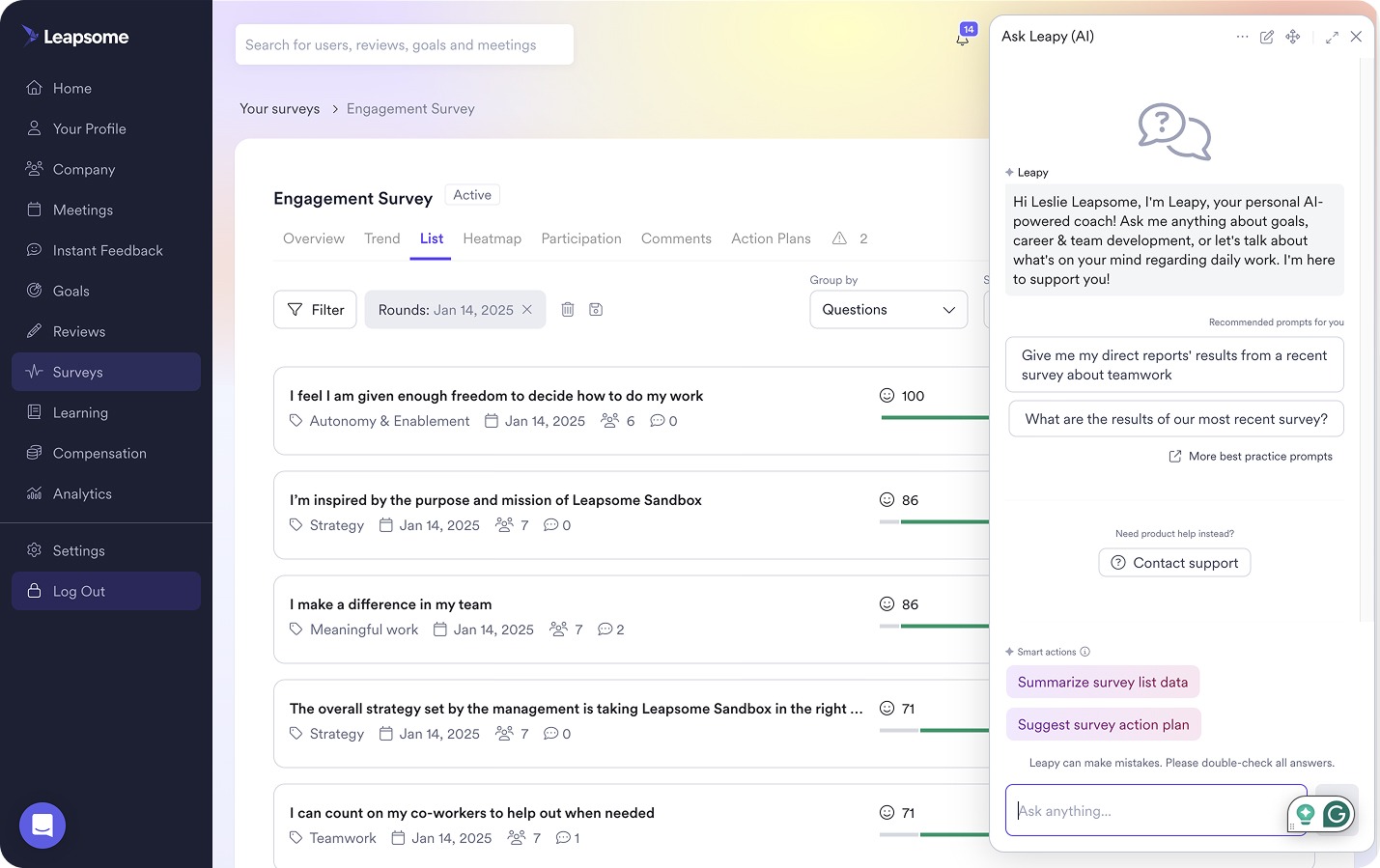
🖐️ Stoppt sinkendes Engagement, bevor es sich festsetzt
Bewertet und interpretiert Engagement-Trends ganz einfach mit individuellen Pulsbefragungen, bevor es für proaktives Job Enrichment zu spät ist.
👉 Erfahrt mehr über Mitarbeiterumfragen
Warum Job Enrichment vernetzte People-Systeme braucht
Job Enrichment ist keine einmalige Aktion. Rollen nachhaltig anzureichern heißt, Systeme über viele bewegliche Teile hinweg aufzubauen und zu verankern, darunter:
- Mitarbeiterentwicklung
- Feedback-Qualität
- Kompetenzaufbau
- Ausgewogene Workloads
- Karriereentwicklung
Und all das muss zusammenhängen: Flickwerk aus unverbundenen HR-Tools und -Strategien macht es praktisch unmöglich, Wachstum und Engagement konsistent zu unterstützen, weil kritische Signale verloren gehen.
Hier ein Blick auf die miteinander verbundenen Komponenten, die Job-Enrichment-Initiativen zum Erfolg verhelfen.
Performance- und Feedback-Systeme
„Bei Feedback geht es nicht nur um Korrektur, sondern um Wachstum. Ihr schafft zuerst Sicherheit und gebt Feedback dann über Fragen und Neugier, nicht über Anweisungen.“
– Anja Schauer, Global Head of Customer Success bei Leapsome
Kontinuierliches, strukturiertes Feedback und Performance Reviews geben Führungskräften die Insights, um zu verstehen, wo Teammitglieder stark sind und wo Raum (und Interesse) für Wachstum besteht. Diese Gespräche können auch Motivationsrisiken sichtbar machen, etwa sinkende Feedback-Qualität oder weniger interne Besetzungen.
Einblick in Workload-Balance und Wohlbefinden der Mitarbeitenden
Kontinuierliche Sichtbarkeit heißt, zentrale Kennzahlen zu beobachten, etwa Fehlzeiten und Engagement-Trends. Auch Zeiterfassung und Personalakten tragen dazu bei und helfen euch, ein vollständigeres Bild inklusive Workload-Balance zu zeichnen. Wenn ihr Burnout-Risiken und unzumutbare oder monotone Workloads früh erkennt, könnt ihr sofort gegensteuern.
Workflows für Lernen und Entwicklung
„Setzt auf Entwicklung statt auf Wachstum. Schleichen, nicht springen. Investiert kontinuierlich und entwickelt Menschen über ihre Stärken, damit sie besser performen können.“
– Steve Browne, Chief People Officer bei LaRosa’s
Ein gut gestaltetes System für Lernen und Entwicklung umfasst Pfade, die strukturierte Wege zum Aufbau neuer Fähigkeiten schaffen. Lernprogramme funktionieren am besten, wenn sie auf konkrete Rollen und Meilensteine zugeschnitten sind, statt Einheitsratschläge zu verteilen.
Wie SHRM betont, sind diese Pläne auch effektiver, wenn sie mit Performance- und Engagement-Daten kombiniert werden, damit ihr auf echten Wachstumssignalen aufbauen könnt. All das manuell zusammenzubringen kann auslaugen und frustrieren. Mit Leapsome könnt ihr Mitarbeitende dagegen mit maßgeschneiderter Unterstützung stärken, die sich mit veränderten Bedürfnissen weiterentwickelt.
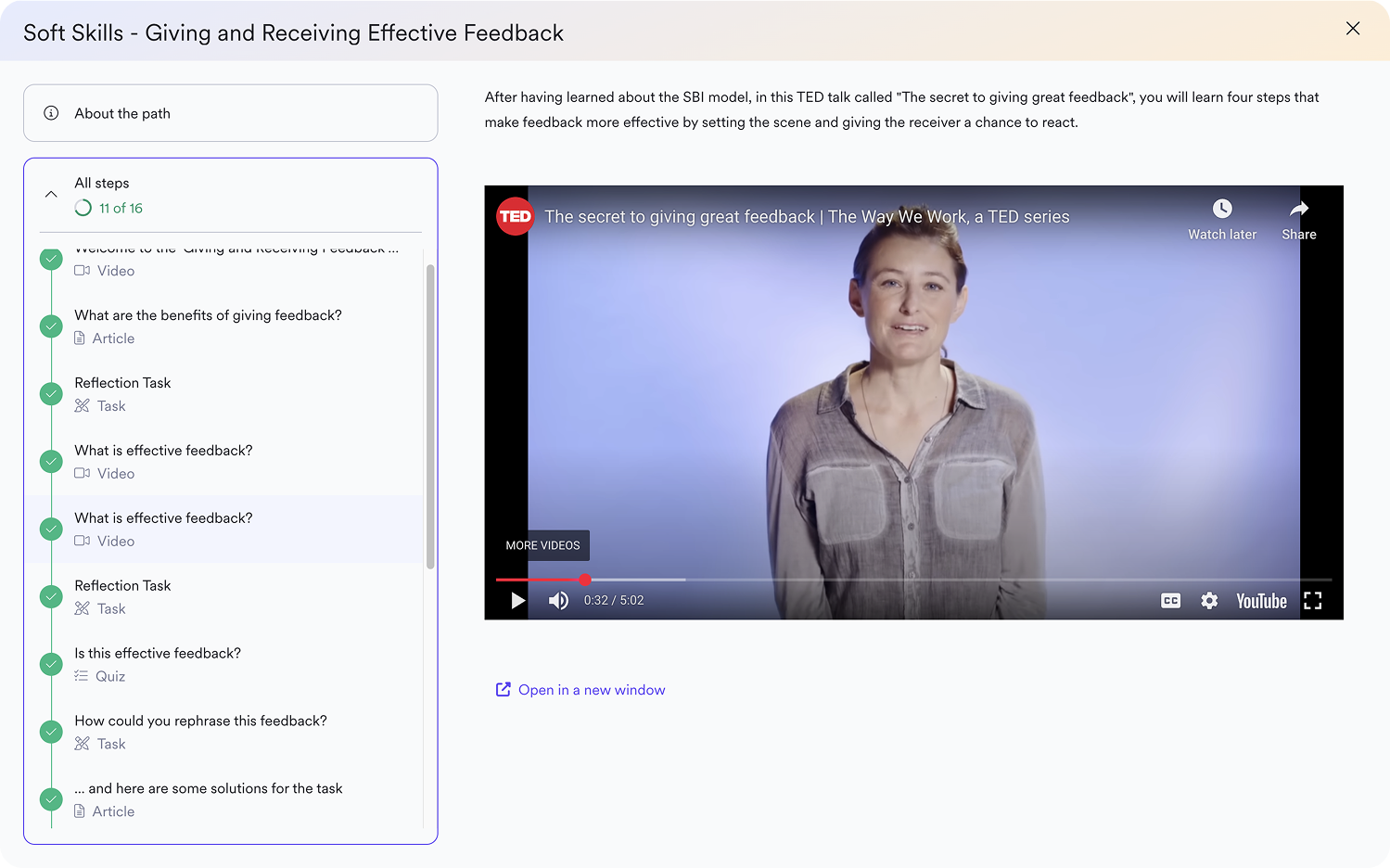
🧑🏫 Stützt Lernprogramme auf harte Daten
Erstellt und betreibt individuelle Lernpfade auf Basis dessen, was die Zahlen über Engagement und Performance verraten, und schließt Kompetenzlücken, bevor sie zu Bindungsrisiken werden.
👉 Entdeckt Leapsome Learning
Setzt ein wirkungsvolles Job-Enrichment-Programm mit Leapsome um
Unverbundene Tools und uneinheitliche Führungspraktiken machen es schwer, Engagement und Mitarbeiterbindung zu verbessern. Manuelle Workflows erschweren die Aufgabe zusätzlich und verwandeln Routine-Admin in zeitraubende Pflichten. Wenn Organisationen skalieren, halten die Systeme oft nicht Schritt, und HR-Teams schnappen nach Luft.
Leapsome hilft euch, strategische People-Entwicklung und den operativen Alltag in Balance zu bringen, über eine vollständig integrierte HR-Plattform. Ihr findet Tools für:
- Performance Reviews: Führt strukturierte Review-Zyklen durch, die direkt mit den Personalakten verknüpft sind.
- Lernen und Entwicklung: Erstellt und vergebt individuelle Lernpfade und verbindet sie direkt mit Performance und Engagement.
- Zielsetzung: Nutzt KI, um SMART-Ziele zu setzen und zu tracken, die auf übergeordnete Unternehmensziele einzahlen.
- Engagement-Insights: Verschickt Pulsbefragungen und beobachtet Engagement-Trends über die Zeit, um mögliche Probleme zu erkennen, bevor sie ernst werden.
- Automatisierung: Verschlankt Workflows und Freigaben, damit HR weniger Zeit mit Koordination und mehr Zeit mit Strategie verbringt.
„Wir haben unsere Job-Level segmentiert, damit Führungskräfte und Mitarbeitende genau sehen, welche Fähigkeiten sie für den nächsten Schritt brauchen. Bei Wachstum geht es nicht nur um einen neuen Titel oder mehr Geld, sondern darum, neue Kompetenzen zu meistern, die dich wertvoller fürs Unternehmen machen.“ – Janelle Daugherty, Head of People and Culture bei Notion Health
🏠 Haltet die Motivation in Bewegung und Burnout auf Abstand
Leapsome hält Personalakten, Engagement-Daten und Lernprogramme unter einem Dach und hilft euch, ein transparentes Job-Enrichment-System aufzubauen, das keine Entwicklungschance ungenutzt lässt.
👉 Demo anfragen




.jpg)