Die EU-Entgelttransparenzrichtlinie: Anforderungen und Vorbereitung

.jpg)
Hinweis: Dieser Inhalt dient ausschließlich allgemeinen Informationszwecken und stellt keine Rechtsberatung dar. Leapsome übernimmt keine Gewähr für die Einhaltung gesetzlicher Vorschriften und kann nicht bestätigen, wie konkrete Sachverhalte vor Gericht beurteilt würden. Wenn ihr unsicher seid, wie die Anforderungen auf eure Organisation zutreffen, wendet euch bitte an eine qualifizierte Rechtsberatung.
Die EU-Entgelttransparenzrichtlinie wurde 2023 verabschiedet, und der 7. Juni 2026 ist die Frist, bis zu der die EU-Staaten sie in nationales Recht umsetzen müssen. Diese wegweisende Regelung schreibt vor, Gehälter während der Personalbeschaffung offenzulegen und Statistiken zum geschlechtsspezifischen Lohngefälle zu veröffentlichen. Damit macht die EU ihren bisher entschiedensten Schritt, um diese hartnäckige Kluft zu schließen.
Das geschlechtsspezifische Lohngefälle ist von 16,2 % im Jahr 2011 auf 11,1 % bis 2024 gesunken. Das ist ein langsamer, aber stetiger Fortschritt, durch den Frauen jedes Jahr noch immer einen halben Monat länger für dasselbe Gehalt arbeiten (1). Über die offensichtliche Ungerechtigkeit hinaus bremst diese Kluft das Wirtschaftswachstum: Wenn die Hälfte der Erwerbstätigen systematisch unterbezahlt wird, schrumpft die Kaufkraft der Haushalte, Talente werden falsch eingesetzt, und ganze Branchen verlieren den Zugang zu den Kompetenzen, die sie brauchen. Das Ausmaß der verpassten Chance ist enorm:
„Das Schließen dieser Kluft könnte das globale Bruttoinlandsprodukt um mehr als 20 % steigern und damit die globale Wachstumsrate im kommenden Jahrzehnt praktisch verdoppeln.“(2)
Neue Gesetze bringen immer neue Herausforderungen mit sich, und in diesem Fall besteht die größte darin, HR, Recht, Finanzen und Recruiting so aufeinander abzustimmen, dass eure Organisation die neuen Vorschriften erfüllt. Eurem ohnehin knapp bemessenen HR-Team noch mehr aufzubürden, kann sich anfühlen, als würdet ihr eure To-do-Liste bis zum Zerreißen dehnen, besonders in kleinen und mittelgroßen Organisationen.
Doch die EU-Entgelttransparenzrichtlinie ist eine Chance für euch und euer Unternehmen, etwas Besseres aufzubauen. Indem ihr eure bestehenden Vergütungsstrategien hervorholt und analysiert, könnt ihr abbauen, was nicht funktioniert, und euren Arbeitsplatz gerechter gestalten.
Dieser Leitfaden ist ein praktisches Handbuch, um die wichtigsten Fristen und zentralen Pflichten zu verstehen sowie die Schritte, mit denen HR-Fachleute und Rechtsteams die Richtlinienkonformität ohne großen Aufwand anstreben können.
- Eurostat, 2026
- Indermit Gill, Chefökonom der Weltbankgruppe, 2024
Die EU-Entgelttransparenzrichtlinie im Überblick: Funktionsweise und Betroffene
Die EU-Entgelttransparenzrichtlinie soll unfaire Vergütung korrigieren. Dazu setzt sie auf einige neue operative Aufgaben, etwa Mitarbeitenden vor und nach der Einstellung Gehaltsdaten bereitzustellen und regelmäßig Berichte zur Entgeltgleichheit in der Organisation einzureichen.
Hier ist ein Überblick über die Richtlinie, einschließlich des Zeitplans, der Betroffenen und des Ablaufs der Einführung.
Einheitlich oder lokal: ein kurzer Hinweis
Diese Richtlinie legt den EU-weiten Mindeststandard fest, doch jeder Mitgliedstaat setzt sie in nationales Recht um. Das bedeutet: Die zentralen Pflichten (Entgelttransparenz bei der Personalbeschaffung, Berichterstattung zum geschlechtsspezifischen Lohngefälle und das Auskunftsrecht der Mitarbeitenden) gelten überall, während Details wie Berichtsvorlagen, Schwellenwerte, Sanktionen und bestimmte Definitionen je nach Land variieren. Nutzt unseren Leitfaden als Rahmen und prüft die lokalen Umsetzungsrichtlinien für weitere Details.
Zeitplan der EU-Entgelttransparenzrichtlinie
Die wichtigsten Termine bei der Einführung der EU-Entgelttransparenzrichtlinie sind:
- Mai 2023: Die EU hat die Richtlinie verabschiedet.
- 7. Juni 2026: Die EU-Mitgliedstaaten müssen die Richtlinie in nationales Recht umsetzen.
- 7. Juni 2027: Arbeitgeber mit mehr als 150 Mitarbeitenden müssen ihren ersten Bericht zur Entgeltgleichheit auf Basis der Daten von 2026 einreichen.
Für wen die Richtlinie gilt
Alle Arbeitgeber mit in der EU beschäftigten Mitarbeitenden müssen die neuen Vorschriften zu mitarbeiterzugänglichen Gehaltsdaten und fairen Vergütungsrichtlinien erfüllen. Allerdings verpflichtet die Richtlinie Arbeitgeber mit weniger als 100 Beschäftigten nicht dazu, Berichte mit diesen Daten einzureichen, es sei denn, ein Mitgliedstaat erweitert die Anforderung in seinem Zuständigkeitsbereich.
Unabhängig von der Unternehmensgröße müssen alle intern geteilten Gehaltsdaten im Einklang mit der DSGVO behandelt werden. Wo kleine Gruppengrößen das Risiko bergen, Einzelpersonen zu identifizieren, ist Aggregation gängige Praxis. Die deutsche Beratungskommission hat beispielsweise eine Vergleichsgruppe von mindestens sechs Personen empfohlen, und ähnliche Schwellenwerte entstehen derzeit in den Mitgliedstaaten.
Die Frist für den ersten Bericht (und die anschließende Berichtsfrequenz) hängt von der Größe der Belegschaft ab:
- Arbeitgeber mit 100–149 Beschäftigten: 7. Juni 2031, danach alle drei Jahre.
- Arbeitgeber mit 150–249 Beschäftigten: 7. Juni 2027, danach alle drei Jahre.
- Arbeitgeber mit mehr als 250 Beschäftigten: 7. Juni 2027, danach jährlich.
Für diese Arbeitgeber legt die Richtlinie neue Anforderungen und Pflichten für die wichtigsten Phasen des Employee Lifecycle fest:
- Vor der Einstellung: Unternehmen müssen Gehaltsspannen in Stellenanzeigen und gegenüber Bewerbenden offenlegen.
- Während der Beschäftigung: Mitarbeitende haben das Recht, Informationen zur Gehaltsstruktur anzufordern.
- Nach der Beschäftigung: Arbeitgeber müssen Gehaltsdaten für die Rechtsdurchsetzung und Vergütungsstreitigkeiten verfügbar halten.
Die Anforderungen der EU-Entgelttransparenzrichtlinie in Kürze
Die EU-Entgelttransparenzrichtlinie legt eine Reihe konkreter Maßnahmen und Pflichten fest, die Arbeitgeber einhalten müssen, um konform zu bleiben.
Regelmäßige Berichterstattung zum geschlechtsspezifischen Lohngefälle
Bei der Analyse früherer Gleichbehandlungsgesetze hat die EU „festgestellt, dass erhöhte Transparenz geschlechtsspezifische Vorurteile und Diskriminierung in den Vergütungsstrukturen eines Unternehmens oder einer Organisation aufdecken kann.“ Die verpflichtende Berichterstattung zum geschlechtsspezifischen Lohngefälle steht im Zentrum des Versuchs der Richtlinie, diese Erkenntnis in die Praxis umzusetzen.
Hier ist der Zeitplan, wann EU-Arbeitgeber unterschiedlicher Größe bei den Behörden Berichte mit Kennzahlen zum geschlechtsspezifischen Lohngefälle einreichen müssen, etwa zum mittleren und gesamten Lohngefälle, zur Gehaltsverteilung nach Geschlecht und zu Bonusunterschieden:
- Arbeitgeber mit 100–149 Beschäftigten : 7. Juni 2031, danach alle drei Jahre.
- Arbeitgeber mit 150–249 Beschäftigten: 7. Juni 2027, danach alle drei Jahre.
- Arbeitgeber mit mehr als 250 Beschäftigten: 7. Juni 2027, danach jährlich.
Probleme beim geschlechtsspezifischen Lohngefälle untersuchen und lösen
Der neue Schwellenwert der EU für Lohngefälle liegt bei 5 %. Wenn Berichte einen ungerechtfertigten Unterschied von 5 % oder mehr beim Durchschnittsgehalt zwischen den Geschlechtern in einer Beschäftigtenkategorie zeigen (einen, der sich nicht durch objektive, geschlechtsneutrale Kriterien erklären lässt), haben Arbeitgeber die Möglichkeit, ihn zu beheben. Tun sie das nicht innerhalb von sechs Monaten nach dem Bericht, löst dies eine verpflichtende gemeinsame Entgeltbewertung aus. Diese gemeinsame Entgeltbewertung bringt Arbeitnehmervertretungen mit Arbeitgebern, Beschäftigten und der überwachenden öffentlichen Stelle ins Gespräch, um herauszufinden, was schiefgelaufen ist, und es künftig zu verhindern. Die Ergebnisse müssen allen Beteiligten zugänglich sein.
Das Auskunftsrecht der Mitarbeitenden stärken
Arbeitgeber müssen ihre Vergütungsstrukturen konsequent auf objektive, geschlechtsneutrale Kriterien stützen, und diese Strukturen müssen Mitarbeitenden auf Anfrage zugänglich sein. Mitarbeitende erhalten außerdem das Recht, Informationen zu ihrem Gehalt und zu den durchschnittlichen Gehaltsniveaus für ihre Rolle über die Geschlechter hinweg anzufordern.
Gehaltsspannen während des Einstellungsprozesses klären
Stellenanzeigen und Titel müssen geschlechtsneutral sein, und Arbeitgeber müssen Bewerbenden vor der Einstellung die Gehaltsspannen offenlegen, damit sie von Anfang an wissen, was das Unternehmen bietet. Arbeitgeber dürfen Bewerbende nicht mehr nach ihren Gehältern in früheren Positionen fragen.
Was ändert sich für Arbeitgeber?
Die Richtlinie nimmt mehrere Anpassungen daran vor, wie Teams ihre Gehalts- und Personaldaten organisieren, teilen und sogar verwalten, was einen großen operativen Aufwand bedeutet. Um abzuschätzen, wie viel ihr umsetzen müsst, sobald die Richtlinie in eurem Staat in Kraft tritt, prüft, wie gut diese Prozesse in eurer Organisation bereits mit den neuen Standards übereinstimmen:
- Teamübergreifende Koordination: Die Pflichten der Richtlinie berühren Vergütung, rechtliche Risiken, Finanzplanung und Lohnabrechnungsdaten, daher müssen alle relevanten Teams für vollständige Konformität zusammenarbeiten. Richtet frühzeitig eine Arbeitsgruppe mit klarer Aufgabenverteilung und Zeitplänen ein, um teamübergreifende Reibung zu minimieren.
- Formale Vergütungsrahmen: Richtlinienkonforme Vergütungsrahmen sind nahezu unmöglich zu erreichen, wenn eure Gehaltsstrukturen informell sind oder nur in den Köpfen der einstellenden Führungskräfte existieren. Erwägt, Ad-hoc-Entscheidungen durch einen objektiven, konsequent angewendeten Rahmen zu ersetzen, mit einem strukturierten und transparenten Ansatz, der auf die Richtlinie abgestimmt ist. So bleiben eure Prozesse für alle klar und nachprüfbar, falls ihr je einer gemeinsamen Entgeltbewertung gegenübersteht.
- Einbindung von Arbeitnehmervertretungen: Wenn eure Mitarbeitenden Arbeitnehmervertretungen haben, verpflichtet euch die Richtlinie, sie in Entscheidungen zur Entgeltbewertung und Stellenbewertung einzubeziehen. Für Unternehmen mit Hauptsitz in den USA und remote arbeitenden EU-Mitarbeitenden ist es besonders wichtig, Arbeitnehmervertretungen früh einzubinden, um Koordinationsprobleme zu vermeiden.
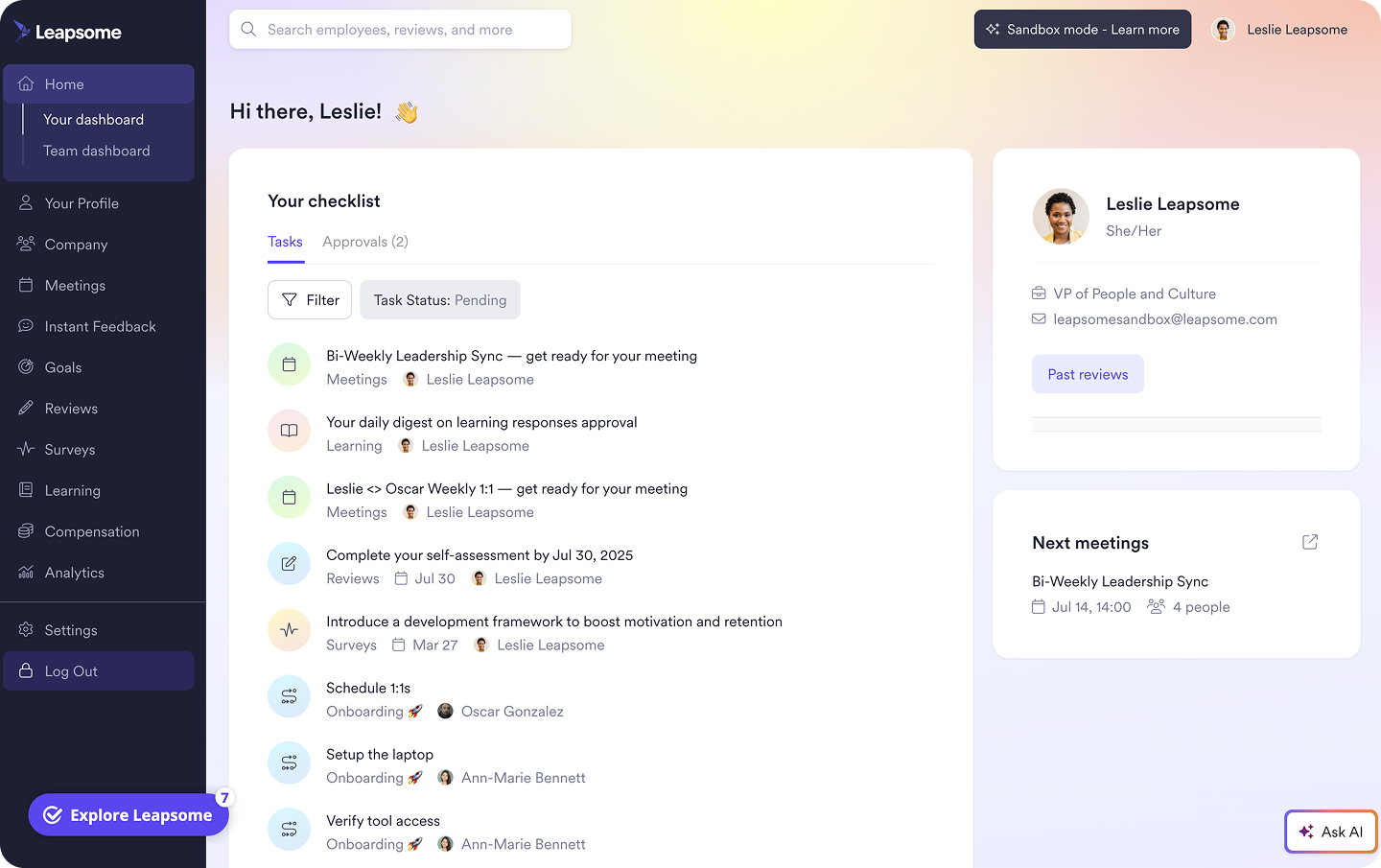
- Berichtsdaten: Die Pflicht zur Berichterstattung über das Lohngefälle ist eine der größten Verpflichtungen der Richtlinie. Um den Weg zu ebnen, richtet ein Kennzahlen-Tracking für alles ein, was ihr braucht, um saubere, konforme Berichte zu erstellen. Wer wird wie bezahlt, und wie sieht die Verteilung nach Geschlecht aus? Am einfachsten findet ihr das mit einem funktionsreichen HRIS wie Leapsome heraus, das Mitarbeiter-, Rollen- und Vergütungsdaten mit integrierten HR-Funktionen vereint, für einen strukturierteren und konformen Umgang mit Vergütung.
🦘 Werdet konform, ohne zwischen Tools zu wechseln
Leapsome hilft Organisationen, Rollenstrukturen zu standardisieren, Gehaltsbänder anzupassen und konforme Berichte teamübergreifend zu erstellen, alles an einem Ort.
👉 Entdeckt das HRIS von Leapsome
Vorbereitung auf die EU-Entgelttransparenzrichtlinie: Leitfaden in sieben Schritten
Ein strukturierter Plan hilft euch, die Anforderungen dieses großen Übergangs zu bewältigen. Im Verlauf des Prozesses werdet ihr fast unweigerlich Lücken in euren aktuellen Praktiken entdecken. Uneinheitliche Vergütung, undurchsichtige Stellenstrukturen und informelle Entscheidungsfindung verstecken sich gern in aller Öffentlichkeit, bis eine Regelung wie die Richtlinie euch zwingt, genauer hinzusehen.
Hier sind sieben praktische Schritte, mit denen ihr eure Organisation auf die neuen Regeln der Richtlinie vorbereitet und nebenbei eure gesamte Vergütungsstrategie stärkt.
1. Den Umfang definieren und eine Roadmap erstellen
Beginnt damit, eure bestehenden Richtlinien und Daten zu bewerten, um zu sehen, was aktualisiert werden muss. Dokumentiert Stellen, an denen eure Praktiken nicht mit der Richtlinie übereinstimmen, und schätzt ab, welche Ressourcen ihr braucht, um sie zu beheben. Nutzt eure Erkenntnisse, um eine klare Roadmap zur vollständigen Konformität zu definieren, inklusive Meilensteinen und Verantwortlichen.
Wenn ihr ein US-amerikanisches Unternehmen seid, das in der EU einstellt, prüft etwaige Änderungen der Anforderungen in den konkreten Ländern, in denen ihr einstellt.
2. Eine geschlechtsneutrale Stellenarchitektur aufbauen
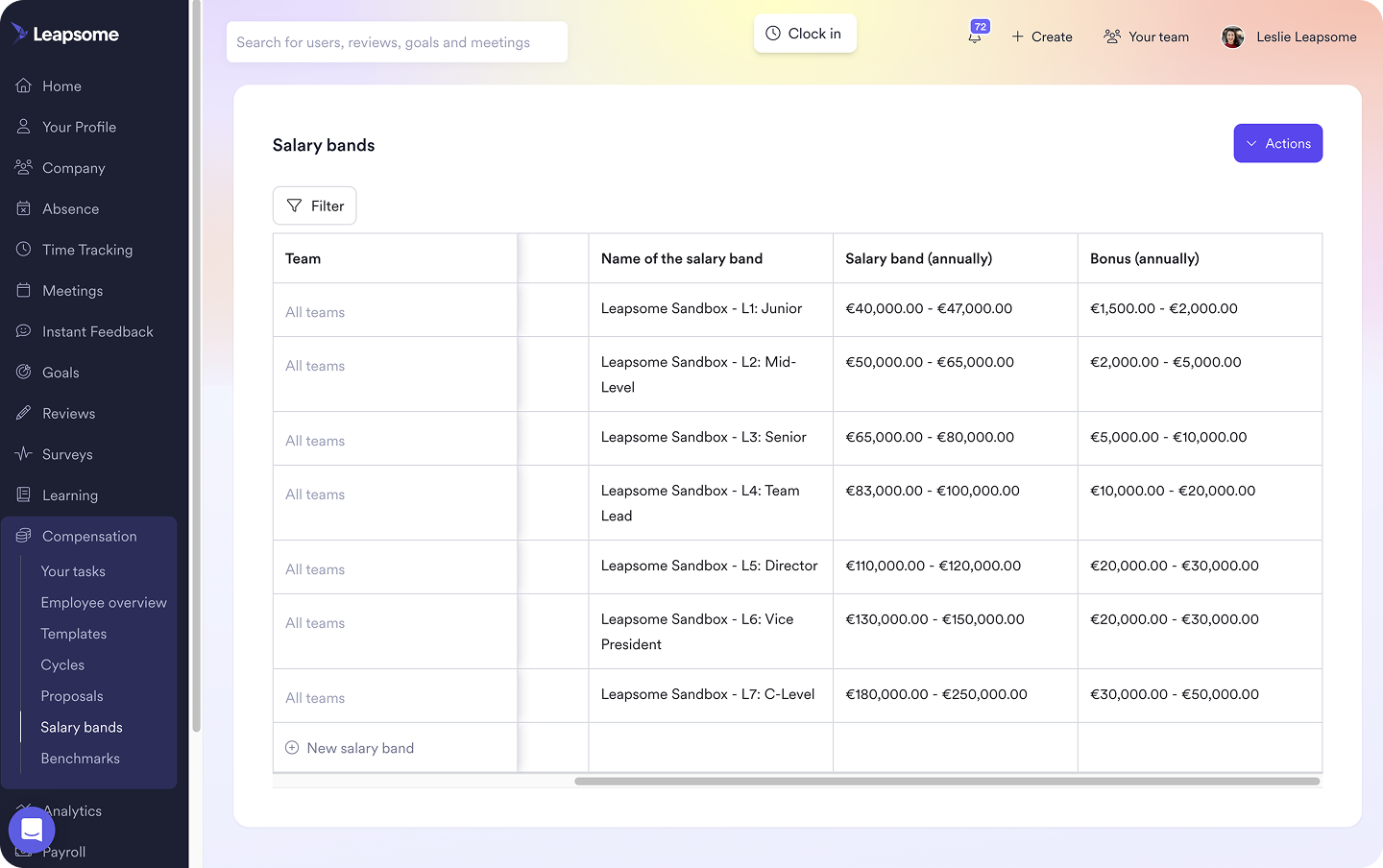
Definiert explizite, objektive Kriterien für jede Rolle in eurem Unternehmen, etwa die Fähigkeiten und Erfahrung, die nötig sind, um die Aufgabe gut zu erfüllen, ihre Verantwortlichkeiten und Arbeitsbedingungen. Sobald diese Kriterien feststehen, nutzt sie, um Rollen in Joblevel zu gruppieren und Gehaltsbänder und Benchmarks anzuhängen, wobei ihr eure bestehenden als Ausgangspunkt verwendet.
Über die Richtlinienkonformität hinaus hat eine gut definierte Stellenarchitektur den Zusatznutzen, Gespräche über Performance und Vergütung für beide Seiten objektiver (und einfacher) zu machen.
3. Entgeltgleichheit prüfen, anpassen und korrigieren
Ihr habt den Rahmen. Jetzt ist es Zeit, ihn anzuwenden. Mit der aktualisierten Stellenarchitektur in der Hand taucht in eure Lohnabrechnungsdaten ein und prüft, wie weit die bestehende Vergütung von euren frisch erstellten Gehaltsbändern abweicht. Analysiert, ob diese Abweichungen durch Dinge wie Rollenfunktionen oder Erfahrung gerechtfertigt sind oder ob sie korrigiert werden müssen. Konzentriert euch zuerst auf Lücken von 5 % oder mehr, da diese eine gemeinsame Entgeltbewertung auslösen könnten.
4. Einstellungspraktiken überarbeiten
Streicht Fragen zur Gehaltshistorie aus Bewerbungen und ergänzt eure Stellenanzeigenvorlagen um Gehaltsspannen. Dieser letzte Schritt hat über die Konformität hinaus Vorteile: Laut einer SHRM-Studie berichten 70 % der Organisationen, dass die Angabe von Gehaltsspannen in Stellenbeschreibungen mehr Bewerbende anzieht.
5. Daten-, Berichts- und Governance-Tools aufrüsten
Unvollständige oder ineffiziente Software macht eine richtlinienkonforme Vergütungsverwaltung schwerer als nötig. HR-Teams brauchen ein All-in-one-System, das ihnen hilft, heute und in den kommenden Jahren konsistente Gehaltsentscheidungen über Regionen und Rollen hinweg zu treffen.
💶 Macht Klarheit, Fairness und Skalierbarkeit zur Selbstverständlichkeit
Leapsome bringt eine vollständige Suite an Tools mit, um transparente Vergütungsrahmen zu entwickeln, damit ihr Gehaltsbänder mühelos definieren und Gehaltsüberprüfungen verwalten könnt.
👉 Mehr erfahren
6. Mit dem Team kommunizieren
Eine Leapsome-Studie von 2026 hat ergeben, dass 45 % der Mitarbeitenden das Vertrauen in ihr Unternehmen verlieren, wenn wichtige Entscheidungen ohne Transparenz getroffen werden. Die Richtlinie führt neue Rechte (und möglicherweise neue Gehälter) für eure bestehenden Mitarbeitenden ein, und sie werden dazu Fragen haben. Kommuniziert proaktiv über die Änderungen, um Verwirrung zu minimieren und Spekulationen im Keim zu ersticken. Verteilt Erklärungen, seid offen für Fragen und seid bereit, jegliche Gehaltsanpassungen zu begründen.
7. Führungskräfte für Gehaltsgespräche schulen
HR schreibt die Richtlinien, doch Führungskräfte setzen sie um. Wenn Inkonsistenz weit verbreitet ist, könnten Entscheidungen von Führungskräften die Ursache sein. Gleichzeitig könnt ihr nicht erwarten, dass Führungskräfte fundierte Entscheidungen treffen, ohne die richtige Schulung.
Gebt euren Führungsteams praktische Frameworks an die Hand, um Anfragen zu Gehaltsinformationen zu bearbeiten, einschließlich der Erklärung von Gehaltsentscheidungen und Aufstiegskriterien. Sorgt dann dafür, dass alle, die Interviews führen, dies mit vollständiger Entgelttransparenz gemäß den Richtlinienvorgaben tun.
Wollt ihr euch all das deutlich erleichtern? Wir haben Leapsome mit richtlinienorientierten Funktionen ausgestattet, etwa mitarbeiterzugänglichen Gehaltsbändern, automatischer Berichterstattung zum Lohngefälle und einem Gender-Pay-Gap-Dashboard. Um mehr zu erfahren, nehmt Kontakt mit uns auf.
Sichert eure richtlinienkonforme Vergütungsstrategie mit Leapsome
Kleine und mittelgroße Organisationen haben nicht die gleichen tiefen Taschen wie größere Akteure, daher fällt es ihnen eher schwer, sich auf die EU-Entgelttransparenzrichtlinie auszurichten. Das Problem verschärft sich, wenn Gehaltsentscheidungen aus dem Bauch heraus getroffen werden und es an internem Einblick fehlt.
Leapsome schafft gleiche Bedingungen, indem es HR-Teams einen Ort bietet, an dem sie Vergütungsdaten mit ausgereiften HR-Tools verbinden. Unsere Plattform kombiniert HRIS- und People-Strategy-Funktionen, damit ihr Gehaltsrahmen standardisieren, Analysen zur Entgeltgleichheit durchführen und berichten sowie transparente Gehaltsentscheidungen in voller Übereinstimmung mit der EU-Entgelttransparenzrichtlinie fördern könnt.
„Transparenz bedeutet nicht, jede Zahl zu teilen. Sie bedeutet, die Logik zu erklären: wie Gehaltsentscheidungen getroffen werden, welche Kriterien herangezogen werden und wie sich Menschen innerhalb der Struktur weiterentwickeln können.“ – Alexandra Edl, Senior HR Consultant, Interim Manager, Coach und Trainerin bei EDL Consulting
🏃 Bringt eure Bemühungen um Richtlinienkonformität in Schwung
Die zentralisierten Gehalts- und Personaldaten von Leapsome helfen HR-Teams, Struktur und Fairness in ihre Vergütungsverwaltung zu bringen.
👉 Demo buchen
Hinweis: Dieser Inhalt dient ausschließlich allgemeinen Informationszwecken und stellt keine Rechtsberatung dar. Leapsome übernimmt keine Gewähr für die Einhaltung gesetzlicher Vorschriften und kann nicht bestätigen, wie konkrete Sachverhalte vor Gericht beurteilt würden. Wenn ihr unsicher seid, wie die Anforderungen auf eure Organisation zutreffen, wendet euch bitte an eine qualifizierte Rechtsberatung.
FAQ
Was verlangt die EU-Entgelttransparenzrichtlinie bis Juni 2026?
Der 7. Juni 2026 ist die Frist, bis zu der die EU-Staaten die EU-Entgelttransparenzrichtlinie in nationales Recht umsetzen müssen. Organisationen mit EU-Mitarbeitenden müssen Systeme haben, um:
- alle Vergütungsentscheidungen auf objektive, geschlechtsneutrale Kriterien zu stützen
- Gehaltsspannen vor der Einstellung offenzulegen
- Mitarbeitenden ihre Gehaltsdaten und das geschlechtergemittelte Gehalt für ihre Beschäftigtenkategorie bereitzustellen
- Kennzahlen zum geschlechtsspezifischen Lohngefälle zu berichten
- eine gemeinsame Entgeltbewertung mit Arbeitnehmervertretungen für Lohngefälle von 5 % oder mehr durchzuführen, die sich nicht durch objektive, geschlechtsneutrale Kriterien rechtfertigen lassen und nicht innerhalb von sechs Monaten nach einem Bericht behoben werden
Wann müssen Arbeitgeber Daten zum geschlechtsspezifischen Lohngefälle berichten oder veröffentlichen?
Die Richtlinie verpflichtet EU-Arbeitgeber mit weniger als 100 Mitarbeitenden nicht dazu, Daten zum geschlechtsspezifischen Lohngefälle zu berichten. Hier ist der Zeitplan für größere Organisationen:
- Arbeitgeber mit 100–149 Beschäftigten : 7. Juni 2031, danach alle drei Jahre.
- Arbeitgeber mit 150–249 Beschäftigten: 7. Juni 2027, danach alle drei Jahre.
- Arbeitgeber mit mehr als 250 Beschäftigten: 7. Juni 2027, danach jährlich.

.png)