Your role in HR change management: leading people through transition
.png)
.jpg)
System rollouts, policy updates, and organizational restructures have become a regular part of HR work. You're expected to lead the people side of these, but HR teams frequently end up reacting to change rather than strategically guiding it.
When change isn't managed well, the consequences are tangible. According to our research, 66% of employees report increased workloads during major changes, particularly around the adoption of AI.* But how you lead on implementing new tools and processes can be structured, measurable, and repeatable.
This article offers a straightforward, reusable framework to facilitate coordination of change efforts, support your teams, and demonstrate to leadership that HR plays a vital strategic role in organizational change.
You'll learn how to
- See what changes are taking place across your organization
- Avoid overloading people with new systems and workflows
- Define roles so you're not managing every aspect of adoption alone
- Equip managers with practical tools to help guide their teams
- Identify what's working so you can report your findings to leadership
🏗️ Build a change-ready HR foundation
Leapsome HRIS connects your people data, surveys, and performance insights so you can track change in real-time.
👉 Explore Leapsome HRIS
*Leapsome's 2026 Work Trends Report
What HR change management actually means
HR change management is the work you do to help people understand, adopt, and succeed through organizational changes. It's distinct from project management, which focuses on timelines, budgets, and scope. It's also different from internal communications, which handles channels and messaging formats. Your job is the people part.
Here's what you own as an HR leader:
- Getting teams ready — assessing who’s affected, what support they need, and what barriers might slow adoption before the change goes live
- Making communication clear and consistent — ensuring everyone hears the same story about what's changing and why, whether it comes from executives, managers, or HR
- Training teams so they know what to do — providing practical guidance that helps employees confidently use new systems or follow new processes
- Building continuous feedback loops — creating ways for people to share concerns and questions, then actually using that input to adjust your approach
- Tracking basic signals — monitoring a small set of metrics that show leadership what's working and what needs attention
Your role is to protect trust and people's experience while the business implements changes. When you do this well, it builds your credibility as a strategic partner. When you don't, changes fail, and people lose trust in leadership.
Research backs this up. A 2025 study found that taking on an explicit HR change leadership role, combined with strong HR professionalism, significantly increases employees' commitment to the organization and the change itself. The reason? Competent HR professionals drive clearer communication, more efficient change management, and a more supportive culture.
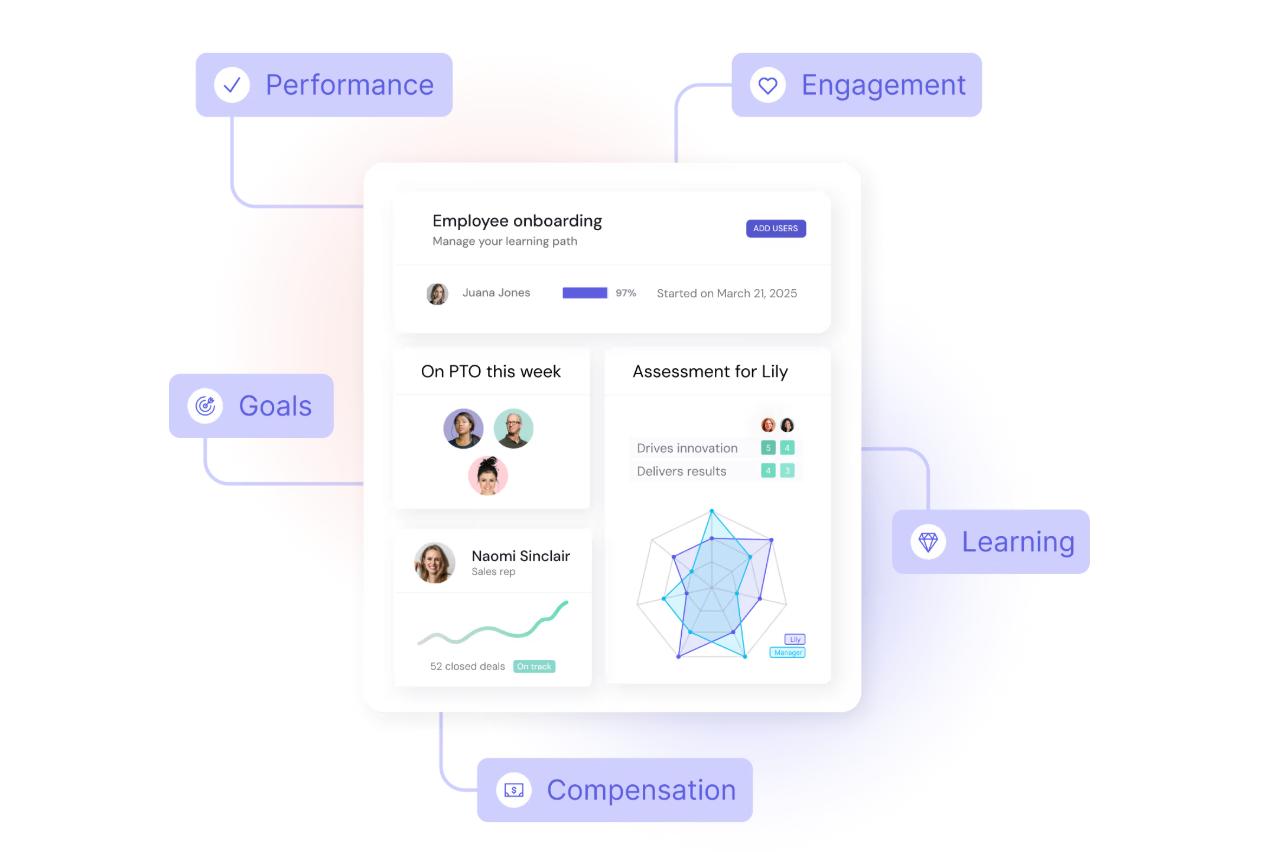
For example, HR leaders using an HRIS platform like Leapsome can connect engagement data, performance trends, and learning insights to see how people are actually experiencing change, rather than just how leadership perceives it.
The types of changes where HR leads the people side
HR’s role becomes critical across several types of organizational change:
- System rollouts — for example, you're launching a new performance management platform that changes how teams conduct reviews and track development goals
- Policy changes — for example, you're transitioning from fully remote work to a hybrid model with specific in-office requirements
- Structural changes — for example, you're merging two departments under new leadership, which means revised reporting lines and team compositions
- Culture or behavior shifts — for example, you're rolling out new leadership standards that require managers to hold regular one-on-ones and provide documented feedback
Whatever change you’re leading, a one-off announcement is rarely enough to ensure it’s properly accepted, adopted, or implemented. People need context to understand why the change matters, training to know what to do differently, and time to adjust their habits and workflows. Most importantly, they need a way to ask questions when something isn't clear.
Many of these changes involve new workflows inside tools. Think performance reviews in a new system, learning and development paths that require different navigation, or surveys that replace old feedback methods.
Therefore, a significant part of your job is helping people adopt these workflows in a sustainable manner and ensuring they don’t simply follow the new process once and then revert to their previous tools and methods.
That's where HR process automation becomes valuable. When you automate routine tasks, you free up time to focus on the human side of change rather than getting stuck in administrative work.
A simple framework for HR-led change
At Leapsome, we use a straightforward, reusable framework to bring structure to HR change work. You don't need a big new methodology or expensive consultants to make this work.
The framework has four parts:
- Map your changes — so you see overlaps, spot potential conflicts, and can prioritize based on team capacity
- Clarify who does what — so you're not carrying everything by default, and other stakeholders understand their roles
- Support managers — so they can explain and reinforce changes day-to-day with confidence and clear tools
- Track progress with surveys — so you can measure understanding, catch issues early, and show leadership what's working
Think of this as "start here, even if you have no formal change process," focusing on making progress with each change rather than achieving perfection from the start.
Research supports this approach. Recent research has demonstrated that transparent communication, employee participation in decision-making, training, and effective leadership all have significant positive effects on employee engagement and performance during organizational change. Cultural context moderates the strength of these effects, but the basics remain effective across organizations.
HR leaders using tools like Leapsome often follow similar patterns. They map changes, align roles, and use survey and performance data to guide decisions. This section breaks it down into steps that anyone can use, whether you have sophisticated tools or are starting with spreadsheets and manual entry.
Map all people-impacting changes and who they affect
You can't manage change well if you don't know what's already happening across your organization.
To achieve that visibility, create a basic change overview: a table or list that includes each major change, the owner, timeframe, impacted teams, and a quick risk assessment (low, medium, or high).
This simple exercise helps you identify issues that can create predictable burnout and resistance. It also helps you avoid change pileups by spreading initiatives across time or adjusting scope when too much lands at once.
Most importantly, it provides you with the data you need to have more informed conversations with leadership about timing, priorities, and trade-offs based on actual team capacity.
As you build this overview, use a spreadsheet initially to allow for quick updates and easy sharing with stakeholders. You can move into project management tools later if it makes sense, but don't wait for the perfect system to get started.
You can use a platform like Leapsome to complement this overview by filtering survey data, performance trends, and engagement scores by team or initiative. That way, you can see where changes are causing any issues within the team and adjust your approach before problems escalate.
Agree on who does what at the start of each change
Often, when there are no clear role definitions, everything defaults to HR. Decisions slow down, managers feel unsupported, and executives assume you have it handled when you don't. To avoid this, define a simple split of responsibilities for each major change, for example:
- Executives sponsor the change, make key decisions, communicate the strategic "why," and remove barriers when things get stuck. They set the tone and signal importance.
- HR designs the people approach, including the communication plan, training resources, feedback process, and measurement framework. You also support managers and track the impact across the organization.
- Managers translate the change for their teams, answer day-to-day questions, reinforce new behaviors, and flag problems back to HR when something isn't working.
Document who’s responsible for what in a short "roles and responsibilities" summary for each major change. It doesn't need to be fancy or formal, just clear enough that everyone knows what they're accountable for.
When you use platforms that centralize people data and feedback in one place, the work gets easier. Executives and HR can view high-level dashboards that track adoption and sentiment, while managers receive targeted insights about their specific teams to guide conversations and identify issues early.
Give managers a simple toolkit to explain the change
Managers are your most effective channel for change, but only if they feel confident. Most don't require extensive training or complex resources, but they may need a minimum viable toolkit that they can use in real conversations with their teams.
At Leapsome, we give them three things whenever a big change takes place:
- A one-page overview that explains what's changing, why it matters, when it happens, and what employees need to do. Keep it scannable and jargon-free.
- 5 - 7 FAQs that answer the most common questions, including the uncomfortable ones people will ask anyway. Don't avoid the hard topics.
- A few suggested questions for one-on-ones and team meetings that help managers initiate conversations.
The goal here is to turn managers into confident explainers of the change you’re leading and to avoid them simply becoming reluctant messengers. Be sure to keep this information concise and clear, as your managers are less likely to use resources if they feel like homework or require hours to digest.
When managers fully understand the change and have the right tools at their disposal, they become your strongest champions in driving adoption.
Some HR teams host these resources alongside surveys, review cycles, and learning paths in their performance management system, so managers have everything in one place when guiding their teams through change.
At Leapsome, we use these mechanisms to ask and respond to questions like, "How do you feel about the new review process? What parts make sense, and what feels unclear?"
With a unified system and solutions like our AI features, we can instantly identify patterns that signal issues, generate an action plan such as adjusting communication timing or adding targeted training, and then measure the impact on adoption rates and manager confidence.
We examine what some of those signals might be and how to manage them effectively next.
🤖 Turn manager insights into action with AI
Leapsome AI instantly surfaces patterns from feedback and suggests next steps so you can respond faster.
👉 See how it works
Use short surveys to track understanding and sentiment
Focused surveys help you measure how people are experiencing a specific change at key moments. Keep them short (we find that five questions is normally plenty for a pulse survey) and tied to one initiative at a time.
The questions you ask should be direct and actionable, such as:
- Do you understand what's changing and why? — Yes/No with open comment for context
- Do you believe this change will help you, the team, or the company? — 5-point scale to gauge buy-in
- Do you feel supported to make this change successfully? — 5-point scale to assess readiness
- What questions or concerns do you have? — Open text for surfacing specific issues
When you run these surveys, matters, too. Send one shortly before the change launches to check if people feel ready, another 2-3 weeks after to catch early problems, and a final one at 6-8 weeks to see if the change is holding.
Pay close attention to open-text comments because they explain what's really happening behind the scores. With the right employee engagement tools, you can run these pulses quickly and segment results by team or location, using AI-powered people analytics to identify which teams need more support.
Once you have the results, share your key findings with leadership and managers, then adjust your communication or training accordingly.
📋 Run change surveys in minutes, not days
Leapsome makes it simple to pulse your teams, segment by department, and turn feedback into action fast.
👉 See our survey tools
Signs your approach to HR change management isn't working
Even with good intentions, change efforts can struggle, and certain signals could indicate you need to adjust your approach.
Research shows that only 45% of employees achieved their organization's change goals. However, employees with strong change management skills are 3.5 times more likely to succeed and have 2.2 times better mental well-being. The difference often comes down to how well HR coordinates and communicates change.
Below are four common problems and what they tell you about your current approach.
Mixed messages about what's changing and why
In organizations with multiple departments and leadership layers, it's easy for messages to fragment. Executives say one thing in town halls, HR sends a different explanation in email, and managers interpret it yet another way in 1:1s.
As a result, employees start hesitating and having side conversations to figure out what's "really" going on. They resist the change because they don’t trust the information they're getting.
Typical evidence of this kind of issue is managers reporting numerous clarifying questions from their teams, and employees expressing confusion in surveys. This causes the adoption of tools and practices to stall because people aren't sure what they're supposed to do.
The fix is coordinating communication upfront. Centralize key messages and FAQs so executives, HR, and managers all reference the same source when understanding and explaining any change.
Changes feel like they just add work without clear benefits
When people have more tools to check, extra approval steps to navigate, and new forms to complete, there's a risk they don’t see or understand what problem these changes are solving. If the benefit isn't immediately apparent, a new initiative may feel like no more than an additional burden.
This can cause change fatigue to set in quickly. People start ignoring new processes, finding workarounds, or doing the bare minimum to comply without actually adopting the change.
When this happens, you might see rising complaints about workload in manager check-ins, survey comments about feeling overwhelmed, and stubbornly low adoption rates despite structured training.
This pattern emerges when changes aren’t designed with the employee experience in mind, or they’re not fully explained.
To avoid this, make the "why" crystal clear from the start. Explain what burden each change removes or what specific benefit it creates.
According to our research, 66% of employees report rising workloads, and about half feel more overwhelmed year over year. When you layer new changes on top of this reality without explaining the payoff, resistance becomes inevitable.
Provide practical training, remove unnecessary friction before launch, and adjust quickly based on early feedback.
Feedback is collected, but nothing visible happens
If you don’t quickly and effectively respond to feedback or fail to properly communicate what changed, trust quickly erodes, and people stop participating in future feedback opportunities.
You'll notice this when survey response rates drop, participation in feedback sessions declines, or employees openly express cynicism about "another survey." The damage compounds over time as disengagement spreads across teams.
To prevent this, build a visible feedback-to-action loop. At Leapsome, we utilize a framework we call the Survey-to-Action Loop (STAL): collect feedback, analyze what matters most, take specific actions, and communicate those actions back to employees.
Even if you can't change everything, closing the loop with transparency matters. For example: "After the Q2 survey, you told us the approval workflow was too slow. We've cut two steps and added a fast-track option."
.jpg)
💡 Close the feedback loop automatically
Leapsome AI analyzes survey responses and recommends specific actions, so employees see that their input matters.
👉 See how to automate an action plan
Making HR change management a repeatable strength
HR change management is now a core part of your role, but the good news is you don't need a complicated methodology to do it well. Rather, focus on a simple, repeatable structure that you can reuse across initiatives.
We've found that the best approach comes down to a few simple steps. These cover mapping your changes to identify overlaps and prioritize, clarifying roles and responsibilities to ensure they are distributed appropriately, supporting managers so they can confidently explain changes, and tracking progress with focused surveys to measure what's working.
To get started, select one upcoming change, apply these steps, and refine as needed. Over time, this builds your credibility and makes future change easier to manage.
Using an all-in-one platform like Leapsome supports this work by connecting surveys, performance data, goals, and learning in one place, making it easier to implement and measure changes to tools, processes, and policies.
🚀 Make HR change management your competitive advantage
Connect surveys, performance, goals, and learning in one platform designed for people-led change.
👉 Book a demo
FAQs about HR change management
What are the most common mistakes HR teams make during change initiatives?
The biggest mistakes in HR change management are launching changes without coordinating timing across the organization, sending inconsistent messages that confuse employees, and collecting feedback without closing the loop visibly. HR teams also often try to carry all the work themselves instead of clearly defining what executives and managers should own, and may try to survey sentiment without the right tools to make that job.
How can HR use surveys to support HR change management?
You can support change management with focused surveys at three key moments: before launch to assess readiness, 2-3 weeks after to catch early issues, and 6-8 weeks later to check if adoption is holding. Ask direct questions about understanding, belief in the change, and feeling supported.
How can HR measure whether employees are really adopting a change?
You can measure adoption by tracking usage data for new tools, observing whether people follow new processes consistently, and running short pulse surveys asking if employees feel confident using the change. At the same time, pay attention to manager feedback about questions from their teams.
Sam Abrahams

.jpg)

.jpg)
.jpg)
.jpg)
.jpg)
.jpg)
Ready to transform
your People operations?
Automate, connect, and simplify all HR processes across the employee lifecycle.
.webp)
.webp)
 Request a demo today