How much does payroll really cost? Key factors and hidden costs


It would be convenient if subscription costs told the whole story about payroll expenses. But in reality, understanding how much payroll actually costs means digging into less obvious factors, like your HR operations.
As a business grows, processes get more complicated and data becomes fragmented. These inefficiencies can drive up payroll costs behind the scenes. Even if you don’t notice extra money going out the window, poor HR systems make it harder to forecast and budget accurately. Everest Group found that a staggering 80% of business leaders aren’t well equipped to use payroll reporting to make informed, strategic decisions.*
In this guide, you'll learn more about common operational challenges that can quietly increase expenses. We’ll also explore some ways you can avoid overpaying for payroll.
* Everest Group, 2024
How much does payroll processing cost?
There are four common payroll methods that influence how much payroll processing costs for small businesses:
- In-house payroll: Handling payroll manually is the most popular option, used by nearly two-thirds of companies according to Deloitte. Keeping things in-house is cost-effective on paper, but it’s also the most time-consuming and error-prone approach. When startups are ready to scale, manual systems become even more impractical.
- Payroll software: Integrating with digital tools gives you extra help on tasks like calculating net pay and filing taxes. This is generally the most affordable way to scale if you want to keep all HR operations in-house.
- Payroll outsourcing: You can pay to have professional payroll management services take care of processing and compliance tasks. Some third-party services, like administrative services organizations, handle specific workflows, while others are co-employers that provide bundled services.
- Online payroll services: Cloud-based payroll solutions offer a middle ground between outsourcing and software. Most combine HR automation with support services.
Along with the system or partner you use, plus obvious factors like employee wages and compensation, payroll management costs depend on:
- Taxes and compliance expenses: The time and risk involved in staying compliant with the latest tax and labor laws can add significant admin pressures.
- Software or outsourcing fees: Basic software services often charge flat monthly fees plus per-employee costs, while more advanced platforms cost extra for integrations or multi-state payroll tools. When outsourcing payroll, the upfront costs are usually higher in exchange for added convenience and capacity.
- Operational costs: From reconciling discrepancies to managing employee data, payroll-related admin tasks can put a significant strain on your budget.
What factors most impact payroll costs?
“Seventy-five percent of the company spend is on salaries. If that’s not effectively spent, you’re throwing money away. HR exists to make sure it’s invested wisely.”
– Melanie Naranjo, Chief People Officer at Ethena
As the largest part of payroll spend, it makes some sense to concentrate on compensation. However, wages don’t live in a vacuum. According to the Deloitte paper we mentioned earlier, payroll operations costs an average of $236 per employee per year for tech-focused companies, and $146 for non-tech organizations.
Variation around those averages is high, though, and what your numbers look like will depend heavily on the following factors.
Company size and workforce structure
Bigger teams means larger potential payroll problems. As headcount grows, you have to deal with more variations in pay (e.g., full-time versus contractor), approvals, and chances for errors and exceptions, all of which drive up your total expenses.
For example, a 20-person small business might run a fairly simple cycle with one or two payroll types. But a 200-person team requires more time and systems to coordinate multiple departments, pay schedules, overtime rules, and benefits admin.
Multi-location compliance requirements
Once you start hiring outside your state or country, payroll compliance becomes both more important and more intricate. Different tax filing rules, labor laws, and reporting requirements mean added admin work and new ways to make mistakes. These complexities transform payroll into a risk management arena that often relies on specialized expertise and tools.
Manual vs. automated HR workflows
“It’s one big lift to automate, but every cycle after that becomes faster and easier. Automating the invisible work gives HR leaders back time for culture, strategy, and meaningful connection.”
– Emma Leeds, Founder and CEO at People Function
How well you manage employee data affects your total payroll costs. Relying on manual processes (like updating spreadsheets or switching between systems) takes longer and tends to create more errors along the way. In contrast, an automated, integrated HR platform reduces admin chores while improving accuracy at scale.
For example, Leapsome is an all-in-one HRIS and people management platform that includes scalable payroll prep tools. Since the system keeps all your employee records and time tracking in the same place, you can easily apply real-time data to your payroll calculations, before sending that information to a linked partner like ADP for processing.
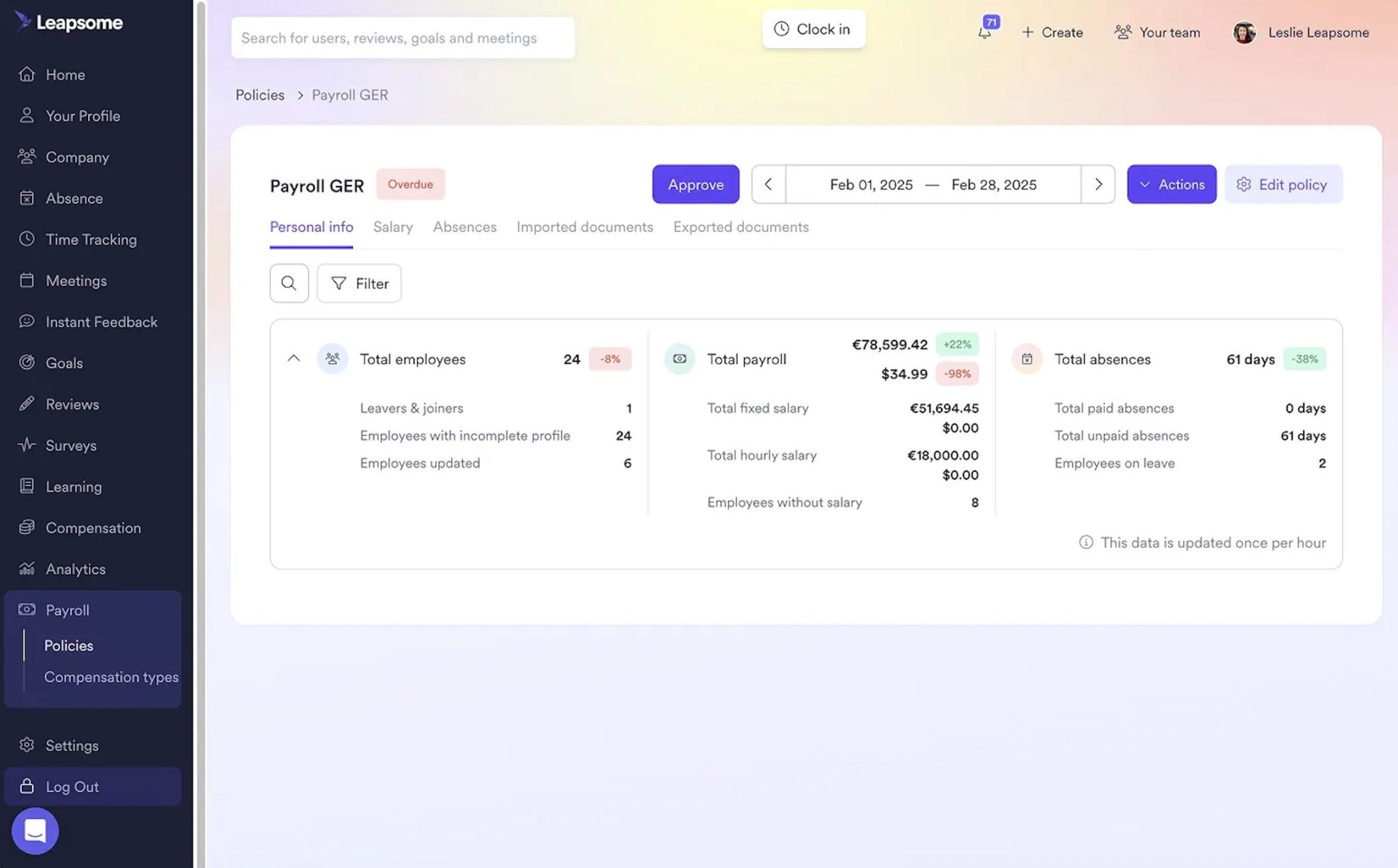
💵 Cut down on payroll costs with centralized HR data
Leapsome unified HR system keeps your people data updated and in one place, so you’re always ready for the next payroll run.
👉Explore Payroll Prep
The hidden costs of payroll most companies overlook
Typically, the expenses that eat away at your payroll budget are operational. Data from EY shows that companies spend an average of $291 to fix individual payroll errors. Since the average payroll accuracy is only about 80%, those mistakes can add up to a sizable drain on your resources.
“We were spending way too much time just executing tasks and not focusing on people.”
– Siddharth Dhanuka, Head of Finance and Operations at SQUAKE
Payroll errors are usually caused by HR inefficiencies like:
- Outdated employee records and duplicate data entry: Companies that don’t quickly update employee data, like tax statuses and role changes, run the risk of triggering corrections, re-runs, or compliance checks. Plus, entering employee info across fragmented tools creates inconsistencies that can lead to compliance risks and payroll processing errors. That’s why it’s vital to use an HR system that automatically centralizes and updates records.
- Manual PTO tracking and approval bottlenecks: When you track PTO requests in separate or ad-hoc tools, rather than through a structured system, managers have to search for context and check multiple files. This slows down the approval process and tends to create errors. Make sure all time-off and benefits tracking runs through one connected platform, with built-in approvals.
Why payroll accuracy starts long before payday
To prevent problems down the line, focus on a few areas where HR feeds directly into payroll:
- Employee onboarding, offboarding, and status changes: If you don’t capture an employee's start and end dates, salary increases, and role changes, payroll processing relies on outdated information that leads to miscalculations and time-consuming manual fixes.
- Time-off tracking and approvals: Tracking PTO and overtime is a messy job when you’re using fragmented systems. And delayed or missed approvals often trigger avoidable last-minute adjustments.
- Documentation management: Spreading employee data across too many sources increases the risk of human error and lost information. Even a minor mismatch in job or tax details can lead to a major payroll discrepancy.
How to figure out if your payroll process creates unnecessary costs
“If your HR systems don’t really talk to each other… You kind of have to pull this from your HRIS, this from your performance review, this from payroll… I think the trails break down a little bit.”
– Sammie Masley, People Partner at Leapsome
You can gauge how efficiently you're managing payroll by auditing HR operations. If you find that teams constantly update data across multiple systems, or lack clear structures for approving PTO and compensation changes, your processes are likely prone to payroll errors. You can also look directly at the frequency of payroll corrections and off-cycle adjustments.
If your current systems aren’t getting the job done, you can create a single source of truth with Leapsome. Along with centralizing your records, Leapsome offers efficiency-enhancing tools that directly impact payroll. Instead of chasing down updates, you can collect and update attendance, hours worked, and overtime data using structured approval workflows.
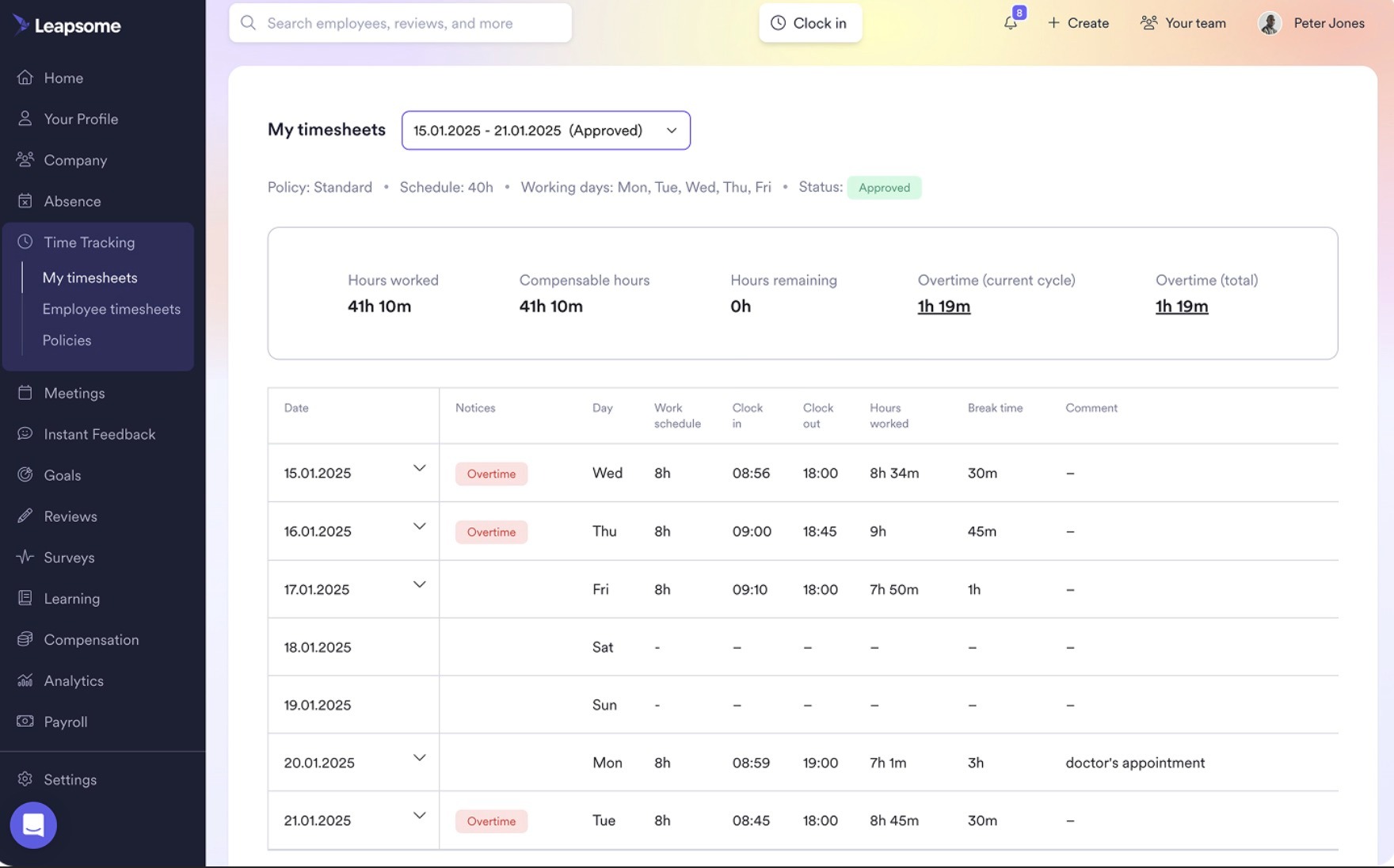
🕒 Prevent payroll errors with timesheets
Improve payroll accuracy by centralizing attendance, leave, and approvals in Leapsome for stress-free payroll prep.
👉 Learn about Time Tracking
Avoid payroll headaches with Leapsome
Payroll puts a lot of stress on HR as your organization scales. If your payroll processing systems aren’t interconnected and automated, you’ll end up manually updating spreadsheets and correcting errors, instead of working toward your growth goals. And all that extra admin overhead impacts how much it costs to do each payroll run.
But it doesn’t have to go that way. Leapsome’s all-in-one platform combines HRIS features and people data, creating a single source of truth you can rely on for accurate payroll prep. Plus, thanks to tools like automated workflows and PTO management, you can spend more time creating people ops strategies and waste fewer hours (and resources) fixing payroll problems.
“All payroll data lives in Leapsome — it’s a living number. When salaries change, managers update them directly.” – Siddharth Dhanuka, Head of Finance and Operations at SQUAKE
💸 Improve payroll accuracy with centralized people data
Leapsome keeps HR operations and payroll in one synchronized system, helping you eliminate data fragmentation and keep the company compliant.
👉 Request a demo