Global HR strategy and management: Empower your international workforce

.jpg)
When you’re planning for (or coping with) international expansion, compliance is likely front of mind. And while compliance is essential, too much focus on that one area can stop small and mid-sized organizations from preparing for the other challenges of distributed work.
Without a strong global human resources (global HR) system — not just a collection of informal procedures that have done the trick so far — data quickly becomes scattered across multiple silos. Regional managers improvise, and performance management becomes a patchwork of local interpretations. And as culture and standards erode, employee engagement tends to drop with them, turning what should be an exciting new venture into a slowly sinking ship.
It’s not surprising then that Deloitte found that successful growing organizations leave many of the old HR rules and assumptions behind.* As industries continue on their borderless trajectories, the companies that rise to the top build new systems that keep them aligned organization-wide, no matter where their employees work from.
This guide explores how you can develop a global HR system to rein in the chaos that often goes hand-in-hand with international expansion.
* Deloitte, 2024
Disclaimer: This content is for general informational purposes only and does not constitute legal advice. Leapsome does not guarantee legal compliance and cannot confirm how specific situations would be assessed in court. If you're unsure how the requirements apply to your organization, please consult qualified legal counsel.
What’s global HR?
Global HR is the hiring and development of international workforces. By crossing borders, organizations can recruit the best talent from around the world, and tap into specialized skills and knowledge that might be difficult to source domestically.
Implementing global HR policies effectively isn’t just a logistical problem. Getting it right means putting systems in place that keep employee engagement strong and maintain culture across borders, without fragmenting processes and data.
Is your company ready to go global? Gauging organizational maturity
Rome wasn’t built in a day, and neither is a multinational organization.
Companies typically move through a series of stages as they expand internationally. Getting trapped in limbo between these stages is a real risk that, according to McKinsey, often starts with structural issues.
What’s more, you can’t move forward if you don’t know where you’re at. Here are the three primary stages of global expansion, and how each can affect HR teams.
1. Building the legal foundation
At this stage, organizations are still laying the legal groundwork that allows them to hire across borders in the first place. They’re focused on employment contracts, local labor law compliance, and payroll infrastructure.
When an organization starts to expand across borders, it’s common to have multiple third-party providers managing different countries’ workforces. This might be sufficient in one or two new jurisdictions or with a small international team, but as the company continues to expand, problems often arise.
For instance, limited global workforce visibility means leadership can’t get the cross-border metrics they need, at least not without HR scrambling to put the pieces together from disparate data sources. Further, undocumented differences in HR operations can quickly erode company culture.
2. Shoring up operational infrastructure
Once you can legally operate across borders, you need systems in place to do it at scale. Fragmentation is the enemy here, as it can lead to:
- Inconsistent talent acquisition and onboarding procedures, resulting in an uneven and potentially unfair employee experience.
- Disjointed employee data scattered across tools, creating blind spots that make it difficult or impossible to get a clear picture of your workforce.
- Mismatched tools for different regions, resulting in inconsistent workflows with even more inconsistent results.
3. Creating cultural alignment
Standardized systems keep management in different regions from becoming a free-for-all of independent policies and unaligned enforcement. This cultural drift shows itself most clearly when managers develop their own performance criteria and rating standards that deviate from company policy.
A well-defined performance management system is key, but it’s difficult to enforce one consistently across borders without supportive technology. Leapsome’s Performance Reviews feature integrates with your HR stack and provides a centralized way to conduct reviews based on real-time, interconnected people data.
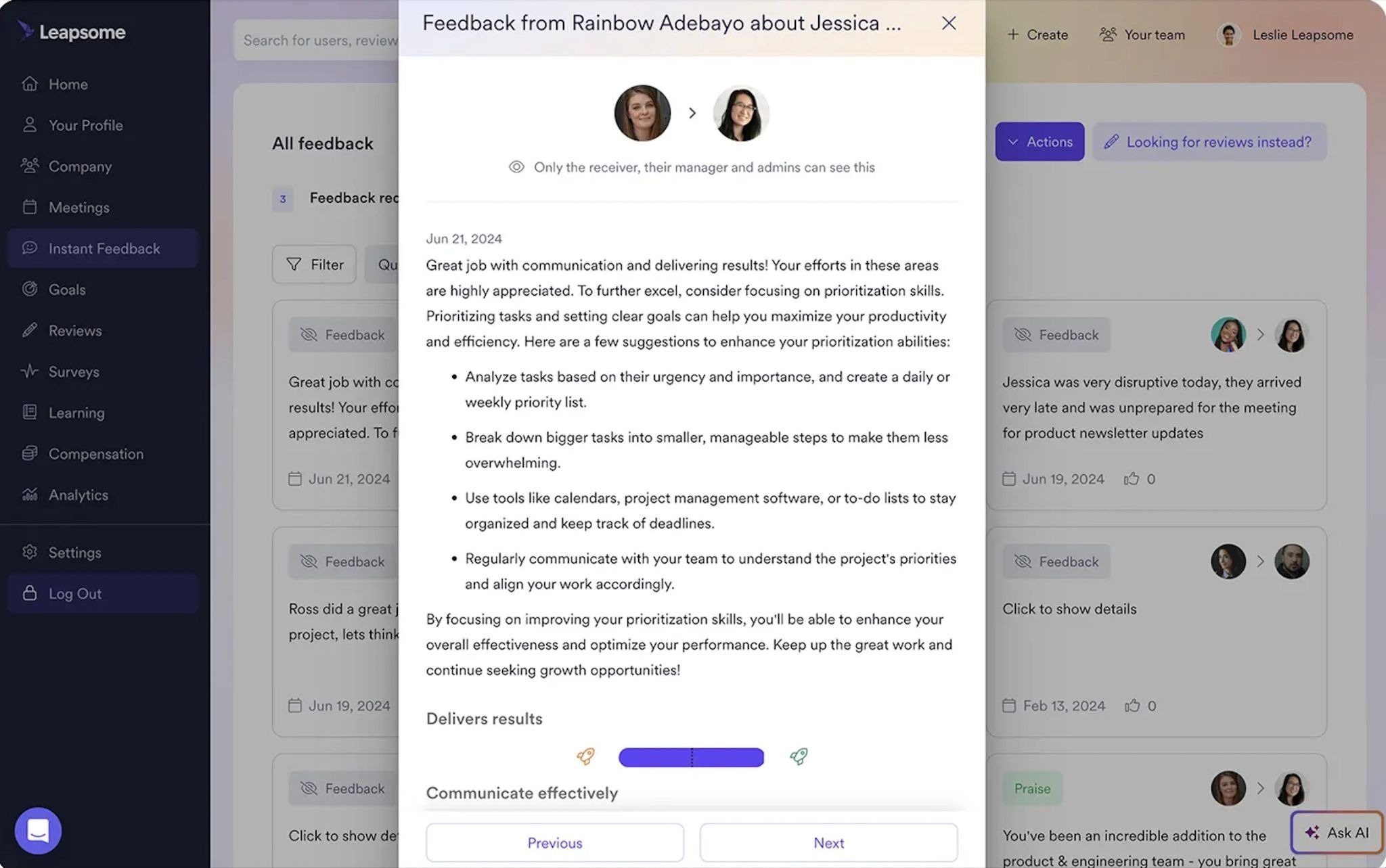
📝Keep performance reviews fair and useful as you scale
With Leapsome, you can build a strong and reliable performance review system that integrates with employee data and translates smoothly across borders.
👉 Explore Performance Reviews
How to build a global HR strategy that holds up across borders: Five-step guide
If you’re ready to push your organization forward, here’s how to keep global HR planning on track.
1. Know where you stand
First, use the framework in the previous section to get a sense of your current organizational maturity level, and identify where you need to make improvements. If you’re already operating across multiple countries, look for misalignments across regions, such as differing performance criteria or onboarding policies.
Then, audit your existing systems to create a list of all the tools you have at your disposal. Compare that list to your current and anticipated future needs, and think big. Compliance matters, but you’ll also want to verify whether your setup supports scalable and global people operations. And make sure you have unified employee data and tools that integrate through a centralized repository.
2. Pick the right expansion model
Decide whether to use an employer of record (EOR) for global HR services, establish local business entities in targeted jurisdictions, or mix both approaches.
An EOR simplifies core HR processes such as payroll, benefits administration, and local compliance. The downside is you’re relinquishing some control, and you may have difficulty wrangling all your people data.
Establishing a local business entity is significantly more involved. But if you know you’ll be recruiting and managing staff in a particular region for the long haul, this approach can be more affordable. Plus, you maintain full control over processes and data.
3. Go global, but don’t neglect the local
You’ll want to keep some things global, such as:
- Core onboarding milestones: Make sure managers follow the same orientation and 30/60/90-day check-in procedures everywhere.
- Leadership principles and company values: Ensure that training programs reflect company values and managers understand the organization’s leadership philosophy.
- Performance frameworks: Keep review cycles and rating criteria the same globally to promote impartiality.
But be adaptable to local considerations like:
- Contract laws: A contract that works in the United States might not be enforceable — or even legal — in France or Brazil.
- Benefits administration: Regulations for employee benefits vary significantly by country. Offering a globally standardized package is not only a compliance risk, it signals to employees that honoring local norms isn’t a priority.
- Communication styles: Different regions have unique standards for what type of language is considered professional and how team members should interact.
“Before you fix misalignment, talk to your teams. Culture is like an iceberg — the visible parts are small. The deeper stuff, like time perception or communication norms, defines whether collaboration works.”
– Anita Anthonj, Co-Founder at Talaera
4. Create a single source of truth
When each region plugs its own data into its favorite tools, there’s no easy or fast way to get organization-wide visibility into turnover or performance.
Fragmented data affects performance management, because without a system connecting reviews to records, managers are left to improvise. Paper trails also suffer, making it hard to measure whether promotions are in line with documented performance histories. Fortunately, you can avoid all these problems with global HR software like Leapsome.
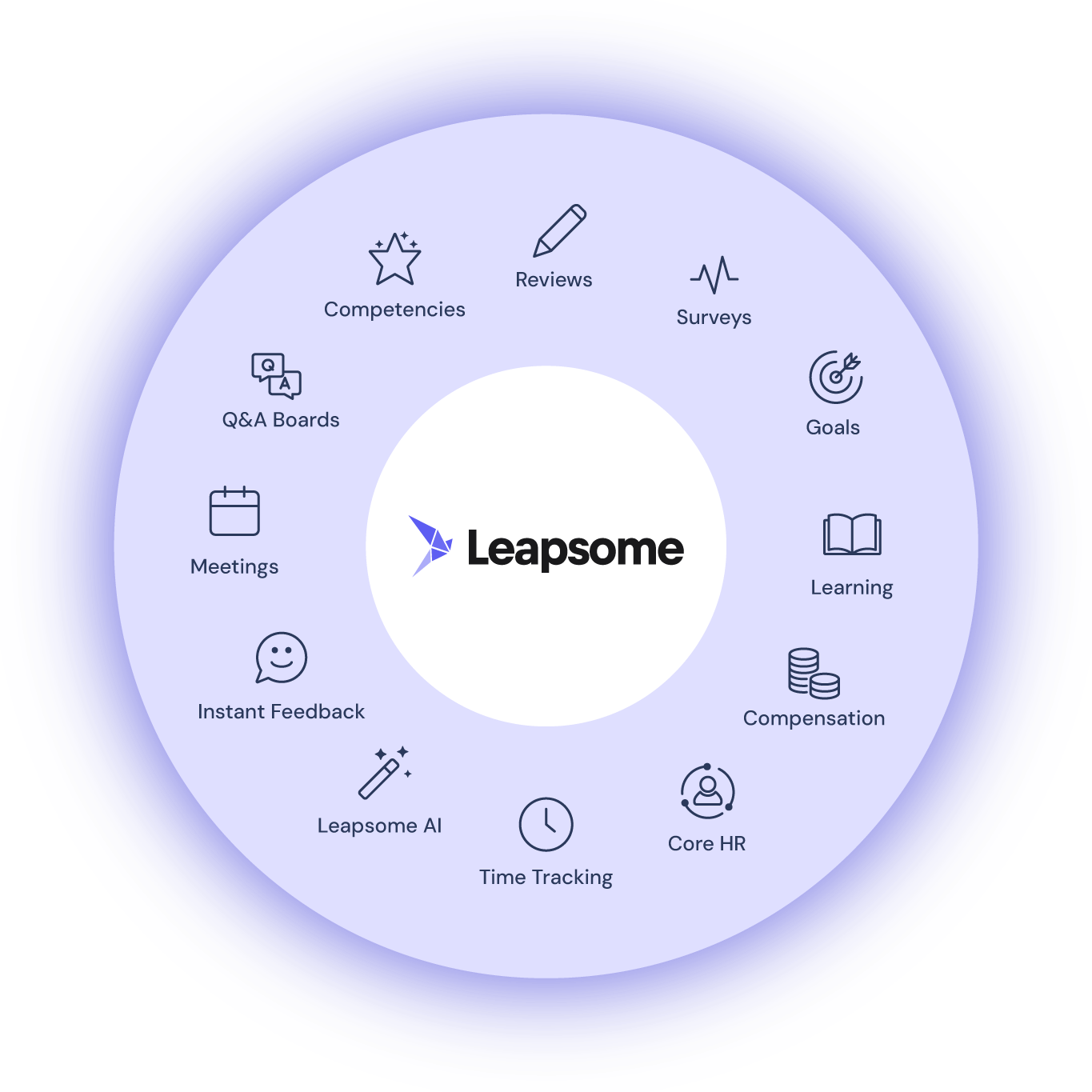
🧑💼 Bring your global workforce under the same roof
Leapsome’s Employee Records centralizes roles and compensation data for fair, consistent employee management across the board.
👉 Learn more
5. Use data to spot drift
Backing your global HR strategy with hard data helps you catch cultural drift before it becomes a systemic issue. Consider tracking key metrics such as:
- Promotion rate: Comparing the promotion rate across regions lets you know where inconsistent performance standards are hiding.
- Time-to-productivity: If new hires in one jurisdiction hit performance targets faster than others, your onboarding process may need a second look.
- Engagement rate: If surveys show that employees in one location are more engaged than employees in another, there may be a disconnect in how your culture translates.
Obstacles to international human resources management
International HR management comes with unique challenges, as well as familiar ones amplified to a global scale. These include:
- Cultural differences: Factors like feedback styles and work-life balance norms vary, so what works in one region can be counterproductive in another.
“Cultural health depends on leaders modeling the behavior. If the top doesn’t live it, middle managers lose passion, and it becomes a check-the-box exercise.”
– Luck Dookchitra, former VP People & Culture at Leapsome
- Employee engagement: Without a strong system, global workforces devolve into inconsistent employee experiences. The numbers tell the story: Just 20% of employees report feeling engaged at work. To beat the odds, you’ll need a tool like Leapsome that standardizes and tracks engagement initiatives.
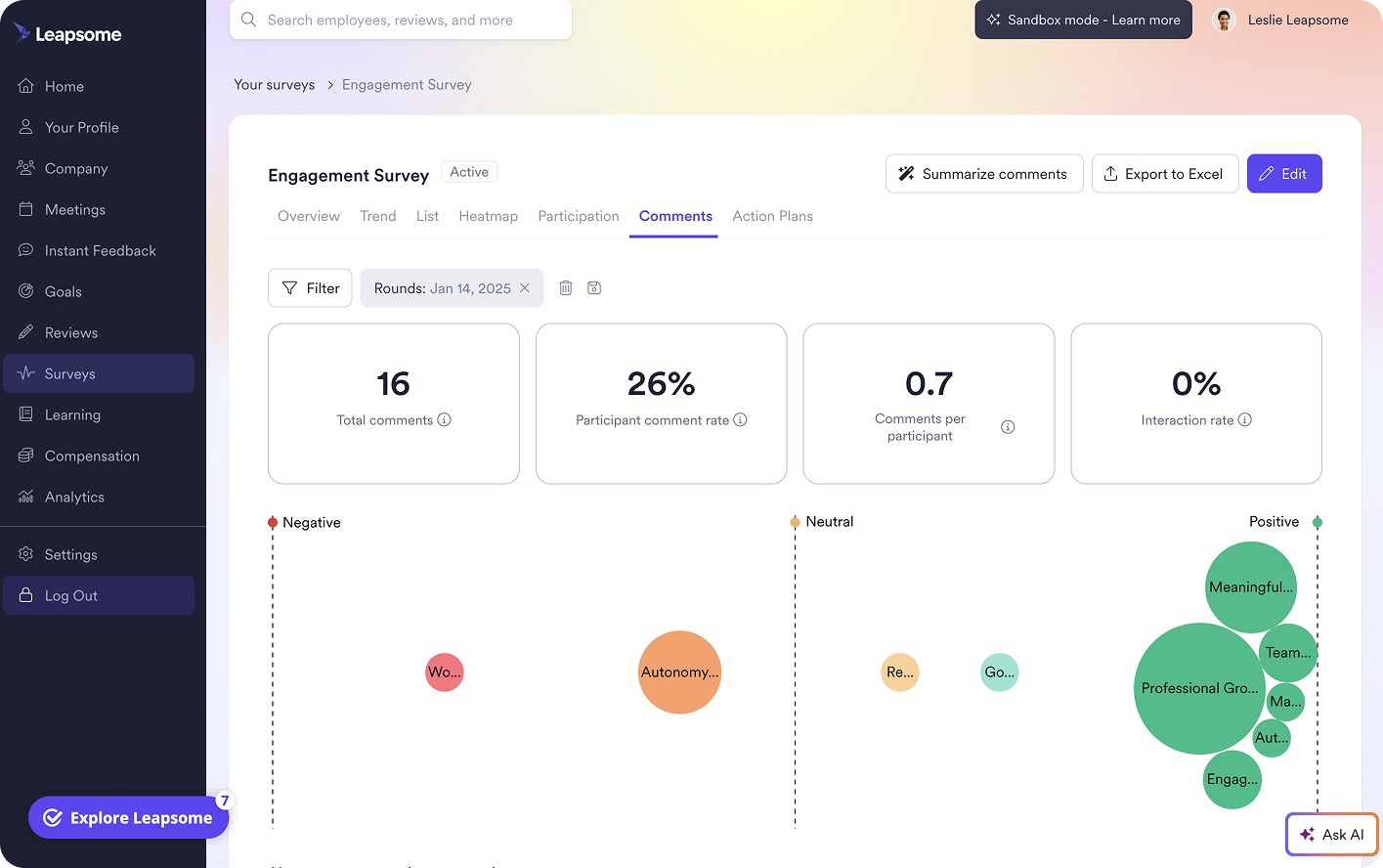
📝 Take your workforce’s pulse, from Anchorage to Zanzibar
Leapsome offers standardized Engagement Surveys with AI-powered insights, so you can check in on your team no matter where they are.
👉 Explore Engagement Surveys
Take your organization international and avoid the growing pains with Leapsome
Small and mid-sized organizations don’t need buildings full of lawyers implementing complex governance structures to take their workforces international. They just need strong, scalable systems, plus the tools to capture globally distributed data and execute HR processes consistently across regions.
Leapsome helps you get all your data in order and prepare for global payroll no matter where your team is located, offering support in over 36 languages — and that’s just the start. You get a centralized repository for all your people data, plus performance management technology for comprehensive analysis and consistent enforcement across the globe. Get as granular as you want when setting leave policies and managing approvals, all from the same integrated platform.
“Employees can now find everything in one place — their data, absences, goals, and reviews. I don’t have to explain which tool to use for what. It’s all in Leapsome.” – Merilyn L, Senior People Operations Specialist at Bob W
🌏 Put your global HR system on a firm foundation
Leapsome’s global HR solution unifies your people data in a one-stop platform for management and operations.
👉 Request a demo