How to create compliant, bias-free employee write-up forms


Writing up an employee isn’t a pleasant experience for anyone involved. But there are ways to approach this situation that keep the company safe while ensuring that team members feel supported and respected.
A better process begins when you stop viewing employee write-ups through a disciplinary lens. By framing them as opportunities to grow, you avoid creating a culture of fear that drives people away and hurts the company’s reputation. Plus, research shows that when you have a consistent, standardized performance management procedure, you’re likely to see better results from employees and improved goal alignment.*
This guide explains how to fill out an employee write-up form, offering a clear path for team members to learn from mistakes.
* The Talent Strategy Group, 2026
What’s a write-up at work?
Write-up forms for employees give HR a way to document performance issues and misconduct. While write-ups are often used as disciplinary actions, you can also use them to track performance and offer feedback for improvement.
“Feedback not only drives continuous learning but also provides clear metrics and benchmarks that help teams track progress toward shared goals.”
– Mona Andrews, CEO of Stay In The Game, for Forbes
Note that write-ups are distinct from performance improvement plans, since the latter outline structured improvement strategies over time, and the former focus on specific moments. Employee write-up forms also differ from termination notices, because write-ups aim to intervene before a situation reaches the point of no return.
When should you use an employee write-up form?
Writing up an employee is a sensitive process, and sometimes all you need is a verbal warning. Make sure there’s a clear, consistent way to decide when to do a write-up, and let everyone know the guidelines so it’s not a surprise.
Incidents that likely call for a write-up
People leaders commonly use write-ups for:
- Performance issues: Write-ups create a papertrail you might need if underperformance issues don’t improve.
- Policy violations and attendance patterns: When a team member shows up late or breaches company policy repeatedly, flagging the trend in writing proves that the employee was notified and knew the consequences.
- Misconduct: Issues like harassment and offensive language make the workplace feel unsafe. Meticulously documenting complaints shores up your legal defenses and contributes to a culture of accountability.
Incidents you probably don’t need a write-up for
Here’s what likely doesn’t warrant a formal write-up at work:
- First-time lapses for minor issues: If an otherwise punctual employee shows up twenty minutes late once, a verbal warning is enough.
- Unclear expectations and untrained skill gaps: If an employee doesn’t meet an unwritten expectation, it isn’t fair to censure them. The same applies when an employee underperforms because they lack a skill they weren’t hired or trained for.
- Systemic issues: If a team member struggles due to organizational problems outside their control, pinning the blame on them disguises the true issue. These incidents should instead prompt you to look for and shore up weak points in company processes or training.
How to create a fair employee write-up process
HR leaders need to set organizational write-up standards that rein in subjective bias, maximize legal defensibility, foster a safe work environment, and keep documents consistent. Here’s how to tick all those boxes.
Get everyone on the same page
Without shared standards, inconsistencies in write-ups can create both fairness gaps and legal exposure. Create a template that standardizes all fields you want write-ups to include, such as incident descriptions, relevant policy citations, prior coaching/warnings, and corrective actions.
You also need to clearly define your write-up triggers: Which behaviors or performance issues warrant a formal written warning? We recommend setting firm rules around this and training managers to apply rules consistently, then using an HR platform that centralizes your documentation so you can easily check on how your write-up process is actually being applied.
Train supervisors to be (as) objective (as possible)
Telling supervisors to “stick to the facts” is a start, but it underestimates the problem. Unconscious biases (errors in judgment based on unconscious prejudices and skewed impressions) are prevalent in the workplace, and they can be very difficult to detect. These biases can directly affect performance assessments — including write-up frequency and accuracy — leading to consequences like unfair promotions or disciplinary action.
This might show up in language your team uses in write-ups. For example, in a Textio 2024 study, they found that in performance feedback, men are 4x more likely to be positively stereotyped as “likeable” compared to other genders. And White and Asian people were 2x more likely to be positioned as “intelligent.”
Here are a few common workplace biases your team should be aware of:
- Recency bias: When an employee’s most recent performance review affects current evaluations
- Affinity bias: When an employee is harsher on those who are different from them (different backgrounds, fewer hobbies in common, etc.)
- Identity bias: Evaluating someone based on identity markers like their gender, race, or religion
Don’t make it hard to find docs
Disconnected data is a sure path to poor decision-making, so manage all your documentation, including employee write-ups, in a centralized HR platform to boost consistency and visibility into performance patterns.
This matters at the compliance level, too: 55% of companies now use HR tech for compliance, double the amount from 2023. You can keep your write-up process compliant by completing and storing documents in a secure platform like Leapsome.
Stay alert and keep improving
Periodically review your process to find weak points. For performance-focused write-ups, you might analyze whether employees received sufficient guidance and how often they improved. If the answers aren’t good, find out why and adjust accordingly.
Reducing biases in these write-ups is a great focus area for improvement. While about 61% of HR professionals have increased their efforts to reduce biases, more than half of HR teams acknowledge that they still have meaningful gaps to close. You might sign your HR team up for formal bias training, or have write-ups go through blind reviews to check for potential biases.
✍️ Centralize all your data
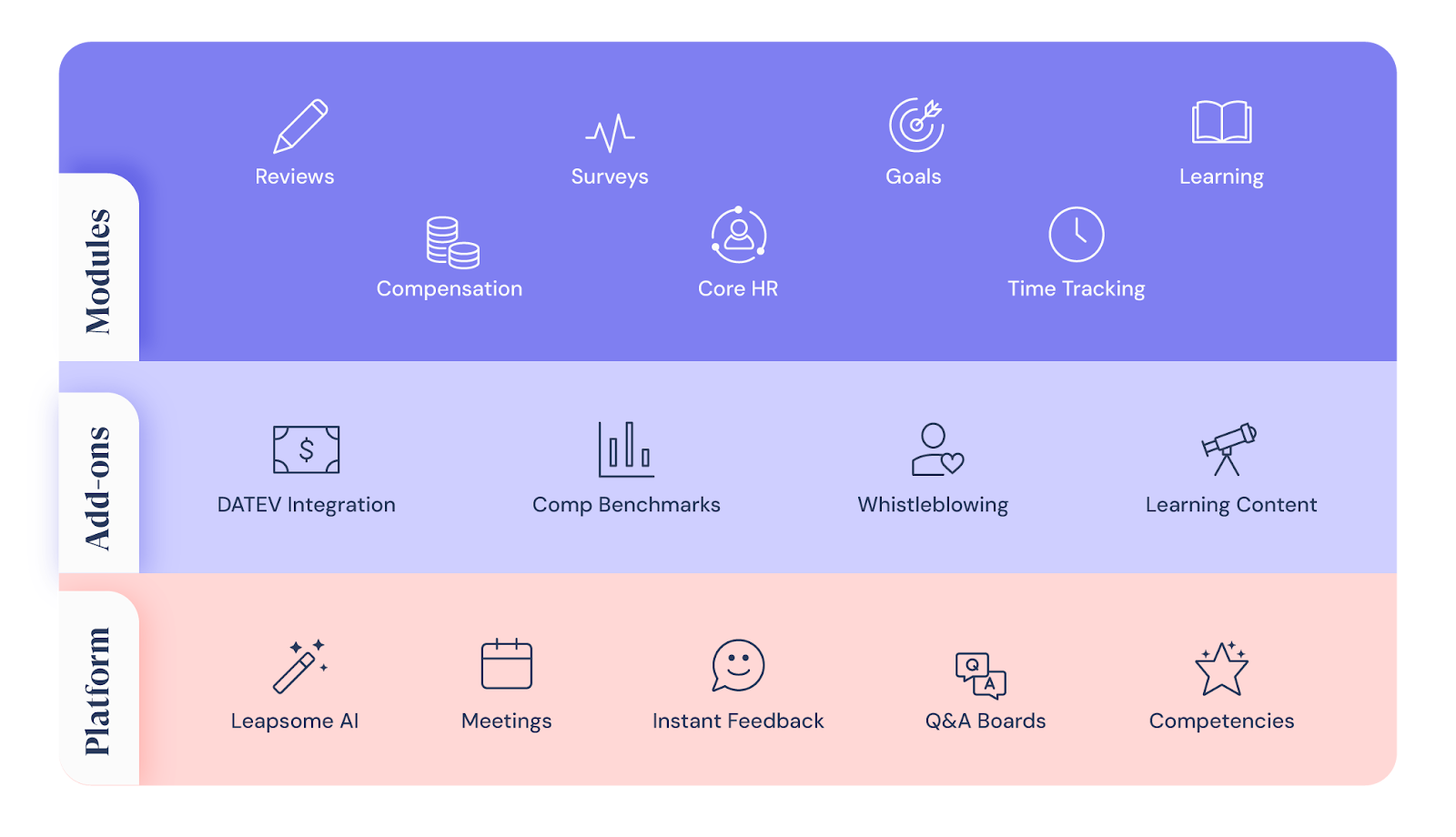
Leapsome’s Employee Records give you a single source of truth, keeping everything synced and supporting around-the-clock audit readiness.
👉 Check out Leapsome’s Employee Records
Six steps for an effective employee write-up
Here’s a clear, six-step system for creating employee write-ups that are fair and factual.
1. Gather all the facts
Compile all relevant information to set the stage, such as:
- The date and time of the incident
- A thorough description
- Performance metrics affected
- Any coaching already provided
- Past performance reviews
2. Describe the issue without bias
Coach supervisors to stick to observable behaviors and leave out bias. This is especially important for insubordination write-ups, where it can be tempting to assume the worst about an employee’s intentions.
Here’s an example of a poor disciplinary write-up:
Description: Michael has once again missed his sales targets. He consistently displays a cavalier attitude to performance, and his poor interpersonal skills leave a trail of disgruntled customers and wasted leads in his wake.
This disciplinary employee write-up sample is unhelpful because it focuses on the supervisor’s personal opinions. Here’s an alternative write-up example that sticks to the facts:
Description: Michael missed his monthly target for the third consecutive month. He received a verbal warning after the first month. After the second month, Michael had a personalized training session to improve his interpersonal skills, and his target was adjusted down from 30 to 25.
3. Lay out the consequences
Explain any negative outcomes the issue caused, as this guides corrective actions. Outcomes can be metrics-based, such as poor productivity and missed performance targets, or more subjective, like creating an unsafe workplace.
4. Give the employee a chance to weigh in
Get the employee’s side of the story, and ask them to be frank about what they feel caused the issue. This helps you better understand what went wrong and keep the write-up fair.
5. Pinpoint the root problem
Once you understand the issue, review documents like company policies and employee handbooks. Find out exactly where the mismatch is between employee conduct and expectations, so you can specify what needs to change and how you’ll measure success.
6. Outline next steps
Create a plan for executing corrective actions or providing supplemental training. Collaborate with other team members or departments as needed, and empower the affected employee with clear steps for improvement.
📈 Boost performance organization-wide
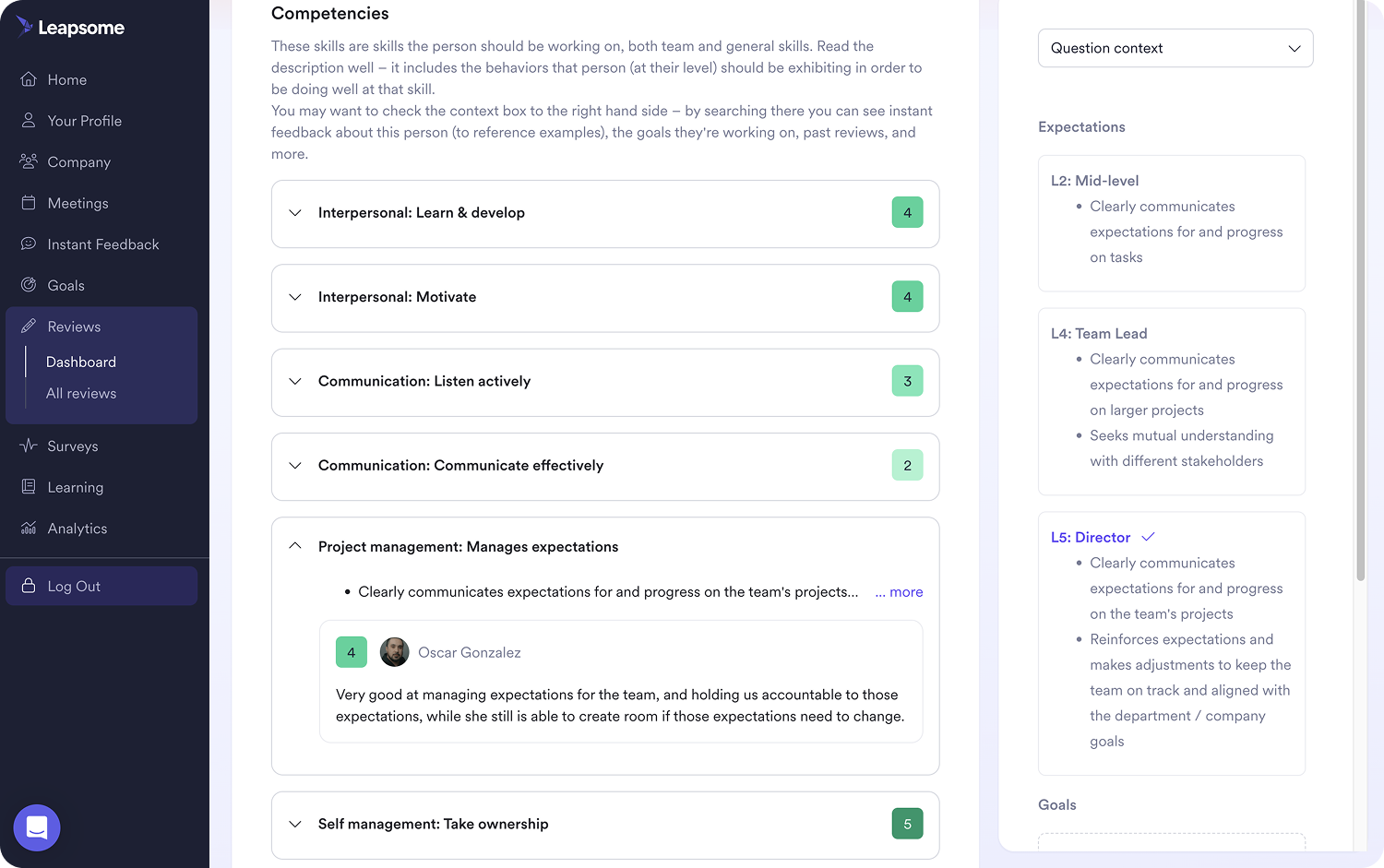
Leapsome centralizes performance history, feedback, and coaching plans for easier follow-ups and performance tracking.
👉 See how Leapsome drives performance
What to include in your employee write-up template
The keys to defensible documentation are consistency and objectivity. To hit those goals, employee write-up forms should contain these elements:
- Employee information: List all relevant details, including name, job title, department, and supervisor.
- Description: Note when the incident took place, describe it objectively, and explain what company policies were violated.
- Consequences: Outline how the incident affected the company.
- Action plan: Describe next steps to address the issue.
- Employee feedback: Include employee comments about the conditions that led to the incident.
- Acknowledgment: Have everyone sign and date the write-up.
📈Simplify your write-up process
You have a lot to do, so don’t create your write-up form from scratch — start with our template and adjust it to fit your organization’s goals.
👉 Download the template now
Legal and compliance implications of write-ups
Employee write-ups create paper trails that help your company stay compliant. That’s vital when you’re faced with serious allegations such as discrimination claims.
Documentation compliance rules vary — in at-will employment states, you may not need a write-up before terminating an employee, while in other jurisdictions, you could face legal action without the right records. Work with your legal team to bake location-specific guidance into your employee write-up process.
How write-ups fit into performance and development conversations
The best write-up systems don’t focus on meting out punishment. They document context and performance history as a foundation for improvement plans and continuous feedback.
“Feedback isn’t just about correction, it’s about growth. You build safety first, then give feedback through questions and curiosity, not commands.”
– Anja Schauer, Global Head of Customer Success at Leapsome
This approach can have a real, measurable effect: Organizations that provide ongoing feedback see employee engagement rise by up to 14%. You can shift into a performance mindset by making supervisor feedback a priority and scheduling follow-ups to measure improvement.
Turn incidents into growth opportunities with Leapsome
A robust HRIS platform is the backbone of any consistent, performance-focused employee write-up system. If you centralize all your documentation under the same umbrella with Leapsome, you’ll know that every write-up is traceable and audit-ready. Plus, Leapsome’s integrated analytics tools help you home in on and address harmful patterns.
“Our main goal with the reviews was to foster a continuous feedback culture and ensure that the different inputs were linked in a structured way. Having this intuitive, user-friendly platform and being able to refer to the feedback received helps employees understand where to go next in their careers at Flink.”
– Theresa Bothe, Head of Organizational and People Development
🧑💼 Transform your HR department
Create a central repository for all your data and automate the most cumbersome parts of managing HR with Leapsome.
👉 Request a demo
FAQ
What are considered grounds for an employee write-up?
Common grounds for employee write-ups include performance issues, attendance problems, policy violations, and unsafe conduct.
Is there a form for writing up an employee?
Every HR department should have its own customized write-up form that includes basic details, such as dates and policies violated, along with fields for detailed descriptions and action plans.

.png)