HR communication guide: Best practices and steps for success


Leaders often inherit fragmented HR communication habits that seem organized on paper, but stall the flow of information. This issue tends to be invisible from the top: While 80% of leaders believe they communicate helpful and relevant information, only 53% of employees agree.*
This gap in perception can grow even bigger during rapid expansion. As your company adds more departments and layers of leadership, messaging becomes heavily shaped by individuals rather than a consistent system. Managers end up improvising, while employees turn to informal channels for clarity.
So, how do you avoid those problems? This guide covers how to build a workforce communication strategy that keeps employees, HR, and leadership aligned.
*Axios HQ, 2025
What does HR communication look like?
The term HR communication refers to the exchange of information between people teams and employees, on topics like policies, benefits, updates, and organizational changes. It’s a core infrastructure for successful operations, because it connects every team member to company goals.
Great communication is usually less about one-sided announcements and more about two-way feedback loops. When your channels let employees share concerns and ideas directly with leadership, you transform HR from a ‘bearer of news’ into a team player. Plus, good communication strengthens engagement and promotes a culture of transparency and trust.
Here are a few directions HR comms might flow:
- Top-down: Leadership shares strategic updates and high-level company goals to promote alignment.
- Bottom-up: Employees use feedback tools like engagement surveys to share insights with HR.
- Horizontal: Teams share information across departments to prevent silos and improve cross-functional collaboration.
- Manager-to-team: Managers translate business objectives into actionable guidance for their direct reports, while also gathering feedback.
Why HR communication is a make-or-break process
When employees can’t rely on a single source of truth, they either default to their own interpretations of company policies, or they spend more time manually searching for answers than driving growth.
On top of providing clarity, a structured employee comms system can:
- Improve employee morale and productivity: Good communication models and clear feedback channels lead to better engagement and efficiency.
- Boost trust and transparency: Employees don’t have to guess about how they’re performing and where the company is at.
- Support change management: Proper communication helps teams move past resistance to change by explaining the logic and context behind decisions.
- Increase alignment: As your organization grows, clear messaging connects every team member to the overall mission.
“When people say they’re good with change, they’re just lying to themselves. Internal resistance should be expected. The problem is we focus on resistance instead of opportunity. People just need context — we jump to execution instead of taking time to talk through the ‘why.’”
– Steve Browne, Chief People Officer at LaRosa’s
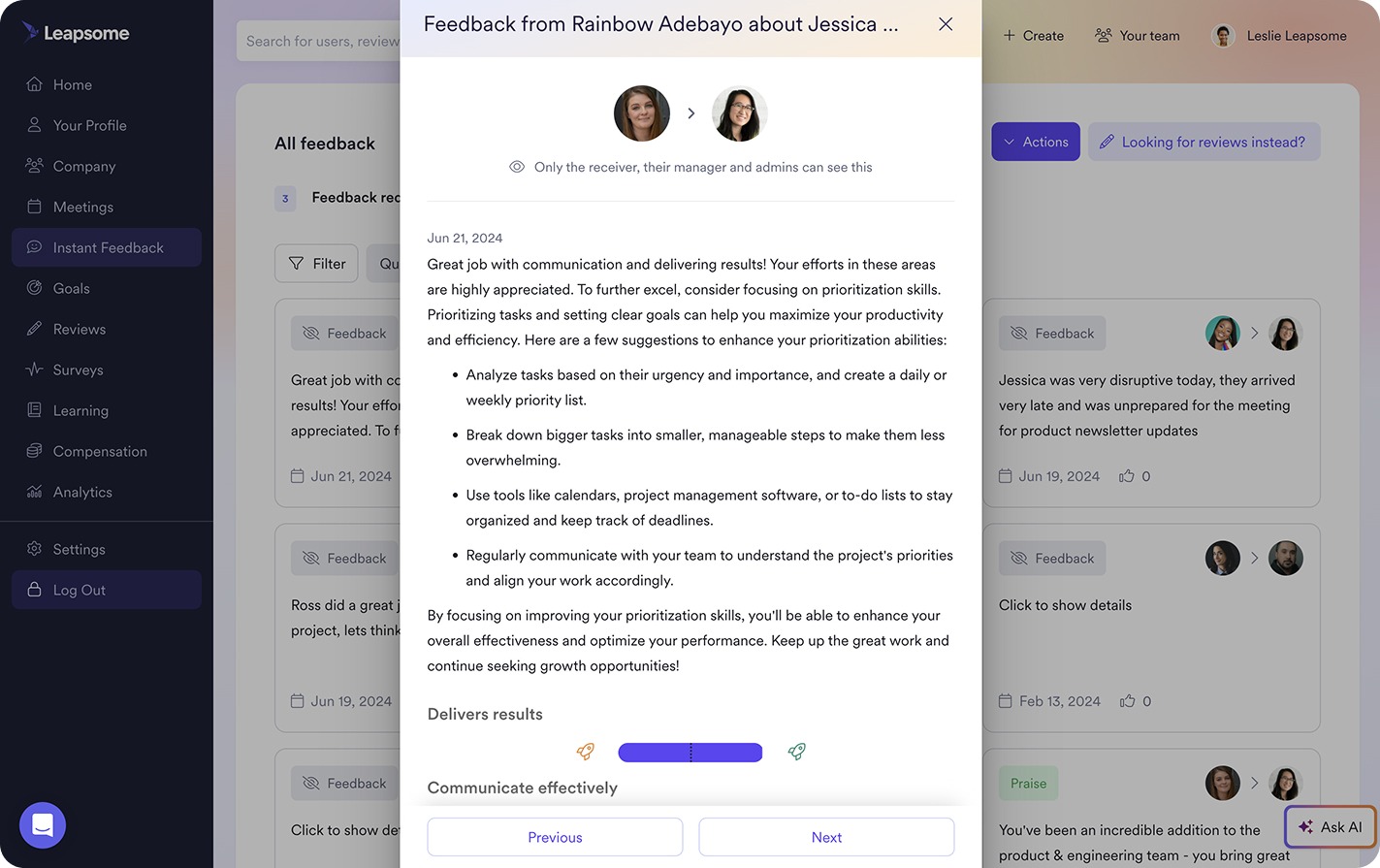
🔁 Support transparent communication with instant feedback
Leapsome helps you centralize communication and create a culture of recognition by sharing instant feedback and public praise.
👉 Learn more
How to build a resilient employee communication strategy: Five steps
Ad-hoc updates eventually crumble under the weight of growing headcount, creating fragmented data and widespread confusion. Instead, move beyond reactive messaging with a thoughtfully designed employee communication strategy.
1. Create a predictable communication rhythm
“In distributed teams, clarity is inclusion. Define exactly how and when to communicate, what’s urgent, what’s async, and what’s collaborative.”
– Priscila Bala, CEO at LifeLabs Learning
Many organizations struggle with operational inconsistency because they lack a fixed schedule for outreach. Establish a clear and repeatable cadence to prevent information gaps one week and a barrage of notifications the next.
Your schedule should account for more and less frequent communications, such as:
- Quarterly all-hands meetings: Align the entire workforce by explaining business outcomes and leadership priorities.
- Monthly department updates: Provide context on how team projects contribute to broader company success.
- Weekly team syncs: Manage day-to-day blockers and offer public praise for good work.
- Biweekly 1:1 sessions: Focus on individual performance and well-being to make sure your employees feel supported.
2. Give every communication tool a job description
The more communication platforms you use, the easier it is for critical information to get buried in random threads. So define a clear purpose for every tool and channel.
Here’s one way you might organize communication:
- Slack or Teams: Use these platforms for quick updates, informal peer-to-peer feedback, and urgent alerts.
- Email: Reserve this channel for formal announcements and permanent documentation.
- HRIS platforms: Centralize goals and performance reviews into a single source of truth.
3. Empower your managers
Managers do most of the key decision-making across the employee lifecycle, yet many don’t have the tools they need to deliver consistent messages.
If you want to make their jobs easier, you can:
- Standardize templates: Give leaders starting points for their updates, so every team member and department receives the same information.
- Define communication boundaries: Clarify which messages come from HR and which topics managers should handle directly.
- Upskill their work with feedback: Teach managers how to communicate with employees by using active listening and curiosity-based questions during reviews.
4. Build documentation legacy
Proper documentation is your company’s institutional memory. It helps your current team avoid compliance headaches now, and ensures that newcomers don’t start from zero. By maintaining a single source of truth, you build a legacy that keeps the organization functional and consistent.
Here are a few practical ways to do that:
- Centralize document storage: Use a modern platform to store all employee records and policies in one secure location.
- Create ownership workflows: Assign team members to manage different sections of the company knowledge base.
- Conduct regular audit cycles: Establish a routine for reviewing documentation, so it stays current.
- Define accessibility standards: Make sure all internal documents are searchable and easy to use. You can quickly implement this step by using Leapsome, which centralizes and organizes all your HR docs.
5. Swap assumptions for measurable data
Track metrics to evaluate whether the steps you’ve taken so far drive employee engagement and improve collaboration. Look into:
- Meeting attendance rates: Track participation in all-hands meetings to gauge workforce interest in company updates.
- Survey completion rates: Monitor how quickly and consistently employees respond to outreach.
- Sentiment analysis: Use an HR analytics feature like Leapsome’s to identify trends in feedback and spot communication gaps.
- Goal visibility scores: Measure how many employees can state their current work goals clearly.
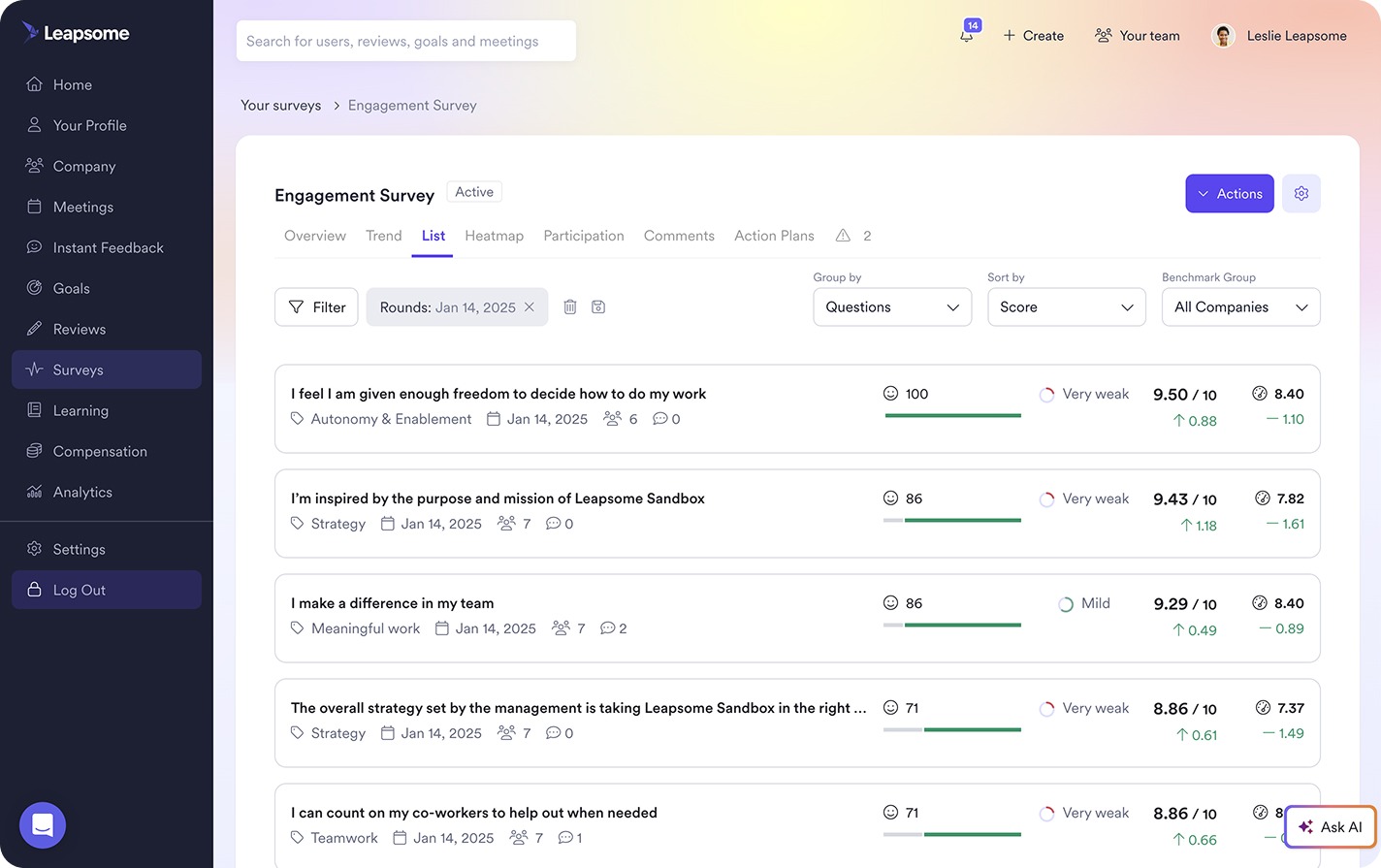
🗳️ Measure your communication impact
Leapsome’s Engagement Surveys provide AI-powered insights to help you understand if your messaging works and where your decision-making needs more transparency.
👉 Learn more
Strengthen your HR communication strategy with Leapsome
Effective communication between employees and leadership means offering more than simple check-ins and occasional emails. Your people need lean, reliable infrastructure that provides clarity and encourages real engagement.
Leapsome supports transparent communication by centralizing feedback and engagement insights. You can use employee engagement surveys to capture real-time sentiment, while performance conversations and feedback tools keep individual growth aligned with organizational goals.
People analytics power every insight, turning fragmented data into clear, actionable decisions for your leadership team. And by integrating HRIS and people strategy features, Leapsome gives every team member the resources and visibility they need to contribute to the company's success, without the friction of a broken communication loop.
“I particularly like the Instant Feedback module. It’s a great way to highlight what others have done great and contributes to more open communication, more transparency within the organization, and better team spirit.” – Meike Jordan, Head of HR at Productsup
📣 Say goodbye to communication gaps
Leapsome’s all-in HR platform supports your communication strategy by centralizing feedback and connecting it to performance and engagement insights.
👉 Request a demo
FAQ
What communication skills does HR need?
To improve communication in the workplace, start by establishing a single source of truth to cut down on conflicting information and misconceptions. Once you centralize your documentation, train managers on key skills and track employee engagement analytics.
How can I improve communication in the workplace?
To improve communication in the workplace, start by establishing a single source of truth to cut down on conflicting information and misconceptions. Once you centralize your documentation, train managers on key skills and track employee engagement analytics.

.png)


Automate, connect, and simplify all HR processes across the employee lifecycle.